• Graham Andrews, Salter’s Skipper

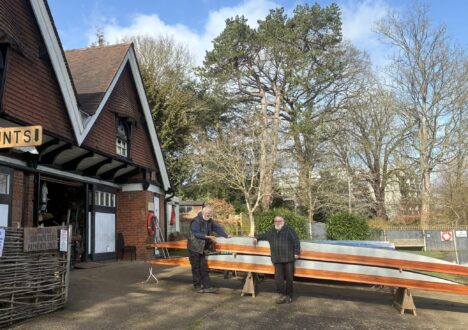
    I’d come to Folly Bridge to meet Graham Andrews. For today he is skippering the Salter’s passenger service that meanders along the river Thames from here to Iffley Lock. The third generation of Andrews to work on the boats, (it’s four if you count his daughter who does a bit of part-time work on the bar) he has promised to let me join him while he fills me in with something of his family history. And at the age of 82, I reckon he has a few stories to tell.

  • Aboard the Corpus Christi Barge 

    I’ve often spotted it on my walk along the towpath from Folly Bridge to Iffley. Across on the east bank of the Isis, nestled into the Kidney Stream, an old cut leading to the Cherwell from the Thames just before you reach Donnington Bridge. A fanciful floating pavilion rising from the water, its curved prow reminiscent of classical longboats, flagpole erect, pilasters framing the door to a whimsical white wooden cabin with hobbit like oval windows. There’s an external staircase leading to a raised rooftop garden overhung with willow, a tall chimney in the middle from which on colder days white plumes of smoke announce that there are occupants below. It all looks very romantic. 

  • A Jar of Jam from King James 1

    I had scrawled the word mulberries across the pages of my calendar for the first week of August. It was to remind me that this was the short window of time that these delicious knobbly clusters more muscular than a blackberry, sweeter than a raspberry, fully ripen and fall from the tree. For I wanted to make jam. Not any old jam mind. This jam was going to be special. A conserve created from the darkened crop of an ancient black mulberry tree.

  • Chris Raworth, fairground model maker

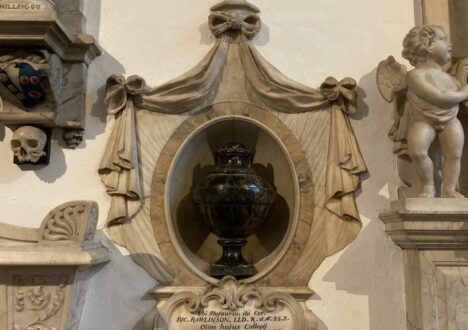
    I was delighted to be invited to meet Chris Raworth at his workshop in Middle Barton, catching him just after he had assembled his set of gallopers. A tall man with a shock of white hair he can barely contain his excitement as he opens the door into a long garage lined with benches overflowing with mechanical parts and crammed with boxes painted with brightly coloured signwriting instantly recognisable as that of the fairground.

  • Headhunting

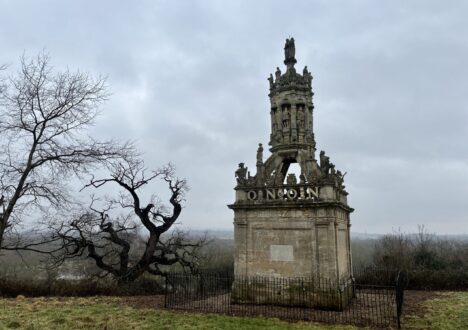
    They are hidden all over Oxford and beyond. Outside, amongst the trees of parks and gardens, positioned in courtyards and parking lots. Huge ancient, crowned heads, features blackened with time, hair interlaced with lichen, lips softened by moss, some so weathered it is hard to see there ever was a face shaped out of the blocks of stone.

  • A Martlet’s Tale.

    I was gratified to hear from an Oxford Sausage reader of my post on the swift tower in the Oxford University Museum of Natural History, asking if was I aware of the heraldic version of the swift, the martlet. This is a mythical bird drawn in such a way that rather than have legs, the bird has tufts of feathers.

  • A walk to Turner’s tomb (from St John Street to Shipton-on-Cherwell

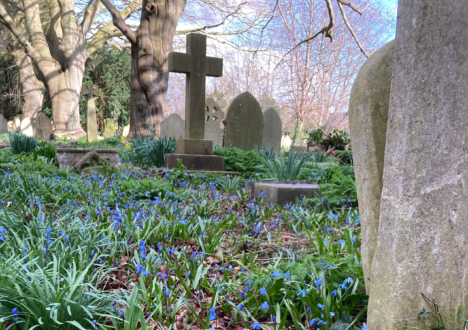
    But there is only one blue plaque. Displayed on the wall of number 16 it remembers the artist William Turner, who lived and worked here from 1833 until his death in 1862. Close by The Oxford Sausage headquarters, it is not uncommon to witness tour guides introducing the place as the home of JMW Turner, arguably England’s most famous Romantic painter. But this is a different Turner altogether.

  • Oscar Nemon and his Pleasant Land

    Today I am venturing a short distance out of town to a place known as Pleasant Land. I don’t as yet know why it is called this. I am just thinking what a wonderful name with its promise of green pastures and natural beauty, both of which are in evidence as I make the steep climb away from the busy city up to Boars Hill, an area of countryside between Oxford and Abingdon.