• Looking for Beaumont Palace

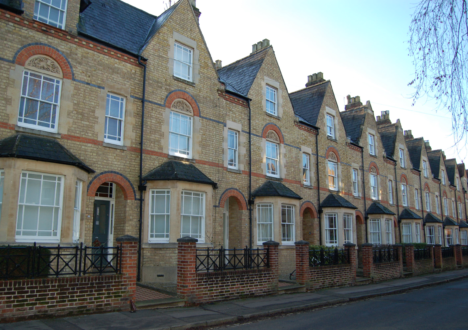
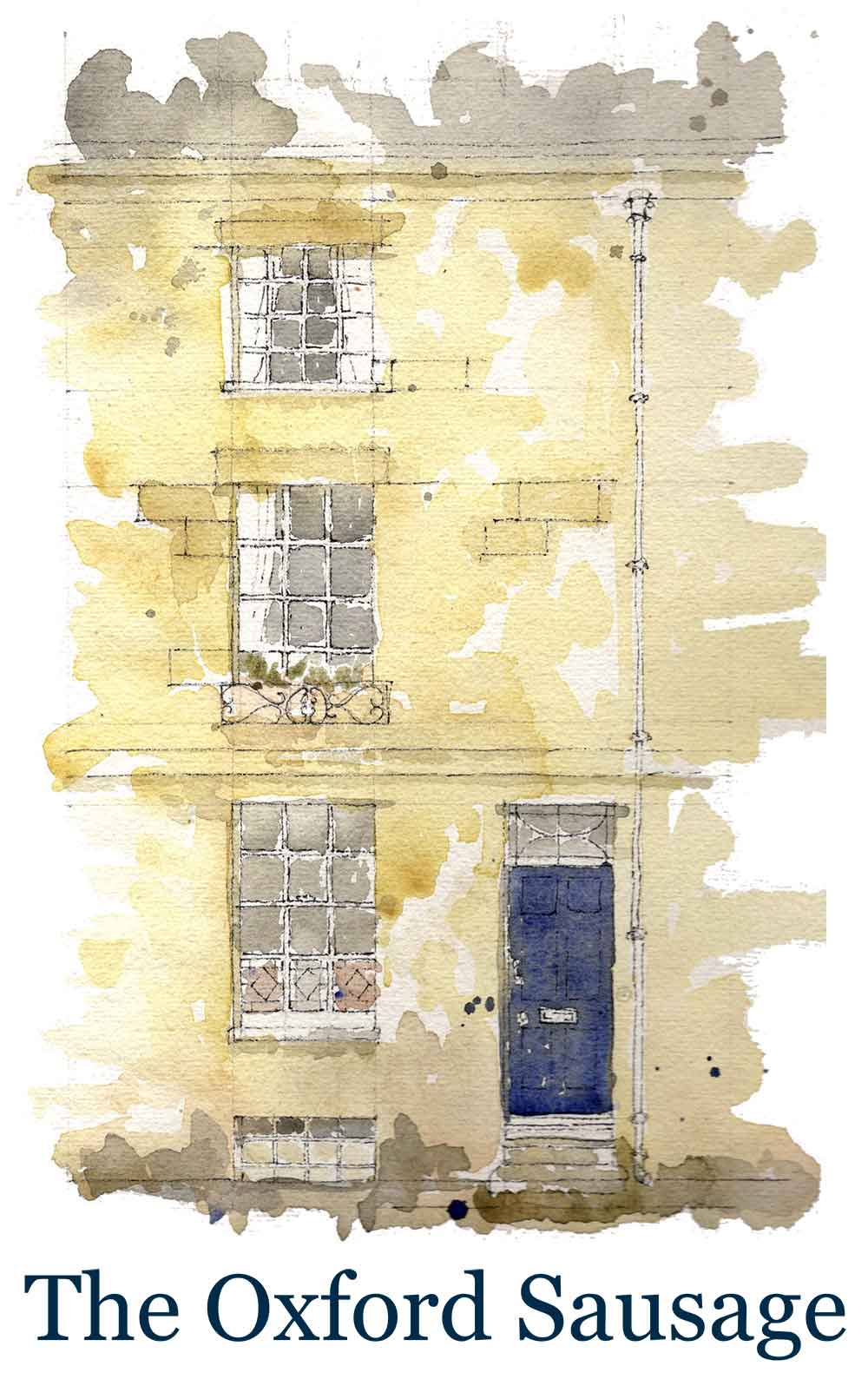
    I am standing at the top of a ladder in the garden of a house in Beaumont Buildings, a quiet street of pretty, terraced townhouses hidden away just north of Oxford’s central bus station. Built in 1826 – there’s a date stone set into its chequerboarded brick frontage – this was part of the new residential development that included St John Street, Beaumont Street and parts of Gloucester Green to help alleviate the surge in the city’s population in the early years of the 19th century. But I was here to look at something a lot older.

  • A chimney crawl around old Oxford

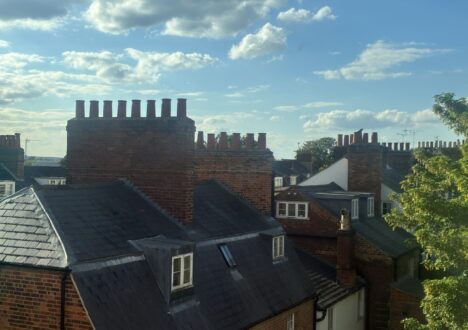
    And it sparked the inspiration to set off around the city with my camera on a chimney pot pilgrimage. A chimney crawl if you like. Choosing one of those cold but clear May days we have had recently, to gaze upwards to check how fine a fare of fancy flues remain today. Chimneys have after all some competition when it comes to our city skyline. What with its spires and towers, grotesques and gargoyles, crenelations and crocketed pinnacles all vying for attention. But I’d like to think they hold their own. 

  • At the Elijah Terrace with Cordelia

    Just before Christmas I get a call from my friend Cordelia. She asks if I’d be interested in meeting her by what is affectionately known as the Elijah Terrace on Walton Well Road just north of Jericho. For she wants to explore the story of the Old Testament prophet as told in the magnificent stone carvings that decorate in exquisite detail the lunettes above nine of the first-floor windows here. It is from these that this row of houses has derived its nickname. 

  • Hunting for Beaumont Palace

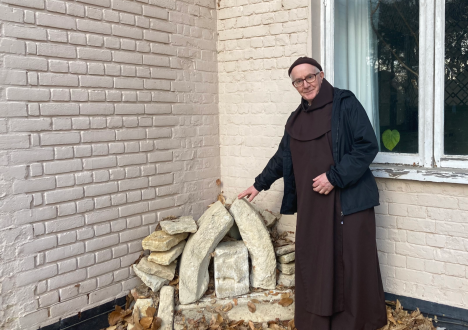
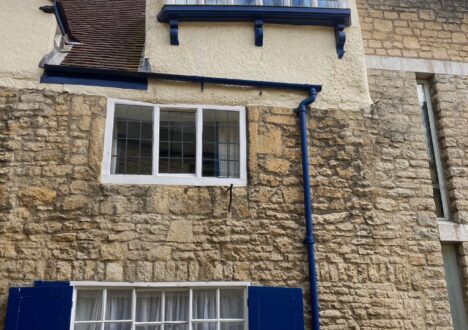
    Down I go and on reaching ground level it becomes clear exactly what it is that I have just traversed. A high wall of roughly hewn field stone. Not grand by any means. But exciting nonetheless. For this was once the western boundary of a royal palace. The curtilage wall for the King’s Houses or Beaumont Palace as it became known. Built around 900 years ago in the 1130’s for William the Conqueror’s youngest son Henry I. And as I was on a mission to uncover anything that might remain of this royal residence I was absolutely delighted. 

  • the crooked house

    Kybald Twychen

    I have long been intrigued by the pretty gabled house that stands in a quiet cul de sac near Oxford’s High Street. For it is a miracle as to how the place stays upright. The walls sag, the windows are wonky and the drainpipes don’t quite run in straight lines. I often wonder whether the Corpus Christi students who now live here negotiate the lopsided landings and how they keep their books and belongs from sliding from the sloping shelves.

  • Headhunting

    They are hidden all over Oxford and beyond. Outside, amongst the trees of parks and gardens, positioned in courtyards and parking lots. Huge ancient, crowned heads, features blackened with time, hair interlaced with lichen, lips softened by moss, some so weathered it is hard to see there ever was a face shaped out of the blocks of stone.