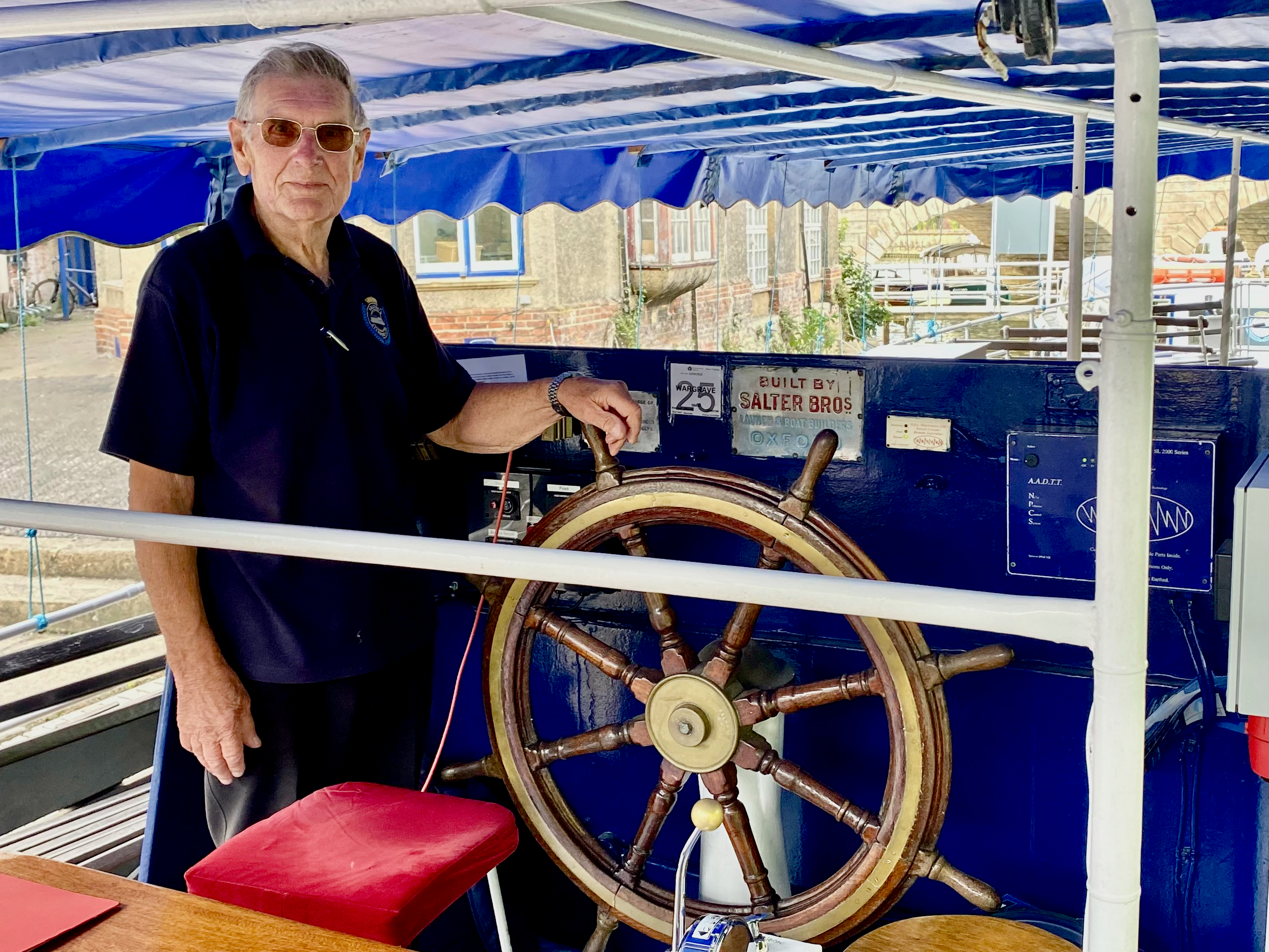
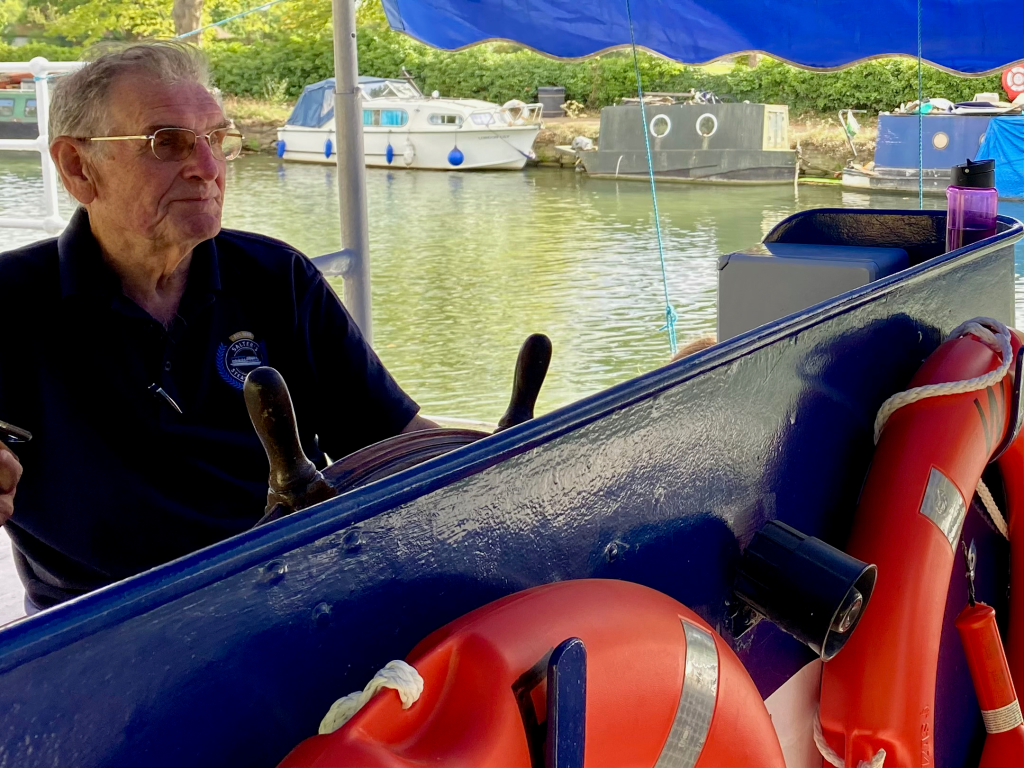
I’d come to Folly Bridge to meet Graham Andrews. For today he is skippering the Salter’s passenger service that meanders along the river Thames from here to Iffley Lock. The third generation of Andrews to work on the boats, (it’s four if you count his daughter who does a bit of part-time work on the bar) he has promised to let me join him while he fills me in with something of his family history. And at the age of 82, I reckon he has a few stories to tell.
I am early so I have some time to take in the surroundings. On the north east side of the bridge is the Head of the River, one of Oxford’s most famous pubs, its upper balconies overflowing with a bright array of begonias. What is now the beer garden, was once the wharf for St Aldate’s Yard, part of the original Salters’ empire, boat builders who had arrived in Oxford in 1858 already with a name for building the best racing eights. Soon the workshops, warehouses and sheds they erected here were servicing the burgeoning college and university rowing scene, as well as being used to construct all manner of other boats: punts, skiffs, dinghies, even a paddle steamer that was sent to the Congo and a line in lifeboats that became instantly popular after the sinking of the Titanic. By the end of the century, they had built up the country’s largest inland fleet of hire boats (900 at one time) and had become with their famous Salters Steamers service the biggest passenger boat operators on the non-tidal Thames. Linking with Great Western Railway they offered river and rail package tours, producing for many years the popular publication ‘The Salter’s Guide to the Thames’. Their boats were kitted out with fine upholstery and comfy cushions, their uniformed skippers dressed in peaked caps and smart blazers with brass buttons, a piano on every boat available for sing songs. And they built homes in the surrounding streets for the hundreds of workers they employed, known as ‘Salter’s Navy’. One of them, in Jubilee Terrace, was where Graham’s grandfather lived, and his father was born.
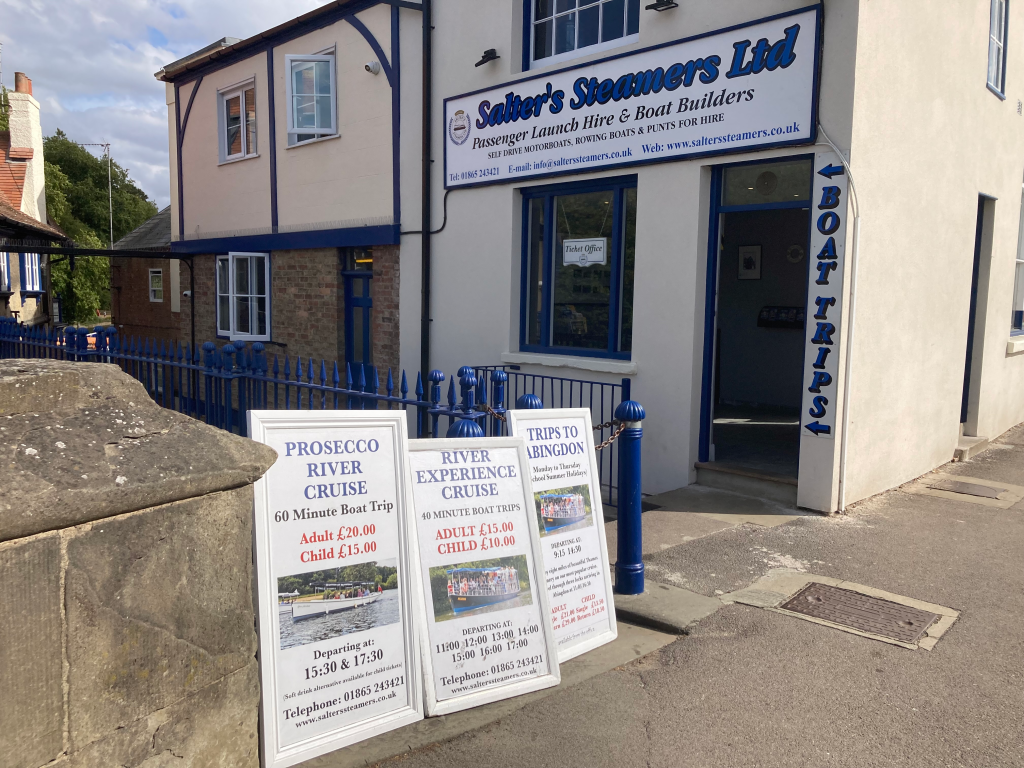
It’s a smaller affair these days. Much of the housing has been sold off, its offices replaced by flats. A tall crane still overlooks the drinkers across the way from where the seventh generation of the original Salter’s family has its ticket office for the more bespoke passenger and boat hire operation it runs today. And there’s another old rusting pulley at the end of Brook Street almost hidden by greenery, reminders of a time not that long ago when boats were launched here, goods lifted and loaded for transport down river, when there were queues of day trippers stretching over the bridge, eager to secure a place on the more popular tourist routes.
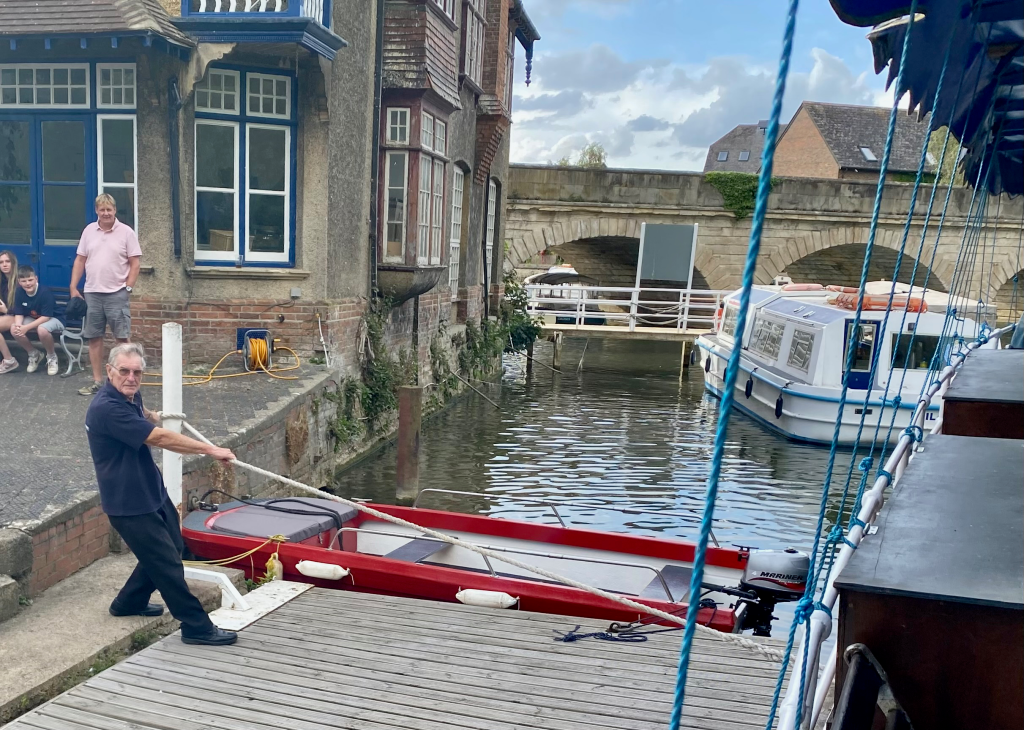
But it is a sunny day and there’s still a healthy group waiting to board the Wargrave, named like many of the Salters Steamers after villages and towns on the Thames. The beautiful old passenger boat with moulded handrails, wooden benches and blue awning was built by Salters in 1913 and today has Graham at the helm. A tall, dignified and friendly man with a rich Oxfordshire burr, it isn’t long before he has moored the 85 foot vessel, courteously welcomed everyone on board, cast off again and manoeuvred the boat in the direction of Iffley. And so it is as we chug along this most ancient of waterways, we leave the noise and the clamour of the city behind us, and Graham begins to tell his tale.
I started to tag along with my father when I was about 8. He had come to work for Salters at the age of 14 in 1930 as a boatbuilder. He (Len) was a good carpenter, but he picked up other skills along the way. Sometimes he’d be repairing the boats, sometimes mending the engines. In the summer they’d call on their staff to man the boats as well, and he’d skipper like I am today. If he was going out, I’d jump on and get a ride. But even if he wasn’t most of the staff knew me and they wouldn’t mind me getting on board. At one time my father was doing the service from here to Benson, so I’d get on here at quarter past nine in the morning, have some dinner at Benson, and then my Uncle Fred was doing the service from Benson to Reading so I’d get on with him and finish up at Reading. The Reading manager used to live in Oxford, so I’d get a lift back home in his car. I’d have had a whole day on the river. I saw more of my dad growing up than my mum. I was always off down the river somewhere.
The first thing I did as sort of work was to help the guy who used to look after the rental boats. If it had been raining overnight, I’d have to bail them out and mop them down. Then we’d put the cushions, the poles and the paddles in ready. Sometimes he’d give me a couple of shillings for helping him. As I got older – well this trip we are on now from Oxford to Iffley was where I started – I’d have been about 13 or 14. We used to have to collect the fares on the boat. If there were 60 passengers, you’d have to get round and get their fares before we got to Iffley Lock.
When I started most of the boats were steam driven. You’d have a skipper, you’d have a steam engineer, and you’d have crew; a mate, a purser collecting the fares and looking after the customers and a woman behind the bar serving teas, coffees and snacks. You’d have five people on a boat like this. Now all the controls are done from up here. I do all the routine checks and unless there is a big party you only have one crew.
Back then they had 17 boats like this, plus smaller ones that held about 60 each and they had a hire fleet as well, punts, skiffs, canoes that sort of thing that you could hire for the week. We had 50 or so camping punts with oars and canvas covers that you could bring down at night and sleep under, like ‘Three Men in a Boat’. They’d have little boxes with saucepans, frying pans, crockery, knives and forks, each boat had one of those. Each weekend they would come in and you’d have to get all that off, wash it all up and pack it all up ready for the next party. Even in my time you could hire them and go one way – you could take a boat in Oxford, row down to Henley or Maidenhead or Windsor leave the boat there and Salters would send a lorry down and bring it back.
At one time Salters used to cover the whole river from Folly Bridge in Oxford all the way down to Kingston. It would probably take you about two and a half days to get to Kingston. Stopping off for lunch at the Lamb in Wallingford, and dinner at the Catherine Wheel in Henley, the passengers would have overnight stays at hotels on the way. The crew would live on the boat. It’s gone now but the place where they slept had a proper entrance and was kitted out with bunk beds. Once the day was finished there wasn’t much to do so they’d scrub the deck– you can’t spend too long in the pub, and in the mornings, they’d polish the brass.
You’d get a lot more people then. The boat that went from Oxford to Abingdon would hold 160-70 people and often you’d have to put an extra boat on as a relief cos you couldn’t get all your passengers on. There and back in the morning and there and back in the afternoon. They also had boats going to Wallingford and then they shortened that to Benson. They’d have another boat coming up from Reading to Benson, and then you’d go from Reading up to Henley and Marlow. Marlow to Windsor, Windsor to Kingston. We don’t do it anymore, but I liked the trip to Windsor best. You get a lot of variety on that stretch, big houses, nice countryside, more boats.
My Grandfather used to let boats from a pontoon where the Head of the River is now. He lived at number 4 Jubilee Terrace, which is where my father was born. When dad married my mum he moved to 9, Sunningwell Road just down the road. And then they rented 7, Buckingham Street. They were all houses owned and built by Salters for their staff. But then something happened and in the late 40’s they had to sell off some of the houses and my father bought 7, Buckingham Street for £325.
My father’s three brothers, Uncle Fred, Uncle George and Uncle Albert all worked like him for Salters. My Uncle Albert moved on to become waterman for the Oxford University Boat Club, and Uncle George did Exeter and Brasenose Colleges. But they still worked for Salters at weekends and during the long sixteen-week vacations. My father worked at Salters until about 1960 – he then went to work for Oriel and The Queens College. Then he was asked to take on Lincoln being as they were all the same boathouse when the old waterman retired so he ended up with three colleges. My dad was always keen on rowing. At 13 he was captain of South Oxford school rowing. He used to have a crew called Sons of the Isis – they were all the college watermen. They were a really successful crew and they were actually training for the 1948 Olympics but then they powers that be said because they were living on the water, they were professional, and they wouldn’t let them take part. After that they got a bit disillusioned. My father and Uncle Albert they were both in the crew, the other 2 rowed but they weren’t in the boat that was so successful. We had loads of tankards.
I remember when they had the barges on the river. Because they were wood and a lot of them started leaking, they’d have little handpumps and you’d sit there pumping the water out. Christ Church boathouse was the first to be built in the 30’s – when they built the three brick ones. But they still had the college barges on the late 50’s. As each boathouse was built, they got rid of the old barge. They were nose to tail all the way down the river.
Personally, I prefer something with an engine.
I retired from my proper job at 60 (Graham was an electrician by trade but continued to work on the boats on evenings and weekends) so now I’ve got more time I can skipper three or four times a week depending on bookings. I’m probably the oldest person doing this now. I have to have a medical every year because of my age but hopefully I’ll carry on until the doctor says sorry you can’t do it anymore. I will be disappointed. I don’t know what I’ll do with myself then. I’ve been brought up with it, it’s in the blood. The pace of life slows down when you are on the river. I get to see a lot of wildlife. I don’t know all the names, but I like it. Being out and about on the river, you meet different people every day. I just enjoy doing it really.
With grateful thanks to historian Simon Wenham whose book ‘Pleasure Boating on the Thames, A History of Salter Bros’ is published by The History Press
And contributing photographer John Milnes
Details of all boat trips and boat hire can be found on the Salters Steamers website.

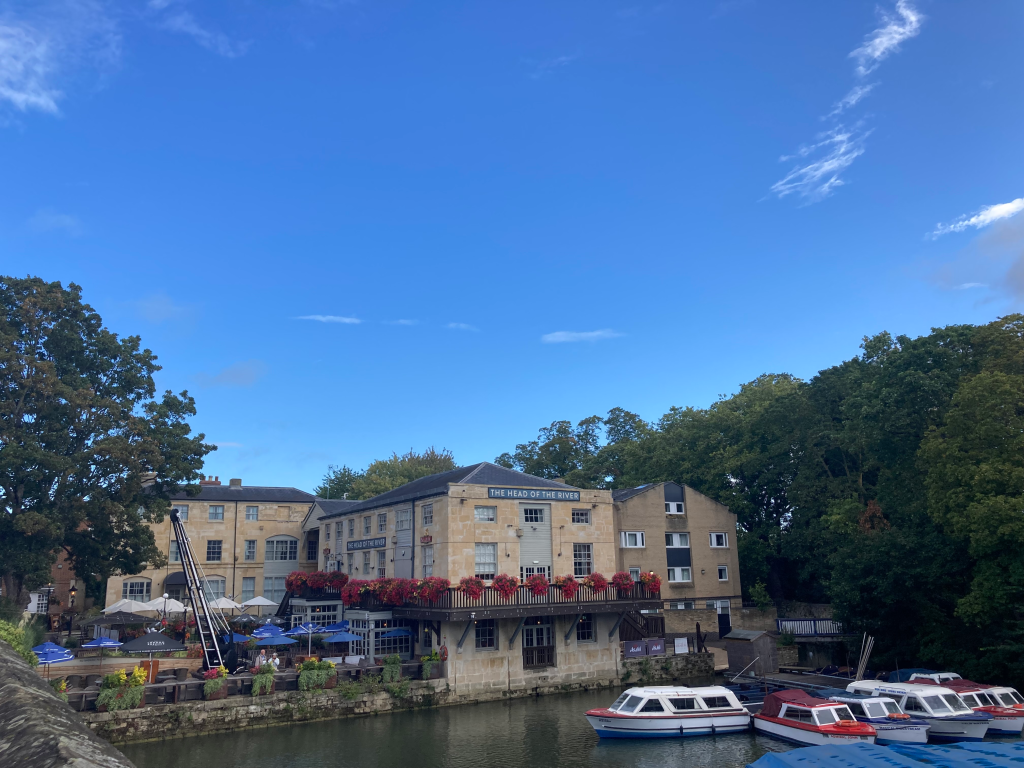
The Head of the River, formerly St Aldate’s Yard with the old crane at the front on what was once the wharf. The motor boats and punts for hire still belong to Salters.
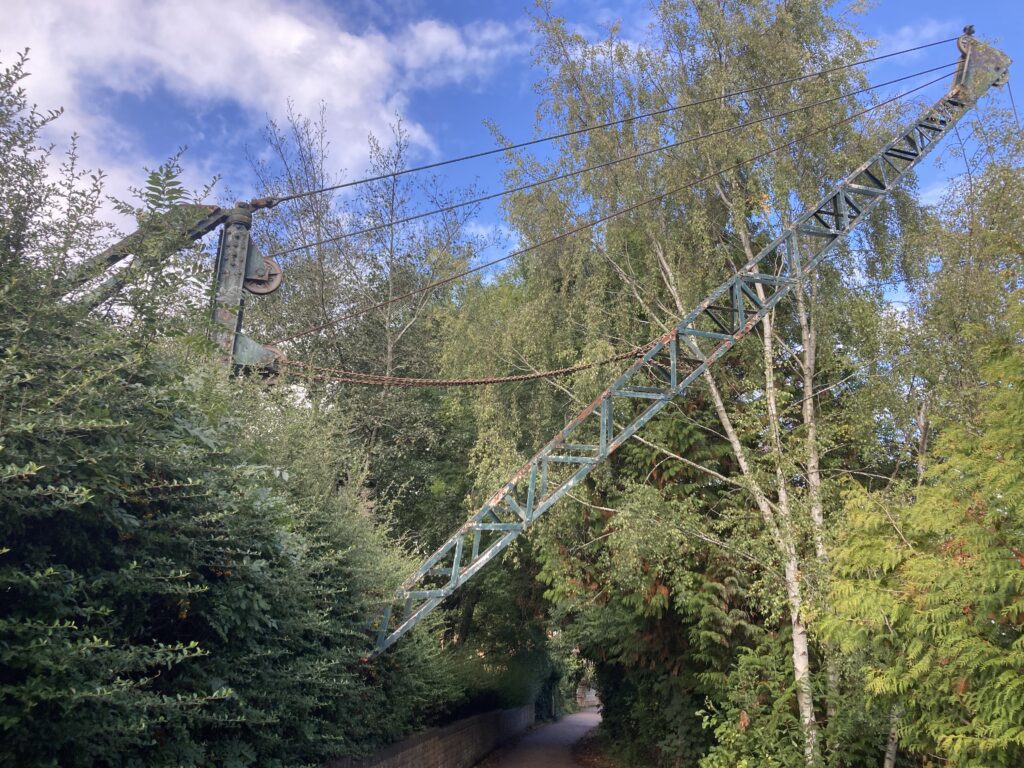
Another old crane at the end of Brook Street, once used for loading and unloading boats on the other side of the bridge.
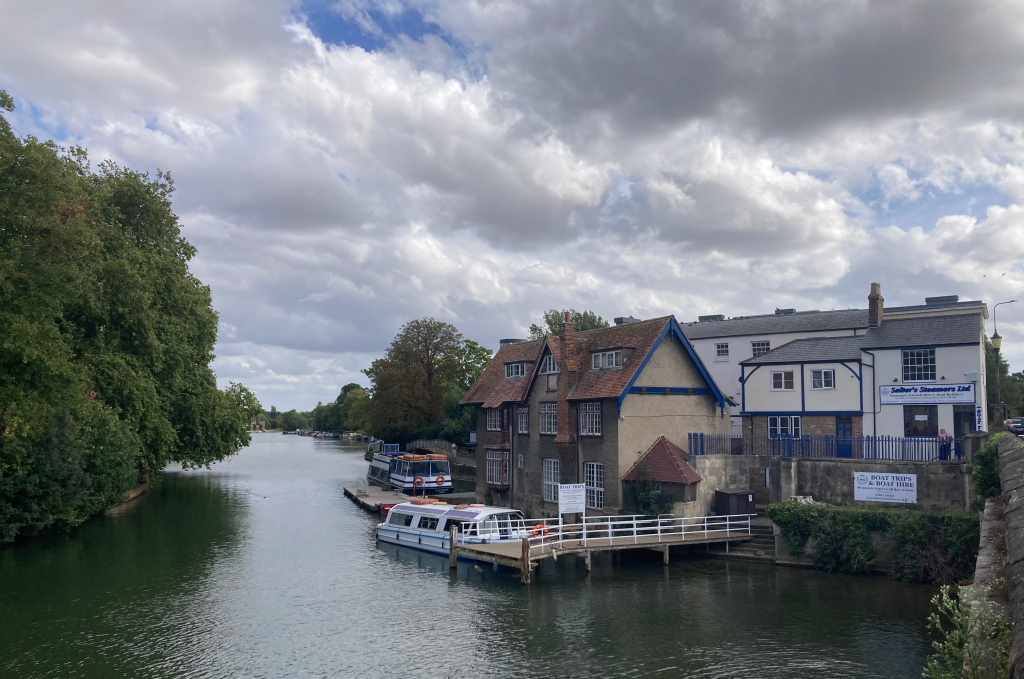
The Salter’s wharf where the passenger boats are now moored. While the ticket office remains, the old offices and storage space for the camping boat equipment are now rented out as flats.
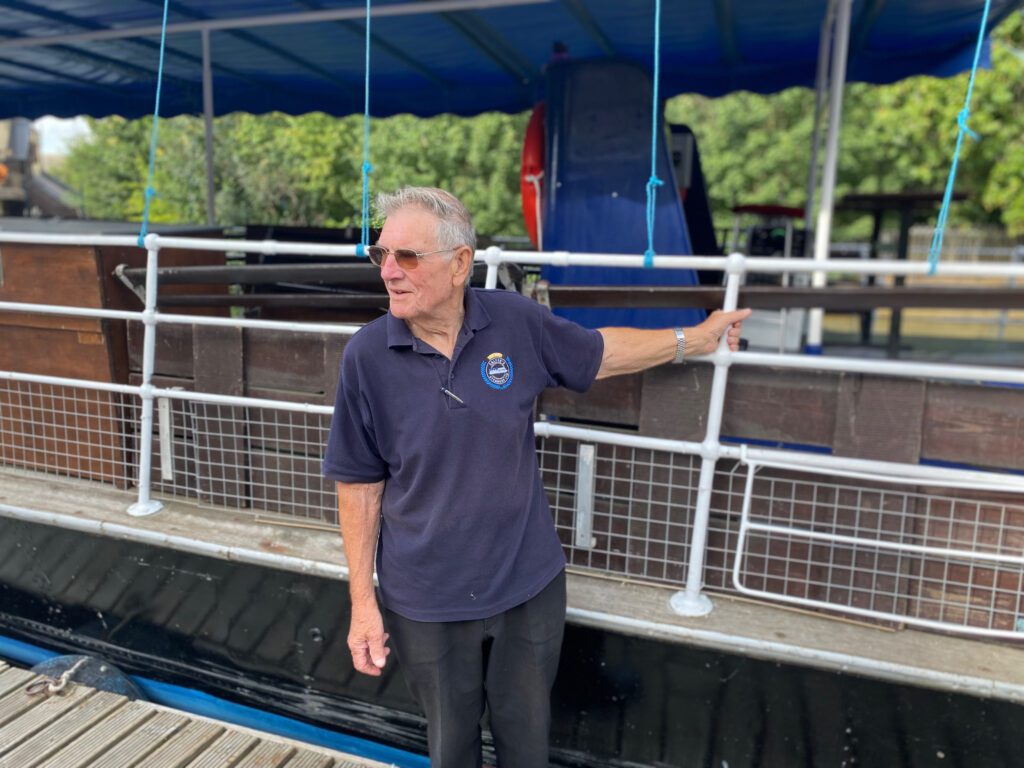
Graham Andrews.
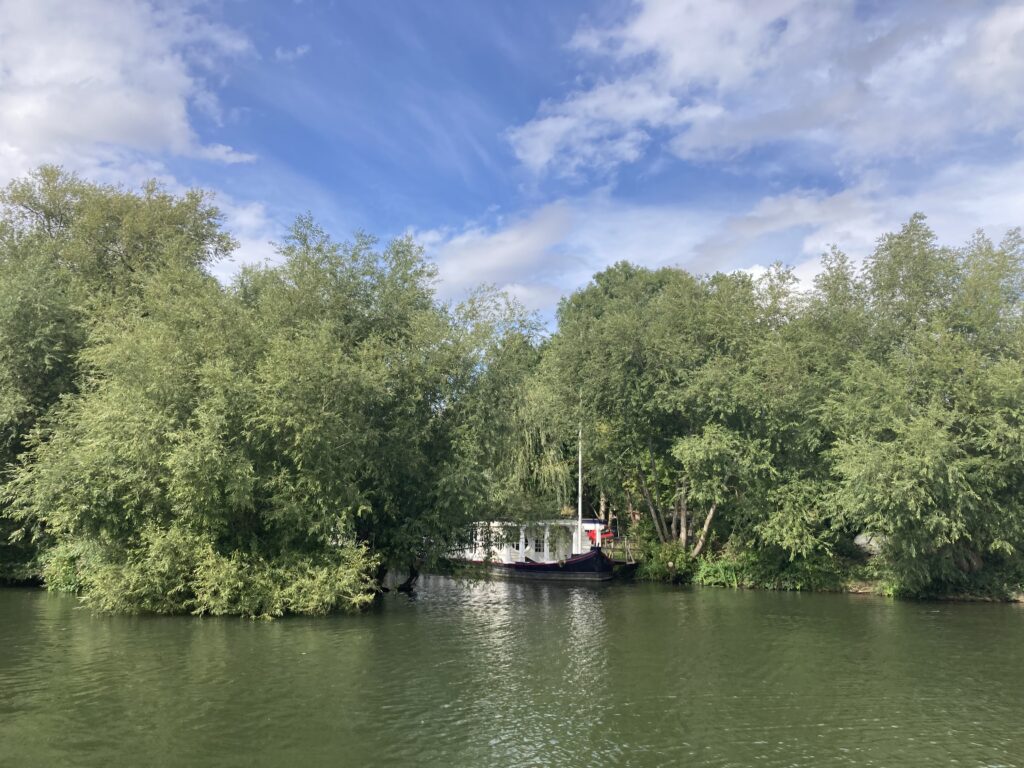
The journey passes the Corpus Christi College barge, built by Salters in 1930.
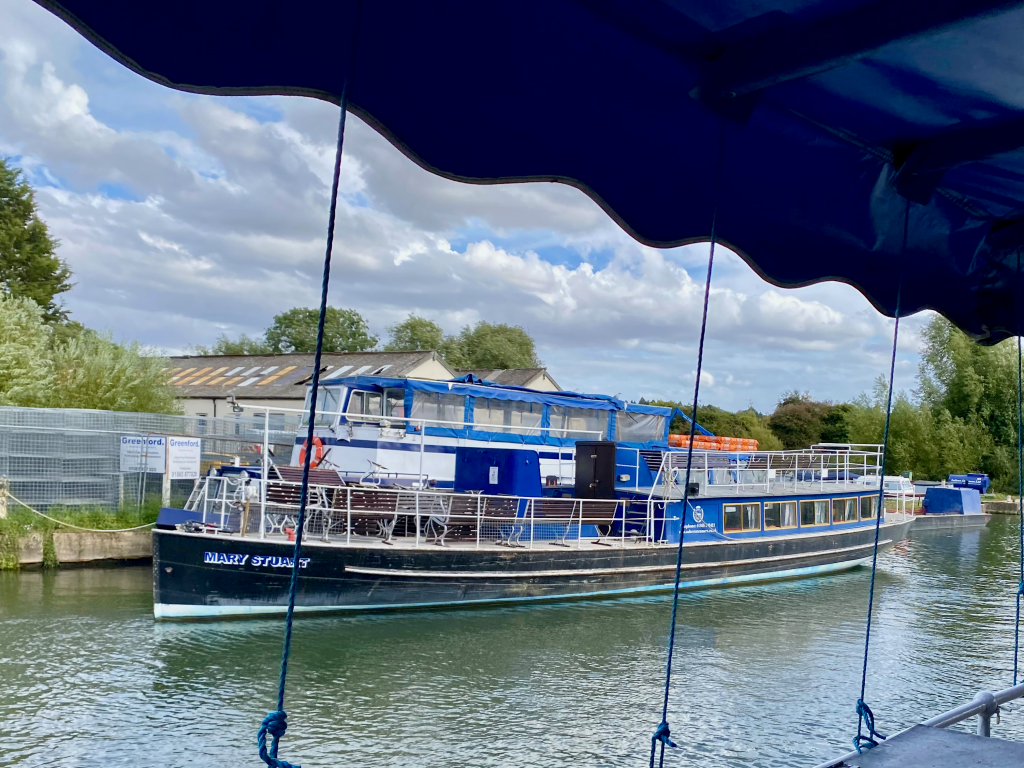
Salters still have their boatyard up near Donnington Bridge.

Iffley Lock where the Wargrave drops off passengers and from where it makes its return journey to Folly Bridge. The trip takes about 45 minutes and runs hourly during the summer.
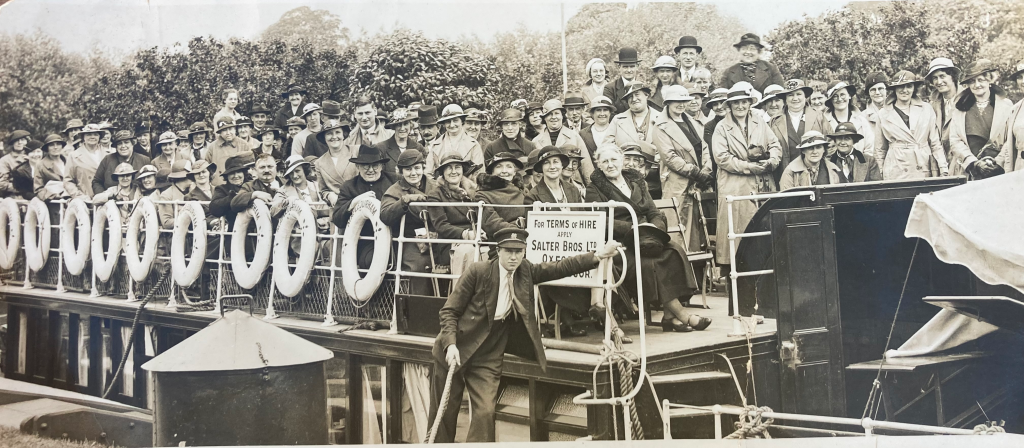
Graham’s father Len at Iffley Lock in the 1930’s. The boat is called the Mapledurham, the joint largest in the fleet. Named after a small village on the Thames near Reading, the boat could carry over 300 passengers. These large passenger boats had riveted hulls that became too expensive to repair. It was in the end sold as scrap.
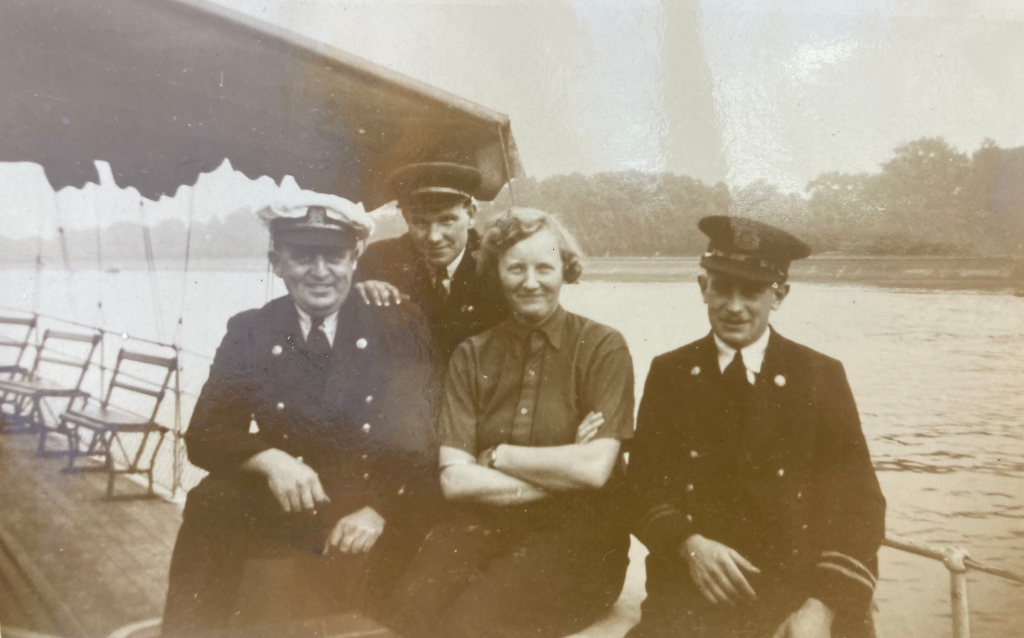
Len at the back with the rest of the crew aboard the Mapledurham during the war when it was used as a hospital boat.
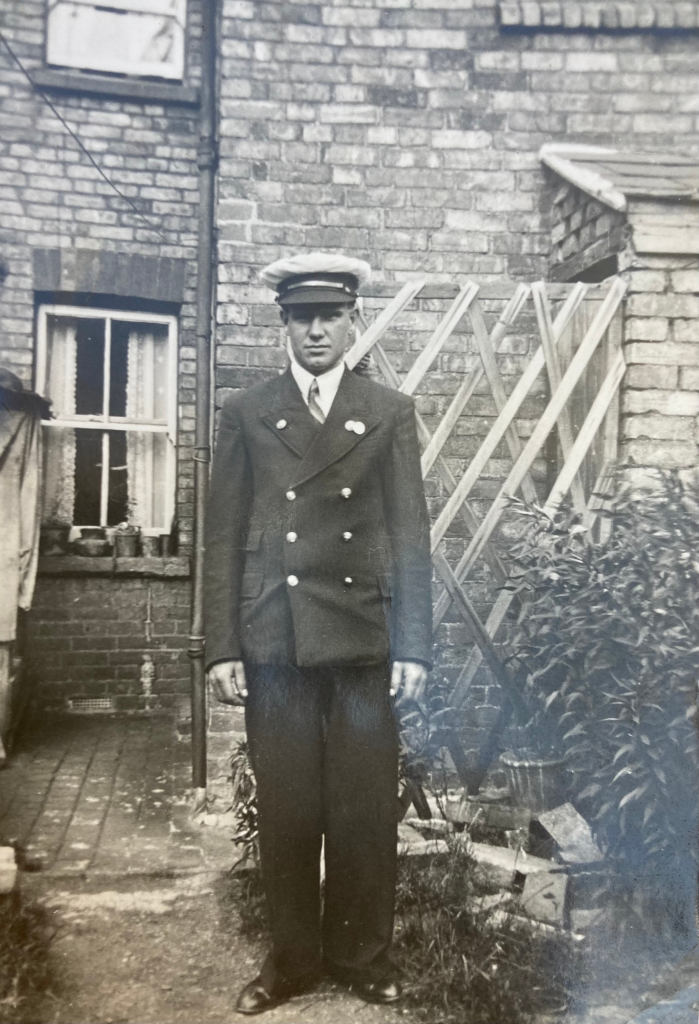
Len proudly wearing his first Salter’s uniform. This picture is taken in the garden of Jubilee Terrace where he was born in 1916 and lived until he got married.
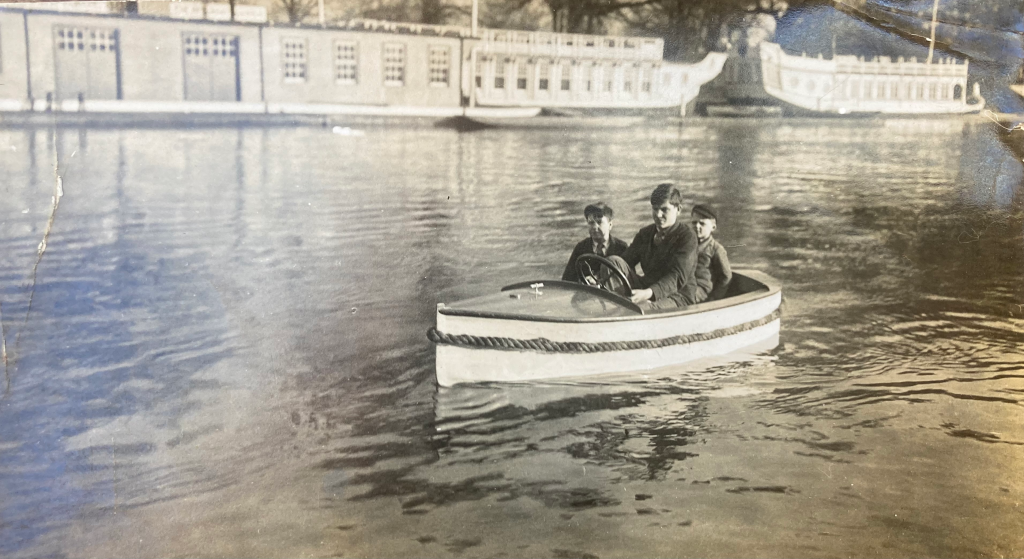
Len driving a hire boat (Frank Collins is one of the passengers but Graham is unsure of the other boy) built by Salters. These were rented out for use on municipal lakes and the like. The college barges are prominent still in the background.
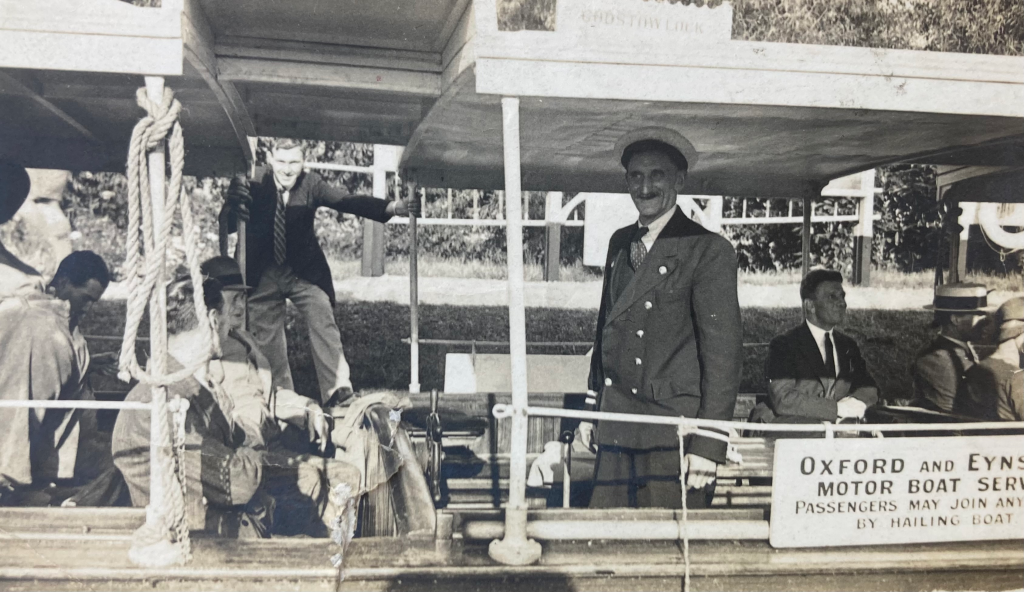
Len working as crew (looking into the boat) on board the boat Leander when there was a service to Eynsham
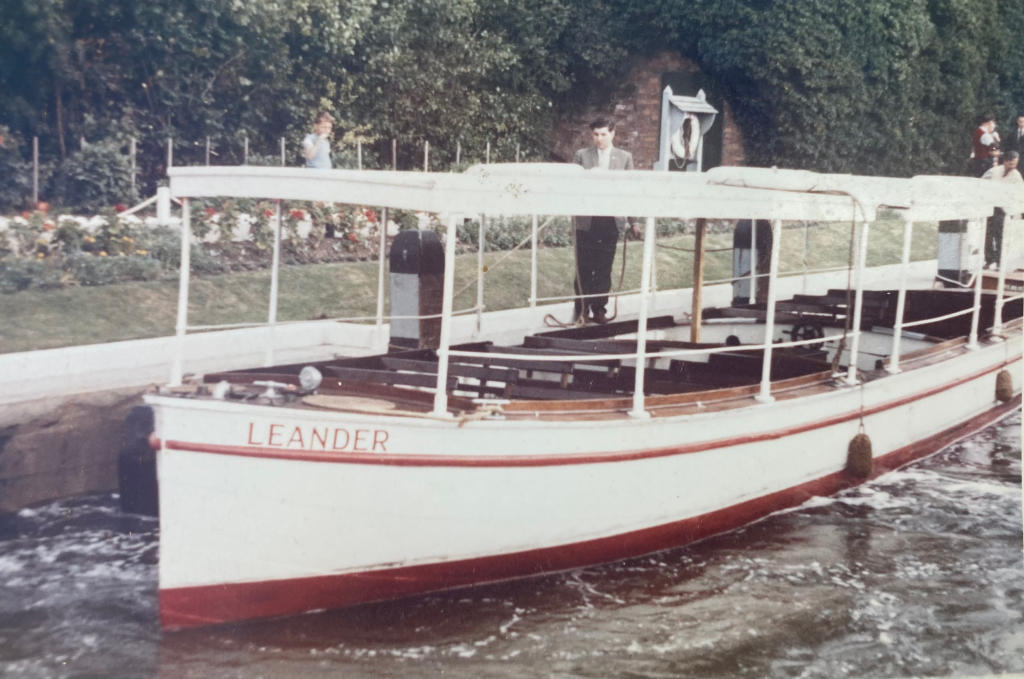
Graham on the same boat at Sandford Lock in the the late 1950’s. Salters owned two 60 seater passenger boats which they used as back up when the larger boats going to Abingdon were filled.
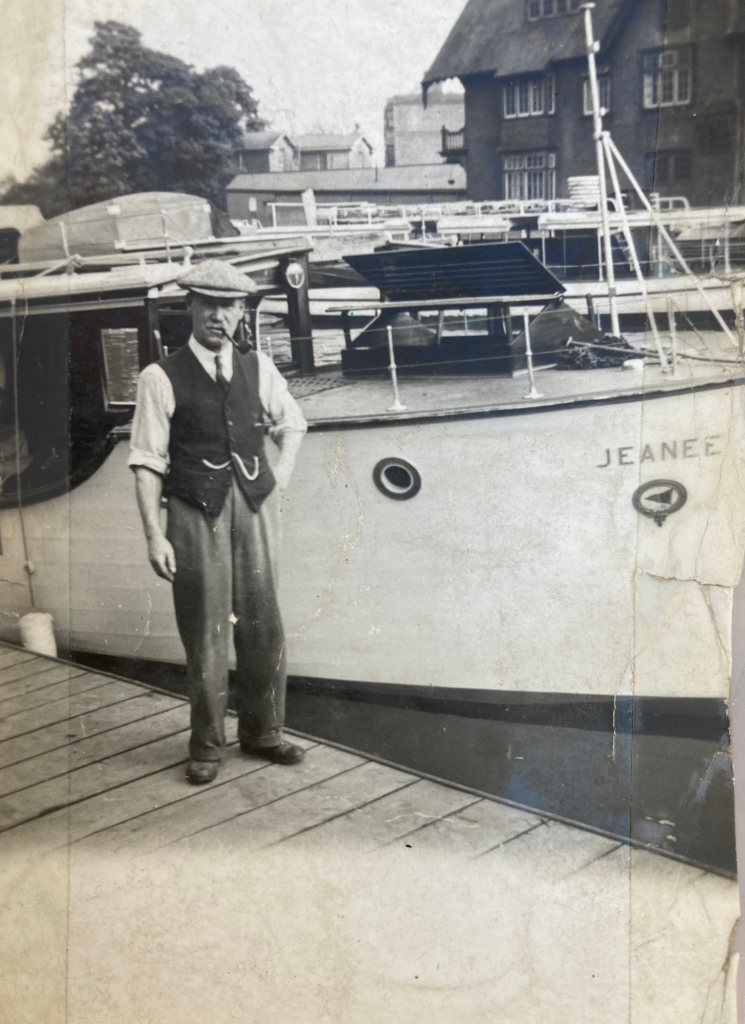
Graham’s Grampy, Charles Andrews on a raft in front of what is now Head of the River pub, but was then Salters workshops.
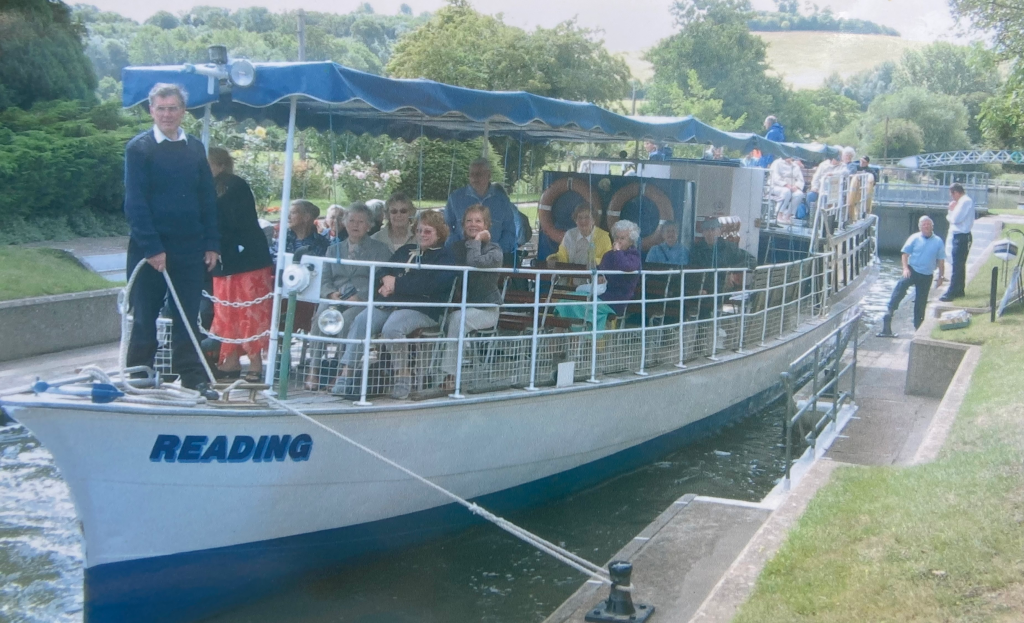
Graham at Day’s Lock in 2006 with the Wittenham Clumps in the background.
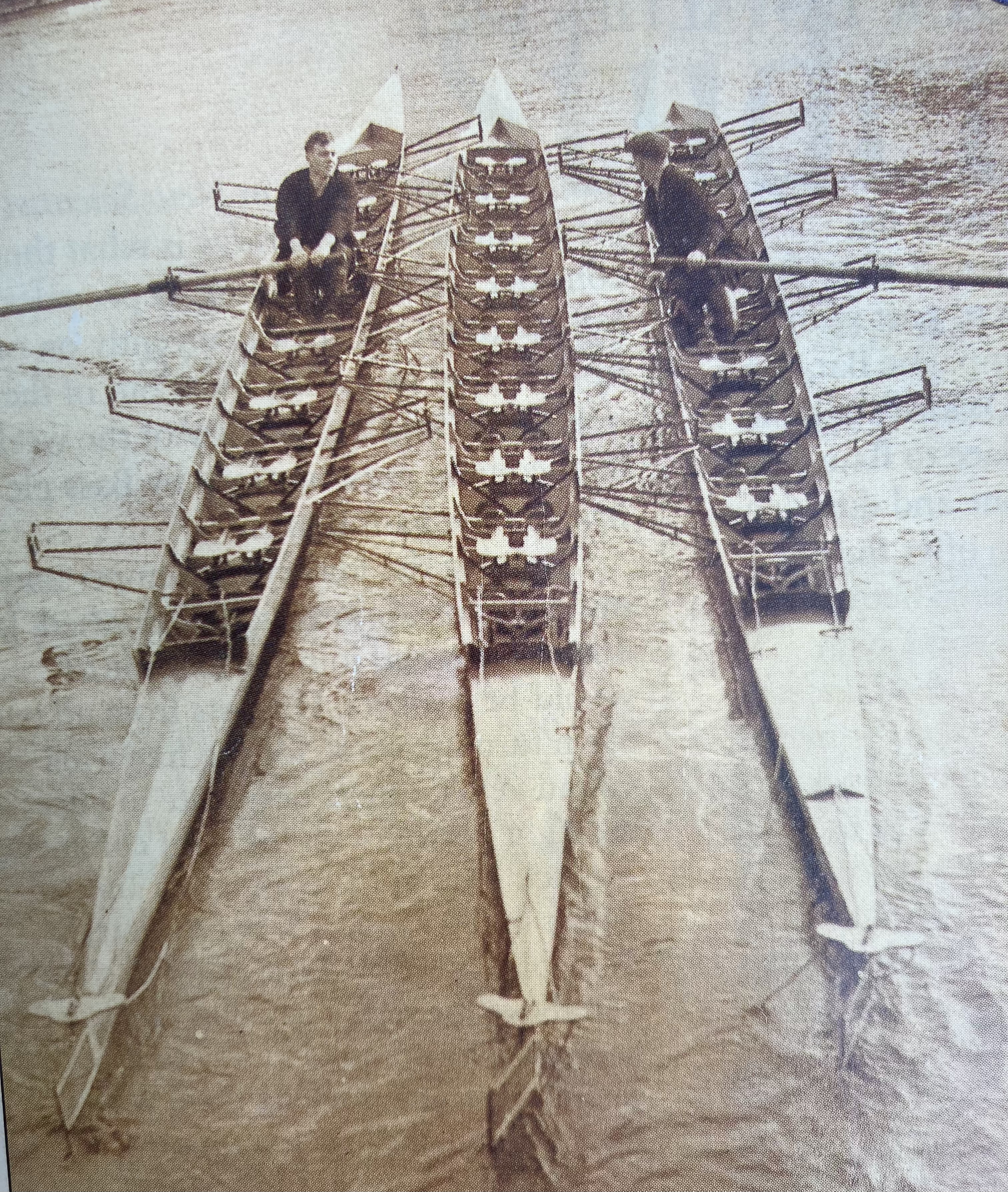
Len (on left) and Uncle Fred (on right) when they worked for Salters. Salters made many of the racing boats and rented them to the colleges. The college barges still in use at that time were too small to store them, and so they were strung together, sometimes as many as nine at a time, and rowed up to Folly Bridge where they where stored in Salter’s sheds behind what is now Head of the River.
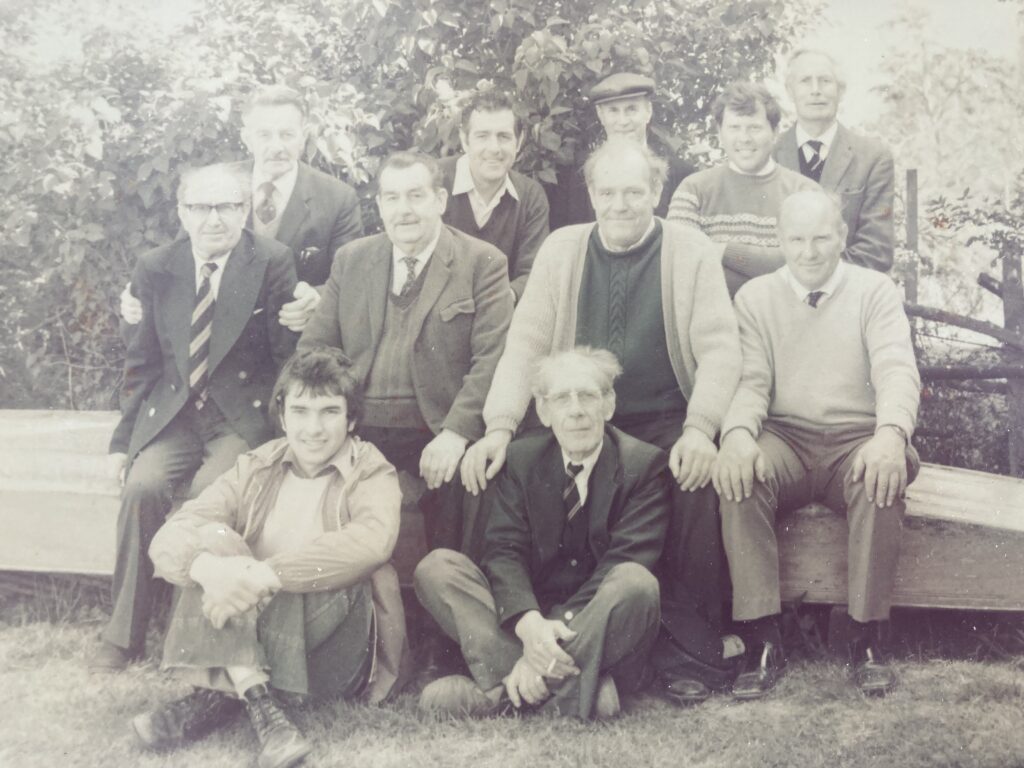
Uncle George (on the left with glasses) Uncle Fred (at back with cap) and Len (seated on right) sitting for a portrait with the other college watermen, probably taken at Torpids when they would have all been present.
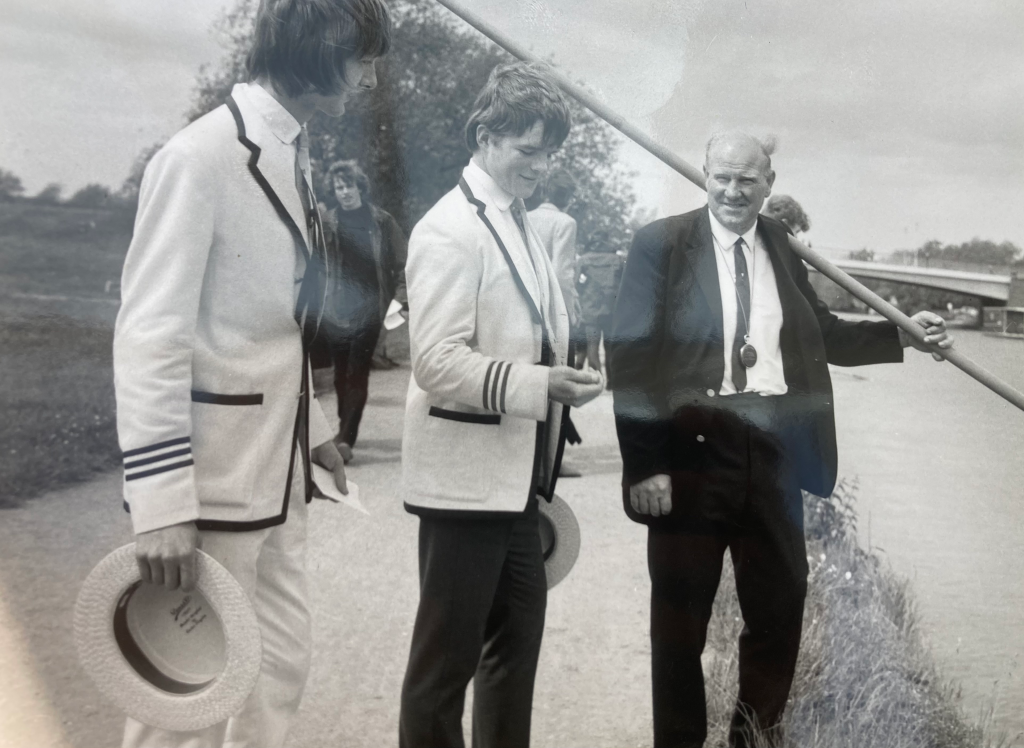
Len always dressed in suit and tie when he attended the Summer Eights regatta.
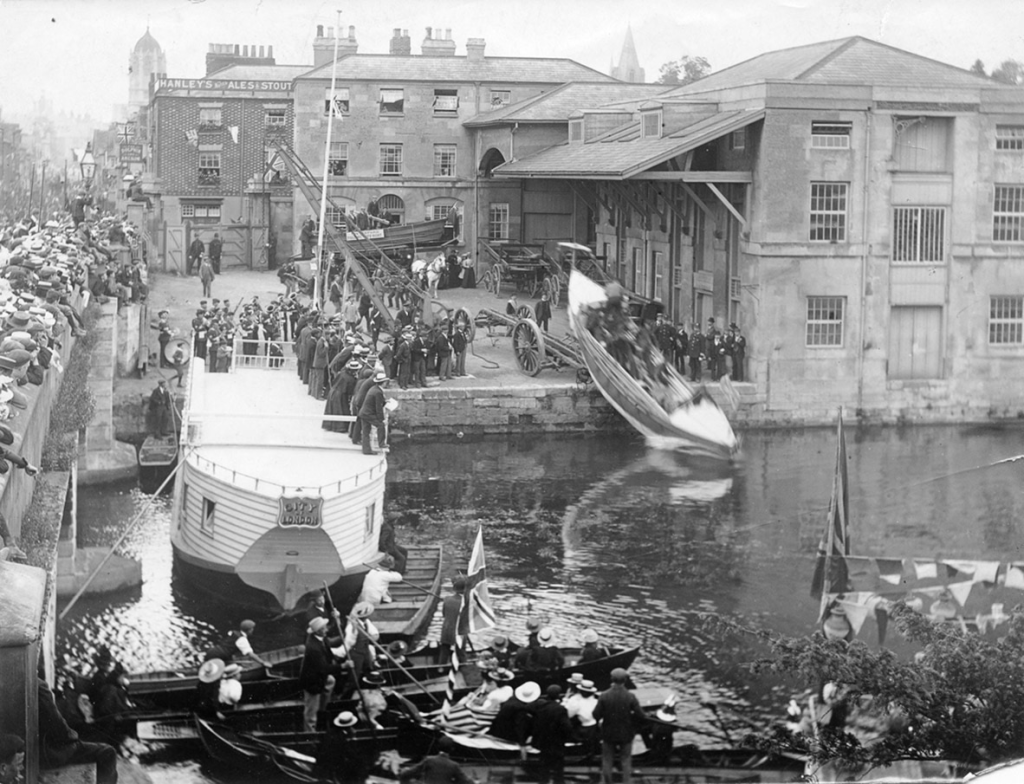
A lifeboat being launched by Salters with a college barge as well as the bridge crammed with spectators.
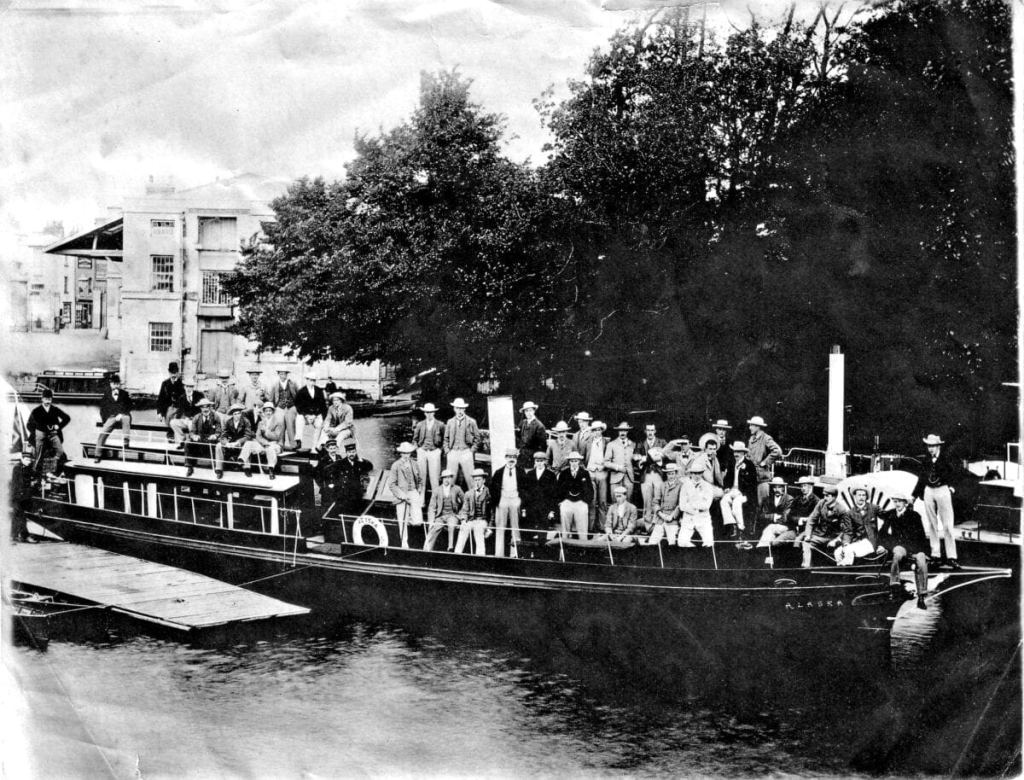
The passenger boats in their heyday. ©Salters Steamers
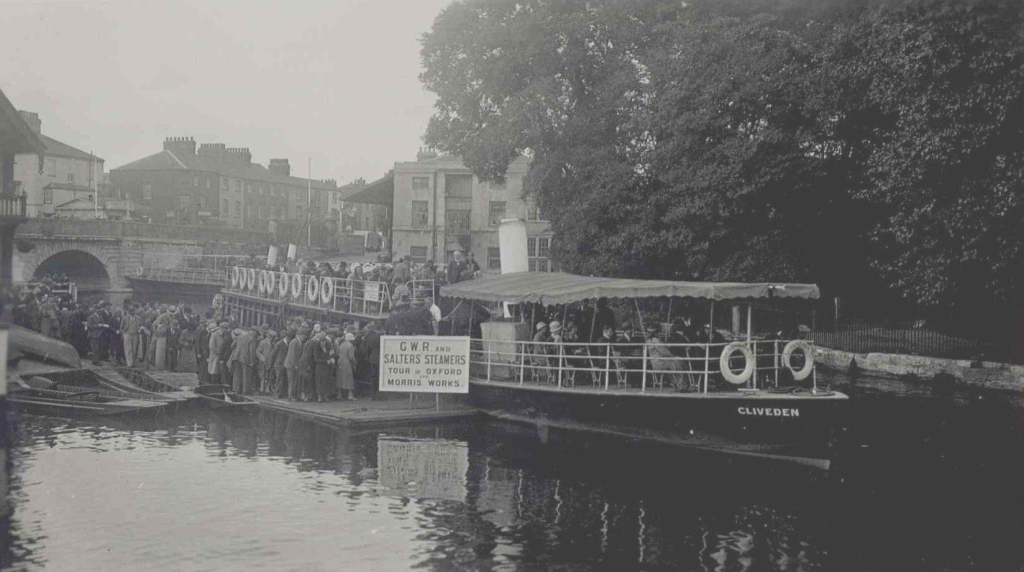
©Salters Steamers
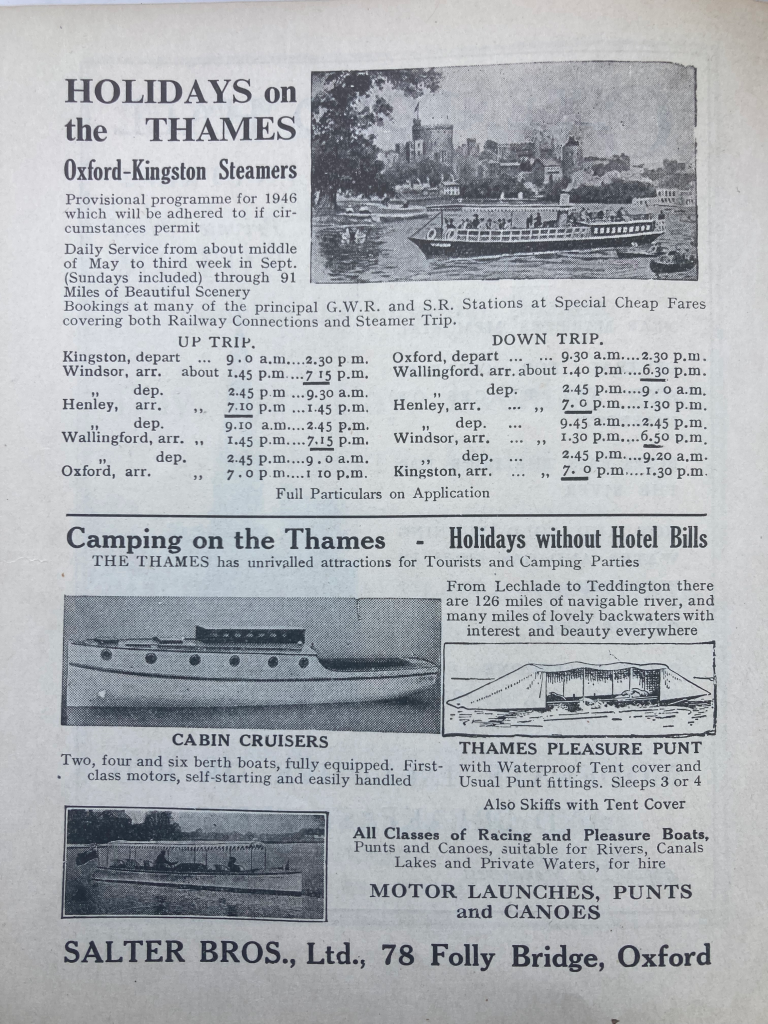
Advertisement for Salter Bros in the 1946 edition of Alden’s Guide to Oxford.
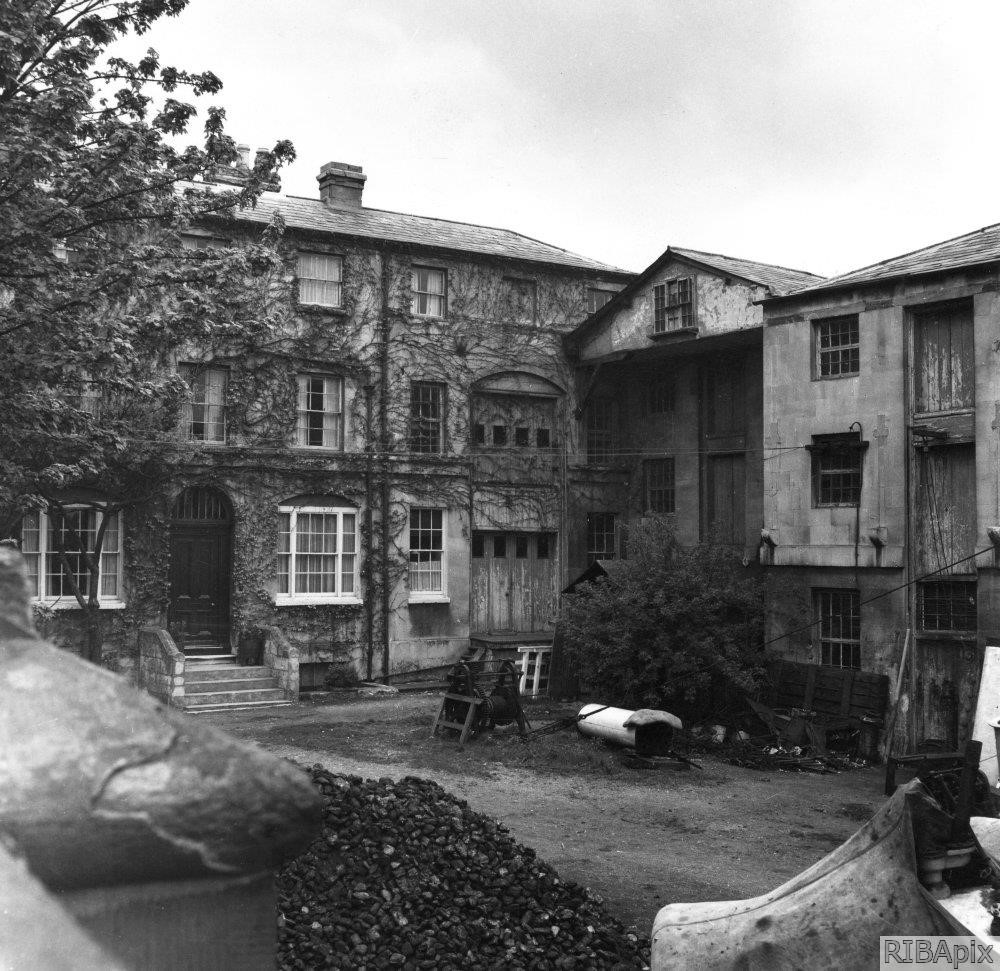
The old Salter’s yard, with the proprietor’s residence, now Head of the River, with the piles of coal then used by the steamers before they were diesel driven.
You might also like to read Aboard the Corpus Christi College Barge
3 Comments
Join the discussion and tell us your opinion.
Loved this on Graham Andrews. For a very brief spell I, too, was a member of Salters navy. You had a photo of my boat, Mary Stuart, which doesn’t often turn up in pictures. Under skipper Ernie Westell we sailed to Benson & back each day to meet up with Fred Andrews who had come from Reading with the Nuneham. Onward passengers would lunch at The Chicken in the Basket whilst we transferred their luggage. Pay for a mate was £4 a week but I had an extra 10s. for taking up floorboards in the saloon to oil the prop shaft bearings. Tips were the best income as tourists making the through journey to London always tipped with paper money, a ten bob note being most usual. Some wet days we would set off with no passengers in case there might be any to bring back from Benson but there may well be a message with the Culham lock keeper to turn back as Reading had sent none either. Many lock keepers kept what almost amounted to a smallholding and we were often carrying eggs from one or potatoes from another being swapped amongst themselves.
Fascinating article about the Salter’s Steamers and the boats that are still used.
Thanks
I’ve just discovered our family links to Abingdon, to a few boats and definitely the Bradford family. I recognised a boat called Wayfarer and another that might have been Tamaris. Tamaris looks like one of the salter boats around 1939 . I have photos of the family on board so if they ring any bells please do let me know. Bert was my grandfather, had a few brothers, Len, Frederick, Monty.