• The Armistice Tree

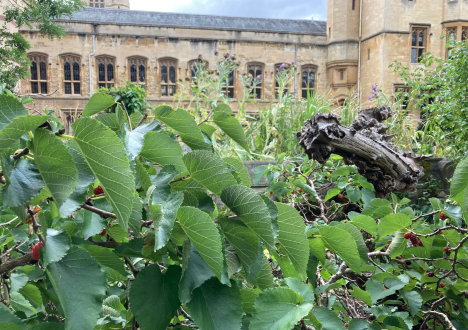
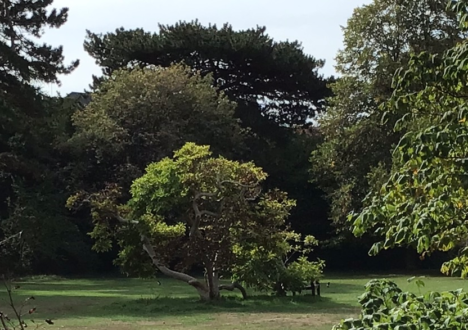
    Today I am heading north of the city to meet an old friend of the Oxford Sausage, the biologist and artist Emma Coleman Jones. She is drawing a tree in the gardens of St Hugh’s College, which she thinks might interest me. And though at first, I am surprised to learn that it is a Magnolia soulangeana, whose glorious goblet shaped blooms don’t come good until the spring, I soon discover that the tree is also known under a different name. The Armistice Tree. A gift from students over a hundred years ago in 1919 to mark the signing of the treaty that ended the First World War on the 11th November 1918. An event still memorialised at this time every year, and in truth a more than appropriate reason to visit.

  • A dazzle of dahlias

    I’m used at this time of year to the rusts and copper colours of autumn, but here was something much brighter and more showy. What I can only describe as a dazzle, a delight, a drama, the best collective nouns I can dream up for what are surely the crown jewels of October’s flowers, dahlias. 

  • A walk along Britain’s oldest road

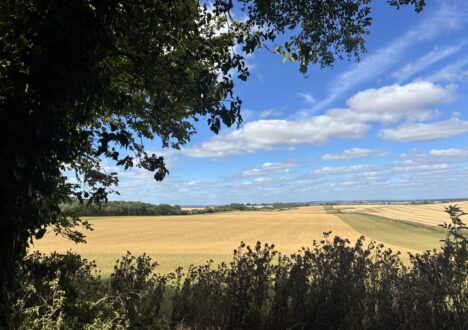
    On one of the last of this year’s long summer days, I accept an invitation from my friend Gina to take a walk along the Ridgeway, also known as the oldest road in Britain. She had discovered that she could use her free pass on the bus to London as far as Lewknor, a small Oxfordshire village at the foot of the Chiltern Hills, and a stone’s throw from the ancient path trodden for over 5,000 years by generations of our ancestors.

  • The gardeners of Cripley Meadow

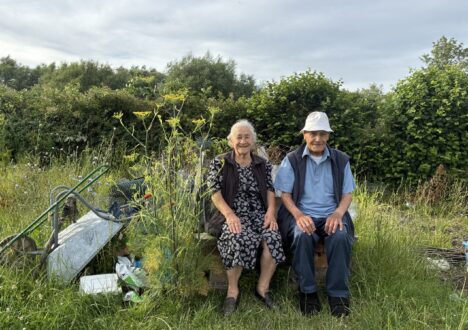
    Arriving in England from Southern Italy in 1960 to take up positions in domestic service, they were always going to grow their own – it was what you did back home. And over the years, they have cultivated everything from peas, parsnips, and pumpkins to chicory, chard, carrots and cucumbers, beetroot, borlotti beans and purple sprouting broccoli. They may no longer have the bend in their bodies to put in the hours they once did, but with no garden at home this is still their favourite spot, where they like to come to get out of the house. The place in which they have produced such abundance is where they feel most happy. 

  • Bewitched by the bluebells of Bagley Wood

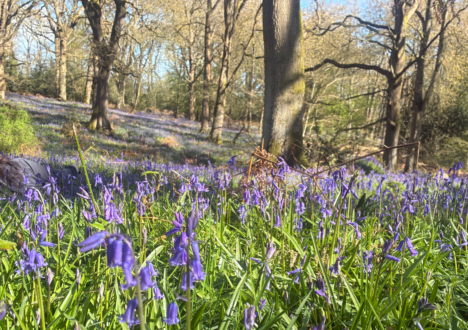
    For although there is a hint of rain as we set off early one morning last week, the sky is as blue as the flowers we have ventured out south of Oxford to see. For this is bluebell time. Britain’s favourite flower.  And according to Bea, the best place to experience its full beauty is at Bagley Wood. The time of year that the 568 acres of ancient woodland rolls out the blue carpet as if in readiness for a royal arrival.

  • A snake’s head spectacular at Addison’s Walk

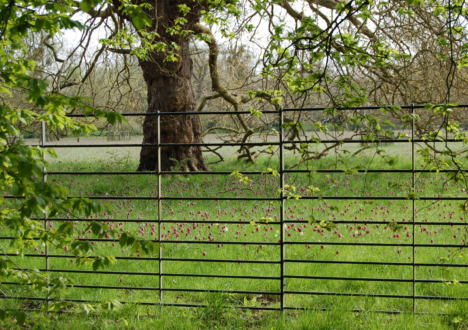
    At exactly this time last year I wrote on these pages about my outing to Iffley Meadows in search of Oxfordshire’s county flower, the snake’s head fritillary. I’d been informed that this was one of the few places close to the city where one could see in any numbers these delicate plum-coloured bells with their distinctive reptilian markings. And although I had been rewarded by the sight of a smattering of what have affectionately been called by descriptive names like ‘chequered lily’, ‘frog cup’, or ‘chess flower’ it was not the carpet, the swathes, the spectacle I had been expecting.  For that, I was told later with a nod and a wink by those in the know, I must go to Addison’s Walk, a one mile raised pathway that circles an ancient island water meadow between tributaries of the River Cherwell in the grounds of Magdalen College.

  • Grinling Gibbons in Oxford

    For so detailed and realistic are the flowers, fruits and foliage carved around the border that they seem as if they are still sprouting and suffused with life, so rounded and realistic that you might feel inclined to reach out and pluck them for the table.

  • Springtime at St Sepulchre’s

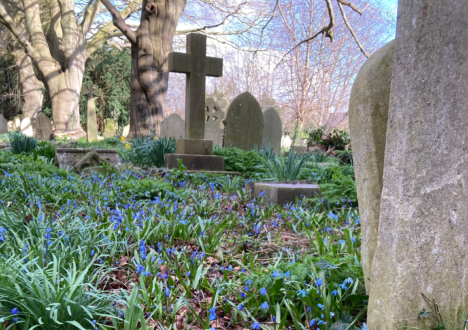
    A bright sunny day this week found me heading up Walton Street to St Sepulchre’s cemetery. Sandwiched between a Londis convenience store – with its mops, brushes and buckets of…

  • 100 years at Hill End

    This is Hill End Camp, 67 acres of unspoiled countryside four miles west of Oxford, protected by deed of trust for the outdoor education of children. And it is here that I am heading today, 100 years after the first cohort of infants from West Oxford Elementary School arrived by charabanc back in 1926. A pioneering project that championed a belief in the physical and phsycological benefits of being in the ‘great outdoors’, of immersing yourself in nature. And I am delighted to say that it is still going strong.