
In the summer of 1847, Frank Buckland attended a party held by the British Association for the Advancement of Science at Oxford’s Botanic Garden, a stone’s throw from where he was studying at Christ Church. He was accompanied by his guest Tiglath Pileser, Tig to his friends. Dressed in the student attire of cap and gown, Tig on being introduced to many of the illustrious attendees was seen to become a little over affectionate, taking their hands in his in order that he might suck on their fingers. After which he emitted what could only be described as a satisfied growl. A little disconcerting perhaps but not at all surprising when you consider that Tiglath Pileser was a young bear. A pet that Buckland kept in his college rooms on Fell’s Buildings along with a menagerie of other exotic animals, snakes, marmots, chameleons and the like. A scientist with a fascination for the weird, Frank also possessed two beer drinking monkeys called Jacko and Judy, a jackal with a blood curdling scream and an eagle that regularly crashed the cathedral’s morning matins.
Not long after, the college head, Dean Gaisford had had enough. Buckland was told either he or the Bear must go. So Tig was sent to Islip, a pretty village seven miles north of Oxford, where the River Cherwell meets the River Ray. He was to live with Frank’s father William Buckland who had recently taken possession of The Old Rectory, a living that went with his new post as Dean of Westminster. The eagle and the jackal had already taken up residence. But then William as I was to discover when I went to visit his old haunts, was no stranger to unusual animals.
Alighting from the short train journey between Oxford and Islip, I make my way up to The Red Lion, one of only two coaching inns still left in the village from the many that once plied their trade when this was the main stopover for travellers between London and Worcester. Passing by the village hall and shop I soon learn that Edward the Confessor is a big name around here. For this is where the last King of Wessex was born in 1005, the man later responsible for building Westminster Abbey, to which he endowed both the lands of his birthplace and the living of the little church of St Nicholas. But Edward was not the purpose of my trip. I was here to discover more about the celebrated eccentric, Frank’s old man, William Buckland. For it is in Islip that he resided for the last 10 years of his life and where he is buried with his wife Mary. And I was delighted that local resident Professor Jim Kennedy had agreed to help me out.
Jim as it turns out could not have been a more appropriate guide.
For like Buckland, who was awarded Oxford’s first Readership in Geology in 1818, Jim is also an award-winning Oxford geologist. He is a former Director of Oxford’s Museum of Natural History, the very place that holds much of Buckland’s collections of papers, letters, drawings and specimens. There on display today is Buckland’s most famous find, the fossilised remains of the right lower jawbone of what we now know to be a carnivorous dinosaur living in the Middle Jurassic period about 168 million years ago. Naming it Megalosaurus, or ‘giant lizard’ his was the first detailed description of a dinosaur discovery. Found in Stonesfield quarry, not far from where we are standing, alongside other extraordinary pieces, including the wing bone of a pterosaur, the egg of a prehistoric reptile and the fin spine of an extinct shark.
First stop The Old Rectory, Buckland’s country home while he was Dean of Westminster. The front is largely hidden behind a high stone wall, but he has a blue plaque with his name on it by the back gate through which you can see the impressive size of the building and its gardens. It seems family life here continued much as it had while he held rooms in Tom Quad as Canon of Christ Church. Willliam and Mary, herself an experienced illustrator with a keen interest in natural history (indeed she was responsible for much of the analytical notes that accompanied her husband’s work) encouraged their children to be curious about the amazing variety of life on earth. It was not a tidy household. Drawing room sideboards groaned under the weight of ammonites, pickled animals in jars, shells, and lumps of lava. Candlesticks were carved out of the bones of ancient reptiles. He even had a table made from 64 sectioned coprolites (that’s fossilised poo to you and me, in this case fish excrement). William and Mary had nine children (four died young and are buried in Christ Church Cathedral) for whom they kept innumerable pets including jackdaws, frogs, guinea pigs and a pony onto which they would all clamber and career around the house. Half dead crocodiles littered the floor. The arrival of Tig into this kind of domestic chaos can hardly have caused a stir. Frank, who could identify the vertebrae of an ichthyosaurus by the age of four, was just carrying on the family tradition.
The dinner table was also a culinary minefield. For Buckland had set himself the task of tasting ‘every animal on earth’. Zoophagy, or ‘eating a zoo’, was he claimed all part of his scientific studies. Everything was fair game. From porpoise to porcupine, hyena to hedgehog. His favourite snack was mice on toast. His worst a mole, which he declared to be ‘perfectly horrible’, though the blue bottle fly came a close second. Frank continued the habits of his father, feasting on roasted giraffe and boiled elephant trunk. Once he dug up a dead panther from the local zoo to see what it tasted like. As one might expect, it was ‘not very good.’
The locals it seems were happy to put up with this unusual behaviour. For as soon as the Bucklands arrived in Islip they brought their customary enthusiastic energy to village life. Behind the beautiful old stone wall of the tithe barn at the back of the Rectory, scarred but still standing is where William and Mary set up a youth club. Mary taught geography to the younger children by using home-made inflated paper globes. And at night school she taught the older ones how to use microscopes and write letters. William helped the villagers drain land to build allotments. Encouraging the use of manure to increase the yield, he was so excited when he produced a particularly sizable turnip, he insisted it be exhibited in the Ashmolean Museum.
What the locals weren’t so keen on was Tig.
We were returning from a short detour down to the river. Jim had wanted to show me the place where flint tools from a Mesolithic campsite were discovered. It is humbling to walk through these fields, still littered with lumps of limestone, the very stuff in which Buckland had discovered the fossilised remains of the flying reptiles and giant beasts that inhabited this place many millions of years ago. Our route back takes us along Mill Street, the pretty honey-coloured houses built from the same iconic Cotswold stone; there were at one time over 20 quarries between Islip and Woodeaton. This is the street, Jim tells me, down which it is thought that Buckland’s bear liked to wander.
It was to be the creature’s undoing. Having once escaped from the Rectory around the corner, Tig had discovered that the grocer kept a plentiful supply of sweets. After which he made regular raids on the shop in search of the sweet stuff, terrifying the shopkeeper who took to bolting herself into a back room as soon as his hirsute figure appeared at the door. Buckland was forced to send Tig away to the zoo. Where he died soon after.
I’d like to say that it was a happy ending for the rest of them. But it was not so. Jacko the monkey became a liability, pulling on people’s hair, defecating in public spaces, shredding any garment that came his way. When he eventually expired Frank had him skinned and made into a table cloth. Frank himself died relatively young in his early 50’s of severe respiratory problems. As for William and Mary, we end the tour at their graveside. In the churchyard of St Nicholas. William had left instructions that he be buried overlooking the hills and countryside he knew so well. Only not all of William is there. His corpse is missing its head. In his final years the older Buckland had suffered from a mystery illness. So convinced was Frank that this had been caused by an injury incurred to the back of his head after a fall from a carriage, that he had insisted that William’s skull be bequeathed in the interests of science to the Royal College of Surgeons. Where it remains.
Even in death, the Bucklands proved somewhat unconventional. They don’t make them like that anymore.
Special thanks to Professor Jim Kennedy for his illuminating tour and indispensable research materials.
Main picture: Life at home with William, Mary and Frank (under the table) Buckland, silhouette made by Auguste Edouart 1829
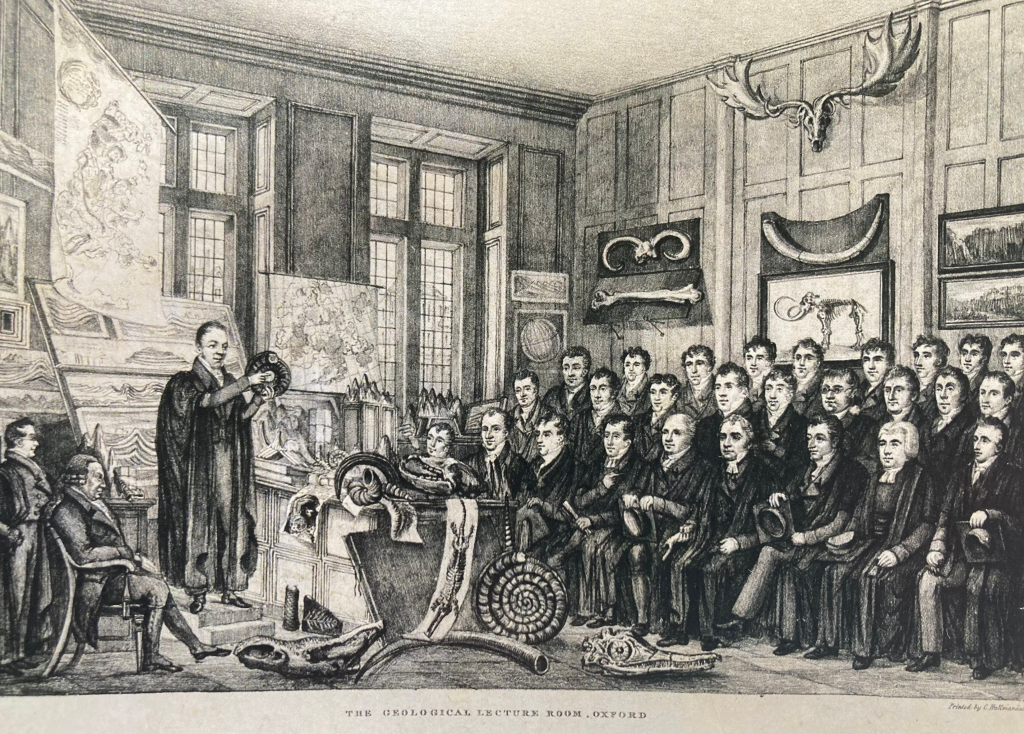
Lithograph by Nathaniel Whitlock 1823
William Buckland in the Geological Lecture Room, Oxford. The antlers he has mounted on the panelled wall can now be found in the Museum of Natural History (seen below).

Where Professor Kennedy was once Director. And where most of Buckland’s papers, drawings and specimens are held.

The bust of Buckland on display at the eastern end of the Museum court.
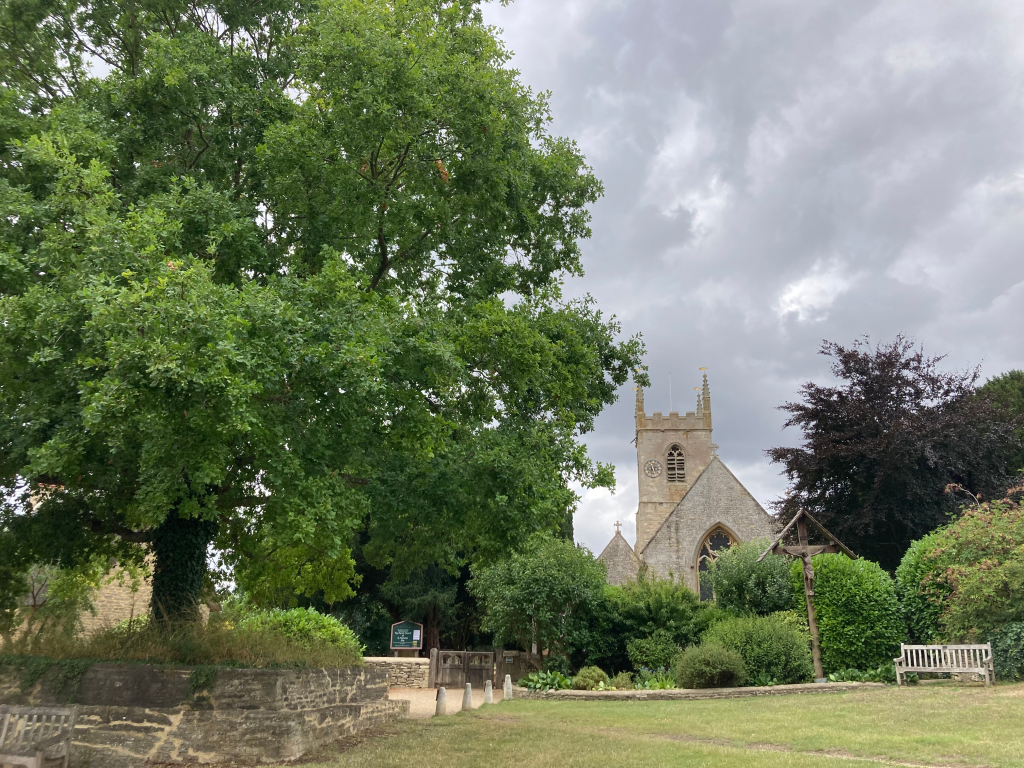
The Church of St Nicholas in Islip where William was Rector from 1845 until his death in 1856.
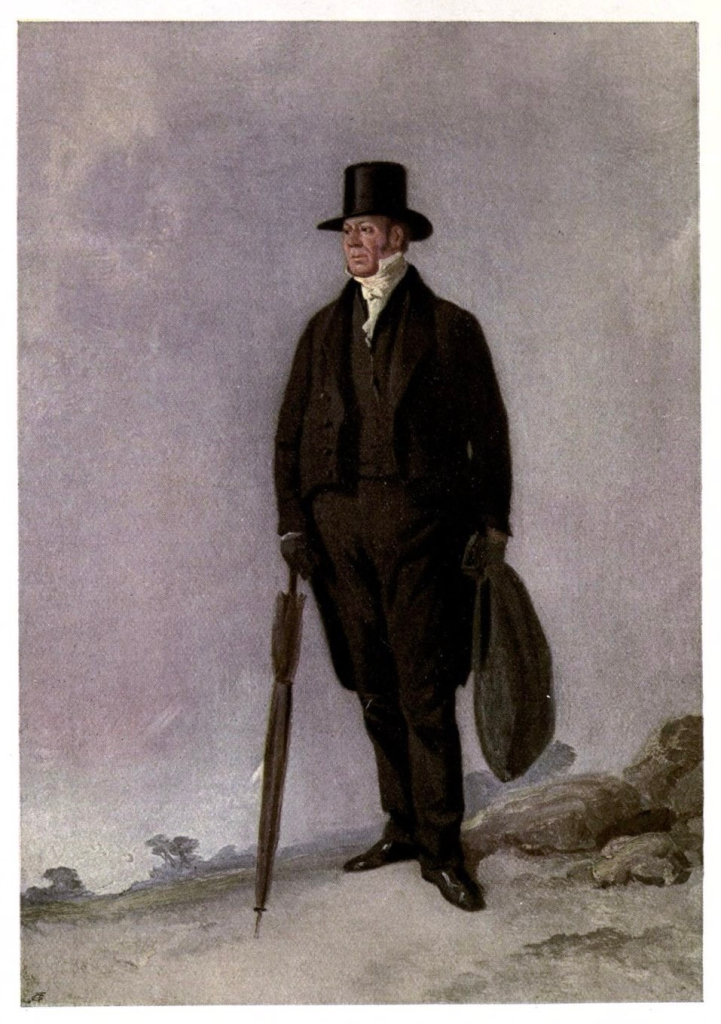
Portrait of William Buckland with his famous collecting bag by Richard Ansdell ©The Geological Society
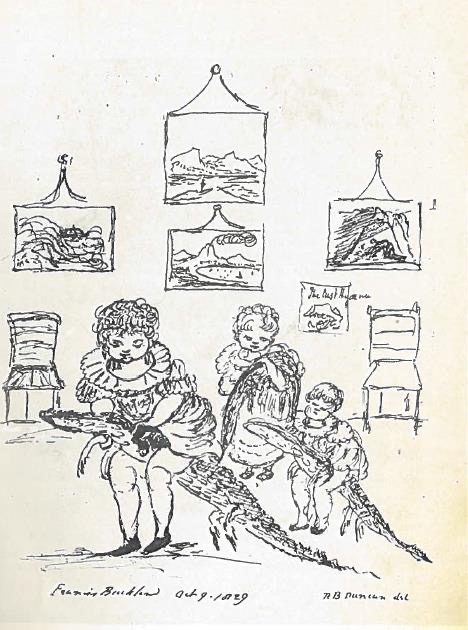
Frank Buckland and two of his siblings riding crocodiles like hobby horses at their home in Oxford. Sketch by Philip Duncan.
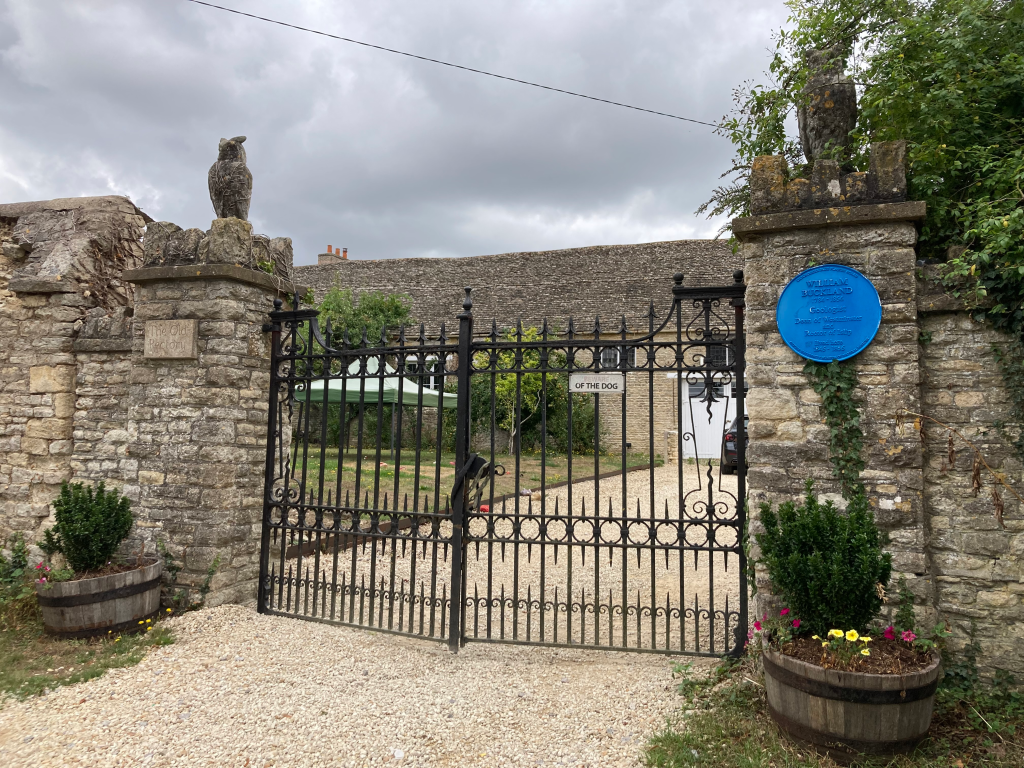
The back gates to The Old Rectory in Islip with William Buckland’s blue plaque. It became a private house when it was sold by the Church in 1918.
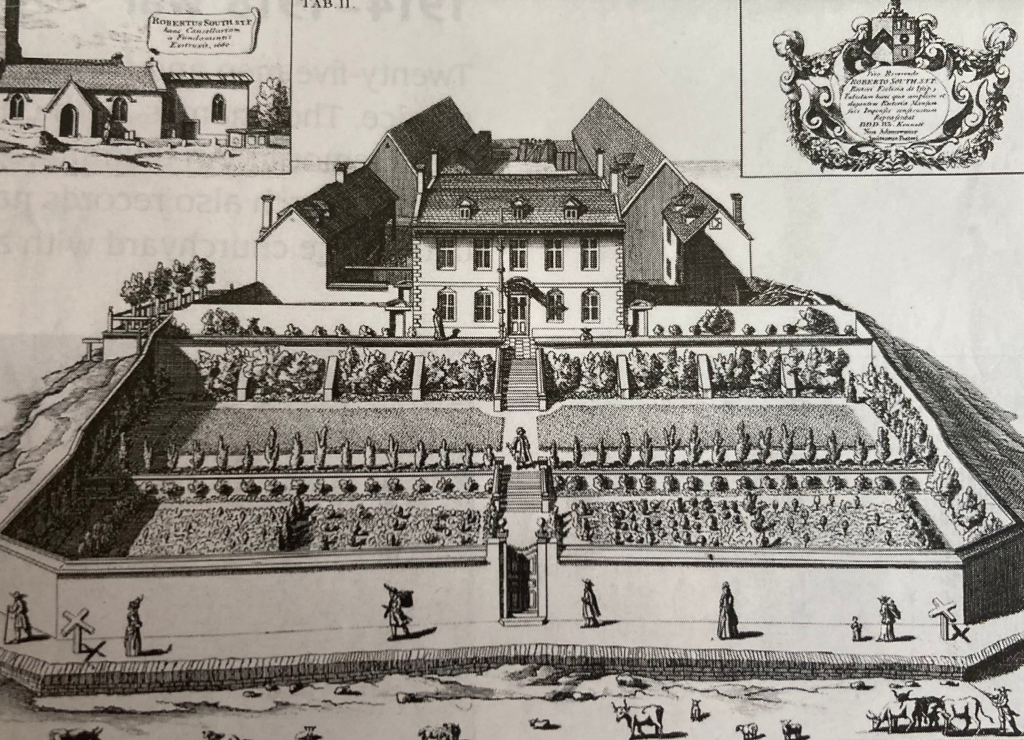
As it looked in 1690 when it was first built by Robert South, the then Rector of Islip. The entrance would when the Bucklands lived here have been through the south wall and up through the formal garden. William’s daughter records that after dinner at the Old Red Lion guests would retire to the Rectory terrace for “coffee, fruit and frolic.”
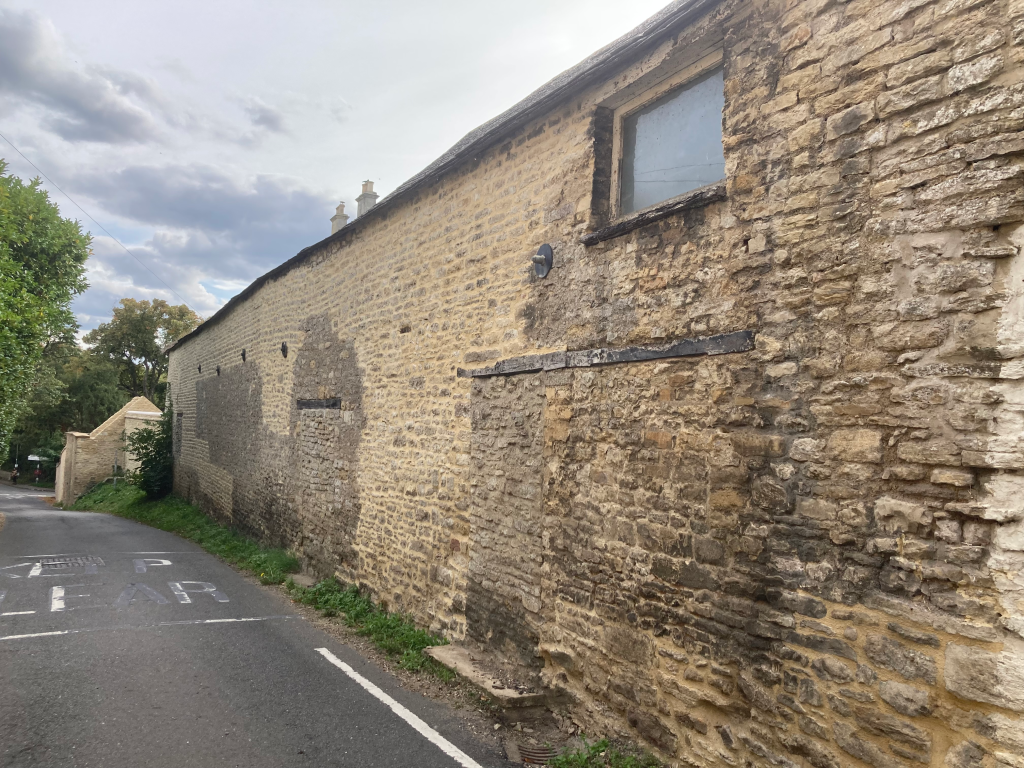
The long wall of the old tithe barn. Also built in 1690 it was originally used to store the tithes, paid by villagers in support of the church. It was used by the Bucklands as a youth club.
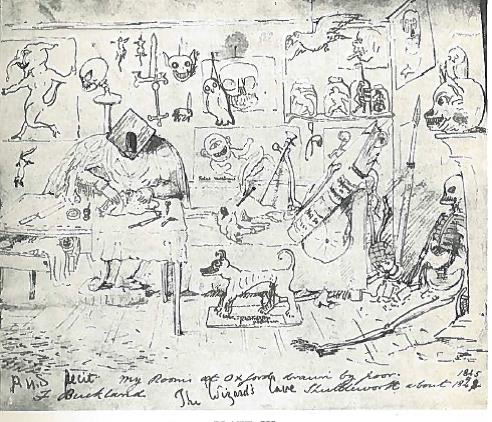
The Wizard’s Cave by Philip Shuttleworth. Frank Buckland’s room at Oxford. © The Royal College of Surgeons
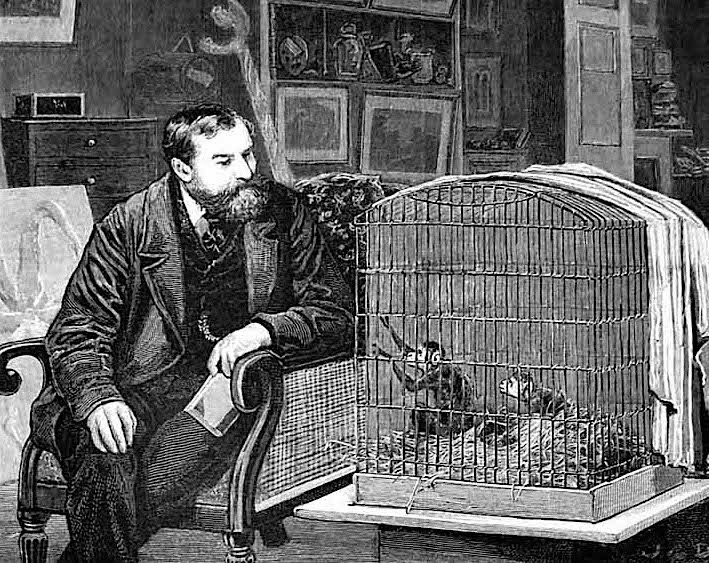
Frank with his two pet monkeys Jacko and Judy.
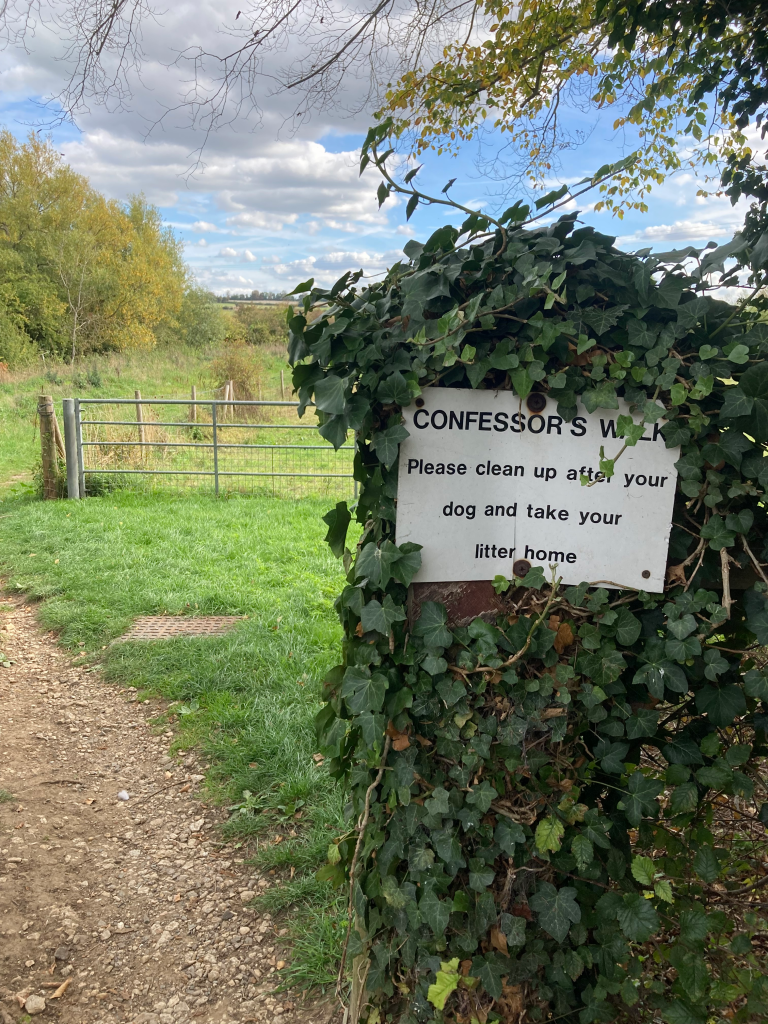
The path to where the River Ray meets the River Cherwell. Many millions of years ago this would have been a lush landscape of coves and inlets inhabited by giant reptiles and huge flying creatures.
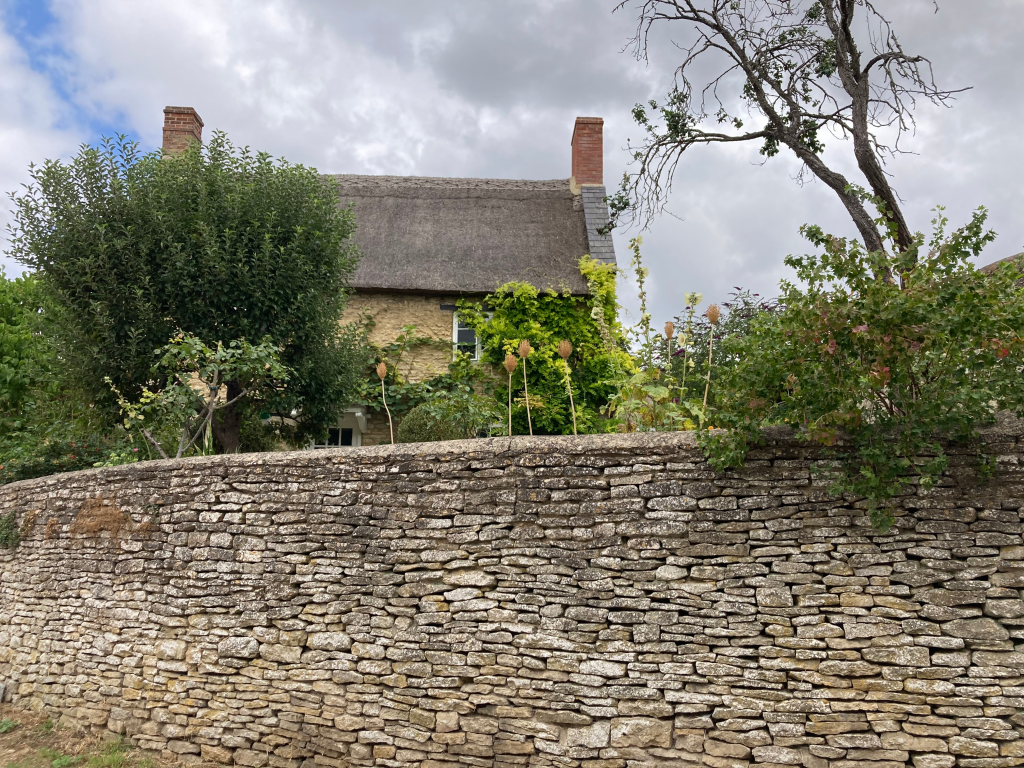
Jim identifies many different categories of stone as we wander through the village. This wall is made from Forest Marble, formed during the late Jurassic period over 160 million years ago. This is the type of fossil rich stone found at Kirtlington Quarry nearby.
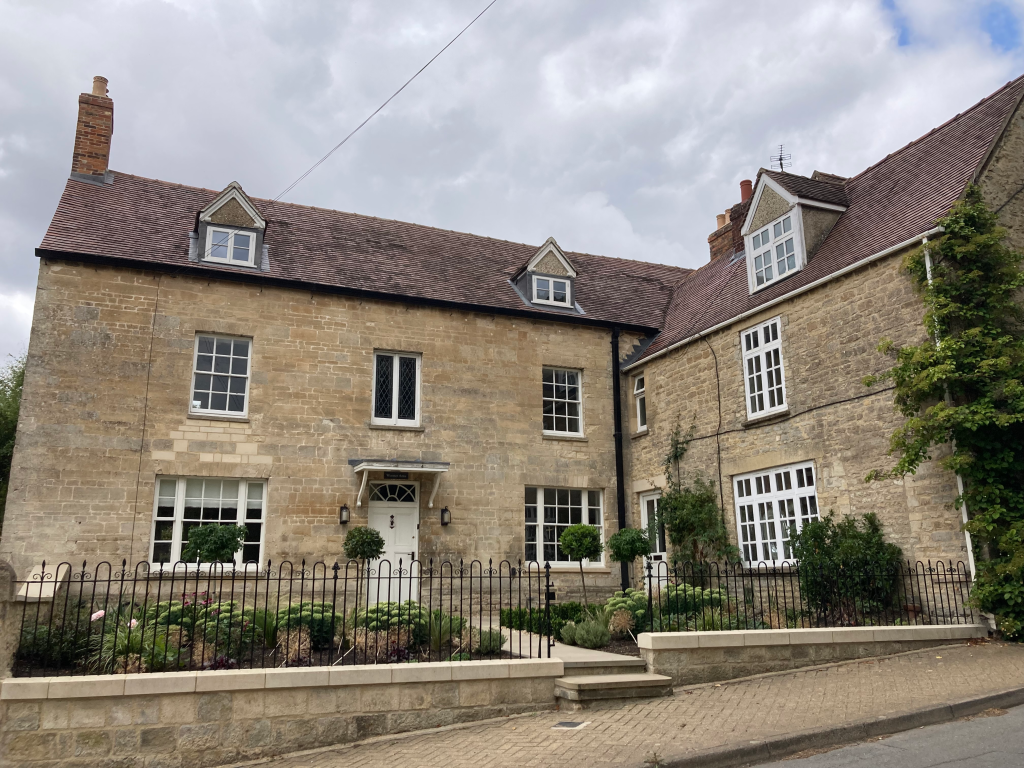
The Wooster Arms, once one of the many coaching inns in the village, is now a private residence.
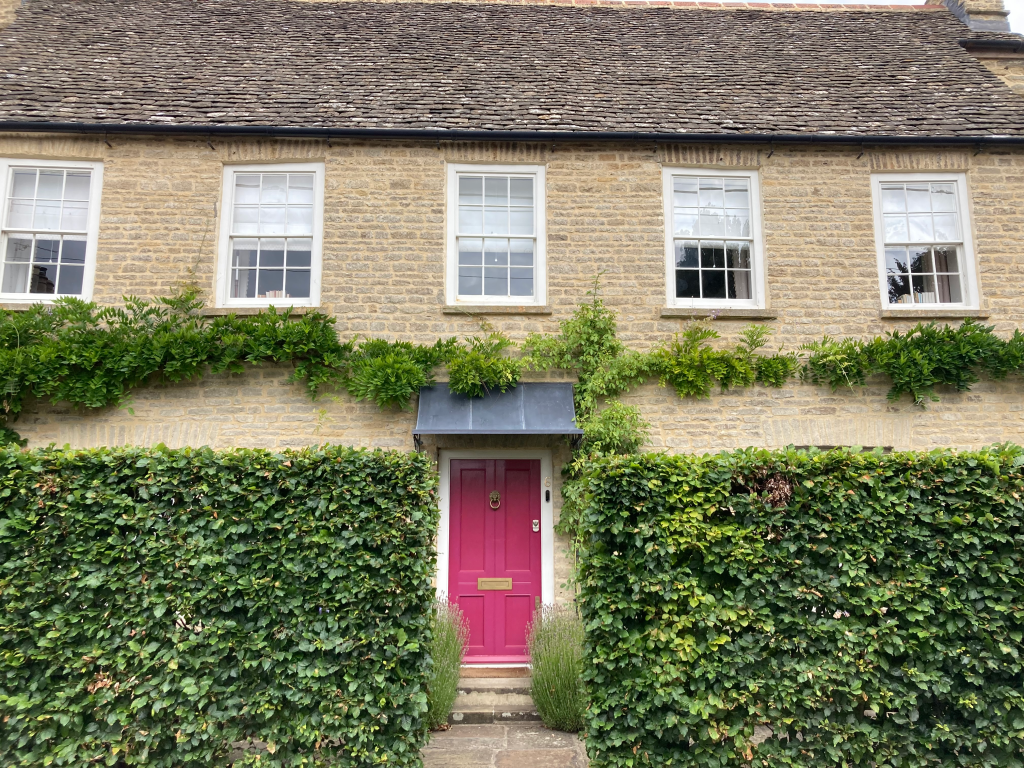
A house on Mill Street where even the slates are made from local stone. Tiglath Pilaser may well have ambled past here in search of sweet stuff.
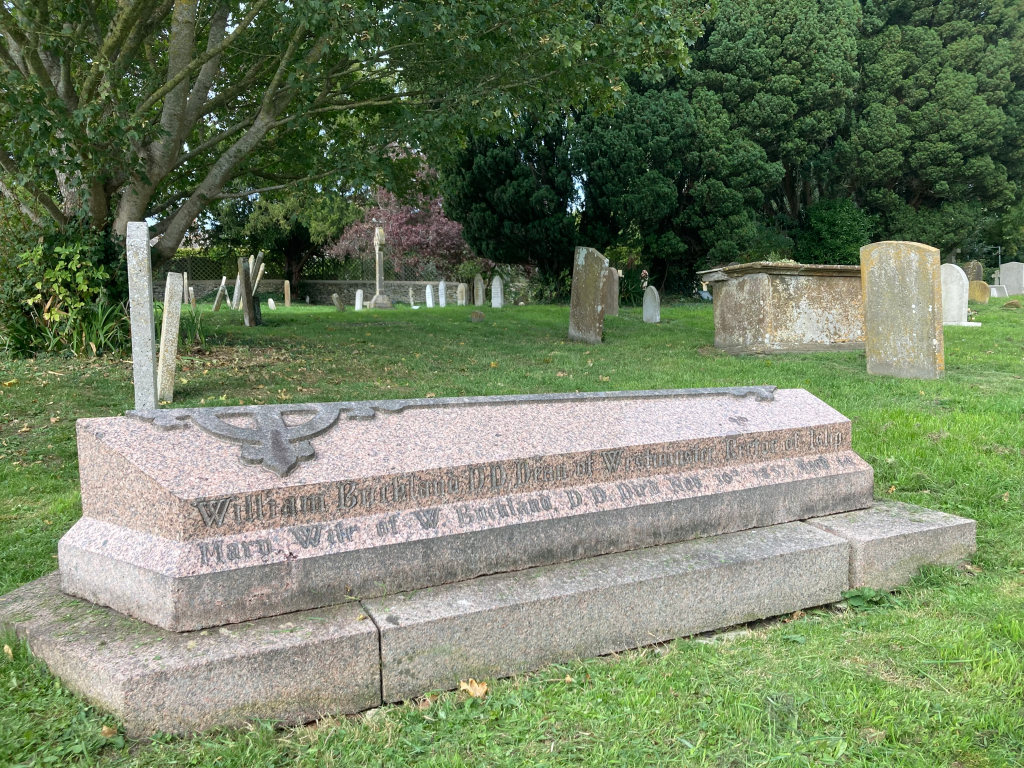
William and Mary’s final resting place. William had left instructions that he should be buried in local limestone deposits and that his head was to rest on one of Britain’s oldest rocks Aberdeen granite. His head, however, is not there.
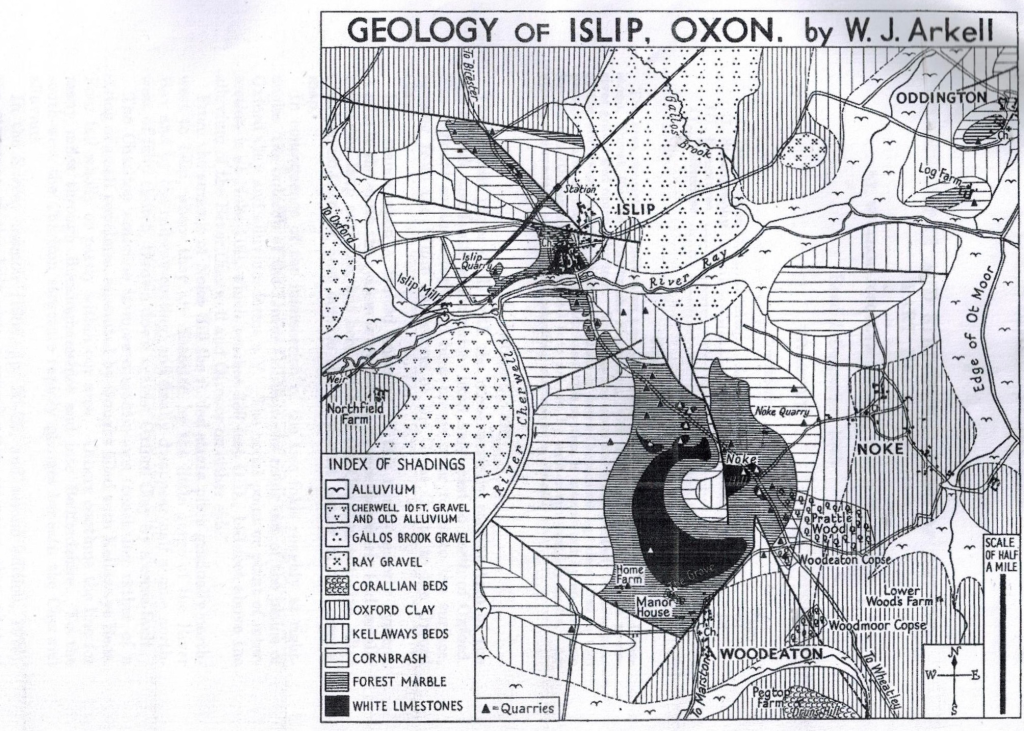
The geology of Islip
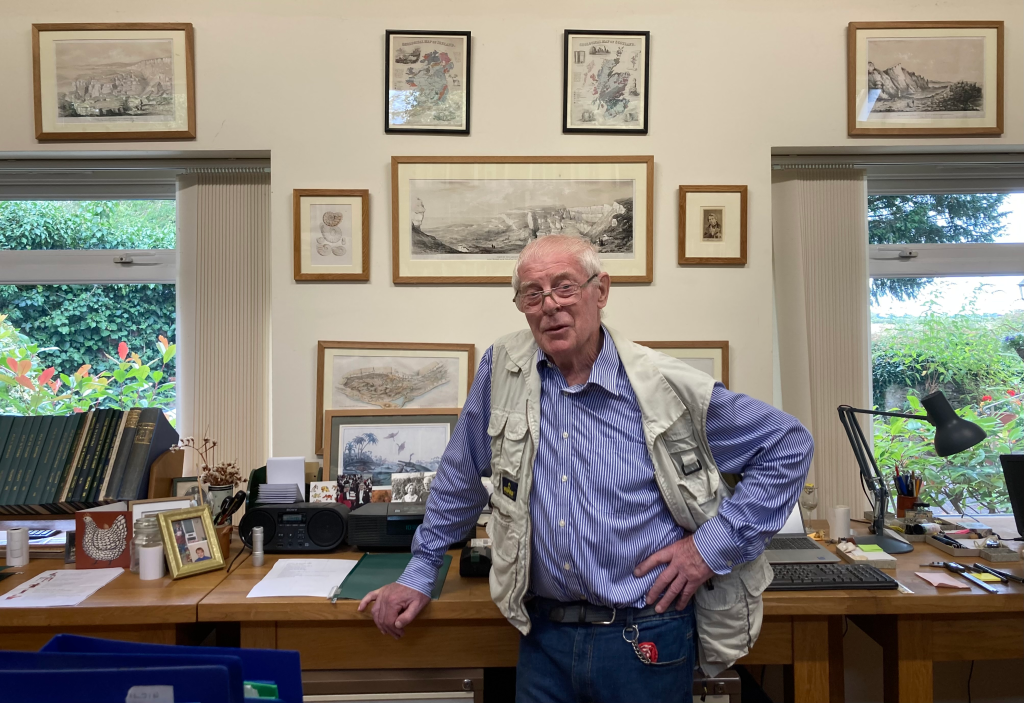
Professor Jim Kennedy at home in Islip with his own collection of geological drawings, books, maps and specimens. No live animals that I could detect however.
You might also like to read The Heart in a Jar
6 Comments
Join the discussion and tell us your opinion.
Fabulous piece! Loved it. What a story. I gather that William Buckland also ate the mummified heart of Louis XIV, can this be true?
Yes he did. Here’s the story – also told in my blog ‘I left my heart in a jar in St Johns’ link above.
One summer evening in 1848 William Buckland, the celebrated Oxford geologist and palaeontologist had been invited to dine by his friend Lord Harcourt at his country estate in Nuneham Courtenay. As the meal was reaching its end, the host pulled out a silver locket in which was contained the mummified heart of Louis XIV, the Sun King himself. It was his party trick. A relic brought out as a curiosity to entertain his guests. He was not prepared however for what was to happen next. For when the shrivelled lump the size of a walnut was placed before Buckland, instead of passing it to his neighbour, he popped it in his mouth and swallowed it down whole. He’d have won ‘I’m a Celebrity…’ hands down.
Also a note from Professor Jim Kennedy.
“The bits of Buckland that are not buried with him are is his cervical vertebrae and the base of his skull, which was, and perhaps still is on displlay with the tubercular specimens in the Museum of the Royal College of Surgeons. It is illustrated on p. 104 of Richard Girling’s 2016 The Man who ate the Zoo.”
I fear that the Red Lion is no longer
Oh no!
Actually I visited after I took that walk with Jim and saw a For Sale sign. Only one pub left then!
[…] Read all about Islip’s famous personalities here. […]