Midsummer meetings on Oxford benchmarks
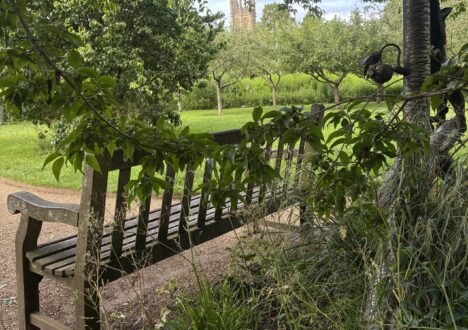
Benches do that to people. They are meeting points, places to come together, to converse, to commune. They serve as special seats to rest and remember.
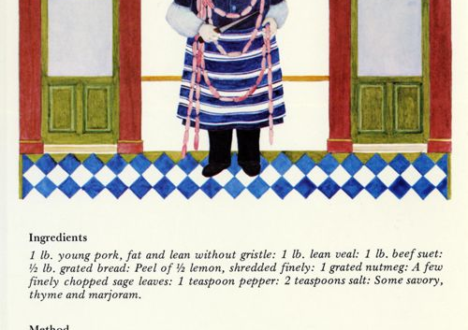
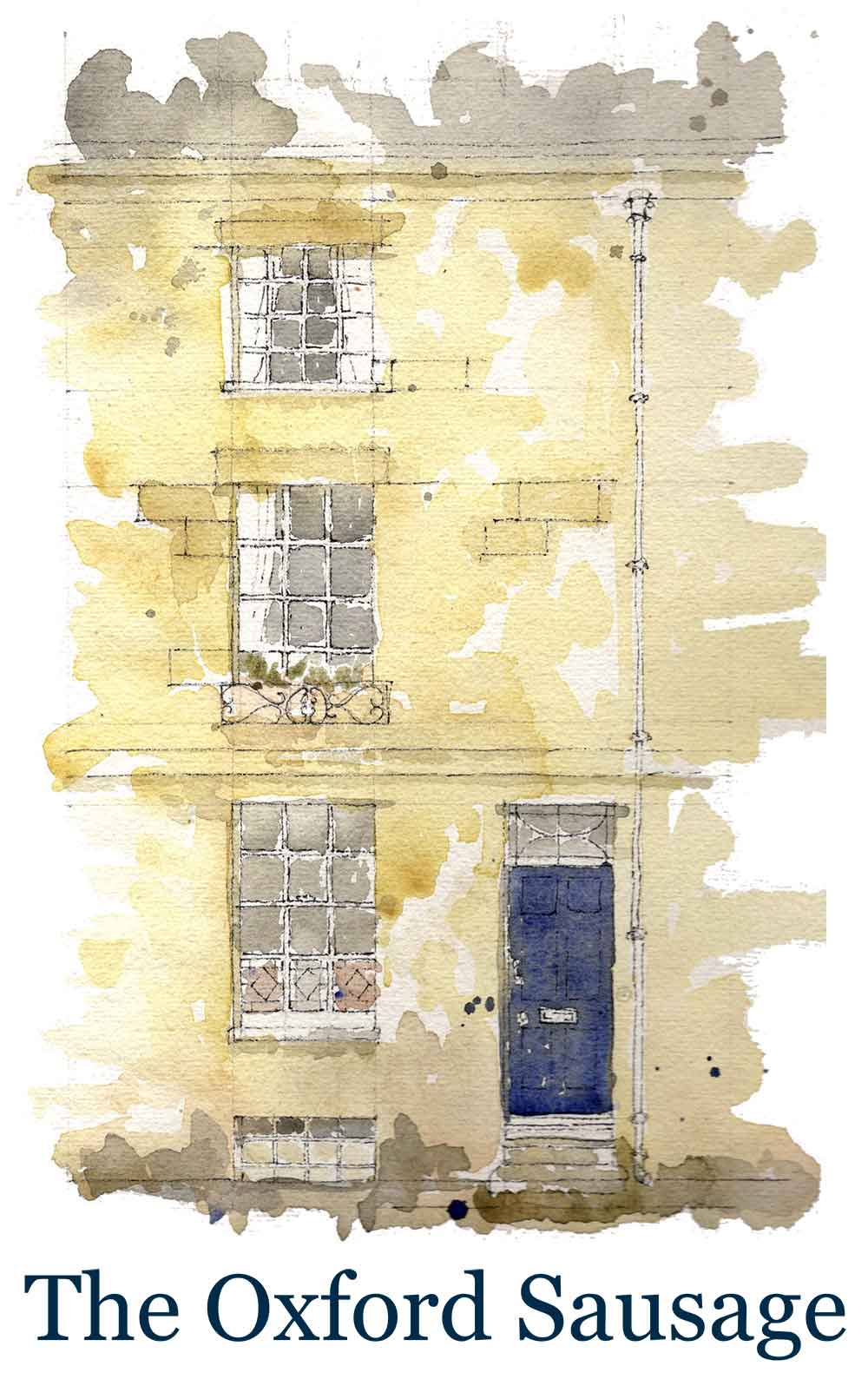
I was delighted to discover the above recipe for Oxford Sausages from 1883. It is taken from the Victorian Recipe Book ‘Consult Me on How to Cook’, and more recently illustrated by Mollie Picken. The butcher looks a jolly fellow in his bowler hat, and blue stripey apron, garlands of sausages strung around his neck. The ingredients are pretty much the same as specified by the famous Mrs Beaton in her tome of ‘Household Management’ published in 1861 and announced as her ‘ideal sausage’. For this was the heyday of the Oxford Sausage. A time when an Oxford Alderman when asked in a Parliamentary committee whether there was anything manufactured in his city, had answered, “yes, parsons and sausages.”
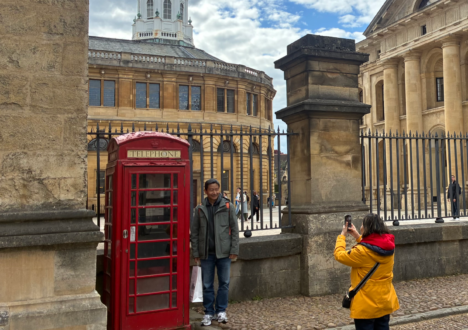
Nestled into a corner on Catte Street across the way from Oxford’s famous ‘Bridge of Sighs’, stands an old red telephone box. It is in a sorry state. The door is locked. The paint peeling. Its contents long since carted away. Most people pass it by without so much as a glance. Occasionally a tourist will stop to take a selfie, for they have read in the guidebooks that this is a monument to British telecommunications history, that the design has iconic status. But for me, standing here looking at its sad empty shell, this cherry-coloured cubicle with its distinctive domed roof brings back memories.
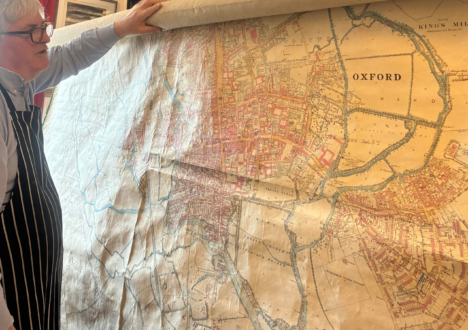
For Julian is an antiquary, that is a person who studies the past through looking at historical artefacts. And it is his lifetime’s collection of the stuff (and still counting), that I am delighted to have been invited to see today.
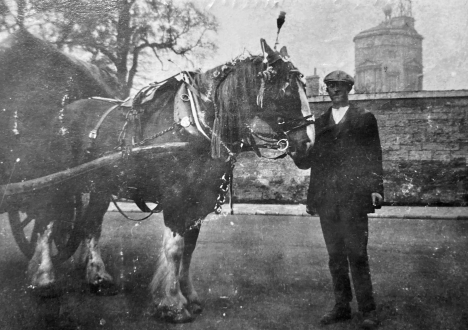
Albert Ernest Smith was born in 1903 and started work aged 13 for what was then known by the Orwellian title of The Cleansing Department, part of Oxford Corporation (now Oxford City Council). His first job was as a dustman, later driving a small van from which he serviced the central Oxford public lavatories.
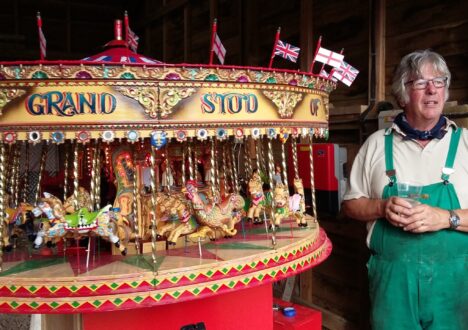
I was delighted to be invited to meet Chris Raworth at his workshop in Middle Barton, catching him just after he had assembled his set of gallopers. A tall man with a shock of white hair he can barely contain his excitement as he opens the door into a long garage lined with benches overflowing with mechanical parts and crammed with boxes painted with brightly coloured signwriting instantly recognisable as that of the fairground.
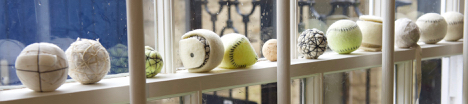
This was ‘real tennis’, played with a net that sags in the middle, on a funky inside court to a complicated but intriguing set of rules more akin to a game of ‘quidditch’ than that played on the lawns of Wimbledon. And although today I am heading to the one surviving court in the city, it seems the game is still alive and kicking.
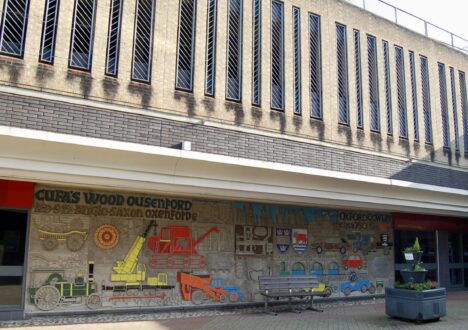
Firm believers in art made for public spaces, they were also keen that their work was accessible, sensory, tactile, carving the polysterene moulds by hand using household tools like potato peelers and nutmeg graters to produce a variety of concrete finishes.
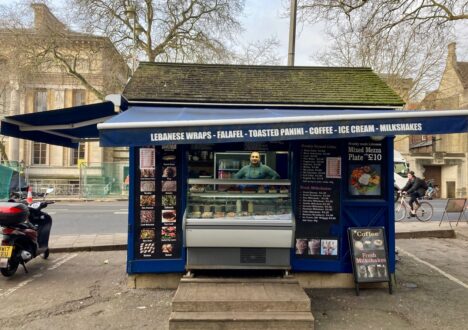
It’s extraordinary to see what is achieved in such a tight space – Masoud and his team navigating the area, taking orders, scooping, cutting, frying, filling, it’s like a tightly choreographed ballet.
What I hadn’t fully understood was this was to be an immersive Christmas experience. For Cordelia doesn’t do this season by halves. First, I am treated to a tour of her Christmas crib collection. She has 74 of them.