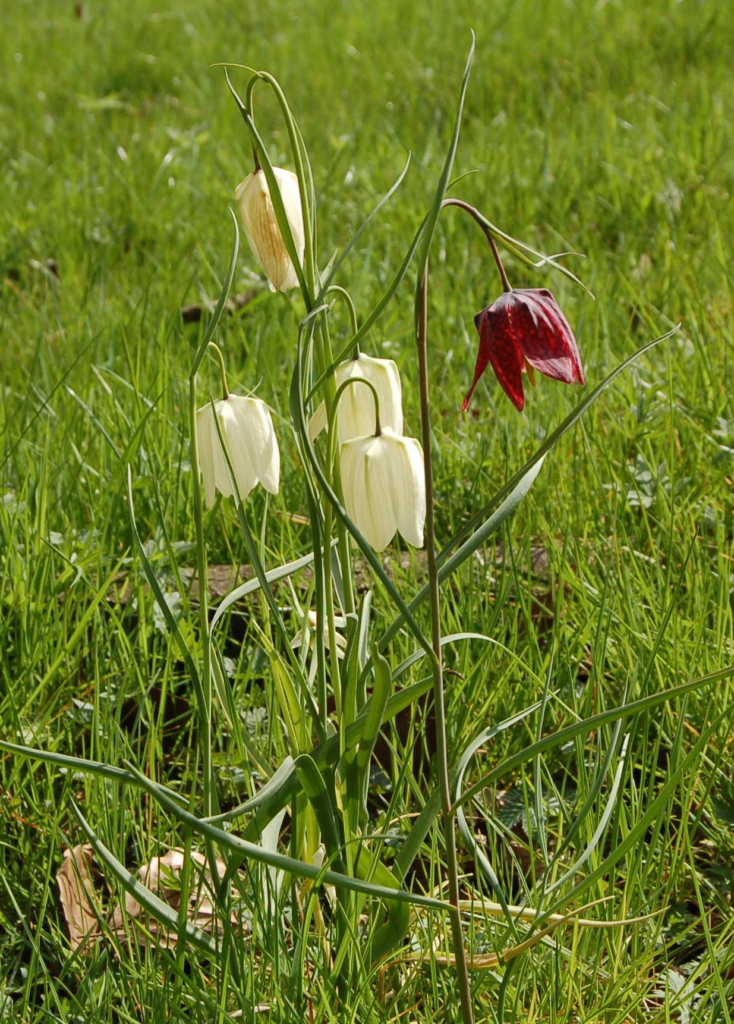
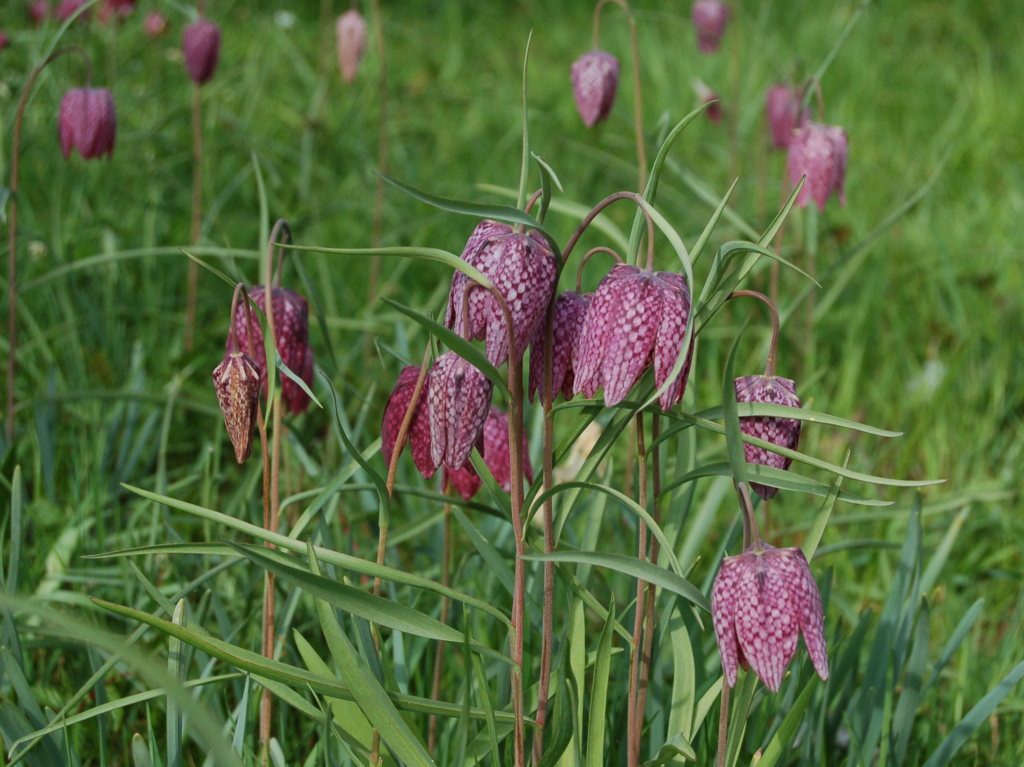
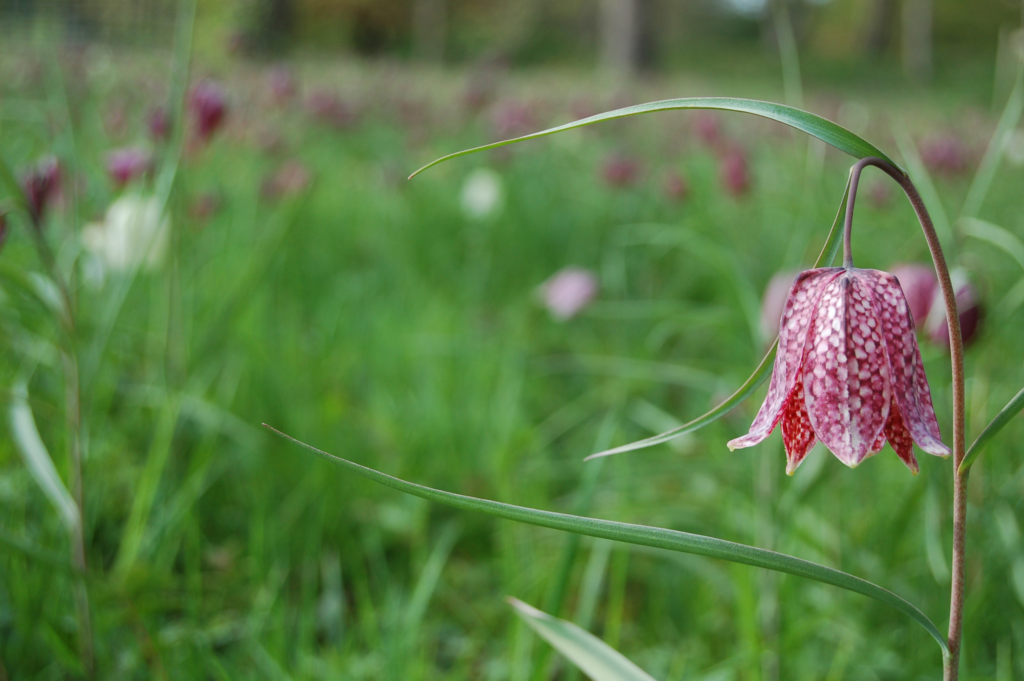
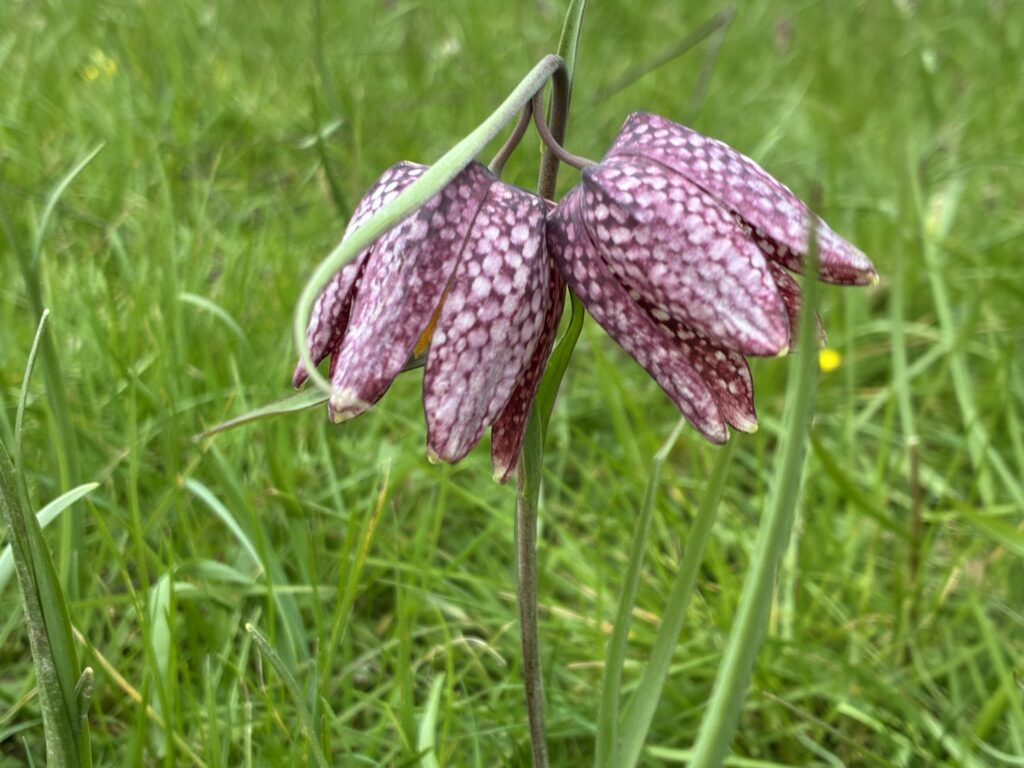
At exactly this time last year I wrote on these pages about my outing to Iffley Meadows in search of Oxfordshire’s county flower, the snake’s head fritillary. I’d been informed that this was one of the few places close to the city where one could see in any numbers these delicate plum-coloured bells with their distinctive reptilian markings. And although I had been rewarded by the sight of a gentle and very lovely smattering of what have affectionately been called by descriptive names like ‘chequered lily’, ‘frog cup’, or ‘chess flower’ it was not the carpet, the swathes, the spectacle I had been expecting. For that, I was told later with a nod and a wink by those in the know, I must go to Addison’s Walk, a one mile raised pathway that circles an ancient island water meadow between tributaries of the River Cherwell in the grounds of Magdalen College.
And so it is that a year later, here I am. And as a local resident, entry under the famous great tower is pleasingly free. Around the medieval cloisters framing a stripey square of freshly mown lawn and walls of perfectly trained wisteria weighty with buds I go. Out into the Palladian open space that hosts New Building and then through the grand gate that takes you over the bridge and Holywell Mill Stream to Addison’s Walk; named after Joseph Addison, poet, essayist and fellow of this college who liked to stroll this way back in the early 18th century.
And who can blame him.
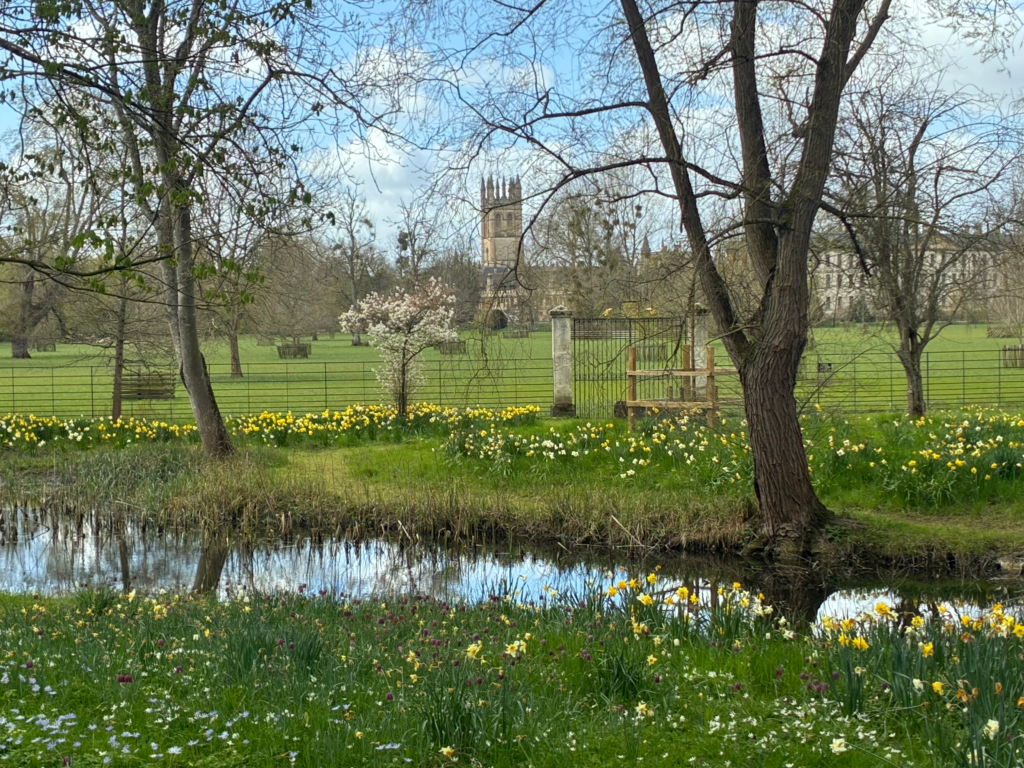
The wooded walkway is only a few hundred yards from what is now the busy, bus-filled High Street. And yet it is as if you are in the countryside. Age old fossil rich land where the bones of a hairy mammoth have been found, and where from more recent history fortifications remain from the civil war, the main southern defence for the Royalist city against the Roundheads. This week the daffodils may be past their best, but they’ve been replaced by sloping borders of blue and white anemones, primroses, and overhanging willow and lime trees clothed in new growth.
I am totally beguiled by the bucolic scene. On the left is the Grove, where the 42 Magdalen deer (the same number as the first intake of students back in the day) spend their winter months. At one time there were ostrich, emus and other exotic animals too. Now as well as the fallow deer, there are I am told by a friendly porter, otters, badgers, and plentiful birds and butterflies – I spotted my first yellow brimstone. And then, turning the corner past Holywell Mill House the magic truly begins.
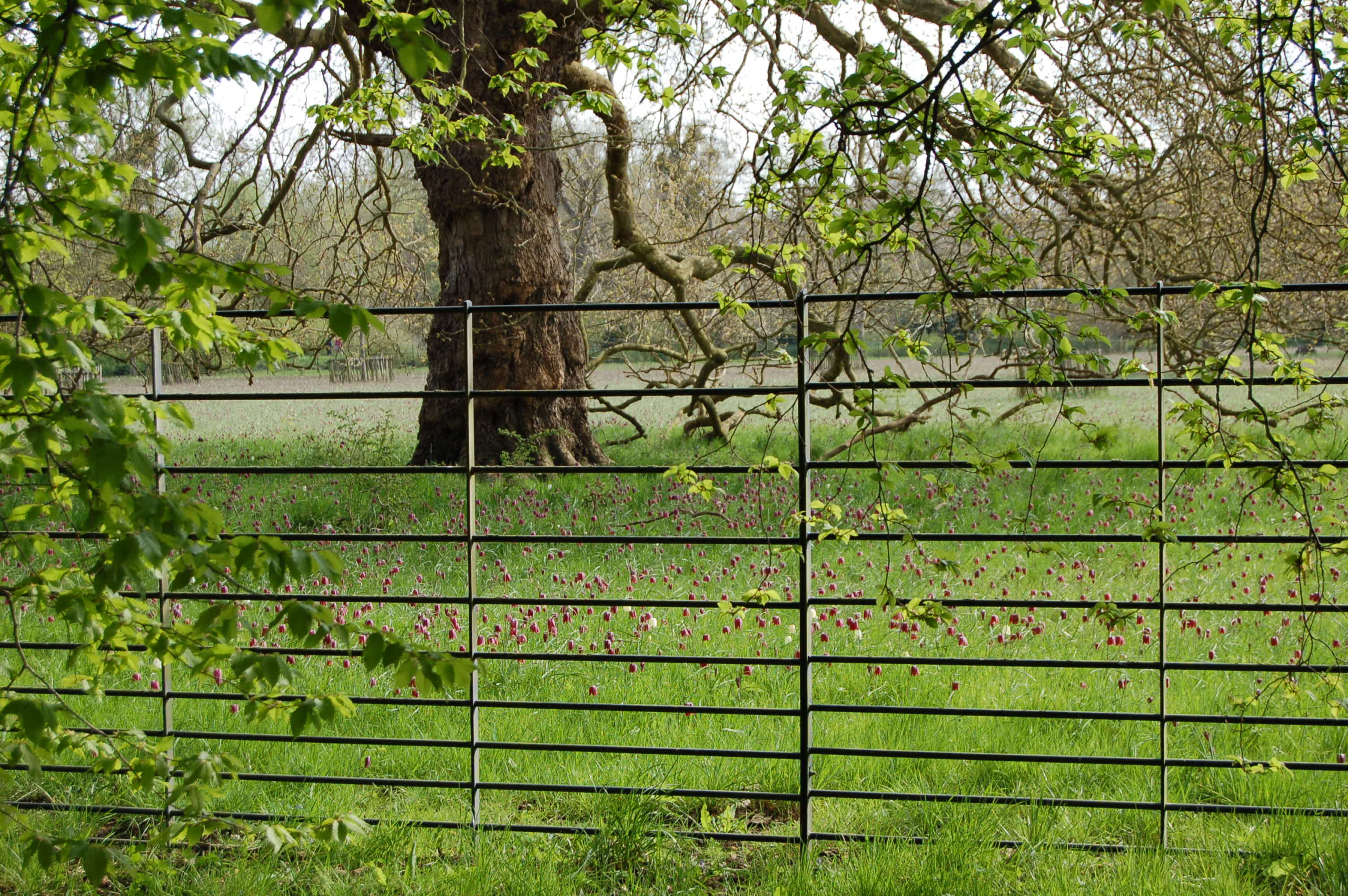
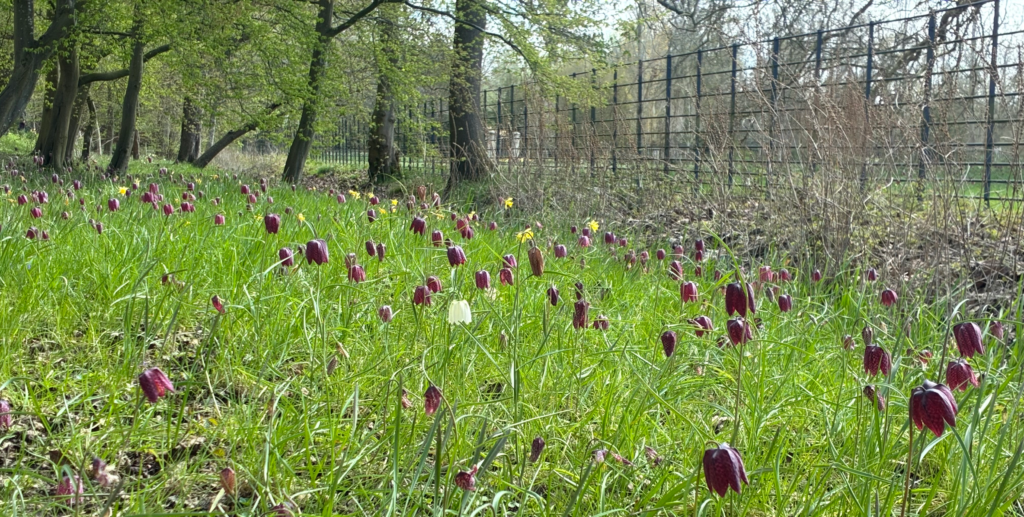
The path itself is elevated, so that when the River Cherwell floods, which it does regularly, it acts as a causeway standing high above what becomes a large circular expanse of water. Indeed in 1801 the place very nearly got turned into a giant boating lake. Thank goodness they couldn’t raise the cash. Because in the spring, what that garden designer Humphrey Repton described as a ‘low, damp meadow’ becomes a unique oasis for the hundreds and thousands of snake’s head fritillaries that greet me. Enclosed since the Middle Ages, untouched by fertiliser or plough, the grass cut only for hay in summer before the deer are let in to graze, this is the perfect environment for these shy, sensitive flora, heads bent and today bobbing in the light wind.
I come here on three successive days. And as the weather warms, so the show appears more spectacular. Great drifts of pixilated purple in the main meadow kept behind a protective fence (for the deer I suppose that come in later). These have over the years spread beyond the muddy ditch that surround it and all around on to the adjoining banks. On the east side there is a wooden bridge that takes you to an open space with a pretty, stone bench on which to admire the picture postcard setting. A breathtaking view across the meadow of tiny plum coloured fairy tutus with a few white ones mixed in, to the great tower beyond. And here if you are careful, it is possible to lie flat in the grass alongside them and sneak a peek up their skirts to see the yellow tongues tucked up inside, adding an extra ingredient to their snaky name.
There is some dispute as to whether the snake’s head fritillary is native to this country. Some say it was always here, growing along the floodplains that extended along the Rhine and through to the Thames before the North Sea opened up many moons ago. Others insist it was a Tudor Garden escapee, when imported bulbs from abroad were all the rage. Here at Magdalen, they might easily have flown across the road from the Botanic Garden. The nature writer Richard Mabey believes they may have been transplanted from another still large local colony not coincidentally owned by Magdalen College, in Ducklington. Here they hold an annual Fritillary Sunday (this year on Sunday April 19th) where you can walk amongst the flowers, remembering a time when they were so plentiful the train which ran alongside the fritillary meadow would slow to allow passengers to disembark and gather armfuls to sell at the markets in Oxford, Abingdon and Birmingham.
Vita Sackville-West describes our fritillary as ‘sulky dark’ and ‘a sinister little flower in the mournful colour of decay,’ hanging its head in sorrow at the time of Christ’s crucifixion – apt for this weekend.
I don’t agree at all. This may not have been the season when C.S Lewis took his now famous walk this way in 1931 with JRR Tolkien and Hugo Dyson during which he has the epiphany that leads to his conversion to Christianity. But I like to think, during his long engagement as a fellow and tutor at Magdalen College, he must have walked here on many occasions at this time of year. And wondered at these mottled marvels. Every year they return. Ever more profusely. A harbinger of hope in difficult times.
Hurrah to that.
Happy Easter everyone.
The Ashmolean Museum’s latest exhibition In Bloom, How plants changed our world, looks at the fascinating stories behind out most beloved blooms and how they arrived on our shores. Is open until August 16th 2026 – you can find more details here.
Press here to find out more about Ducklington’s Fritillary Sunday
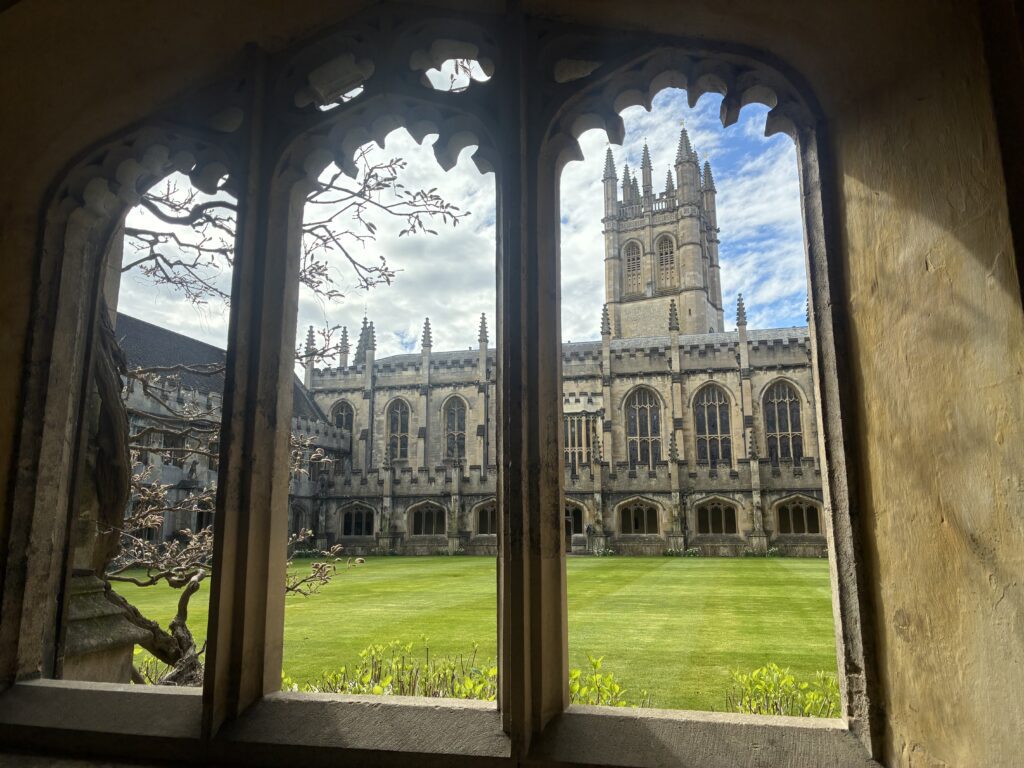
Around the cloisters..
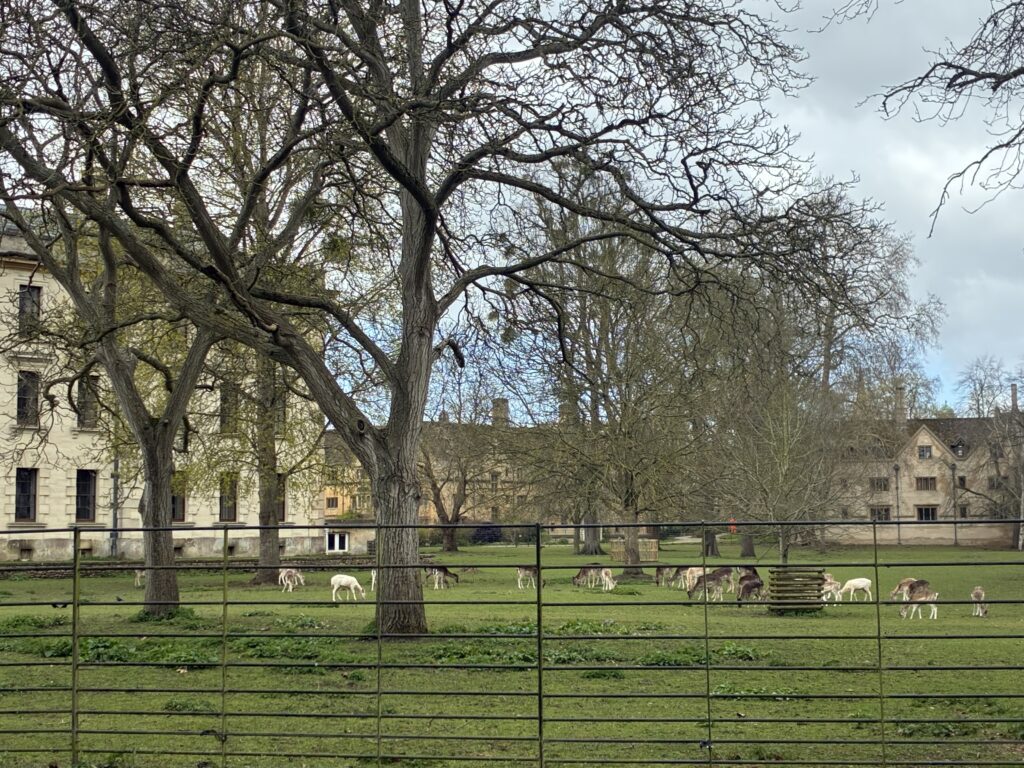
Past the Grove where the fallow deer are kept.
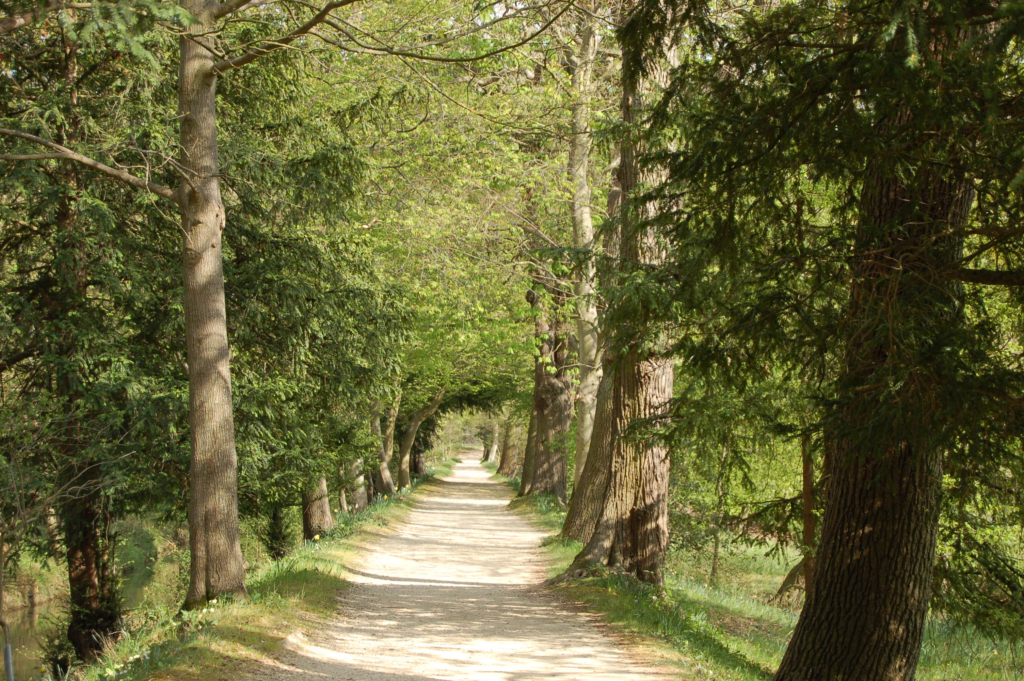
To Addison’s Walk.
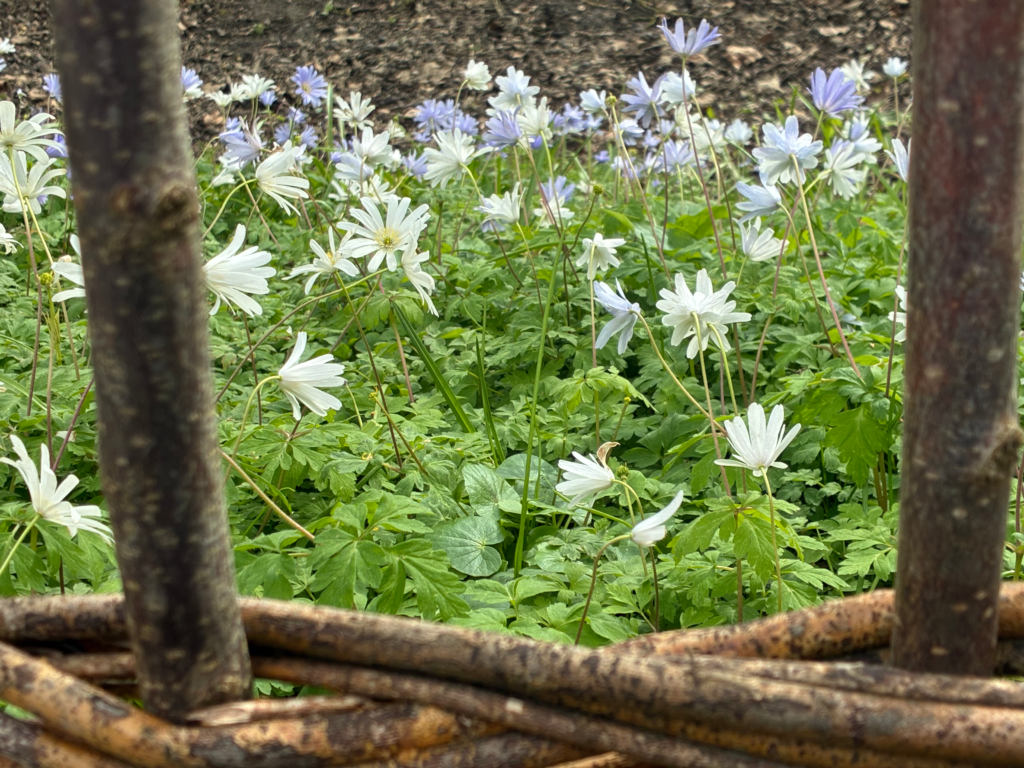
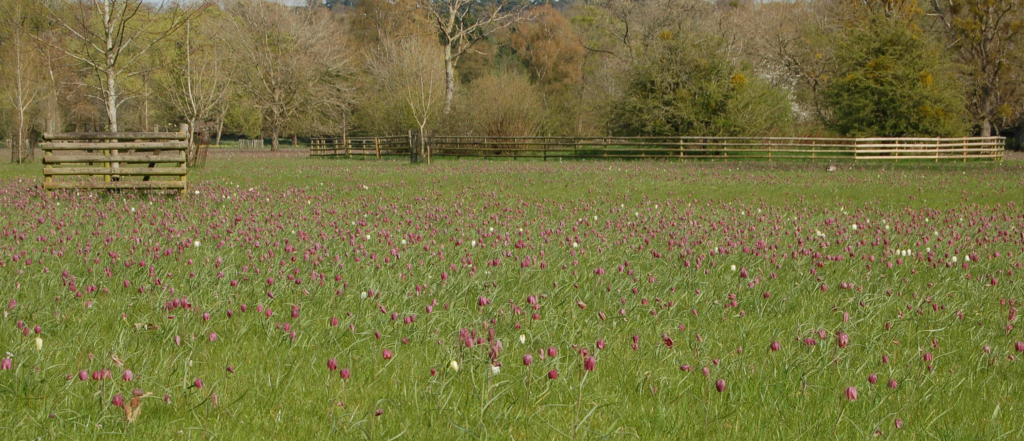
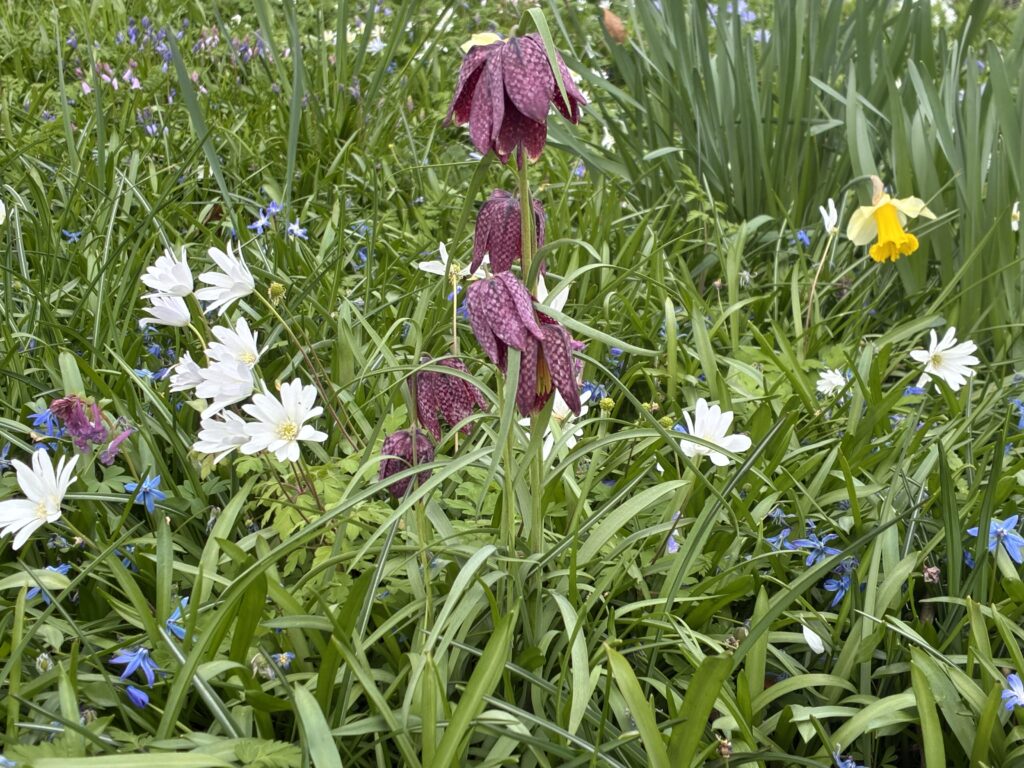
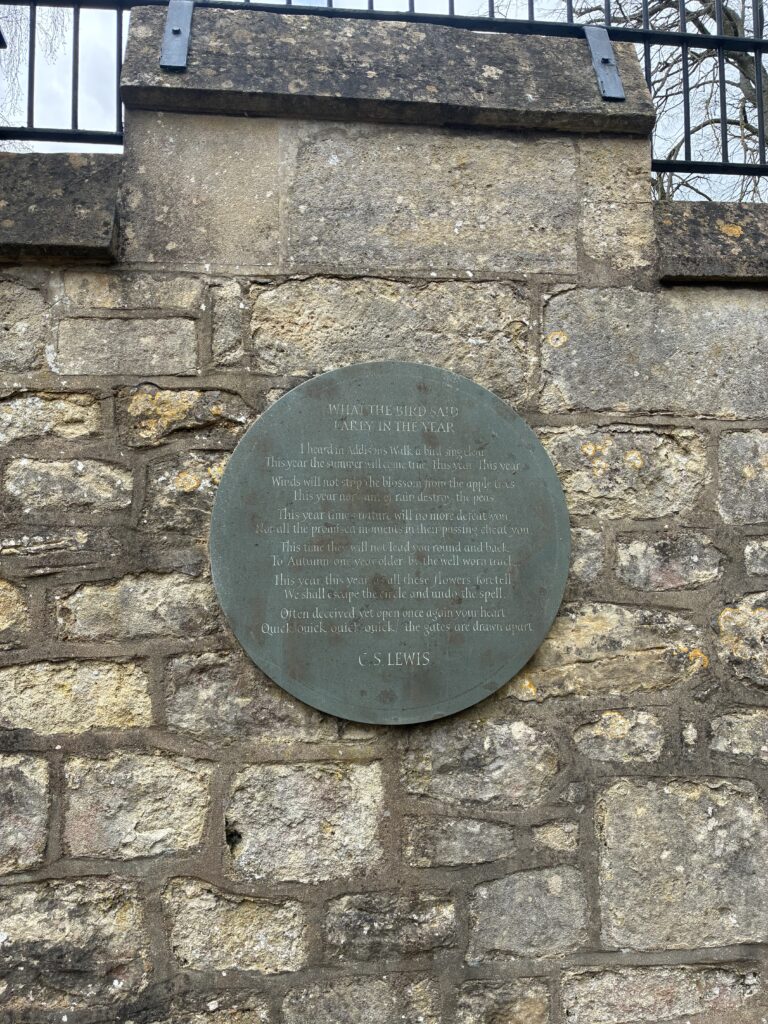
I heard in Addison’s Walk a bird sing clear:
This year the summer will come true. This year. This year.
Winds will not strip the blossom from the apple trees
This year, nor want of rain destroy the peas.
This year time’s nature will no more defeat you,
Nor all the promised moments in their passing cheat you.
This time they will not lead you round and back
To Autumn, one year older, by the well-worn track.
This year, this year, as all these flowers foretell,
We shall escape the circle and undo the spell.
Often deceived, yet open once again your heart,
Quick, quick, quick, quick!—the gates are drawn apart.
– C.S. Lewis, What the Bird Said Early in the Year
As carved on this plaque at the start of Addison’s Walk, this poem by C.S Lewis encourages us to have spiritual hope.
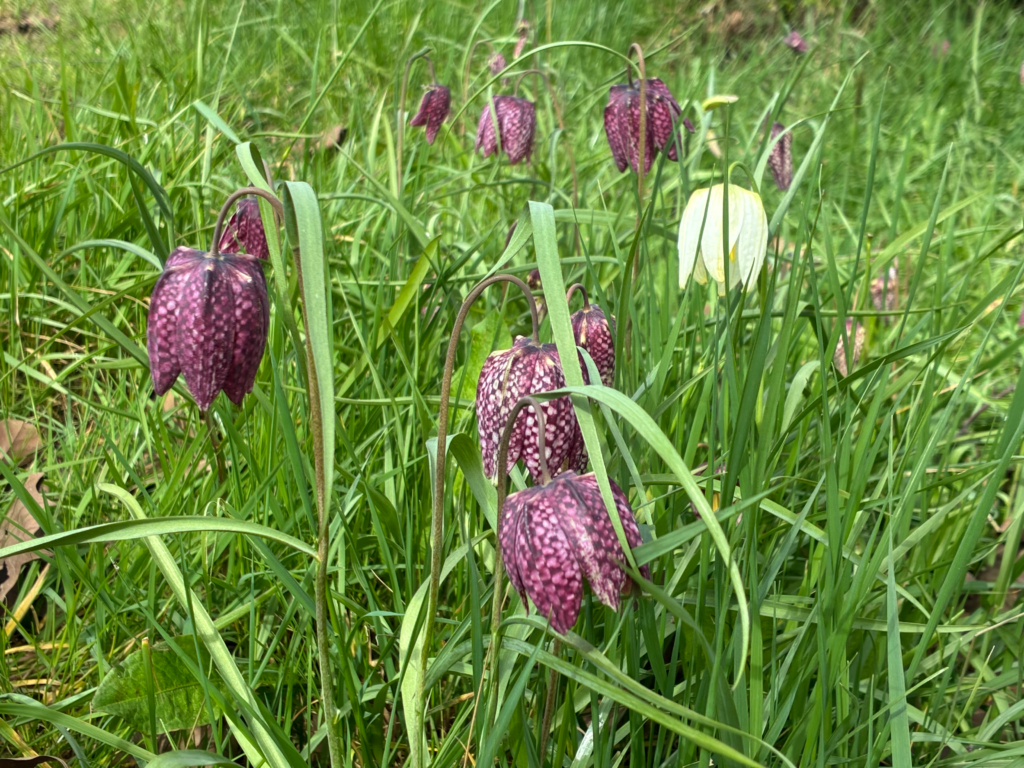
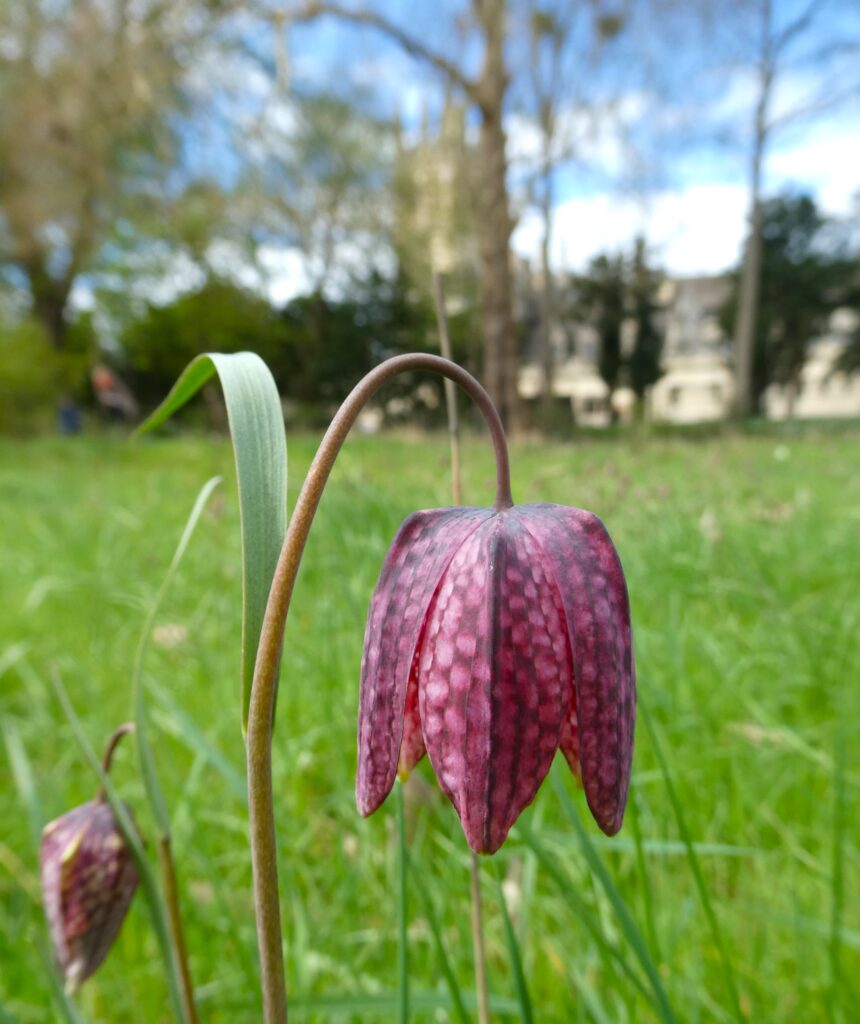
While walking I met by chance The Oxford Sausage nature correspondent Bea Groves, who like me was at Magdalen to spot snake’s heads. She very kindly send me this lovely photo with Magdalen Tower unusually playing second fiddle to the flowers, for which I am most grateful.
You may also like to read:
9 Comments
Join the discussion and tell us your opinion.
Gorgeous! Lovely one to wake up to.
Thank you Jane
Thank you for celebrating the frits – my favourite flower! The photos are fabulous. Addison’s Walk is such a special place. I’ve been there several times in March but clearly went too early (I only saw one) so this Sausage article makes up for it! By the way among the many floral paintings at the Ashmolean Bloom exhibition I’m sure I saw a frit somewhere. Maybe wishful thinking but some of your more botanically switched on readers can put me right.
Lovely piece as ever Arabella – and it was such a pleasure to bump into you there! And Tony – you are quite right. There is a fritillary in the centre of the vase of Ambrosius Bosschaert’s A Vase of Flowers (1609) on display in the exhibition.
Thank you, another lovely piece, and I’m so glad you included the poem – it’s so moving…
Moving indeed – glad you liked it
Wonderful article as always, thank you! I have lovely memories of my mother taking my sister and I around the Deer Park and Addison’s Walk, but with daffodils abounding rather than fritillaries. I’m an Oxford resident, so do I need proof to wander around without paying?
Yes you should certainly take proof of address –
Great, thanks