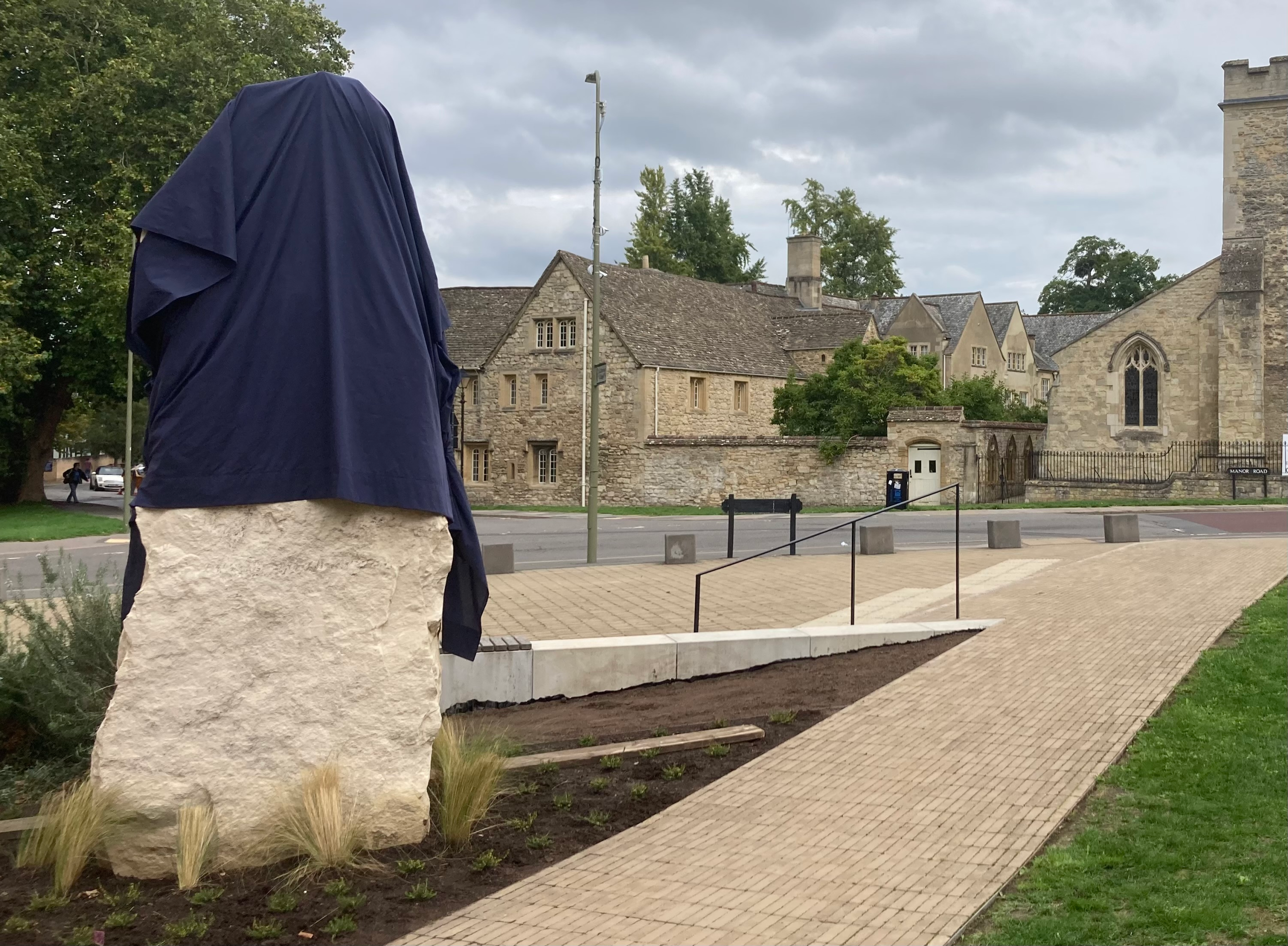
I was delighted to attend the unveiling of a new public statue in Oxford this week. I’d tagged along with photographer John Milnes, who has been following the local sculptor, Alex Wenham in the two year process it has taken to create from commission to completion. Who will it represent? Why was it ordered? And how was the finished piece achieved? Here in a series of pictures and John’s photographs, we tell the story.
Main picture: Under wraps, the statue stands opposite the old Church of St Cross, on St Cross Road, in front of Balliol College’s new graduate buildings.
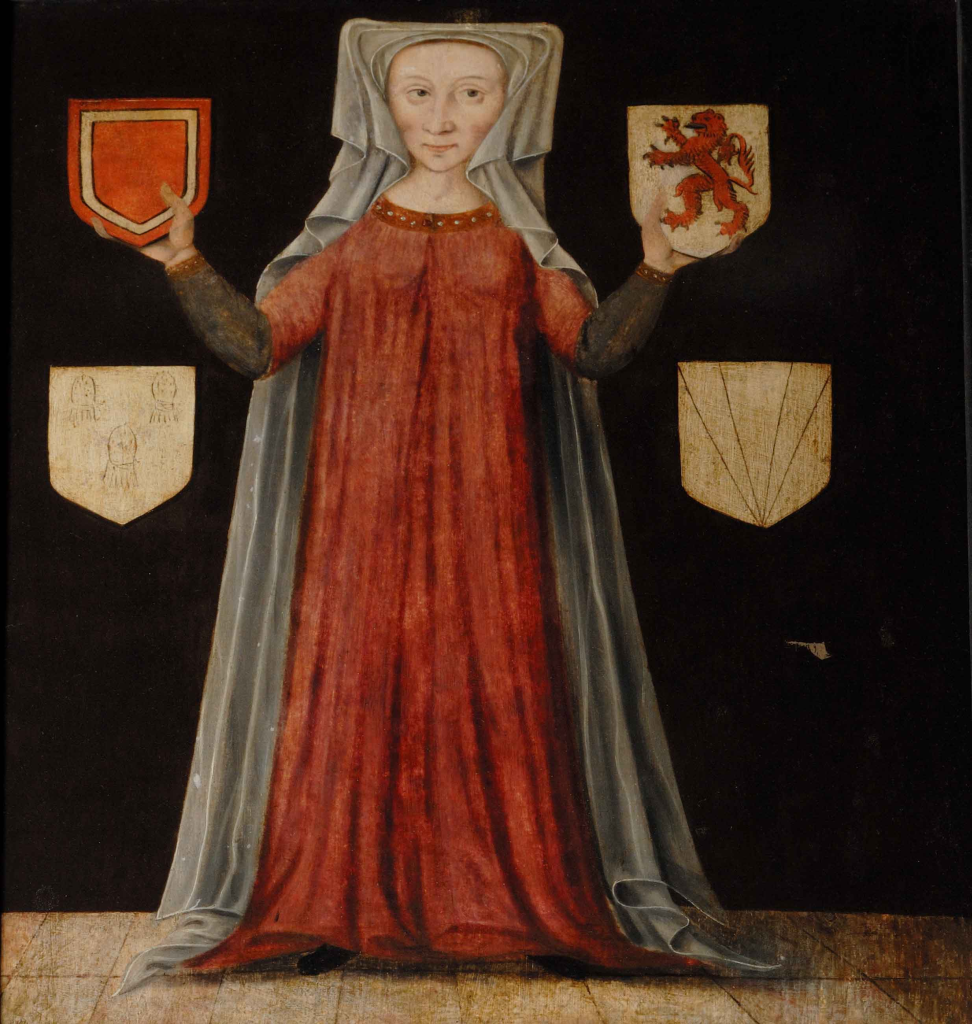
Picture © Balliol College archives
This is a 17th century portrait of Dervorguilla of Galloway who lived from around 1210 – 1290. Her husband John de Balliol owned lands around Barnard’s Castle in County Durham. However, after insulting the Bishop there, he was instructed to set up ‘A House of Scholars’ in Oxford as penance. This is what became in 1263 Balliol College on Broad Street (where the portrait above hangs in the college dining hall). But like so many women’s stories from this time, Dervorguilla’s part in the tale is only just beginning to be told. For after John’s death it was she, a wealthy woman in her own right, whose lineage was descended from the Kings of Scotland, who put up the money for the endowments that secured the future of the college. It was Dervorguilla who issued the statutes in 1282 which made the college a going concern.
Dame Helen Ghosh, appropriately the first female Master of Balliol, wanted to celebrate this. And spotting Alex’s work at the outdoor sculpture show at Asthall Manor’s ‘On Form’ exhibition decided to commission a statue of Dervorguilla. It was to stand in front of what is now known as Dervorguilla Buildings, new Balliol graduate accommodation on St Cross Road.
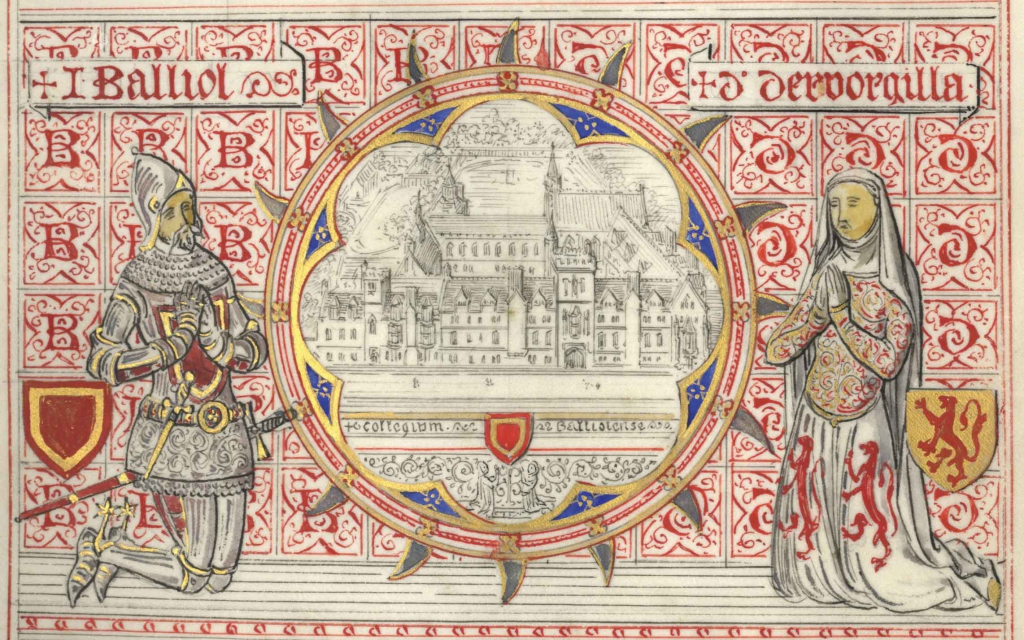
© Balliol College archives
The depiction above of Dervorguilla with her husband comes from a volume of drawings of the college by A W N Pugin made in 1843. Her statutes were issued from South West Scotland near another of Dervorguilla’s foundations, what became known as Sweetheart Abbey where she was later buried with her husband’s embalmed heart. This she had kept in a silver casket since the day of his death. Legend has it that she would insist on setting it beside her at dinner, where a place was still laid for him, the uneaten food afterwards distributed to the poor.
© Balliol College archives
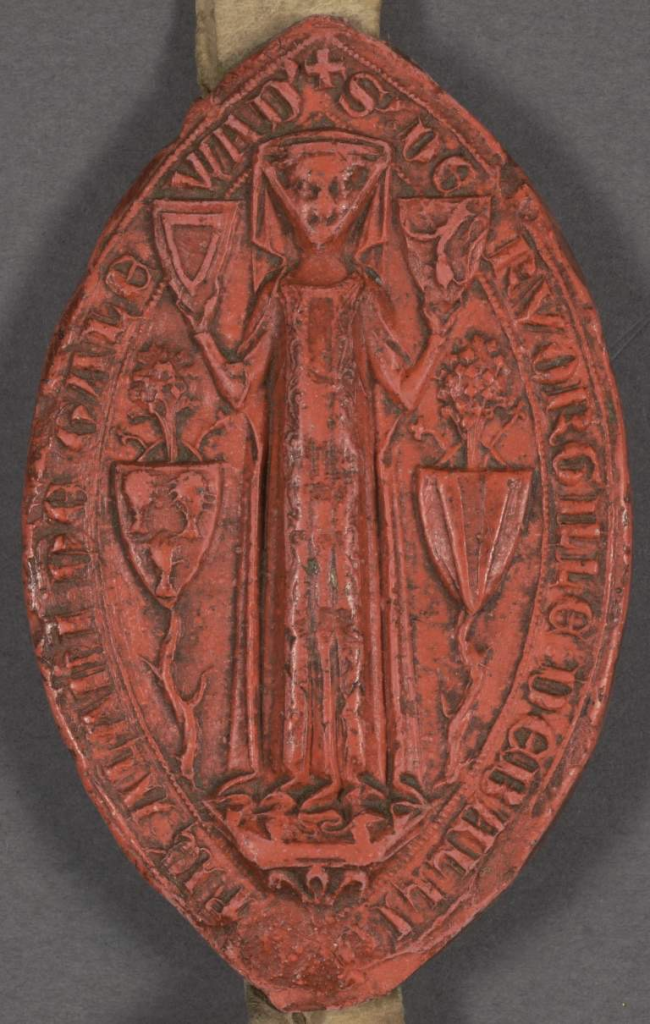
This seal is the only contemporary 13th century image we have of Dervorguilla. She would have seen this and approved it herself. And although the features of her face are indistinct, Alex is able to use it as a starting point for the period clothing he will use for the statue.
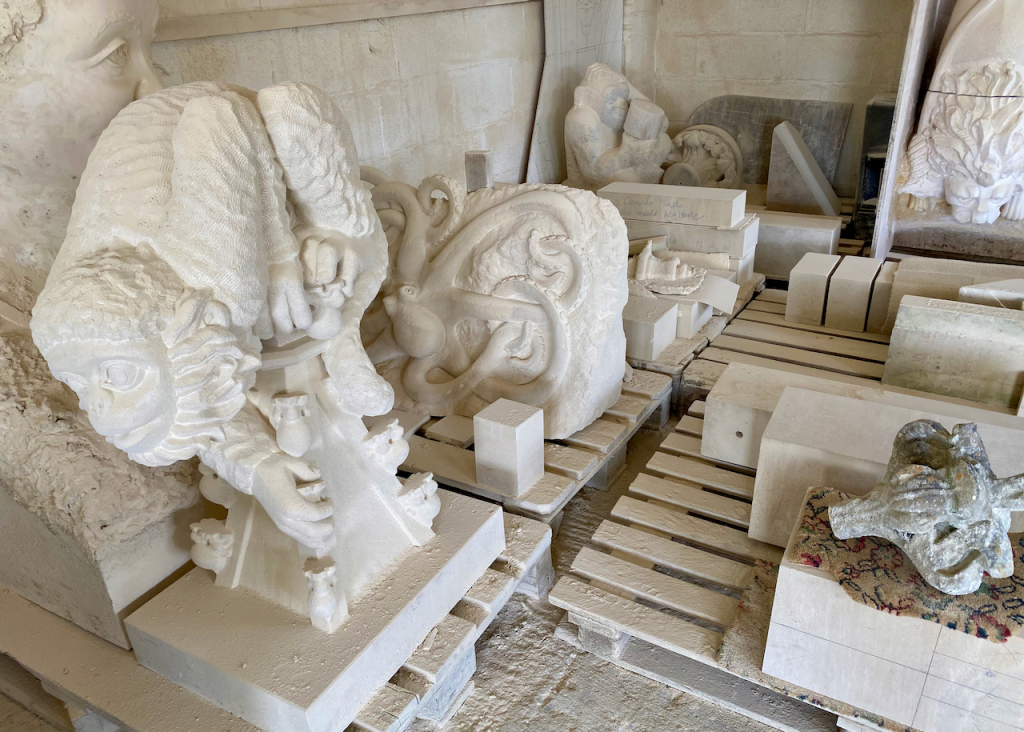
Alex works from a studio and yard in Cumnor. Here he designs and carves all manner of things, including these decorative monkeys and octopus. The movement he creates in the animals as they emerge from the stone is remarkable. He also finds time for stone restoration, conservation and stone lettering. He has been involved in projects for amongst others, the Houses of Parliament, St Paul’s Cathedral and Magdalen College, Oxford.
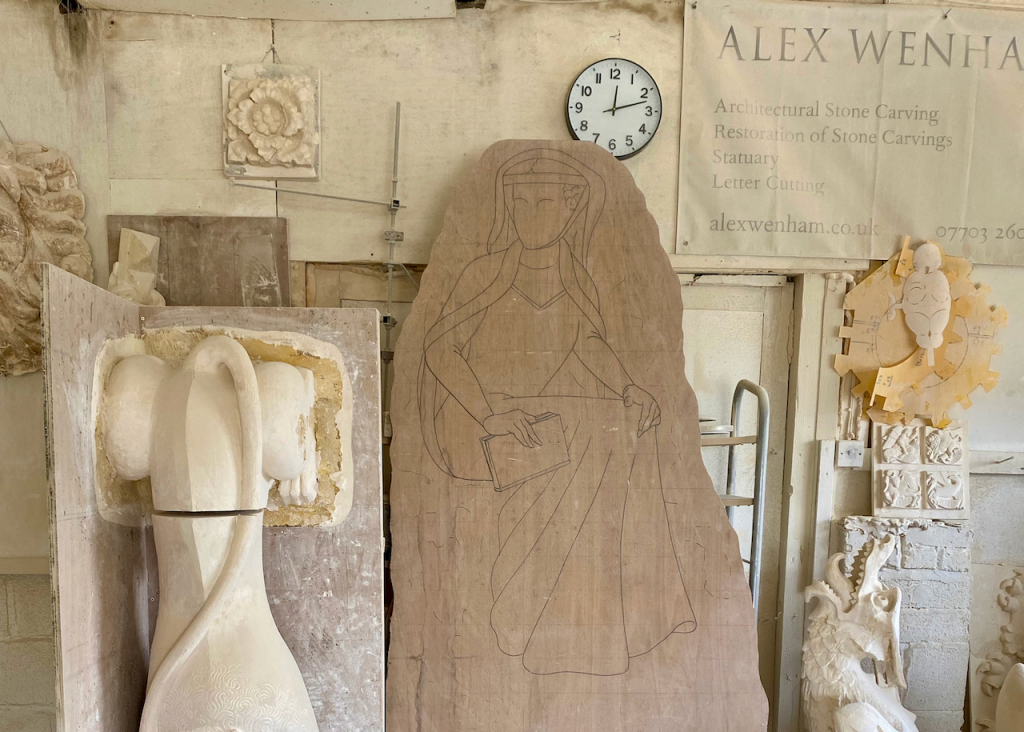
First he sketches the outline for his intended design on to a full size piece of wood. Alex wants to create a contemporary sculpture to represent the 13th century woman. He intends the pose to be modern, forceful and dynamic. But with advice from experts the clothing and drapery is to be authentic. The headgear for example matches that on the wax seal.
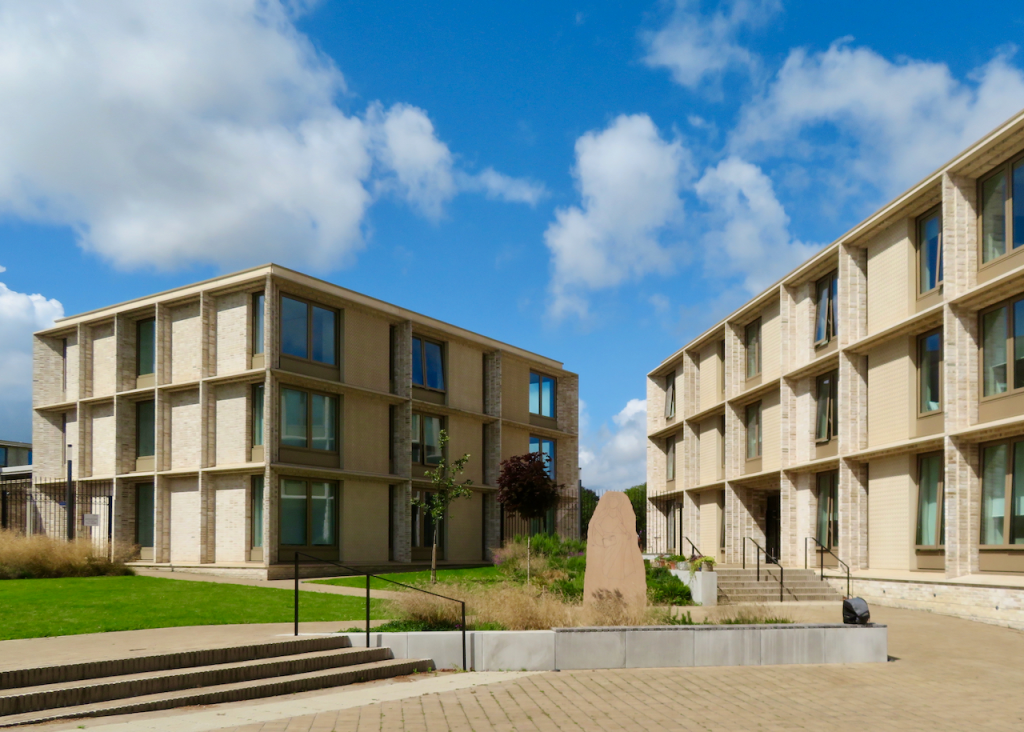
This is then placed in what will be the location for the finished piece to check the size matches with the surrounding buildings.
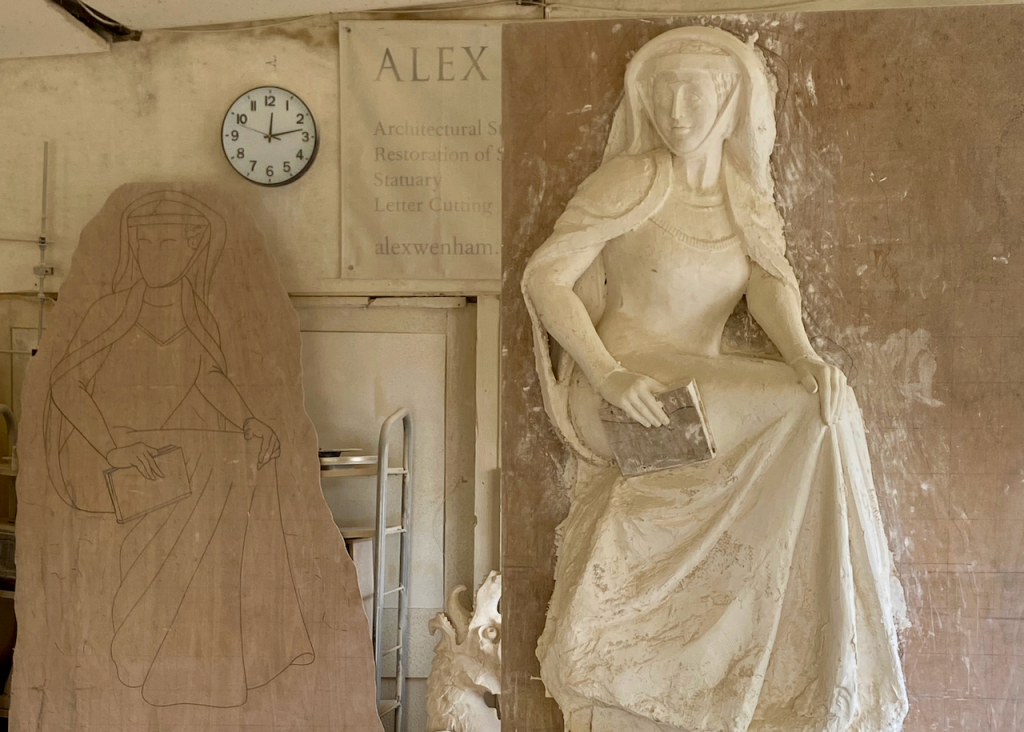
A plaster model is then created. Alex has designed the figure to look as if she is ’emerging’ from the stone. So the upper part of the figure will have a smooth finish, whereas the bottom will ‘disappear’ into the rough surface of the natural stone. She is portrayed aptly for a place of learning as someone who loves books, like St Catherine to whom Dervorguilla was devoted and who became the patron saint of the college. She is holding a copy of her 13th century statutes in her hand.
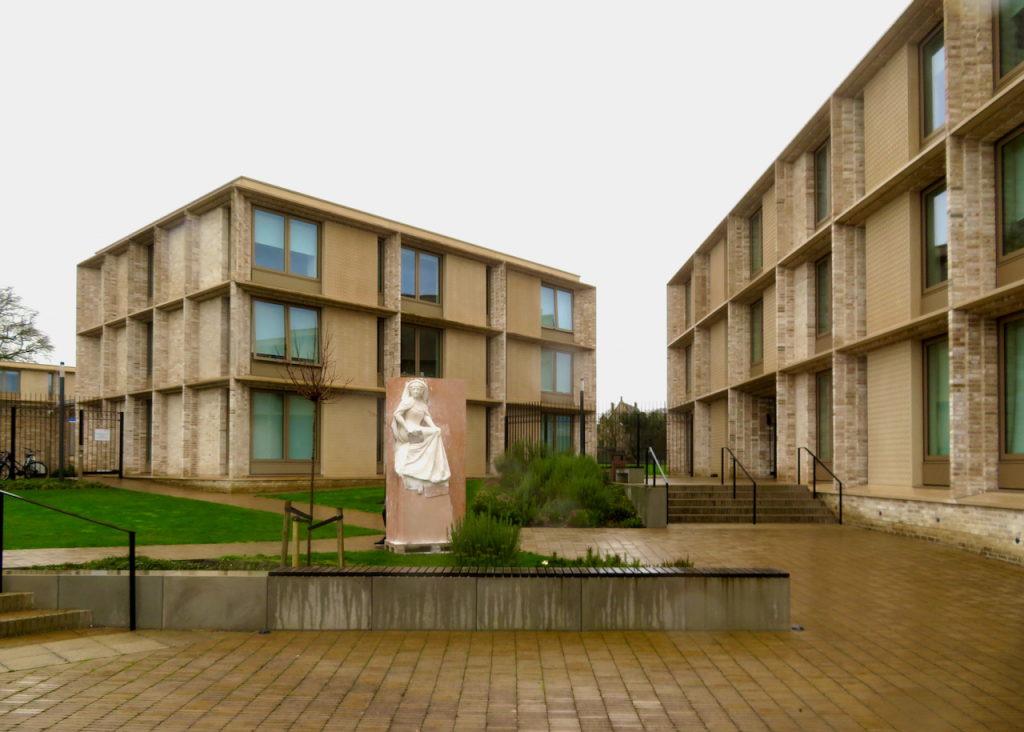
This is also checked out in the proposed site.
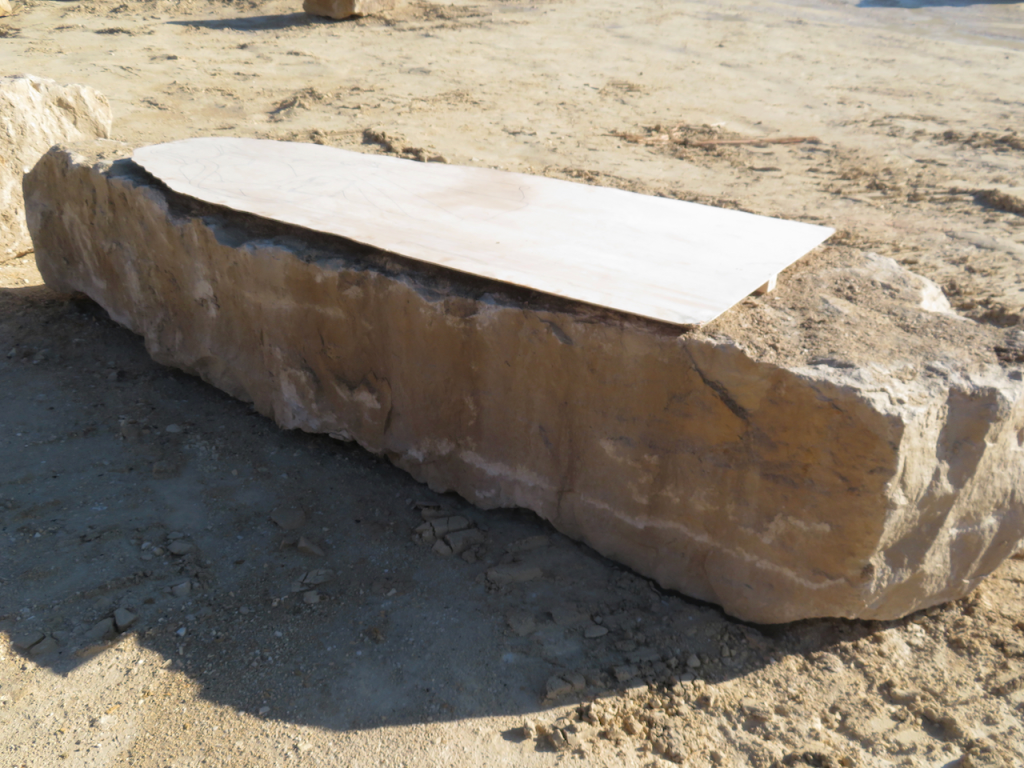
Alex now visits a quarry near Doncaster to choose the piece of stone from which Dervorguilla will emerge. This is a single lump of Cadeby limestone which will be stood on end to create the statue. The stone is chosen because it is good for carving as well as to colour match the local Oxford buildings.
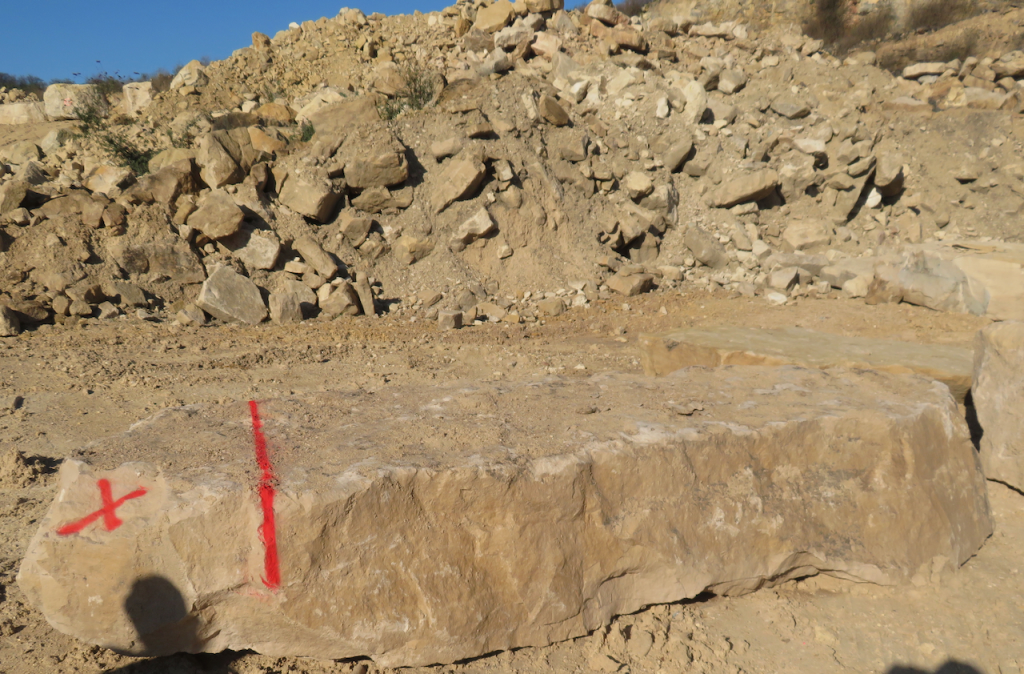
Alex marks the six ton boulder with a red line – this is where he wants it cut so that it will stand neatly on end. It is then transported back to Cumnor.
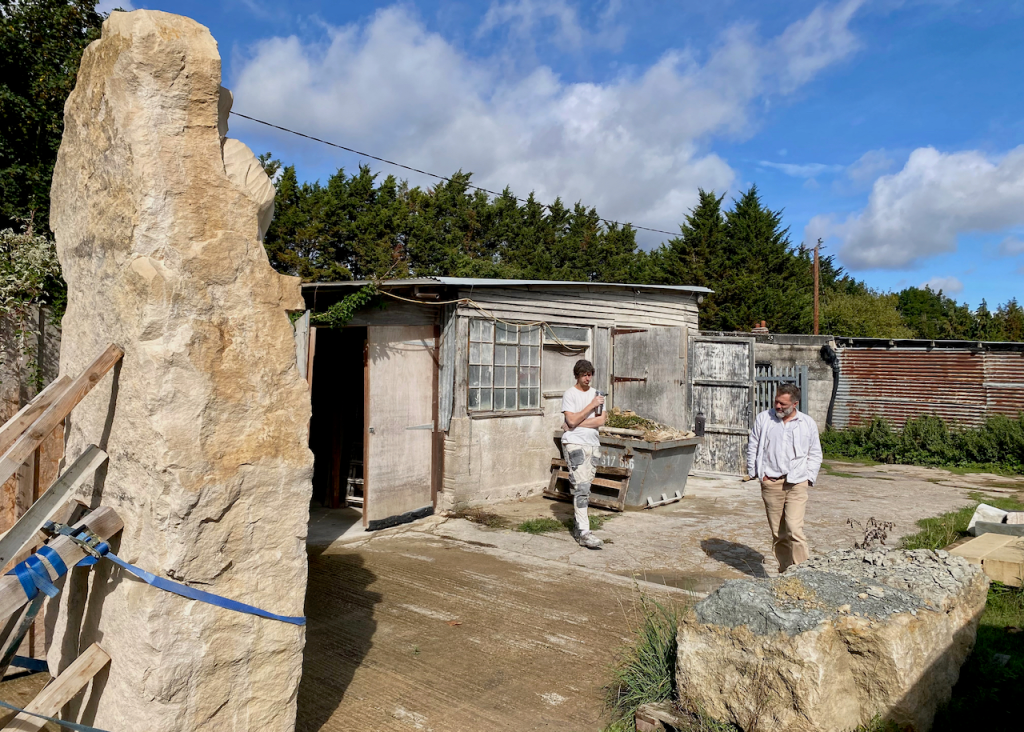
Alex in the yard with the stone and his assistant Gabriel.
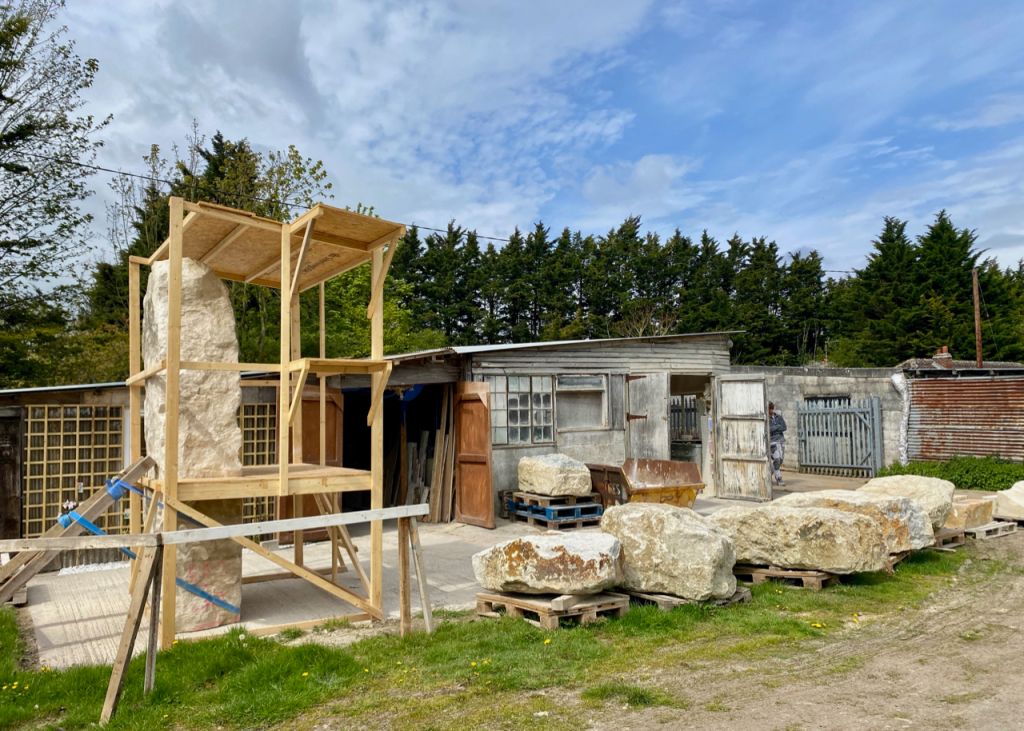
He constructs a wooden frame around the boulder.
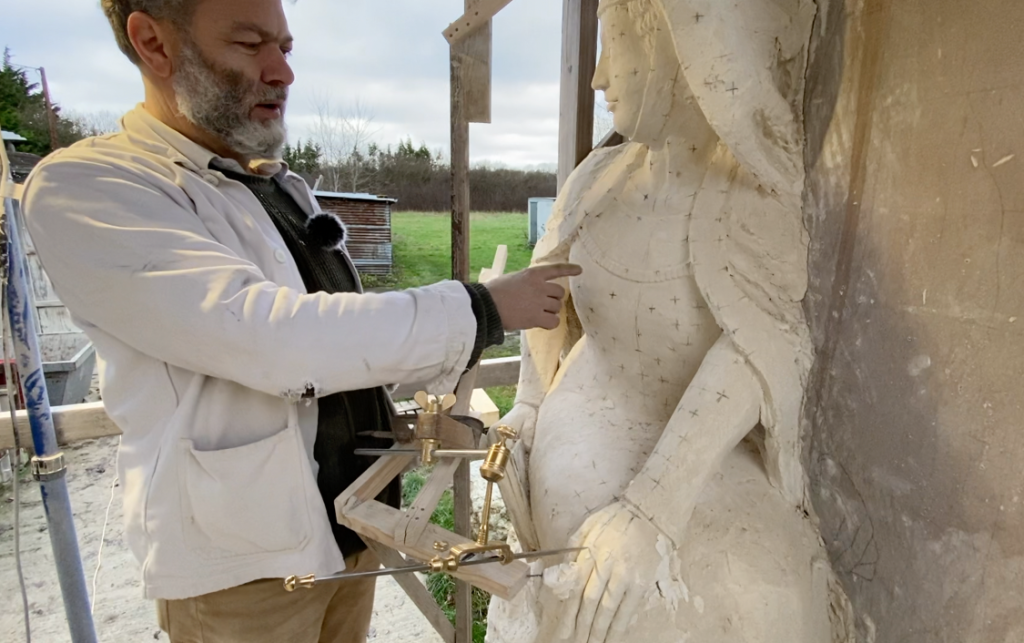
Into which he places the plaster cast model he wants to replicate in stone. In order to transfer the exact dimensions of his plaster cast, Alex uses a skeleton wooden frame on to which he has fitted a sliding steel needle called a pointing machine. He makes four fixed points on the model from which he takes all other measurements. These are then transferred over to the stone when he starts to carve. This part of the process is about finding the form.
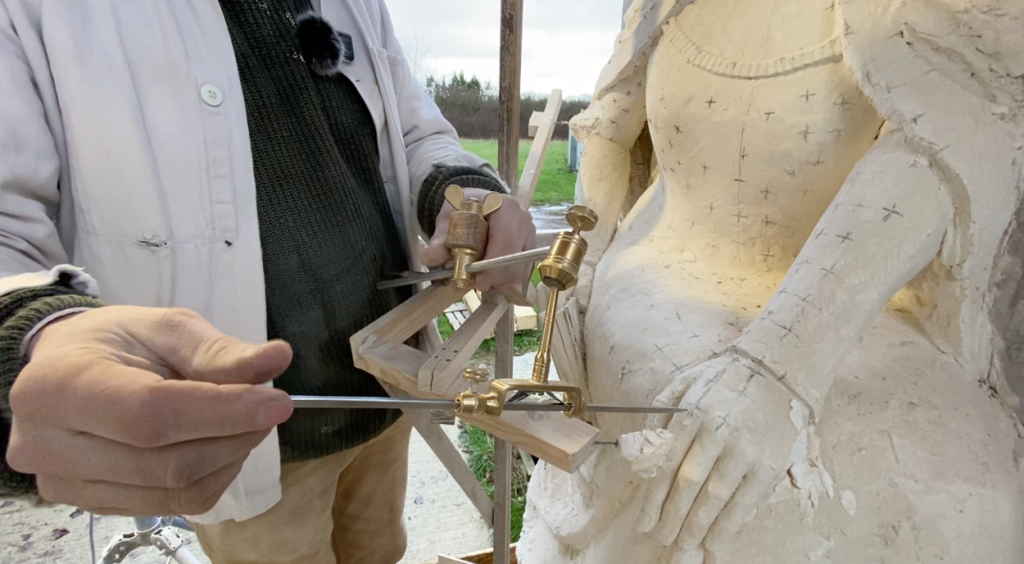
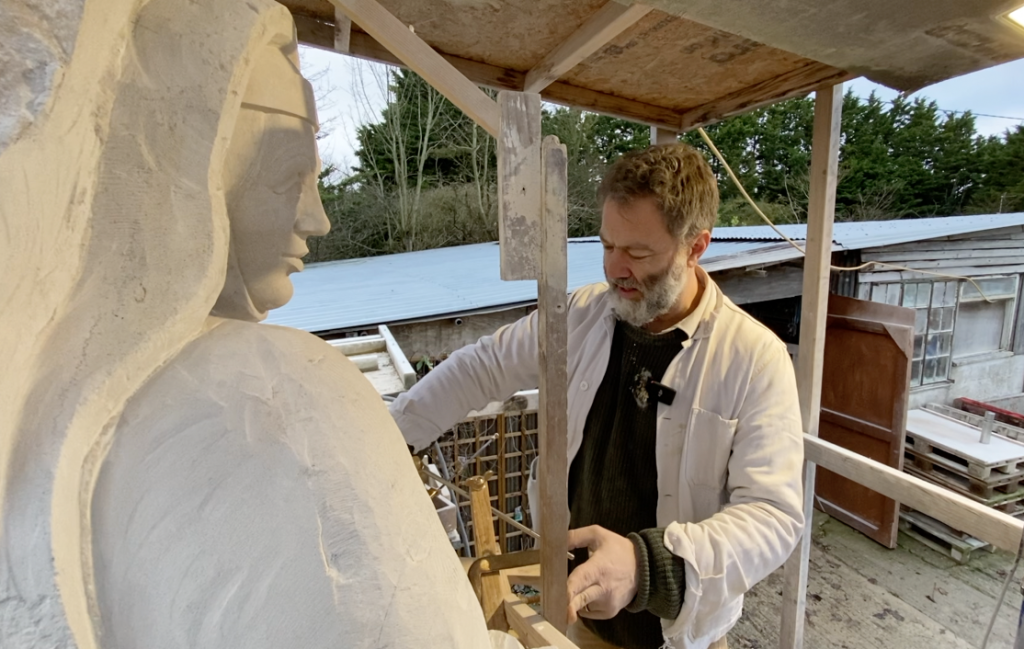
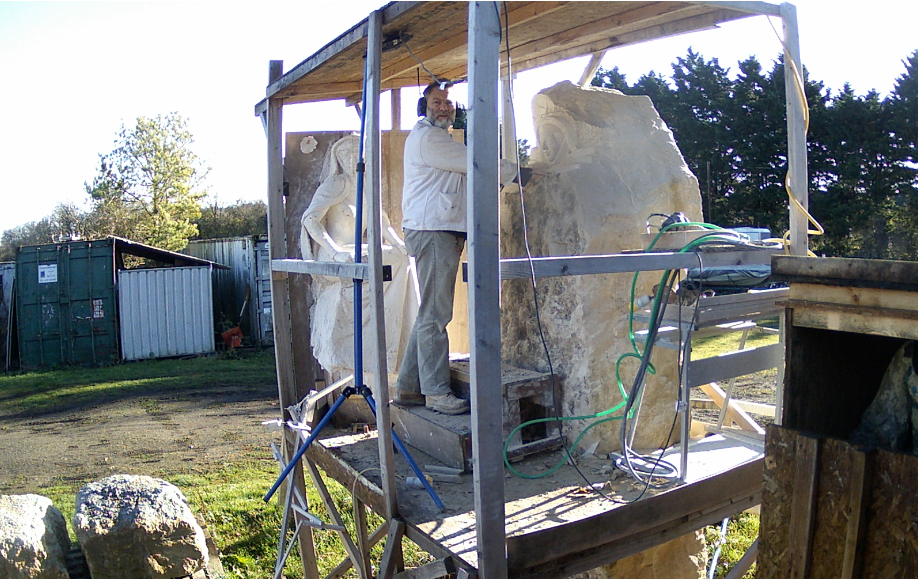
Alex uses angle grinders for roughing out, a pneumatic hammer for doing most of the shaping, and then a mallet and different shaped chisels for finishing the work.
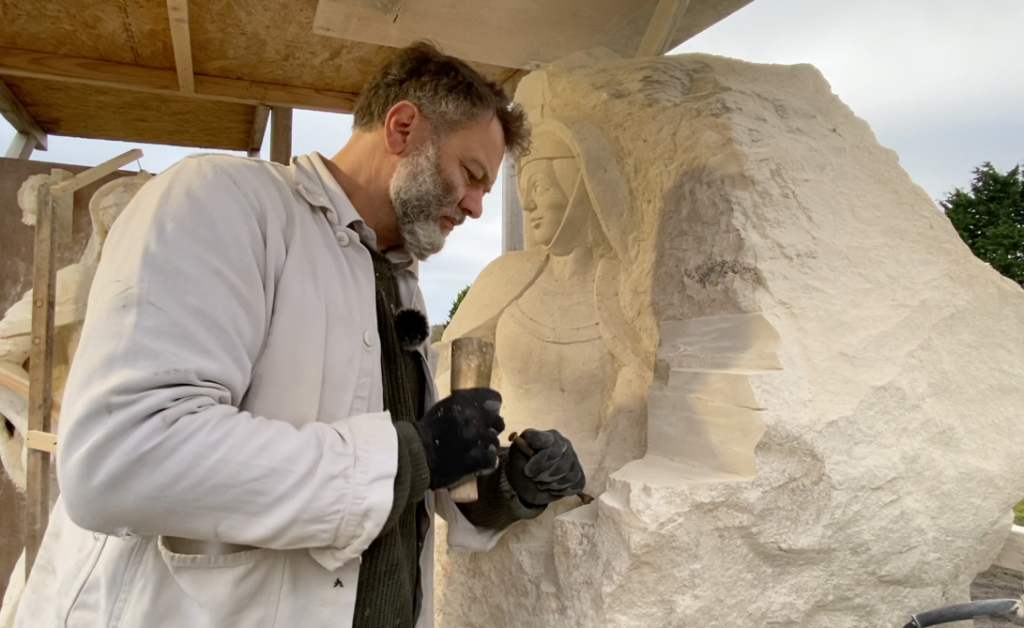
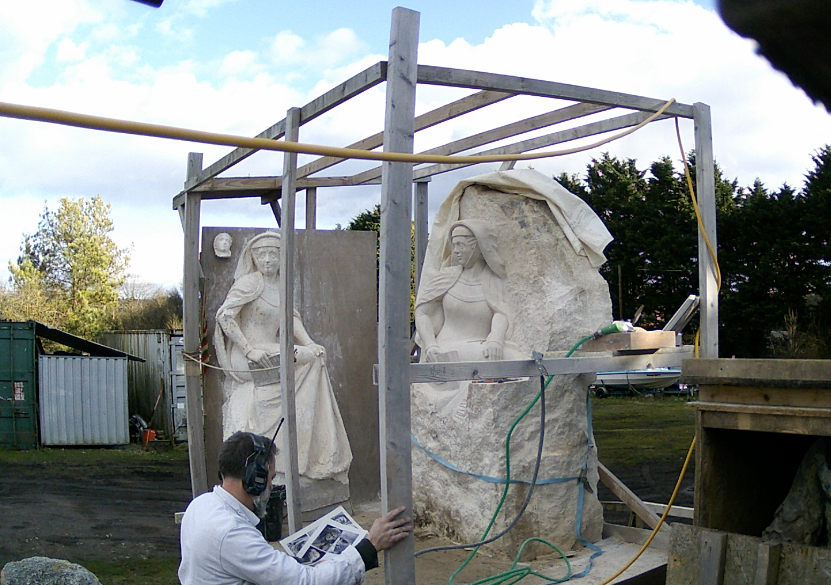
He continuously refers to research materials.
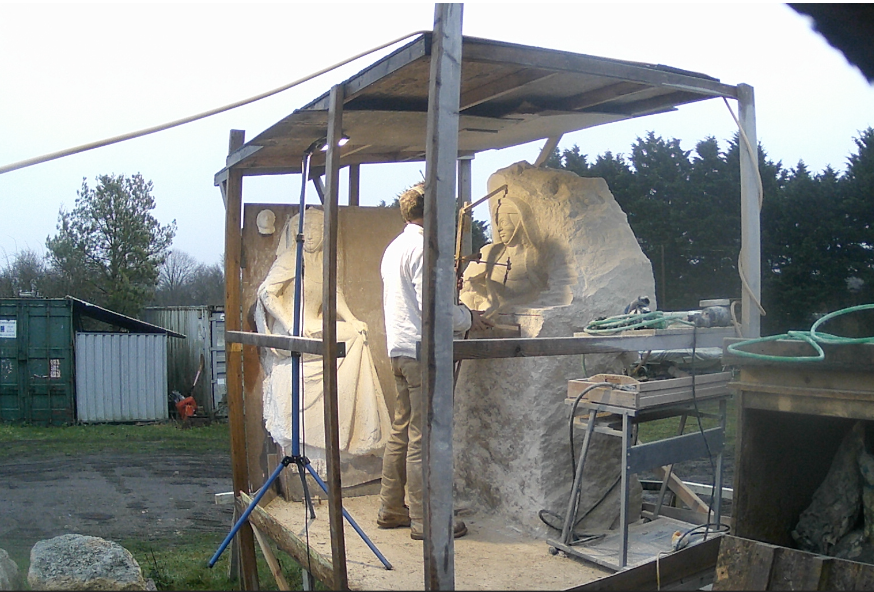
Often he works well into the night. It’s a hard, physical and dusty process. Slowly Dervorguilla begins to emerge.
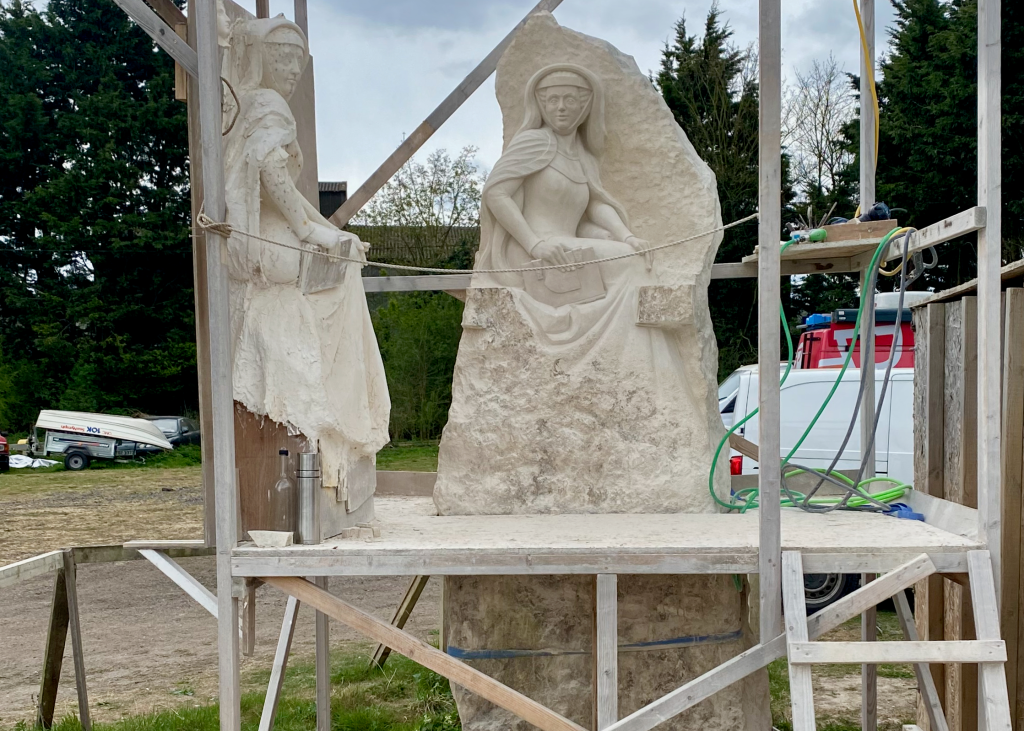
Until at last.
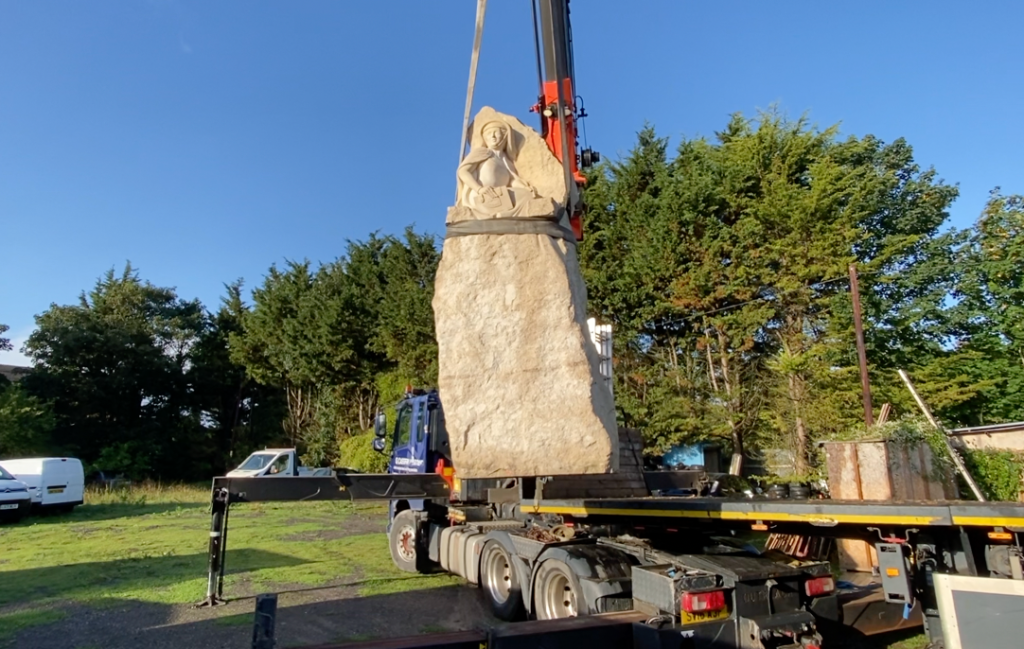
She is ready to be transported to her final resting place. Alex has to leave lifting lugs in the stone, which will be removed later, from which the straps are fitted needed to lift her on to the truck.
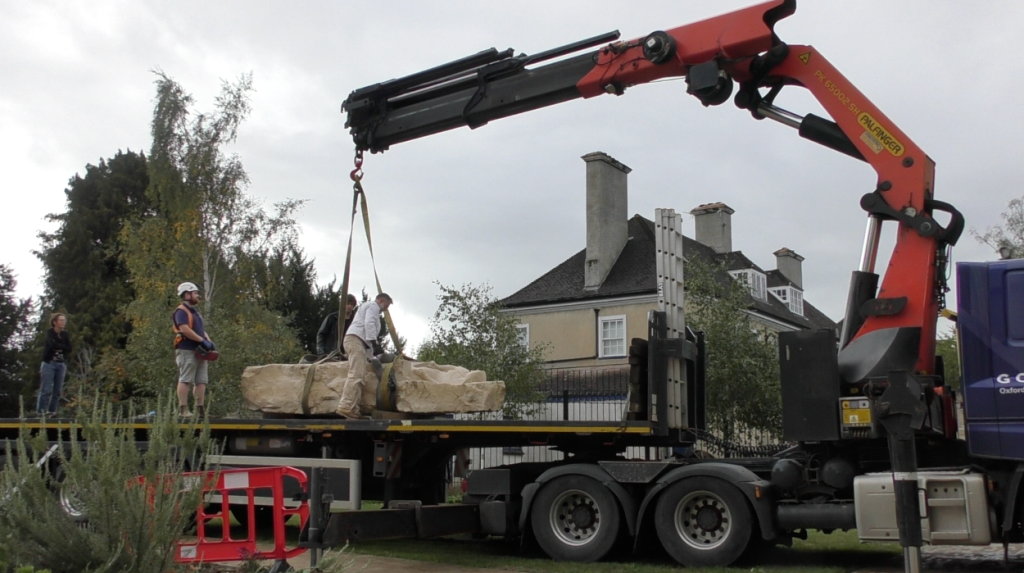
Her arrival at her new home.
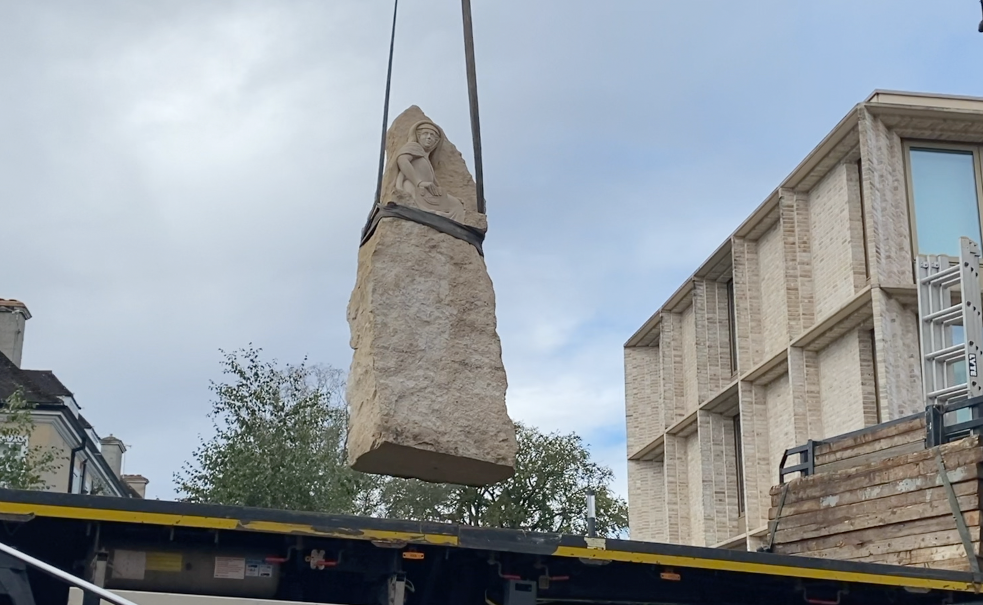
Where she is lifted into place.
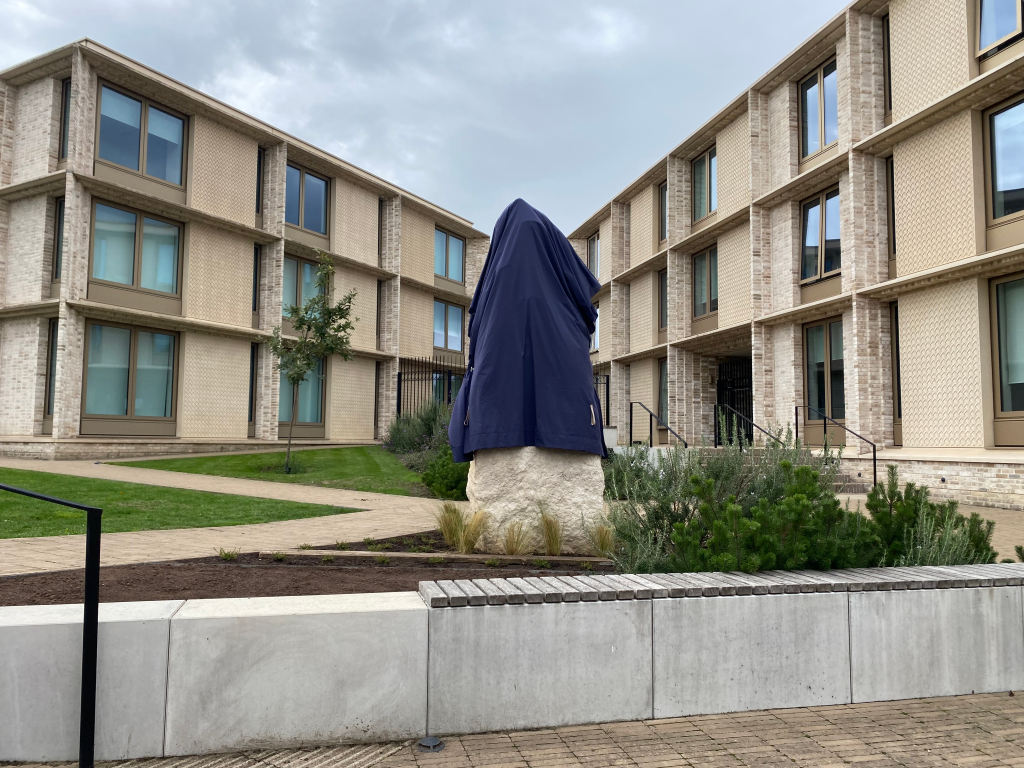
All ready to be unveiled.
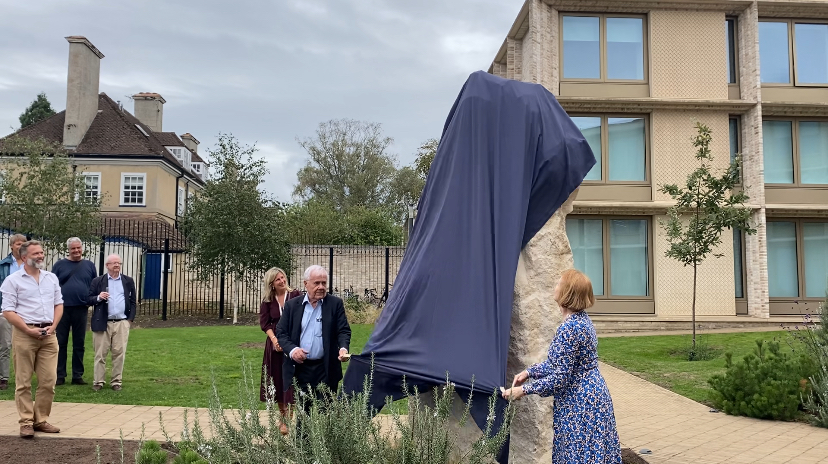
By Dame Helen Ghosh and donor, Jim Rogers. Jim is a Balliol alumnus and coxed the winning Oxford crew in the 1966 University Boat Race.
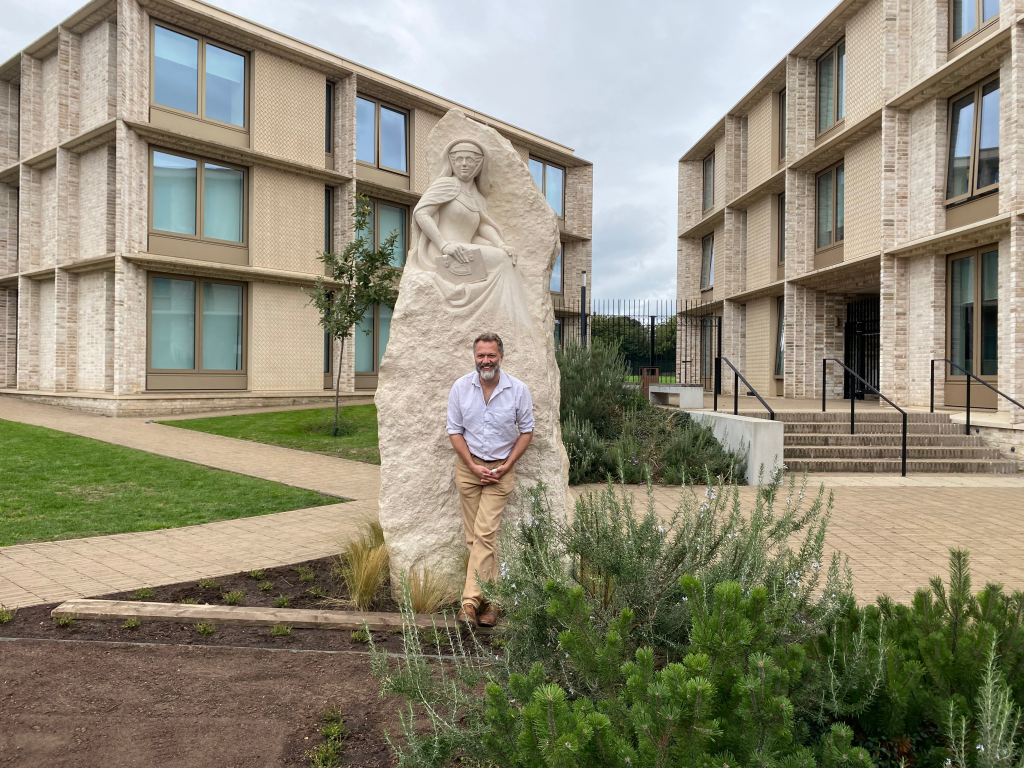
Bravo.
To find out more about the work of Alex Wenham you can visit his website here.
You may also like to read The Stone Saints Retirement Home.
5 Comments
Join the discussion and tell us your opinion.
Yet another fascinating Oxford story. Every Sunday morning has another treat from the ‘Sausage’. Each one reminds me of my childhood in Oxford in the 1940s and 1950s. Swimming in Dames Delight, walking there from my school, the Crescent School in Norham Gardens. Punting through Parsons Pleasure under blankets so none of the nude male bathers should know a female was in their midst. Going to Port Meadow with my teenage brother, Falcon, to fly his model areoplanes and growing up on Boars Hill in the studio of my father, the sculptor Oscar Nemon
Alex Wenham has made a wonderful statue of Dervorguilla. Thank you so much for including so many photographs of the process of how the statue was made. Congratulations to Balliol for commissioning the statue. I was at the Crescent School with a Dervorguilla whose family lived very near where the statue now stands. I wonder where she is now?
Loved this! Thank you.
What a wonderful tribute to what was clearly a very exceptional woman
I shall always remember a car trip we made to Sweetheart Abbey back in the early 1970s, to pay our respects to Dervorguilla. I must ensure we get into town to see the new statue soon, which I think is amazingly beautiful. Joy Crispin-Wilson, married to Robin Wilson, Balliol 1962-65.
Poised, dignified, yet full of creative energy; what an excellent piece of work and such a worthy tribute to Dervorguilla.