• St Frideswide healing the sick at Binsey

    St Frideswide and the ‘treacle well’

    Monday October 19, is the feast day of St Frideswide, the patron saint of Oxford. And so I decide to cycle to Binsey, a tiny hamlet of houses to the north west of the city. Though some might know it as the setting for Gerald Manley Hopkin’s famous lament, ‘Binsey Poplars’, this is also where in the 7th century, according to legend, Frideswide, a Christian noble woman, fled to escape the unwanted advances of the Mercian prince, Algar. Algar follows in hot pursuit with soldiers and dogs to hunt her down. But when he is struck blind by a thunderbolt as if from heaven, the godly Frideswide takes pity on him, and her prayers bring forth a healing spring, whose curative waters restore his sight. 1400 years later and the well still remains where it first bubbled up, now commonly known as ‘the treacle well’, for reasons I hope to explain.
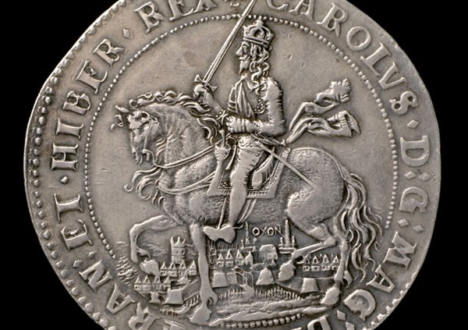
  • King Charles I and his Oxford Mint

    I’d become interested in the story recently when by chance I found myself staring at perhaps the most famous coin minted during that time, the Oxford Crown. It stands in a case of its own, on a lower floor of the Ashmolean and is positioned so that you can walk around it and see the full glory of its exquisite detail. On the obverse side is a proudly mounted King Charles, in one hand the hilt of a drawn sword held aloft, the other the reins of his snorting charger. You can almost make out the breath from the horse’s flared nostrils and feel the breeze as the monarch’s sash billows out behind him.

  • A walk along Britain’s oldest road

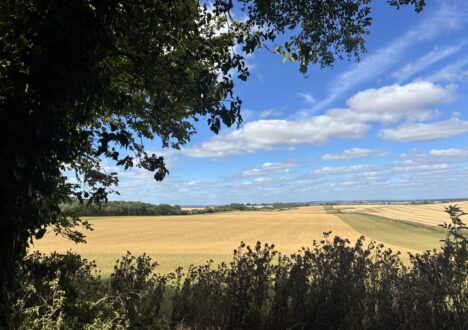
    On one of the last of this year’s long summer days, I accept an invitation from my friend Gina to take a walk along the Ridgeway, also known as the oldest road in Britain. She had discovered that she could use her free pass on the bus to London as far as Lewknor, a small Oxfordshire village at the foot of the Chiltern Hills, and a stone’s throw from the ancient path trodden for over 5,000 years by generations of our ancestors.