On Tuesday 3 January 1643 the young antiquary Anthony Wood noted in his diary, ‘there came into Oxford, divers carts, to the number of 12 or more, laden with Prince Rupert’s gooddes, and with the mint from Shrewsbury, and with some good store of silver ore, to be melted into silver and coyned into money: one Mr Bushell being the chiefe dealer therein; the mint was set up in the New Inne.’
It had been four months since the country had been plunged into Civil War. King Charles I had fled London, leaving those supporting Parliament free to seize the Tower of London, which held not only the country’s largest arsenal, but also the Royal Mint. Without which Charles had no means to pay his soldiers and buy supplies. Swiftly Charles called on the services of his friend Thomas Bushell, an entrepreneur educated at Balliol College Oxford who not long before had secured a patent to make coins from the silver mines in Aberystwyth; ordering Bushell to bring as much silver as he could carry, his equipment and workers first to Shrewsbury and then to Oxford where Charles had set up his headquarters. A formidable team was gathered to support him. First Sir William Parkhurst, Mint Master from the Tower Mint had snuck out from the capital in secret. Then the engraver Thomas Rawlins, thought to have been the former pupil of the brilliant French exile Nicholas Briot, the man who had designed the medals for both Charles I’s English and Scottish Coronations. Large quantities of silver and gold plate were requisitioned from the University colleges to be melted down and turned into coin (Trinity lost its whole collection, Magdalen only retained its Founder’s Cup by hiding it). And so it was that for the next three and a half years, the Oxford Mint, housed in a college hall on New Inn Hall Street (where St Peter’s College is now) became the largest provincial mint of the Civil War and the epicentre of the King’s coin production.
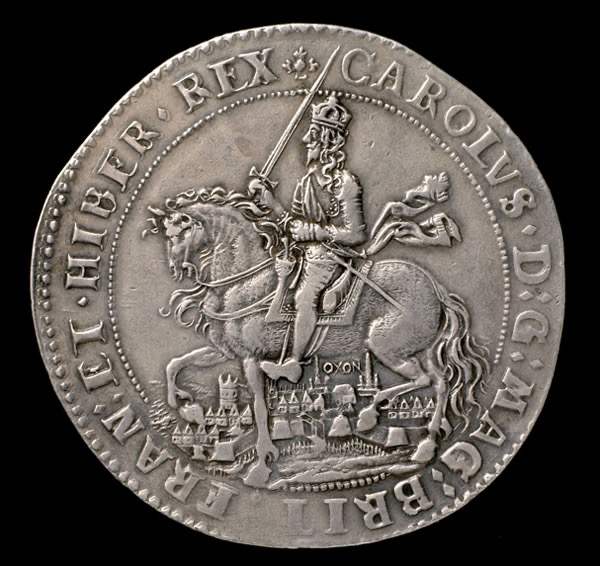
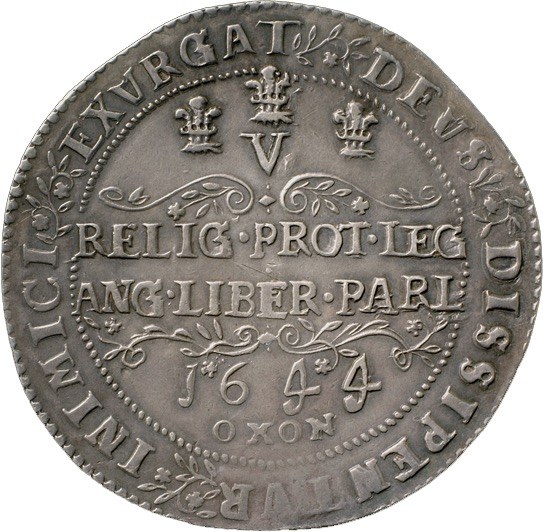
I’d become interested in the story recently when by chance I found myself staring at perhaps the most famous coin minted during that time, the Oxford Crown. It stands in a case of its own, on a lower floor of the Ashmolean and is positioned so that you can walk around it and see the full glory of its exquisite detail. On the obverse side is a proudly mounted King Charles, in one hand the hilt of a drawn sword held aloft, the other the reins of his snorting charger. You can almost make out the breath from the horse’s flared nostrils and feel the breeze as the monarch’s sash billows out behind him. And under foot is the Oxford skyline of 1644, the date it was minted. A unique design in British coinage. There is the old city wall, and its fortifications. There is Magdalen Tower, the spires of St Mary the Virgin on the High Street and All Saints Church (now Lincoln College Library) as well as the roof and tower of the new Bodleian Library. No Radcliffe Camera for another 100 years. ‘Let God arise, let his enemies be scattered’ says the inscription on the reverse side. Something, we now know, didn’t go exactly to plan. Five years later, after losing his fight against the forces of a parliament, whose freedom he had vowed, according to the inscription, to protect, Charles’s head was no longer on coins of the realm. In truth, it was not on his shoulders either.
As it happens compared to other issues from the Oxford Mint this coin would have been produced in very small quantities, says Julian Baker, Assistant Keeper of Medieval and Modern Coins at the museum. The effort put into the engraving of every die, and the care taken in striking meant that they were party pieces if you like, made for show or for gifts. And only 11 that he knows of survive today. A quick check reveals that the last sold at auction a couple of years ago fetched £382,000. That’s some inflation for five shillings worth of silver.
Julian has kindly agreed to meet me upstairs in the Heberden Coin Room. It’s here that the museum’s 300,000 strong coin collection is stored in large vaults, and where after pulling on a pair of gloves, I am allowed to handle some of the other moneys made at the Royalist Oxford mint during the Civil War. The largest denomination, a beautiful gold Triple Unite (worth three pounds or 60 shillings) sporting the King’s head holding a sword in one hand and an olive branch in the other. The most common, a silver half crown, (two shillings and sixpence). The exact daily wage of a cavalier (to include the upkeep of his horse). Huge quantities of these coins, now in variable condition, were minted to pay for the King’s campaigns.
Oxford would have looked quite different during these years. Transformed from a quiet, medieval university town into a heavily fortified military camp teeming with billeted soldiers. The King and all his entourage were stationed in Christ Church. His wife, when she arrived, stayed in Merton (two gates had to be cut into the walls of the intervening Corpus Christi College so they could meet.) Prince Rupert and his men took over St Johns. New College was the principal magazine, the Law and Logic schools became an oats store, swords were beaten at Wolvercote, there was a powder mill at Osney. Overcrowding led to outbreaks of the plague and typhus. In October 1644, a great fire destroyed 300 homes between what is now George Street and St Aldates.
And then there was the Oxford Mint in New Inn Hall Street. There had been a mint in Oxford before, in St George’s Tower at Oxford Castle back in Anglo Saxon times. In Wallingford too, each small kingdom stamped with the image of their own king, and designed to be never further than a day’s walk away from home. There weren’t so many denominations in those days – if you wanted to buy something for half its worth you simply cut the coin in half. Then in the 1300’s everything was centralised and the local mints all but disappeared.
Until our Oxford mint was born again of necessity in the Royalist capital. It would have operated out of a traditional stone and timber building filled with makeshift charcoal furnaces and crucibles, vast scorched vats used to smelt plate into refined silver and gold. This would then be beaten to the right thinness, cut into blank coins with shears, to be clipped and filed to the required shape. Ready to be struck between two dies, a pair of metal blocks, with the desired mirror images engraved on to their flat ends. The lower die (heads) had a spike that was driven into a wooden block to hold it securely in place. The blank was popped on top, in preparation for the hand-held reverse die (tails) to be positioned over it and then hit hard with a hammer. The finished coin was then removed and replaced by another blank. One coin per minute, a working shift, ‘a journey’ of 12-14 hours (allowing for short breaks) would produce 750 half-crowns a day.
This was the end of the line for hand-made coin production. Machine milling and mechanisation took over after the Restoration in 1660. I can see it in the inconsistencies of the coins made by human hand in the trays before me. When a striker tires at the end of the day and is forced to make multiple blows to create the imprint. When the wrong die is picked up after lunch. When a replacement die (the relentless blow of the hammer on the upper die meant it wore twice as fast as its lower counterpart) didn’t quite match the one that went before. Multiple possibilities of human error. I can see why numismatists might become a little obsessed with tracking down the mules, the word used to describe these hybrid creations.
In the 1930’s a hoard of nine silver coins from the Civil War era were discovered during the demolition of a brick barn in Wolvercote. Then shortly afterward 65 silver coins were dug up from a clay trench in Headington. They must have been stashed away about the time that the King abandoned his capital in Oxford. When it was under siege. In the hope they might be retrieved at a later date. But never were. Until 400 years later when we can only guess at their ownership. Some of the last coins to be made during the dying days of the Oxford Mint. Towards the end of June 1646, it had wound down its operation. On 24 June 1646 the city was surrendered to Fairfax and Parliament. And that was the end of that.
But what a legacy its short life has left. At its peak the Oxford Mint was hand hammering two and a half million half-crowns a year. As well as amongst others, the masterpiece that is the Oxford Crown. I pop back downstairs to wonder again at its workmanship. And to ponder on its historic irony.
Main image: The Oxford Crown and all other coin images (Courtesy of the Ashmolean)
From 12 December 2026 there will be a new exhibition entitled Charles I in Oxford 1642-1646) in the Money Gallery of the Ashmolean
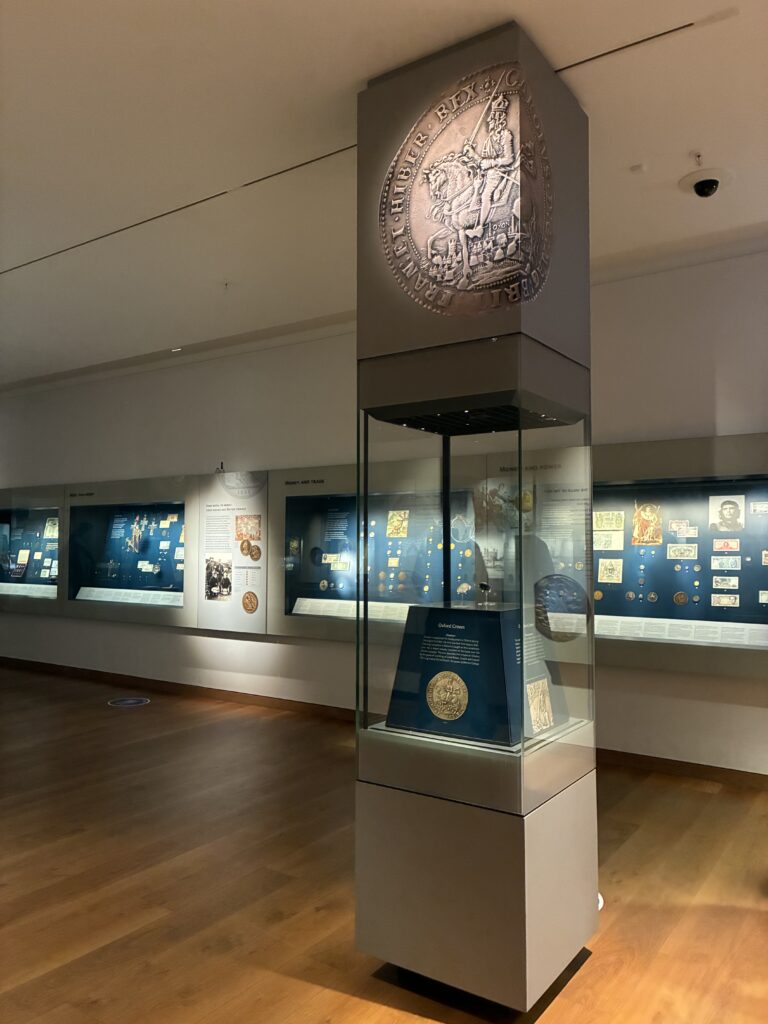
The Oxford Crown as exhibited in the Money Gallery of the Ashmolean. From early days in this country it was the monarch’s prerogative to print money.
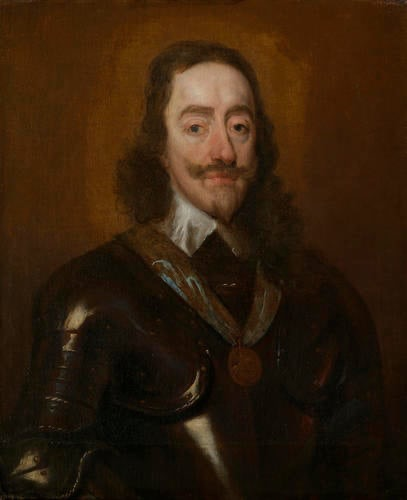
William Dobson took over from Van Dyke as Charles I’s preferred portrait painter. This was completed during the time Charles was in Oxford. In the days before photography the representation of the King’s image on a coin might be the only portrait ordinary people saw.
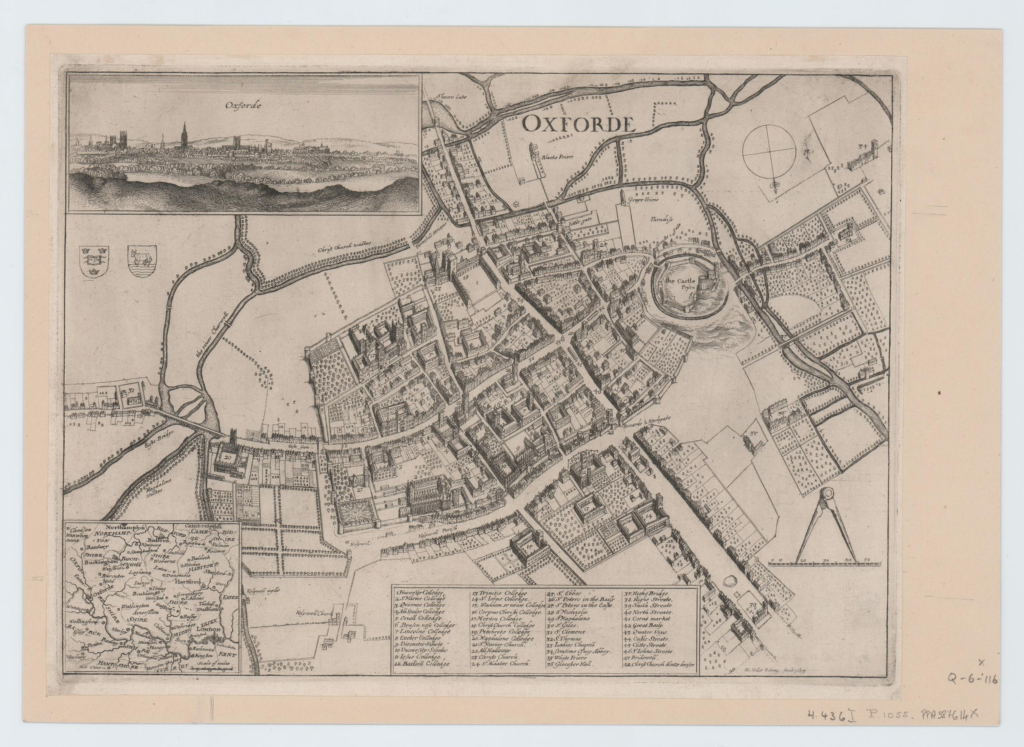
View of Oxford in 1643 by Wenceslas Hollar (courtesy of the British Museum)
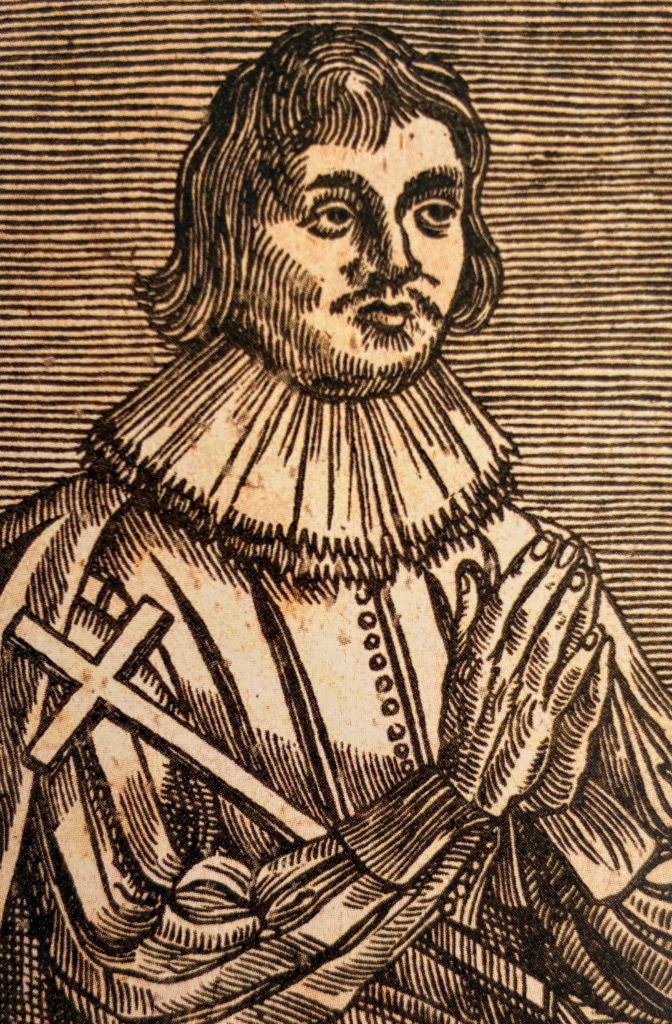
Thomas Bushell, who shared the job of mint master with Sir William Parkhurst when he first came to Oxford from his silver mines in Aberystwyth. He was one of the earliest vegetarians in England.
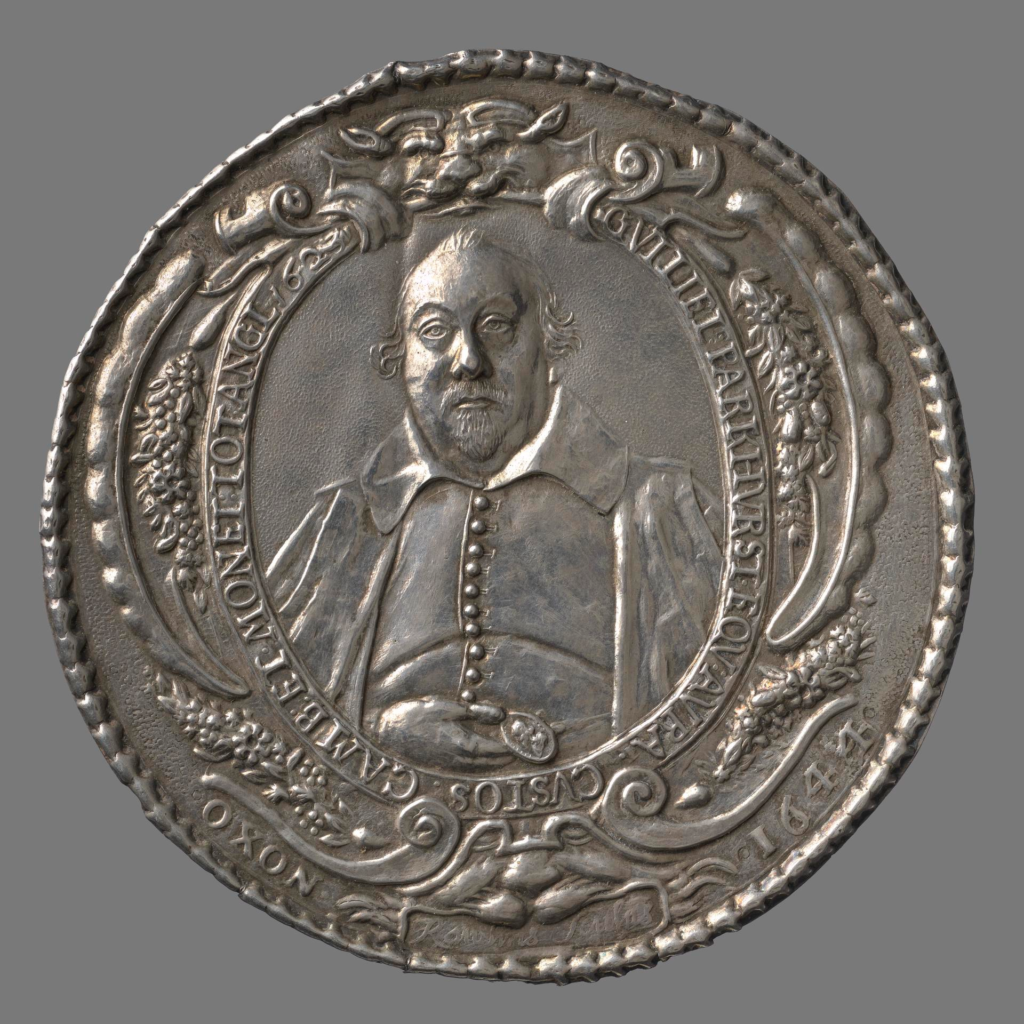
Sir William Parkhurst, the Tower’s Mint Master before he absconded to join the King in Oxford on a medal engraved in Oxford by Thomas Rawlings. He returned to his post at the Tower in 1660 at the Restoration of Charles II
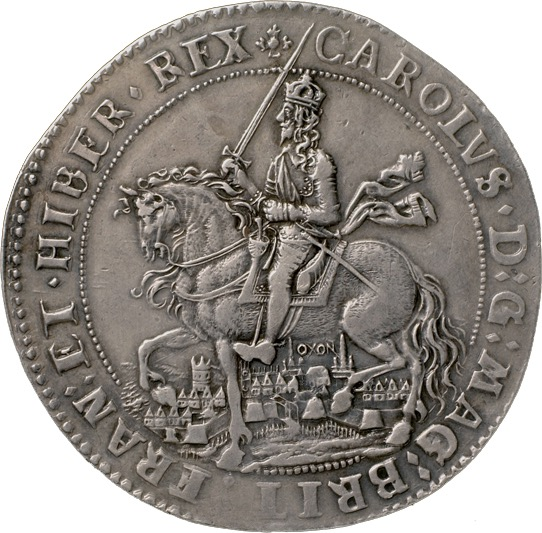
The Oxford Crown was engraved by Thomas Rawlings who was appointed ‘Graver of Seals, Stamps and Medals’ at Oxford in 1643. We know this is by him as he used his own signature, a cross made of lilies (just above the King’s sword on the obverse side). He will have engraved most of the dies during this time. After the King’s execution in 1649 he fled to France, returning to make a living making tokens for tradesmen. At the Restoration he was reinstated as ‘Engraver to the Tower Mint’, where he lived until the end of his days.
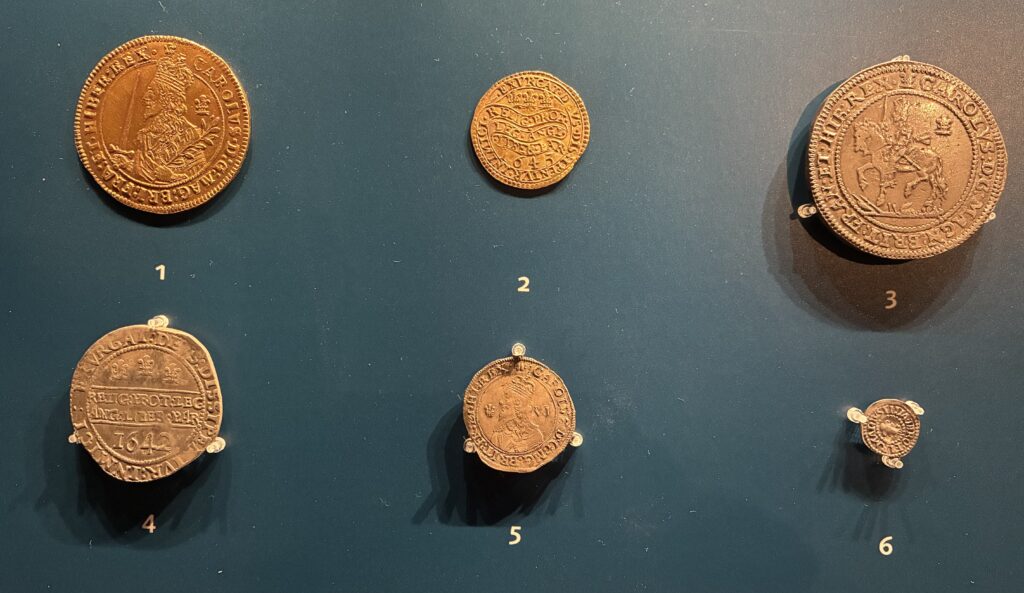
Coins from Charles 1’s time, minted in Oxford (and now in the Ashmolean) to show size. 1. The gold triple unite (three pounds or 720 pennies) 2. Gold half unite (120 pennies) 3. Silver half pound (120 pennies) 4. Silver half-crown 5. Silver sixpence 6. Silver penny showing a feather. The plume was often used as an Oxford mint mark.
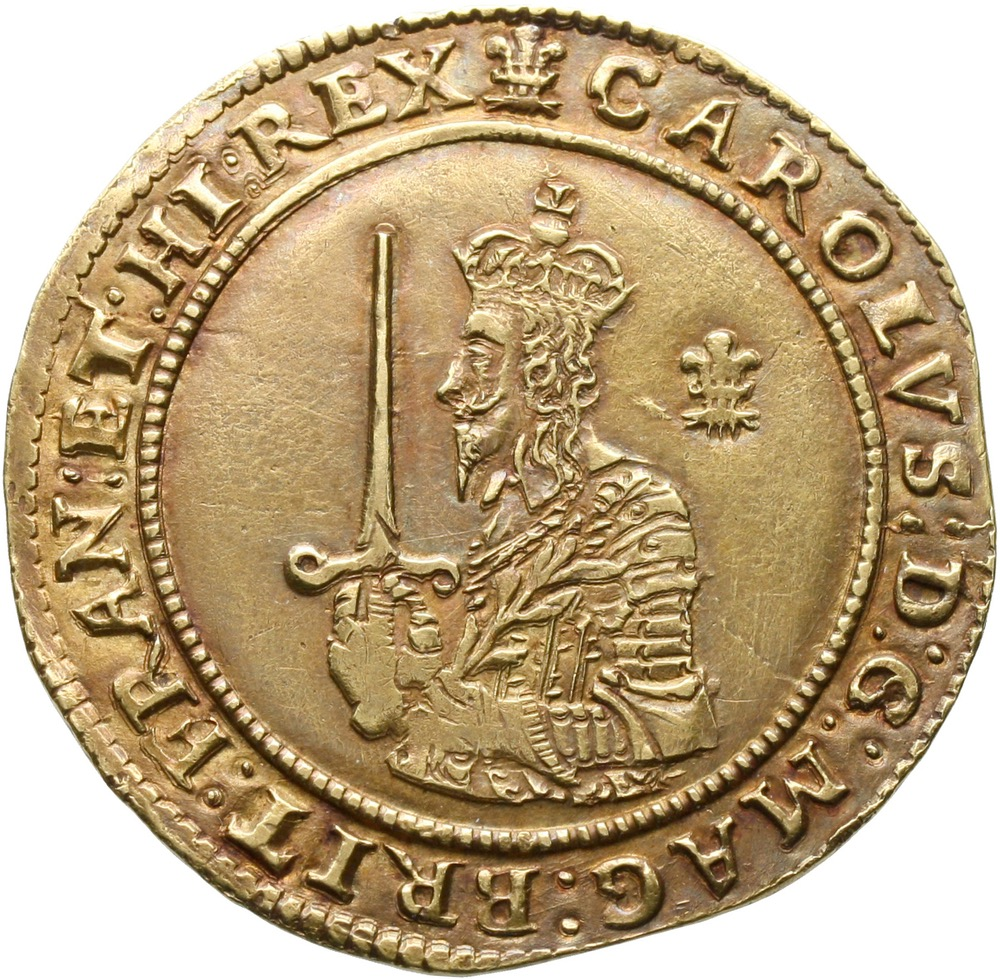
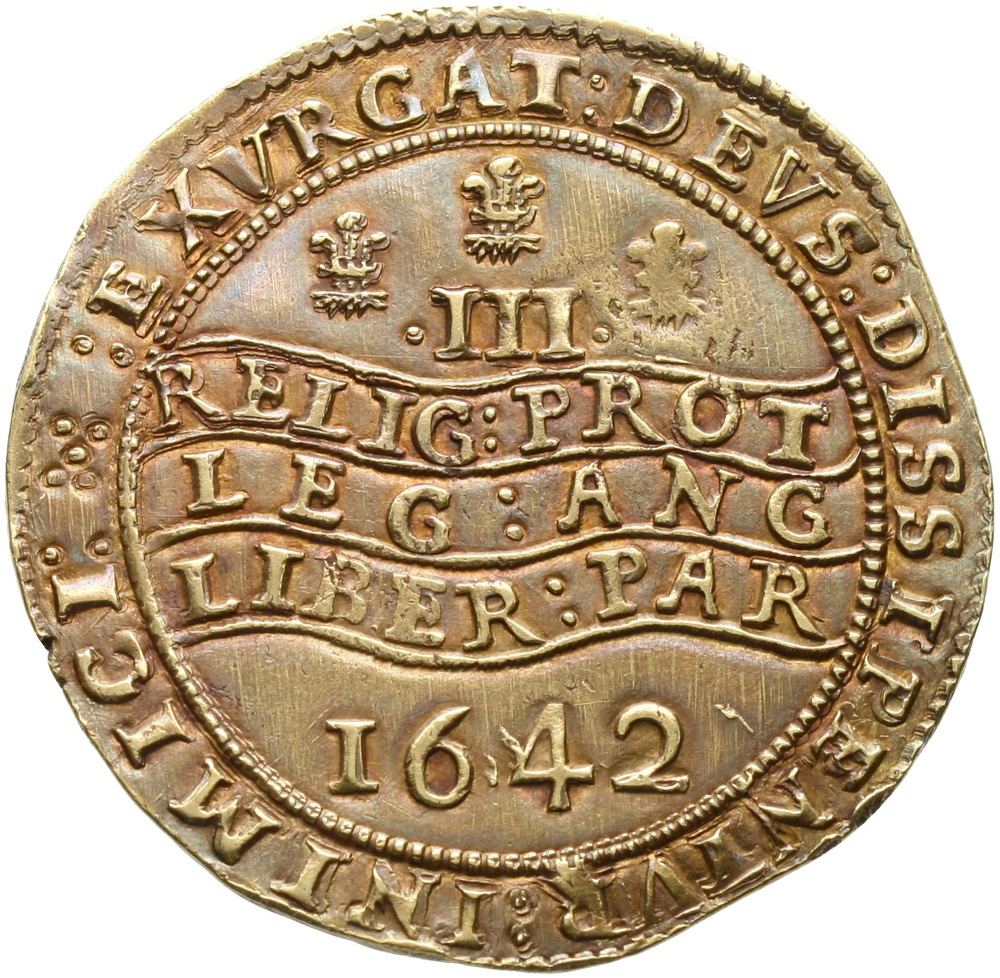
The beautiful gold triple unite was the largest denomination minted in Oxford at three pounds. Charles holds both a sword and an olive branch to show that he is keeping his options open. On the reverse as on many of his coins he promises to uphold the Protestant religion, the laws of England and the freedom of Parliament. Ironic when you consider he was fighting against Parliament. Coins made by Parliament at the Tower Mint continued to bear the King’s effigy and name right up to his execution in January 1649, as they claimed that they were not fighting against the King but his corrupt advisors. These coins are still more commonly found than those of any other mint.
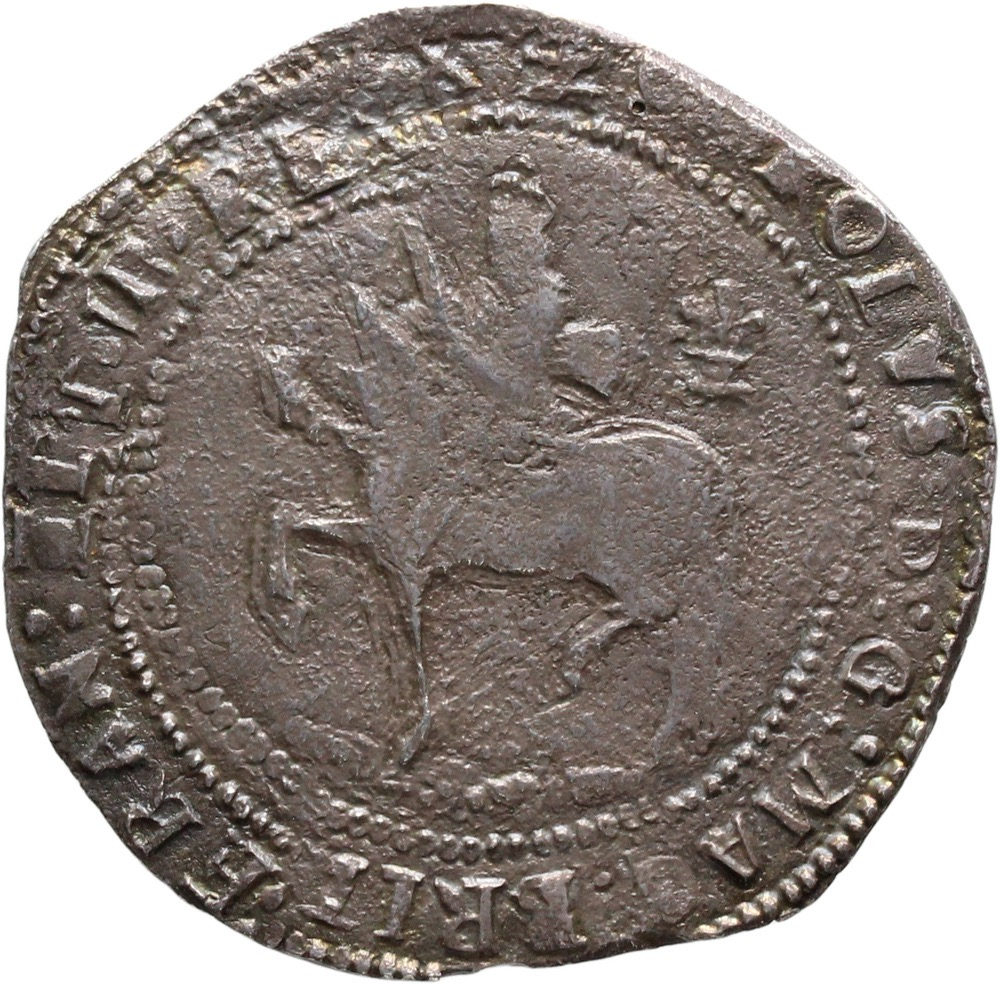
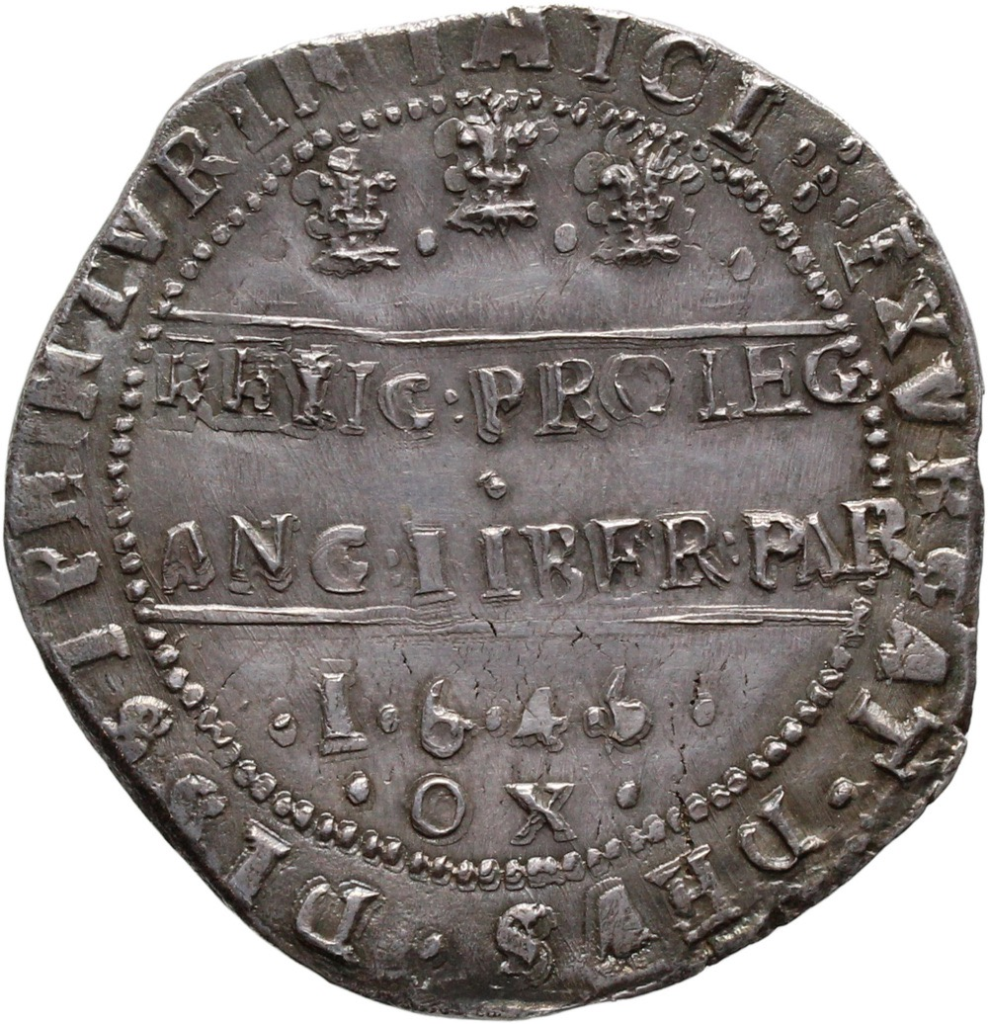
A silver half crown – the unit used for a cavalry officer’s daily wage.
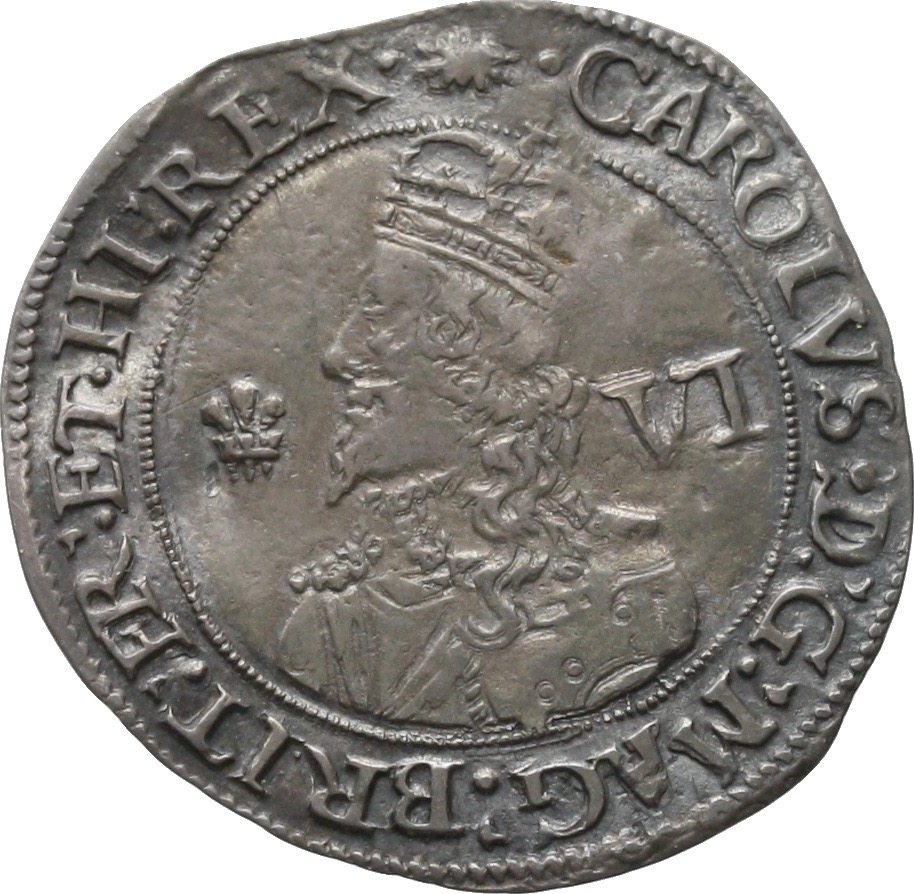
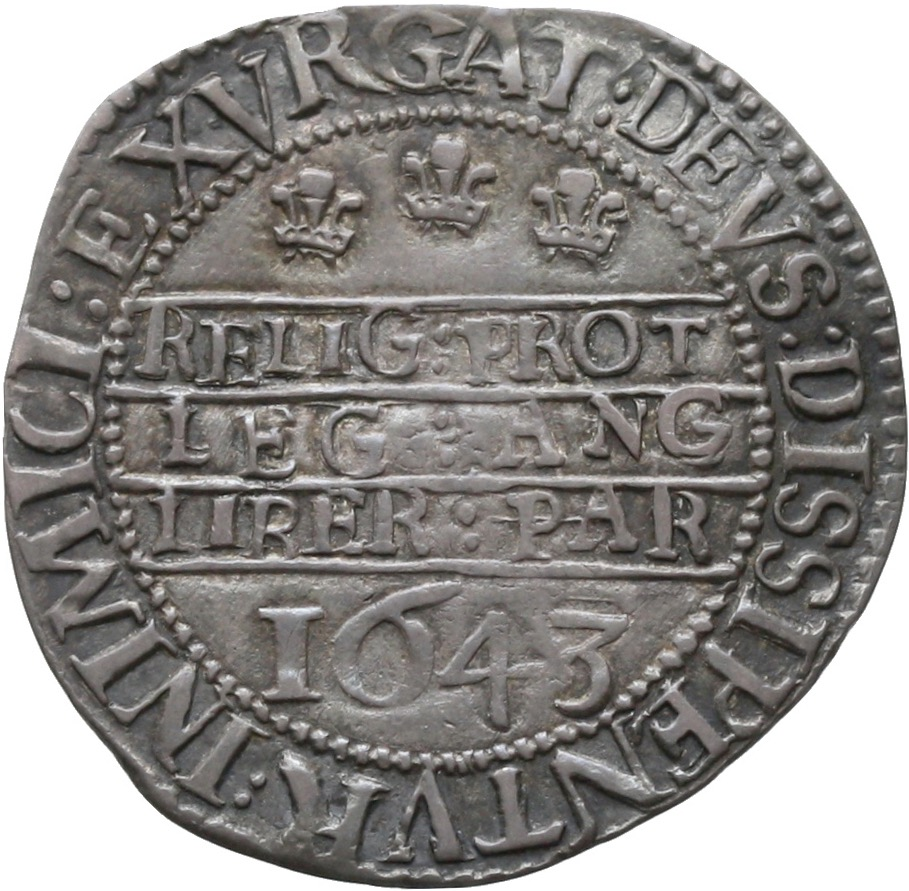
A silver sixpence. The King’s crowned head is seen here turned to the left in profile. After the monarchy was abolished, the cross of St George replaced the King’s head, the inscriptions written in English not Latin. Later there was an attempt to put Cromwell’s head back on Commonwealth coinage. Facing as above to the left. At the Restoration, Charles II insisted his head should face to the right on coins – so ‘turning his back’ on the old regime. Since then each new monarch faces in the opposite direction to their predecessor.
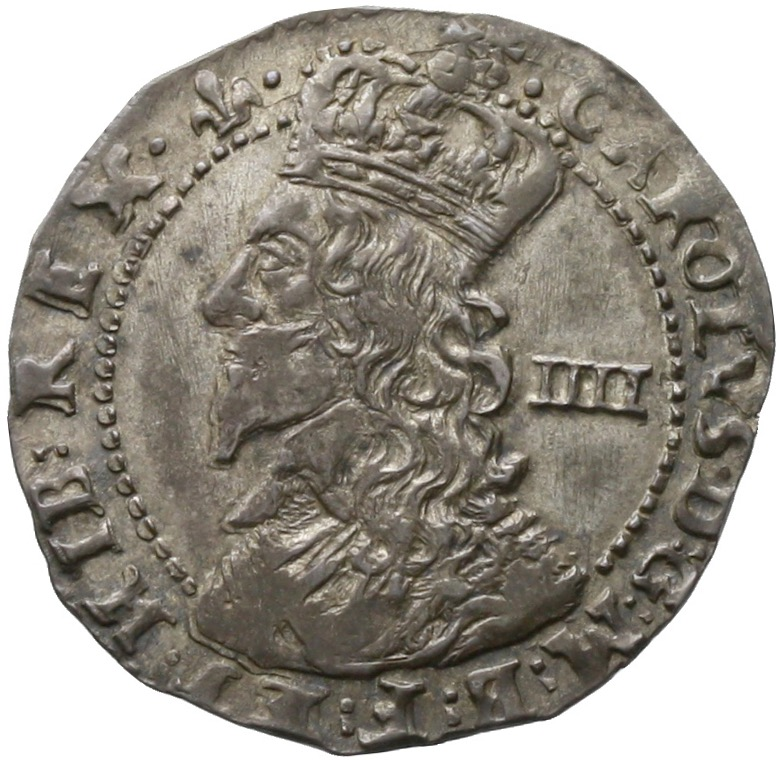
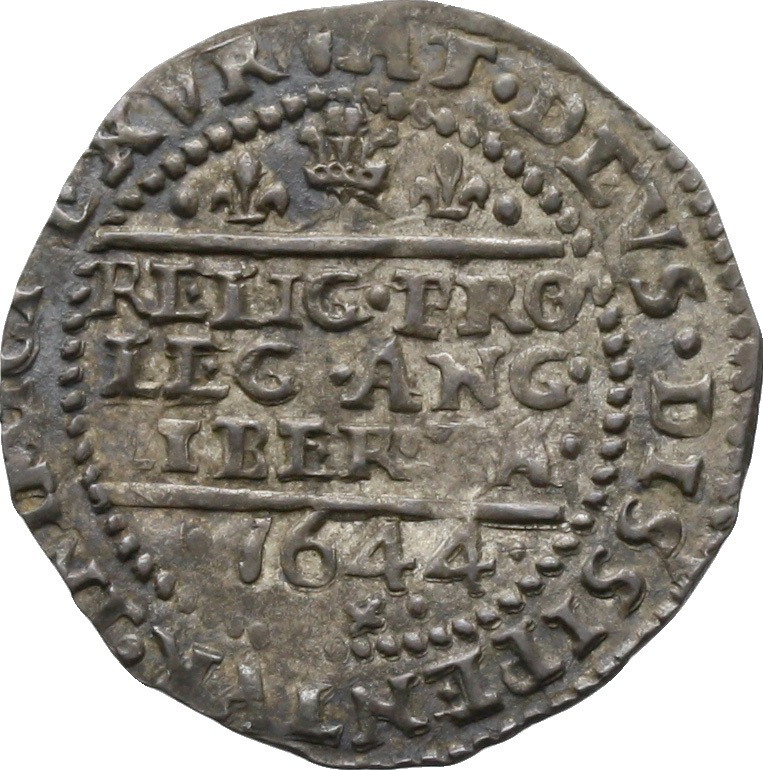
A silver groat was equal to four pennies. In the Civil War this might buy you a couple of loaves of bread or a gallon of cheap ale. A labourer during this time might earn a shilling a day (12 pence).
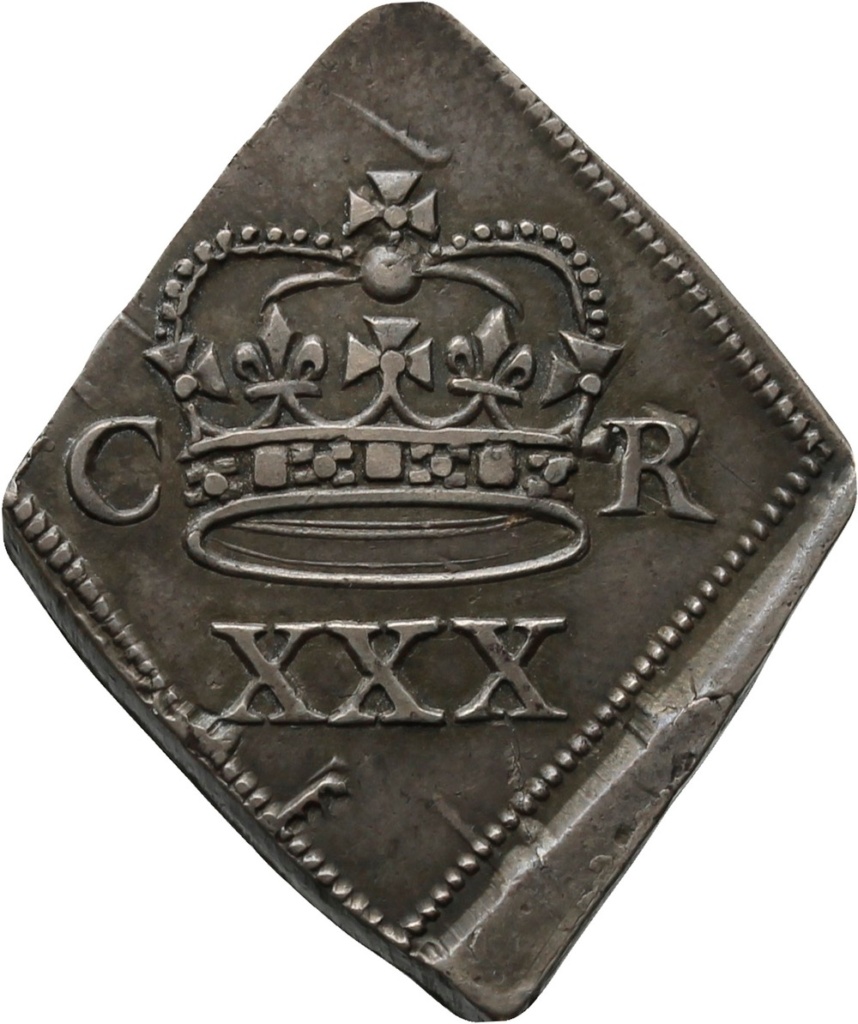
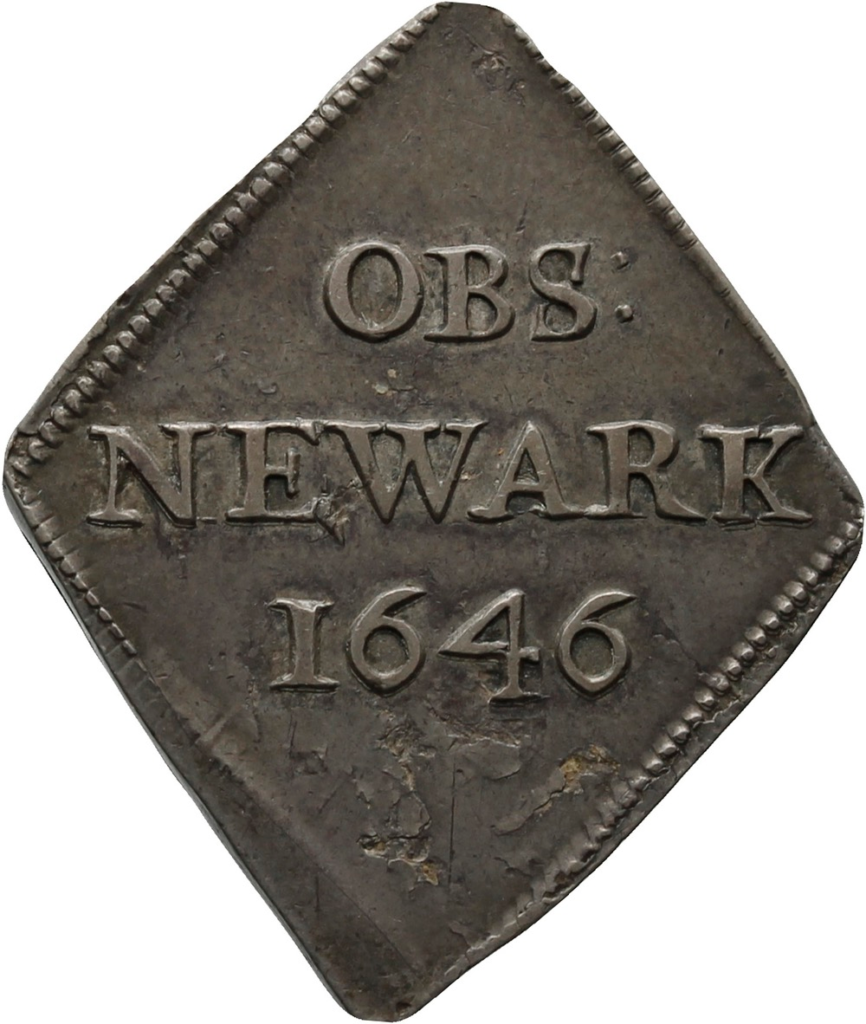
This diamond shaped coin is a silver siege piece stamped at Newark in 1646. On the reverse OBS (is short for ‘obsessum’ meaning ‘besieged) and Newark-on-Trent in Nottinghamshire the place that was under seige. When Royalist commanders didn’t have access to a mint, they would slice up family silver and decorative tableware and cut the coins directly from this to pay their soldiers. There was little attention to the shape (for which you needed specialist equipment) though each had to weigh roughly the same as an official coin.
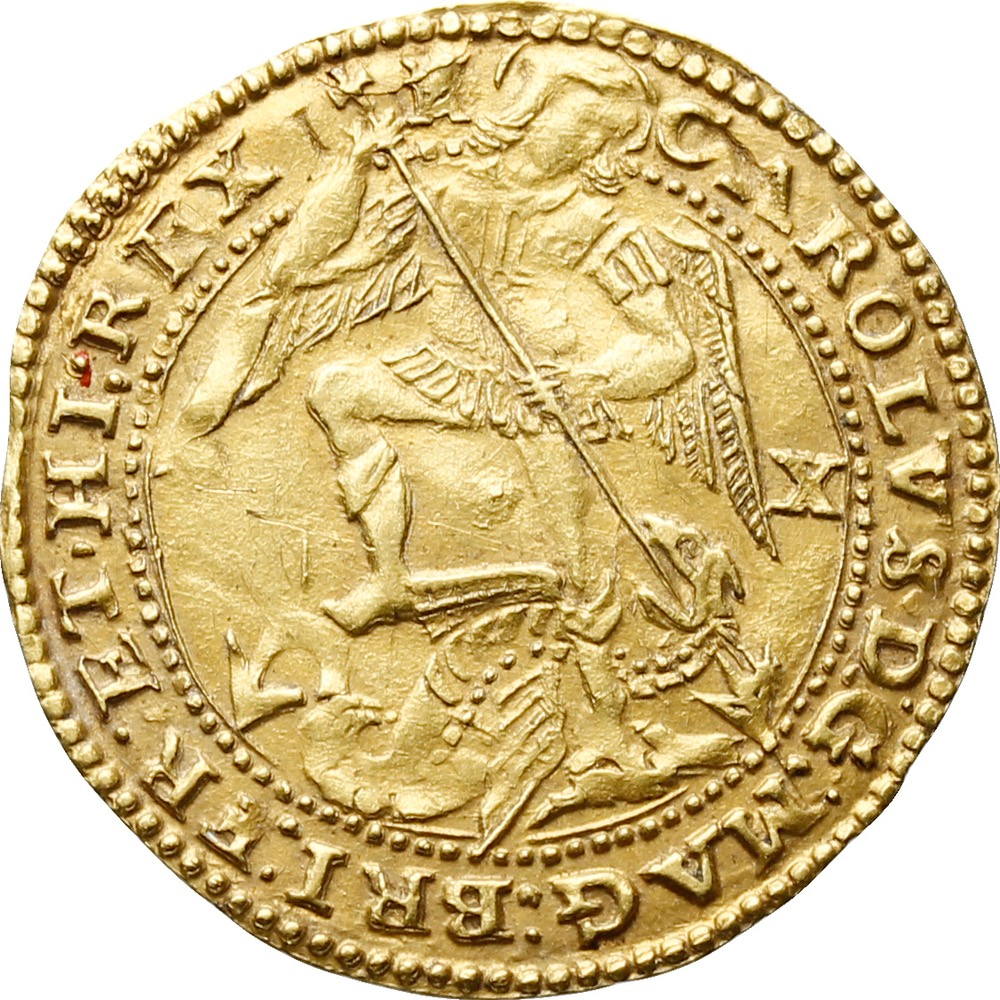
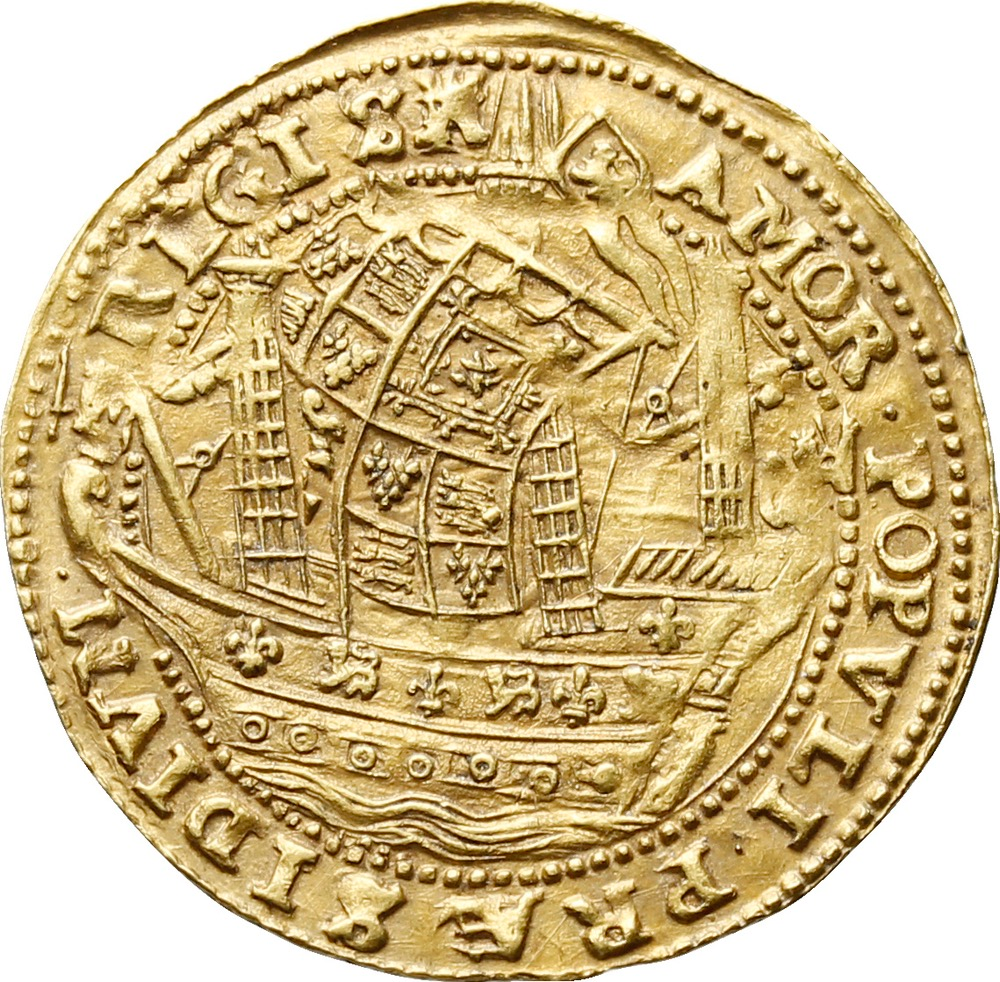
Gold Angel coin or ‘touch piece’. People believed monarchs had the divine right to rule and this connection with God could be used to heal others. The Kings of England often performed a laying of hands ceremony and then gave each one a gold Angel coin. They were last minted just before the Civil War. After the King’s execution many Royalists believed that coins touched by Charles I before he died could miraculously cure ‘scrofula’, an infection of the lymph nodes. They would pierce the coin and wear it around their necks as protection against the ‘King’s Evil’ as it was known.
You might also like to read: