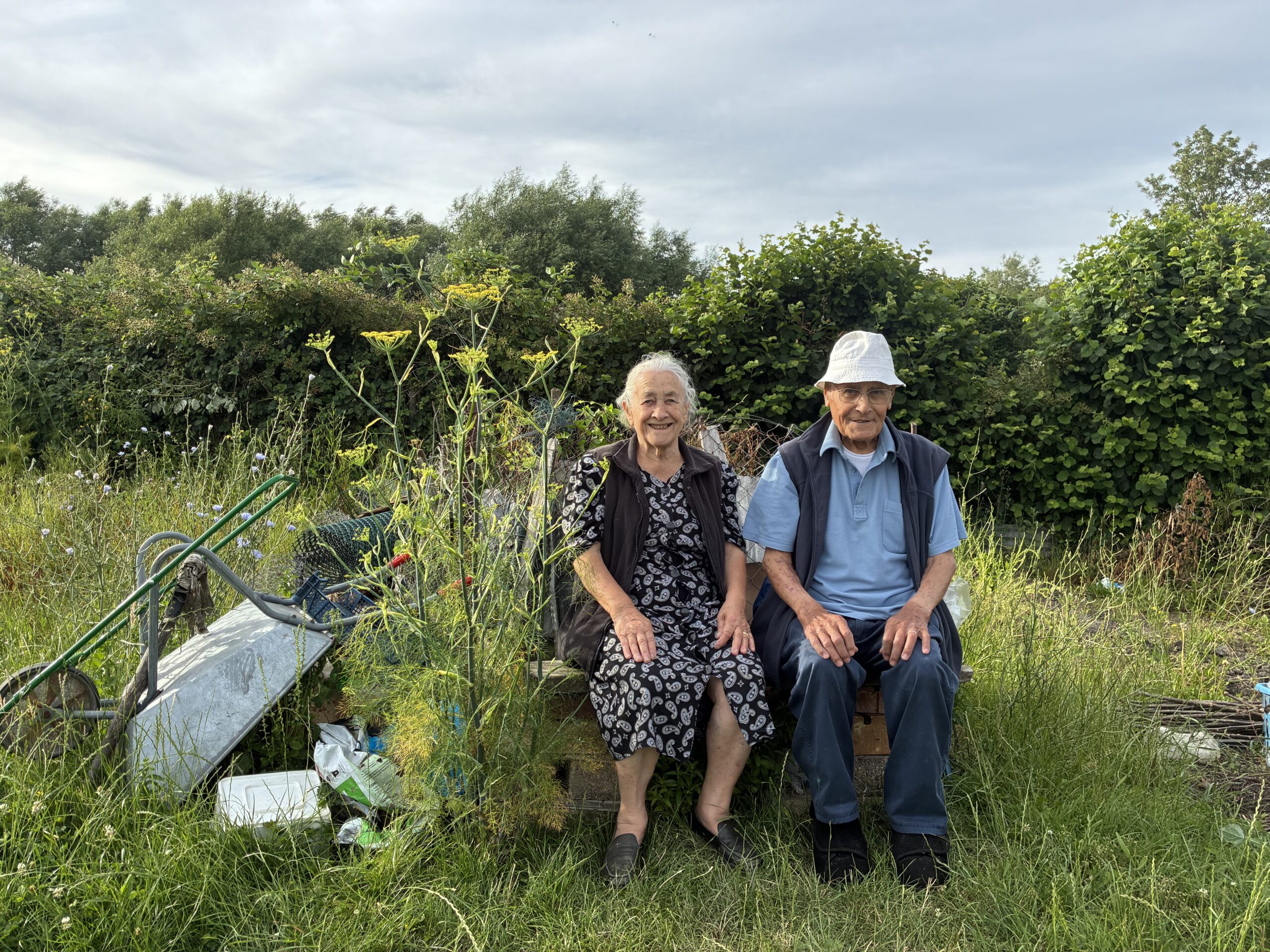
Maria and Giovanni Abarno (above) are instructing their daughter Christina on how to collect fennel, thyme, and oregano seeds when I pop my head over the fence between our neighbouring Cripley Meadow allotments to chat. The couple have been patiently digging, planting, growing, harvesting, cooking and preserving on their plot for nigh on seventy years, and at 90 and 92, have seen more growing seasons come and go than any other gardener here. Arriving in England from the region of Basilicata in Southern Italy in 1960 to take up positions in domestic service, they were always going to grow their own – it was what you did back home. And over the years, they have cultivated everything from peas, parsnips, and pumpkins to chicory and chard, carrots and cucumbers to beetroot, borlotti beans and purple sprouting broccoli. They may no longer have the bend in their bodies to put in the hours they once did, but with no garden at home this is still their favourite spot, where they like to come to get out of the house. The place in which they have produced such abundance is where they feel most happy.
Allotments in this country were established back in the 19th century by Act of Parliament. To ensure that local authorities made provision of land to those on low incomes to provide fresh fruit and vegetables for their family. It was thought that this would not only foster a strong work ethic, but also a sense of belonging and community. The Cripley Meadow site is just south of Port Meadow, sandwiched between the new Castle Mill graduate flats built alongside the main Oxford to Birmingham train track, and the river. Set up in 1891 it was one of the first in Oxford. The land previously used to graze horses and cut hay, had been earmarked to build workshops for the new Great Western Railway. But luckily for us they decided on Swindon instead. And so it was that 14 acres were parcelled up into plots ranging in size from one to 12 poles (an ancient measurement of length from the back of a plough to the nose of an ox). The resident engineer was instructed to deposit street sweepings of horse manure and grit, and buckets of ash and dirt closets from household waste to raise the ground levels for cultivation. As it turned out this was also the perfect fertiliser.
Like many of the wonderfully named allotment sites around the city (there’s Spragglesea Mead, Twenty Pound Meadow, the Trap Grounds and Town Furze) Cripley is located on the Thames floodplain. Fiddlers and Castle Mill Stream skirt the smallholdings. For many months of the year large parts are underwater. Wander around the site at Cripley and you will notice that some sheds are built on stilts, and beds are raised up high. And to take advantage of water being so near to the surface plot holders are encouraged to consider digging their own well. There are instructions on the website on how to do this. With the following warning. ‘Be sure to have someone with you. Don’t try digging on your own in case you get stuck.’
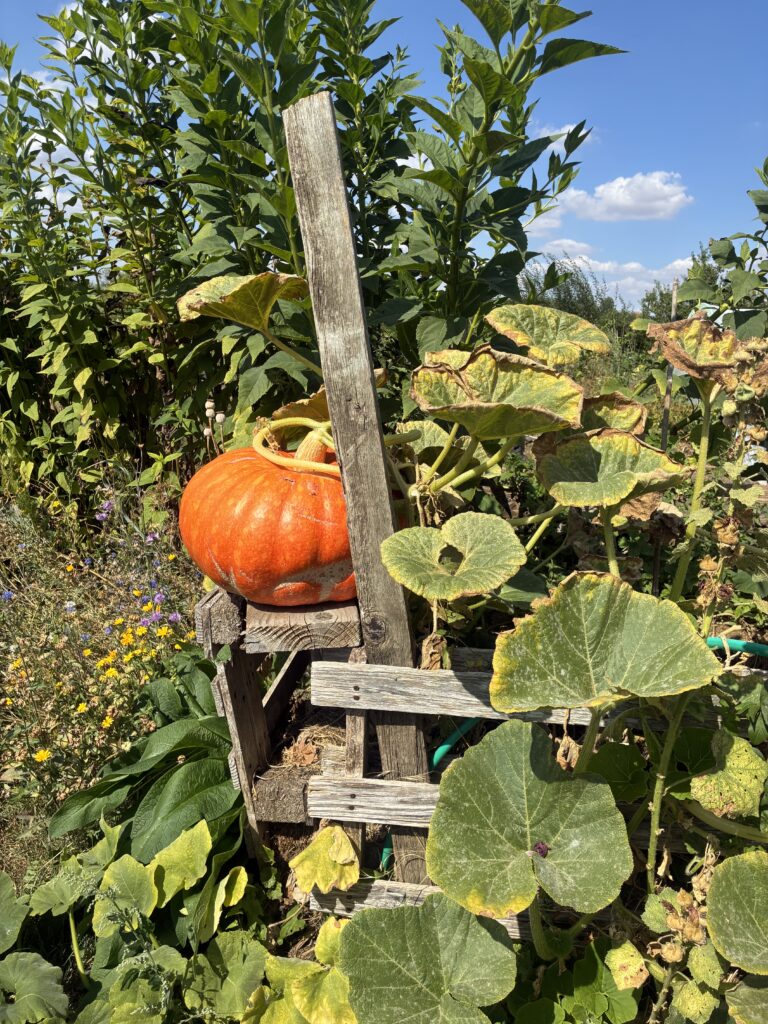
Yet still, this year’s long hot summer has been testing. I’ve witnessed human chains of people with buckets transferring water from the river to prevent prize pumpkins from drying out, heavy rucksacks of bottled water transported twice a day to quench the thirst of a patch of heritage tomatoes grown from seed. There are solar panels installed to drive pumps. I spotted one man rolling a large barrel of water through the streets of Jericho to irrigate the last of his legumes. Allotment holders are nothing if not an ingenious bunch.
And so it proves as I take a wander around these personal oases. Stopping to chat to those I find in residence I discover a diverse group of people from different cultures and backgrounds, unified by a love of gardening, a desire for a haven in which to nurture flowers and grow vegetables, exchange tips with neighbours, enjoy the quiet of peaceful surroundings. And I come away with armfuls of tomatoes, peppers, courgettes and an aubergine large enough to feed an army.
For now is the time of bounty. When we enjoy the last of the summer days before the nights begin to draw in. When we race to pickle, jar and bag up our produce for the freezer. And the gardeners of Cripley Meadow begin to plan their planting for the spring.
I am already looking forward to it.
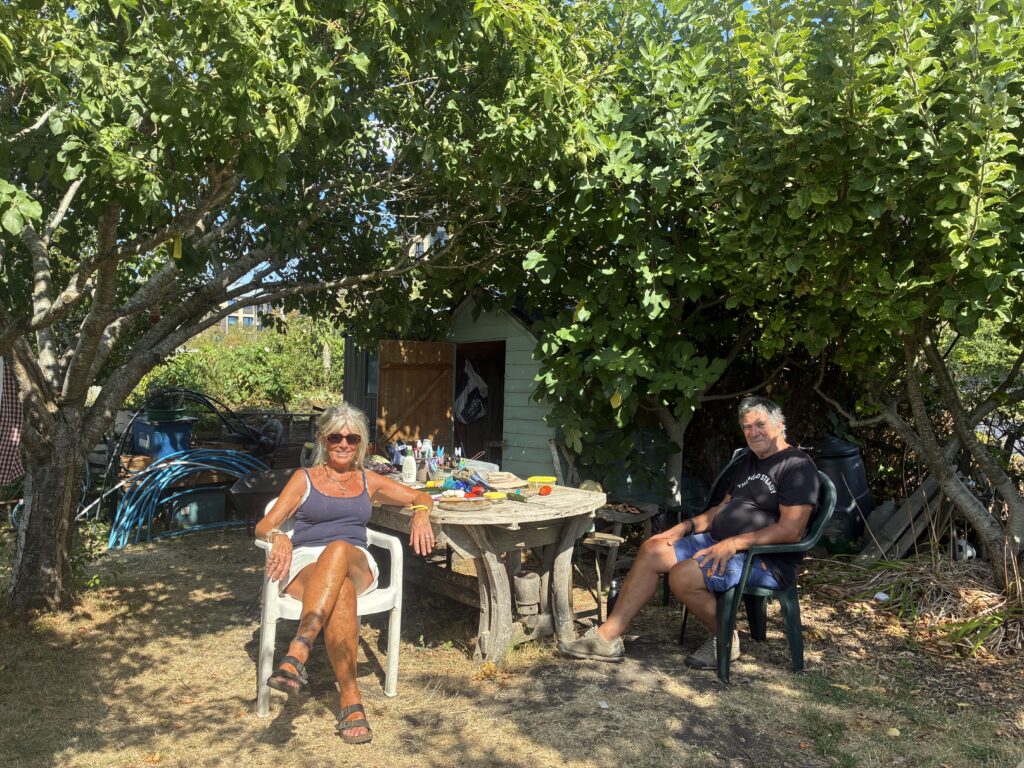
Patsy Franks and Tim Bone
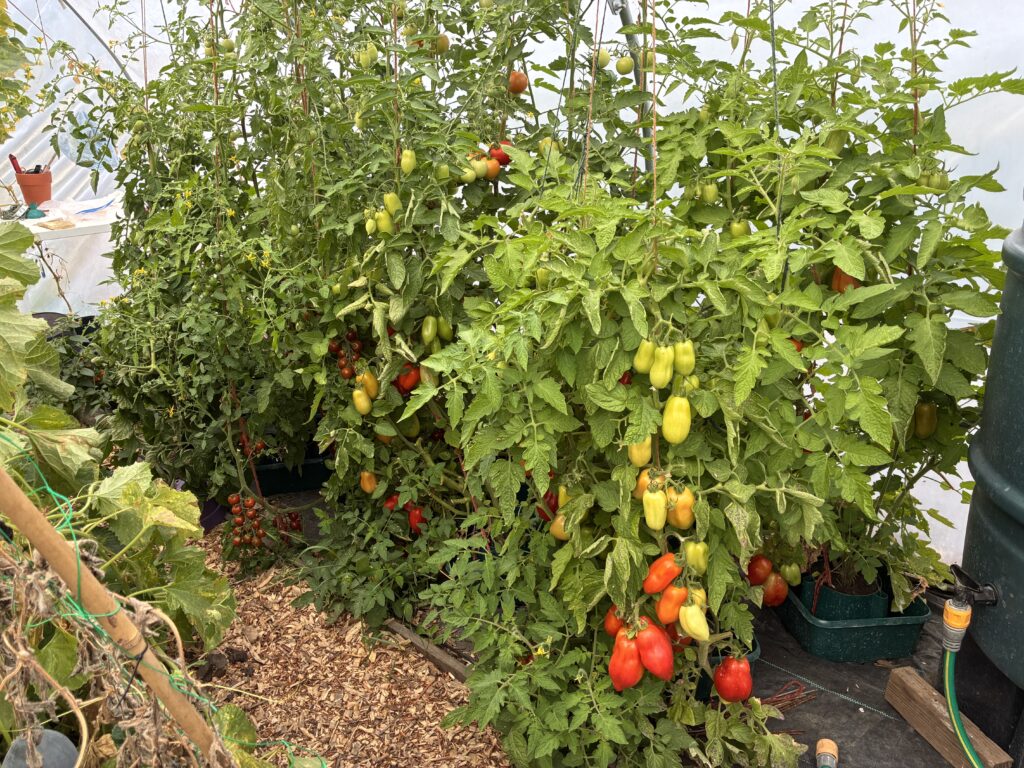
“We have had so many tomatoes this year it’s been hard to keep up – we have seven varieties. The Italian San Marzano plum tomatoes are particularly good for bottling. The tiny Sungold cherry tomatoes you can eat like sweets. We are having gazpacho for supper every other day. It’s corn on the cob tonight. We use single socks with the ends snipped off, or socks with holes to keep the rats from the fruit.
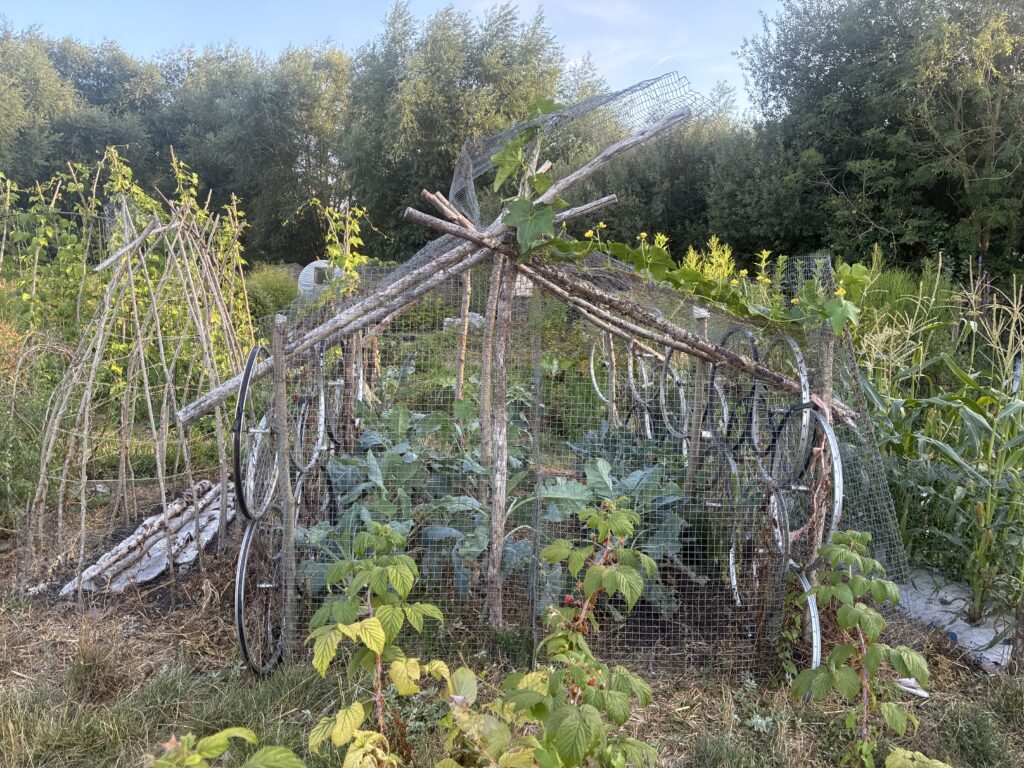
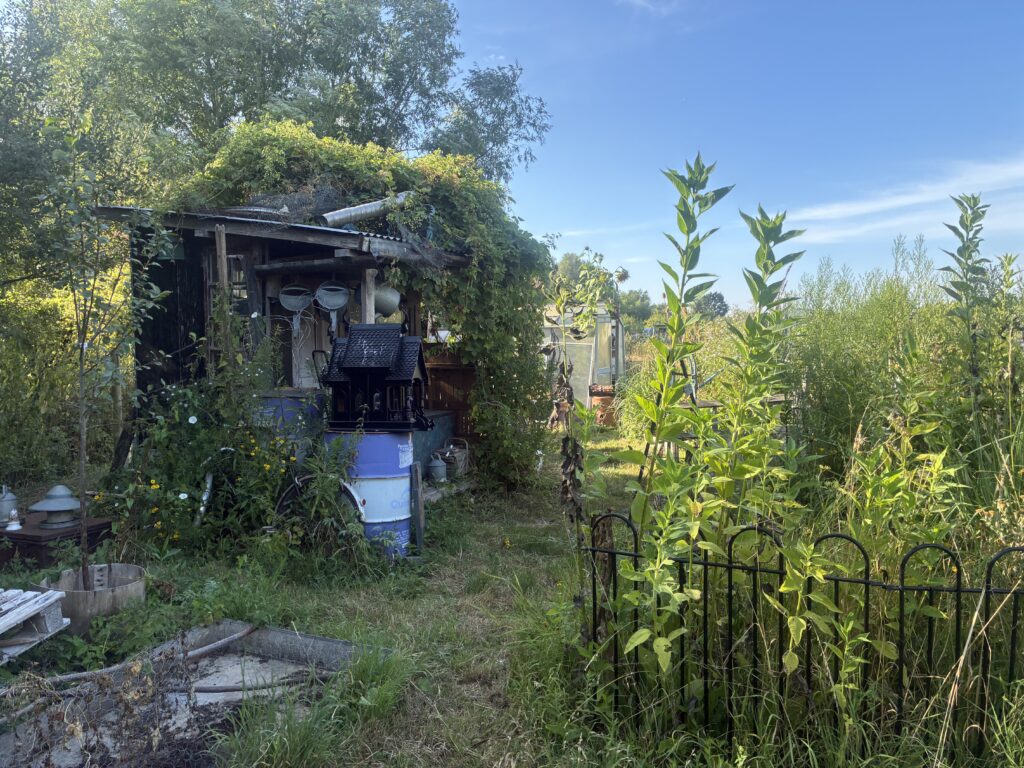
Everything here is from skips or recycled. Even the shed – it was being thrown out by Wicks because it had no door. Then when I wrote to them explaining, they sent me replacement door for nothing. We planted a plum tree and an apple tree at exactly the right distance from each other so we could hang a hammock between them. And later for the grandchildren to lie out on blankets in their shade. They have spent a lot of time down here.We live by a pub with a tiny garden so coming down here is very peaceful. Therapeutic. The peace and the food production go hand in hand.”
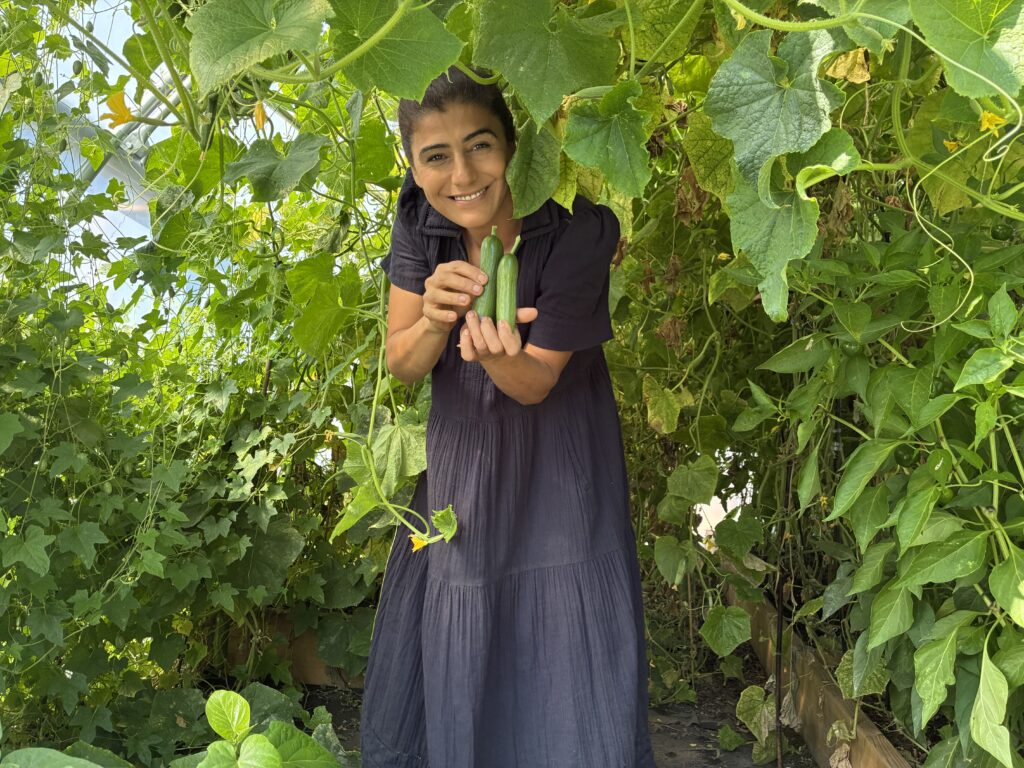
Samira Kazan
“I write a blog about how to make mostly recipes from scratch. It started because I wanted to have a healthier diet. I photographed a beautiful pink smoothie I had created from guava, lime and coconut milk and it went viral. And then I discovered I could make money out of it. And so during Covid I developed hundreds of recipes. For example, how to make cream cheese, how to microwave corn, what to do with a glut of cucumbers.
I come from South Lebanon, and I started to grow things in my garden in Jericho. But I needed more space and so in May this year I took on this plot.
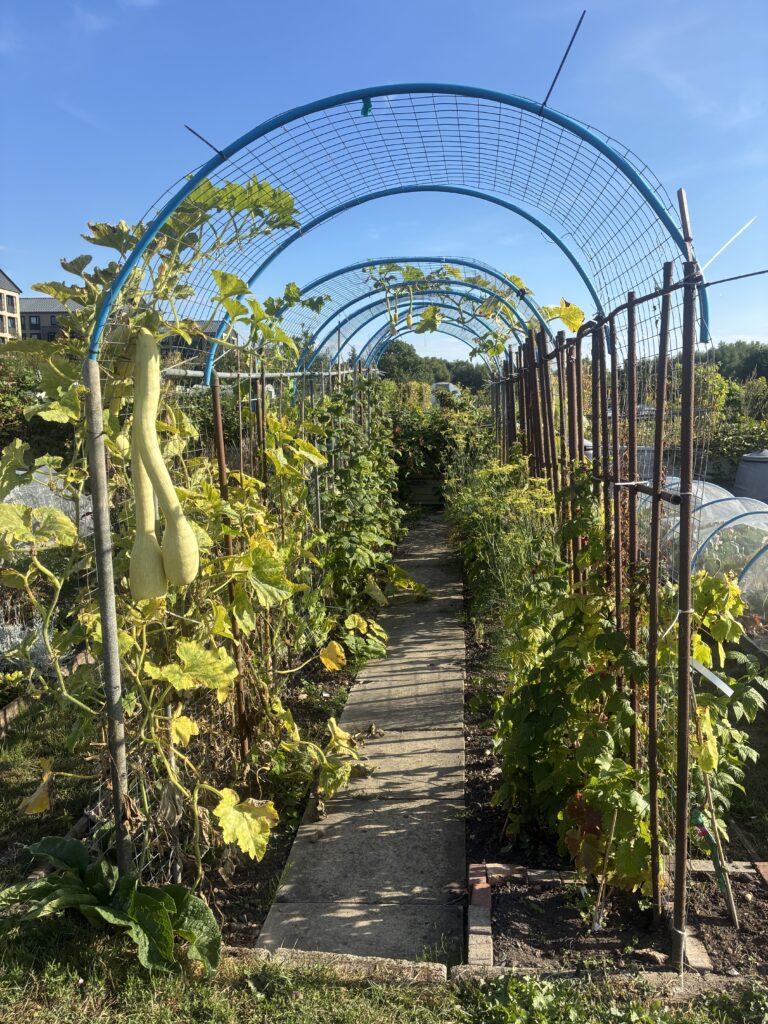
When I arrived, the ground was covered in plastic – there was no shed, no water source. Then I found a hole filled with rubbish – I got rid of six barrels of the stuff to reopen the well. I don’t have a car, so it has cost me a lot in materials and transport to get them here. But I have built a shed, a polytunnel and planters as I wanted to get going straight away. I am a bit of obsessive you see. My plan is to grow things I can use for my recipes and any surplus I will give away. I have grown everything from seed – I have 17 varieties of cucumber. I have made mistakes. Tomatoes need strong supports, pick zucchinis before they grow giant, don’t plant too many cucumbers. Maybe if I do, I can swap next year with somebody who has planted too much of something else. I’m excited about the winter – kale, salad, garlic, onions. And I want to plant roses with perfume from which I can make rose water. There is so much opportunity here.”
You can find Samira’s blog here:
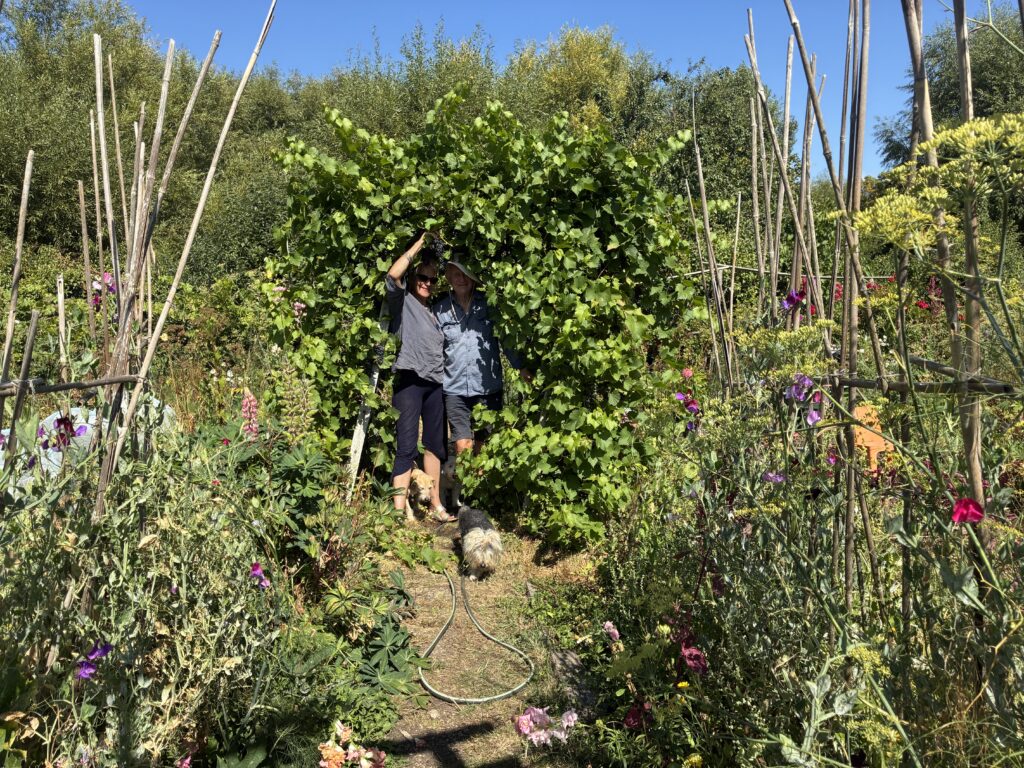
Doke and Robin Ostle
“I had come to Oxford from East Sussex,” says Doke, “where I had had a garden so when I arrived here in 1990, I knew I needed to find somewhere to grow things. I had a plot over the other side of the site before I settled on this one. I chose it because it was by the river and it had a vine. I loved the idea of connection with all the other women in the world who have carried water through the centuries. My daughter and I built the shed out of bits and pieces we found in skips.
Lots of what I have here is self-seeded. I call them my volunteers. I love flowers (all flowers, I don’t have a favourite) and when they self-seed, I don’t have the heart to pull them up. They grow where they land. Every one of them intent on survival.
There’s not a straight line on my plot.
My allotment is very political. After the bombing in the Middle East, I made 120 bunches of volunteers – nasturtiums, dill, fennel, coriander, calendula and hung them on every door on my street. To remind people of the bounty we have when so many people have nothing.”
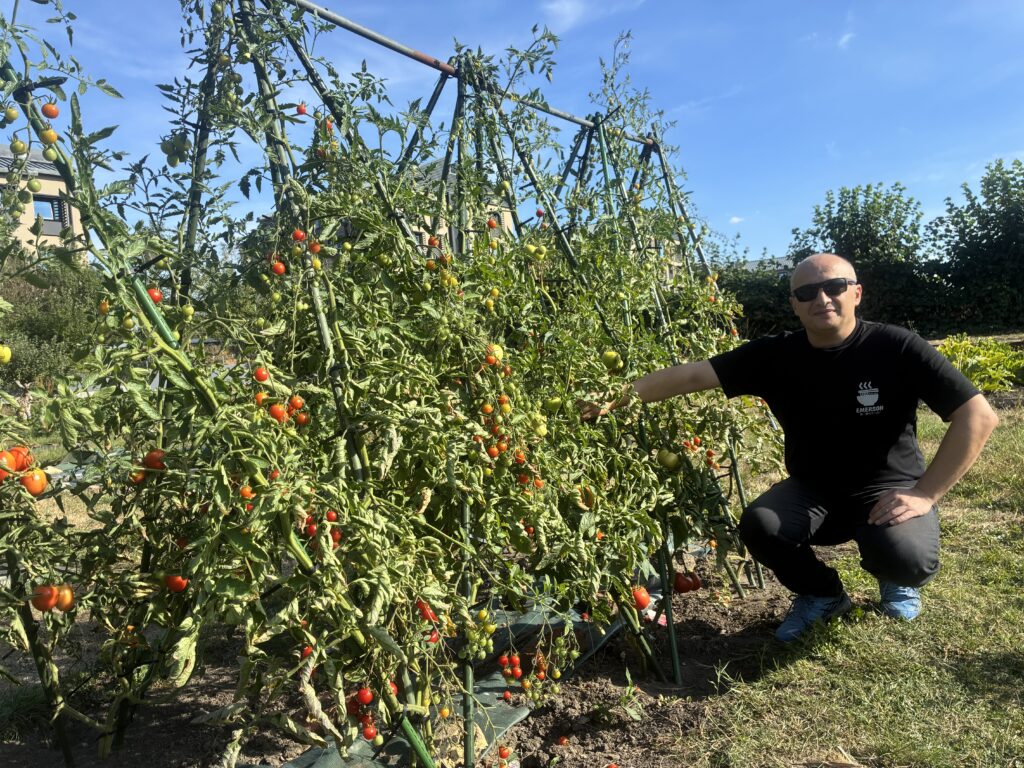
Ilias Kounatidis
“I originally had half a plot, but when more land became available, I took it. I now have three plots. I was born in Katerini next to Mount Olympus. I come from a family with a long tradition of cultivating olive trees – olives and olive oil is what paid for my studies. My PhD was in the microbiota of olive flies. It’s how I got to come to Oxford on a fellowship. I am now a senior lecturer in Biomedical and Health Sciences at the Open University.
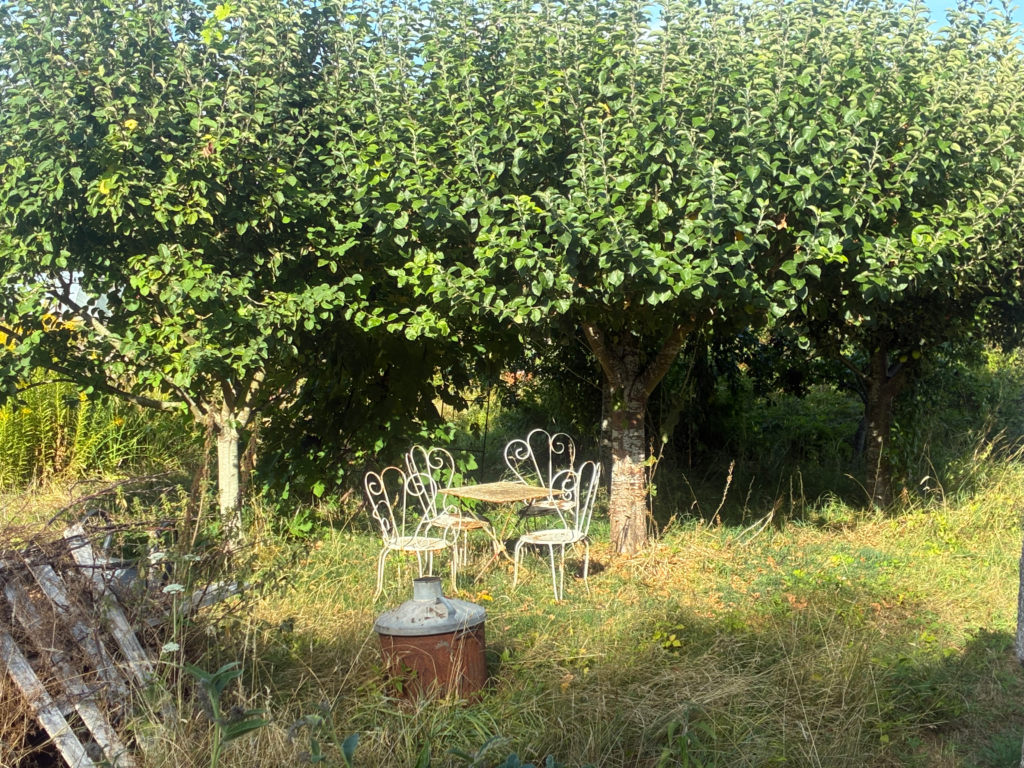
A little while ago I was approached to be Orchard Manager. I liked this title, so I took on the role. We now have 24 varieties of apple here, 10 plum varieties, 8 pear, 2 quince, 2 apricot, 1 medlar and a few more exotic ones, such as 6 Asian pear varieties. Every year my dad comes over from Greece to check my work. He always has lots of suggestions but I have developed my own style now. I have had to adapt to the British weather.
Being part of the committee is a nice way to contribute to the community. I love the passion everyone has. Last year all allotment holders were invited to come and pick the produce from the orchard – we even made apple juice to share. This year has not been so good for apples.
This is my garden. I am impressed by the huge variety of seeds that can be grown here. My family have all our birthdays down here – we put on BBQs with our Greek friends and students. As an academic it is very difficult to switch off. But being on my allotment is proper meditation. It’s the only time I can properly switch off.”
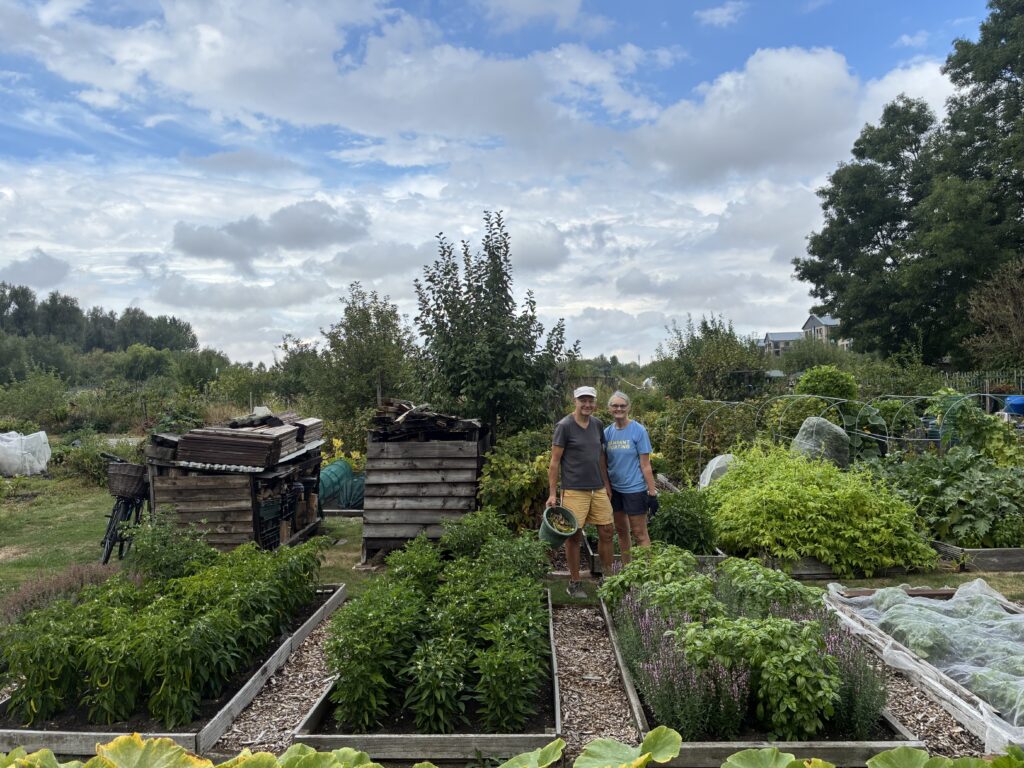
Louise and Rob Bruce
“We only have a yard at home, so this is our garden. And we do it together. Here you get the huge skies – you don’t feel you are in the middle of a city. We have lived abroad a lot, and where we are now, in the south field, was the second stage of reclamation of the site. It had been completely wooded but the then Chair of the committee cleared it and divided it into plots. We soon outgrew our first plot now we have three. It’s our passion,” says Louise.
“I come from a long line of market gardeners from North London,” adds Rob. “I remember going with my grandfather to Covent Garden to sell produce. Louise’s family are also gardeners. The trick is a little and often. In the winter we are down here in seven layers of clothing preparing and clearing and covering so in the spring we are ready to go. We are what we call ‘Womblers’ – everything is up cycled, we even wombled the compost bins. We save our own seeds. The seeds for this climbing achocha plant from South America were a gift from our neighbour. We grow the everlasting flowers statice and helichrysum because that is what my grandfather grew. They have been great for this summer as they don’t require any watering.
The common denominator down here is the plot. It doesn’t matter what you earn or what you do. It is a leveller. The communality is in the growing. And we all know how good it is for mental health”
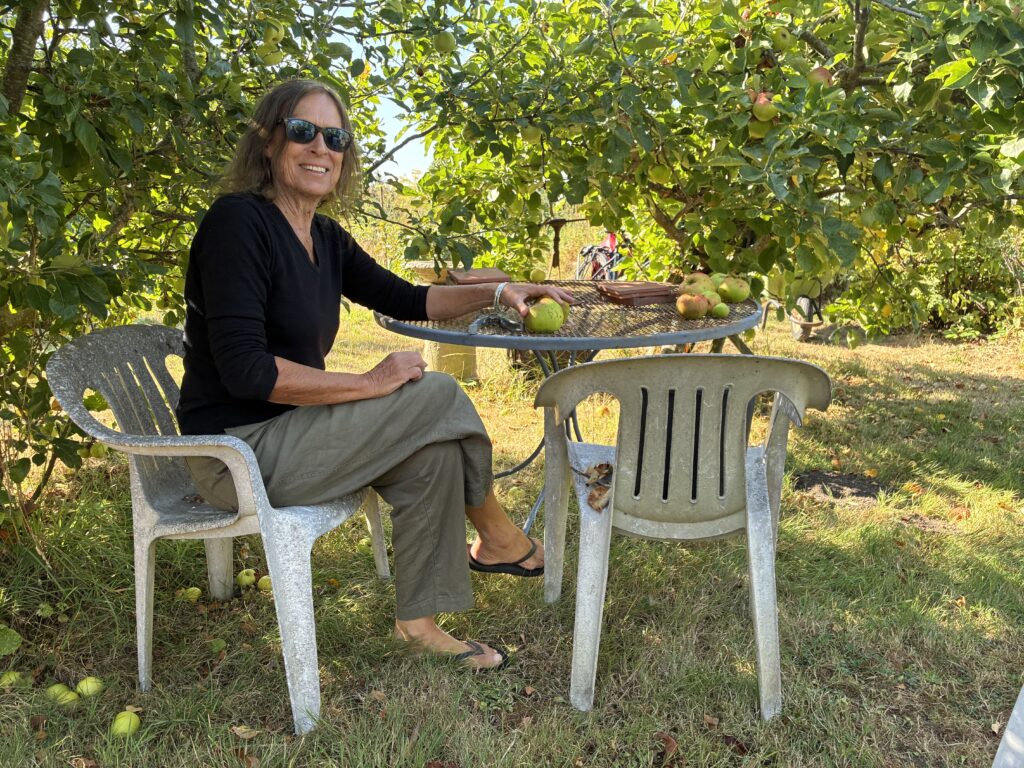
Carol Kennett
“I fancied a piece of land that could be my own. For me it has always been about having a garden. I grow fruit and flowers – they are less work than vegetables. Currant bushes, lots of apples, cherry, pears, grapes. I never want to pick the flowers I grow. It’s my little piece of heaven – a place to go and relax.
I came here 28 years ago when the place was wild and completely overgrown with brambles. My boyfriend at the time built me a shed and I used to sit inside and watch the deer and rabbits. The next allotment to me kept chickens. One man had geese and a horse. It’s more organised now, the plots are better tended – livestock are not allowed.
Having an allotment gets you out. It’s your own little world. It makes me happy. My granddaughter comes here to relax too now. I couldn’t ever bear to give it up.”
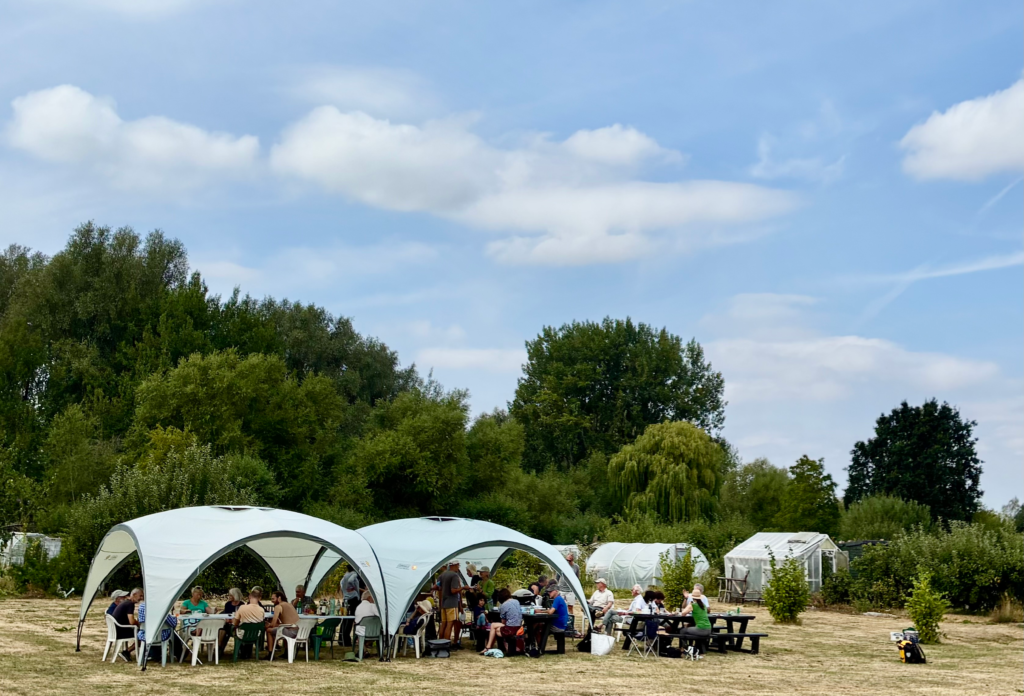
The annual community lunch
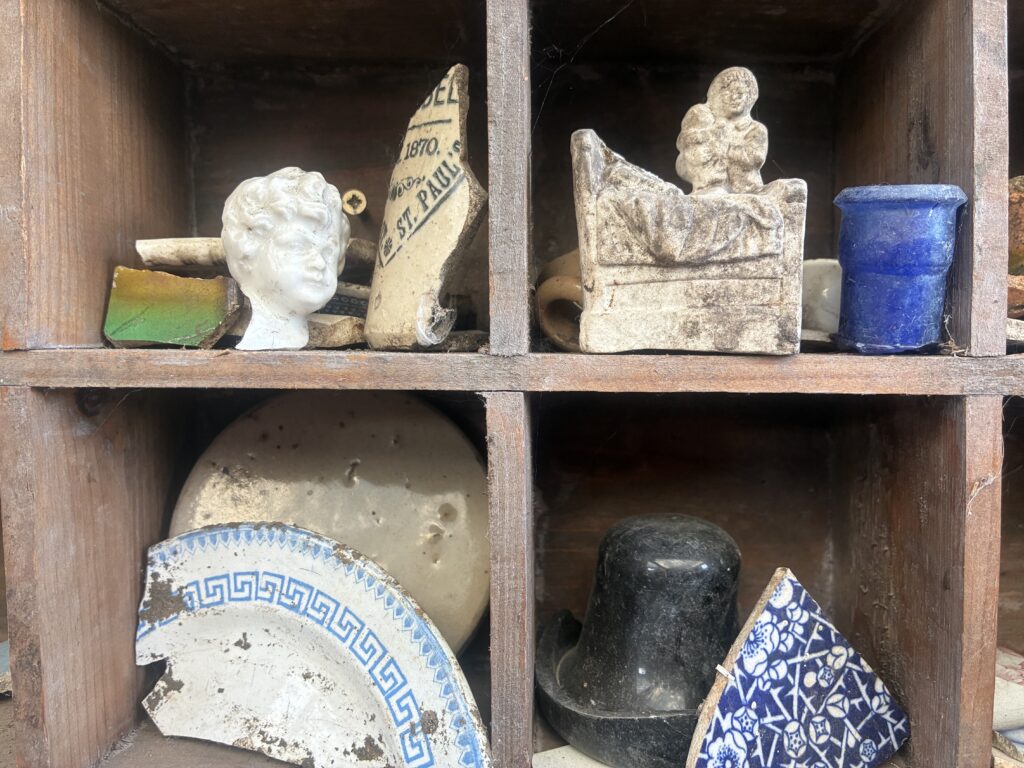
Some of the treasures I have found while digging on the allotment, now in my mini allotment shed museum.
You might also like to read: