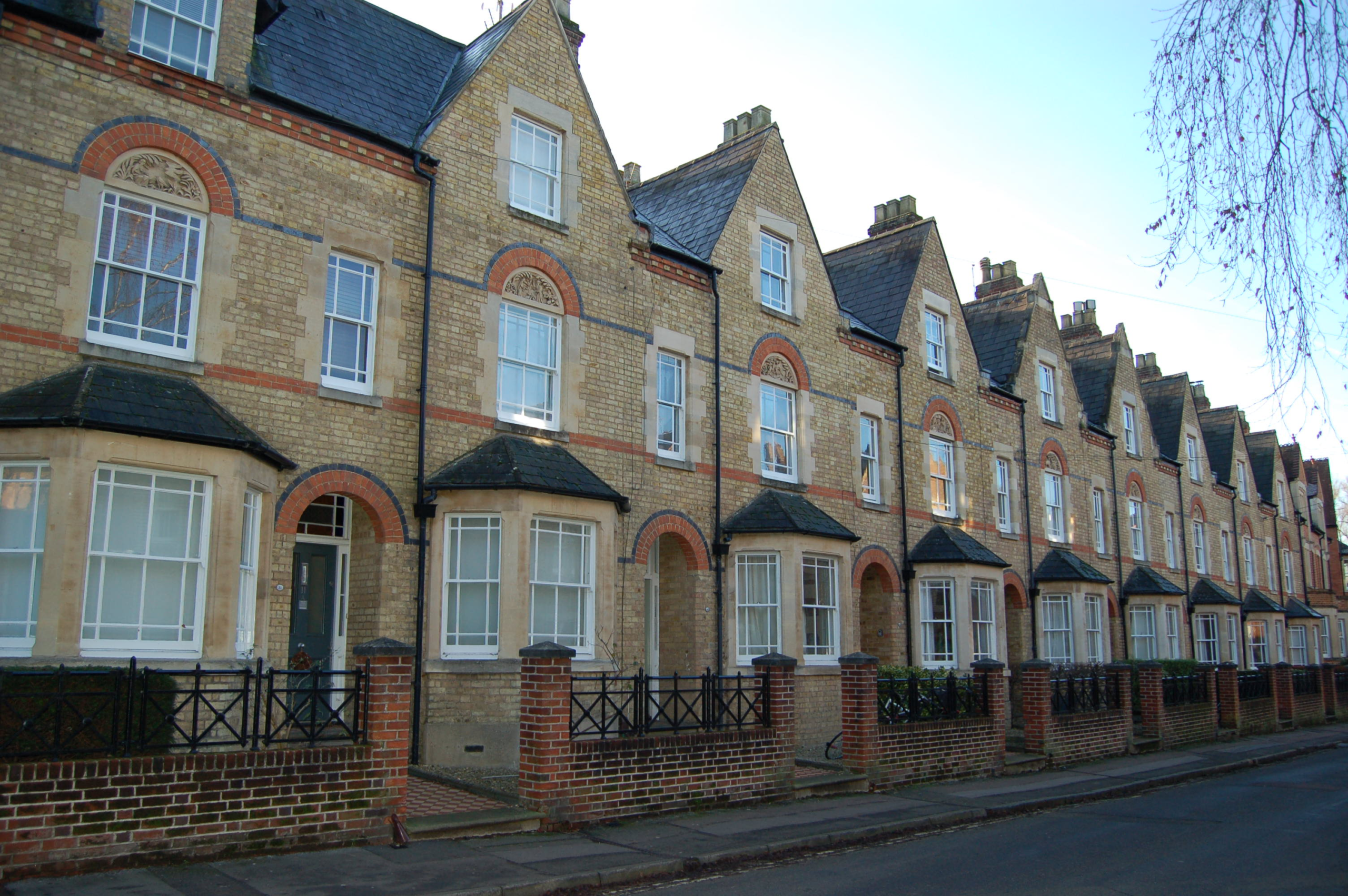
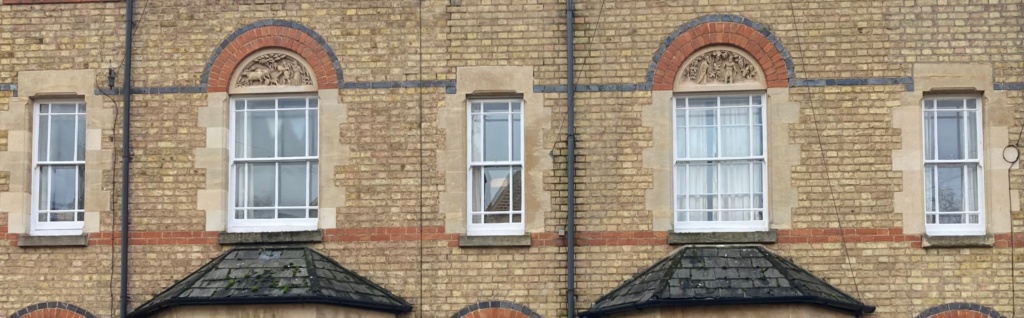
Just before Christmas I get a call from my friend Cordelia. She asks if I’d be interested in meeting her by what is affectionately known as the Elijah Terrace on Walton Well Road just north of Jericho. For she wants to explore the story of the Old Testament prophet as told in the magnificent stone carvings that decorate in exquisite detail the lunettes above nine of the first-floor windows here. It is from these that this row of houses has derived its nickname. And being on my regular route to the allotment and about which I have long been curious, I agree at once.
And so it is that on a crisp winter day I make my way north, to a road named after a well, fed by a spring that fed into a ford formed in a natural indentation in the landscape; gardens, orchards and a scattering of cottages in the early days, and then increasingly industrialised after the canal was cut through here in 1790 and the railways arrived in the 1840’s.
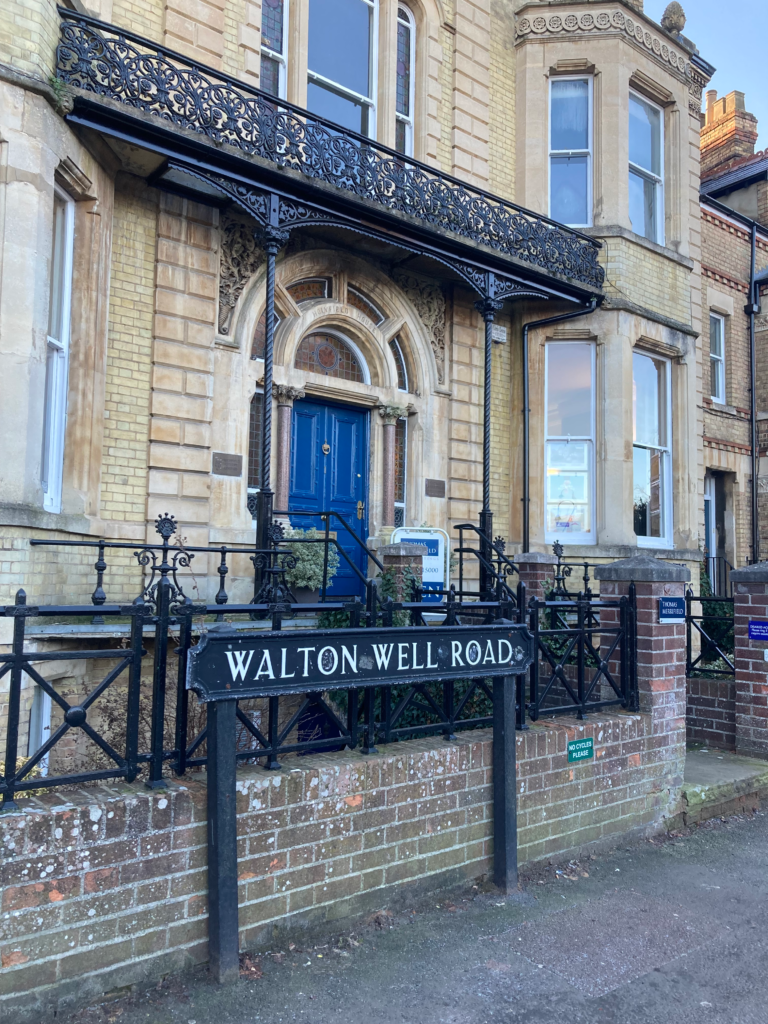
The well, ford and spring were drained and covered over to make way for the increased demand for housing at the end of the 19th century. The eponymous road name and an elaborately designed but dilapidated Victorian domed drinking fountain on the junction where Southmoor Road meets with Walton Well, (soon to be restored to full working order by the Oxford Preservation Trust according to the sign erected beside it) are the only reminders of its watery past. Our terrace is on the south side of the road, just by Lucy’s (once the Eagle Ironworks founded in 1826, now converted into flats). Constructed in 1883 on land belonging to St John’s College, the houses are unusual in that they are built out of pale yellowish brick, with exaggerated gables, slate roofs, ground floor bay windows, the porches topped with contrasting rounded red and blue brick-built arches to match those on the first-floor windows under which our carvings are displayed. They were the design of the independent contractor Joseph Curtis who was the first leaseholder here, (you can see more of his work on the South East corner of Wellington Square, the stone carved reliefs similar in style), eight identical houses, actually nine as the first house is double fronted, kept for himself and used as his home and business address until he died aged 81 in 1901. In collaboration with the stone carver, Samuel Grafton from Cowley, on which it is thought by some that Thomas Hardy’s Jude Fawley, a stonemason by trade is based. Christ minster, after all, is but a thinly disguised Oxford.
Cordelia, resplendent in the elegant red coat she wears only on the days between Advent and Epiphany, is a former Deputy Diocesan Registrar, and well versed in ecclesiastical matters. And while she is perplexed by the religious nature of these tableaux as used on domestic architecture, she has yet to come across another like it and is keen to get going on deciphering the narrative.
Which is easier said than done. Drawing on the words from the Old Testament book of Kings 1 and 2 (the King James version), it takes us a good couple of hours – stamping our feet in the cold, straining our eyes to catch the detail as Cordelia insisting “we have the library of Alexandria in our pockets” reads the text from her phone. For what we see before us is an edited version of Elijah’s life. And we, like nursery children trying to match pictures with the descriptive words, occasionally make the wrong summation. But at length we think we have it worked out. Which is all very pleasing.
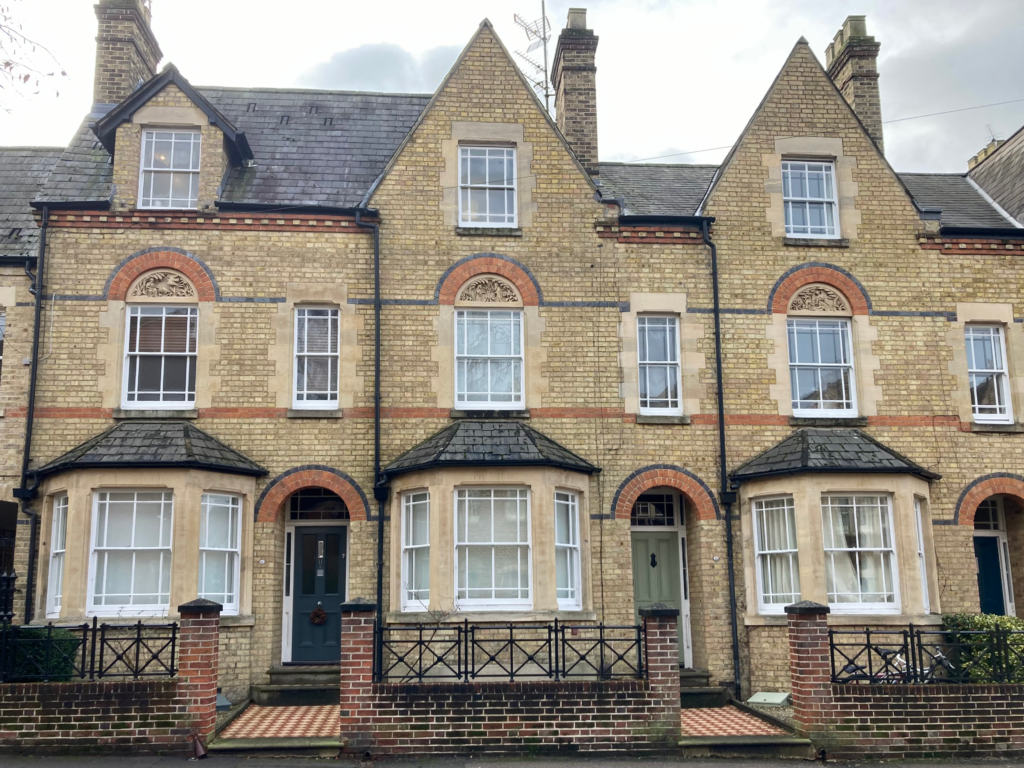
No 11 Walton Well Road (the first in the terrace here on the left of the picture) was always intended for its architect, Joseph Curtis and the roof arrangement is different to the other eight houses.
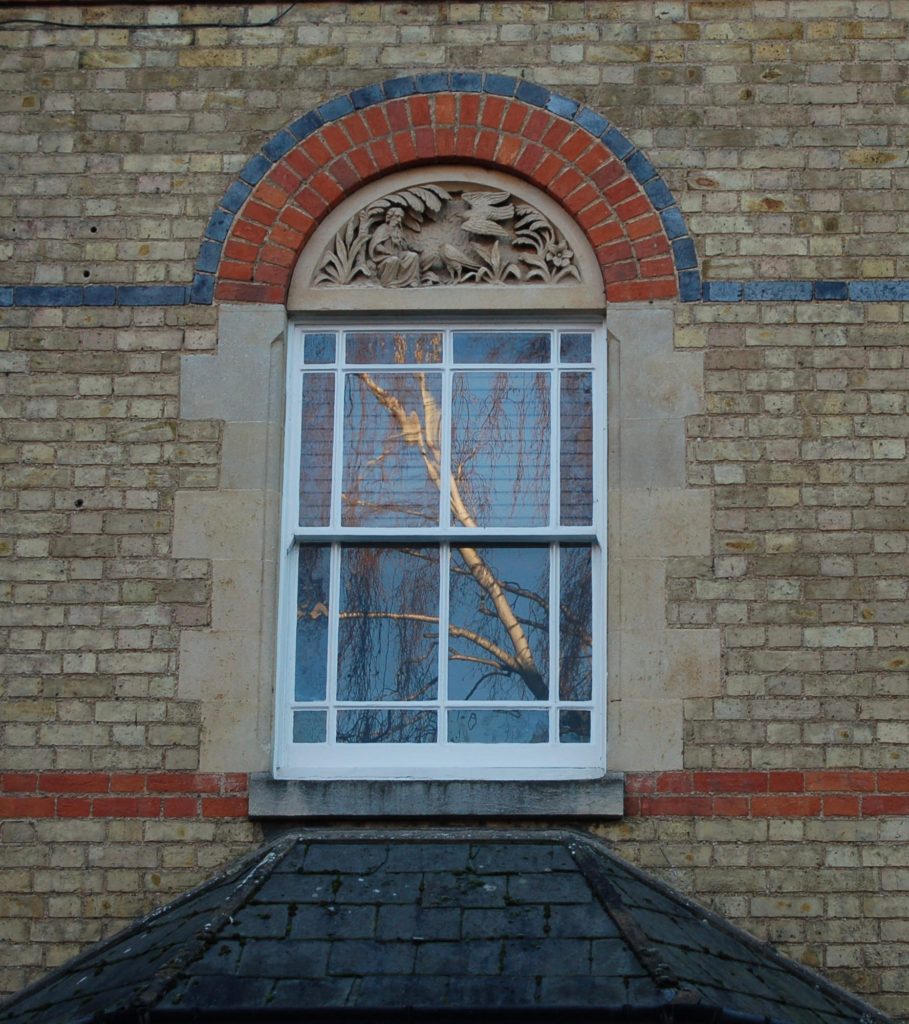
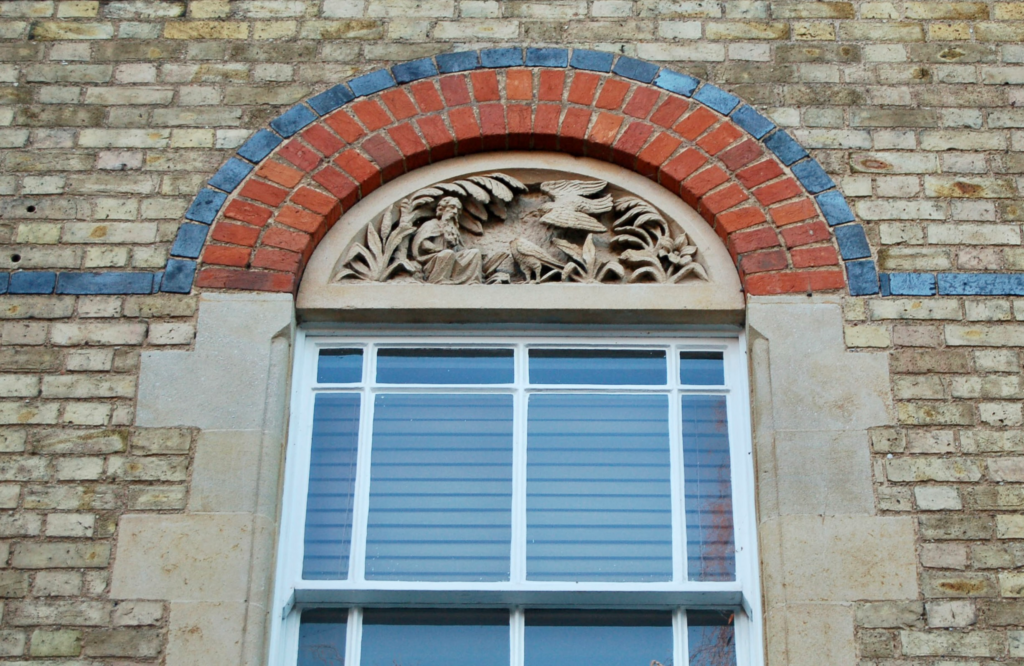
No 11
‘Elijah the Tishbite, who was of the inhabitants of Jordan’ was an Old Testament prophet whose job it was to call out anyone who was worshipping false Gods. In this scene God has brought a drought on the lands belonging to the idolatrous King Ahab. (1 Kings 17) God tells Elijah to hide himself beside a brook from which he can drink and sends ravens with bread and meat to feed him. Cordelia has an embroidery of this scene (very popular apparently amongst 18th and 19th century embroiderers on account of the pleasure involved in crafting the birds and flowers. In Cordelia’s picture the raven is delivering a rack of lamb chops.) The scene is meticulously captured, a bearded Elijah clothed in long robes, the flora and fauna distinct and detailed. One of the ravens sadly is missing his head.
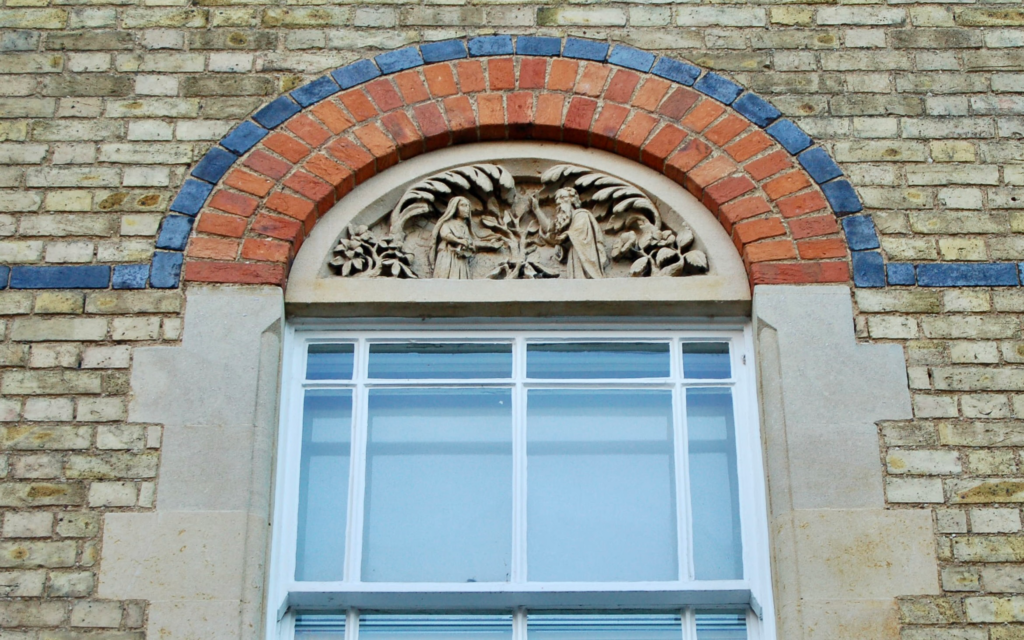
No 13
After the stream dries up God sends Elijah to the virtuous widow Zaraphath to ask for food. While she declares that she has only enough flour and oil to make one small cake, God ensures that there is enough to supply them until the rain returns.
(1 Kings 17)
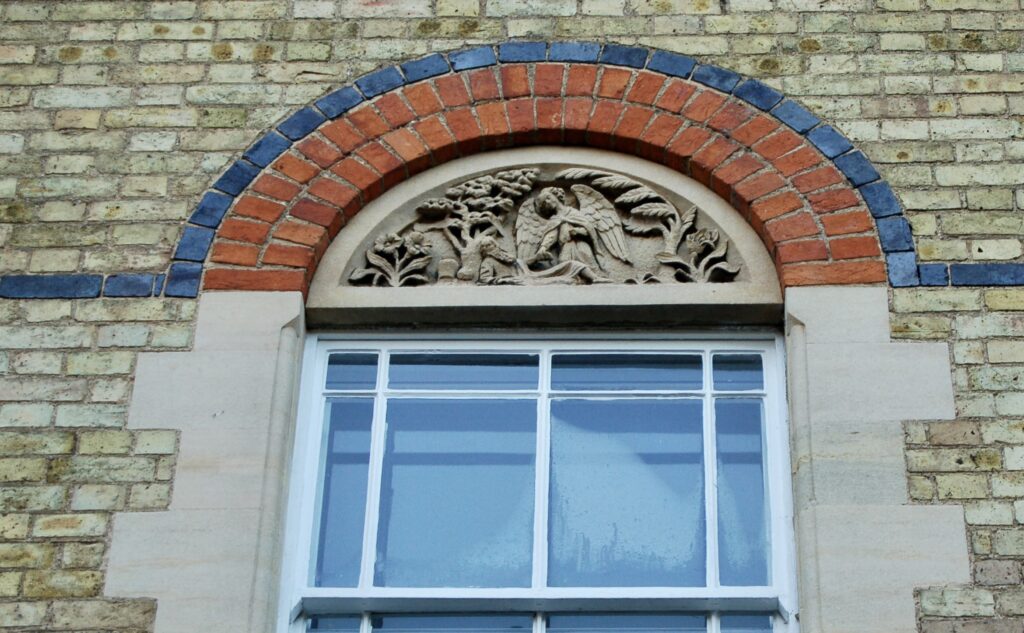
No 15
Here Elijah is seen sleeping under a juniper bush in the wilderness. He has fled there after defeating King Ahab’s wife Queen Jezebel, in a contest on Mount Carmel after which 450 of the prophets answering to the worship of Baal are slaughtered. He fears for his life. An Angel brings him cake and water.
(1 Kings 19)
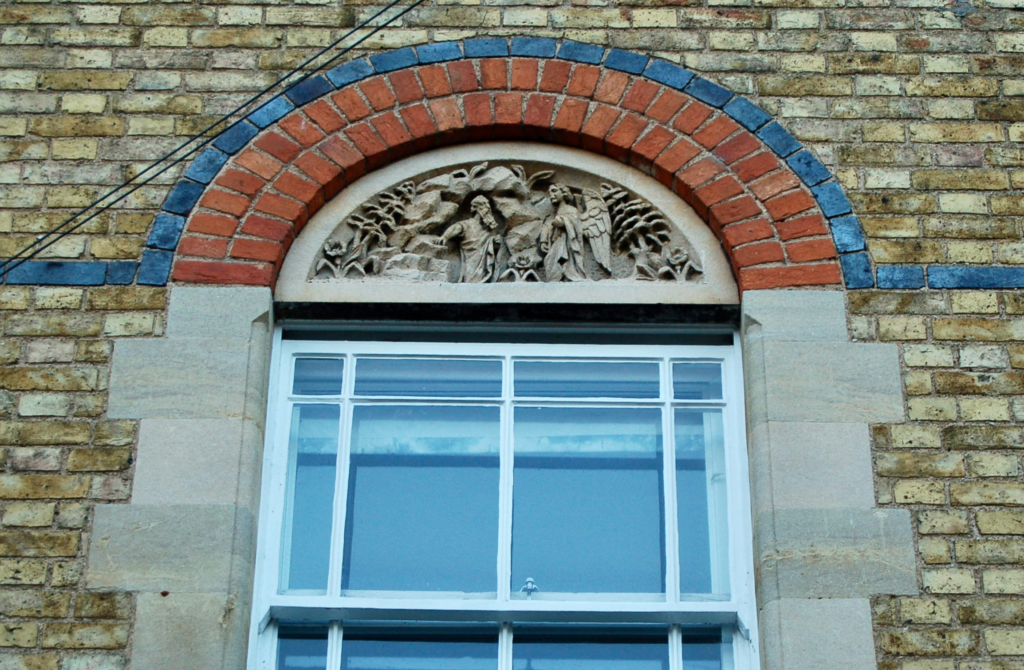
No 17
Afterwards mirroring the lives of Moses and Jesus himself, he is filled with despair and takes himself off to a cave where he spends 40 days and 40 nights to think things through. In this scene he is seen with an Angel, who brings the word of God not with fire and brimstone but whispered in a ‘still small voice of calm’ as in the hymn ‘Dear Lord and Father of Mankind’. The Angel brings with it a mantle for Elijah to bestow on his successor.
(1 Kings 19)
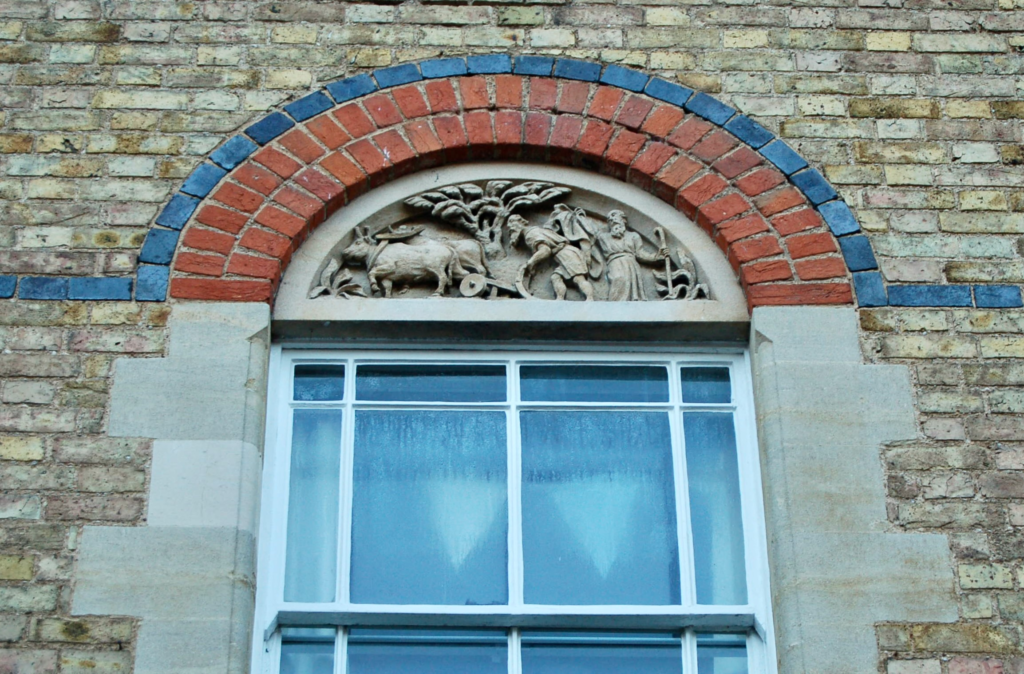
No 19
Which Elijah does on Elisha, who he finds as God tells him, ‘ploughing with the yoke of Oxen.’
( 1 Kings 19 )
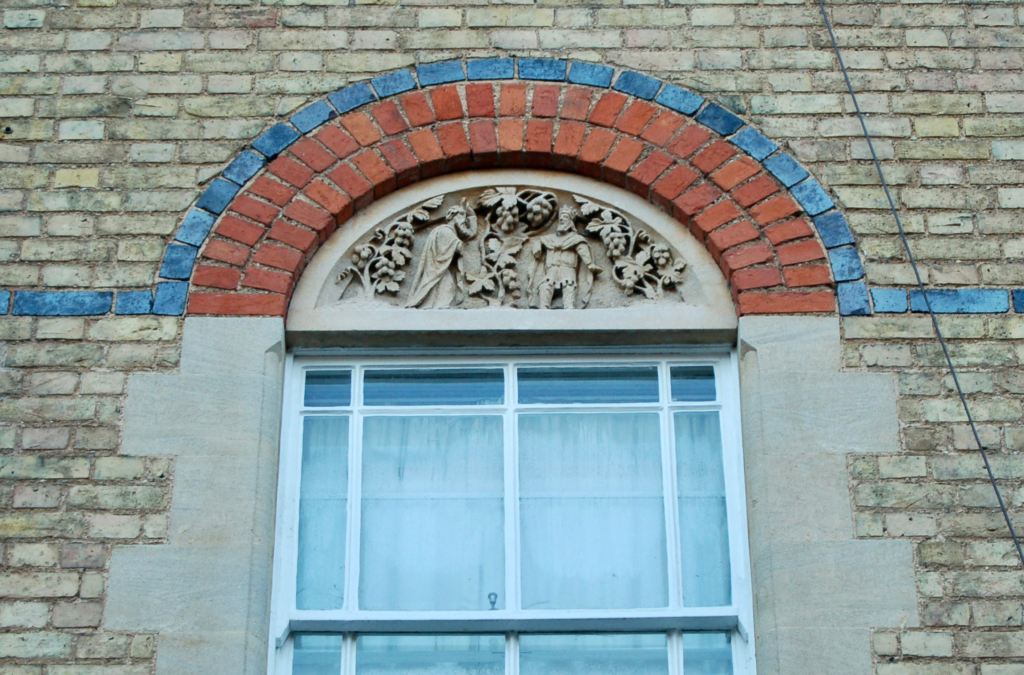
No 21
Here we see Elijah (with the beard) confronting King Ahab (with the crown and Robin Hood style hose and tights) surrounded by vines heavy with bunches of grapes. This is the vineyard that once belonged to Naboth, who King Ahab has had stoned to death on a trumped-up charge.
(1 Kings 21)
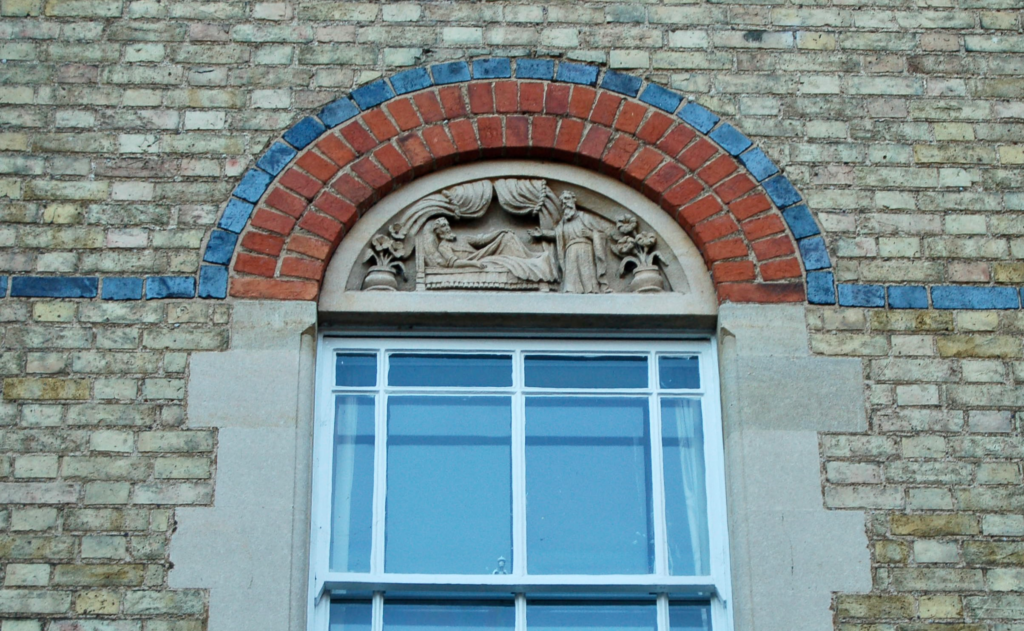
No 23
The man laid out on the bed framed by heavy curtains tied back with elaborate rope ties and two large pots of flowers, is King Ahaziah, Ahab’s successor. He has fallen through the floor and is seriously injured. Here Elijah tells him that he will die as he has denied the one true God.
(2 Kings 1)
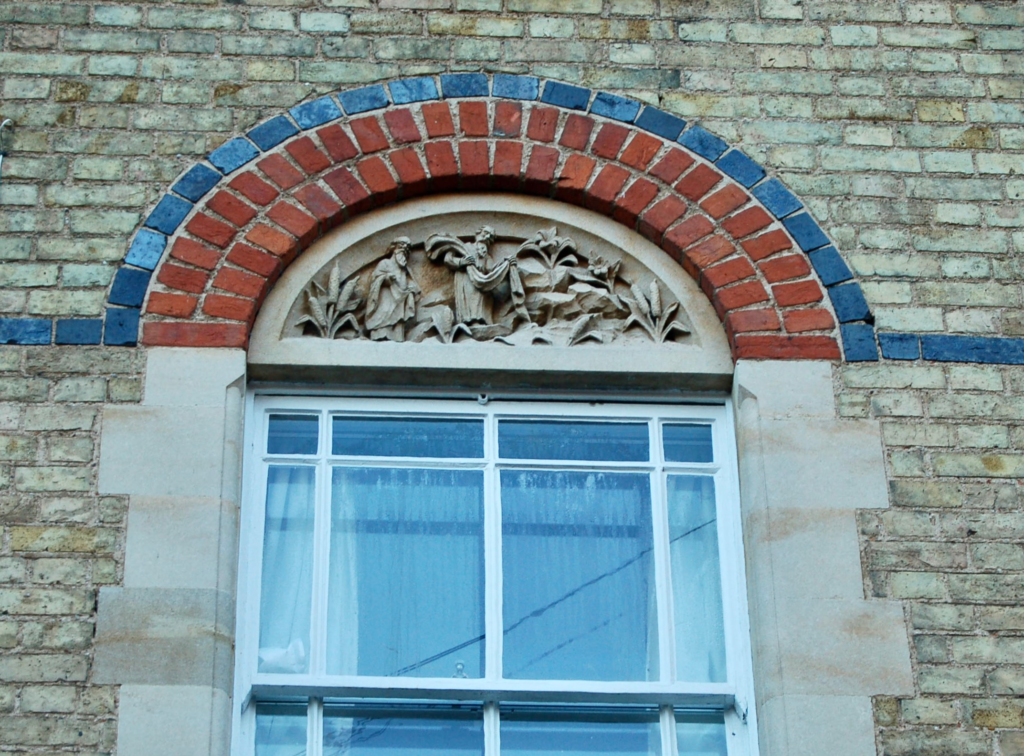
No 25
Elijah and Elisha part the waves of the River Jordan, about 660 years after Moses had done the same thing at Red Sea.
(2 Kings 2)
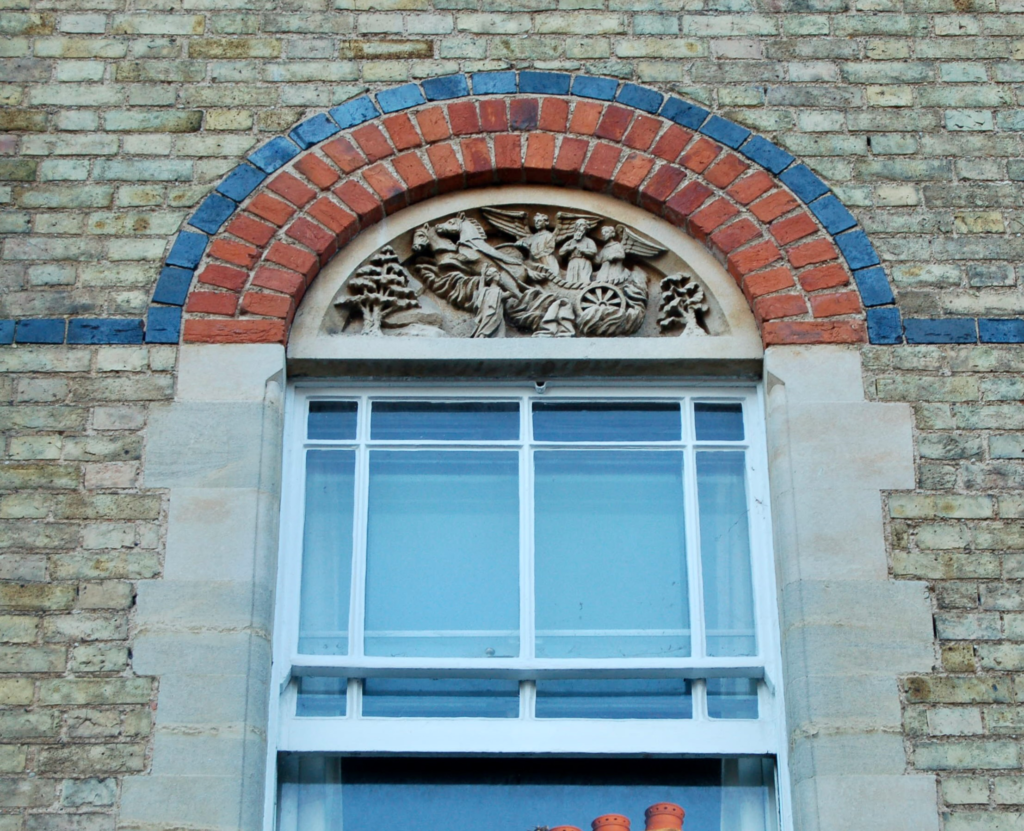
No 27
This wonderful carving features, along with Elijah’s feeding by the ravens, the best-known episode of his life story. Two Cedars of Lebanon flank the fiery chariot and horses that carry Elijah (one of only two men who God accepts into heaven alive, Enoch is the other) up in a whirlwind to Paradise after bestowing his mantle on to his disciple Elisha. Never to be seen again.
(2 Kings 2)
Back home and with a little more research and a bit late in the day I discover a rather useful book about the area by the late John Sutton called Walton Well: the Ford, the Fountain, the Foundry and the Prophet Elijah. Here he throws up a few suggestions as to why Curtis and Grafton might have chosen the Elijah themed tympana. Curtis had been responsible for designing a few Methodist chapels, including Northgate Hall on St Michael’s Street. Maybe this was to be a shopfront for his skills, an example of his handiwork should the church come calling. And then Grafton had been intending to craft the Elijah story in stone at the Church of St Mary and John in Cowley, but they ran out of money and the work was never completed. Maybe he didn’t want to waste the designs he had already imagined. And then again a member of Curtis’s family miraculously recovered from a life threatening illness after praying to God; very like the time Elijah asks God to deliver the child of the poor widow who is near to death. Only this scene is not included in the Walton Well carvings.
So who knows?
Whatever the truth I am glad to have joined Cordelia and worked out the story using only the biblical text. I’d really recommend taking a closer look at the workmanship. Maybe take binoculars. But if you are there in winter be sure to wear warm socks.
Walton Well: the Ford, the Fountain, the Foundry, and the Prophet Elijah by John Sutton is published by Robert Boyd Publications 2018
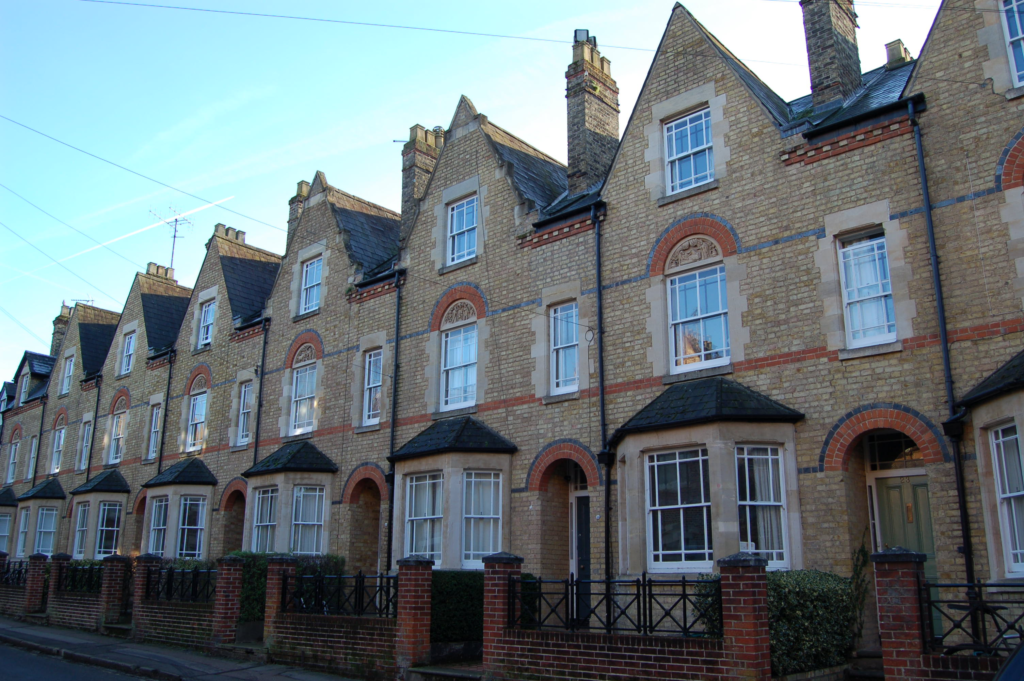
Elijah Terrace was built on land belonging to St John’s College, leased to Joseph Curtis. When the leases ran out in the 1960’s Lucy’s bought them and they are now part of its property portfolio.
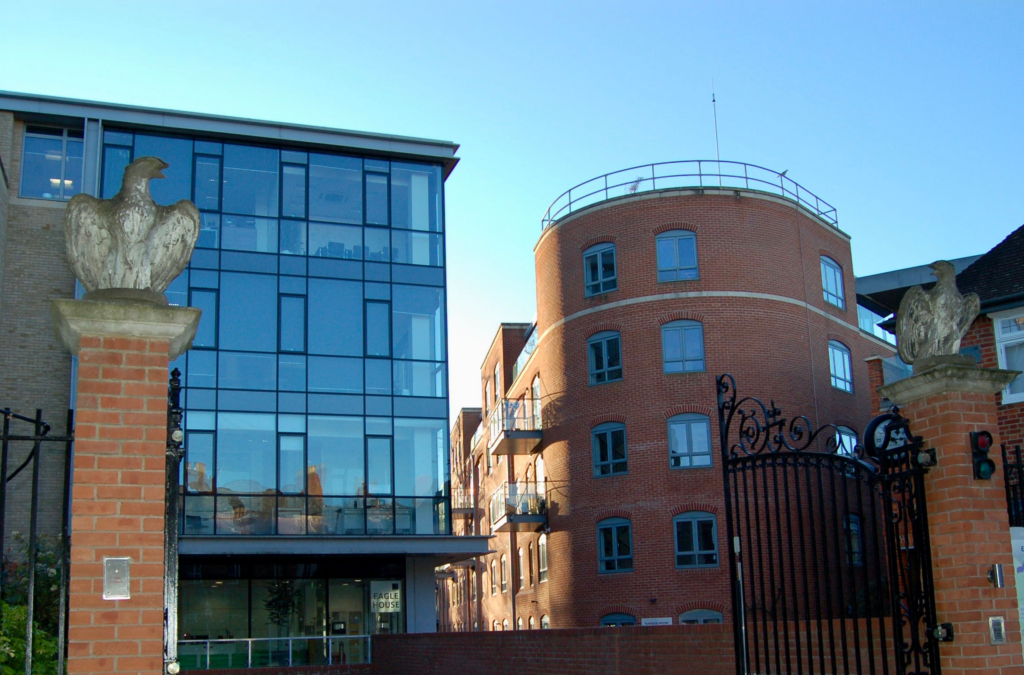
The old industrial gates to Eagle Ironworks on Walton Well Road where now the new flats built in their place are named after what went before: Furnace, Fettler’s and Foundry Houses. In their heyday they made cast iron lampposts, drain covers, and railings, many of which you can still spot around Oxford. John Sutton suggests that Samuel Grafton may have been the craftsman who carved the stone eagles.
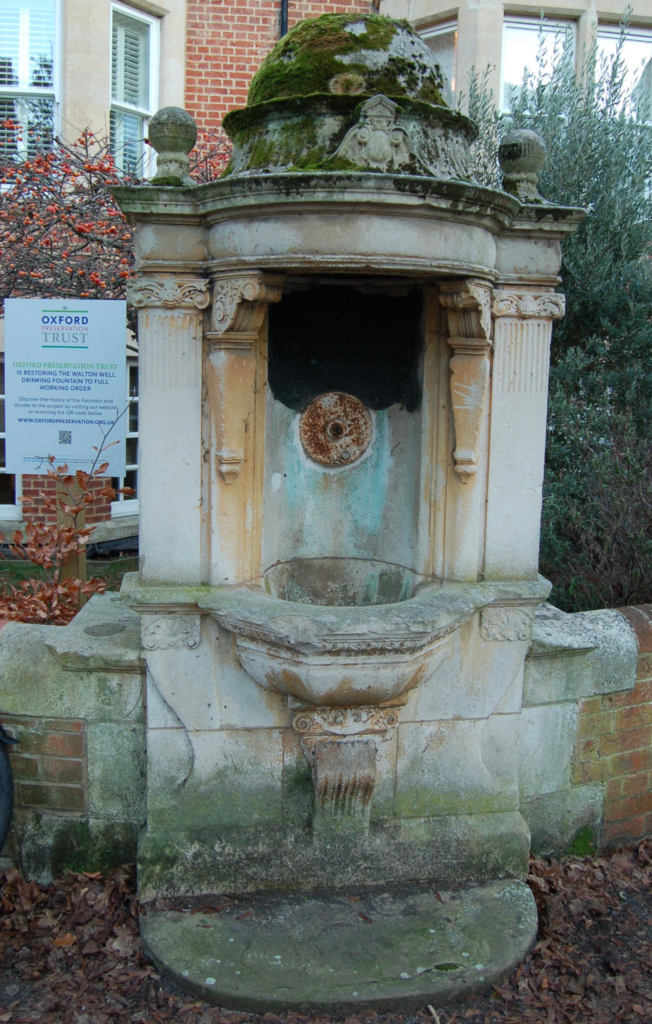
The Walton Well drinking fountain (soon to be restored to full working order). Made from Portland stone in 1885, it was commissioned by the philanthropist, William Ward, twice Mayor of Oxford, whose family fortune had been made as coal merchants in Jericho.
You may also like to read:
7 Comments
Join the discussion and tell us your opinion.
It’s wonderful to have The Oxford Sausage encourage Oxford residents to look closely at the gems scattered around us, instead of having our gaze snagged, depressingly, by the unsightly. Today’s article is uplifting in more ways than one; thank you.
Elijah was a well known ‘type’ for Christ ( where some of the events in the Gospel are prefigured by those in the Old Testament) . It was particularly popular amongst ‘Chapel ‘ people and Non Conformists ; I would suggest that elements from the New Testament would not have been seen as suitable as decoration for secular dwellings, but Old Testament would add an element of dedication or consecration.
Mendelssohn wrote the spectacular oratorio ‘Elijah’ ’ as an Old Testament response to ‘The Messiah’, as Elijah was the nearest precursor to the Messiah ( “some say you are Elijah’).
So maybe the carvings were a shopfront for other work at Non Conformist chapels as is suggested ….
Wonderful curious ties in the most unlikely places if you pay attention. Shows they put much more detail into our shared external spaces than they do now.
Very interesting and enlightening – and also slightly clairvoyant. The blog arrived in my mailbox just as I was about to send an enquiry about the Terrace. My son and I spent a long time on our Boxing Day walk trying unsuccessfully to interpret the scenes and so I resolved that I would seek guidance from the Oxford Sausage – thank you!
Not just Oxford. I noticed Lucy’s Ironworks marked on the drain covers of minor roads in the West Indies. As a resident of Jericho, it gave me quite a turn!
Coincidence and clairvoyance seems to be a thing here. I had recently gone there to have another look at the terrace, having just come across a letter from Mrs Jerrett at no.17, welcoming my dad’s imminent arrival in Oxford, 1st October 1953 to start on his DPhil. She warns:
“The weather here – at the moment – is quite good: sunny and quite warm, with a few clouds hovering in the background. But as it is liable to change with bewildering suddenness, we may get more rain.”
Dad remembered that for a little while, he was quartered in that front bedroom just under the carving, but subsequently went to the top of the house.