I am standing at the top of a ladder in the garden of a house in Beaumont Buildings, a quiet street of pretty, terraced townhouses hidden away just north of Oxford’s central bus station. Built in 1826 – there’s a date stone set into its chequerboarded brick frontage – this was part of the new residential development that included St John Street, Beaumont Street and parts of Gloucester Green to help alleviate the surge in the city’s population in the early years of the 19th century. But I was here to look at something a lot older. For not far from the back door, there is a sharp drop of some fifteen feet only accessible by means of the steps in front of me. Down I go and on reaching ground level it becomes clear exactly what it is that I have just traversed. A high wall of roughly hewn field stone. Not grand by any means. But exciting nonetheless. For this was once the western boundary of a royal palace. The curtilage wall for the King’s Houses or Beaumont Palace as it became known. Built around 900 years ago in the 1130’s for William the Conqueror’s youngest son Henry I. And as I was on a mission to uncover anything that might remain of this royal residence I was absolutely delighted.
A short distance south, hidden behind a high yew hedge on the corner of Beaumont Street opposite Worcester College, a small plaque is the only reminder for passers-by that this is where the once grand dwelling stood. Henry like all medieval kings loved to hunt, and being fond of Oxford must have thought it a good place to break his journey between Windsor and the rich hunting grounds of the ancient forest of Wychwood on the edge of the Cotswolds. He had recently built himself a royal lodge at Woodstock, where as well as hunting deer he kept a mix of exotic beasts penned in for his amusement; lions, leopards, camels, porcupines and the like, after his death transferred to the Tower of London, and later their descendants first stocking Regents Park Zoo.
Why he didn’t stay at Oxford Castle there is some debate, but it is widely believed that medieval Kings of England avoided entering the city, worried that the fate of St Frideswide’s royal stalker, Prince Algar, struck blind when he attempted to pursue her through the city gates, might also beset them. And so it was that they chose to journey around the outside of the city wall, down what is now Longwall Street and Holywell before resting at Beaumont Palace.
The palace precinct was an impressive size, stretching north as far as what is now Wellington Square, east up to the tenements of St Giles, the southern boundary up to what was an open area called Broken Hayes (now Gloucester Green) and the west along the back yards of where I am standing today in Beaumont Buildings.
Planted with a plentiful supply of trees for burning and fruit orchards for the high table, there was a grand vaulted hall, kitchen, chapel with cloisters and at least two chambers as well as the King’s wardrobe, large and small. The floor was laid with tiles decorated with hunting dogs in white slip, window glass painted with heraldic devices and there would almost certainly have been carved columns and statuary. Later came extra accommodation for the Queen, Henry II’s wife Eleanor of Aquitaine gave birth to both Richard the Lionheart (1157) and King John (1167) at Beaumont Palace. And a great gate was added, probably somewhere in the south wall.
But by the early 1300’s it had fallen out of use. In 1318 Edward II granted the place to the Carmelites, after a promise he made after surviving the battle of Bannockburn. The Whitefriars as they were known (the Black and Grey friars were settled in the south west of Oxford) they took up residence, moving from their former home just south of Gloucester College (now Worcester College) a Benedictine foundation of monks with whom they were in constant conflict. But here they stayed, fights often erupting, a less than salubrious neighbourhood and soon Oxford’s go to red light district. The ground under the Oxford Playhouse the friars used as a cemetery – skeletons a plenty have been found and there is talk of a resident white hooded ghost. And a path alongside its southern boundary gave them easy access into town. Now Friar’s Entry, this narrow passageway was the only route for Worcester College dignitaries to make their way to University ceremonial gatherings right up until the 19th century; often having to negotiate buckets and mops, children and washing suspended across from opposite houses.
But by then the palace had become a ruin. For after the dissolution of all religious houses in 1538, most of the stone from all the great Oxford abbeys and monastic establishments was carted off and used elsewhere. 30 loads from the Carmelite friary went to build Christ Church alone. The same to St John’s College. A small portion remained, immortalised in paintings and etchings by local artists of their day. Until these remains too were demolished to make way for the Beaumont development.
Archaeological excavations have since has thrown up artefacts from the days of the Angevin Kings, and it is from these that I have pieced together the descriptions above. But might there be more? With old stones being sold off willy nilly, might there have been room for a little gentle appropriation, or the chance for a few bits and pieces simply to lie hidden and forgotten in all the upheaval?
Turns out there was.
Buried by the wall down which I had climbed, along with a plenitude of pigs’ bones – there was a livestock market here at one time – two interlocking pieces of a triangular pediment were painstakingly recovered by the present owners, along with other fragments of relief carvings; acanthus leaves, classic motifs of Romanesque architectural decoration, and what looks like a highly stylised five petalled primrose as well as a portion of drapery from some medieval statuary perhaps. Shaped by local stonemasons all those years ago.
In an east facing garden of St John Street, I was invited to inspect a moulded column, and what is left of a medieval Gothic ogee window with its distinctive double-curved arch. And sitting atop the garden walls of a Beaumont Street dentist is a portion of delicate ornamental tracery – and while some may be sceptical of its origins, I like to think they were once part of the royal palace.
But that is not all. In 1828, when the last plots on Beaumont Street came on the market, there was advertised ‘at the same time will be sold in lots of 100 yards of stones, the remnants of Beaumont Palace.’ One of the notable speculators at the time was a man called George Kimber, a tallow chandler with a business on Friar’s Entry. Having bought up a substantial number of leaseholds to plots on Beaumont Street, he also purchased a doorway with a rose window above from the old palace ruins. Which he reconstructed in his new home at 302 Woodstock Road, otherwise known as The Avenue.
Jumping on my bike with great excitement I head north, eager to see it still standing. But to my great disappointment, though the gateposts remain, the house is long gone first to make way for a new school and then for denser housing development.
And so it seemed was the arch.
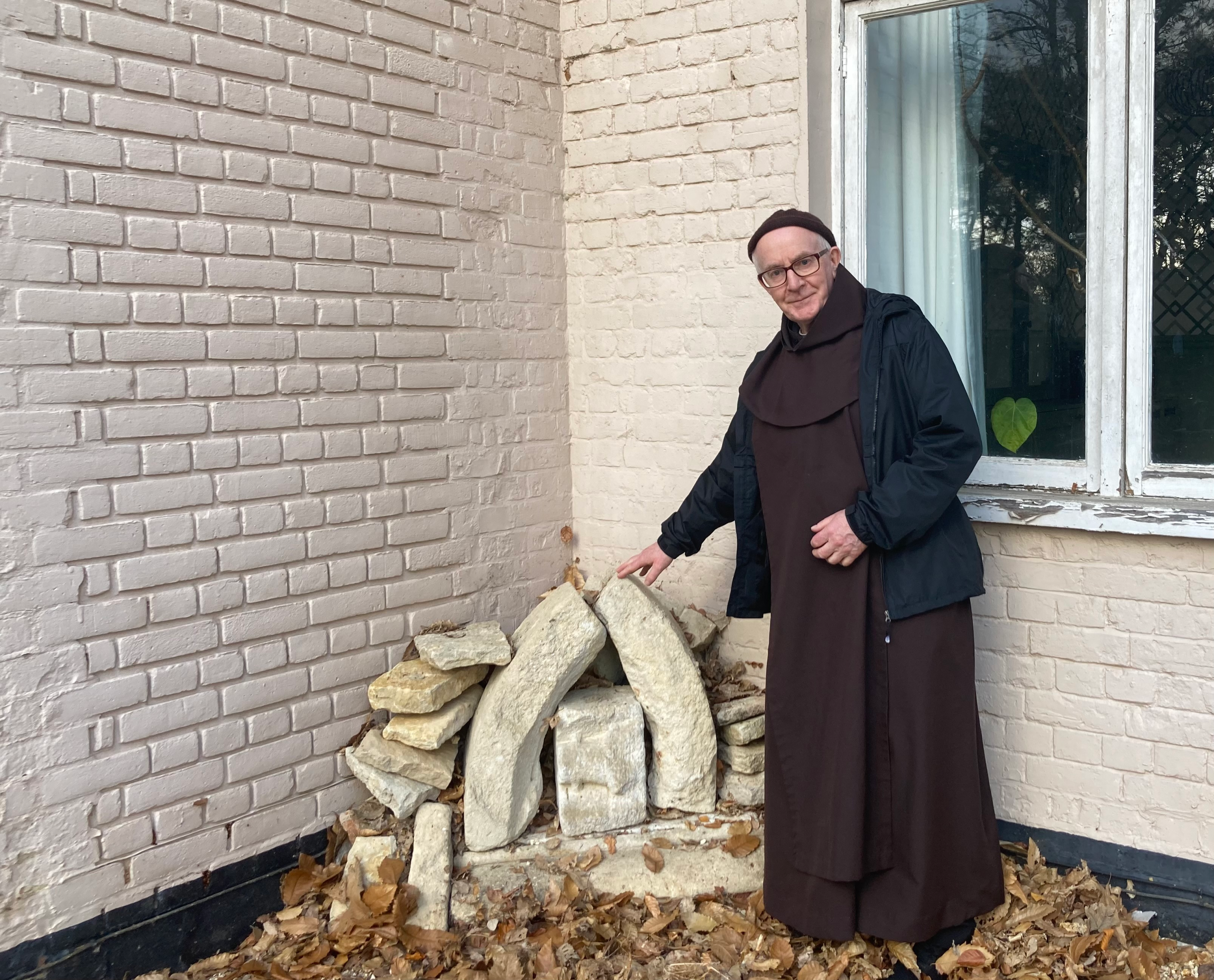
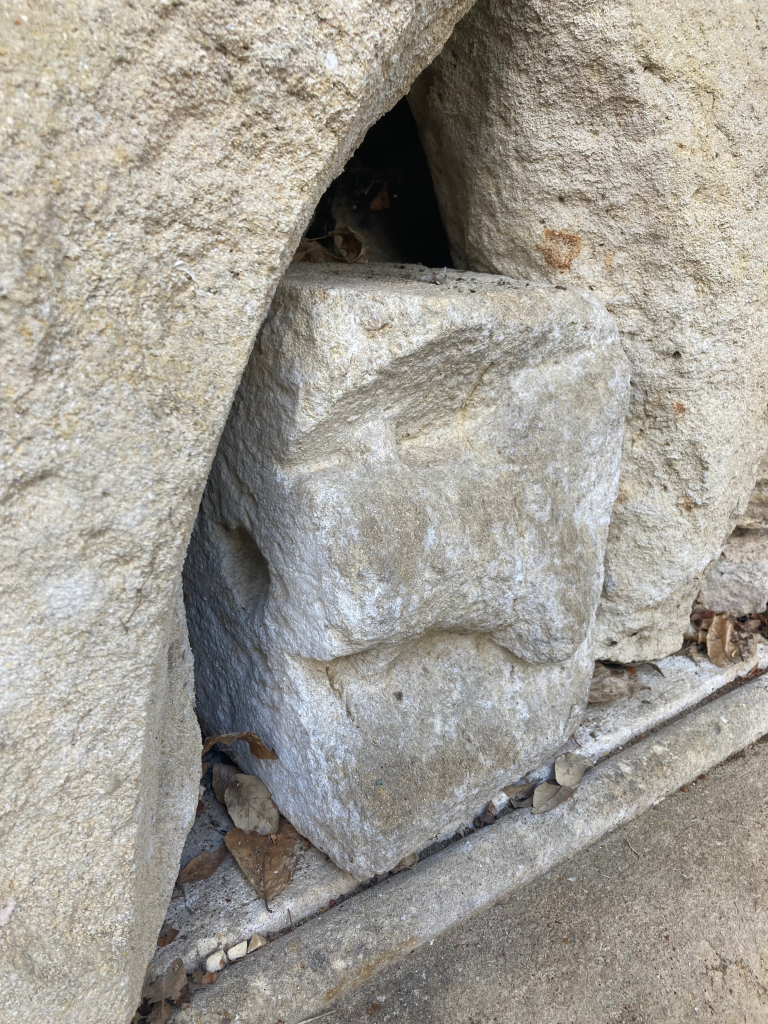
But then I had a lucky break. I found a reference that suggested that as the new homes went up, so the doorway was dismantled and transferred to the Carmelite Priory on Boars Hill. This made total sense. To put it back into the hands of the 12th century foundation and heirs to the royal palace of Beaumont. And so it is that I make my way up the hill with its gated mansions, past Beaumont Nursing Home (which I took as a good sign) and just after the turning to the wooded area that hosts Oxford’s Scout Camp I reach what was once the home of the poet Robert Bridges and is now the Carmelite Priory and retreat. Where at the end of a long drive I am met by Father Liam, a more gentle and friendly man it would be hard to find. Greeting me in the customary brown habit (the name Whitefriars is from the mantle worn over the top) he shows me all that remains of that ancient doorway; sitting amongst the autumn leaves a pile of white stone, some carved, some curved, atop a moulded pedestal. He is apologetic of the state in which we find this ruined relic but says the fathers have been thinking of restoring this piece of their history. Maybe a small shrine would be in order. With its glorious views over the city, here is the perfect resting place for what was once a proud part of a royal palace. Now wouldn’t that be wonderful.
Grateful thanks to archeaologist, Julian Munby for his enthusiastic support of my Beaumont adventures.
And to the Freuds, Nobles, McMullens and Carmelite fathers for allowing me into their back gardens.
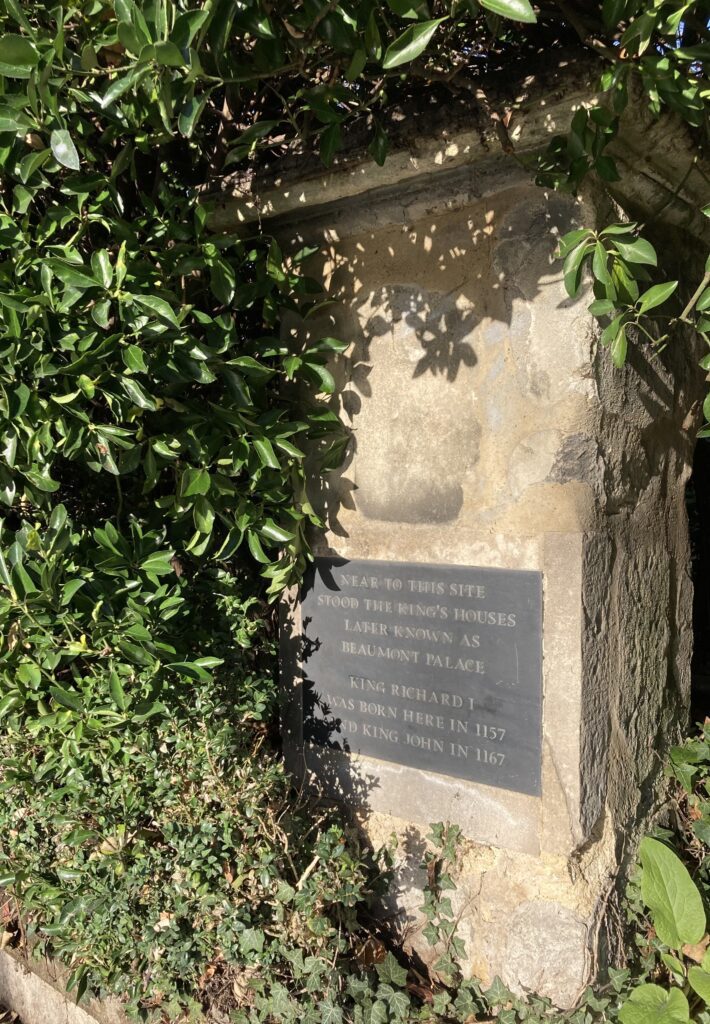
The plaque on Beaumont Street
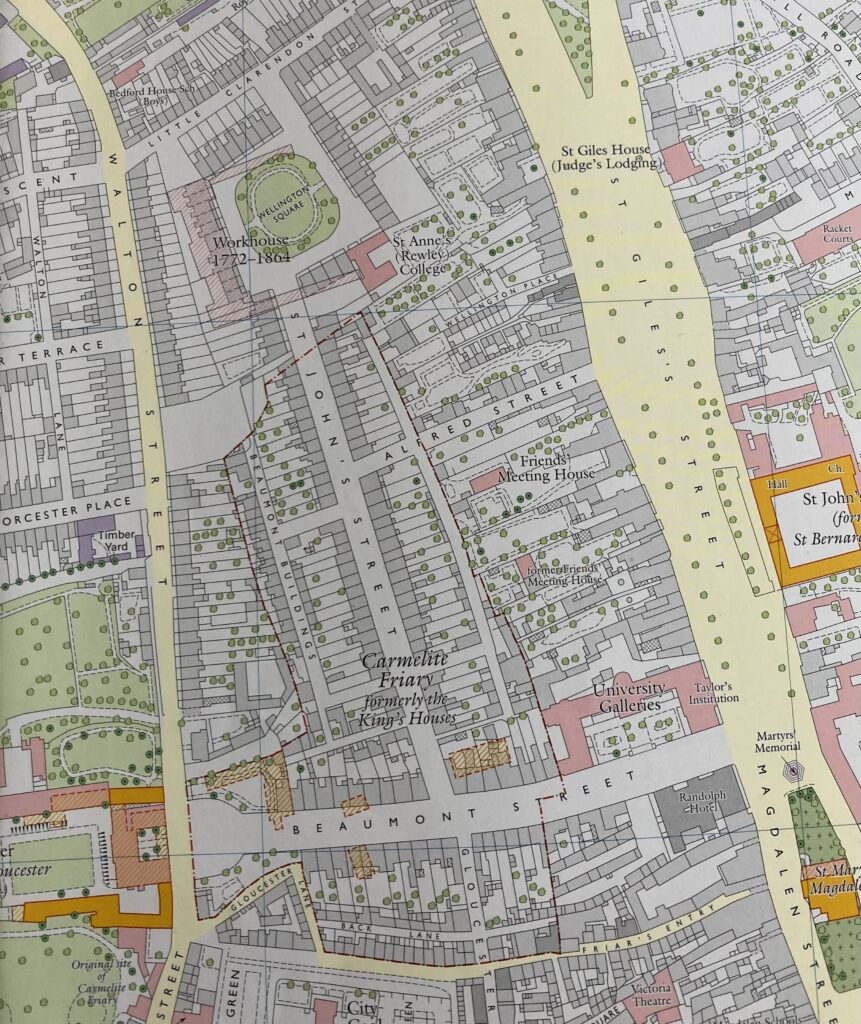
Map showing where the Beaumont Palace precinct would have been (outlined in red).
Taken from The Historic Map of Oxford published by The Historic Towns Trust http://www.historictownsatlas.org.uk
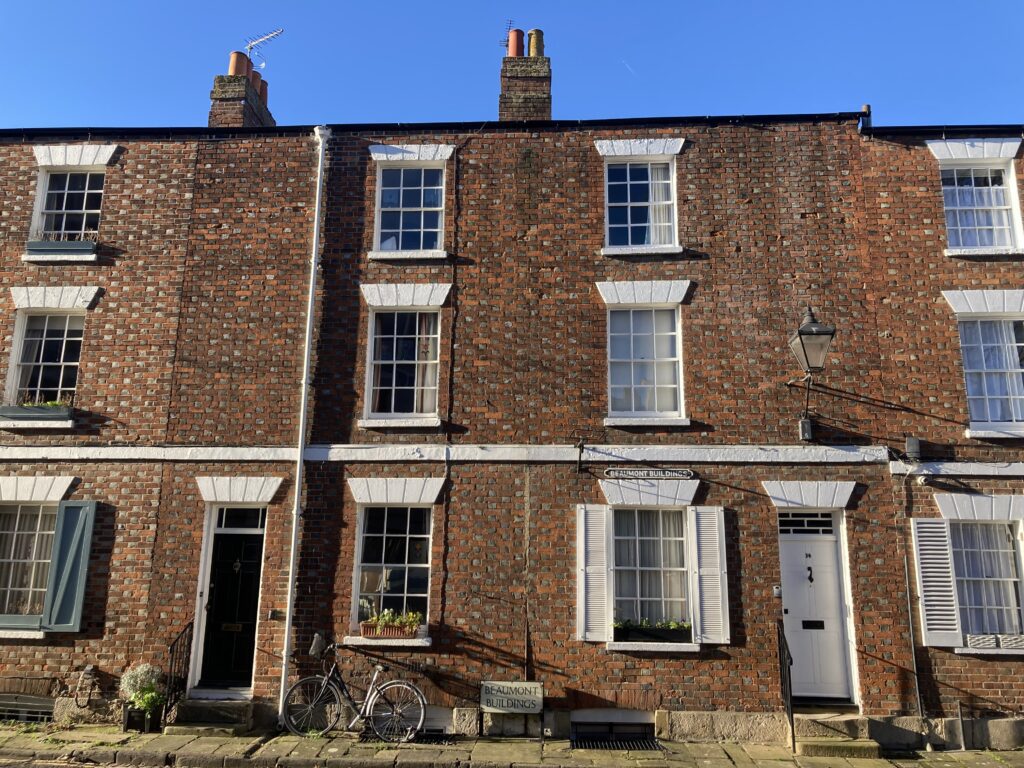
Beaumont Buildings
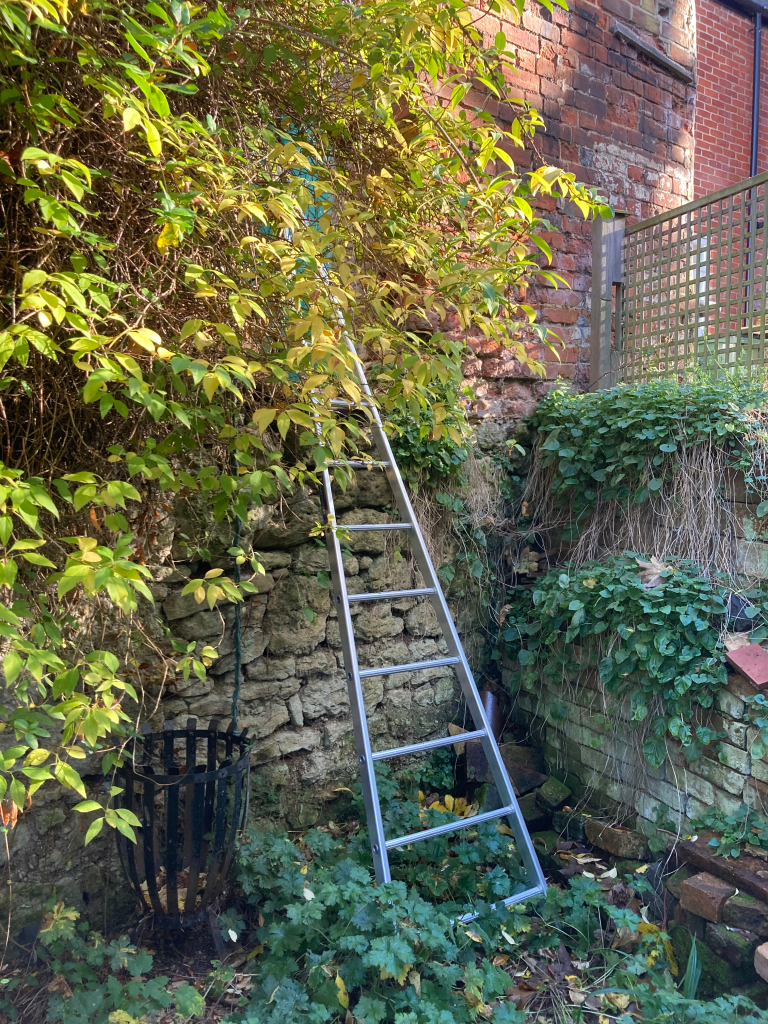
The drop from the backyard – that shows the old curtilage wall for Beaumont Palace
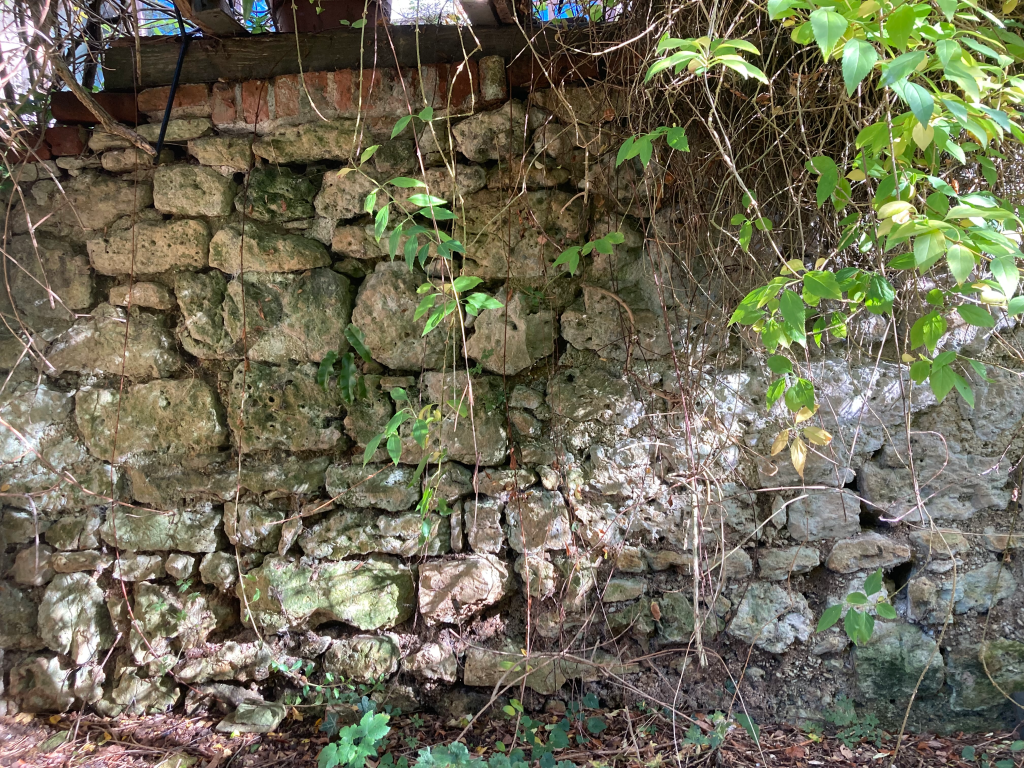
Built to keep livestock out of the main precinct.
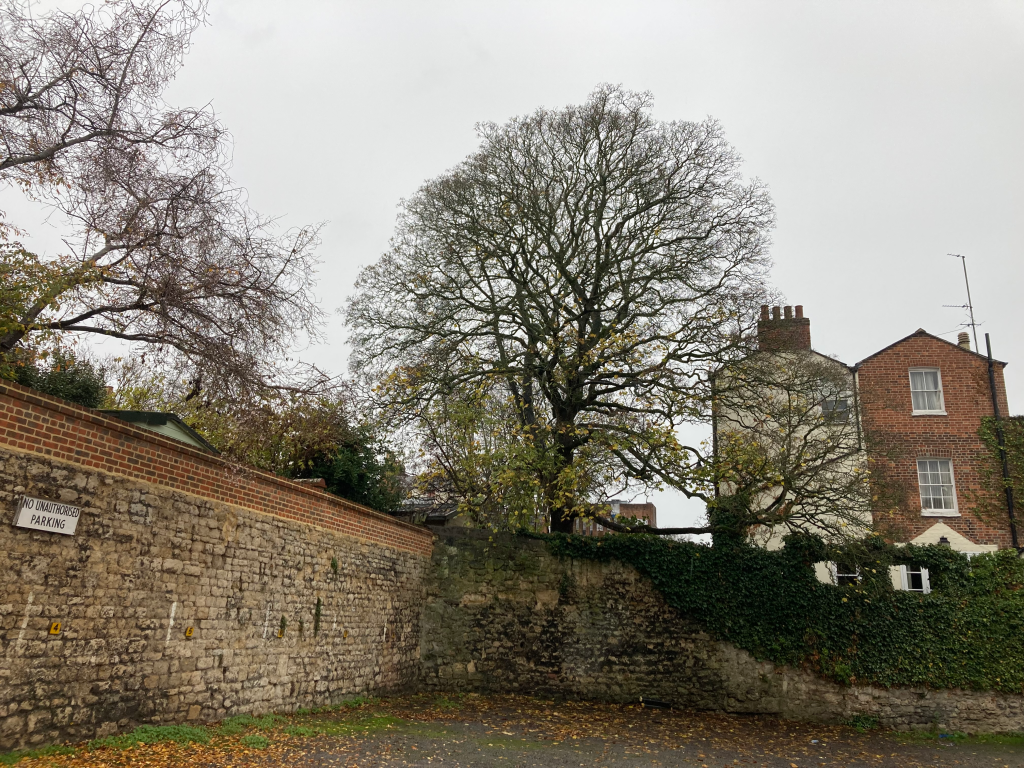
The car park at the back of the Clarendon Institute on Walton Street showing the dog leg in the wall at the end of Beaumont Buildings, seen clearly on the map.
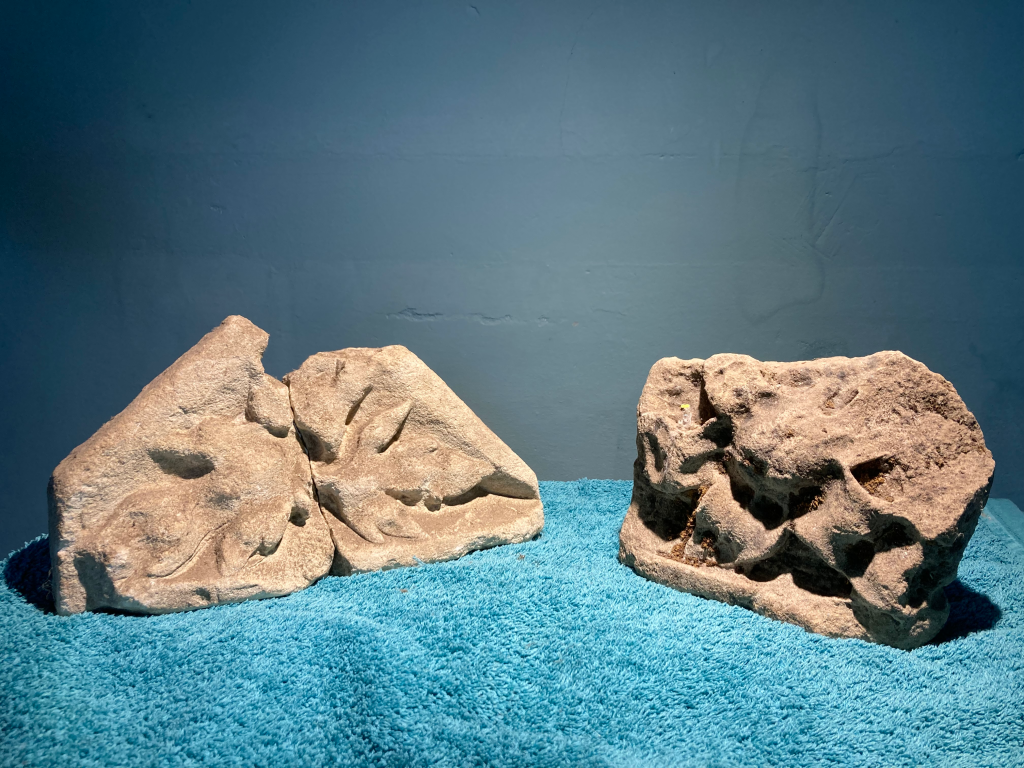
Months of digging and sifting in the garden threw up these beauties.
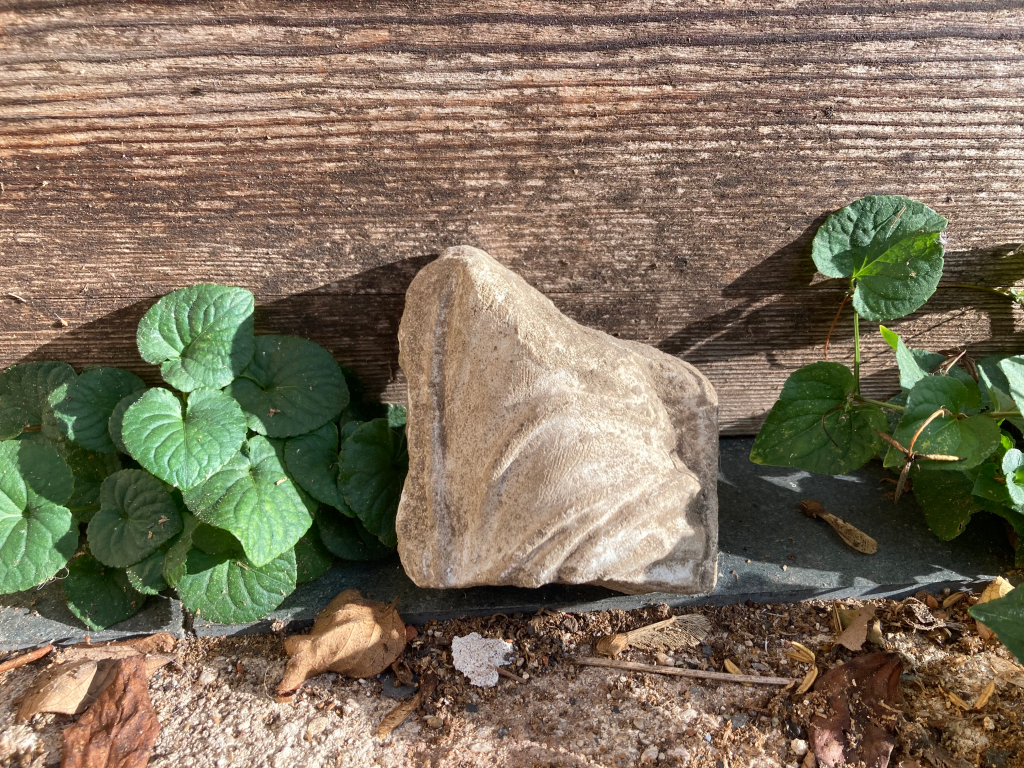
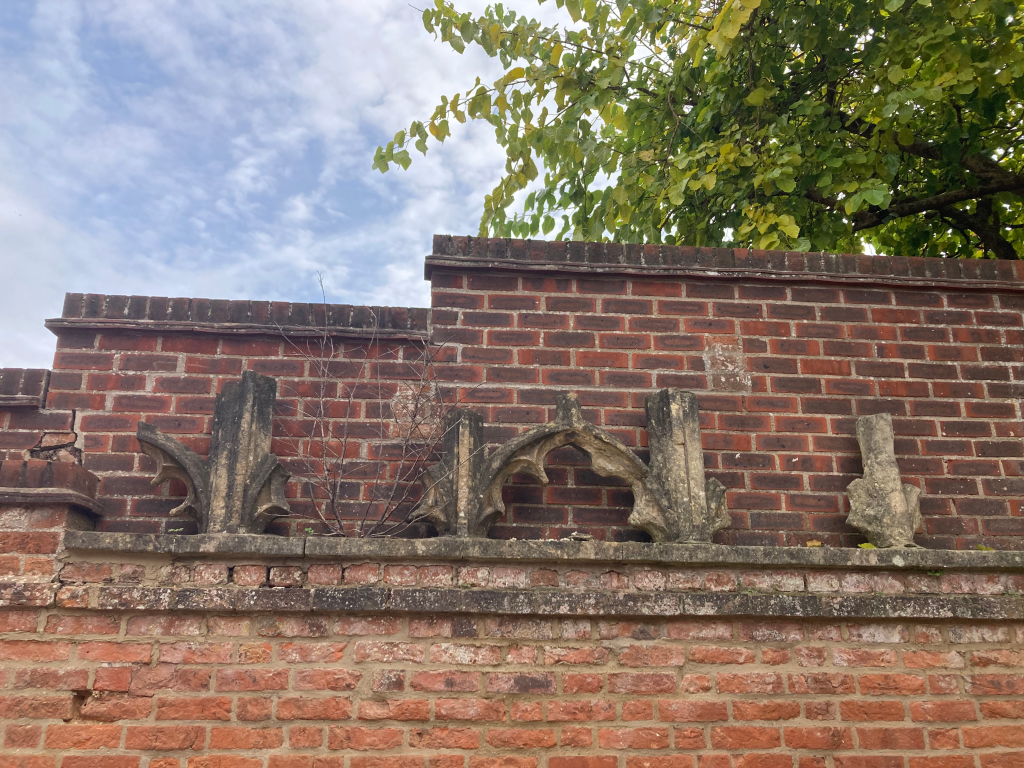
Medieval tracery from somewhere at the back of 28 Beaumont Street – I like to think it was from Beaumont Palace.
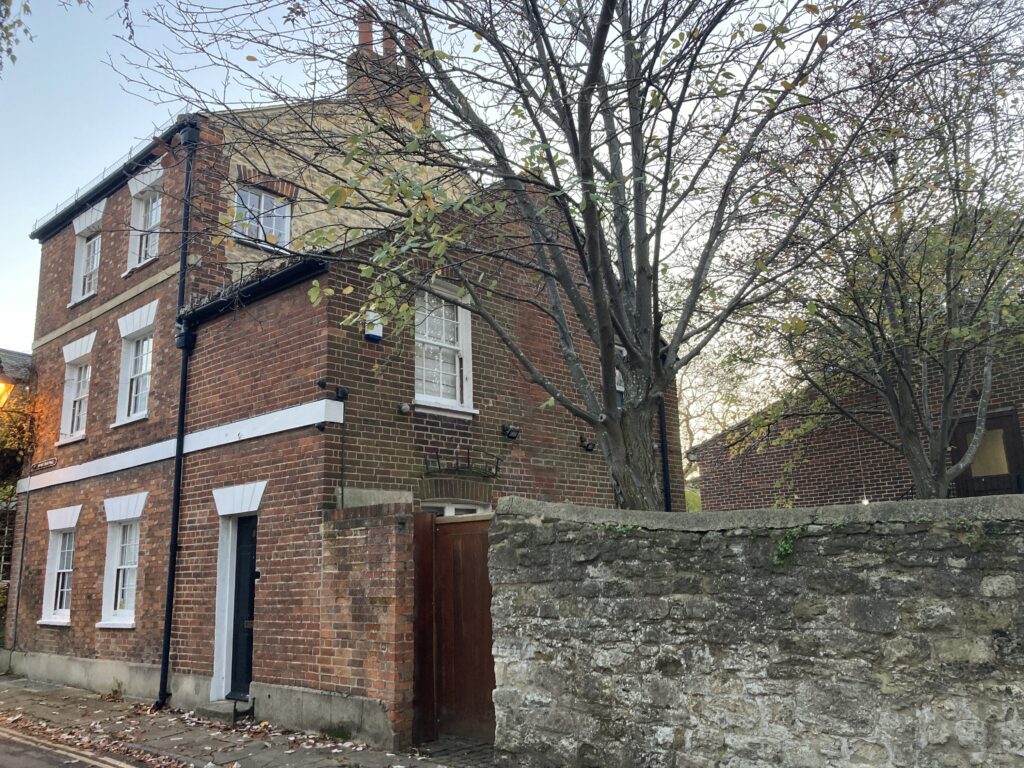
The north facing wall of this house on Beaumont Buildings may have been built from old stone from the original palace buildings.
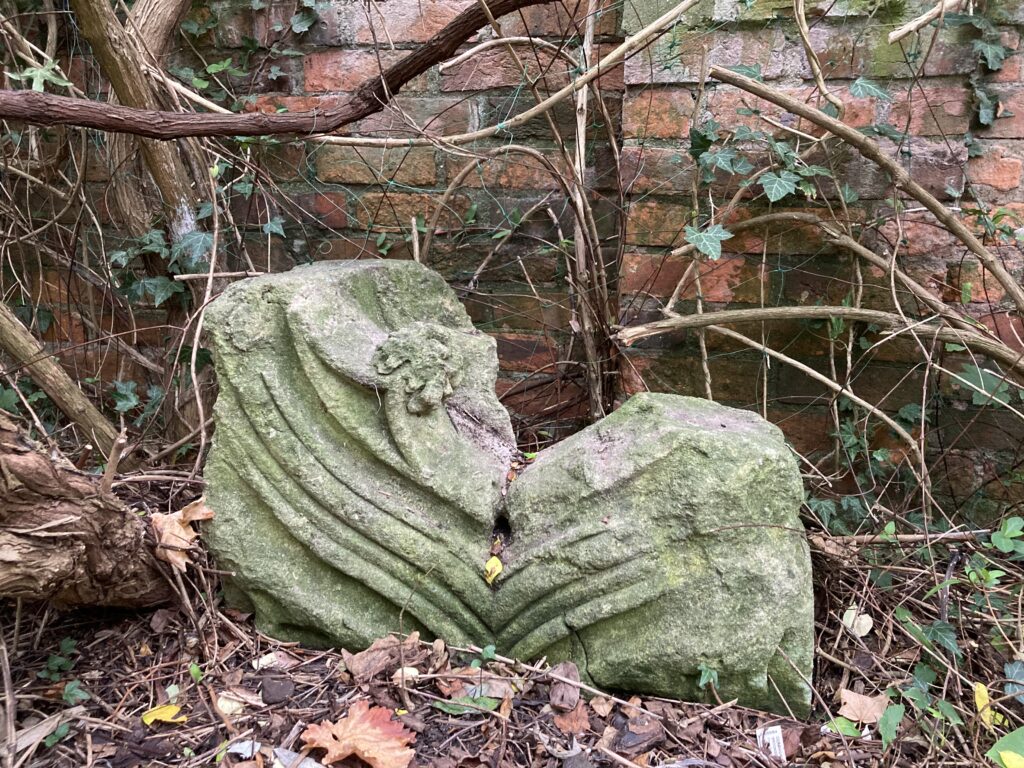
Ogee shaped
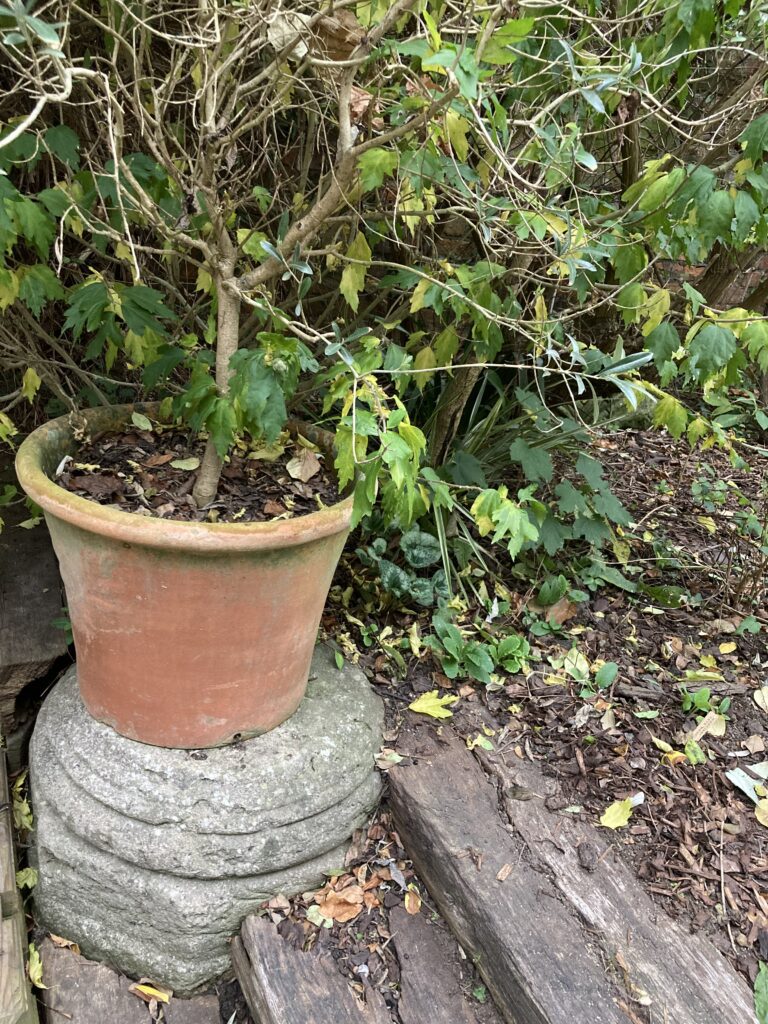
Column
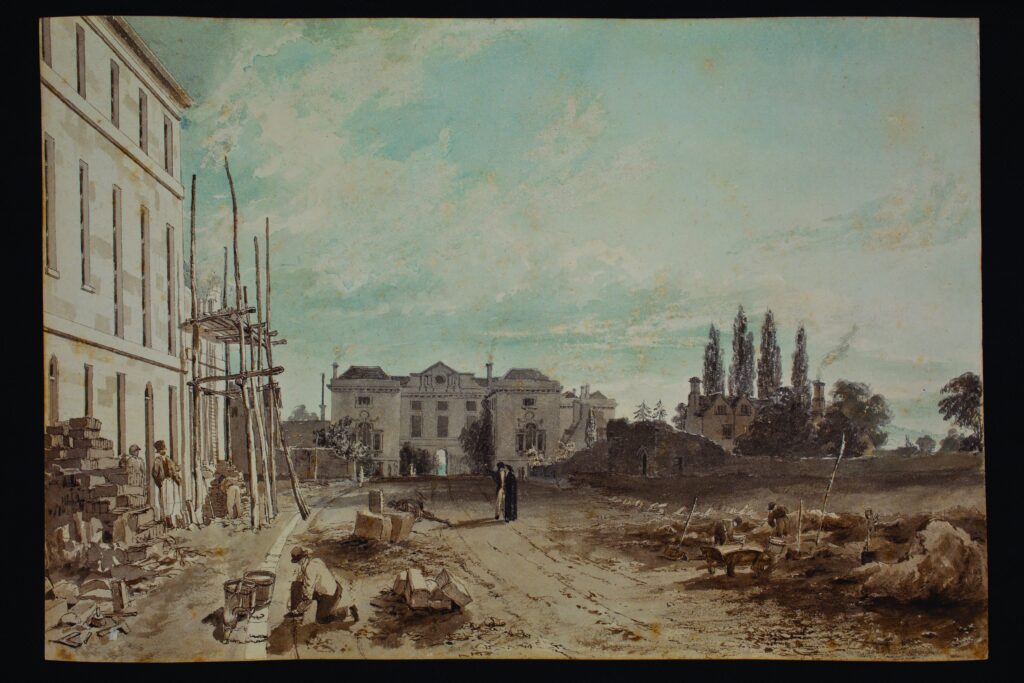
Worcester College from Beaumont Street by George Hollis, Oxford 1823 showing what was left of the old palace buildings at that time.
Courtesy of Worcester College archives
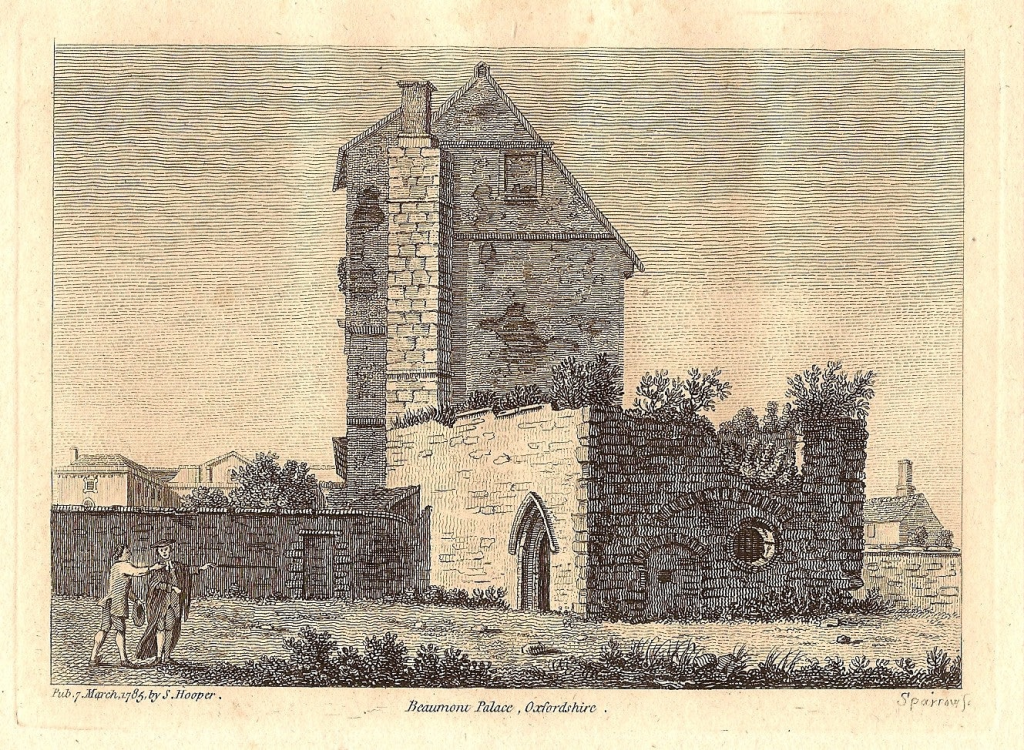
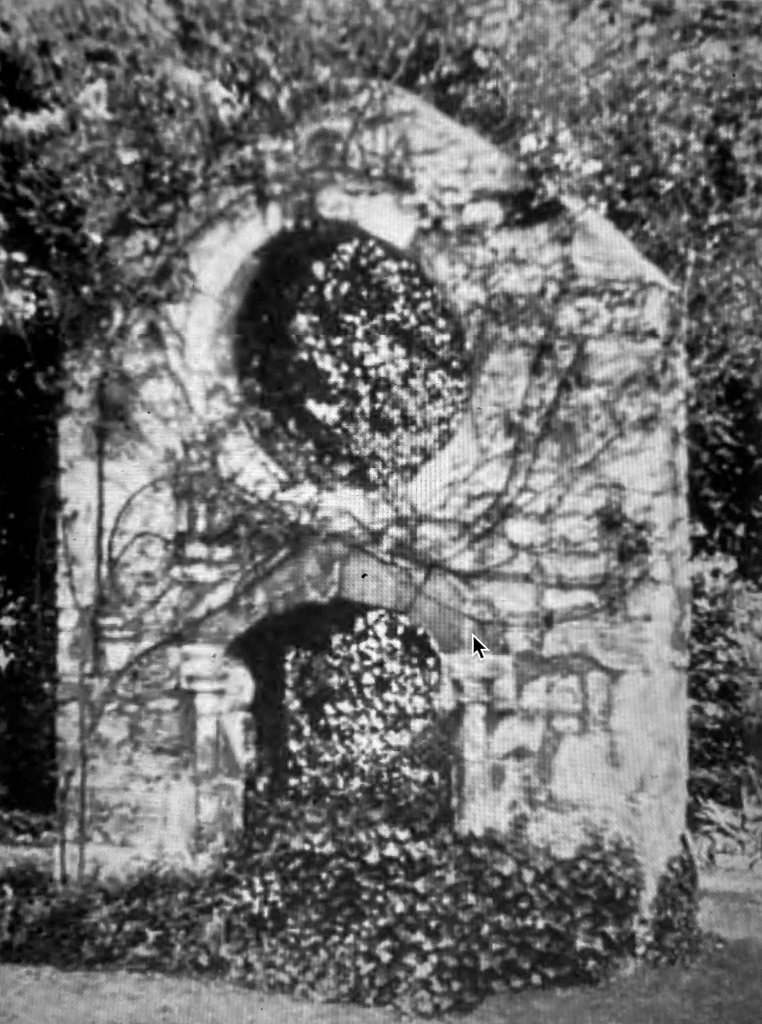
The arch as seen in the engraving, reconstructed in the gardens on 302 Woodstock Road.
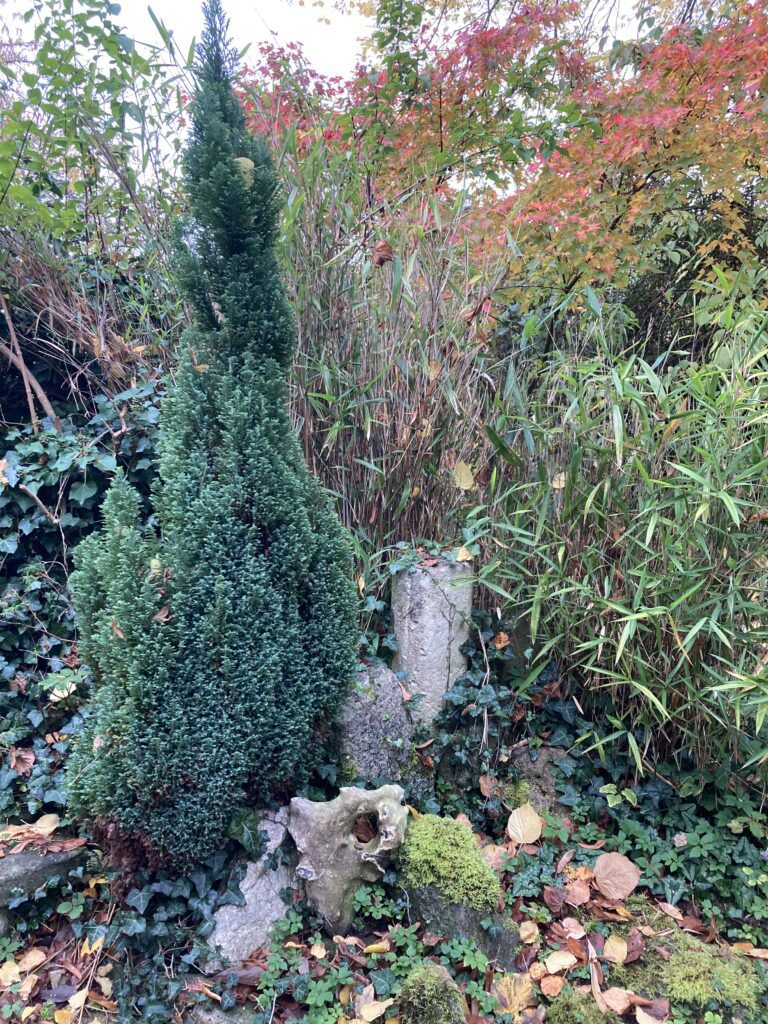
While I was searching for the arch I chanced to meet a local dog walker who showed me what she has always considered to be stones from Beaumont Palace, now used in the rockery of her home in Osberton Road .
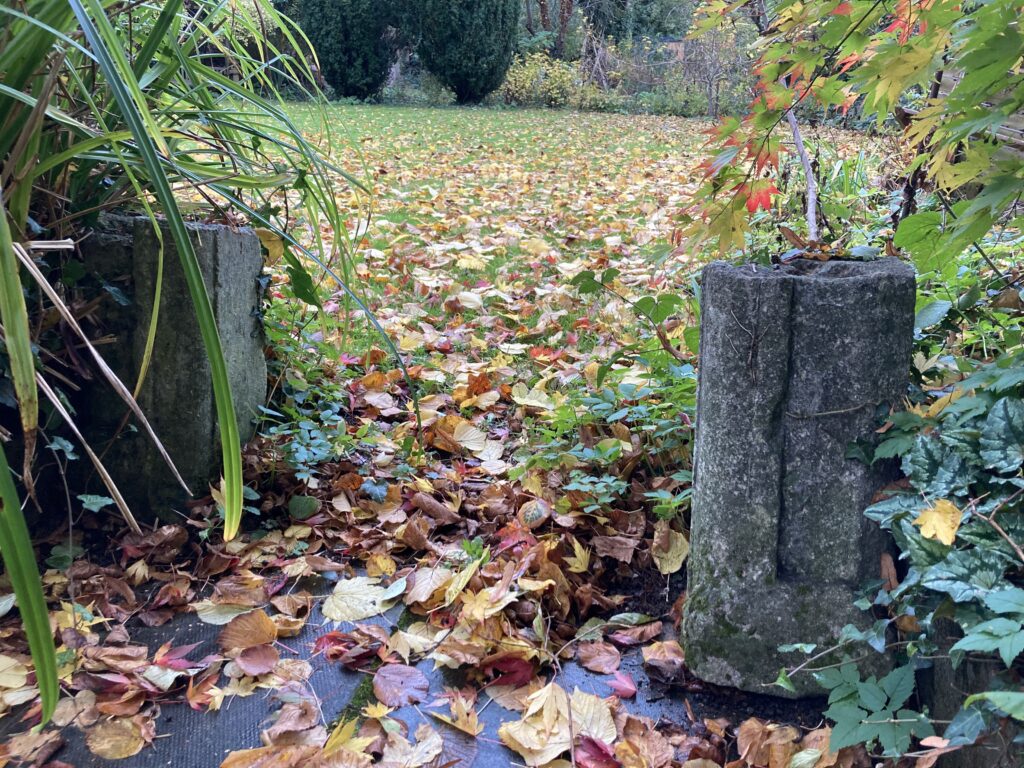
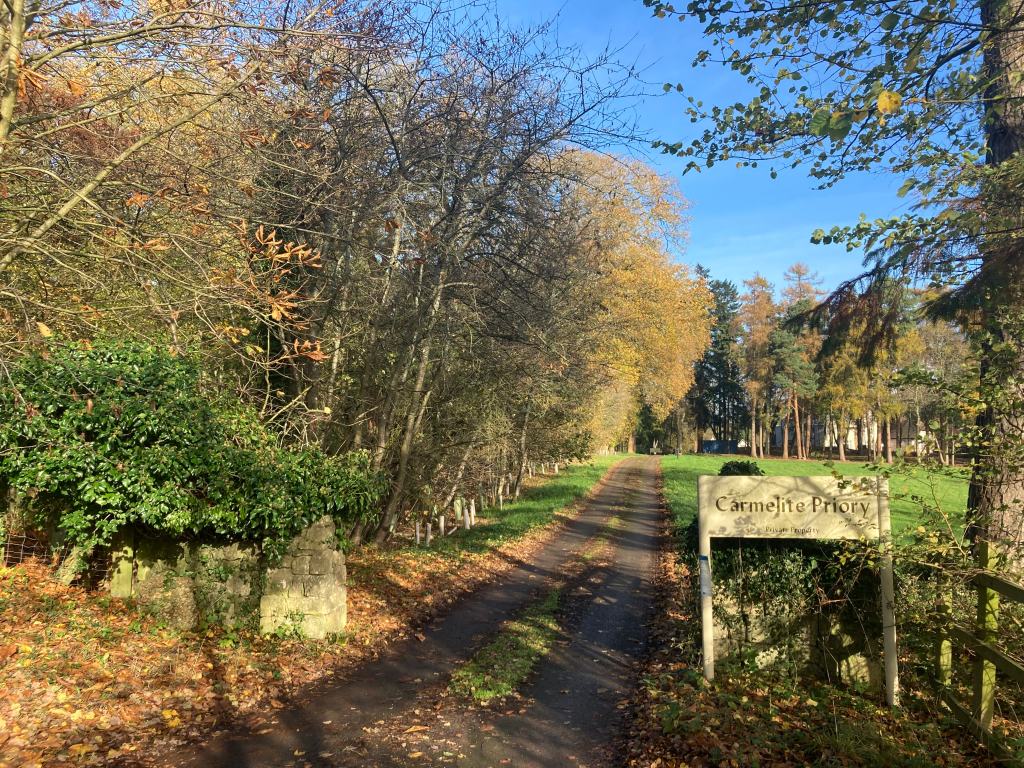
The entrance to the now Carmelite Priory on Boars Hill. Stones from the old Priory in Beaumont Street were used to build the gateposts.
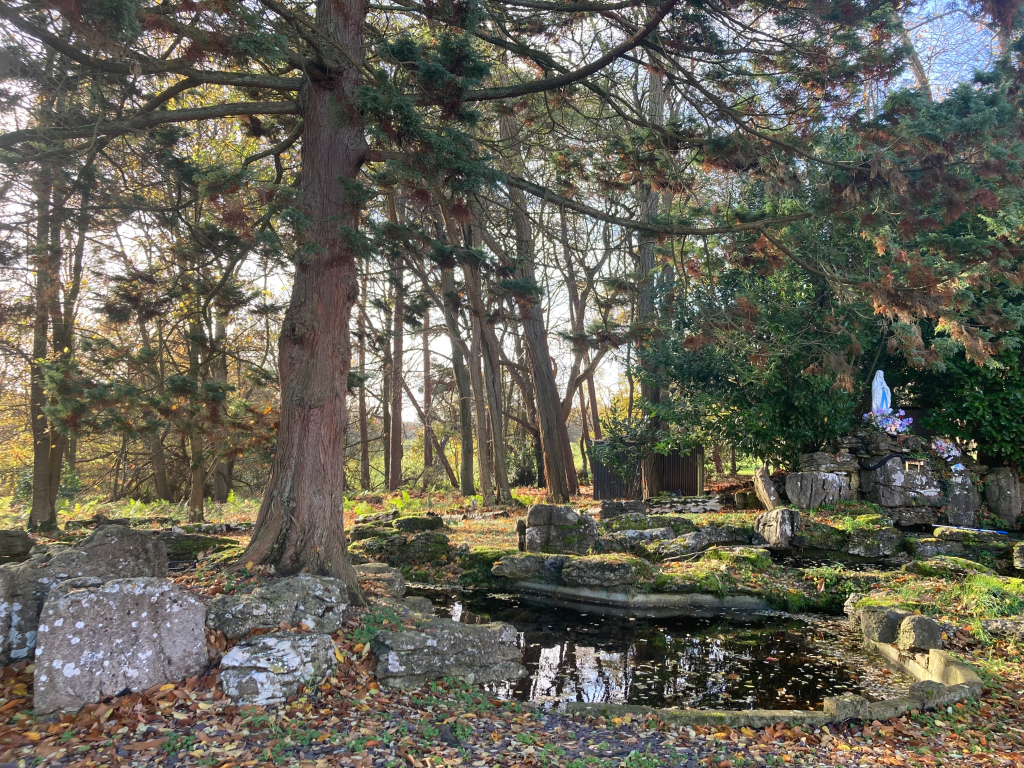
Boulders of stone litter the garden.
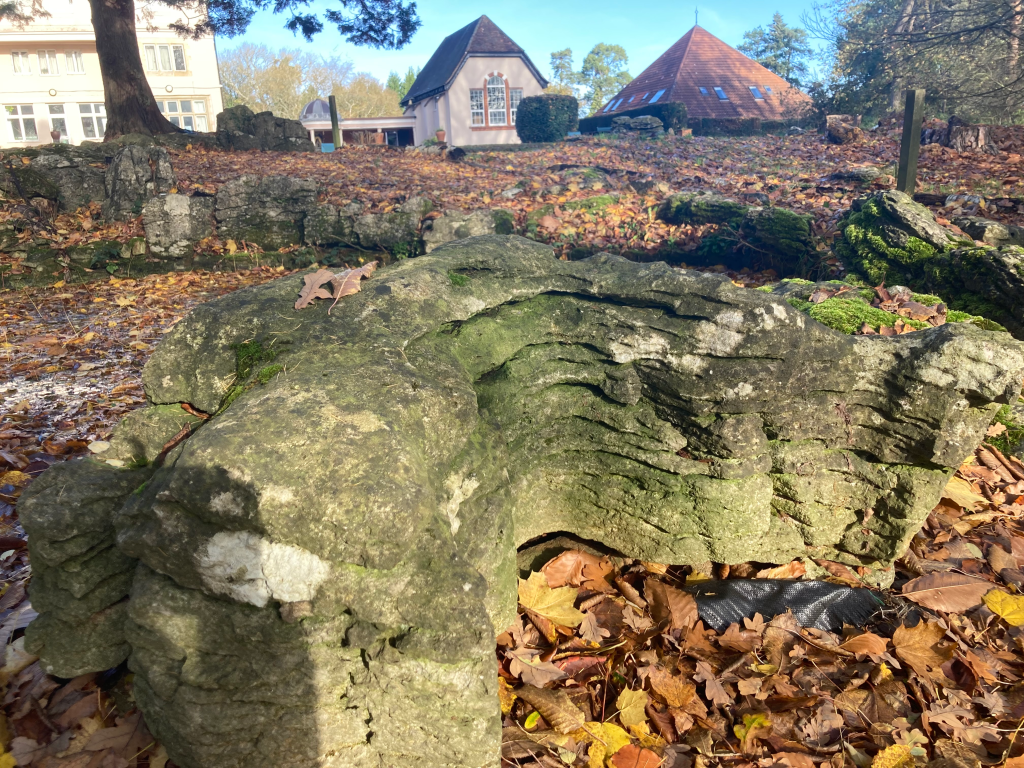
Father Liam does not think this is from Beaumont.
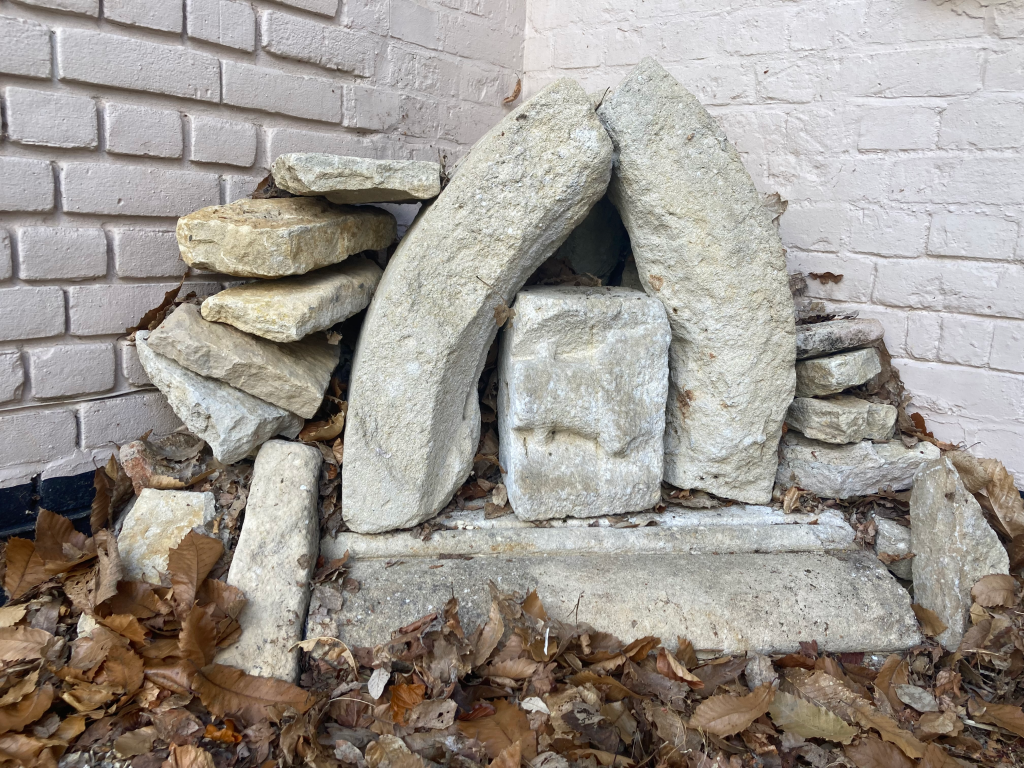
But this most certainly is.
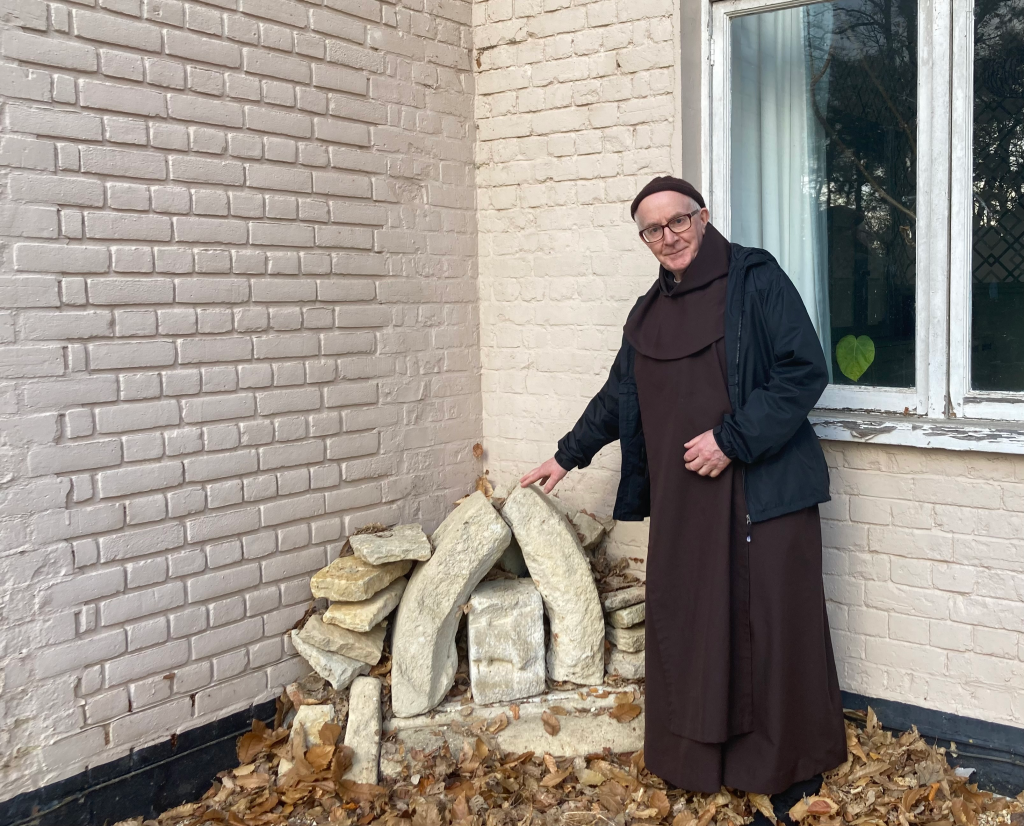
Father Liam from the Carmelite Priory
You may also like to read Headhunting
7 Comments
Join the discussion and tell us your opinion.
The glories of our Blood and State
Are shadows, not substantial things.
There is no armour against Fate
Death lays his icy hand on Kings.
Sceptre and Crown
Must tumble down,
And in the dust be equal made
With the poor crooked scythe and spade’
Thank you for this exploration. I have wondered about the total disappearance of Beaumont Palace since I first read that the Lionheart was born there. The Romans were on Boars Hill, and probably the first foundation of Abingdon Abbey, so there may well be other sources of worked stone there.
Another Oxford Sausage banger! Alienor of Aquitaine was one of history’s greatest – so as a fan (both of Alienor and The Oxford Sausage), a Worcester College alum and a resident of St John Street I was delighted to read this and discover where the vestiges of Beaumont Palace are scattered about. Thank you.
Love this Arabella! Have long wondered where it went – and had no idea about the Playhouse. Your evocative writing brings it back to life.
Fascinating! Thank you, a lovely read and reminds me of my time in Beaumont Buildings
Fascinating! Thank you, a lovely read.
There is a massive door leading to the ancient library in Merton College which is known as the King Richard door. We were told several years ago that this was the original door to Beaumont Palace.
So after writing to Dr Julia Walworth FSA | Fellow Librarian at Merton College, in the interests of prompting further information here is her reply.
“I am afraid that I don’t have a definitive answer. At the time that Merton was building the Mob Quad library, the college bought a door from the Carmelite Friary (bursar’s accounts of 1372-75). It has been assumed that this is the door that provides access to the Mob Quad library. Alan Bott’s Merton College: A Longer History of the Buildings, briefly discusses the door and its possible origins in the Friary itself–so possibly Beaumont palace, but Bott also suggests that the door in question might have been from a tenement left to the Carmelites in 1373. (Bott doesn’t provide a reference for this last bit).
Oddly, I have never heard the door referred to as the King Richard Door. I am not an architectural historian, but I might imagine that the main door to Beaumont Palace would have been larger (?). The door to the Merton College hall dates from the late 1270s and is truly massive.
I wish we knew more, and perhaps at some point some timber dating might be able to help?”