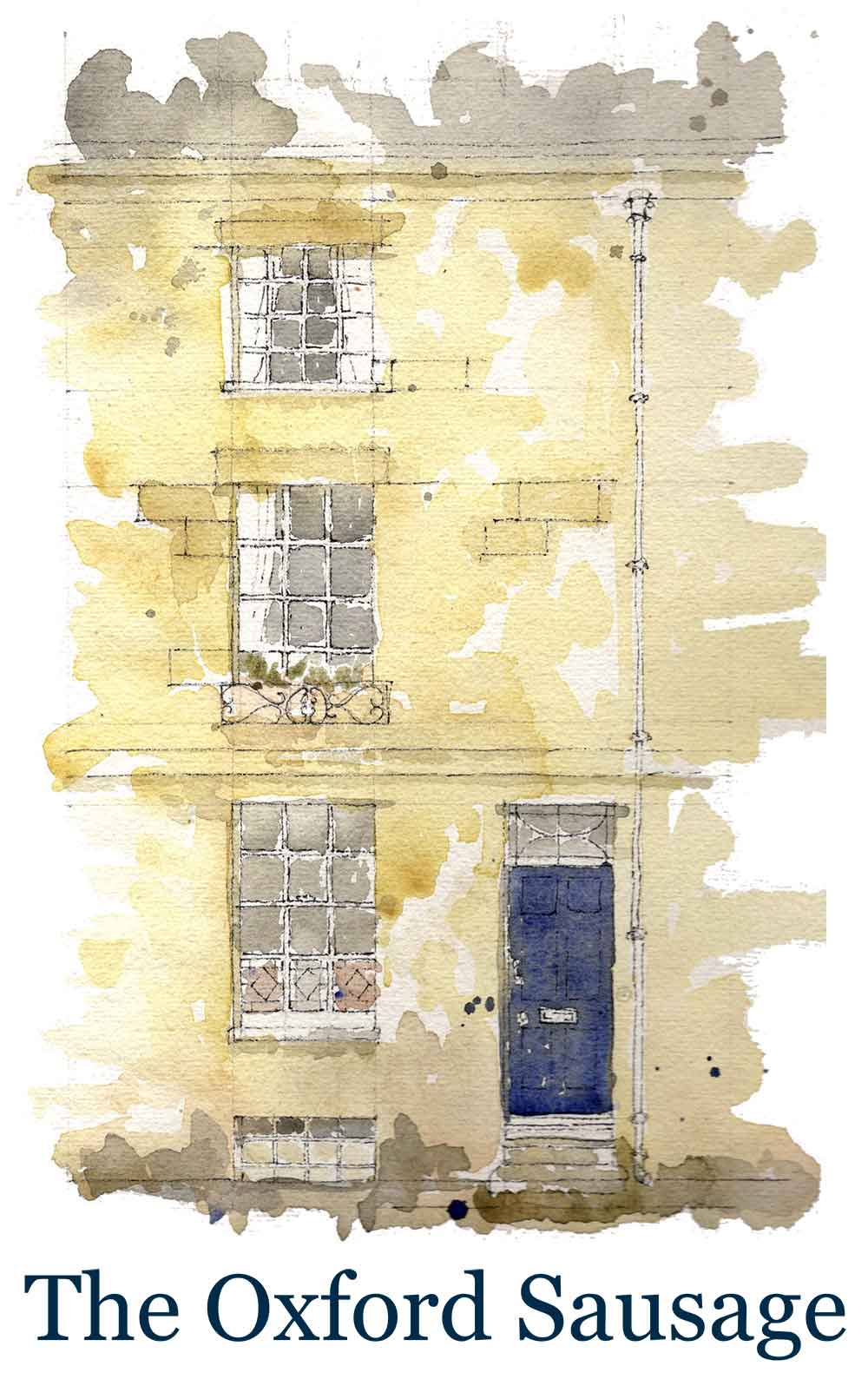
One of the regular activities that perks me up as I claw my way through dull grey January is marmalade making. A couple of weeks into the New Year, crates of the bitter Seville oranges needed in its production (smaller and more pitted than their sweeter counterparts) being to appear in the shops. They are available for a short period only, a couple of weeks if you are lucky. So as Oxford is a city of marmalade eaters you must be quick to secure your basketful of Spanish sunshine, sufficient to fill enough jars to last a good way into the coming year. My mother used to produce vast quantities of the stuff, boiling the fruit whole to make the peel soft and therefore easier to shred. She made it principally for my father who loved the thickly cut and chunky variety, spread liberally on buttered toast for breakfast and in suet puddings for Sunday lunch. I use the same recipe though I cut the rind thinner, and the heady welcoming smell of boiling fruit and sugar is still sweetly nostalgic.
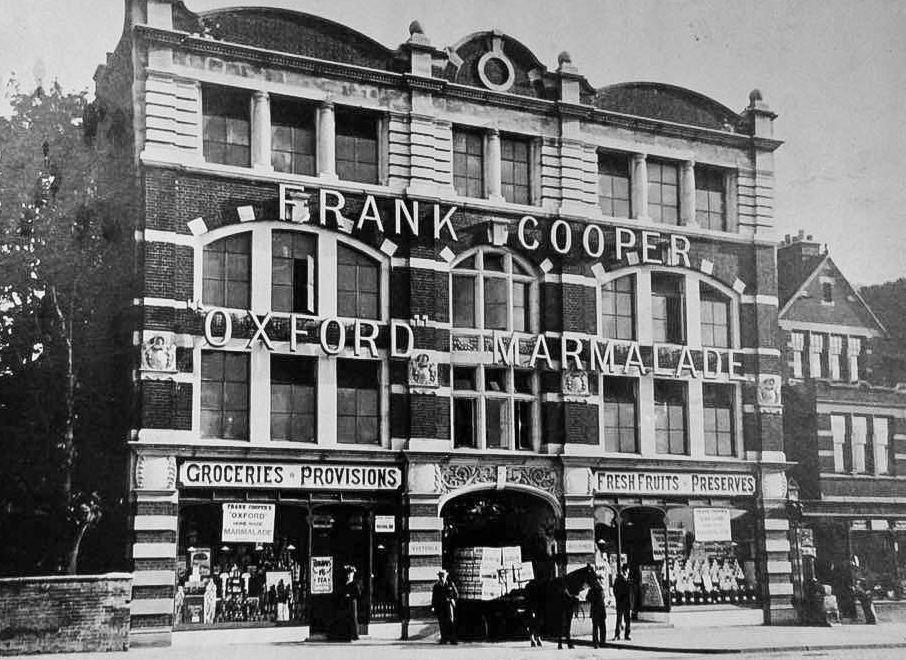
And I feel the weight of history as I boil and slice. Because Oxford is as well known for its marmalade as it is for its sausages. Indeed, it is exactly 152 years ago, at this time of year in 1874, that Sarah Jane Cooper, as the story goes, made her first 75 lbs batch just before the birth of her first child. Using the leftover Seville oranges in her husband Frank’s High Street grocer’s shop, (his was one of several Italian Warehouses as they were known in the city that included olive oil, parmesan, tea and hard to source oranges from abroad amongst their offerings) she certainly didn’t invent the bitter spread. More commonly made from quinces (indeed the word is derived from the Portuguese word for quince, ‘marmelo’) it was used medicinally to settle the stomach and was already popular in Scotland. But this was Sarah’s own special ‘Oxford’ recipe and it happened to arrive at the right time in the right place. By the 1870s, lunch was beginning to find favour over the substantial breakfasts of sole, haddock, bacon, eggs, porridge, steak, veal cutlets, kidneys and curried meats still served privately in Oxford college rooms. Toast and marmalade fitted the bill for a cheaper, healthier breakfast that could be eaten communally in hall. The jars flew off the shelves. So, after having the baby, she made some more. A lot more. And as was often the way in those days her husband took the credit. Frank Cooper’s Oxford Marmalade was born.
Sarah Jane came from a well-known local family – the Gills had been ironmongers since the 17th century, until quite recently trading from a shop down the narrow alleyway that is Wheatsheaf Yard. To visit was like going back in time, every nook and cranny stacked high with pots, pans and boxes of screws of various sizes which you could buy singly, packed carefully in a brown paper bag to keep it safe. Now ironically the place is a nail bar, but not of the iron sort. But the point is, it seems a little unfair that the concoction Sarah cooked up should be branded with her husband’s name. There is blue plaque in her memory on the lovely 18th century house at 83 High Street where the family once lived, next to what was the old shop, now The Grand Café. But it’s high up and hard to spot. So, I hope I am doing my bit to put the record straight.
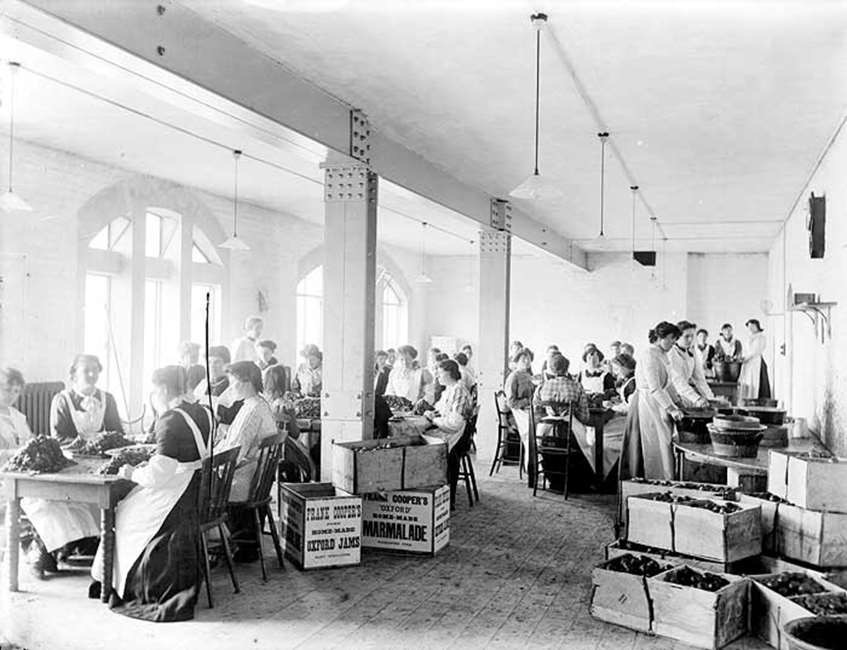
Cooper’s marmalade was at first produced in copper vats at the back of the shop on the High Street by Sarah and a small team. The sweet smell must have been intoxicating as it wafted down the maze of the narrow back alleyways and up through the windows as students were assessed in The Examinations Schools next door. But by the turn of the century, its growing popularity demanded it be made on an industrial scale. In 1903 a purpose-built factory was opened on Park End Street – a prime location opposite the railway station – each storey catering for a different part of the manufacturing process. And amazingly with the devastation afforded so much of this part of Oxford, it’s still there.
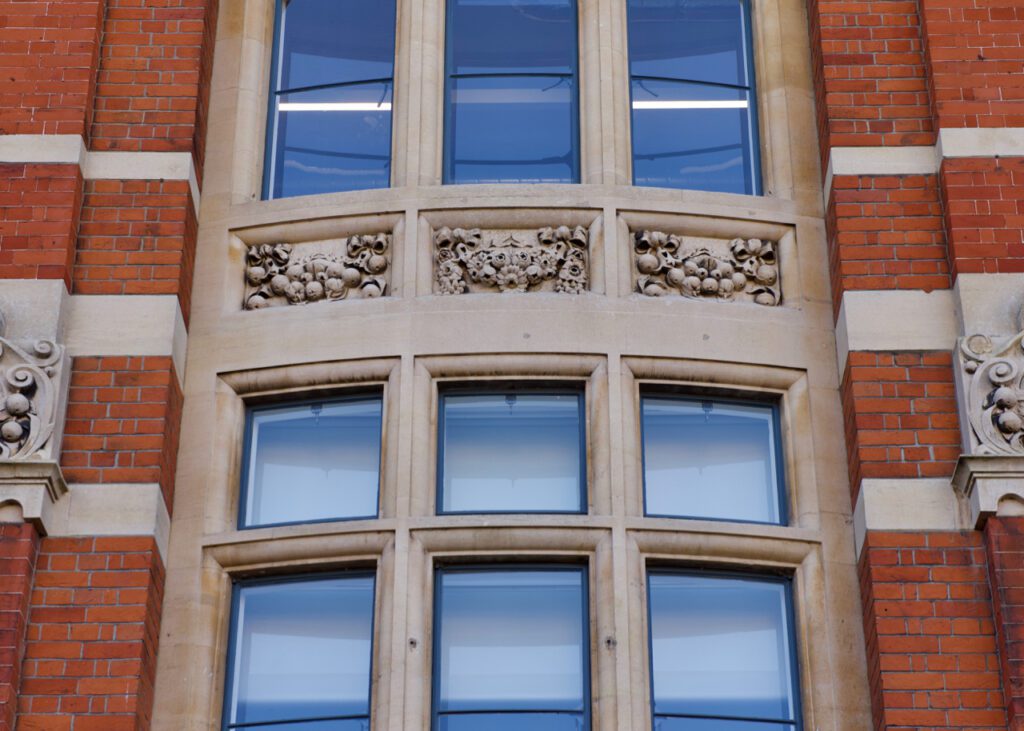
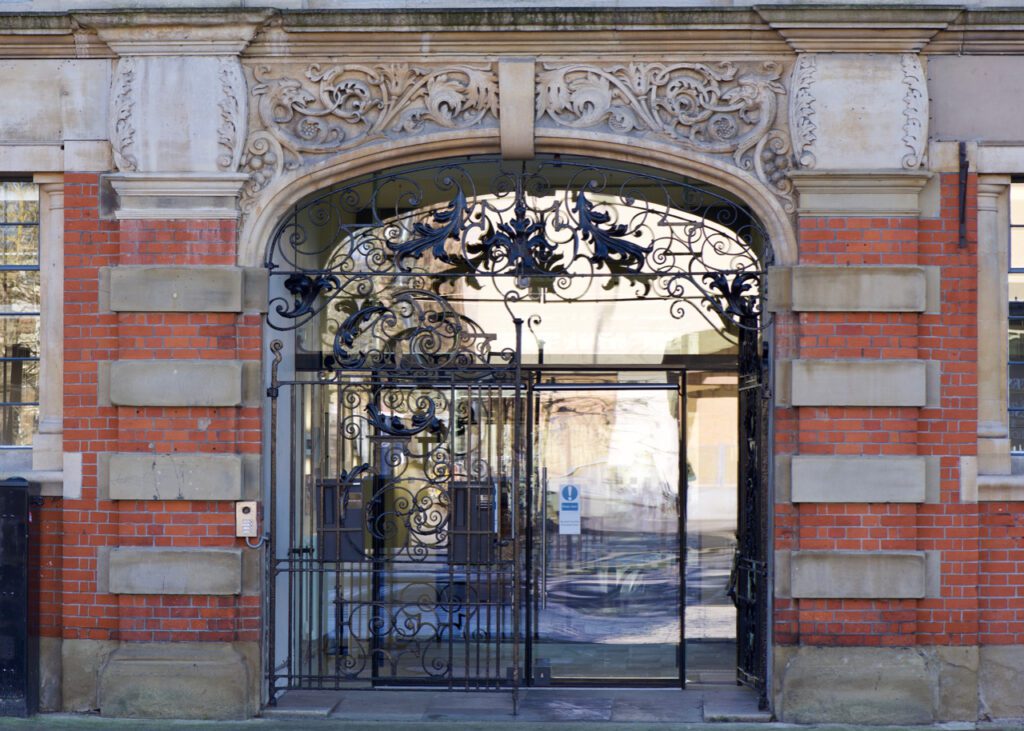
Designed by Herbert Quinton and built by Thomas Kingerlee, (now in its 5th generation as a local family construction business), it is one of the few buildings that deserve attention as you alight from the train hoping for views of dreaming spires. Skirt past the Said Business School, and cross over the busy Frideswide Square and there you will find an eclectic mix of red brick and honey stone. Ornate wrought iron gates still stand at the place where once horse drawn carriages carried pots of marmalade for delivery to the station or to the shops in town. Huge, light filled curved windows reflect the shape of the roofline, and beautifully ornate stone carvings of flowers and oranges complete with pitted skin adorn the frontage. Cooper’s marmalade stopped being made here when the factory moved down the Botley Road in 1947. The family sold up in 1964 and its marmalade production was moved first to Wantage and then out of the county altogether. The building that became endearingly known as The Jam Factory has had several incarnations since. The place has had another overhaul recently, and peering in through the swanky glass doors it appears to be the modern offices of Oxford University Endowment Management. A different beast altogether from its original purpose.
But Frank Cooper’s Oxford Marmalade was in its heyday during the time it spent on Park End Street. Employing a hundred staff, it was marketed as a cottage industry, a natural product with no added ingredients, the peel shredded by hand, and packaged in beautiful Malings porcelain jars. It was to be found only on the most aristocratic of English breakfast tables. “Cooper’s Oxford, please Linda,” says Nancy Mitford’s Uncle Mathew in ‘The Pursuit of Love’. James Bond eats it (the Vintage variety) in Ian Fleming’s ‘From Russia with Love.’ It received the Royal Warrant in 1913 – it was apparently a favourite with King George V – and there’s even a tiny sample pot, complete with miniature signature label in Queen Mary’s doll’s house in Windsor. It accompanied Scott on his ill-fated expedition to the South Pole. One of the only survivors is a rusty tin of the stuff, now on show at the fabulous MOX (Museum of Oxford) in the Town Hall, along with other Cooper memorabilia including a huge paddle used to stir the orange jam as it spluttered and spat. And you can be sure it was the principal ingredient of the marmalade sandwich Queen Elizabeth II took from her handbag when she met Paddington Bear.
And so it is in Sarah Jane’s memory that I set about concocting what I hope will be a vintage marmalade year. First boiling until the fruit is pillow soft. Cooling, then scooping out the pith and pips, to be boiled again before sieving the amber juices onto the now finely shredded peel. Add the warmed sugar. Then watch while it boils. If you are not careful it will burn. Marmalade makers can be a difficult bunch. We all do it slightly differently. Some use brown sugar which makes it darker and richer, others add cardamon or whisky. Then there’s the consistency. I prefer mine not so stiff that it stands to attention, but also not so runny that it dribbles down your sleeve. I know I’ve made a good marmalade when I hold the jars up to the light, and the thin strands of orange seem to have stopped in the middle of a lively dance, suspended in pure sunshine. Sunshine on toast. I’ll settle for that. Thank you Sarah Jane Cooper.
Pictures of Park End Street and High Street buildings by contributing photographer John Milnes
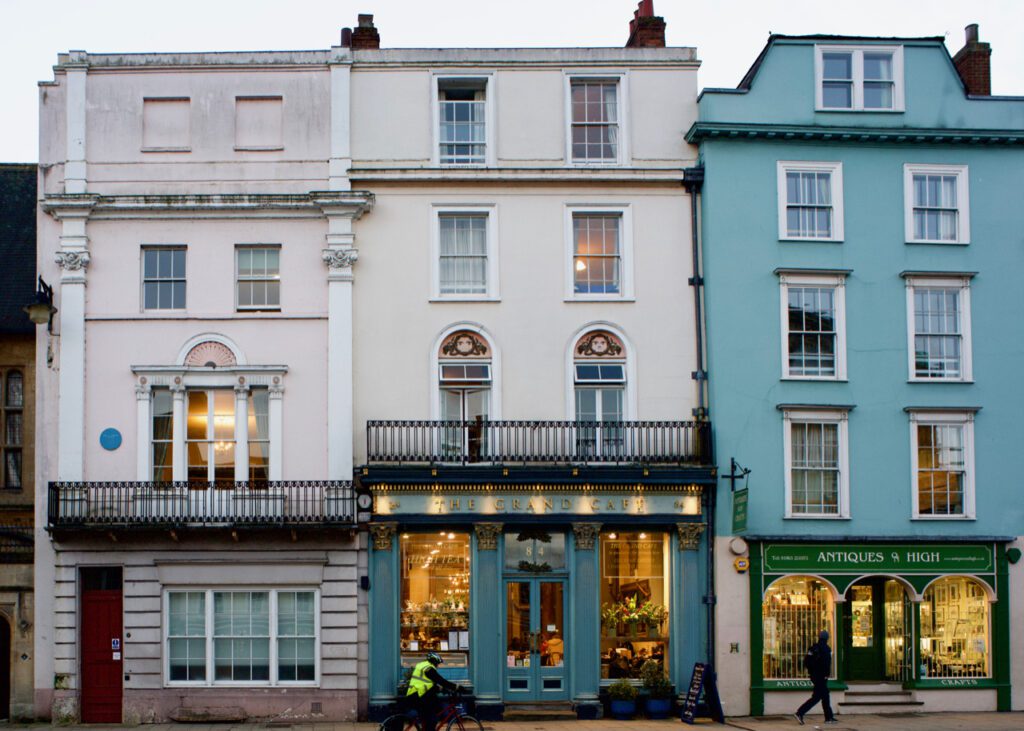
83 and 84 High Street today. The Cooper family lived at no 83. The shop was at 84, now The Grand Cafe, and it was behind here that Sarah made her marmalade.
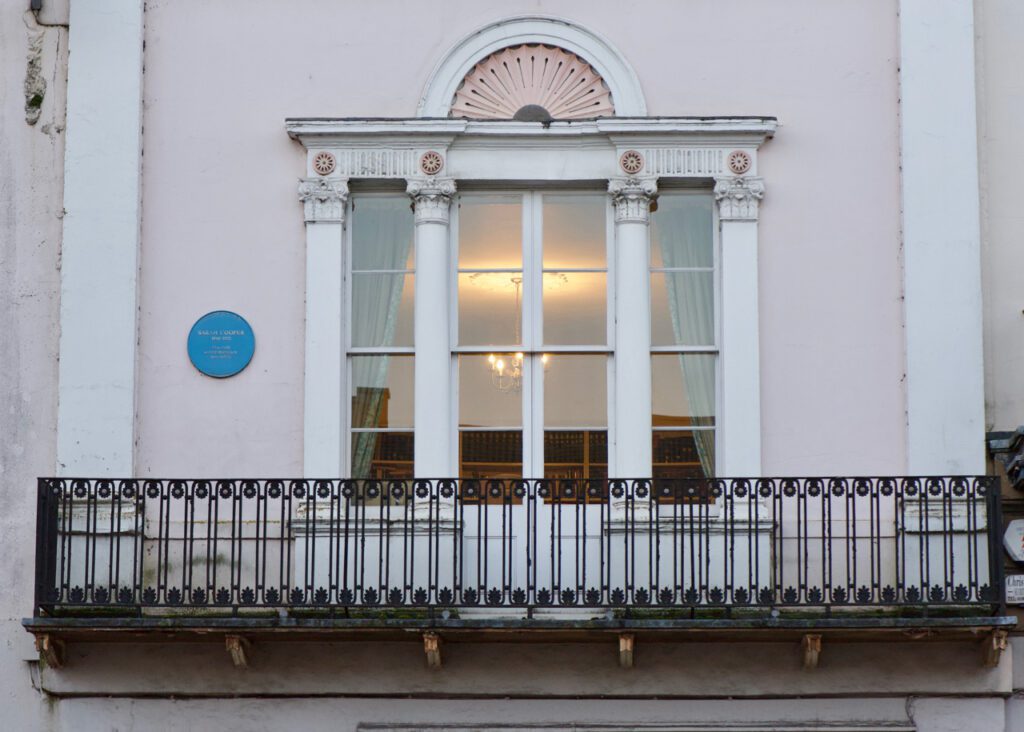
Sarah Cooper’s plaque on the first floor of No 83 reads: SARAH COOPER 1848 – 1932. First made marmalade here in 1874. 150 years ago exactly!
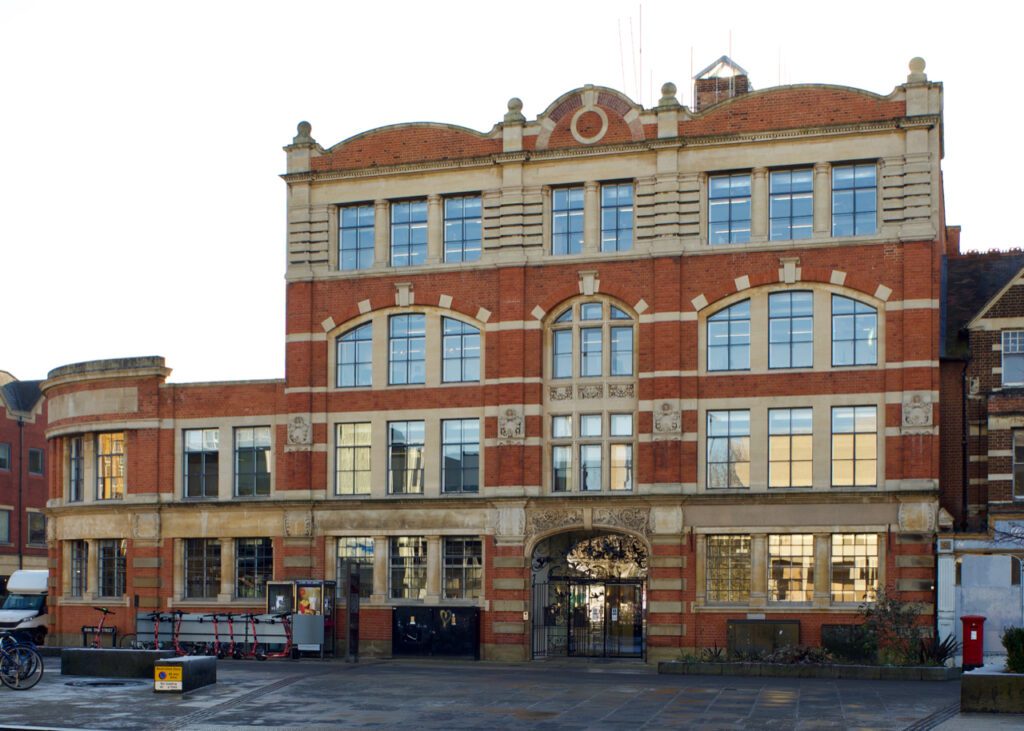
Built in 1903 Frank Cooper’s Oxford Marmalade Factory as it is today.

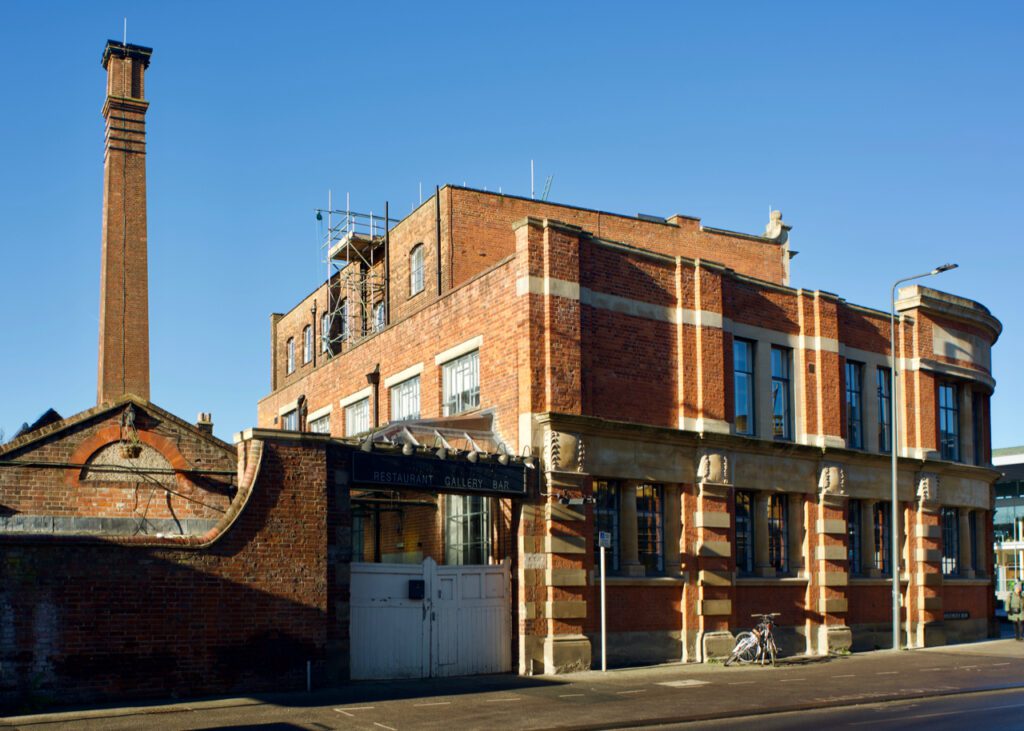
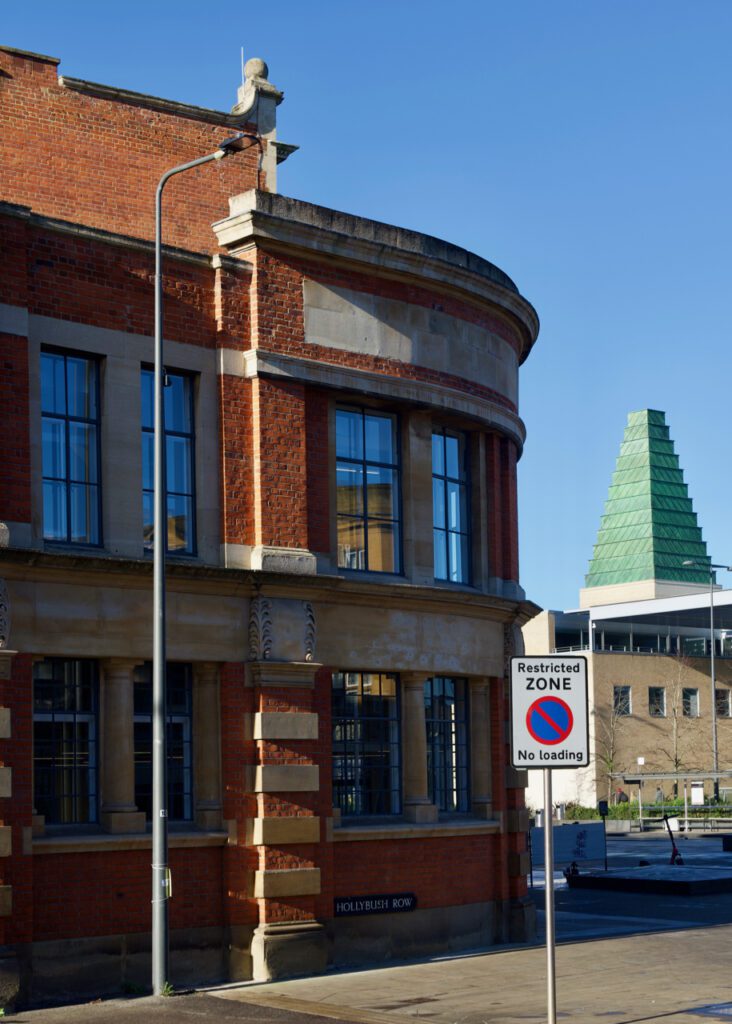
The old and new – the corner of The Marmalade factory and the copper clad ziggurat of The Said Business School across the road, built roughly one hundred years later in 1996.
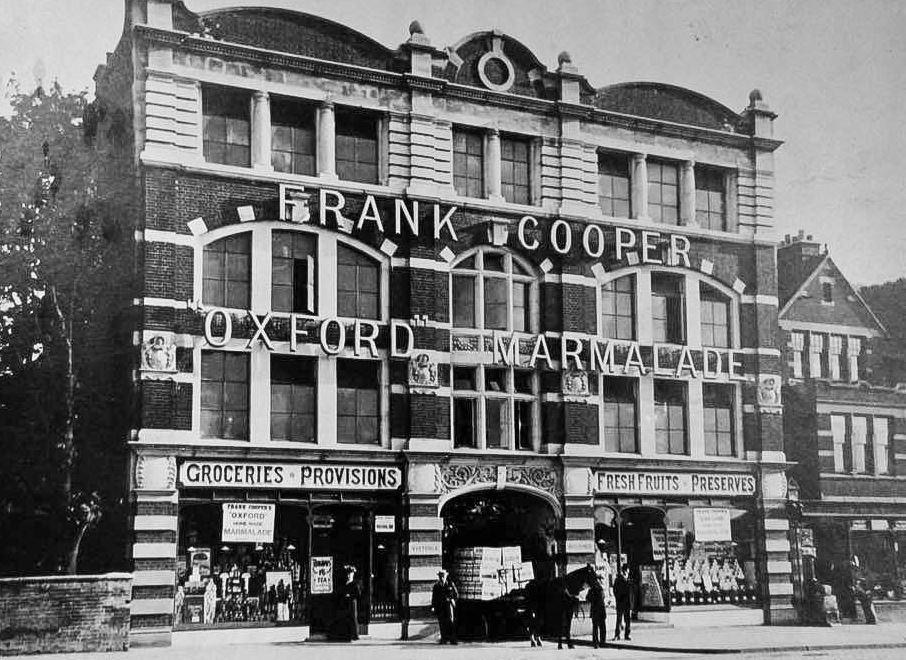
And as it was then. Photograph by Henry Taunt taken in 1906, Oxfordshire County Council
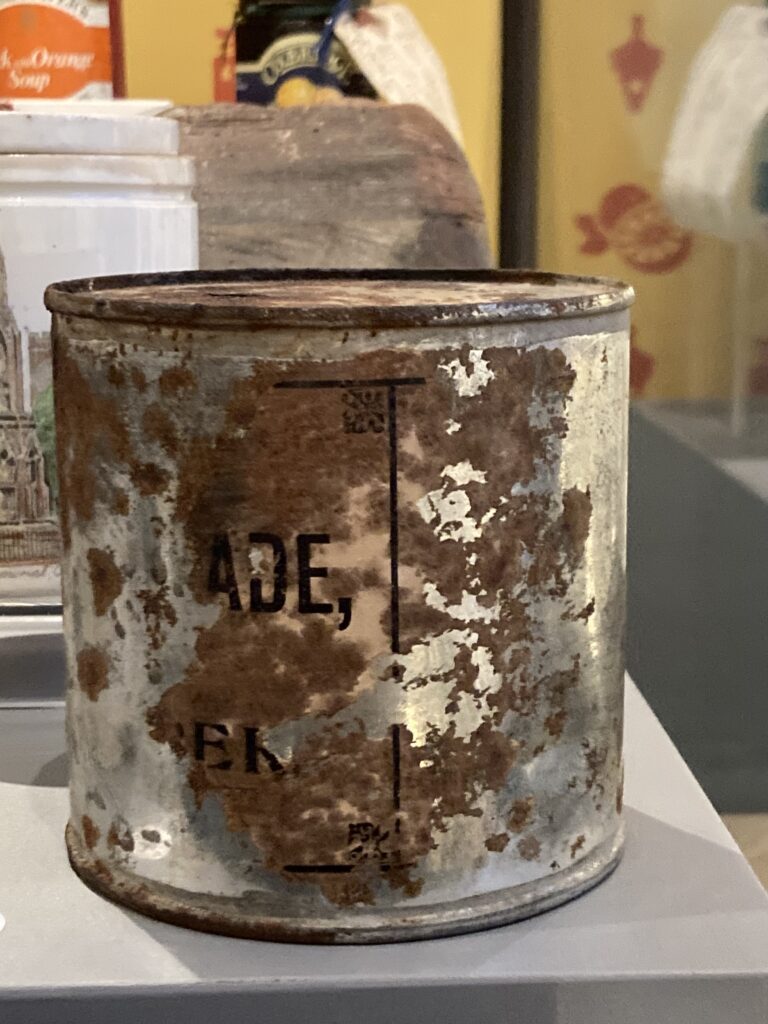
Saved from the ice – what remains of the tin of Cooper’s marmalade taken on Scott’s expedition to the South Pole. Exhibited at MOX – Museum of Oxford
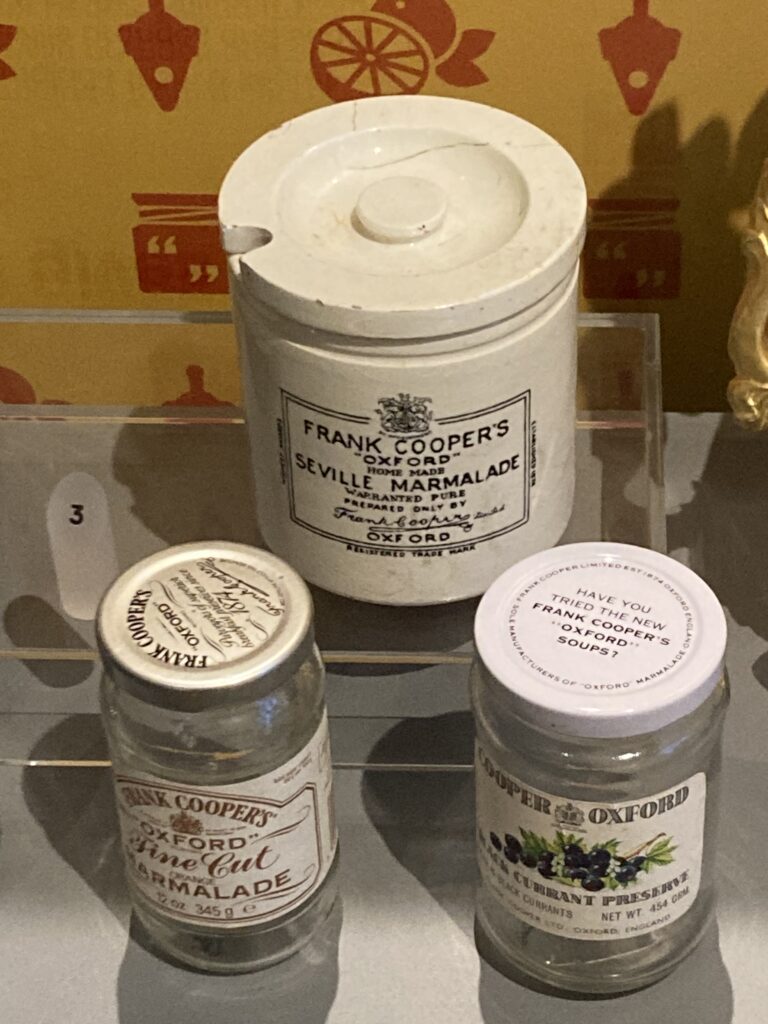
One of the old stone pots used to sell Frank Cooper’s Oxford Marmalade – if you returned it you could claim a penny. Glass jars replaced them in the 1930’s. These are on display at MOX.
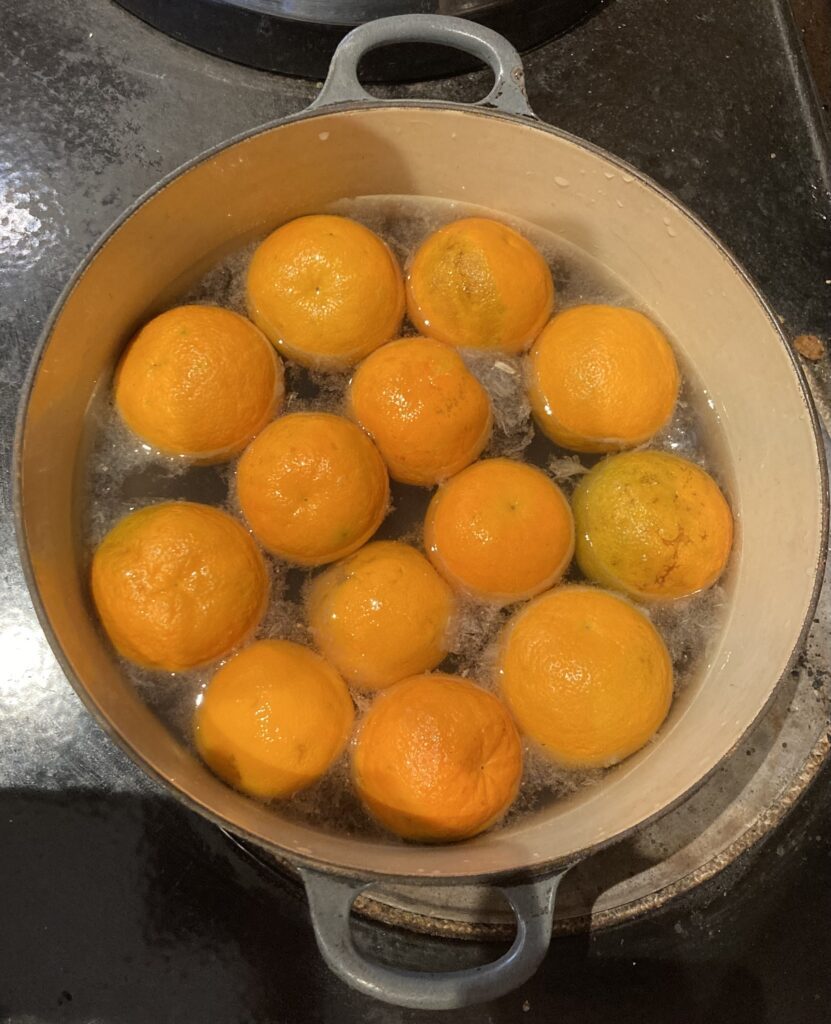
I boil them whole, and then cool so the peel is soft enough to shred easily.
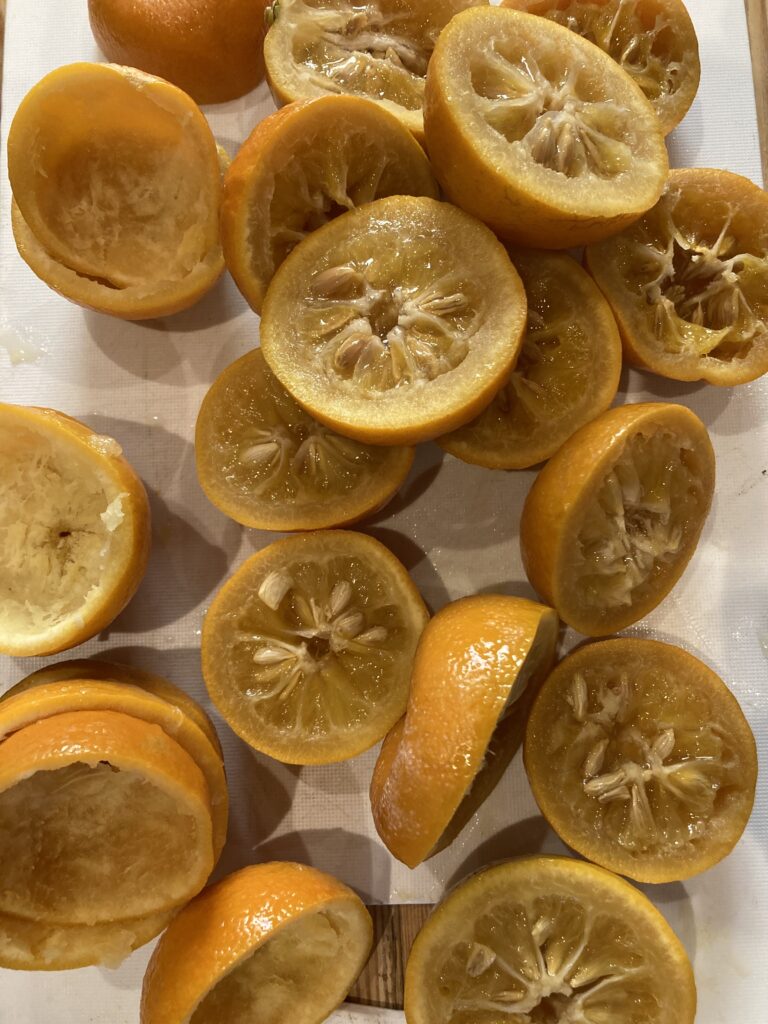
Scoop out the pulp and pips and add to the liquid. This is what gives it a good set. Cool then strain.
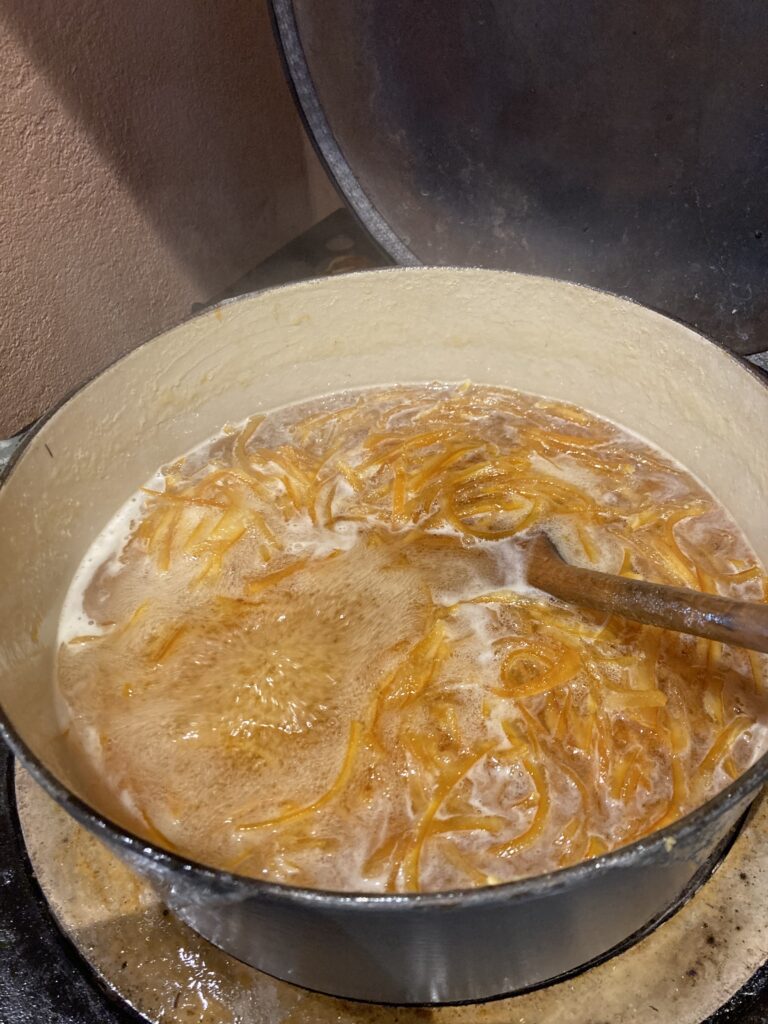
Add the shredded peel and sugar. Once dissolved, boil for about 20 minutes
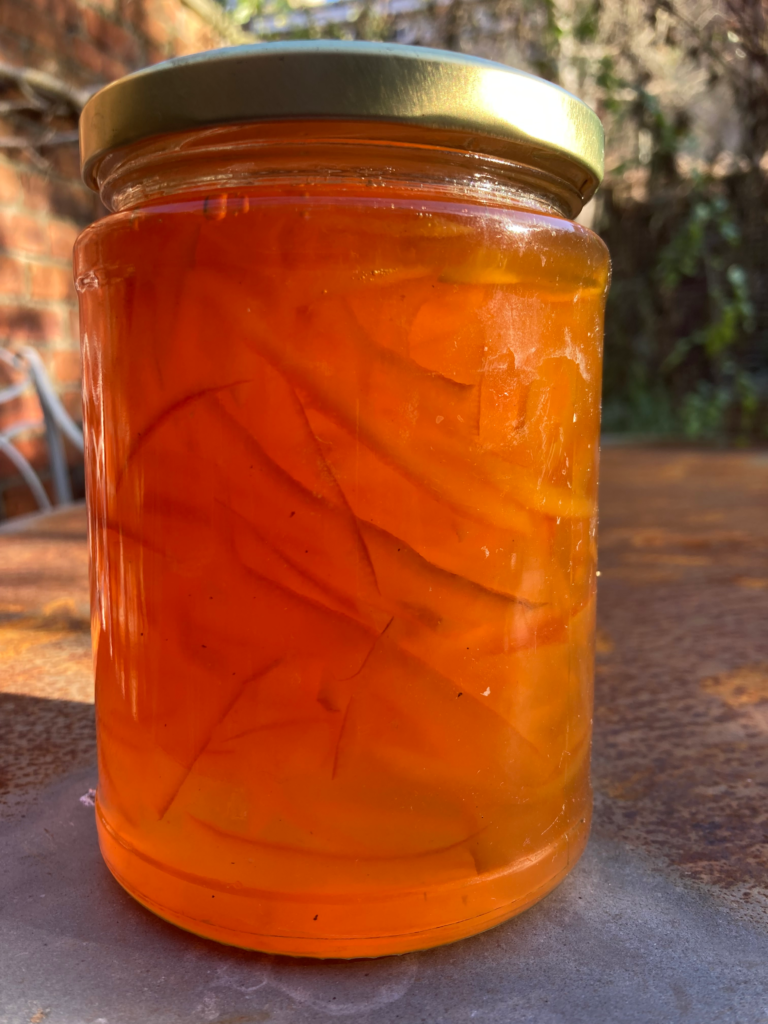
And hey presto! Jars of sunshine.
16 Comments
Join the discussion and tell us your opinion.
The room to the right of the blue plaque at no. 83 – ie the room behind the doors – used to be that of Univ’s English fellow where most of the undergraduate tutorials took place. I am sure that at some point the commercial premises below reverted to a marmalade shop, perhaps before the current incarnation as a cafe. They’d give a discount to students and the big jars with ‘Oxford’ and the royal warrant became popular as presents for one’s family. A lovely essay yet again Sausage. Many thanks.
Thank you. I enjoyed reading this very much and look forward to more
Such a lovely slice of Oxford history with beautiful photos and a new recipe to try out. I’ve never boiled the whole fruit. Will be pointing out Sarah’s plaque to all my visitors
Growing up in Oxford but now in Yorkshire I have just taken my spare Frank Coopers Course Cut Oxford Marmalade out of the store cupboard and am delighted it has lots of detail on the label which I might not have bothered to read. My family — like yours grew up with marmalade. Seville oranges are rare here in the north and I no longer make my own as my mother used to do. My past seems to chime with yours!
Valerie, get a local shop to stock Seville oranges. Now is the time. Our shop – Doull’s in St Margaret’s Hope, Orkney – always gets them in, there would be uproar in the community if not!
Thanks to the Persephone newsletter in Bath, I was referred from Amsterdam to the Sausage blog in Oxford for this delicious article with beautiful photos about Oxford marmalade. We’d love to whip up a jar of sunshine ourselves on this cold winter day, but our greengrocer doesn’t have Seville oranges; Amsterdam isn’t Orkney in that respect. Luckily, we have Kelly’s Expatshop nearby and they have Frank Cooper’s Original Oxford Marmalade in stock. It’s cold here today but sunny. We had fresh baguette with butter and Oxford marmalade for breakfast. Although it is now produced in Leeds, Sarah-Jane’s creation story in her 1874 kitchen is indeed still written there. “The perfect choice to wake up your taste-buds in the morning”, it says underneath.
I look forward to a full story about the LNWR station! Thank you for this blog.
We sourced lovely Sevilles from greengrocer in Filey.
Made two double bathes as per Nigel Slater.
What an inspiration the Sausage is to get out and notice things! Marmelade is so closely associated with Oxford and yet I’d never though to wander out and find out why… Thank you for bringing the story to life. And speaking of stories and marmelade, why on earth has Paddington failed to visit Oxford? I’m sure he’d be eligible for an honorary degree if he did.
A lovely article, telling me much I didn’t know. The 9.00 AM train from Oxford to London in the 1960s had a full-service breakfast car, in which Cooper’s was provided in proper jars. Can a full freshly-cooked bacon and egg breakfast really have cost eighteen shillings and sixpence? This isn’t really a quibble, more of an idea, but shouldn’t it say the factory was opposite Oxford Stations, not Oxford Station. I long to know more of the lost LNWR station, the shell of which still stood till recently, and which I think welcomed (if that is the word ) its last passenger in 1947. What was it like? Where could you go from it? I’d also like to hear about Oxford’s Breweries , especially Morrell’s, where I briefly toiled in 1969, but also Hall’s, which once stood on the opposite corner to the Jam Factory.
Thank you for your comments, and yes I remember the old station which was occupied when we first moved back to Oxford, as a protest against what became the Said Business School. I will see what I can dig out about its history.
The LNWR station stood idle and then became a tyre garage, and I think became a preserved building.
When the Said centre was being planned it was decided to dismantle the building carefully enough in order to transport it to the Quainton Railway Centre out near Aylesbury and rebuild it there and that’s where it remains. A beautiful building.
Brilliant – then I must visit
Another wonderful foray into Oxford’s domestic history. Thank you so much.
My first boyfriend was Douglas (possibly Duncan) Cooper whose father owned the Frank Cooper Factory. As a treat he took me round the factory in 1957, sadly our romance petered out and I don’t know what became of Douglas Cooper.
Someone who had worked for Hartleys Jams told me that the pips in the Seville oranges have no pectin in them and should be discarded. So now when I make marmalade I cut the oranges in half, squeeze them, throw away the pips, but keep the juice. Then quarter the oranges add the juice and water and cook for a couple of hours until tender, then I cut up the rind before adding the sugar and boiling until set. .
I’ve just made 3 batches of marmalade and though laborious well worth the effort during the year. My pips and all the pith go in muslin to be tied to the saucepan and boiled in with the orange liquor. I’ve always understood there is a lot of pectin in the pips. I’m sure everyone’s marmalade is delicious and the orange perfume in the kitchen is lovely. I do mean perfume.
Such an interesting story. For the two years I worked in Oxford, I’d drive past the factory every day and always got a thrill to think it was still standing after so many buildings had been demolished. Thank you, I did enjoy reading.
Just discovered this blog through the Persephone letter, and as an Oxford resident since coming up as a student in the 90s I can’t wait to read more. What a beautiful way with words you have and fascinating stories. It feels like peering down a well to see what little bits of Oxford were like in previous eras, which enriches the city for me. Thank you for sharing your time and knowledge in this newsletter.