It is early September in 1649. The feelings amongst the rank and file of Oliver Cromwell’s New Model Army stationed in Oxford are running high. It is now nine months since King Charles I was executed, and the promise of a more equal and tolerant society that some expected, has not been forthcoming. This is especially true for a group of highly organised agitators in the army nicknamed the Levellers. Petitioning is now banned. Some of their supporters are imprisoned, a few even executed by the new regime. Besides the soldiers have not been paid for months, and nor are they looking forward to an enforced and what looks likely to be a lengthy and bloody billeting in Ireland. It doesn’t take long for this incendiary situation to be whipped up into a frenzy. The soldiers round on the army leaders and lock them within the buildings of New College. This is where the munitions are stored and commandeering the guns they set off around town to celebrate. But any hopes that their demands might be met are soon dashed. Within hours the officers escape and take back control. Many soldiers are imprisoned for their part in the mutiny. Two, Privates Stephen Biggs and Roger Piggen, used as scapegoats for the ringleaders who have all fled south, are court marshalled and shot.
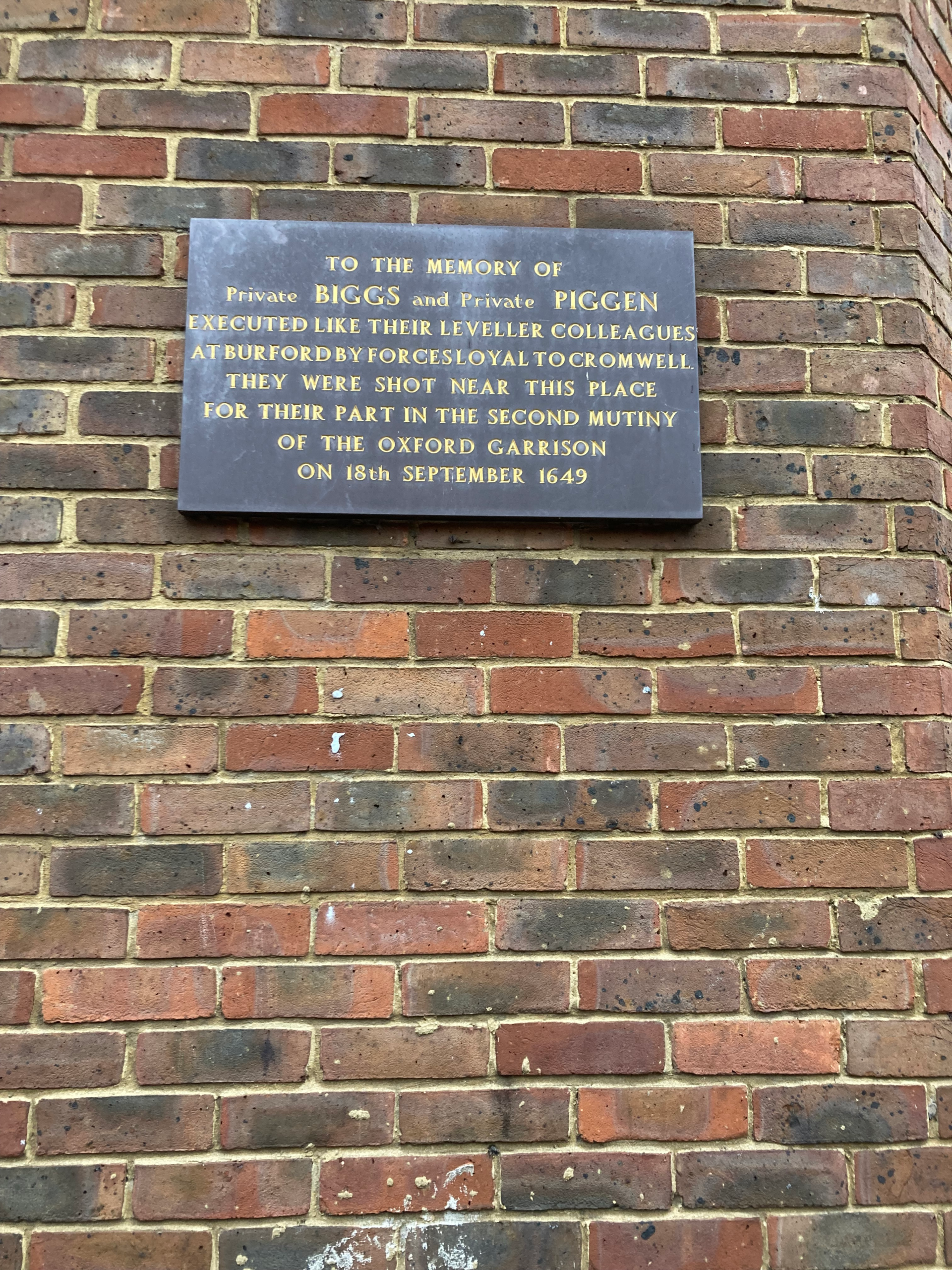
The men are memorialised on a small square plaque not far from my front door. It is positioned high up, so it is not easy to spot, on the west wall of a nondescript red brick building in Gloucester Green that now houses one of our many language schools. It tells us that their place of execution on 18th September 1649 was near here, just outside what was the city wall, probably on the bend in Bulwarks Lane, a place that now lies at the back of Nuffield College. Their bodies most likely then taken along a path on the outside of the walls approximating roughly to George Street, to the Church of St Mary Magdalen where the two soldiers and the companies they served are recorded, (though Piggen is wrongly logged as Biggins) in the Parish Registry of Deaths.
As it turned out this was the end of the line for the Levellers, their moment in the limelight short lived, the mutiny at Oxford their last hurrah. Their name had been coined by their opponents who believed that they were intent on doing away with any kind of social hierarchy, ‘to level’ everyone to the same status, and it stuck. But their leaders, men like John Lilburne, who wrote many versions of their manifesto, ‘An Agreement of the People’ from a cell in the Tower of London, preferred the term ‘agitators’, first used for the ‘agents’, ‘adjutants’, or spokesmen elected by ordinary soldiers in the Parliamentary army, that for a short while were able to voice their concerns in the Grand Council alongside the Colonels and Generals known as the Grandees. They argued for universal suffrage (well, apart from for women) and religious tolerance, and outside of the army they met in taverns and churches, printing, publishing, and distributing thousands of books and pamphlets to spread their ideas.
The Levellers probably had their best stab at successful lobbying and open discussion during what became known as the ‘Putney Debates’ in October and November 1647. The King had been captured, and Parliament had ordered the army under Cromwell, Ireton and Fairfax to disband. Instead they set up camp just outside London. It was here that (thanks to a quite recent discovery in Worcester College library we have the transcripts in Oxford) a series of debates were held at which Colonel Rainsborough for the Levellers famously declared “the least he that liveth in this land hath a life to live as the greatest he.” Liberty, he maintained, was everyone’s innate right.
This was all too radical for the Army bigwigs. And when the King escaped from Hampton Court it was the excuse they needed to end the talks and launch into the second phase of the Civil War.
The Levellers continued to attract popular support especially in London. After Thomas Rainsborough was killed in a Royalist raid in 1648, they came out in their thousands to support his funeral in Wapping, wearing their distinctive badges of sea green ribbons, the brims of their hats bordered with bunches of rosemary for remembrance. But after the King was executed on January 30, 1649, the new regime clamped down.
The Oxford Mutiny was the last of a series of insurgencies by the Levellers during the next nine months. The most famous at Banbury where over 1200 soldiers believing their position no better now that when they had a monarchy, gathered to air their grievances. But it was not to be. Of the 400 men captured by Cromwell and locked up in Burford Church, three – Private Church, Corporal Perkins, and Cornet Thompson (the Leveller colleagues referred to in our Oxford plaque) – were shot as examples to all those who threatened the authority of the military leadership. The bullet holes can still be seen on the church walls.
That Cromwell was feasting in Magdalen College on May 18th, on the very day that the Burford mutineers were executed show how quicky the city had turned coat. Once the Royalist capital for King Charles 1’s court, Oxford was now keen to back the new administration. Cromwell was awarded an honorary Doctor of Civil Law degree and later served as the Chancellor of the University.
So I hope I am doing my bit to remember Oxford’s part in the Levellers fight for a more just and equal society. All that while ago. Burford may be the setting for the annual Leveller celebrations in May, but it was the Levellers in Oxford who rose up in the hopes of retribution for what happened there. It was in Oxford that the Levellers had their last stand.
My thanks to Charles Webster for his help with the research of this piece.
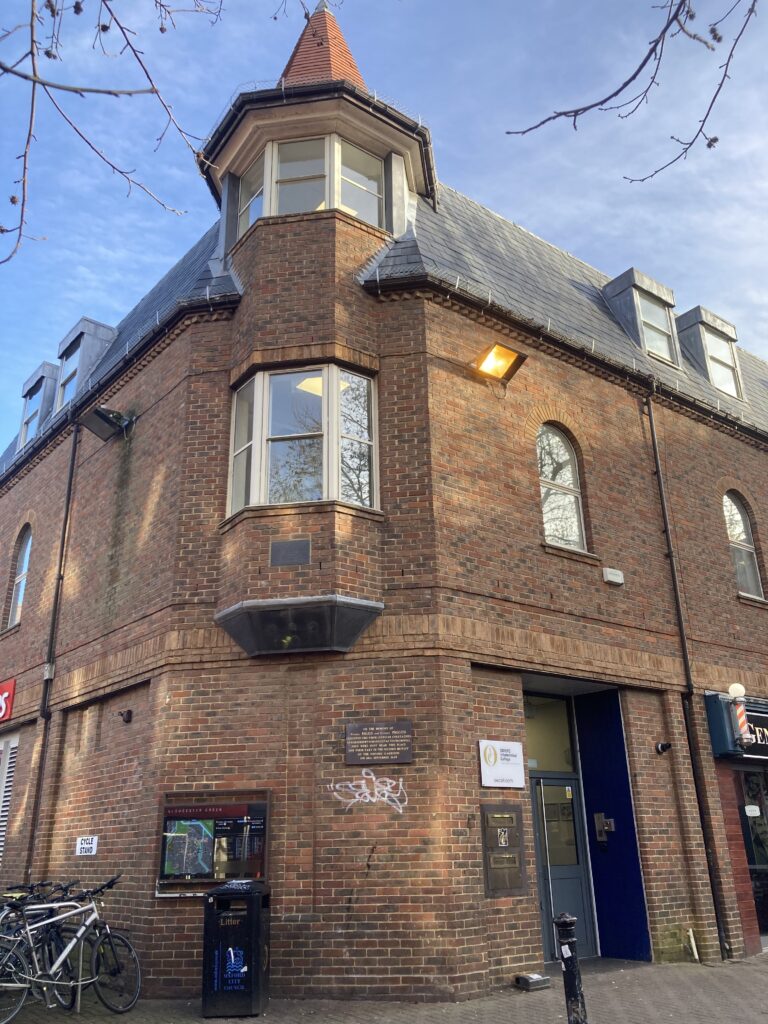
The plaque is situated in Gloucester Green (then called Broken Hayes), not far from the city’s central bus station.
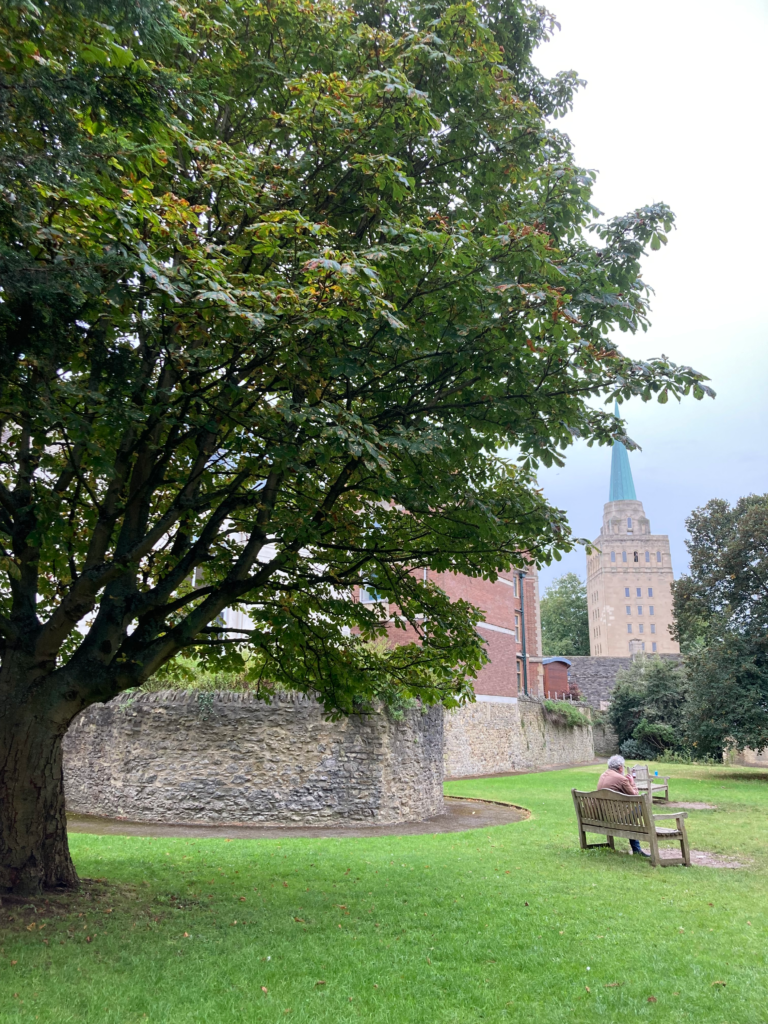
Privates Piggin and Biggs were probably shot somewhere along this stretch of the old city wall, now in the gardens of the former Oxford Boys’ High School in George Street.
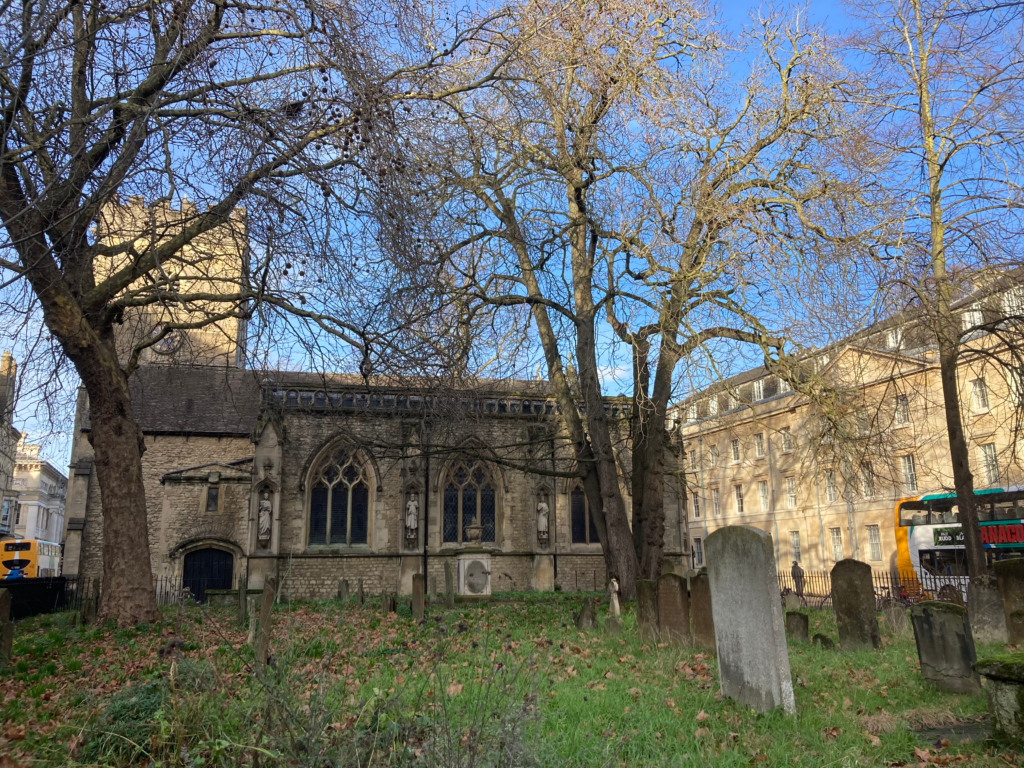
And brought to the Church of St Mary Magdalen, though it is unlikely they were buried here.
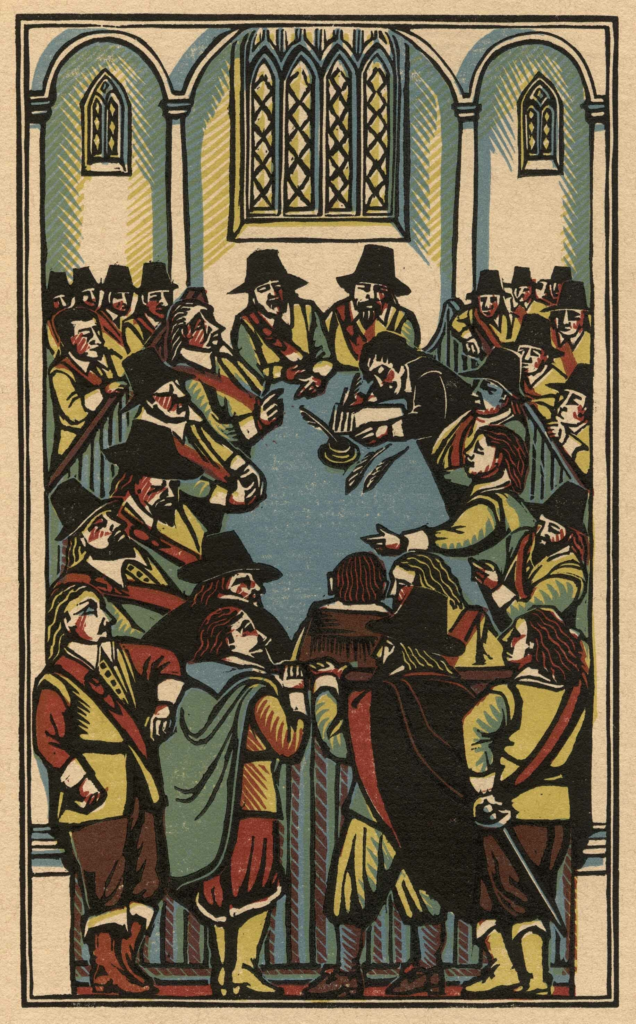
The Levellers in debate.

John Lilburne also known as ‘Freeborn John’. He was whipped pilloried and imprisoned (he spent six months in prison in Oxford) for his beliefs. He wrote many of the Leveller tracts and pamphlets including An Agreement of the People for a firm and present peace upon grounds of common right debated at Putney. In October 1649 he was tried for high treason. Cheering crowds gathered outside the court when he was acquitted.
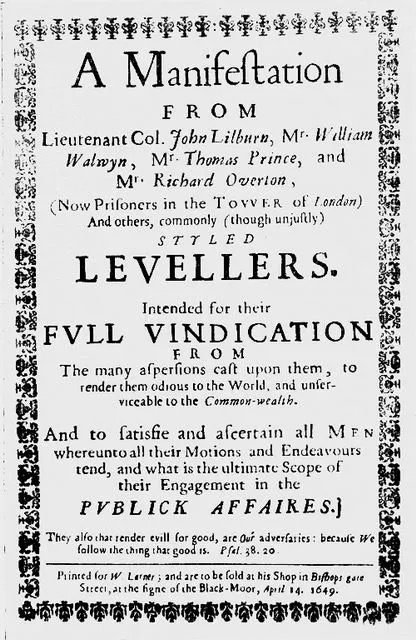
Lilburne was imprisoned in the Tower of London with other Levellers William Walwyn, Thomas Prince and the printer Richard Overton where they continued to issue writings and publications. Here they call themselves ‘unjustly styled Levellers’, in a pamphlet circulated just before the Banbury uprisings. It was another group, the ‘Diggers’ who called themselves the ‘True Levellers’, believing in a more socialist model of economic equality as well as political.
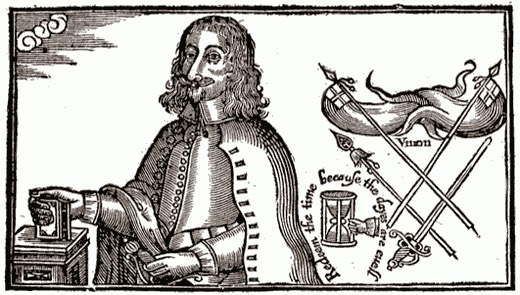
Thomas Rainsborough was 38 when he died on 29 October 1648. His funeral in Wapping was attended by 3,000 Leveller sympathisers dressed in sea green.

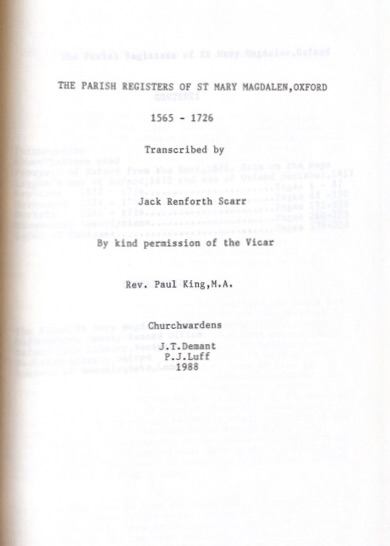
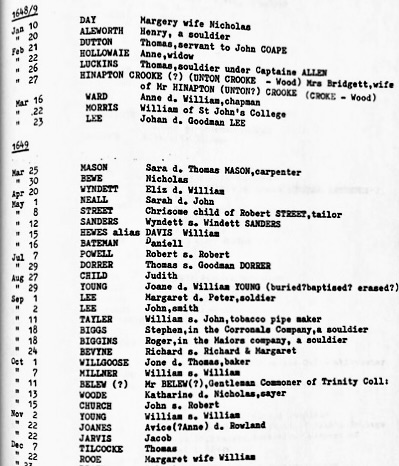
The deaths of Stephen Biggs and Roger Biggins (should have been Piggen) as recorded in the Parish Registers of St Mary Magdalen Church in Oxford on September 18th 1649.
2 Comments
Join the discussion and tell us your opinion.
The person responsible for the plaques at both Burford and Oxford was Alan Hicks.
Thanks Bob. I came here to say the same thing. I met Alan when he (and I) were at Oxford Poly – he was a … mature … student at the time, very fond of smoking Eastern European cigarettes, that he bought on bus tours. One of the great characters of leftish politics at the time, Alan campaigned to have the Levellers recognised for years. We were all very proud when the plaque in Gloucester Green was unveiled. Alan was also a great advocate of the Workers’ Educational Association, and was a real influence to the young people who met him at Oxpoly back in the mid/late 80s.