For me the murals in Edwin Lutyens’ Lady Chapel at Campion Hall on Brewer Street are one of the great hidden treasures of Oxford. I’d glimpsed them on a previous visit to the Jesuit foundation, as a guest of Professor Peter Davidson, Curator of the Hall’s Collections. And now he has kindly invited me back to take a closer look. For these wonderful wall paintings chart the life of Mary, mother of Jesus. And as the streets of the city fill with festive cheer, I wanted to remind myself of what it is we are all celebrating.
Dedicating a side chapel to Mary is a tradition in Catholic churches and this one is approached through an arch in the east end of the main chapel, amusingly hung with bright red lights shaped like cardinals’ hats. Once inside you are immediately transported into a painted ivy clad walled garden, set in the English countryside with summer skies and well-tended flowerbeds. The architecture of the windows, doors and vaulted ceiling are cleverly incorporated into the pictorial rich scheme, white arched recesses framing the colourful narrative of Mary’s life. Here is portrayed her birth to elderly parents, her betrothal to Joseph, the Annunciation, the Nativity, as well as the family’s flight to Egypt, her crowning as Queen of Mercy, and her Dormition, the ‘falling asleep’ or leaving of her earthly life.
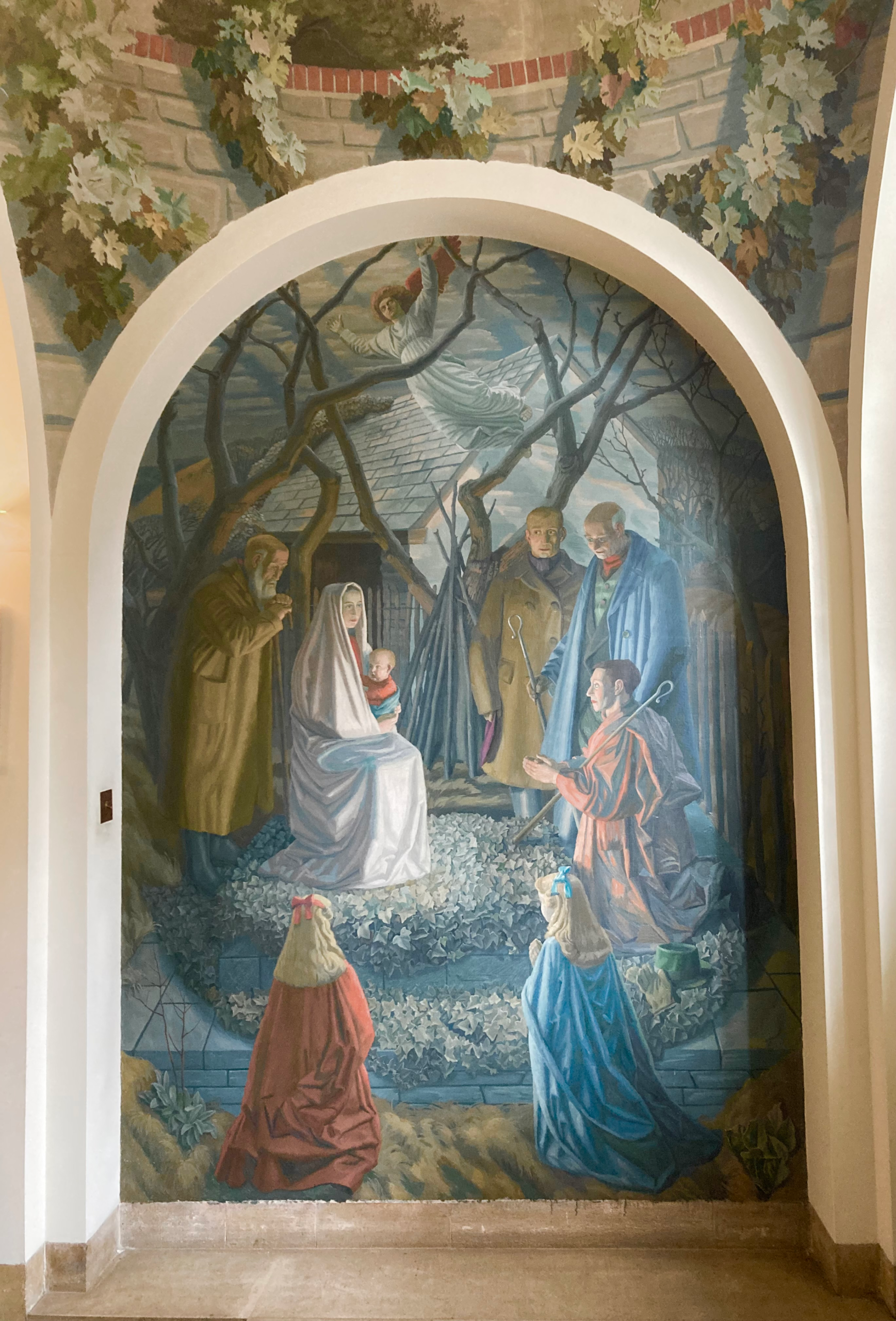
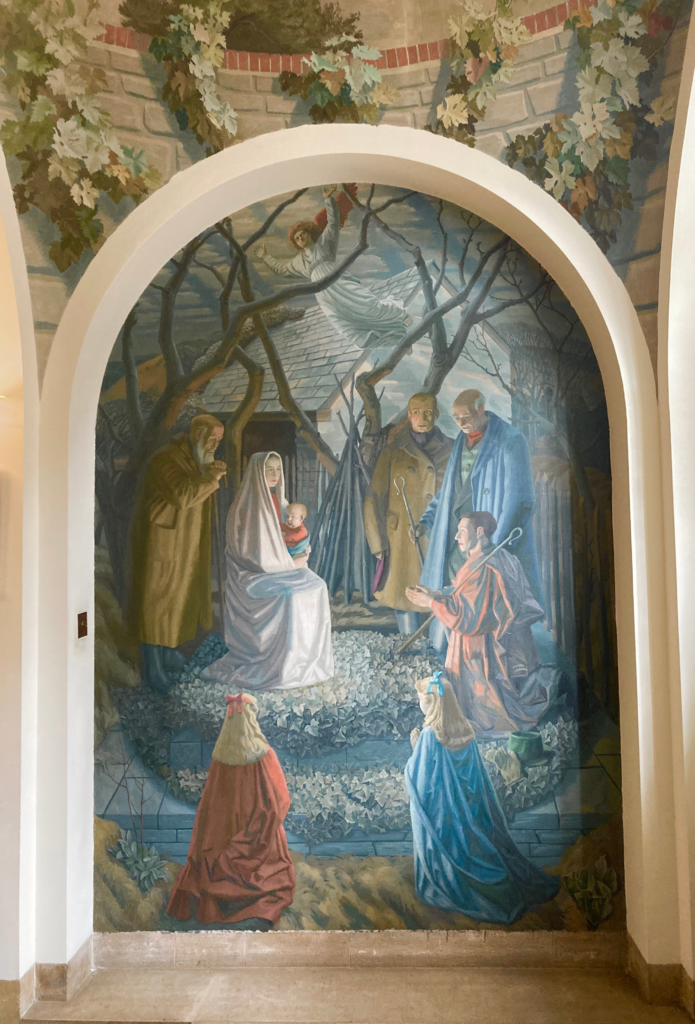
But so near to Christmas it is the Nativity that I have come to see today. And it really is rather splendid.
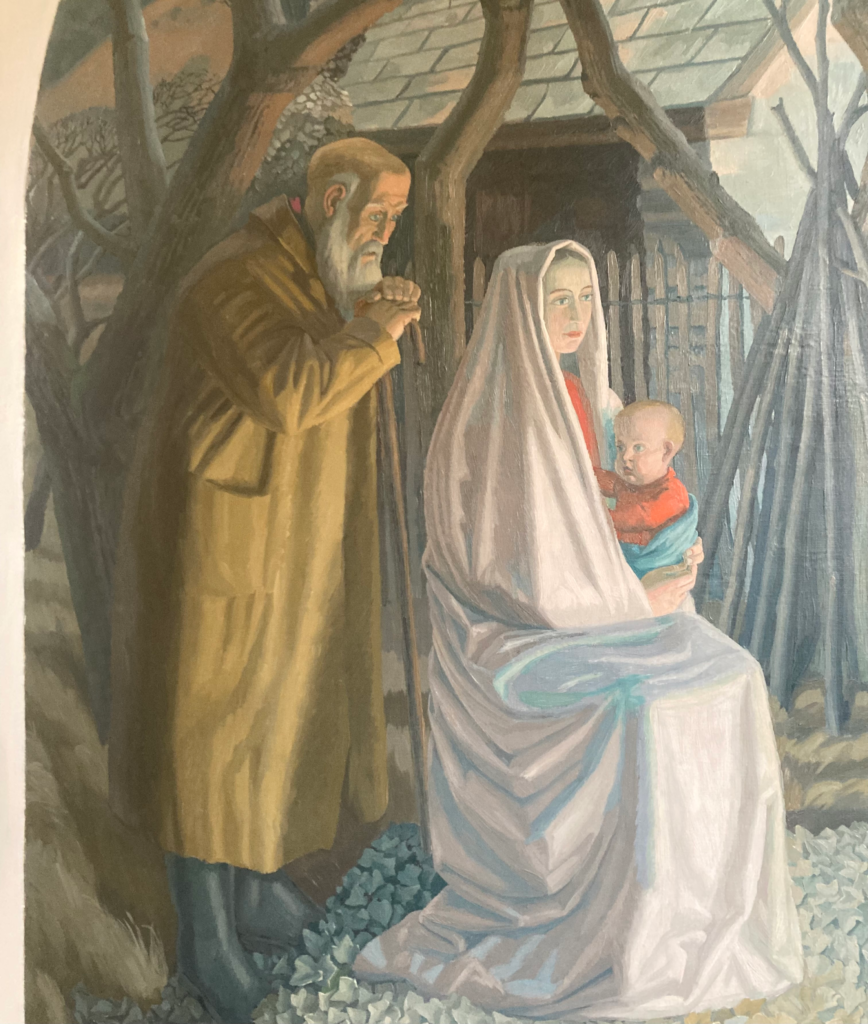
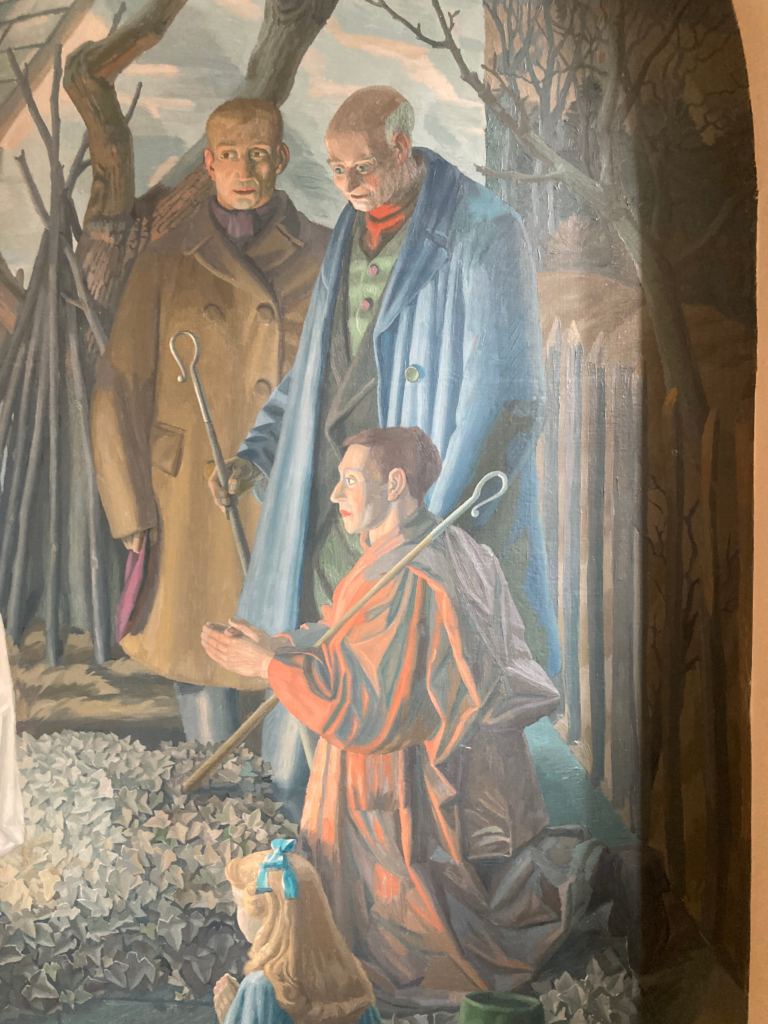
Bare branches and frost-covered ivy set the wintery scene. There is a farm outbuilding roofed with slate, a split rail fence, and a wigwam of hazel, with a Cotswold landscape beyond. This is unmistakably England. And an England that is reasonably recent. For although the central figure of the holy mother, the Virgin Mary, and that of a kneeling shepherd are clothed in the traditional attire of 1st century Galilee, the other men in the tableau all wear army trench coats, their faces betraying the trauma of war. The long hair of the two small girls kneeling at the front, is pulled back into Alice bands, and Jesus (looking more like a one-year-old child than an infant baby) appears to be wearing not swaddling clothes but a romper suit. This is the biblical story set in 1930’s and 40’s wartime Britain. And herein lies a fascinating tale.
It was Father Martin D’Arcy appointed Master of Campion Hall in 1933 who was responsible for commissioning Lutyens to design the current building in St Aldates, completed in 1936. An art lover and collector, with friends in high places, he’d always wanted to commission a set of murals for the Lady Chapel. But he didn’t have the money. Until Evelyn Waugh, recently converted to Catholicism by D’Arcy and a frequent visitor and dinner guest, decided to gift the royalties of his biography of Edmund Campion to finance it.
But finding an artist was easier said than done.
“David Jones was approached,” says Peter. “Which could in many ways have been one of the most wonderful things in Britain. He only did one mural which was at Capel y-ffin in Wales near Hay on Wye – which is heartbreaking and astonishing. But he declined for health reasons.” Stanley Spencer, who had recently completed the Burghclere Memorial Chapel in Hampshire, was also a contender but was rejected as being too difficult. In the end, D’Arcy plumped for Cyril (always known as Charlie) Mahoney, who had attended the Royal Academy of Art along with Eric Ravilious and Edward Bawden and then returned there to teach, where he headed up the Mural Room. Linking painting with design this was the perfect preparation for his work at Campion Hall.
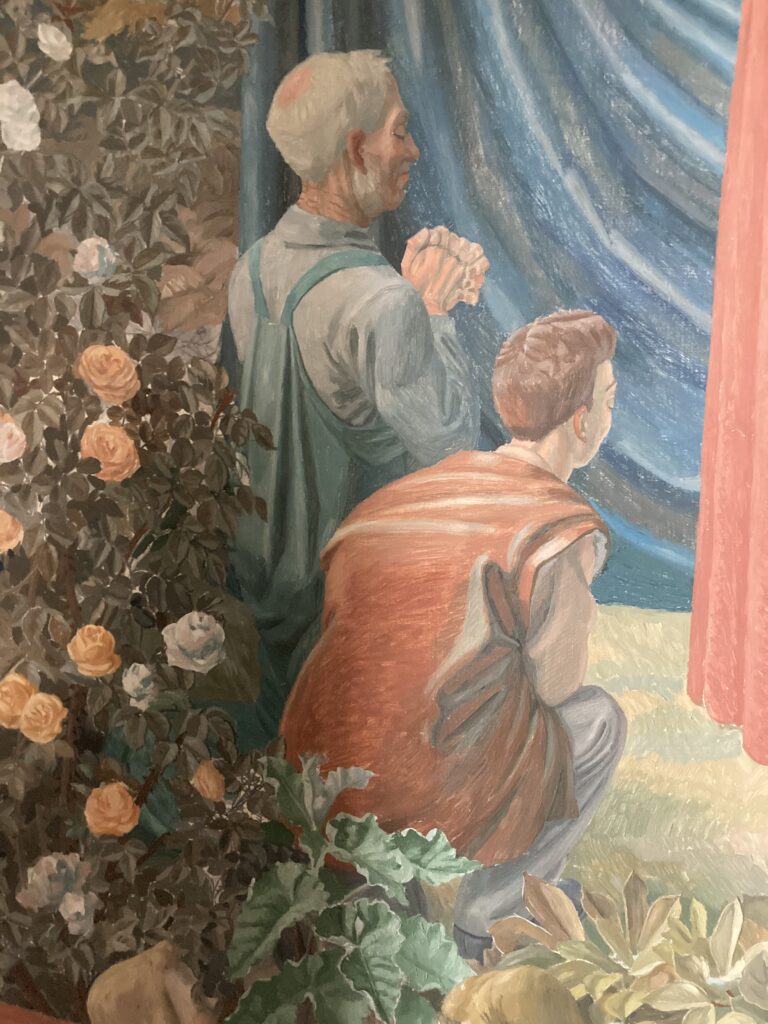
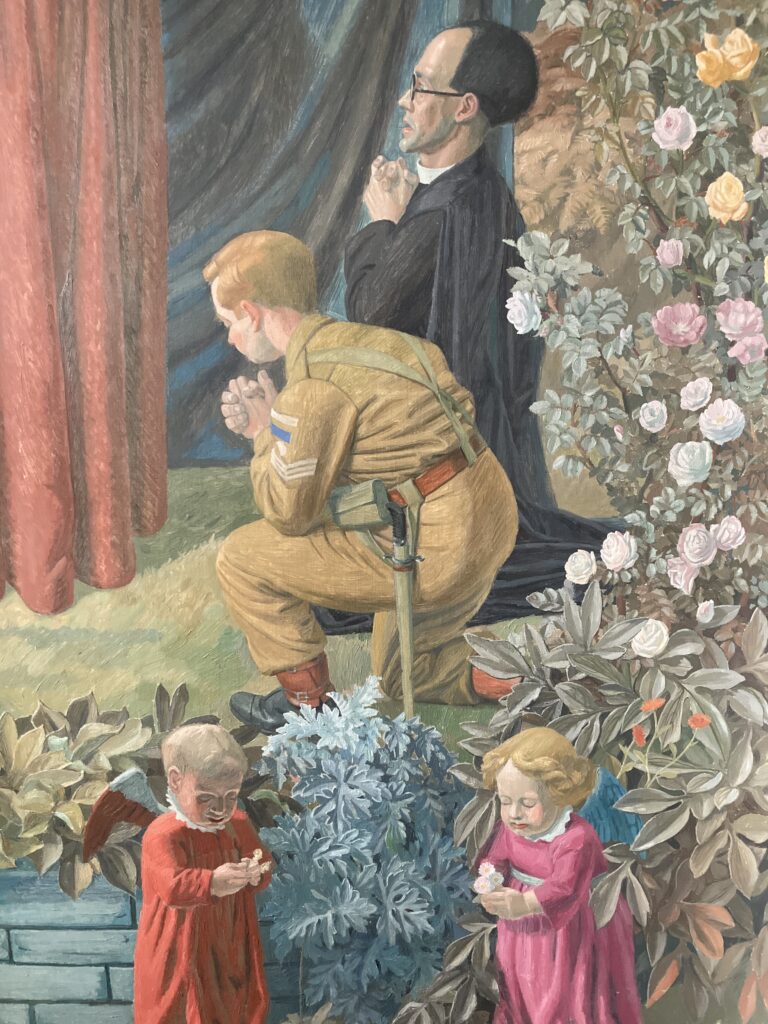
He started in 1942. Having lost an eye as a child and suffering from chronic chest problems he had been ineligible for the army. But from Ambleside in the Lake District where the college had been evacuated, he made trips down south. Not a Catholic himself, he would take long walks with the Fathers to better understand the biblical stories he was telling. And into this he wove his own modern narrative. Here you find soldiers in uniform, farmers and students, alongside angels with blue and red wings. And as a keen horticulturalist and gardener, he placed his leading lady amongst the very English flowers and plants he loved. Roses tumble over brick walls, branches of golden beach sway in the wind, primulas pop up from the painted plaster.
However, as Mahoney would only work in Easter and summer holidays, in situ during daylight hours the project dragged on. Ten years later, when the money ran out, he had still not finished, and to this day remain so. For when in 1966 he was asked by the then Master to consider their completion he was far too ill to contemplate the idea.
Mahoney’s paintings at Campion Hall are his only large scale murals that survive today. The rest were destroyed by bombs during the Second World War. So we are so very lucky to have them in Oxford. His paintings show an understanding of the human kindness, motherly love, holiness and queenly majesty that he wanted to embody in the Madonna. With the promise of redemption through the birth of her child. It has been a privilege to be able to see it all up so close.
And then something rather wonderful happens. It had been a dull day when we entered the chapel. And Peter had been worried that the colours might not look their best in my photographs. But as I rummage for my camera, a burst of sunshine breaks through the window above the altar and fills the tiny room with light. And so it is, I see them in all their glory.
Then I head out and up to Queens Street, where a busker on Bonn Square is singing ‘Jingle Bells’ to an appreciative crowd.
Happy Christmas everyone.
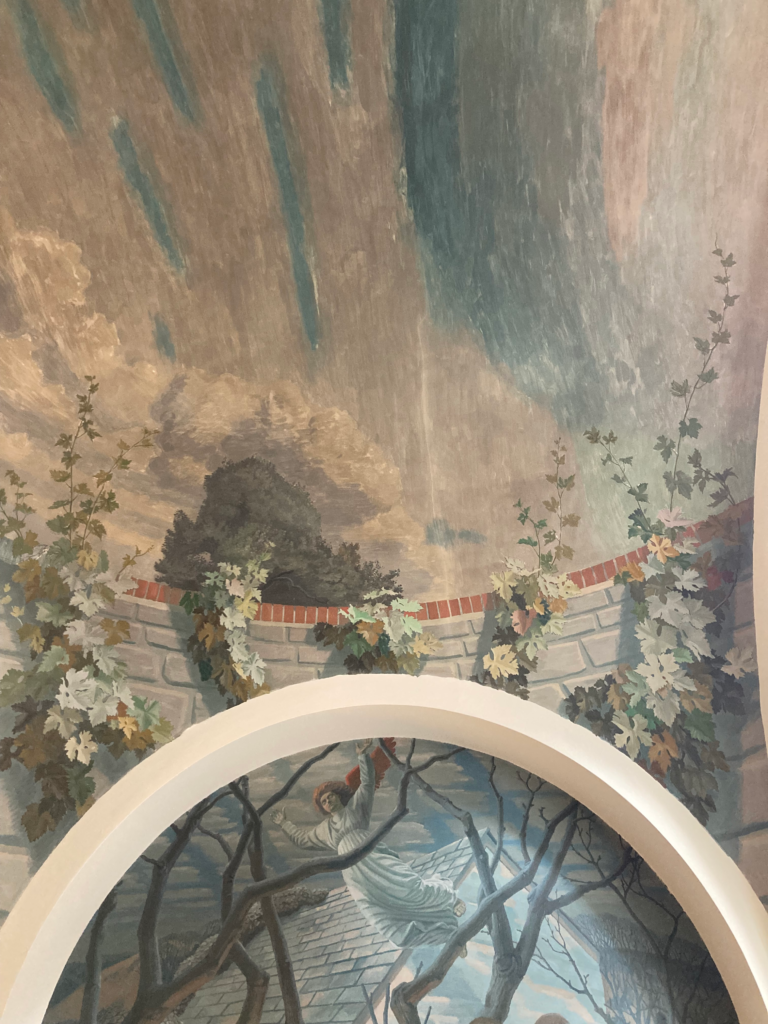
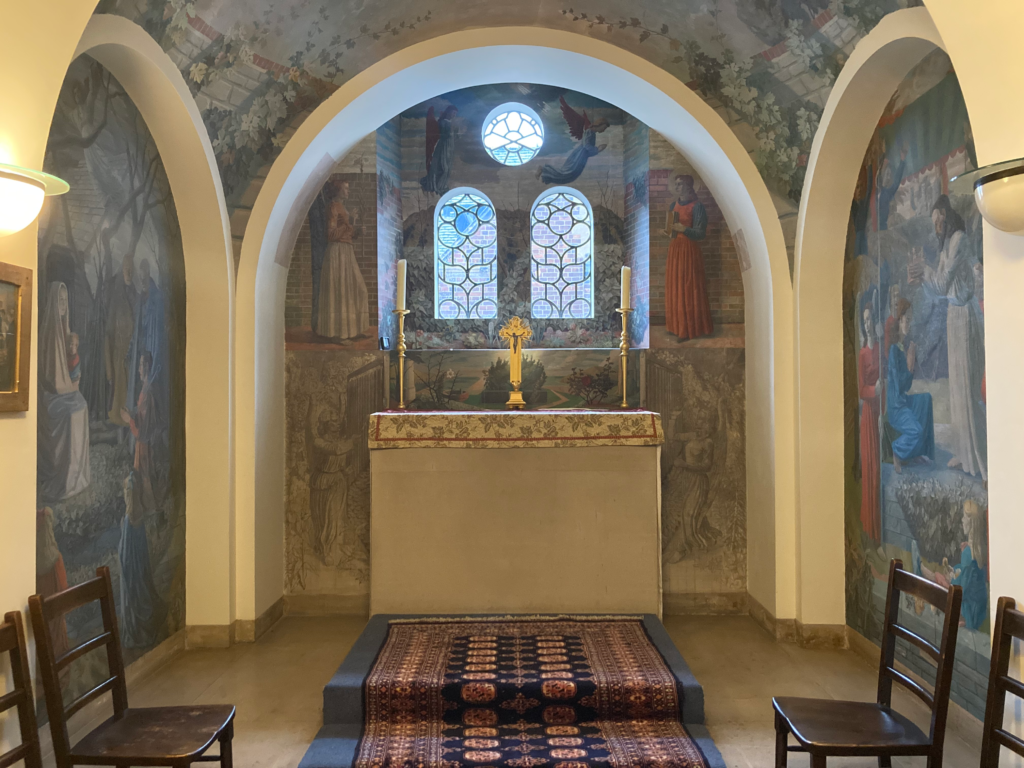
Mahoney painted his Annunciation scene directly on to the plaster of the altar wall. This has meant the painting here are vulnerable to damp and a fundraising project is underway to preserve and protect them.
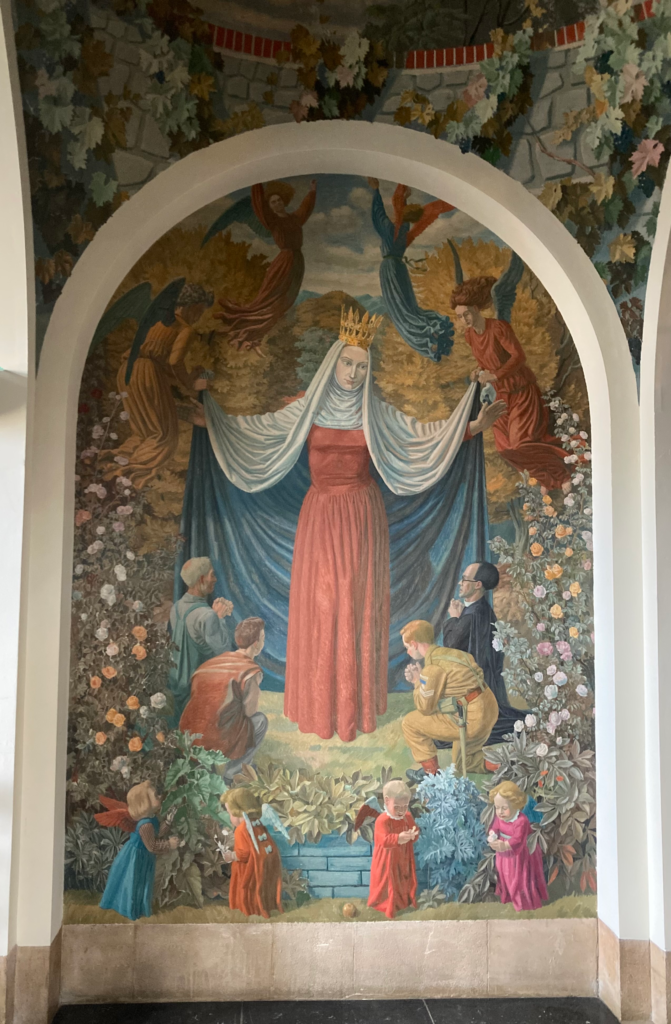
Here Mary is seen crowned as Queen of Mercy, spreading her protective cloak around four cherubs, a workman, a student, a uniformed soldier and a clergyman, his friend the Jesuit Father Vincent Turner.
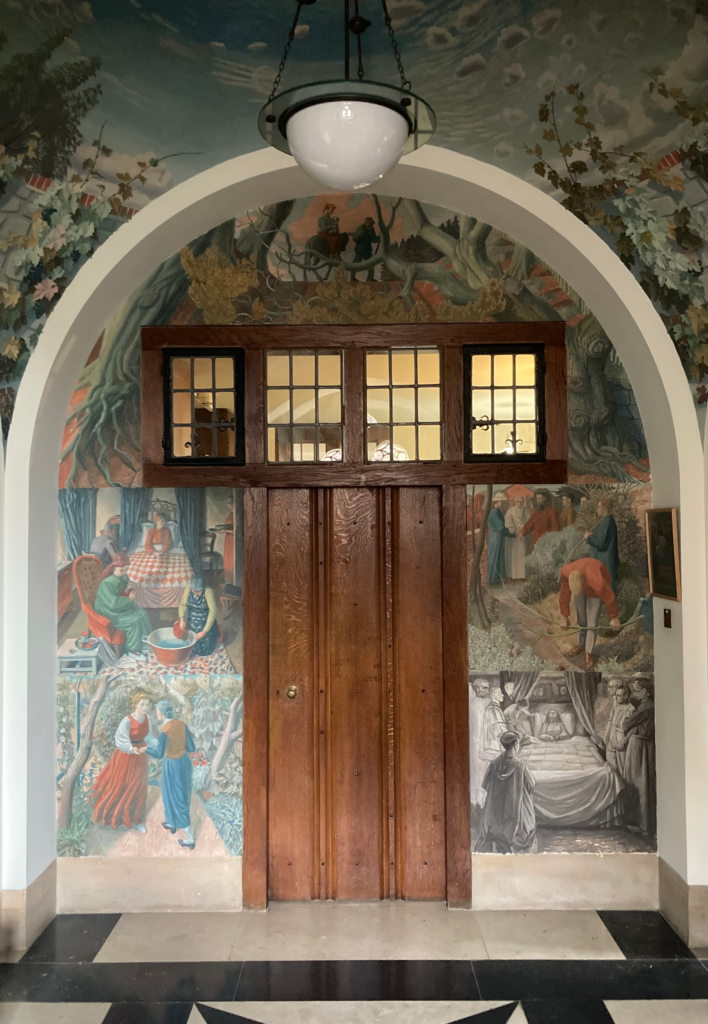
The doorway to the sacristy has been incorporated into more events from Mary’s life. At the top the family’s flight to Egypt. On the left her birth to elderly parents, and her meeting with her pregnant cousin Elizabeth. On the right her engagement to Joseph and the (unfinished) scene of her ‘passing’. Several Jesuit priests are gathered around the bedside. Both D’Arcy and Lutyens are included here.
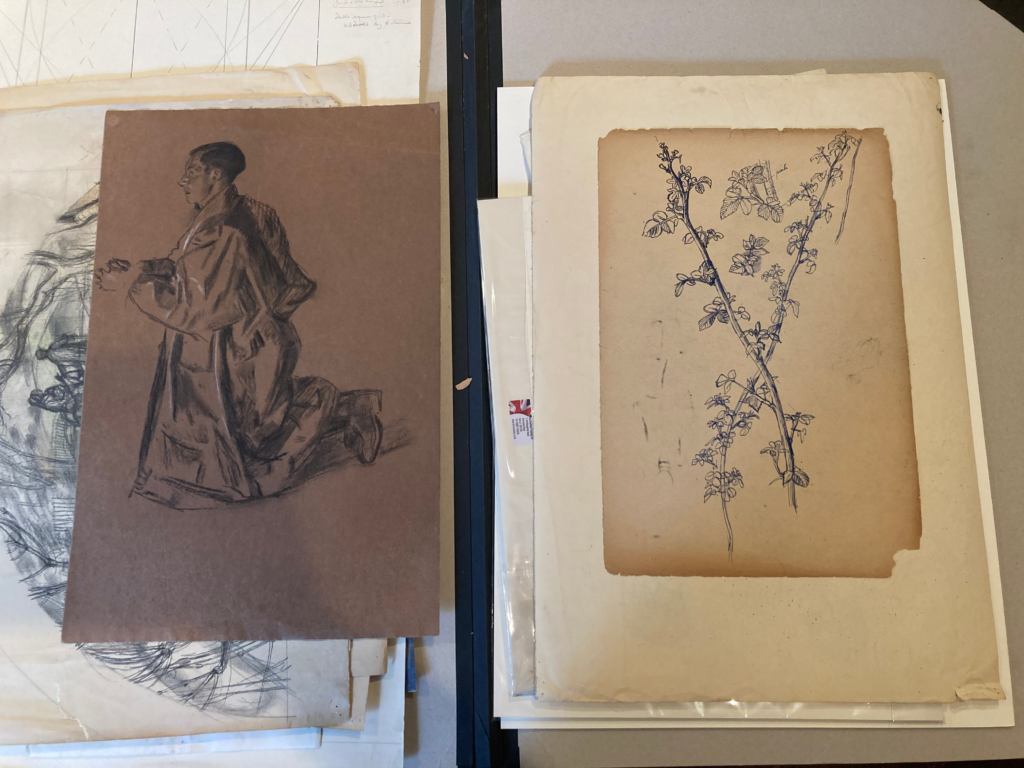
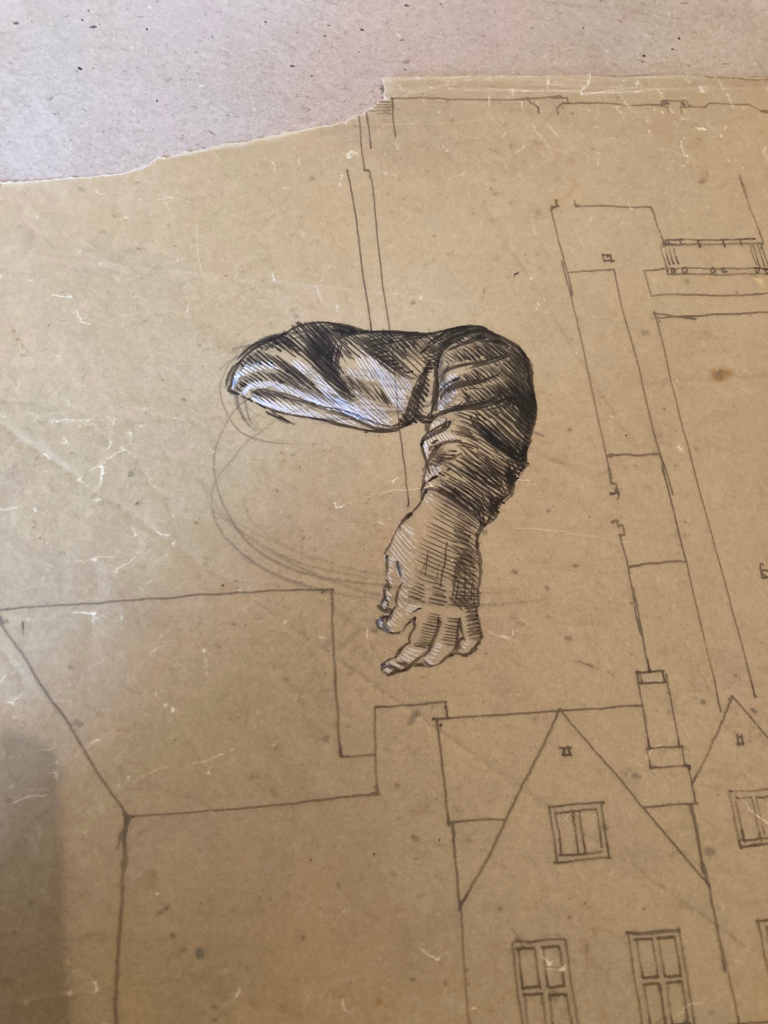
Works from a large body of preparatory works for the murals by Mahoney found in his studio after his death and now at Campion Hall.
You might also like to read:
4 Comments
Join the discussion and tell us your opinion.
Wonderful piece, dear friend! Happy Christmas to you all. XXX Gina
Really interesting blog today and great photos too. Thanks so much for filling my Sundays with great reads that encourage me to visit the places discussed. Many good wishes for a splendid Christmas and a happy and healthy 2026.
Very interesting – as always! Happy Christmas to you!
Another great blog today! It made me wonder whether Campion Hall’s chapel is ever open to visitors, so I went to the website. No events in the chapel are currently listed, only a public lecture on the papal election of 1758 – bound to be a crowd puller. But I was interested that 9 of the Hall’s 21 current grad students are women, given that women can’t be ordained as Catholic priests and St Ignatius (Loyola) actively opposed their admission to the Society of Jesus (although he made an exception for Joanna of Austria who was regent of Spain when Philip came to England to marry our Mary). Some things haven’t changed but the women at Campion Hall don’t have to study theology these days and many of them don’t, opting instead for fine art, music, science and religion, archaeology, and even psychodynamic practice.