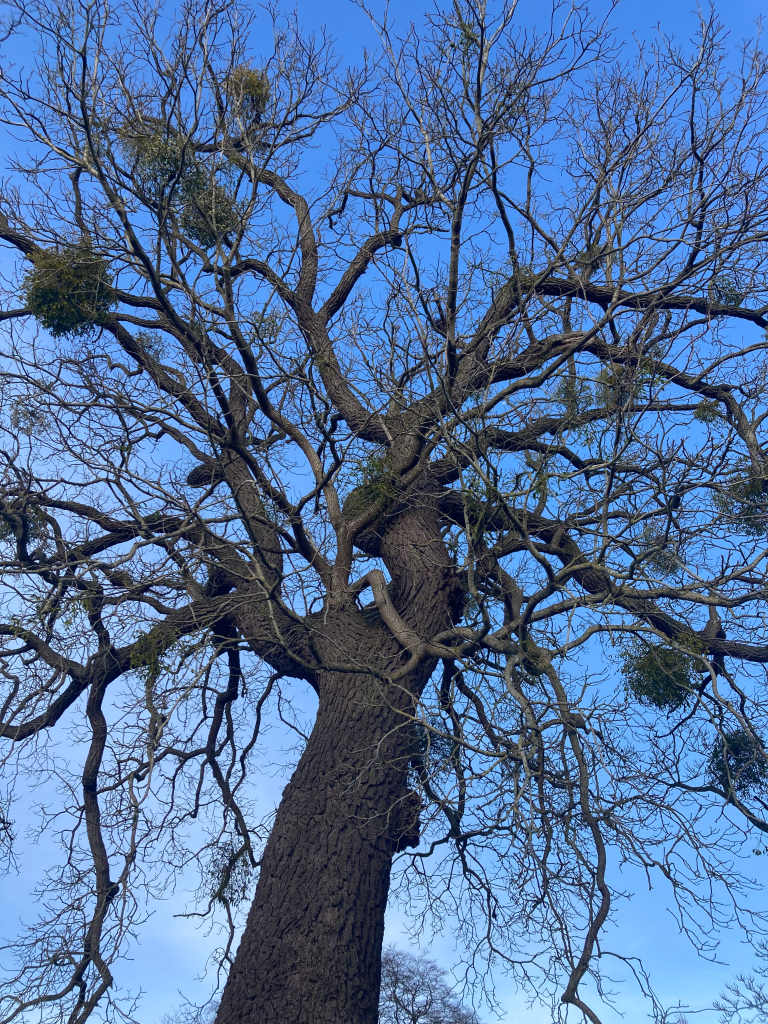
At this low ebb of year, it suddenly becomes visible. When the leaves have fallen from the trees, revealing what appear to be giant birds’ nests perched amongst the bare winter branches. But these hanging baskets of vibrant green foliage are in fact huge balls of mistletoe. Magically, mysteriously, bearing fruit even through the shortest and darkest days of the year.
As it happens, this being Oxford, there is an expert on mistletoe matters right here in the city. Oliver Spacey is studying their ecology and evolution for his PhD, and on a bright afternoon a couple of weeks back, he was kind enough to take me on a mistletoe meander. I’d always associated the plant with the counties around the Welsh borders, Herefordshire, Worcestershire and the like. But it seems, as we stroll around Christ Church meadows and beyond, Oxford also has its fair share. And what a remarkable creature it turns out to be. I had no idea.
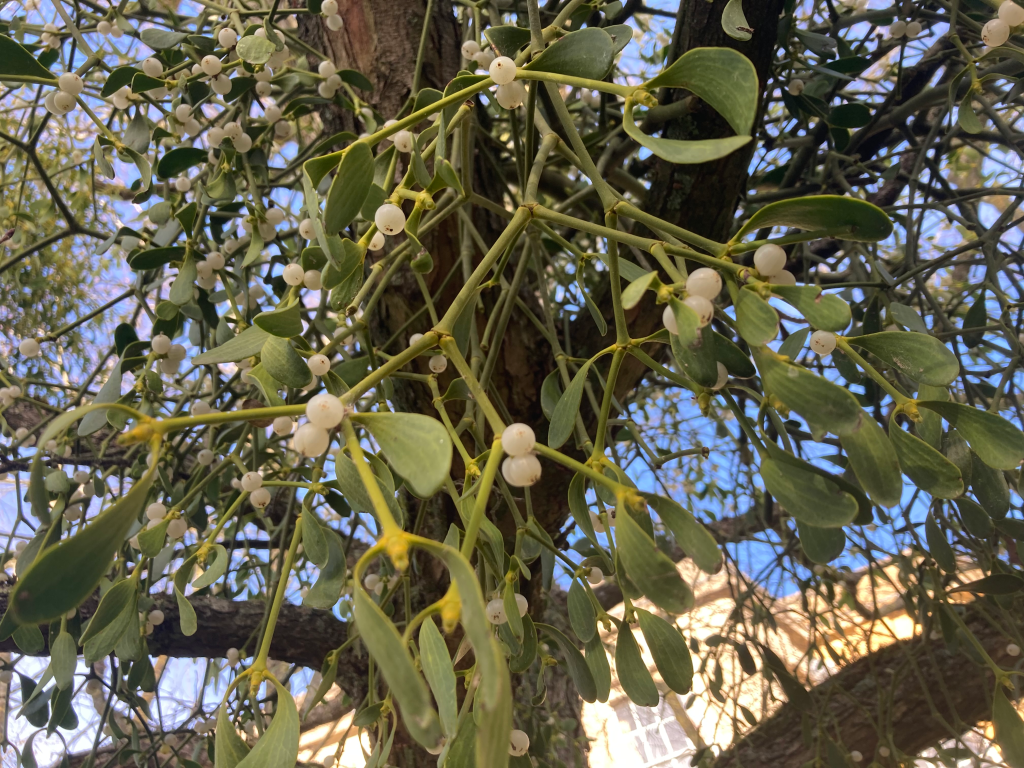
For a start, Oliver tells me, it has the largest genome of any wild species in the British Isles – holding 30 times more genetic material than us humans. It is also one of the very few plants to have no roots. Not restricted by gravity, it simply attaches itself to the branch of a tree, and then like some alien high wire act, shoots an invisible tentacle into the bark, and begins to grow. It takes about five years for it to reach a decent size, forming natural spheres of wishbone shaped leaves, by which time the female plant begins to produce those famous ethereal pearl-like berries under which we like to pucker up at Christmas. They can grow up to two meters in diameter and live to 40 years old.
And that’s not all. Mistletoe is what is called a hemi parasite. This means that while it needs to be attached to the bark of a tree to syphon off water and some of the host’s nutrients, it is also able to make the rest for itself using the energy of the sun and the chlorophyll in its leaves. Clever stuff.
But what Oliver is concerned with is why they choose one tree over another in which to propagate?
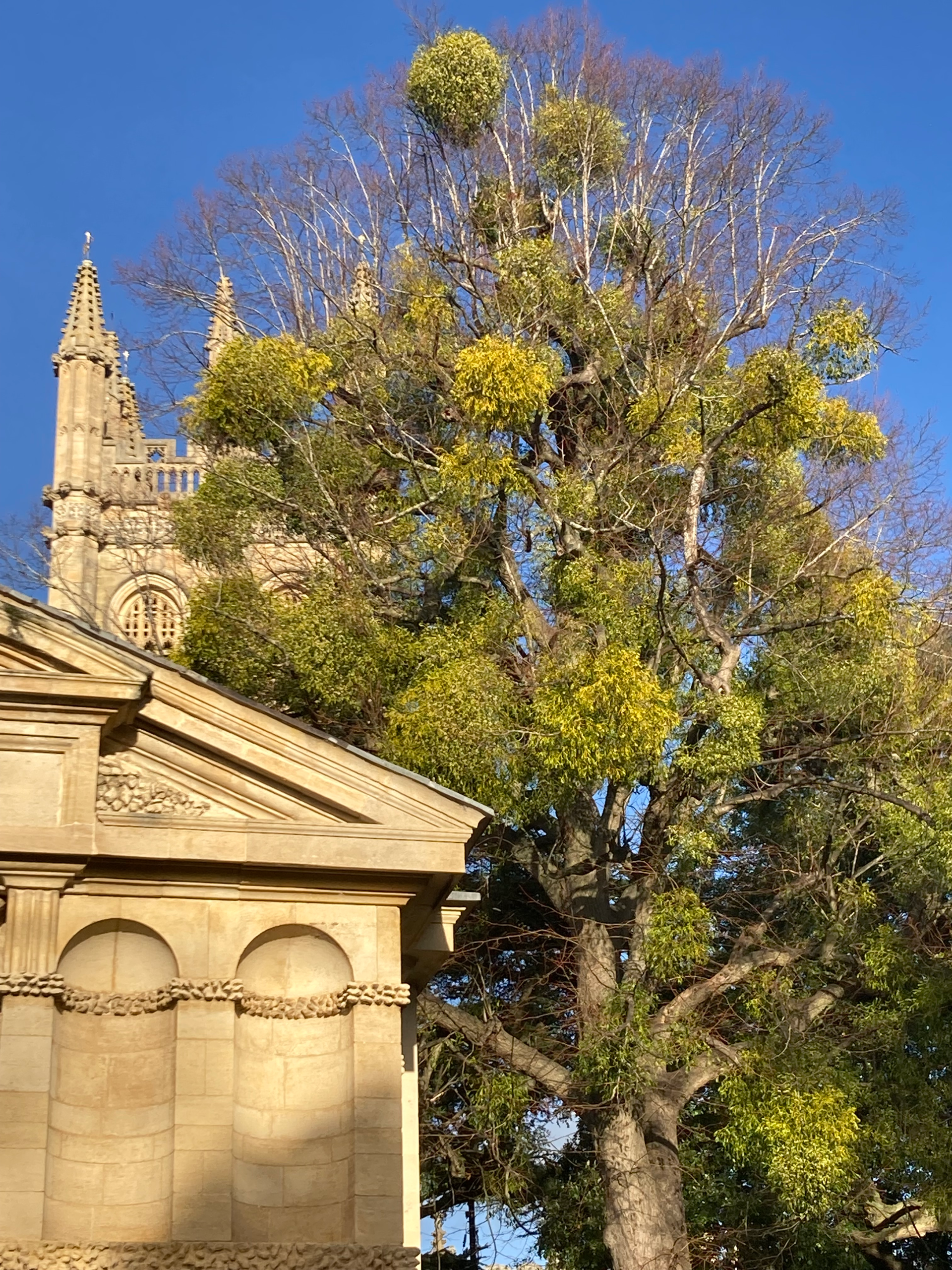
“Mistletoe is spread by birds” he enthuses, now leading me north up Rose Lane and through the gates of Oxford Botanic Garden, a mass of mistletoe balls decorating a giant lime silhouetted against Magdalen Tower. Whether by birds like the Blackcap, who pick the berries, scoff the juicy outside and then smear the sticky seed on to the bark of the tree. The Latin name for the English mistletoe we see here, Viscum Album means white and gluey. Or by birds like the well named Mistle Thrush, who eat the soft fruit and poop it out on to a welcoming branch. Mistletoe’s common name is derived from the Anglo-Saxon word for ‘dung’ (mistel) and ‘twig’ (tan).
But whether they choose the tree because it is near water, its bark is easier to penetrate, or it has access to more light, the jury is still out.
What we do know is that mistletoe’s ability to flourish in the depths of winter has bewitched us for centuries, ensuring it as a symbol of fertility and life. The ancient Druids believed in its healing qualities. The Nordic gods were responsible for its connection with love and kindness. And it was the Victorians who embraced and popularised the ‘kissing ball’, a collection of evergreens that included mistletoe as a Christmas institution.
It’s been an amazing magical mistletoe tour. But there is one last stop. Music Meadow, just behind St Catherine’s College on the banks of the Cherwell, in the spring a mass of wild flowers, now set aside for grazing sheep. Here a clump of tall poplars play home to the most extraordinary collection of mistletoe we have yet to come across. Fantastical trees straight out of a Dr Seuss children’s book, or the Wizard of Oz – hundreds upon hundreds of huge pom poms of foliage, magically, mysteriously hanging in the sky.
Mistletoe’s story is an extraordinary one of adaptation and survival.
“They are an important component of our existence,” says Oliver. “So what they are doing and why is a good question to ask.” Absolutely.
But for now, I stoop to collect a fallen branch of berries. And I take it home where I tie the perfect shaped ball with red ribbon and hang it in the same spot in the kitchen as I always have done. A Christmas tradition, wherever it comes from.
Main picture: lime tree in front of Magdalen College Tower
Oliver Spacey is supported by The Tree Council. You can help him with his research by registering your own pictures of mistletoe on the MistleGO app which you can access here.
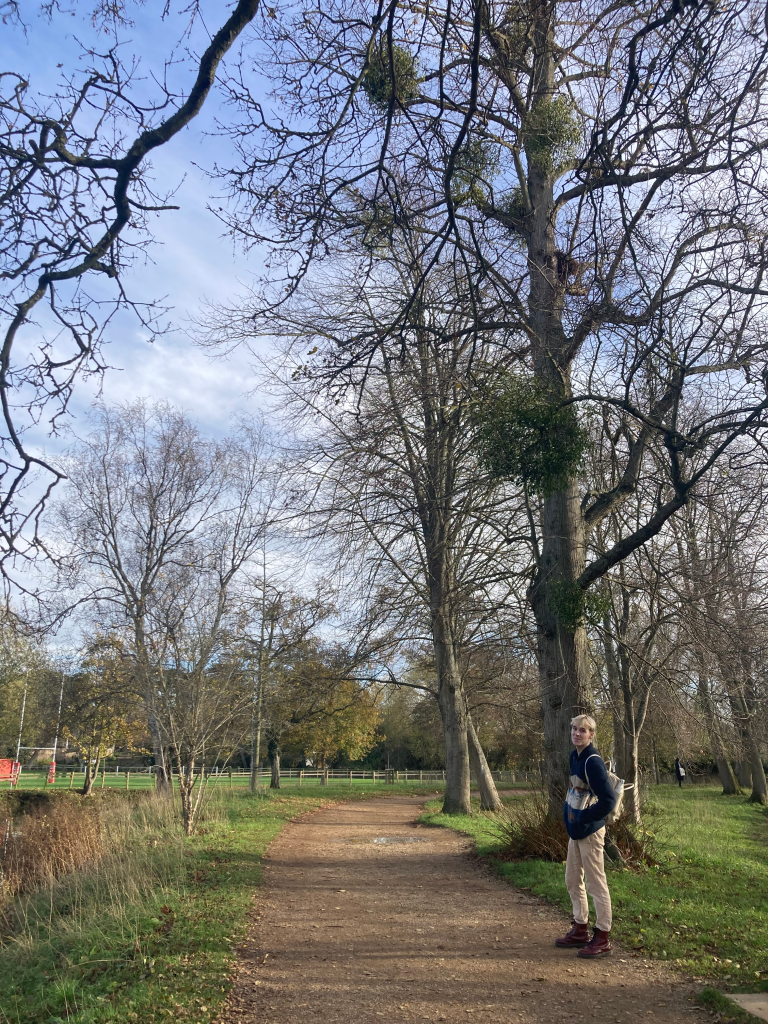
Oliver Spacey from Oxford University’s Department of Biology, in Christ Church Meadow under a lime (Tilia) one of the trees that mistletoe seems to like.
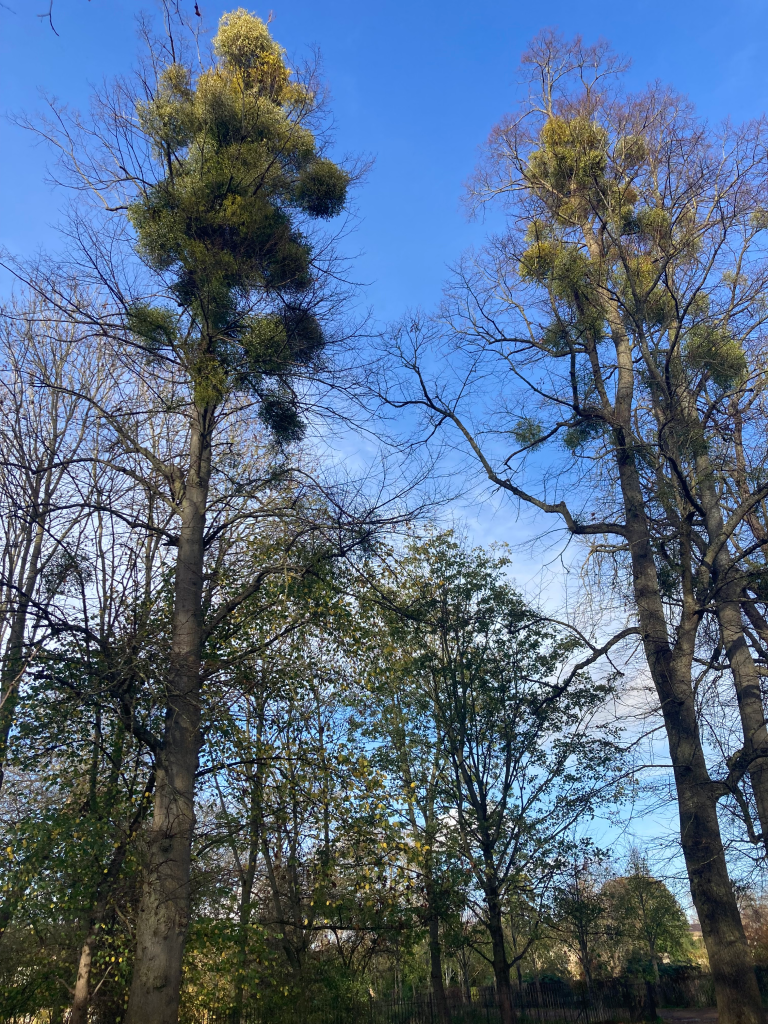
Poplars
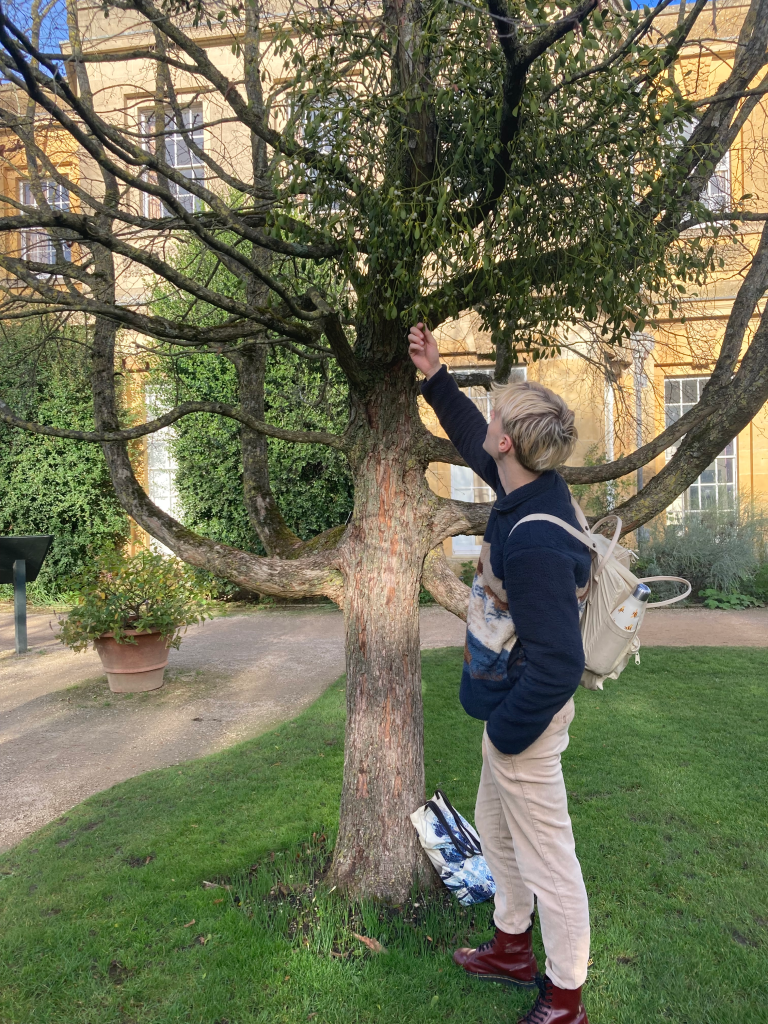
Mistletoe ball in the lower branches of East Asian hophornbeam (Ostrya japonica) at Oxford Botanic Garden
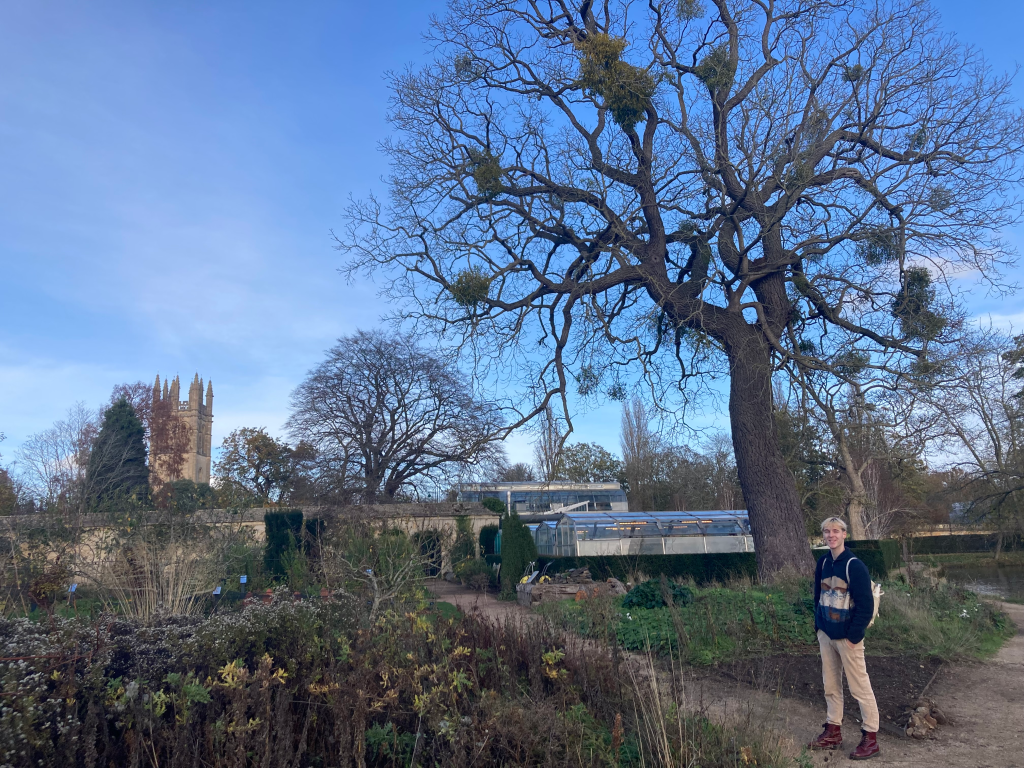
Oliver in front of a black walnut (Juglans nigra)
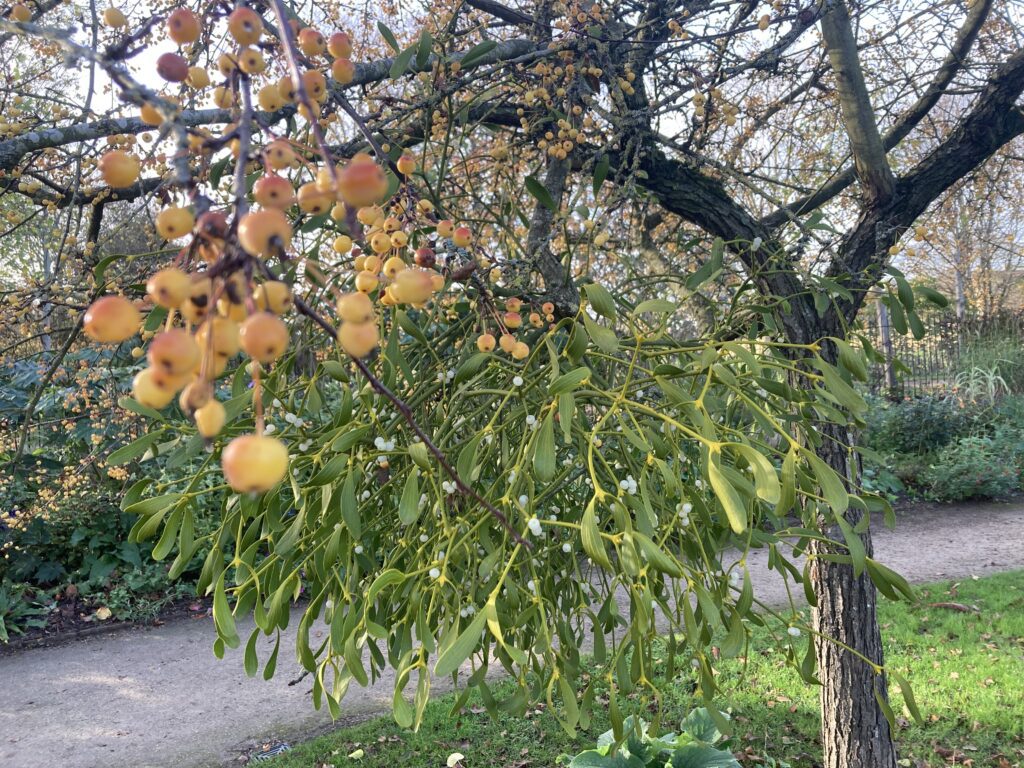
A domesticated apple (Malus domestica) plays host to this ball of mistletoe
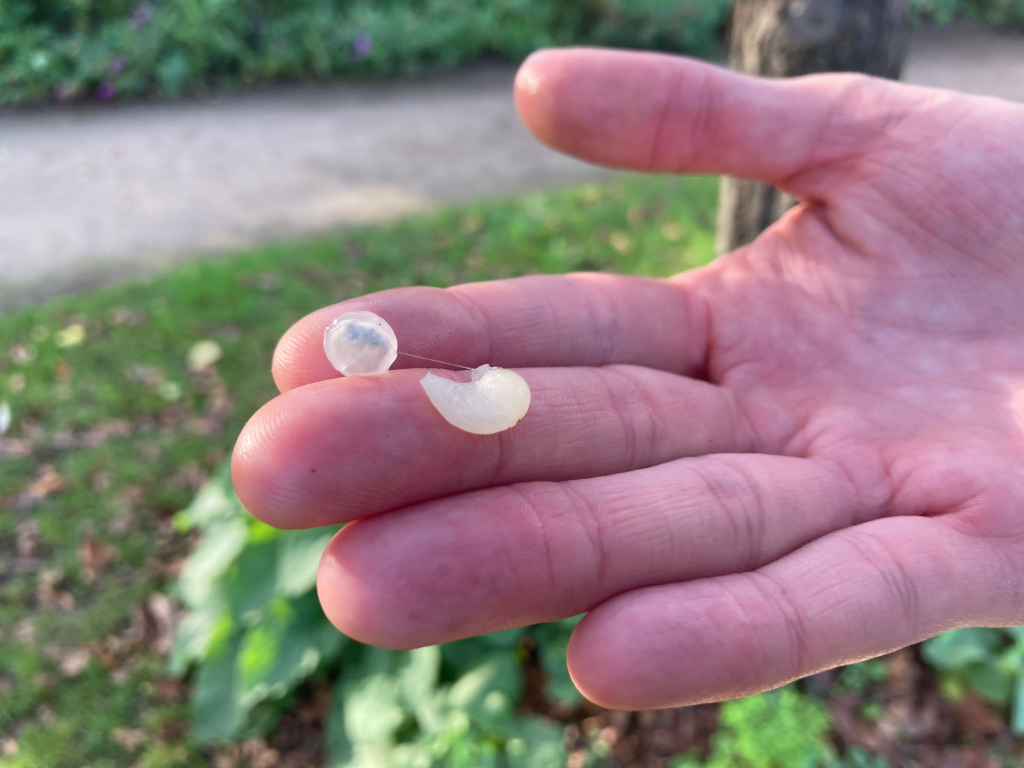
Some birds eat the outside of the fruit and smear the glutinous seed on to the bark of the host tree.
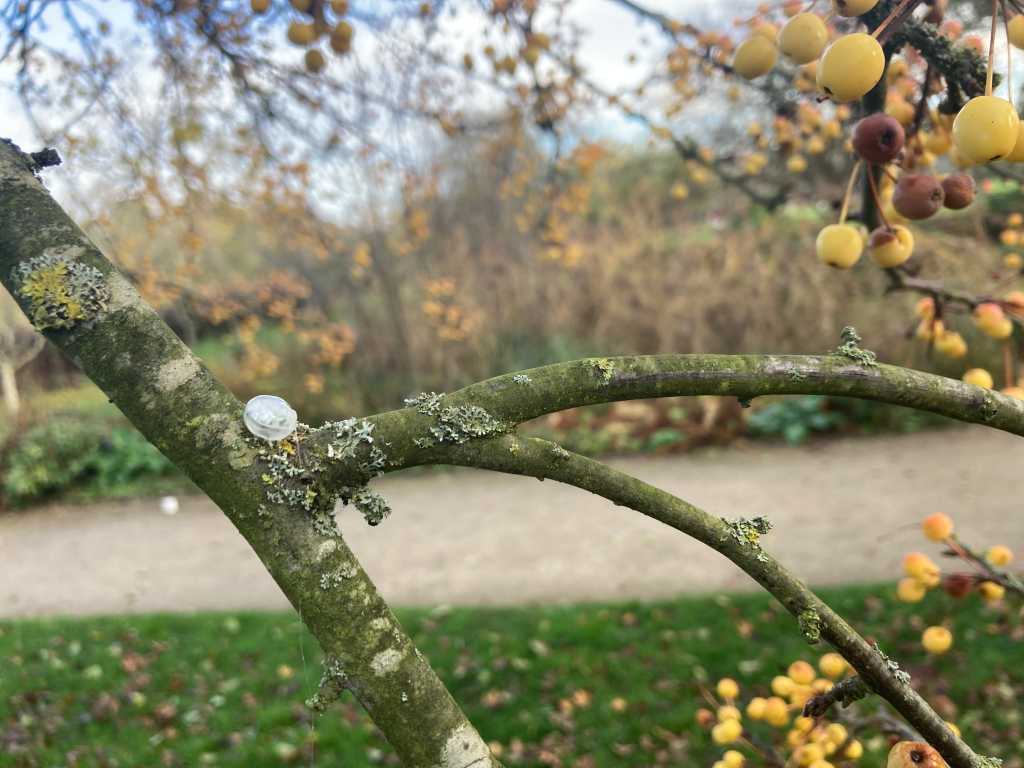
Where it sticks. When propagating mistletoe it is important not to hide the fruit or press it into a crevice in the bark as they need lots of light.
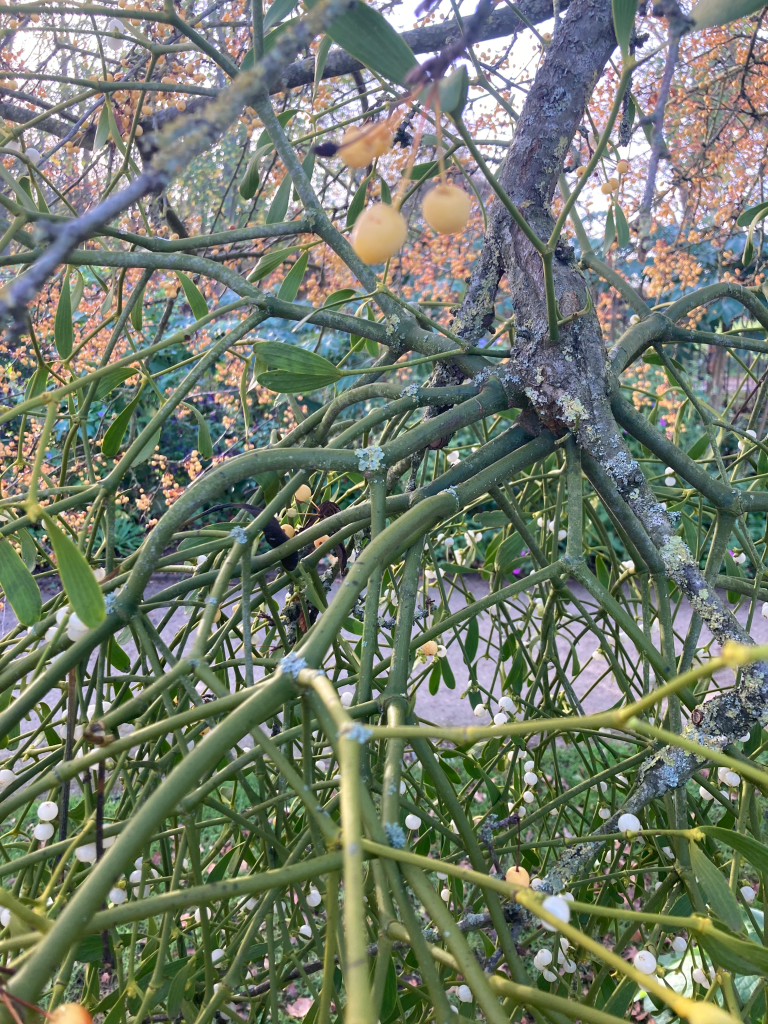
A thin projection called haustorium then penetrates the tissue of the tree allowing the mistletoe to absorb nutrients from its host.
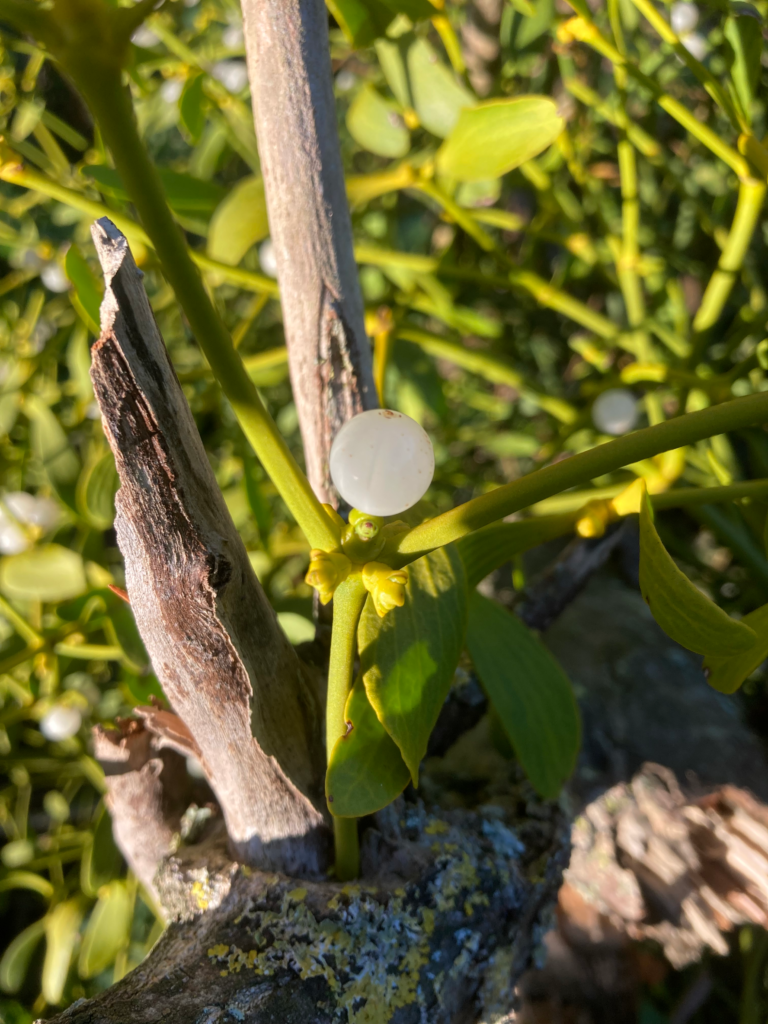
Mistletoe grows in this familiar fork like pattern.
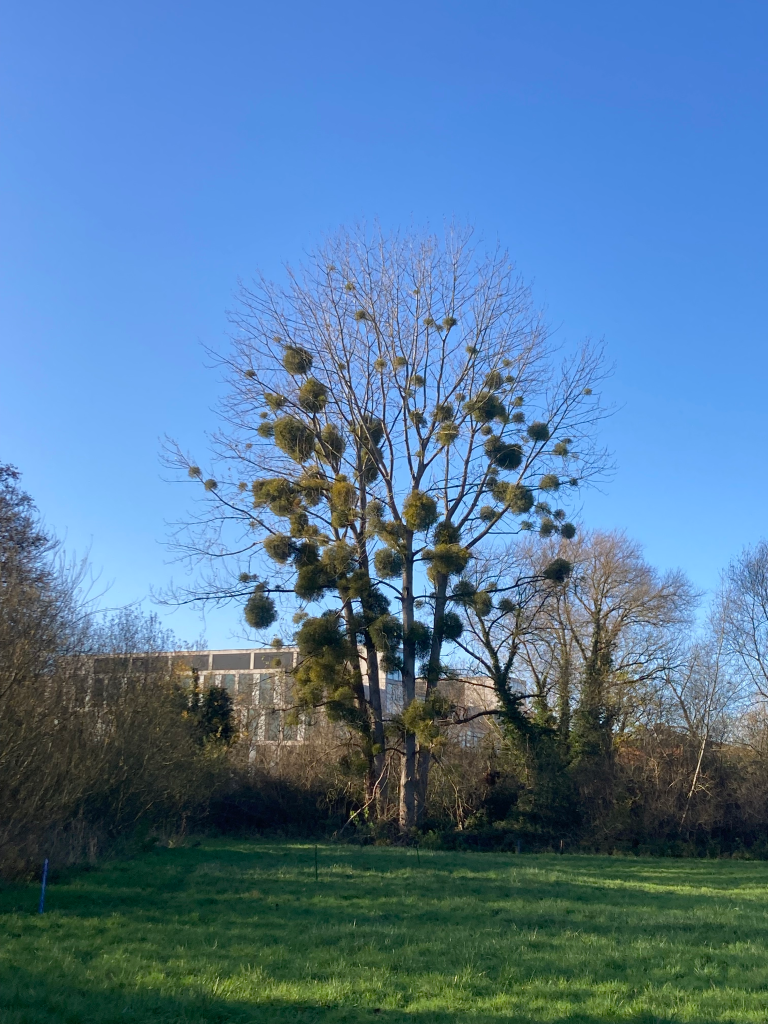
Poplars on Music Meadow
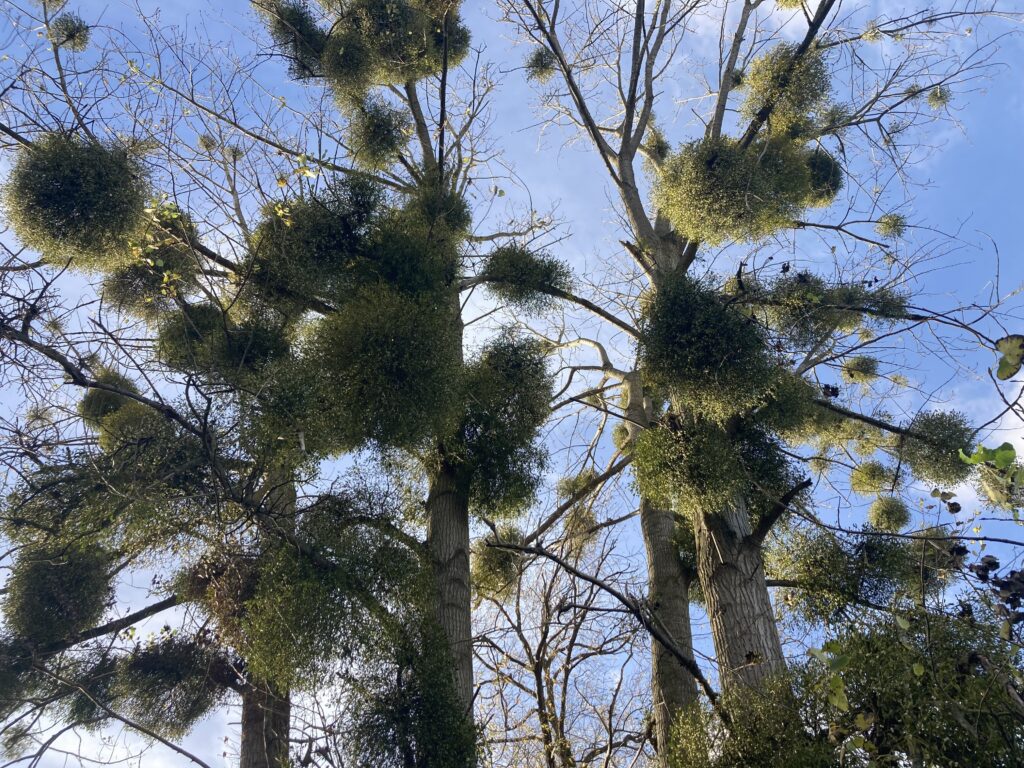
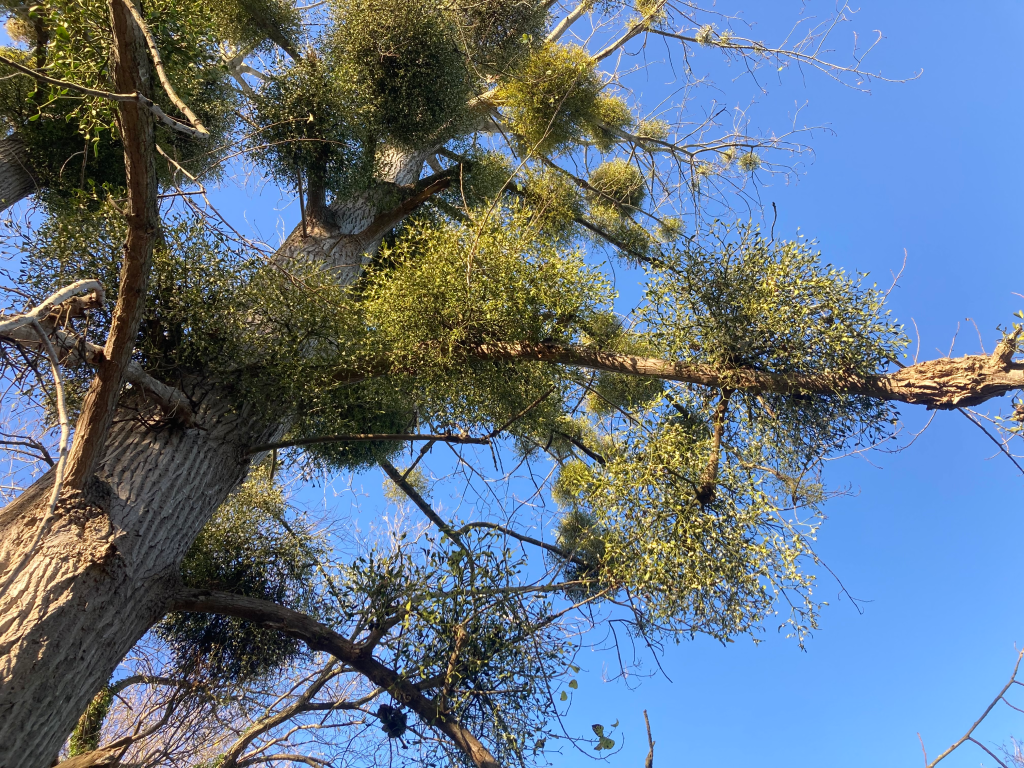
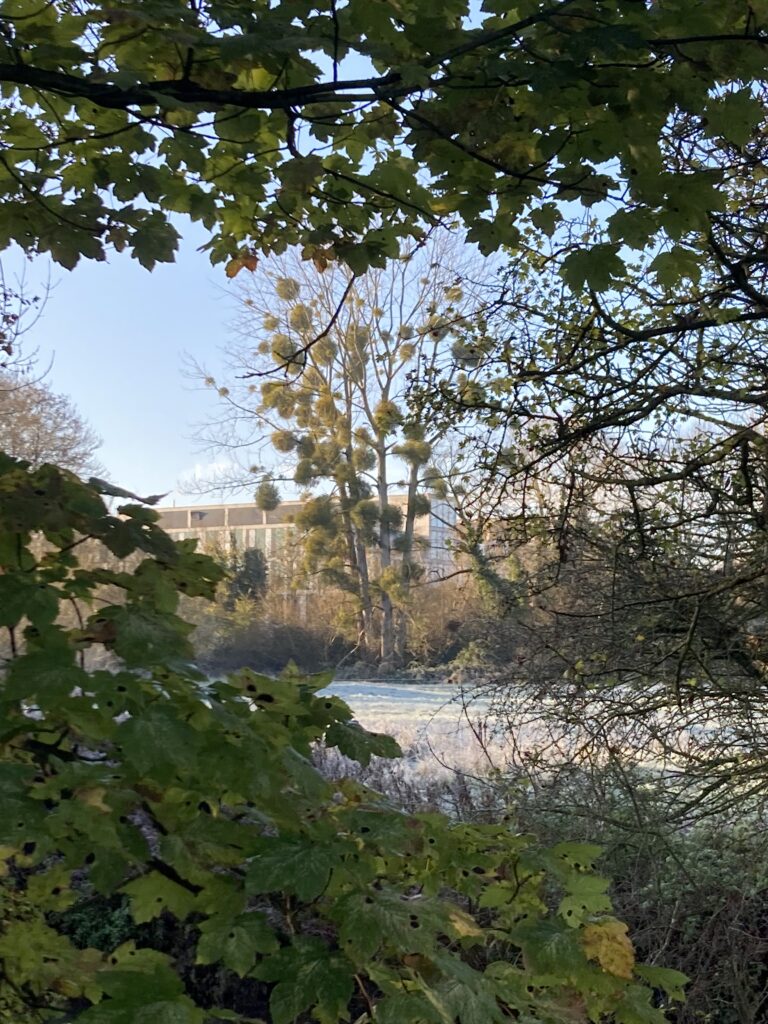
On a frosty morning last week.
You might also like to read
4 Comments
Join the discussion and tell us your opinion.
Goodness gracious great balls of greenery. Terrific pictures. Thank you.
Love reading these!
If you ever want a companion on a history hunt locally, let me know!
Where we lived in Touraine there was masses of mistletoe, but only on the poplars, it completely ignored all the other trees growing beside them. I would be interested to know whether the plants which seem to show a preference for different trees are slightly different varieties , or whether maybe it is down to the local birds’ preferences .
How interesting. And that is what Oliver’s research will hopefully be able to ascertain. On our walk it was the poplars, limes and fruit trees in which we saw all the mistletoe.