Today I am heading east, up Headington Hill to visit Oxford’s Rumble Museum. I’m intrigued for I had not heard the name before. Yet the place has secured accredited status from Arts Council England on an equal footing with the most famous museums in the city. The Ashmolean may have opened in 1682, is Britain’s oldest public museum and the worlds earliest attached to a university, but the Rumble Museum at Cheney School is the first and currently the only one to be housed in a UK state school. I cannot wait to see what cabinets of curiosities await.
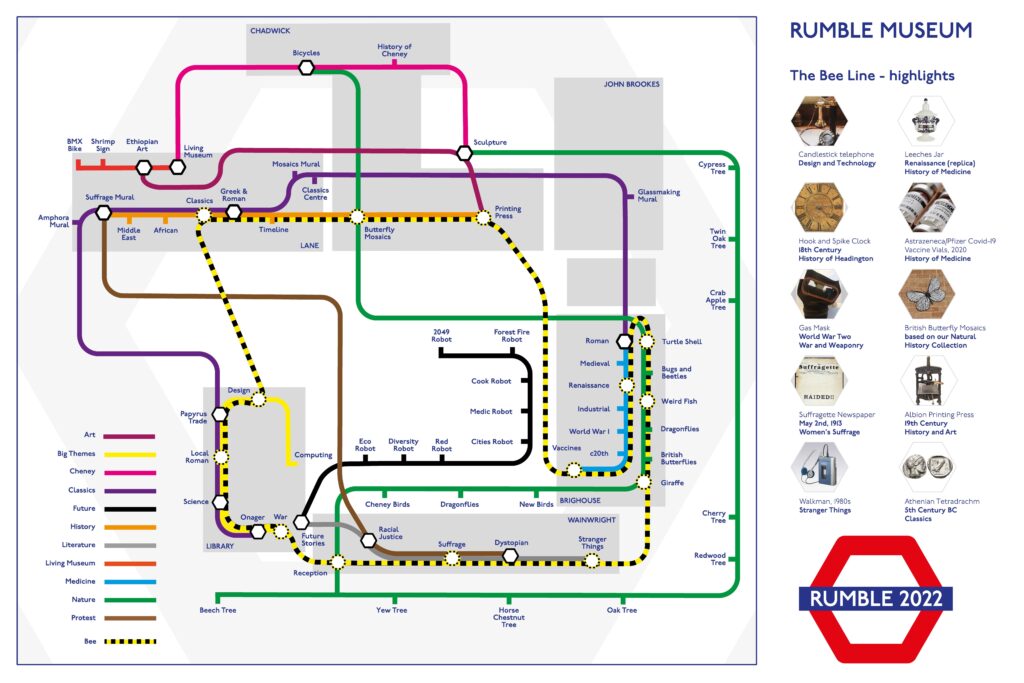
And it doesn’t take long to find out. I am greeted in reception by a vast display modelled on the iconic London tube map, colour coded lines showing where the huge variety of the museum’s offerings are to be found. For the school site is full of them. There are suffragette murals on the stairwells, cases of creepy crawlies in the corridors, and rapping robots in the recreation area. I’m curious to see the Weird Fish Gallery, Roman Mural Trails, and the hands-on Amazing Brain Exhibition marked on the map. There is even what is labelled a Bee Line – the highlights of the museum as chosen by Year 9s. These include an Athenian 5th century BC Tetradrachm, a replica leeches jar from their History of Medicine collection and a Victorian Albion printing press still being used in the art department.
First stop is the ‘100 Years of Toys and Games Exhibition’ housed in a converted set of school lockers, each lit and cleverly curated to look like museum display cabinets. I am here to meet 14-year-old Anya Blackwell-Baker, a member of the Museum Council, a select group of students from each year group who help decide on the museum’s projects and exhibitions, as well as take part in the festivals frequently organised for the local community. Anya’s locker contains a set of Victorian ceramic knucklebones, five stones or jacks as we call them today, with a short history of their use pinned to the back of the door.
“I’m a mudlark,” she tells me enthusiastically, the contents of her case chosen from a growing assortment of old bits and bobs she has been collecting and storing at home for years. “If you have the right eye, you can find old things everywhere. You get into the habit of looking down. My best find was probably a German marble. It’s huge with a very distinctive swirl pattern inside. It’s a great experience to then wonder who the last person was to hold it. I think having all these objects around encourages people to think about history and get involved with the school,” she adds before hurrying off to play netball. I couldn’t agree more.
The Rumble Museum was the brainchild of its now Director, Dr Lorna Robinson. As part of the Iris Project, an educational charity she created in 2006 to promote the teaching of Classics in state schools, she founded the Classics Centre at the school, (Cheney is the only Oxfordshire state school to teach Latin and Classical Civilisation to A Level and Greek to GCSE) and people kept donating objects to take into her workshops.
“And I thought why not display them,” she says leading me to a row of old storage cupboards, repurposed by two ex-Cheney brothers, (now a carpenter and an electrician) to show off the school’s Classical Collection. Here you will find fragments of ‘mortaria’, Roman bowls used lika a pestle and mortar discovered by the archaeological team investigating the site on which Swan School now stands on Marston Ferry Road, a paper-thin glass perfume bottle from 200AD and that ancient Greek coin with Athena on one side and owl on the other, chosen by Year 9 as a must see.
And other donations soon followed – a collection of British butterflies used as the inspiration to make mosaics for the playground, hundreds of World War 1 letters, and a whole corridor of East African artefacts gathered by a local lady while living in the area and then bequeathed to the museum on her return to Oxford.
“We then got a national heritage lottery fund grant to work with students of East African heritage,’ says Lorna. “The display was heavily curated by them. They got to decide what was put on show, came up with the wording and learned how to label everything properly. And the other students have something interesting to look at when they are waiting for lessons.”
Which goes for all the collections. One of my favourite presentations – all exquisitely produced with a professionalism that is a far cry from the scrappy pinboards I remember from my school days – is a history of Cheney displayed on huge panels above the seating in the canteen. You cannot miss it. David Gimson, the Museum Lead for the school, and responsible for embedding it within the curriculum, feels it is important for the students to know about the ancestry of the place, to give them a sense of shared belonging – he does regular student tours around the grounds. And it is fascinating. Starting life as a Sunday School in the New Road Chapel in Bonn Square in 1797, it moved in 1901 to New Inn Hall Street around the corner as the Central Girls’ School (you can still see the name carved on the side of the building.) It didn’t relocate to Cheney Lane until 1959, just after the Headteacher Miss Chadwick famously snapped her cane in half in protest against corporal punishment. Where it remained a school for girls alongside one of the country’s few technical colleges, mostly boys, started by one John Henry Brookes (now with a university named after him). They amalgamated in 1972. Where we are standing is what was the girls’ school hall. It still has the old stage and a beautiful wooden floor dating from 1959.
I have loved being back at school. I have always believed in the importance on reflecting on where we come from and the students at Cheney are lucky to have such an immersive experience. And, as Anya has done, seize the chance to be a part of it all. She’s hoping to be able to show off more of the Victorian discoveries she has found on her walks around the city. She has seventy-five codd bottles (that’s the old ones with marbles in the top used for fizzy drinks and which come in all shapes sizes and colours) for starters. Sounds right up my street.
The Rumble Museum is open to the public on special festival days. You can find out more on the Rumble Museum website.
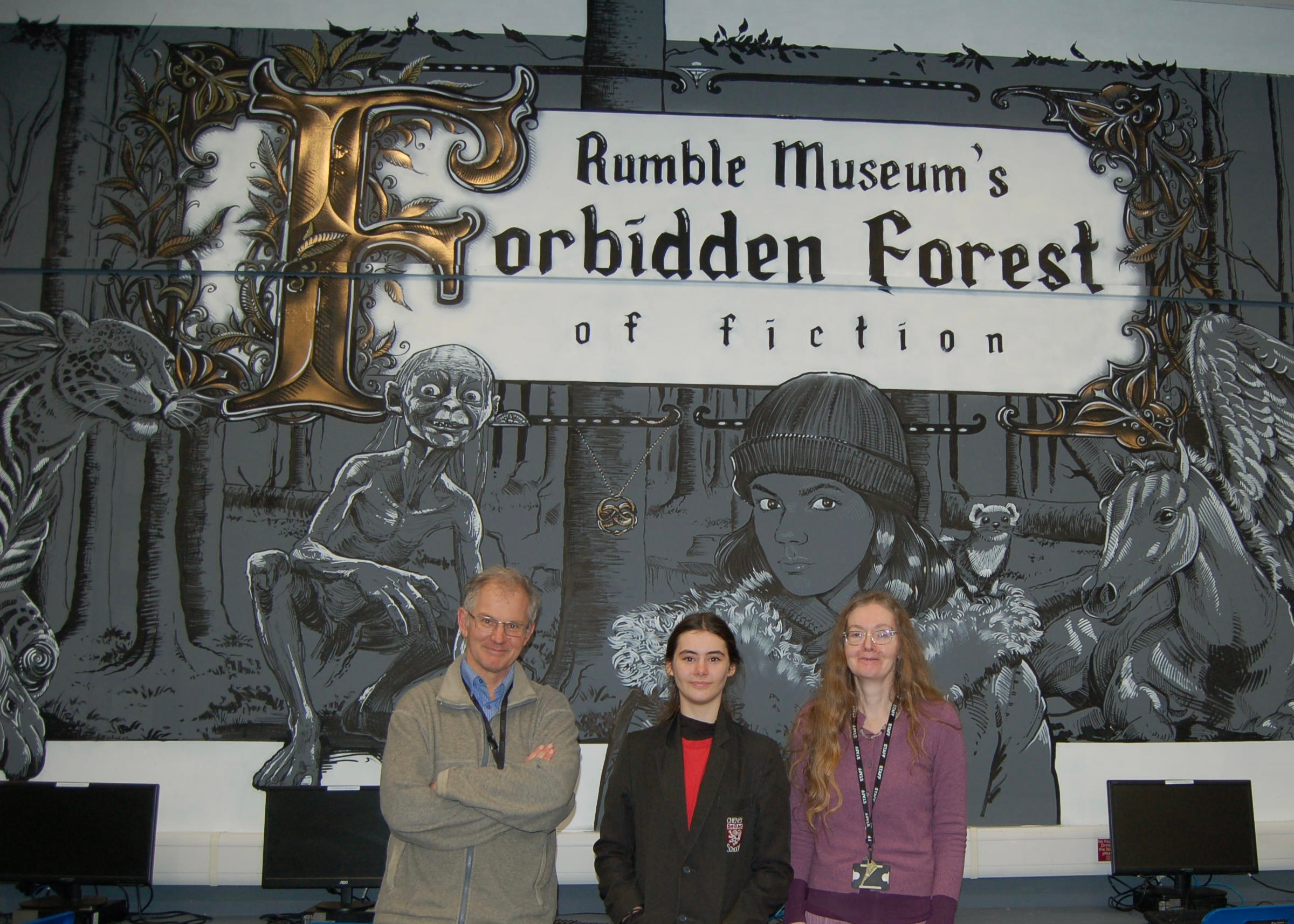
Main image: David Gimson, Museum Lead, Anya Blackwell-Baker Year 9 student and the museum’s Director Lorna Robinson. They are standing in the school library by a mural created by Luke McDonnell. It features characters and objects from the Rumble Museum’s fiction collections, including Gollum from Tolkien’s ‘The Lord of the Rings’ trilogy and Lyra Belacqua from Philip Pullman’s ‘Dark Materials’ books.
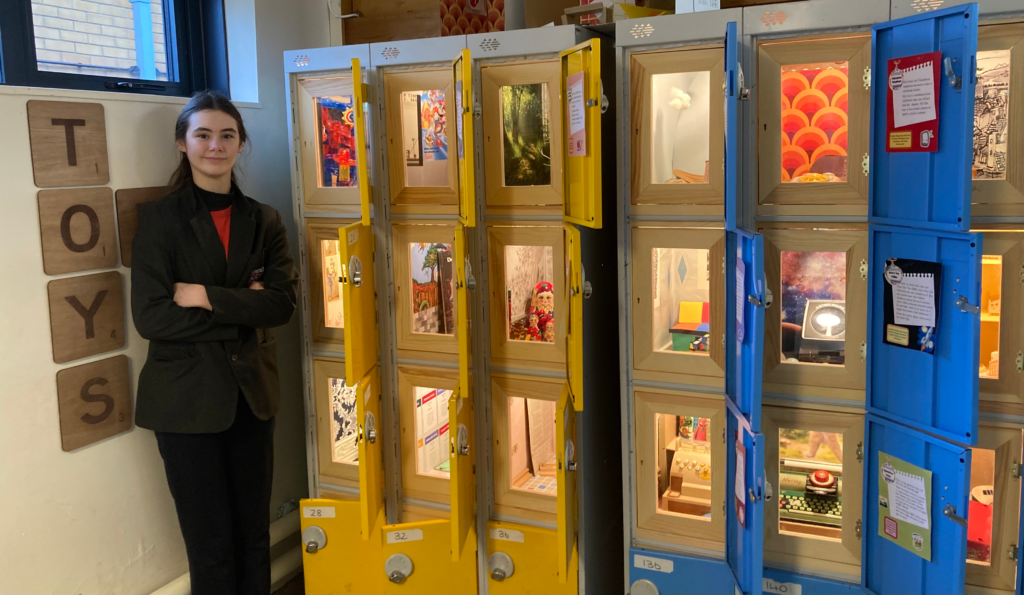
Anya in front of the ‘100 years of Toys and Games Exhibition’ created using old school lockers.
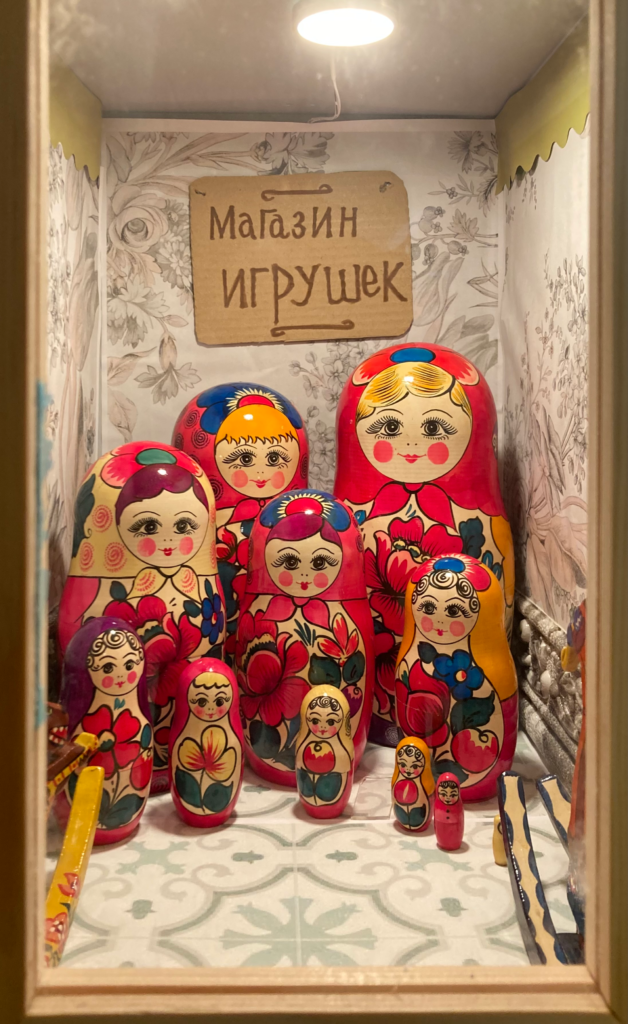
These Russian dolls were first carved in Russia in 1890 and are known as ‘Matyroshka’.
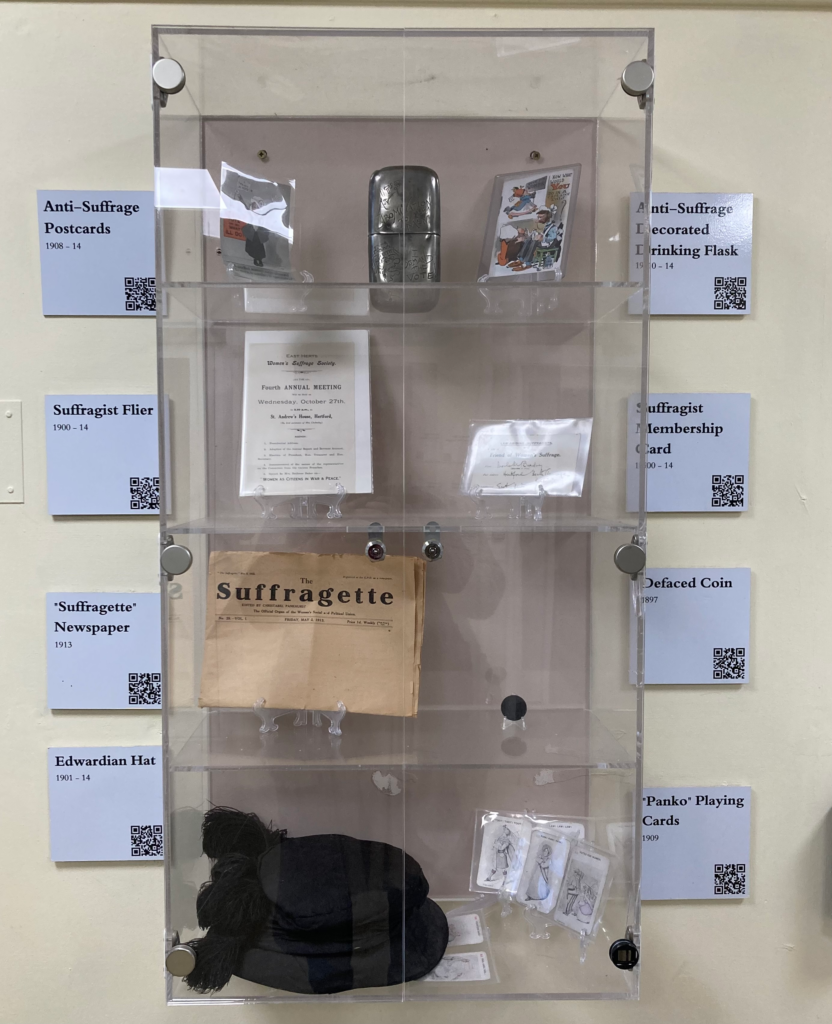
The suffragette cabinet – QR codes mean that students can access information about each object easily.
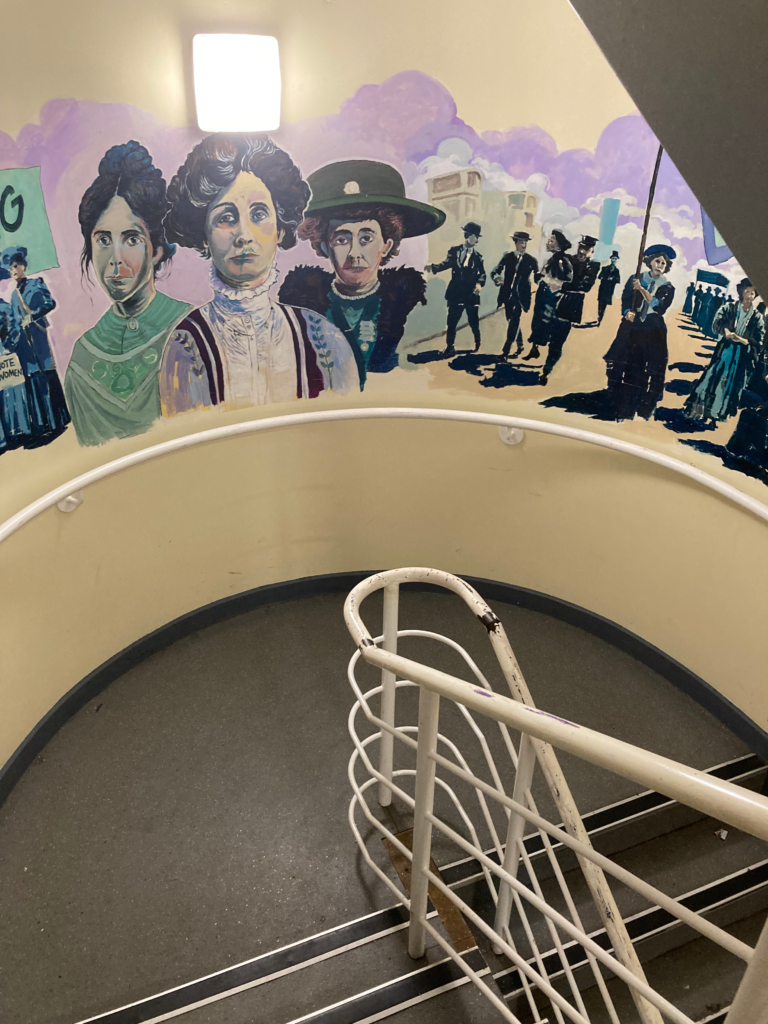
The suffragette mural – Emmeline Pankhurst occasionally sports a moustache but generally the students are pretty respectful.
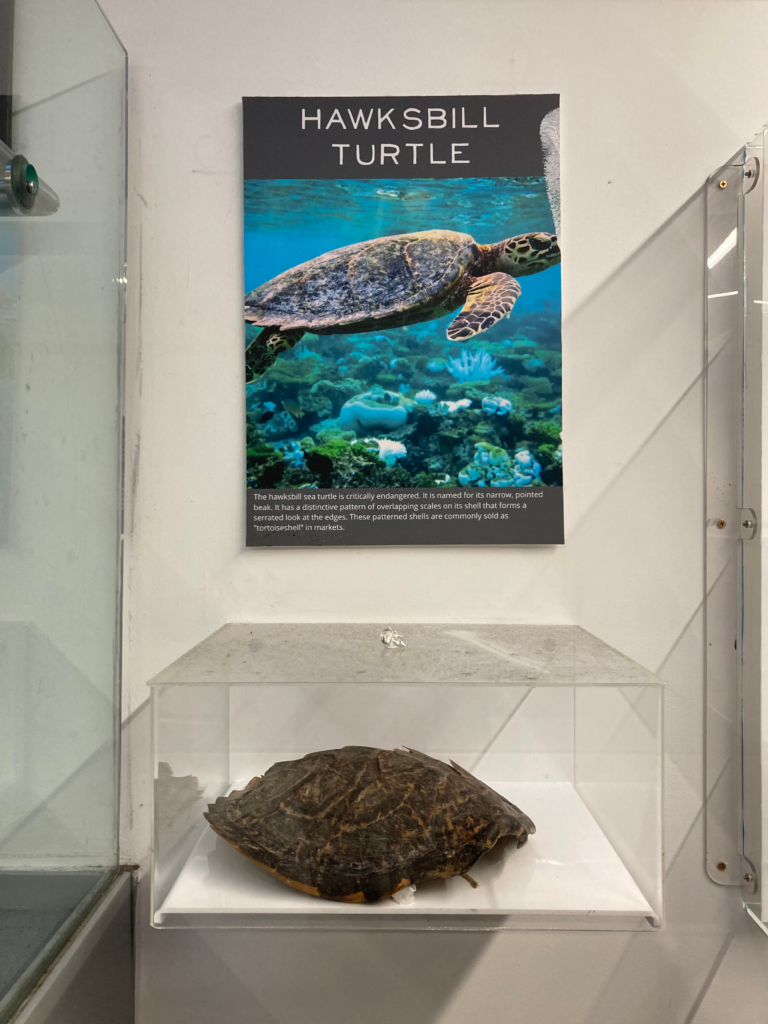
This Hawksbill Turtle shell was donated, along with an Ugandan drum, silver Ethiopian jewellery and many other objects from East Africa.
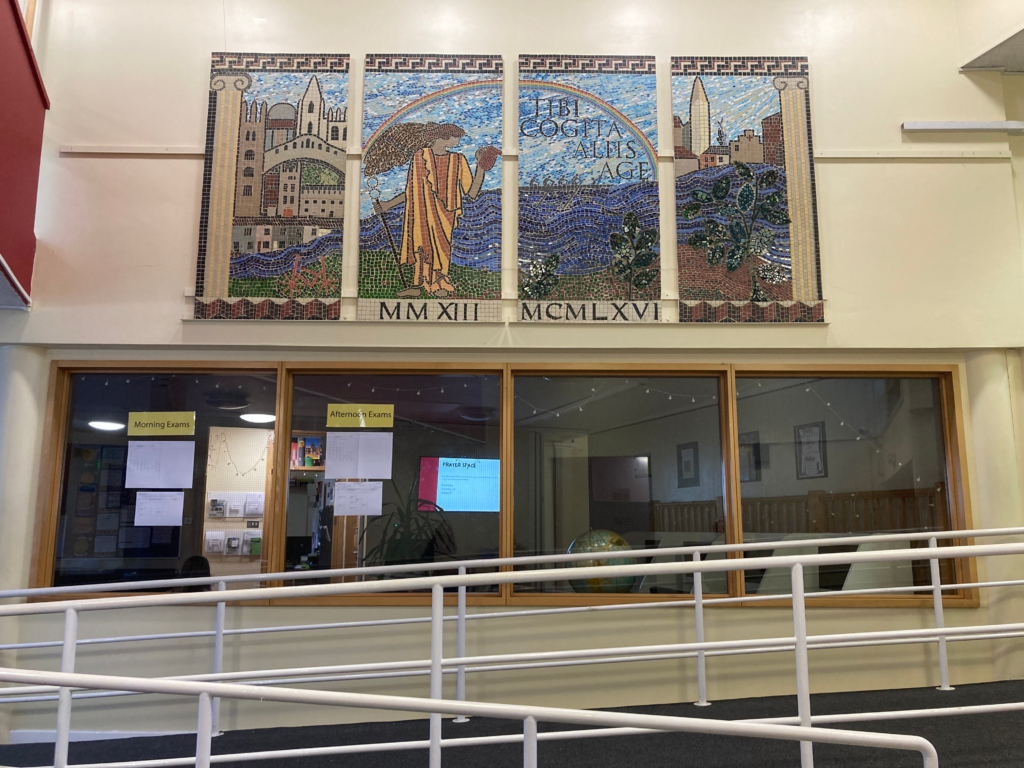
The Classics Centre at Cheney.
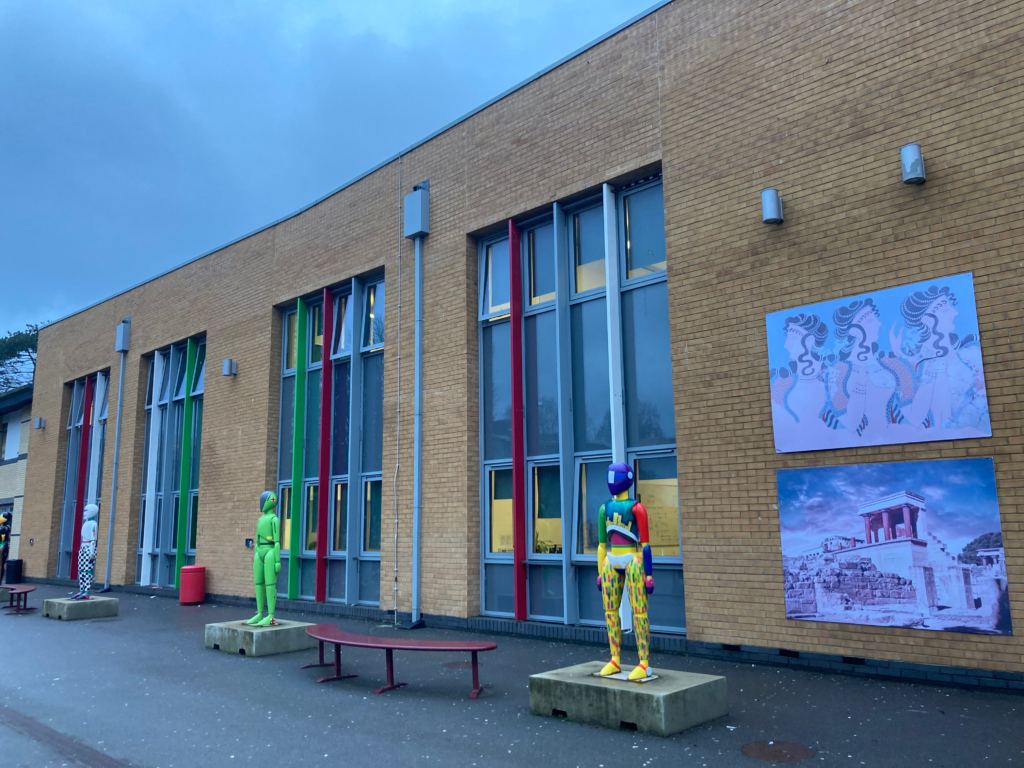
Eight six foot robot models were installed at Cheney by the Rumble Museum, each designed by a different student to represent some aspect of the future, from climate change and emergency, to the future of cooking and medicine. They have now been fitted with speakers so can talk.
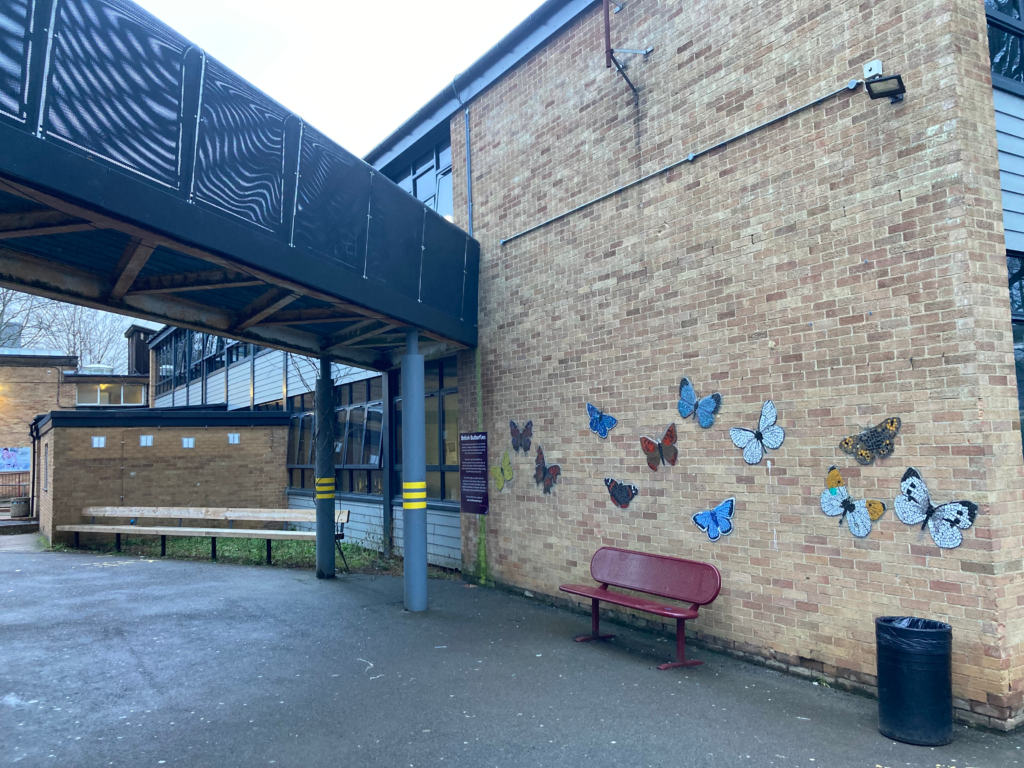
Butterfly mosaics decorate the playground based on a collection donated to the museum.
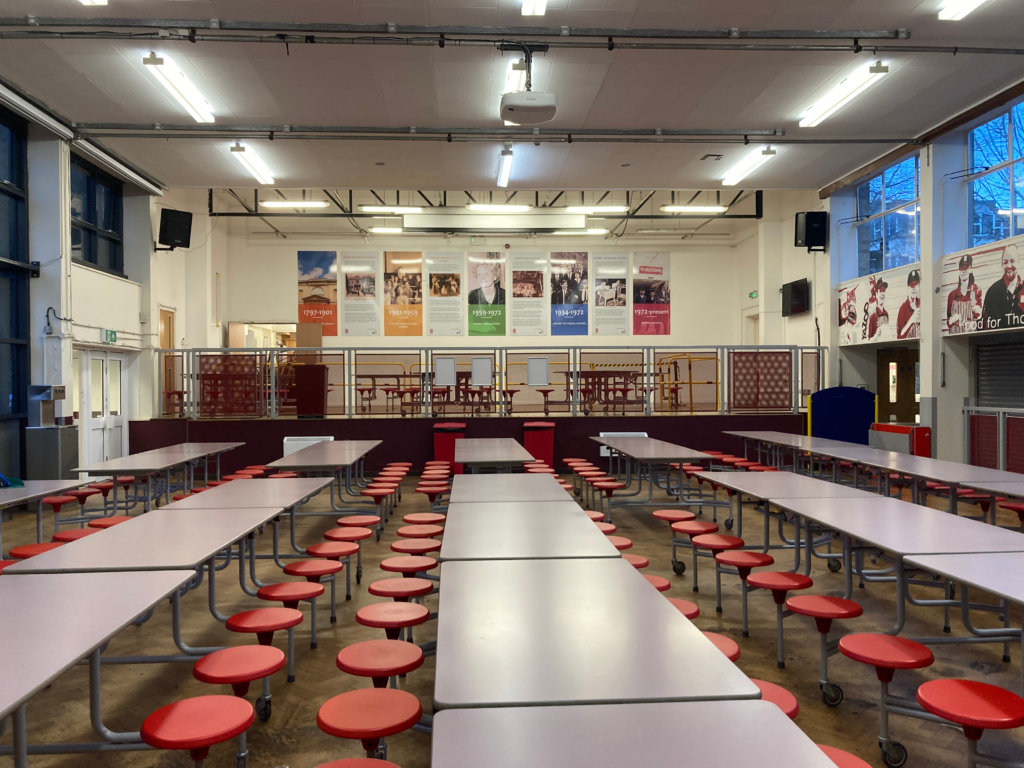
Cheney School canteen, where the history is the school is told on giant billboards.
1 Comment
Join the discussion and tell us your opinion.
Brilliant piece! Thank you dear friend. xxx