“It’s this way,” said Lyra, tugging at Will’s hand.
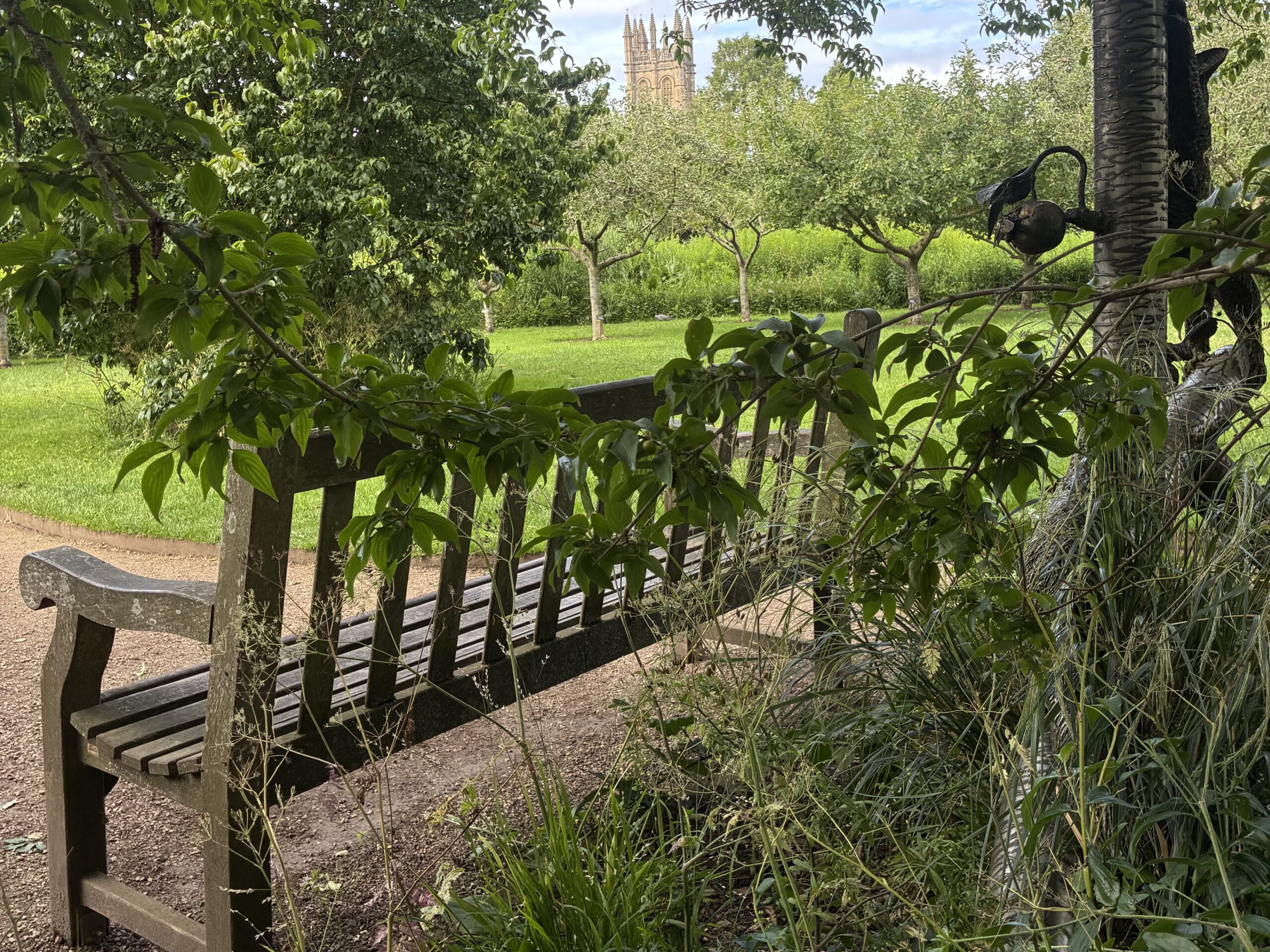
She led him past a pool with a fountain under a wide spreading tree, and then struck off to the left between beds of plants towards a many-trunked pine. There was a massive stone wall with a doorway in it and in the further part of the garden the trees were younger and the planting less formal. Lyra led him almost to the end of the garden, over a little bridge, to a wooden seat under a spreading low-branched tree.
“Yes!” she said. “I hoped so much, and here it is, just the same…..”
This is the moment near the end of Philip Pullman’s fantasy trilogy, ‘His Dark Materials’, when the young lovers Lyra and Will make a pact. Destined to live separately in similar but parallel universes, they find a spot in Oxford’s Botanic Garden that exists in both their worlds. A bench. To which once they have parted forever, they agree to come every Midsummer Day. At midday. For as long as they both live. So that though they might not be physically seated next to each other, they could imagine that they were.
Benches do that to people. They are meeting points, places to come together, to converse, to commune. They serve as special seats to rest and remember.
And so it was, exactly a year ago, just before midday on Midsummer’s Day, that I take the same route as Will and Lyra. Down the High Street through the ornate gateway opposite Magdalen College to the lower end of the Botanic Garden where their famous bench is situated. I’d heard that at this time of year others were wont to come this way. For the bench exists very much in our world too. Today overlooked by the steel sculptures created by Julian Warren of the protagonists’ daemons, Pullman’s physical manifestations in animal form of the parts of our personality not normally on show. In this case a cat for Will and a pine martin for Lyra, and an imaginary crow for Pullman himself.
There’s a small area of grass alongside on which I take up position to watch as the hour approaches. I can see that others have been here before, for there are hearts and initials romantically entwined, besides those of L and W, carved into the wood. And then slowly as the chimes of innumerable Oxford clocks marking midday ring out over the city, a small gathering of visitors begins to emerge.
First David from Malvern and Kartik from Cambridge, old university friends who had made an agreement to meet by the bench. Then Amy and her partner Tom from Portsmouth. And hurrying in on the last stroke of 12, the Watts family who had come all the way from Northamptonshire on a Pullman pilgrimage. All eager to mark the event in the book by sitting on its real-world inspiration. Disparate people with a common intention. Enthusiastically exchanging notes on Pullman’s world of witch-queens and cliff-ghasts, angels and armoured bears.
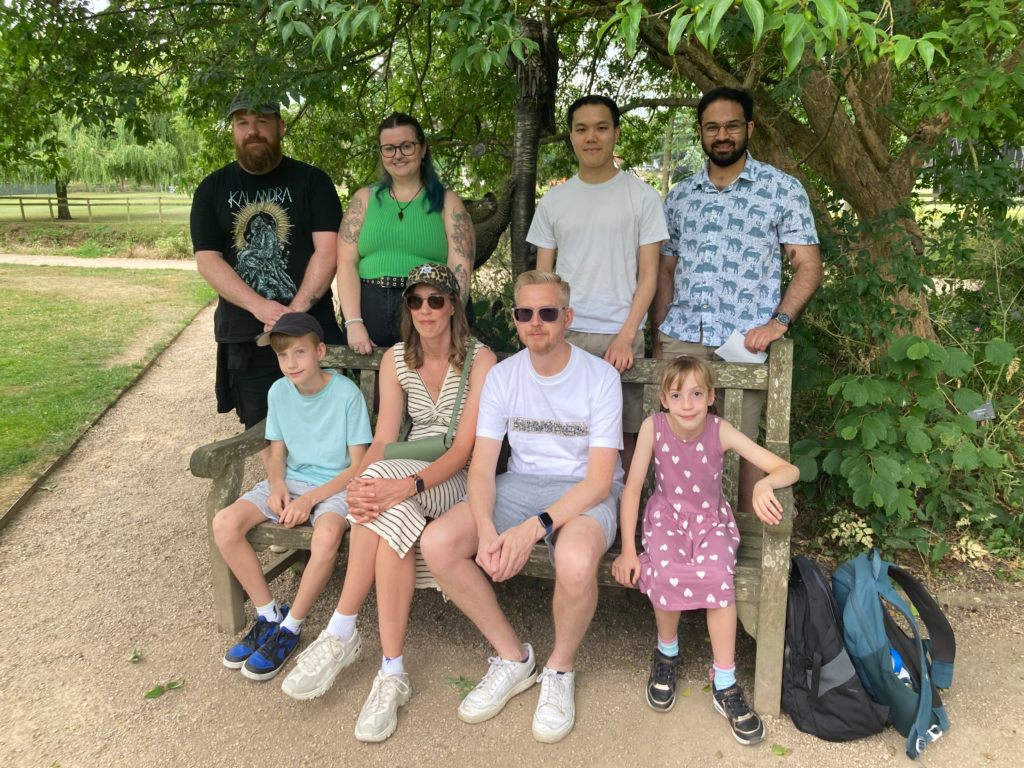
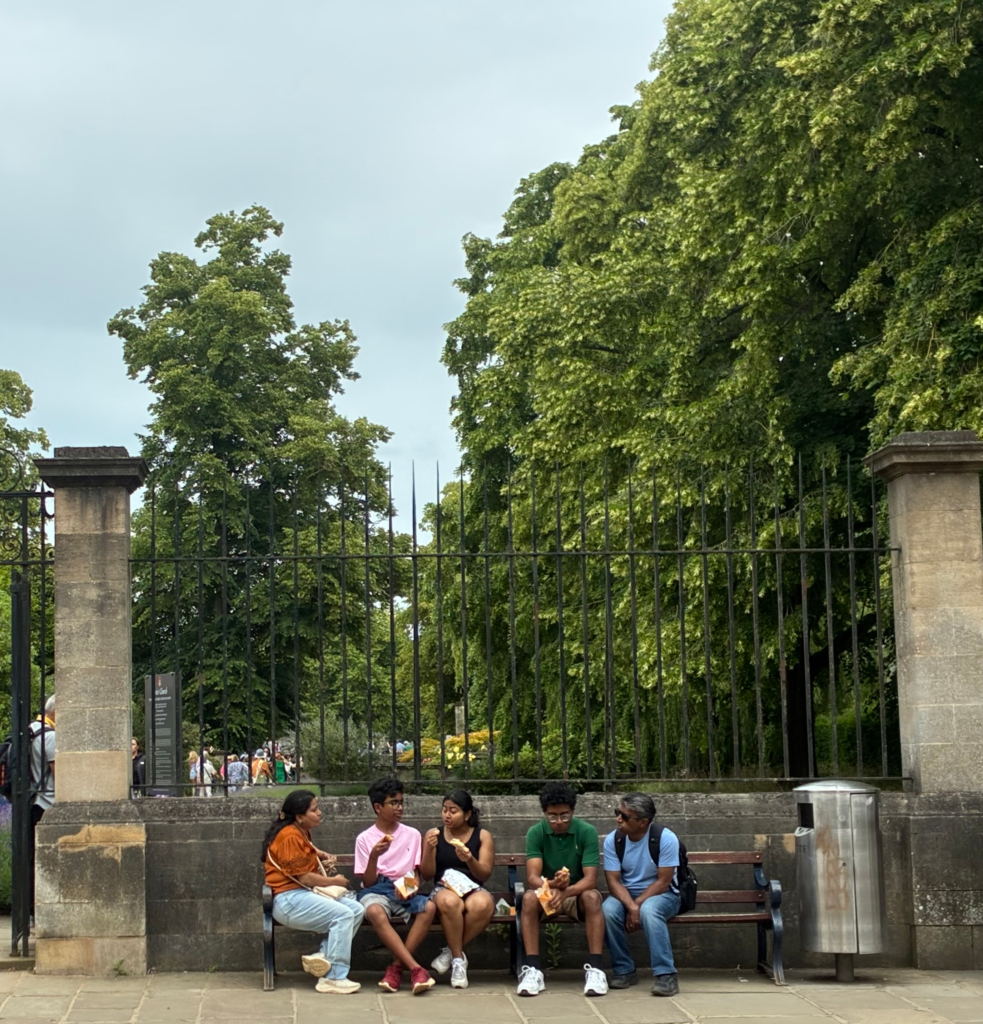
Seated: the Watts family.
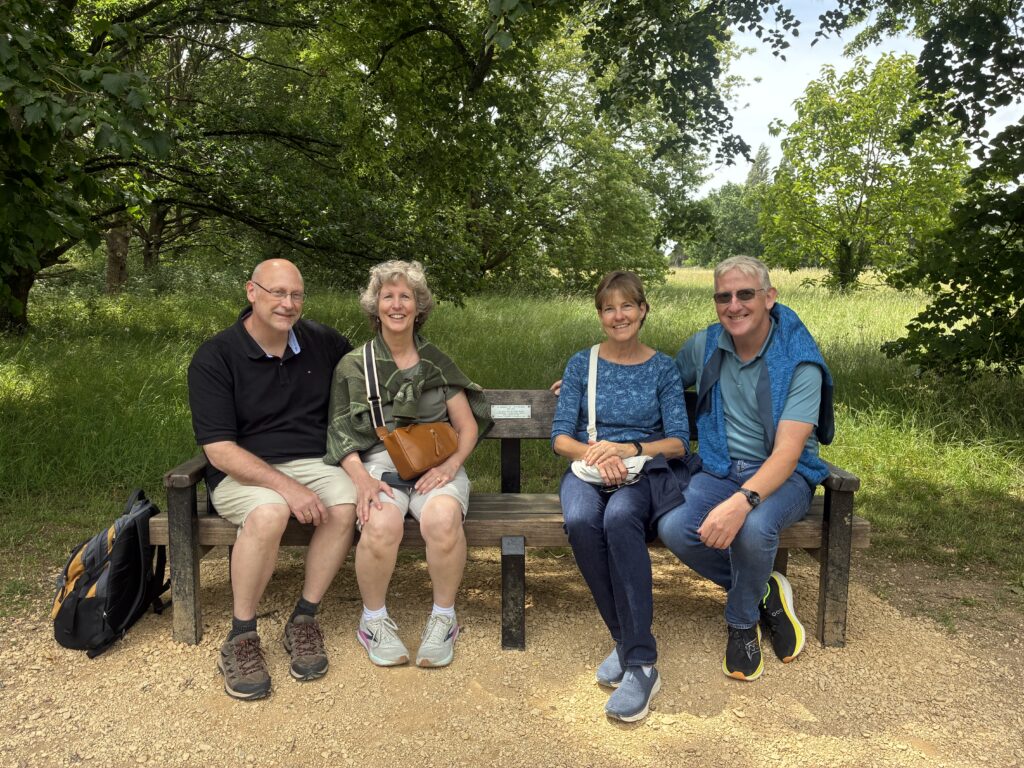
I have a similar experience last week in Oxford’s University Parks. Overlooking the River Cherwell is what has become known as ‘Tolkien’s bench’. Not that the Professor of Anglo-Saxon and fantasy writer of another trilogy, Lord of the Rings ever sat on it, for it was placed here sometime after his death. Though he probably liked to walk this way when he lived around the corner in Northmoor Road. It’s now become part of Oxford’s Tolkien trail. Paul and Kathleen from Chicago (pictured below with Malcolm from Teesdale and Alexia from Germany also here as fans of Middle Earth) had already visited The Trout and the Lamb and Flag where Tolkien liked to drink, when I chanced across them. By way of Wolvercote cemetery where Tolkien is buried. They could only look from the outside at his most famous haunt The Eagle and Child. As it’s currently being refurbished by fellow American and billionaire Larry Ellison. Americans love Tolkien they tell me.
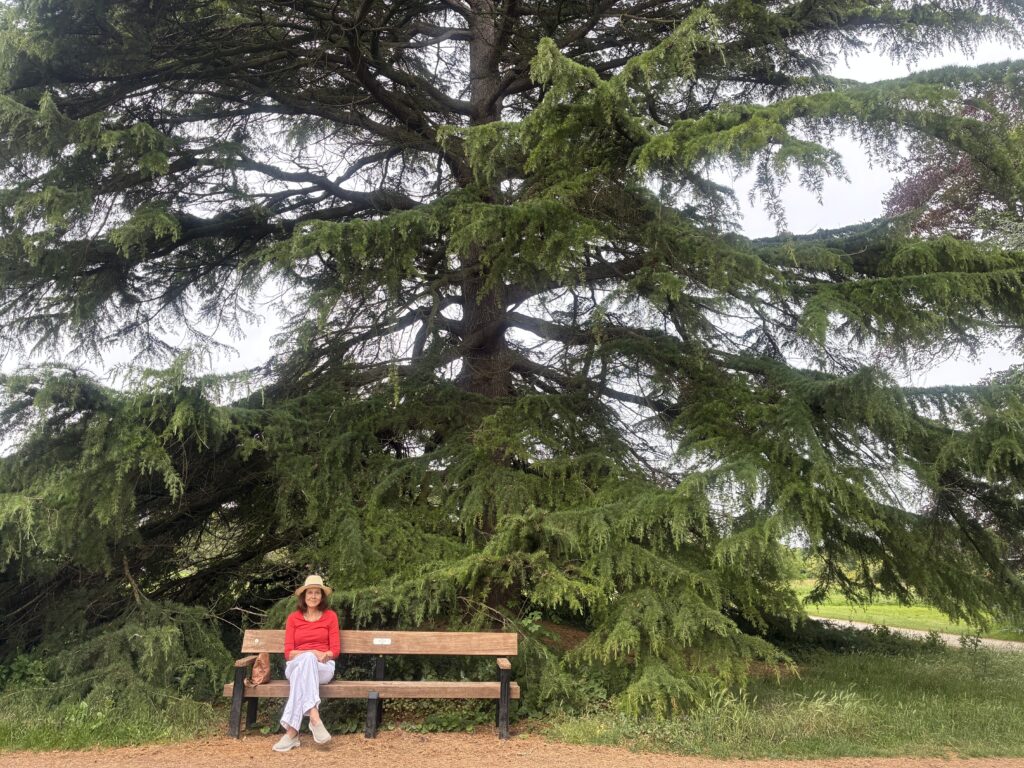
And then there are the benches with a more personal connection. Just up the path stands a seat under the spreading branches of a giant cedar tree. It’s where Caroline likes to sit to remember her uncle Peter Hancock (his name and dates 1923-1996 are inscribed on the back). Caroline is a third generation Oxonian. Her grandfather, Peter’s father was Head Gardener at New College (where he has his own memorial bench). A house on first Holywell and then Longwall Street came with the job, and the Parks nearby were where Peter loved to walk first as a child and later after work with his brown labrador Bruce. It’s where he also brought Caroline when she was a child. It’s where she learned the names of so many of the flowers here. He was a good teacher she tells me.
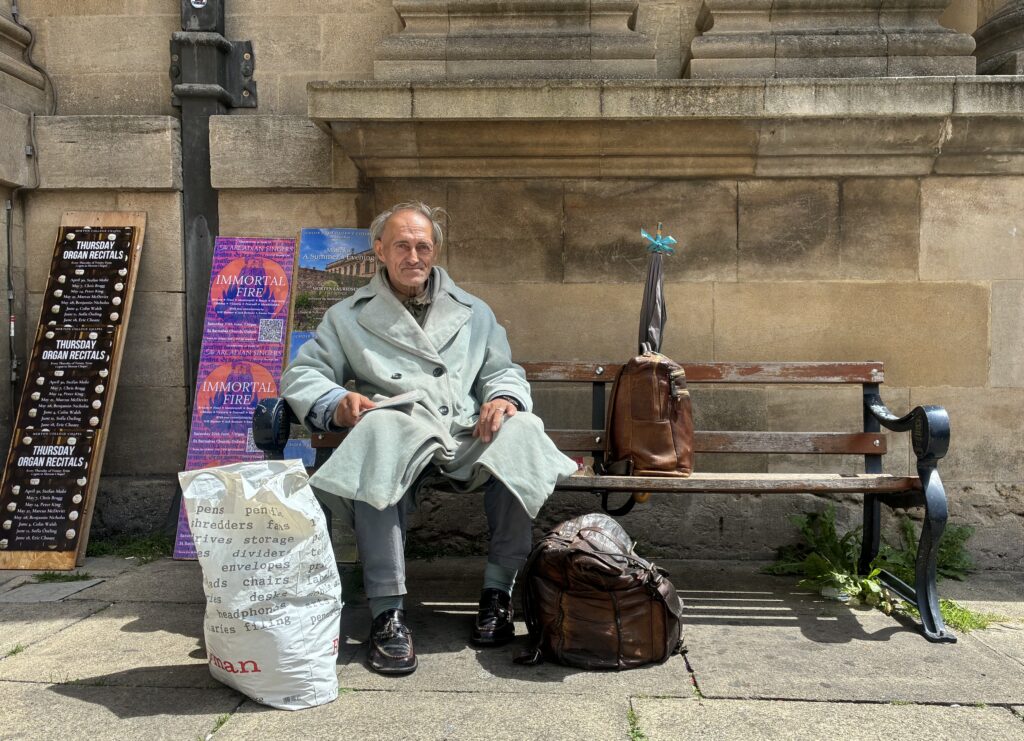
And then from time to time, I share coffee with Adrien on the other side of Turl Street to The Mitre. Here there are a couple of benches on a small, raised platform. Adrien likes to sit on the one nearest to the old All Saints Church. He came to Oxford over twenty years ago with his partner Theodora from the Netherlands because they loved the works of Tolkien. And never left. They were joined at the hip. They dressed identically. They did everything together. And then four years ago Theodora died. And so it is that he likes to come here to sit. He holds a faded photograph of them both on this bench. It’s where they last sat together. It’s where he especially likes to remember her.
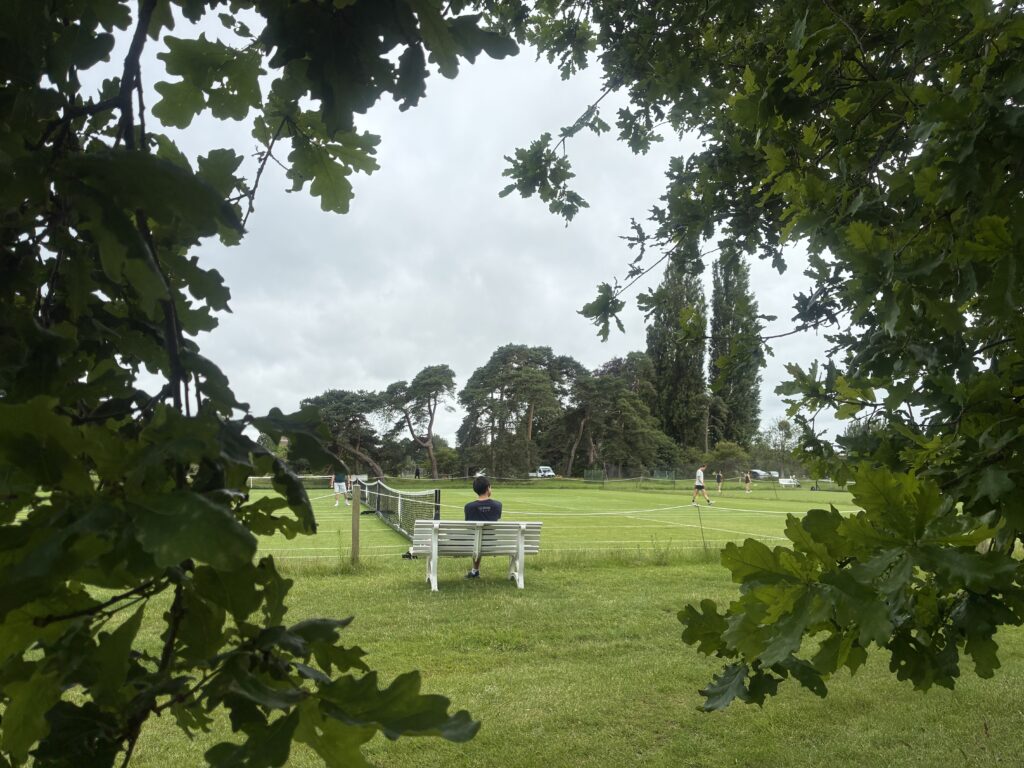
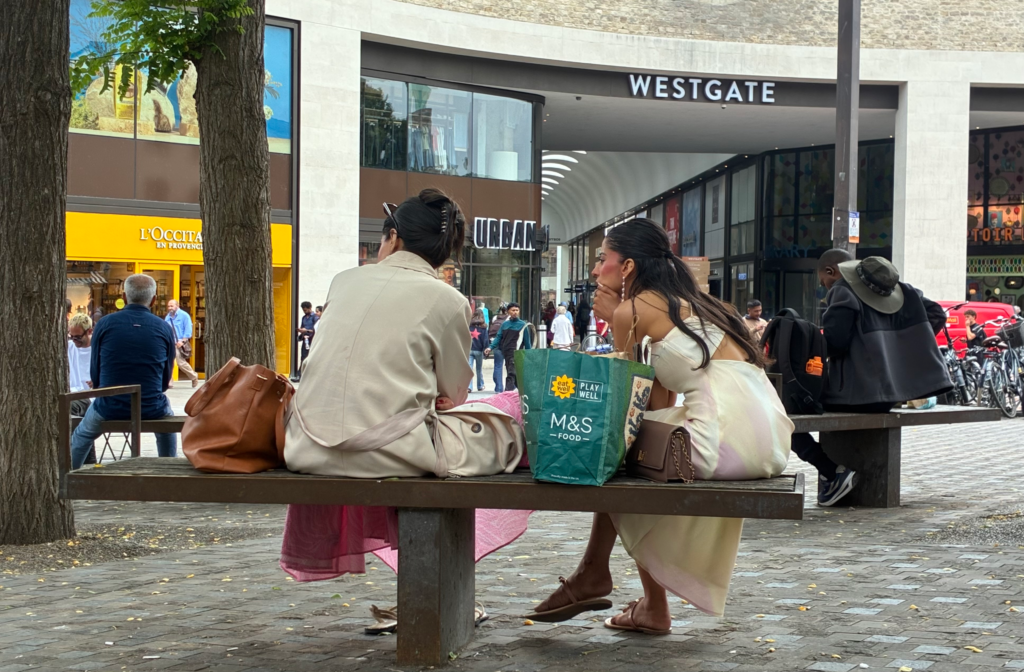
So do not underestimate the humble bench. And I don’t mean the perches that are sometimes installed in their place. I am referring to proper solid benches. Wood, stone, and steel, they are made from all sorts. I like the ones that fit the curve of your spine. For they draw us outside. They are public expressions of welcome and hospitality. They encourage connection and closeness. Both between the living and with those we have lost.
7 Comments
Join the discussion and tell us your opinion.
Colin Dexter considered Lincoln College’s library the ‘most aesthetically pleasing’ building in Oxford. I wonder was this in mind when the bench that bears his name was placed across the road from it.
Then there are the ghastly seats in Cornmarket, which can accommodate 64 people, but there are only 24 that you can actually sit on, with all the rest designed for uncomfortable perching. There was quite a scandal back in 2004 when it was revealed that they had cost an unbelievable £30,000 each (£240,000 in total)
Yes those are the ones in Cornmarket I meant when I talked about perches.
I’m amazed at how the Oxford Sausage comes up with wonderfully orignal themes and stories every week. But then I suppose there’s infinite variety in what brings us together as humans.
Thank you for this lovely piece and for all your writings–they inspire and delight! Many years ago my daughters and husband and I were lucky to live in London for a time. We wrote our own ‘London rules,’ the first of which was ‘always sit on the bench.’ And now I want to go and visit these benches you describe! Thank you.
Benches , especially ‘memorial’ benches, seem to me to be a very British phenomenon. I can’t recall any in my area of France, although there were lots of places which would doubtless have been ‘benched’ in England. Similarly, I don’t remember any in the places I have visited in Italy (hence lots of people perching on monumental steps in public spaces. Bollards or cafes in France! Or a fallen tree trunk in rural places….
There is a bench in the CC garden that reads something like this: In memory of …. He did the best he could.”