Up until I was five years old my family lived in one half of a tiny cottage in Headington Quarry. I have written before about its lack of bathroom and our trips into the city to what were once the public baths in Paradise Square. But this wasn’t something that bothered us children. What I remember most was the huge walled garden. In it stood an enormous apple tree. And soon after we moved in my mother installed a beautiful old brightly painted traveller’s wagon. She’d bought it from some locals down the road in the Slade who were upgrading to a smarter, shinier model. We children thought it the perfect playhouse.
And so it is that many years later I find myself cycling up Headington hill to see what has become of the old place. Besides I’d long wanted to learn something of the history of an area that had for centuries supplied the stone and later bricks to build much of the city below – it’s not called Quarry for nothing. And I was delighted when long term resident Lawrence Kelly and local historian Maurice East agreed to show me around. Four generations of Maurice’s family have lived in Quarry. His great grandfather arrived here from St Ebbes to run The Mason’s Arms in Quarry School Place; the small square pub built on a slope in a curve of the road, still pulling pints and where we begin our meanderings.
It doesn’t take long to get a feel of the place. Houses pop up willy nilly. Of widely different age and design. Perched at the top of steep hills and squeezed into plots behind garden walls. At dog legs to one another. The terrain is all ups and downs, hills and hollows. Look across the same trajectory and you will see a front door, a back door, a chimney stack and a rooftop. Everything stands at different levels. The village of Quarry might today be engulfed by the endless expansion of Oxford city, shorn of its eastern edge by the bypass, but it cannot escape its past. It has a unique identity. Born with an industrial heritage. Built on a rabbit warren of old pits and the rubbish tips that took their place.
Across the way and through the churchyard of Holy Trinity Church where C.S Lewis is buried, and there at the back is a wide expanse of undulating green. This was once Taylor’s, a huge pit, and like most of the pits around here named after the self-employed quarrymen who worked them (Coppocks, Blondin’s, Saccy’s and the like). Maurice tells me that explosions to extract stone from here could be heard as late as the 1930’s. But the land, rich with seams of Corallian limestone and clay formed 155 million years ago in the Jurassic period when Oxford was a shallow tropical seabed, had been dug and delved long before then. First the clay by the Romans to make pottery, then the coral rag by the Anglo Saxons, (you can see it in the towers of St George’s at Oxford Castle and St Michael at the Northgate).
It was first mentioned by name in the New College accounts when Headington stone was purchased to build the Bell Tower in 1396. 1,386 loads of the stuff were brought down the hill in carts. Another 6,140 cartloads went to construct All Souls. William Orchard, the master mason responsible for the fan vaulted ceiling at the Divinity School and who lived over the way in Barton, chose the stone to build Magdalen College. Other colleges followed suit. They leased their own pits. Scooping out the earth horizontally like moles until they got to the narrow seams, then using a puggle, a flat spear-headed piece of metal on a pole to dislodge the stone, raked out with a long shovel called a shrid, and then cut to size with beetles and wedges, long chisels with sharp edges. Before loading it on to carts to be shaped elsewhere. It was tough, outdoor, back-breaking work. In a stark industrial landscape of open pits dotted with workman’s cottages and drinking houses. It is where the materials that built the Bodleian Schools Quadrangle, the Sheldonian and the Clarendon Building came from. Headington stone was even floated down the Thames for use at Eton College and Windsor Castle.
It is hard to marry all this with the pretty cottages with their colourful window boxes that we pass today. But then people didn’t really start to settle here until after the industry peaked. When it was discovered that Headington freestone was not as durable as they might have liked (many colleges had to be refaced in the 20th century because the material had eroded so badly). And although a small amount of mining continued, the very nature of the extraction allowed for homes to be built on the spoil left behind. And this is what people did. Attracted by the seemingly endless supply of stone to make dwellings on anything vaguely flat and with plenty of space to keep pigs and chickens and to grow vegetables. Their skillset was easily transferable. The clay once used by the Romans was now used to make bricks, to supply the Victorian housing boom of the mid 19thcentury when the University was expanding, and houses were needed to accommodate the families of dons now allowed to marry. The people of Quarry kept horses and hired themselves and their haggle carts out for transport of any kind. Huge wicker baskets were sent down to the city on a Monday to collect the college washing. Scrubbed, dried, ironed and folded by the women who ran the many laundries here it was returned on a Friday. Maurice explains that the size of a garden in Quarry was described by the number of sheets that could be hung out to dry. I reckon our old garden would have been at least a ’16- sheeter.’ Wood could be foraged from Shotover nearby. Poaching was common. They got a name for being ‘outsiders’. For doing things their own way. But locally they were know as ‘Quarry Awks’, short for ‘awkward’ people. They were fiercely proud of coming from Quarry and wore their reputation as a badge of honour.
“My great grandfather moved here because he saw it as a place of opportunity” says Maurice. “He was a cap and gown maker, and him and his wife ran a fish and chip shop and a sweet shop from the back of the pub. The place was melting pot of working people. There was no Lord of the Manor. By 1900 there were three pubs and no village green. Impromptu boxing matches after a few pints at the Six Bells on a Sunday was not uncommon.”
And then came the Cowley car factory just a short walk away. A different kind of work entirely.
But the legacy of Quarry’s early history is everywhere we go. It’s there in the narrow passages and alleyways, once the tracks used by quarrymen to walk between the pits and “the only straight lines here,” Maurice laughs. It’s there in the beautiful old rubble stone walls that delineate the area, knocked up from anything that was to hand, often from stone rich with fossil life. We stop to admire a spot on Church Walk recently restored by Lawrence and other ‘Friends of Quarry’ with hot lime mortar, another readily available local material. And it’s there hidden behind the ivy on the side of a back gate; two sculpted stone heads and a carved pedestal most probably ‘left over’ from a job in the city.
And then the old ways are remembered in the names on the highways and byways; Pitts Road, Quarry High Street, William Kimber Crescent, John Snow Place, I could go on.
Along Quarry Road we come to a gate that opens on to Quarry Hollow Park. It is now a playground, a long slide erected to take advantage of the drop excavated when this was Blondin’s pit. Maurice has fond memories of the hours spent here in his youth, affectionately known as Muntises because previously it had been Munts Builders yard. It leads at the other end to what used to be the old funeral path, now Chapel Alley. A procession could walk in a straight line all the way from here to St Andrews Church in Old Headington before it was blocked off and Quarry got a Methodist Chapel and an Anglican church of its own.
We end our tour at the old Magdalen pit. Where they quarried the stone for the college with its famous tower. It was the last pit to close and is now a nature reserve. Plus a site of special scientific interest. Lawrence points to a seam of hard stone still visible in the rockface. Someone has carved their name on one of the boulders. It’s now a quiet, peaceful place. A far cry from the ring of hammers and chisels, of explosives, the shouts of a hundred quarrymen working in all weathers. But I am glad that it has been left to tell its story.
And so it is that I take my leave. But before I head back down the hill, I go to check out our old cottage on Quarry High Street. Maurice has warned me that it may well have altered. And so it turns out. The apple tree gone. The garden sliced off and now filled with a smart new brick residence. A fence shielding it from it from its neighbours. It’s what happens in Quarry, Maurice says. Locals taking advantage of what they have available. The little old post office that once stood in Beaumont Road with its resident duck was demolished to make way for a whole close of houses, Cooper Place. Into those large front gardens like ours have been dropped a mish-mash of places to live. And as a consequence the front doors have now become the back, and the back the front. Sometimes that ‘new’ front door opens on to a different street entirely and requires a change of address.
“It’s bonkers,” says Maurice. “But very Quarry” adds Lawrence.
Higgledy Piggledy Headington Quarry. I am so pleased to have remade your acquaintance.
Black and white photographs courtesy of Maurice East.
Special thanks to Maurice East and Lawrence Kelly for showing me around Quarry.
Maurice will be leading a tour of Quarry on Friday July 24th. Thoroughly recommended. You can book a place here.
If you’d like to find out more about Friends of Quarry you can do so here
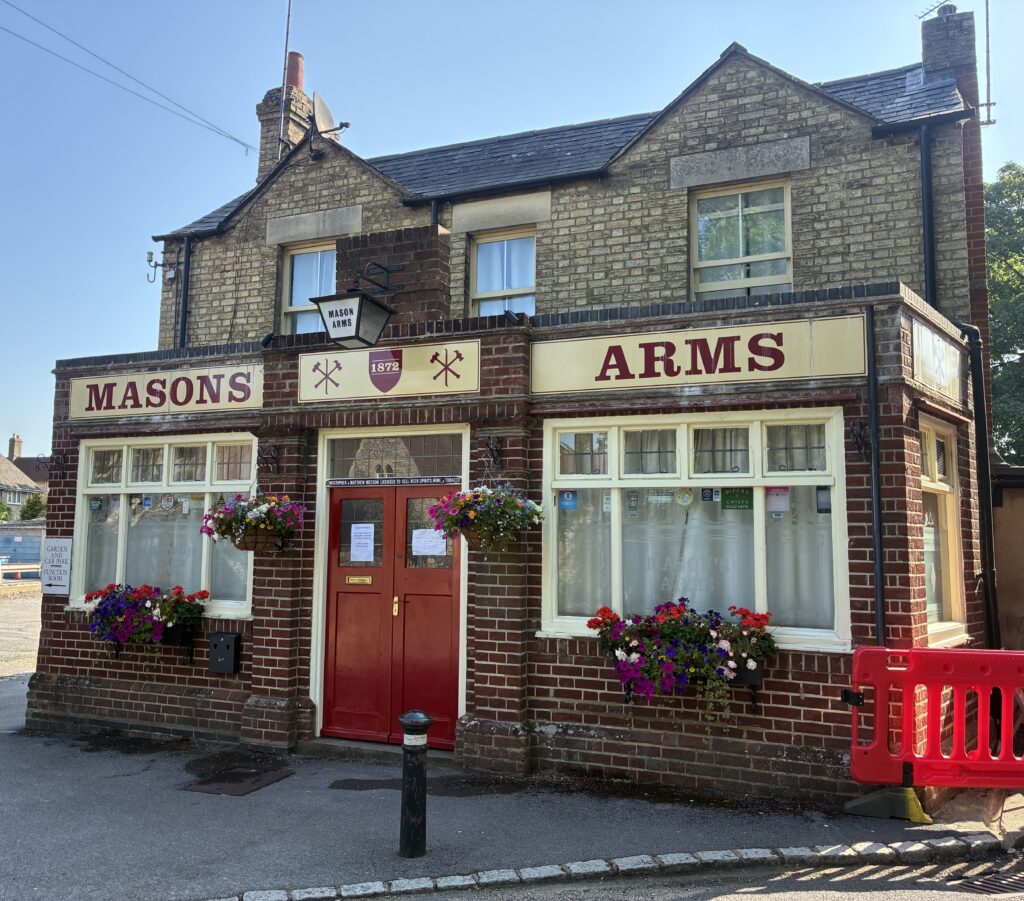
The Mason’s Arms use the stonemason’s tools as its symbol; cross hammers each with a different shaped head to chip out the limestone, with a chisel in the middle to shape it.
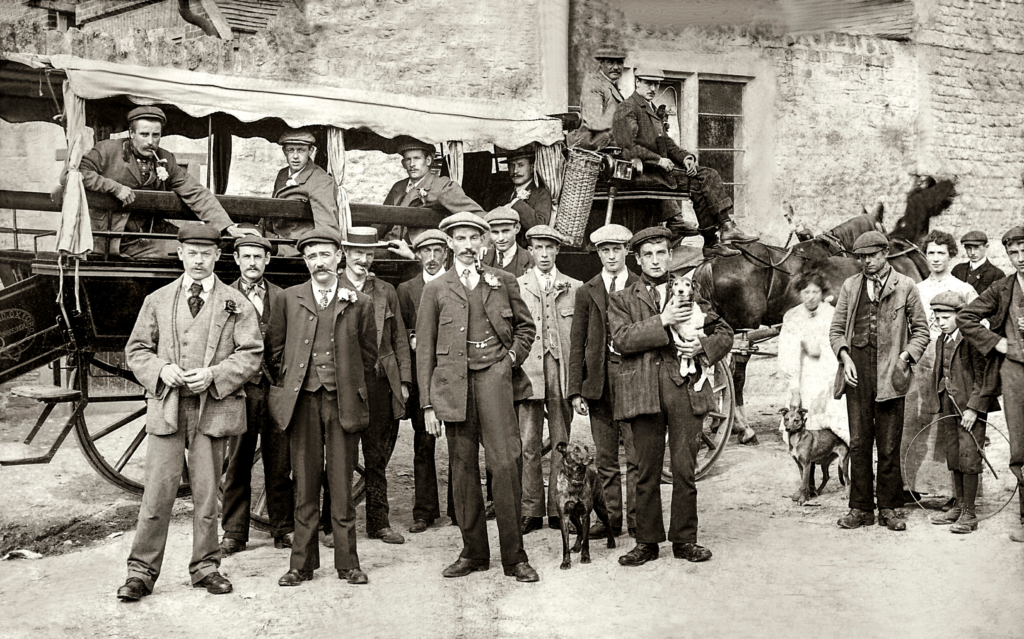
William Goodall (centre with pipe) Maurice’s great grandfather and landlord of the Mason’s Arms outside his pub. Dogs were common in Quarry, but as you can see in this photograph not kept on leashes.
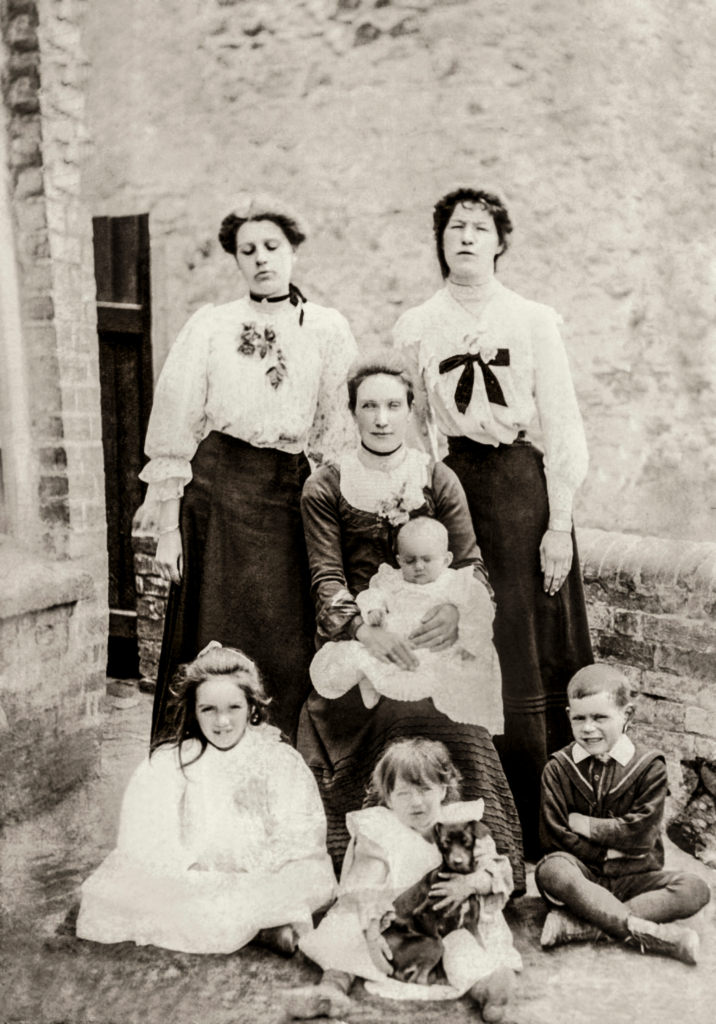
His wife Rose, who kept the chip shop and sweet shop around the back of the pub.
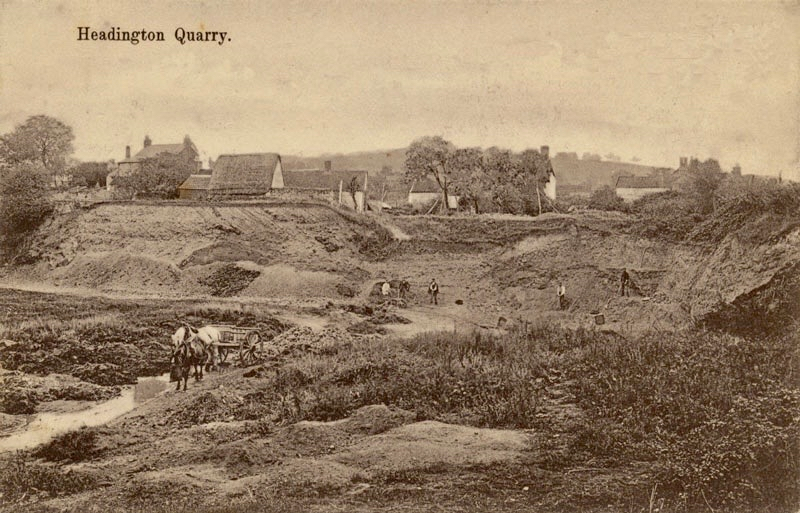
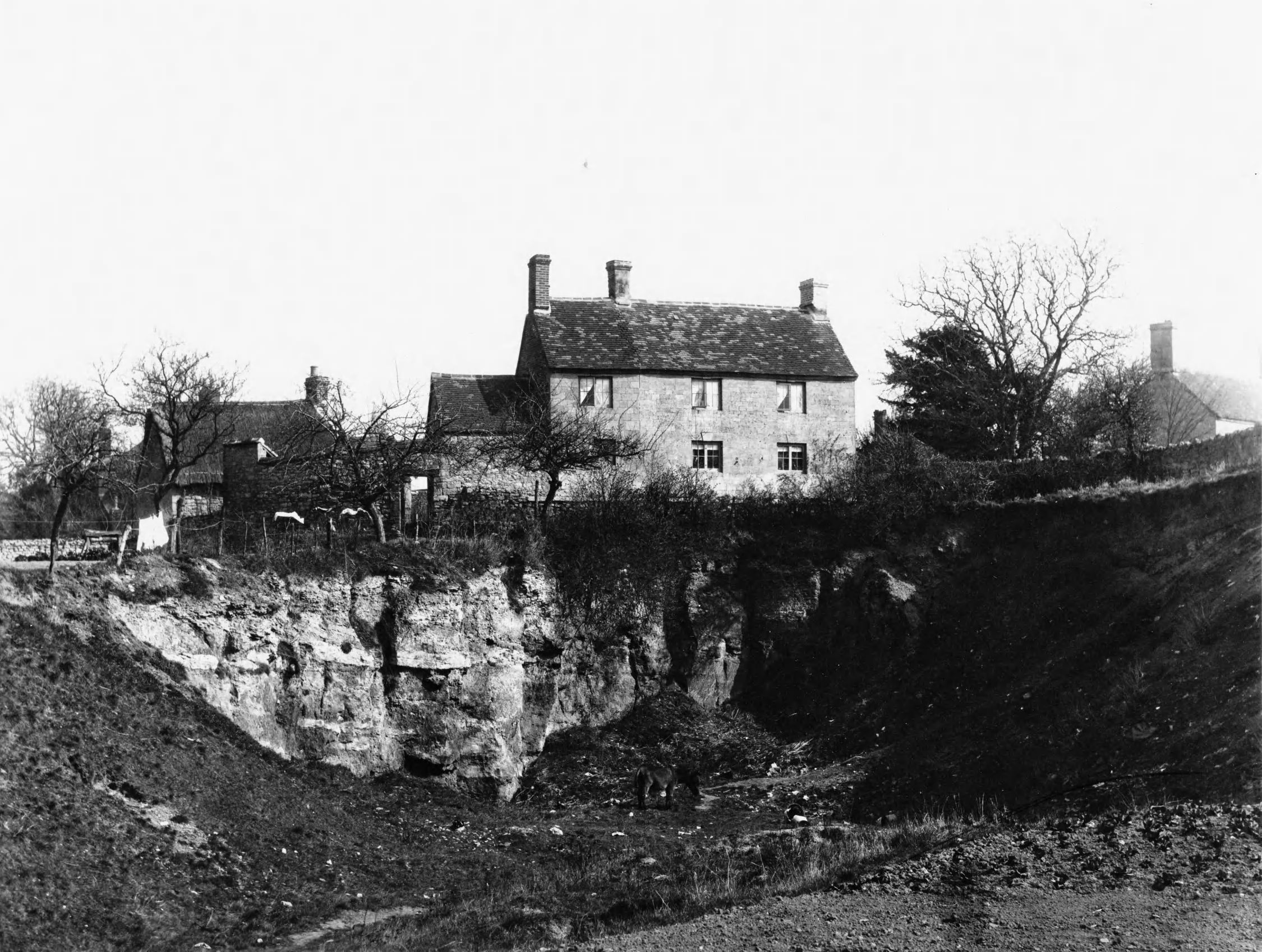
Possibly Taylor’s pit – looking towards Shotover around 1900.
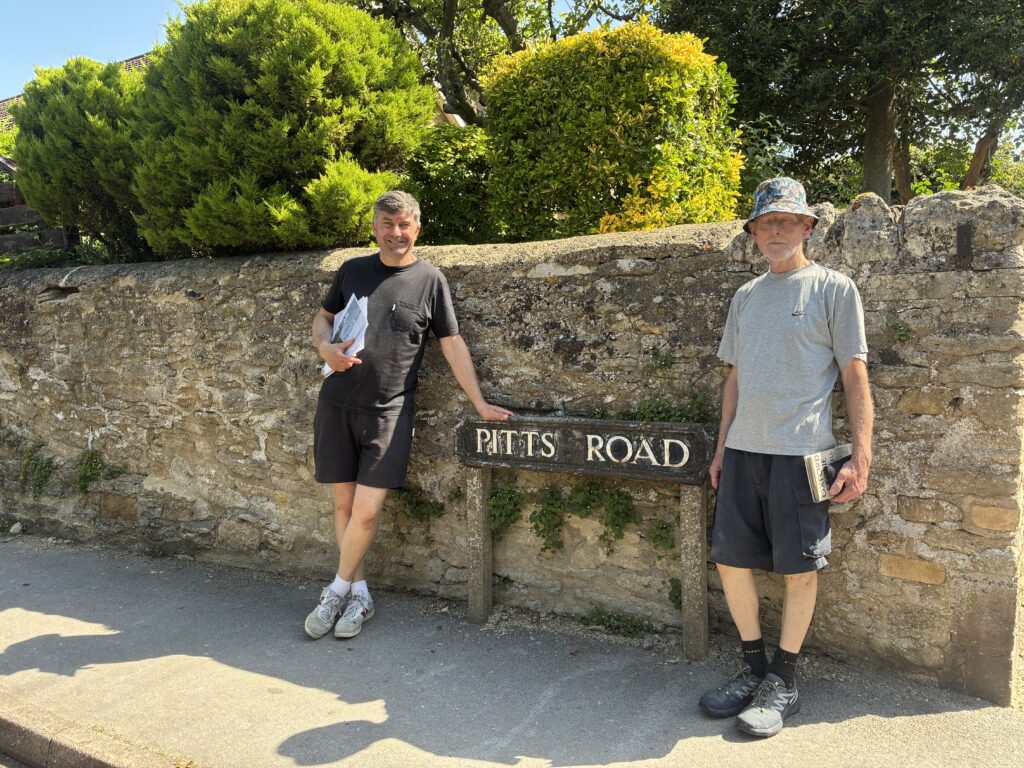
Maurice and Lawrence at Pitts Road, in front of the many walls in Quarry made from rubble stone.
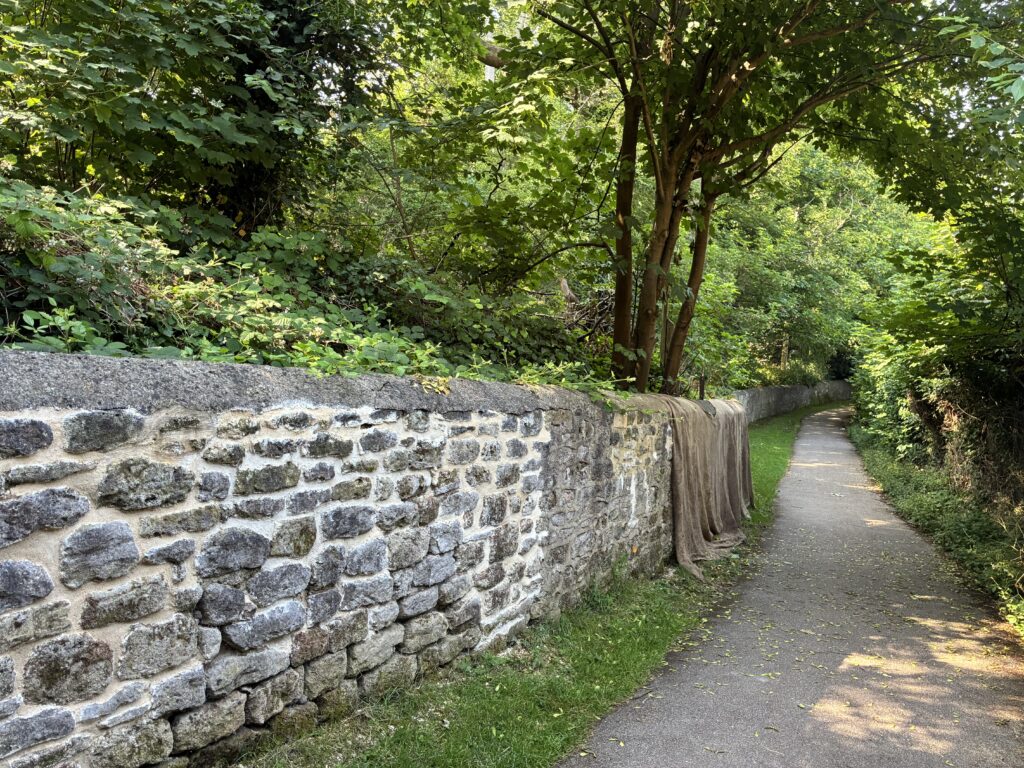
Church Walk where Lawrence and the ‘Friends of Quarry’ have been repairing the old wall.
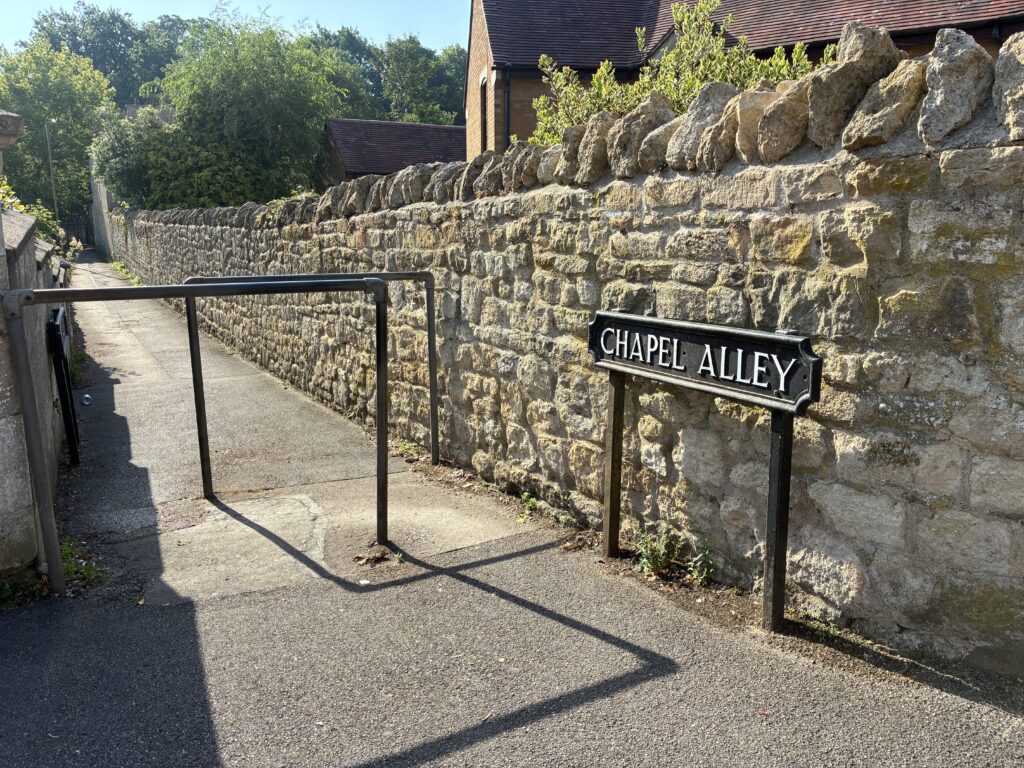
The old funeral path led in a straight line from Quarry to St Andrew’s Church in Old Headington. When it was blocked off, the Methodists built a chapel in Quarry hence the name here. In response Bishop Samuel Wilberforce built the Anglican Holy Trinity Church on a site straddling two pits. And then a school. He thought the Headington ‘roughs’ as they were sometimes known needed guidance. But there was much opposition to this imposition at the time.
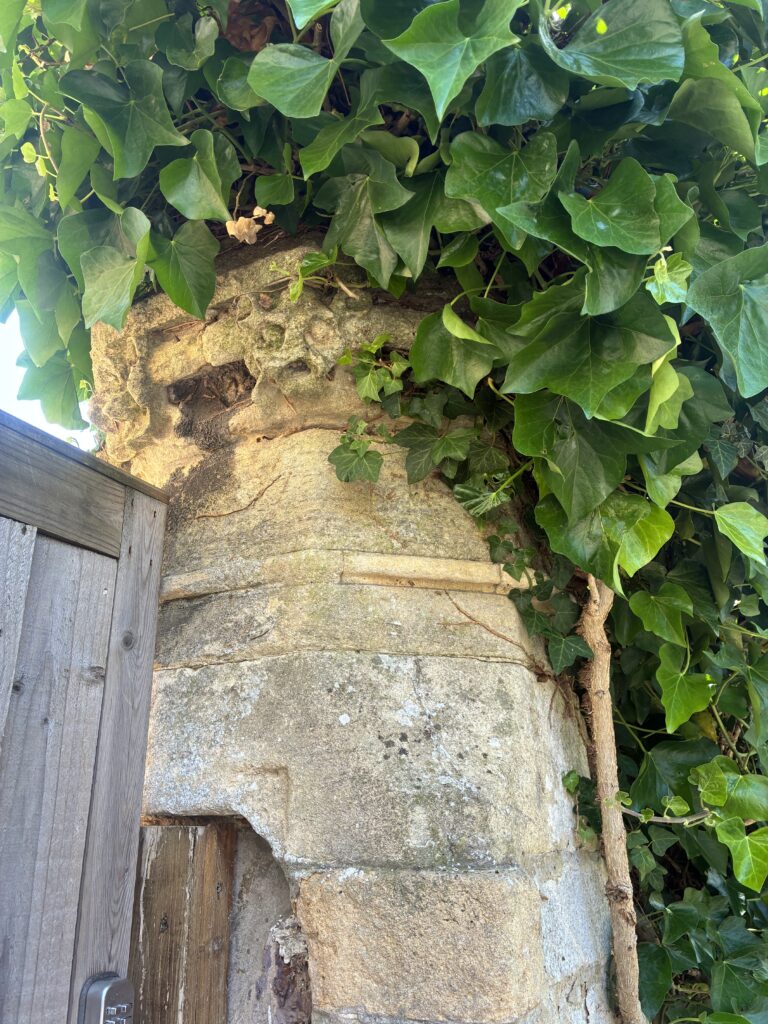
Bits of sculpted stone found hiding on a back gate.
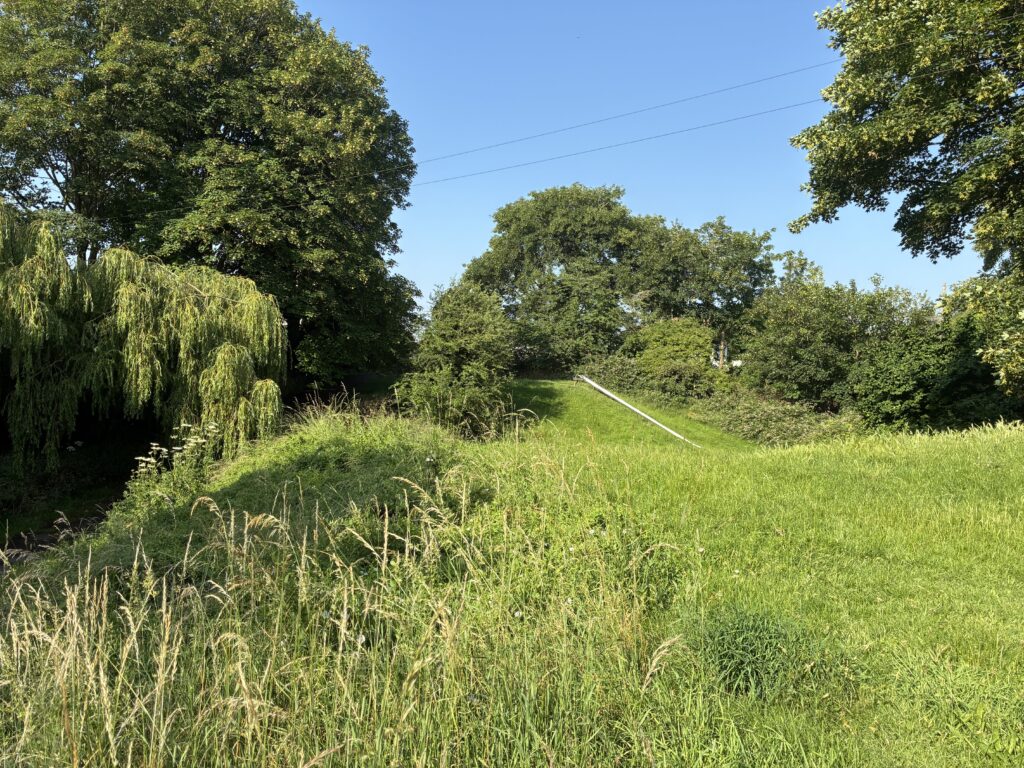
Quarry Hollow Park – once Blondin’s Pit.
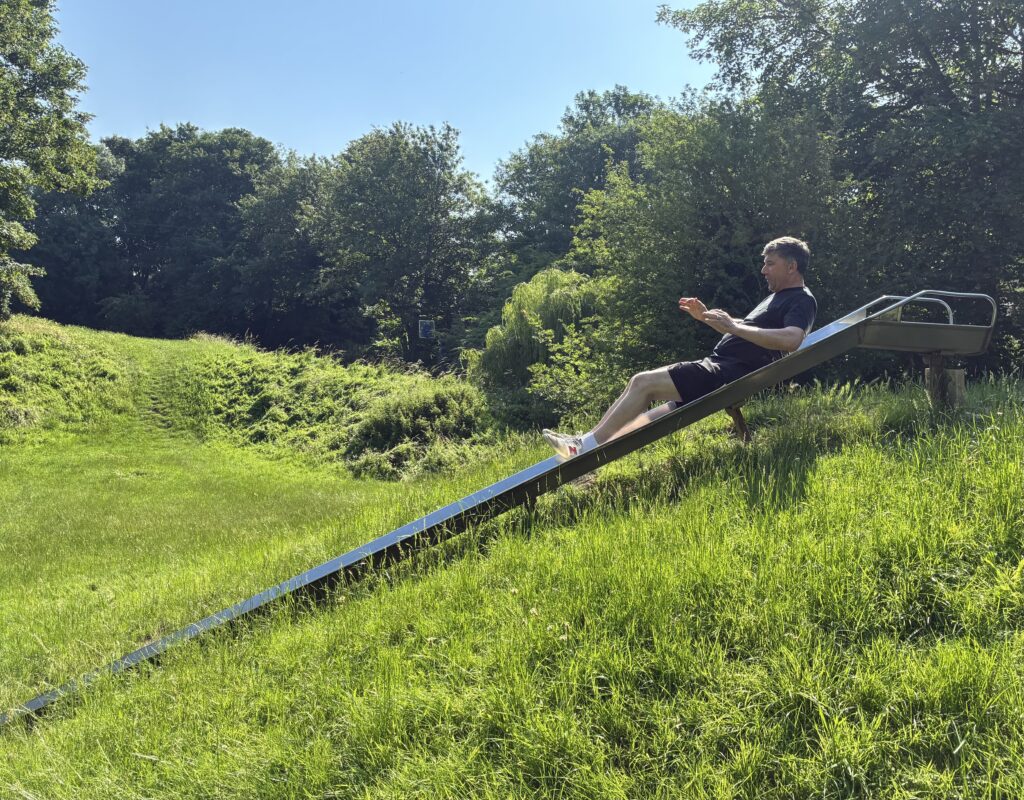
Now a playground.
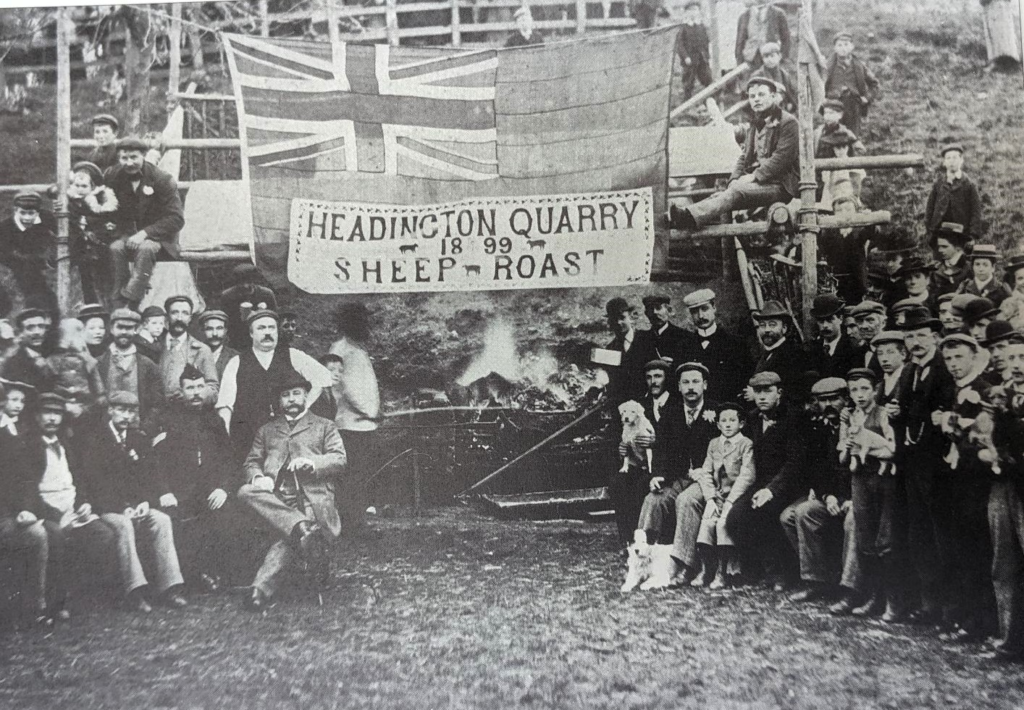
Sheep roast in 1899 – held in the pit next to the Six Bells pub.
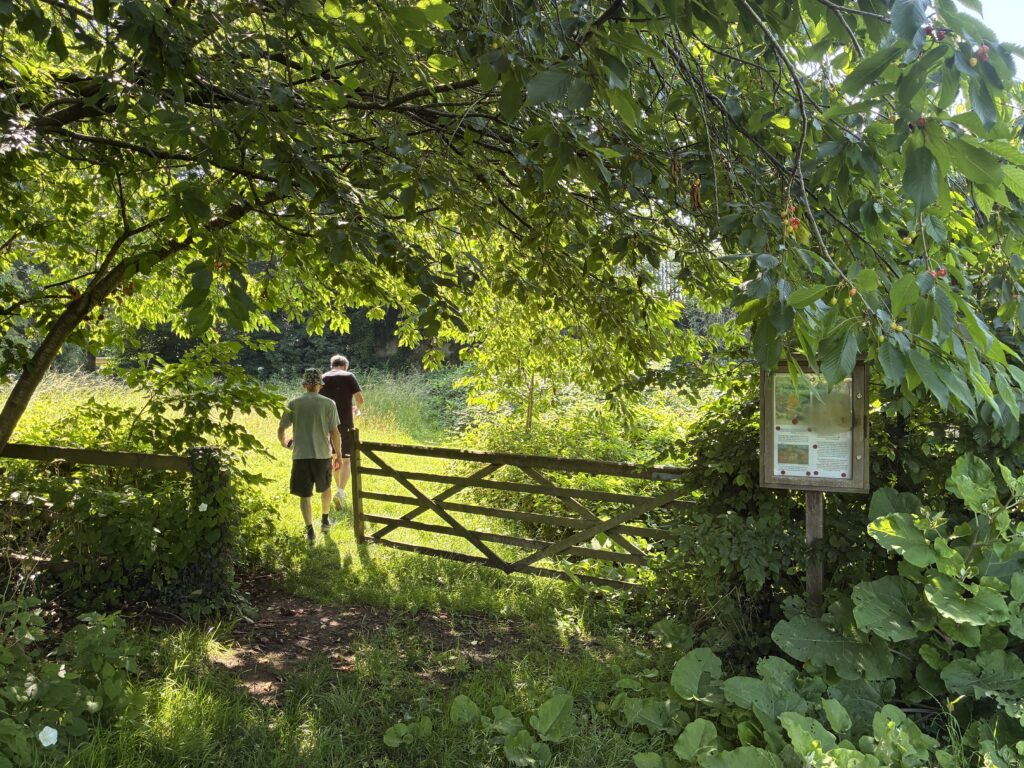
Entrance to the old Magdalen pit as it is today. It was the last pit to close in 1949.
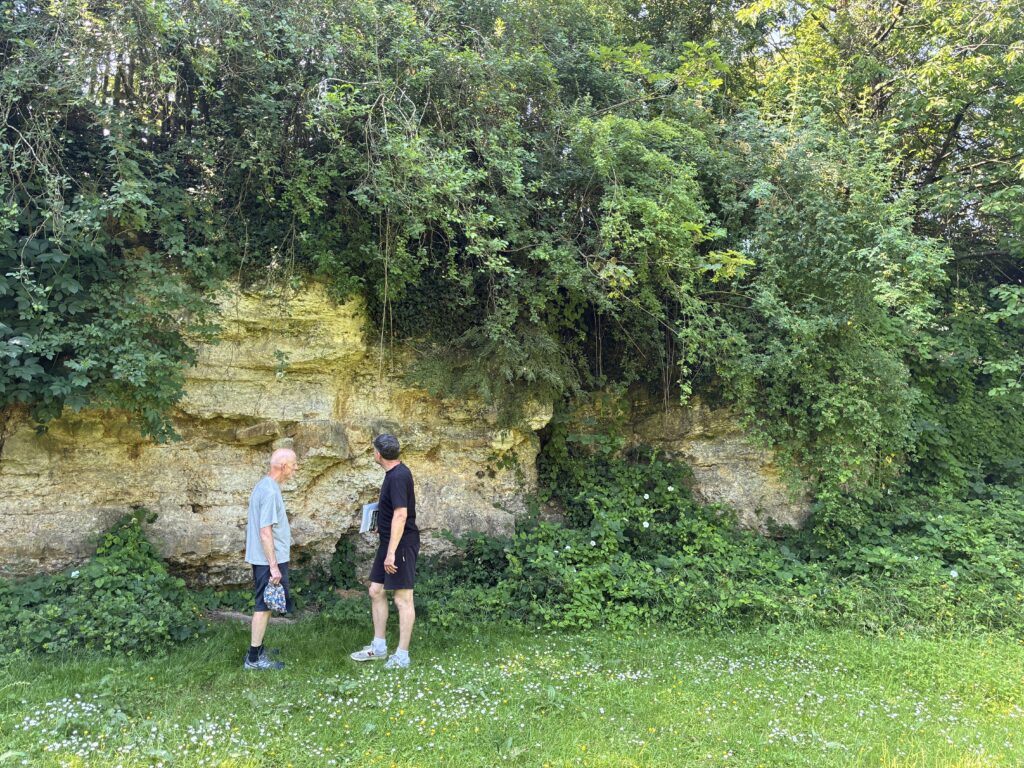
Where the old cliff face remains
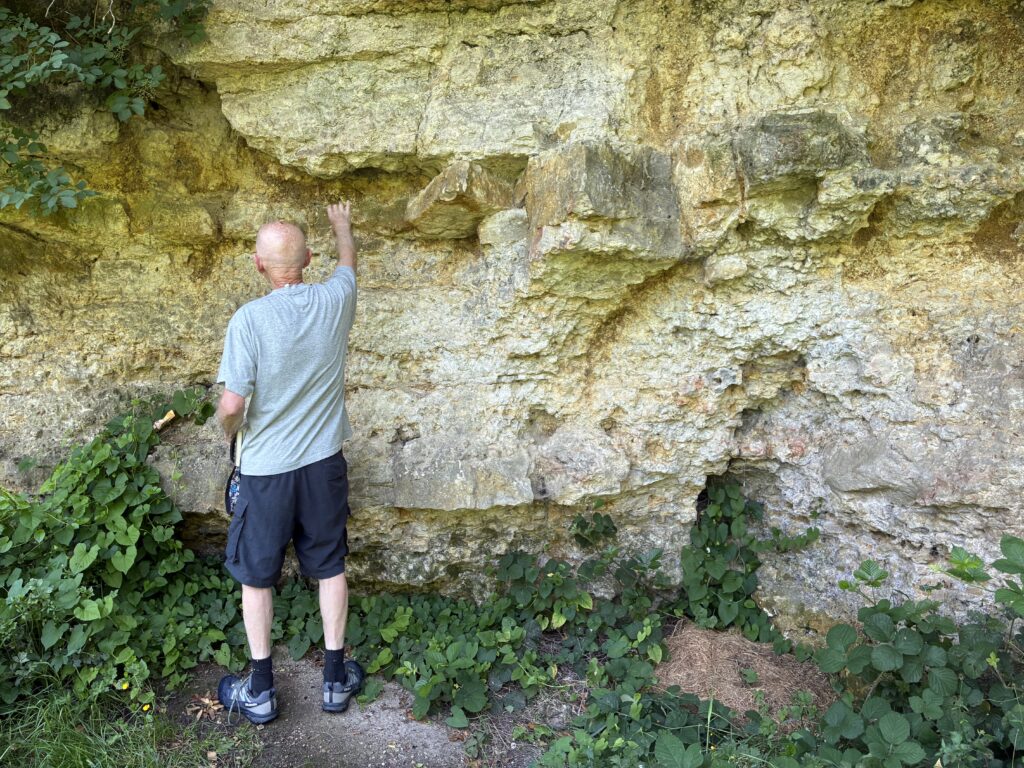
A seam of hard stone is clearly seen here.
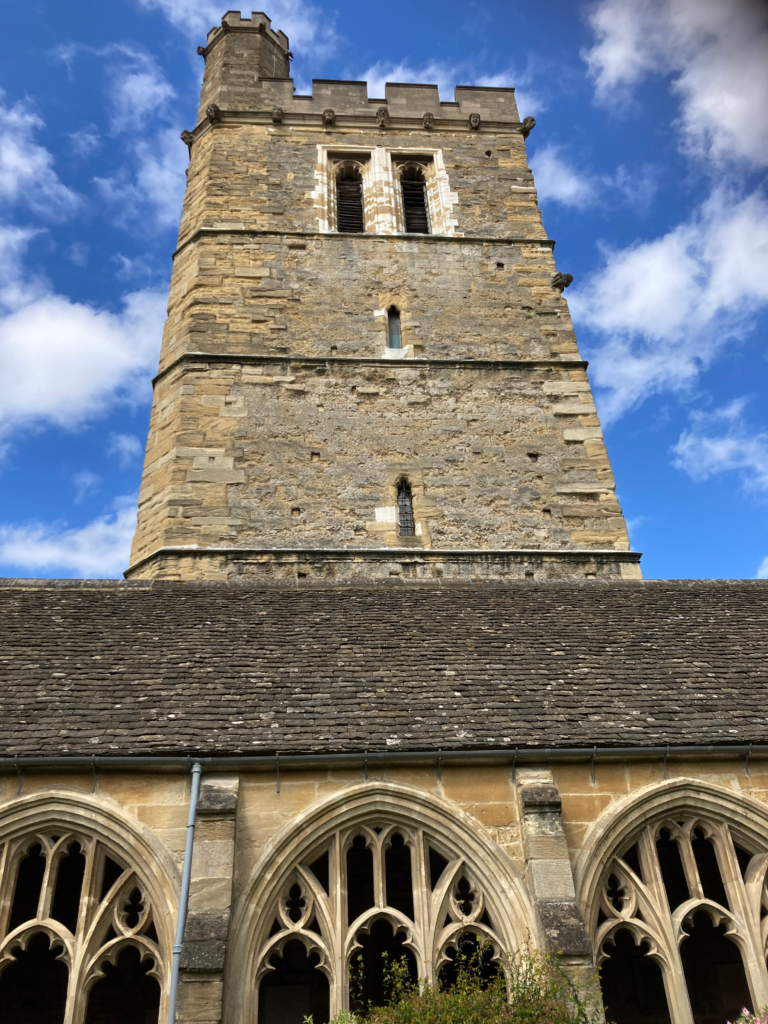
The stuff used to build New College Bell Tower, still in good shape.
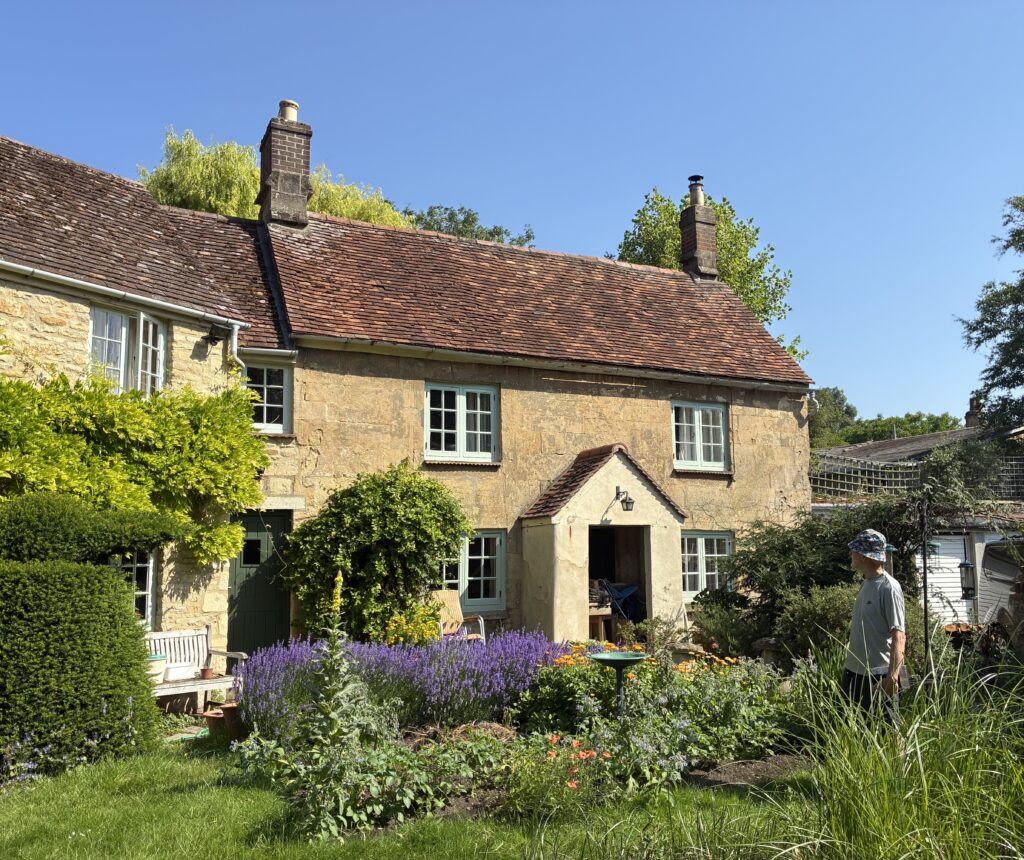
Lawrence’s house is constructed from ashlar – blocks of stone shaped to fit neatly together. It is one of the oldest house that survive in the village, built as an artisan’s cottage in about 1760. It uses the softer Headington freestone and some of the blocks are beginning to erode.
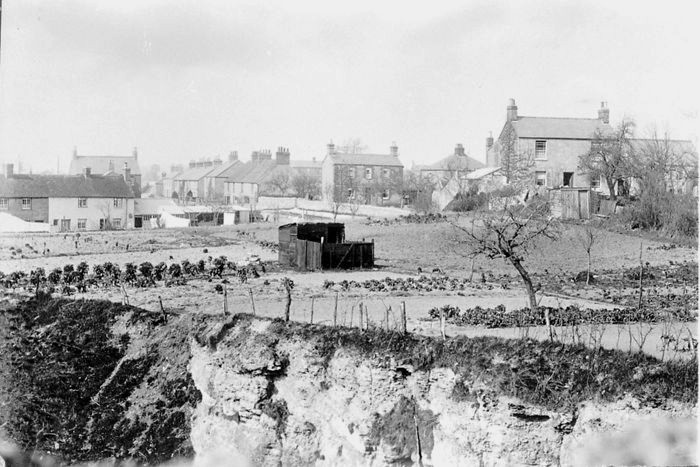
The view towards Pitts Road. My old house is the one with the washing hanging out in the garden on where Pitts Road meets Quarry High Street.
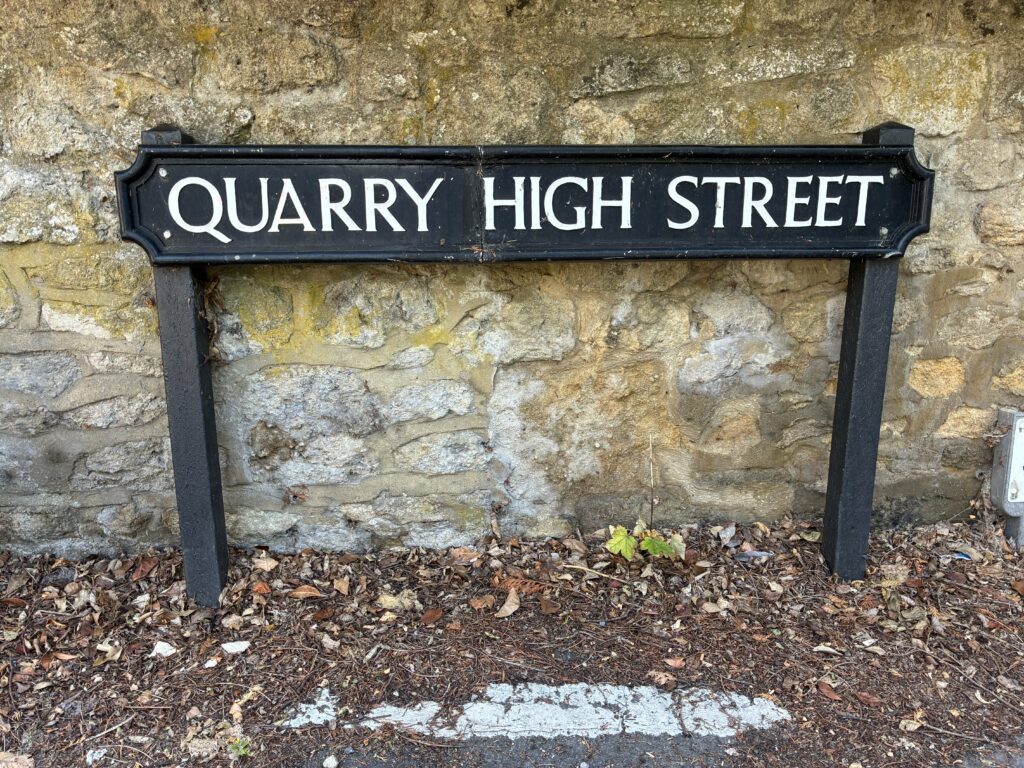
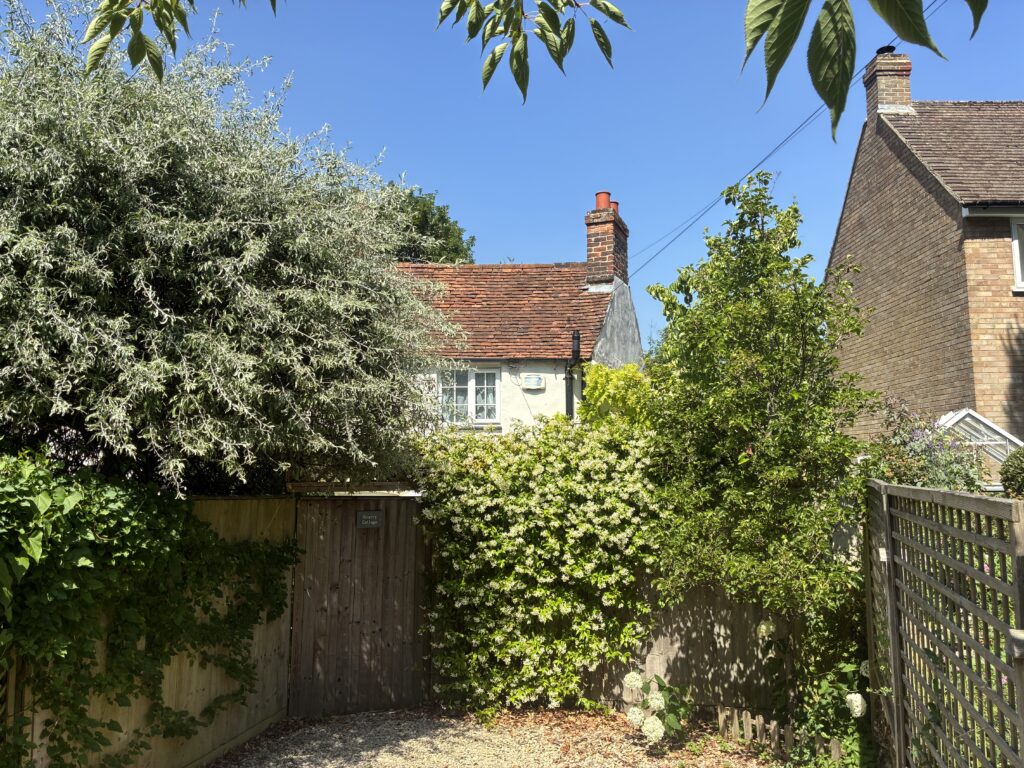
And as it looks today.
You may also like to read:
5 Comments
Join the discussion and tell us your opinion.
What a great way to connect the appearance of Oxford today to its past. A lovely tale weaving in your own history to that of the city.
Another lovely sketch of Oxford history with the Sausage signature brand of beautiful writing, personal connections and pictures. Thank you.
We think the child on the very left of the Sheep Roast picture is my Great Grandmother Ada, b. 1888 in Quarry. Her father David Clare seems to have been in trouble a fair bit, one arrest coming for being drunk and riotous outside the Chequers on Boxing Day while blowing horns, his defence seems to have been that it was Headington Feast and they were going to enjoy themselves.
Thanks for that. Been looking for Magdelan Pit, now found the way into it. Vair interesting. Keeps it up.
I live nearby. When I worked at the Churchill Hospital a few years ago, I used to commute through Headington Quarry to avoid the stress that London Road puts you through every morning – even if you are fortunate enough to not drive to work. Few things can beat its peace, beauty and singularity. I have always wondered why the streets are so irregularly shaped and now I know why. OX3 holds some of the City’s best well kept secrets, and two of my favourite spots. HQ is one of them, of course!
Thank you very much for such a lovely story!