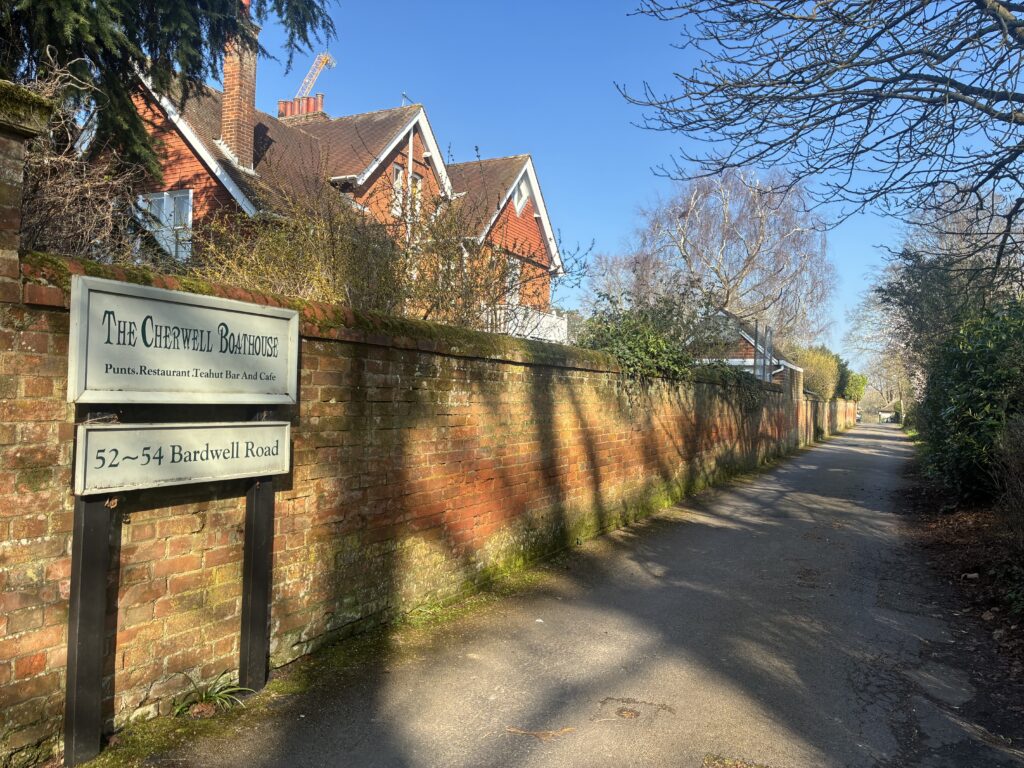
Today there is a hint of pale spring sun as I cycle north of the city to the Cherwell Boathouse. It’s a lovely ride. Through the Victorian villas of Park Town, gardens swathed in their first pink blossom. Past a line of excited children in blue and yellow sports kit heading for morning games practice on the pitch-perfect playing fields of the Dragon School on Bardwell Road. And then down a leafy lane to the banks of the River Cherwell. And here just over a mile from Oxford’s busy central crossroads, I find myself in the bucolic setting of the pretty gabled Edwardian punting station, (now cum restaurant) built in 1904 and still going strong.
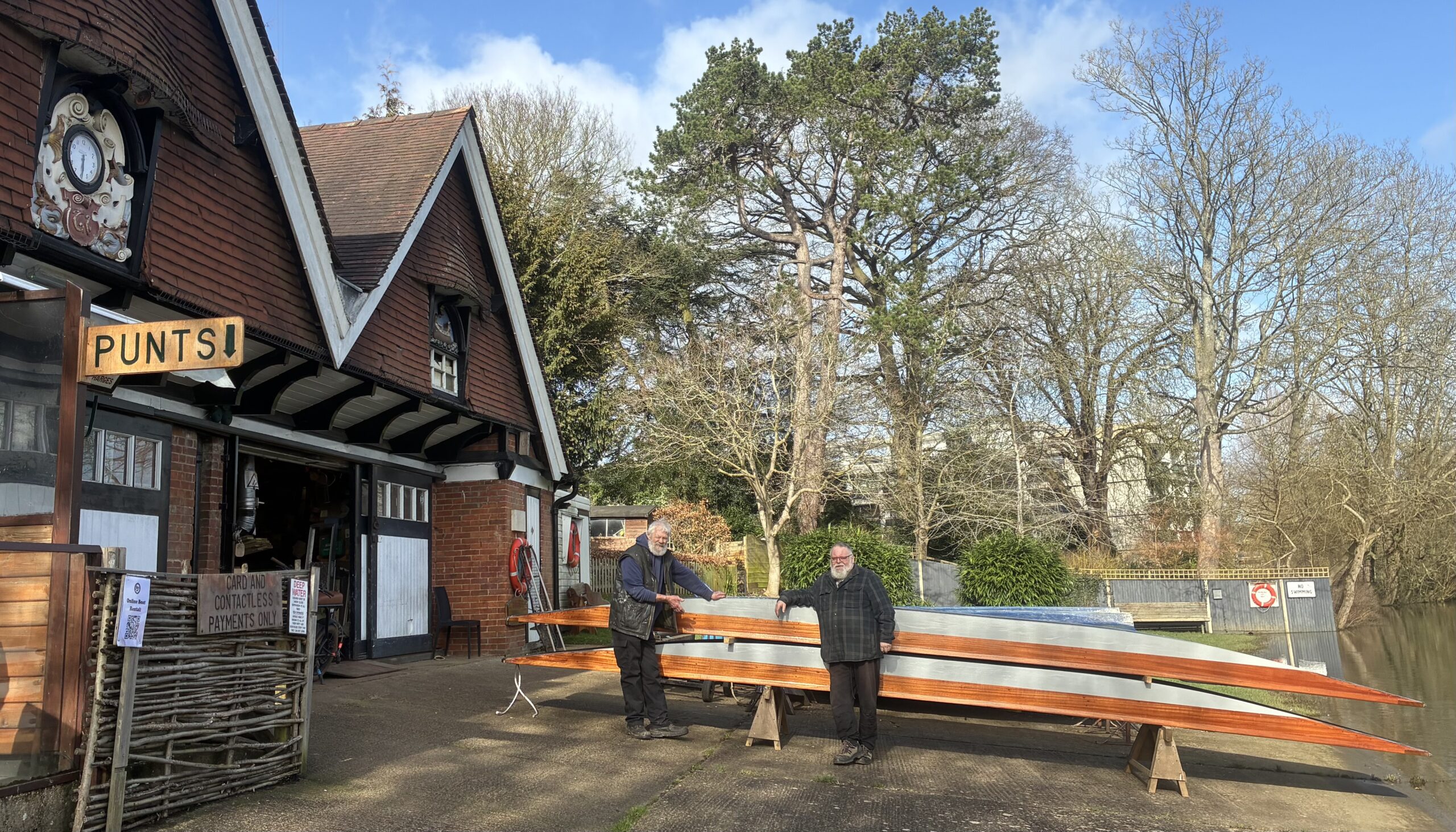
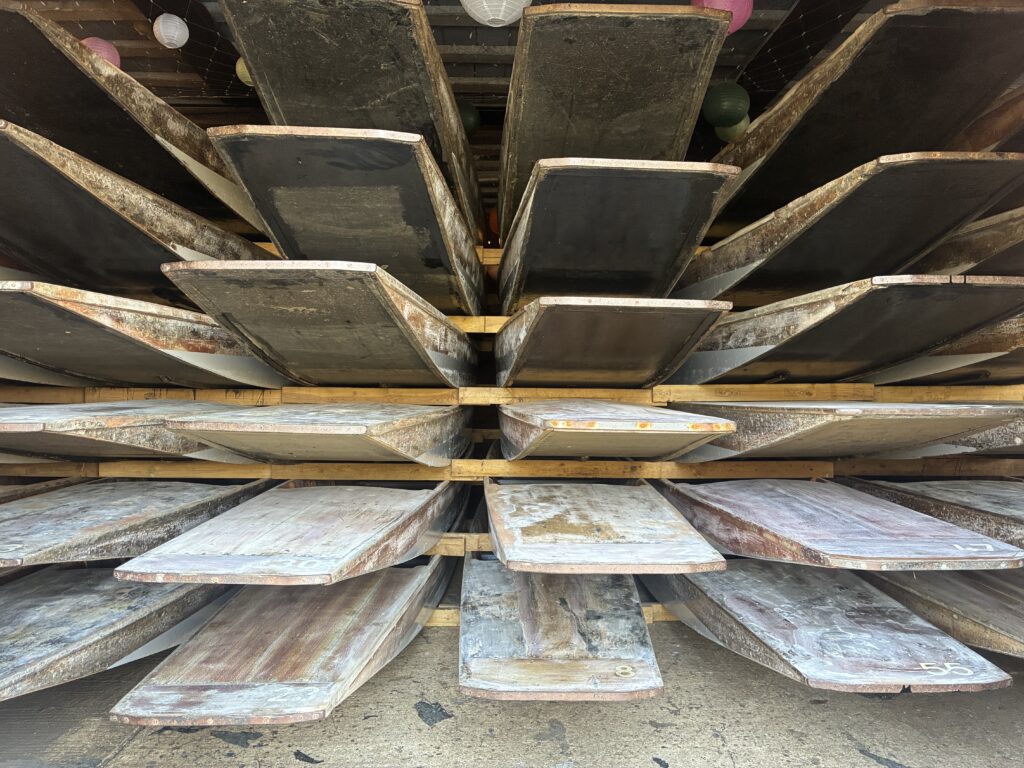
I’d arranged to meet Roger Forster and Bob Dowling, the double act who look after the boating side of things down here amongst the willows on the edge of the water, still high and fast flowing from the recent rainfall. They are preparing for the upcoming punt hire season and there is much work to be done. For their fleet of flat-bottomed boats, stored over winter in a large brick outbuilding need sanding down and varnishing, repairing, and repainting. And there are new punts to be finished, their workhorse shells made strong for a summer of bumps and battering. But then they are old hands at this kind of thing. Because they have both been at it a very long time.
Roger was just eight when he started helping out here in his summer holidays. Collecting cushions, paddles, stray punt poles, that kind of thing in return for a bit of loose change. 50 years later, older, a little larger and now bedecked with a long, braided beard he has his own office. And there’s not a lot he doesn’t know about these unique craft.
Punts were originally used as working boats, he tells me. When rivers were shallower, not dredged and using a pole was the best way to manoeuvre heavy loads along their gravel bottomed beds. They were chunky, heavy, short and square and constructed from oak and elm. Pleasure punts, the lighter more delicate version we know today, ‘the saloon punt’ for four passengers looking inwards, leaning against backrests and specially fitted cushions wasn’t conceived until the 1880’s when people had more time for such things and the railways gave them easier access to towns like Oxford. Up until 1900 the place to hire punts had been to the south, on the river at Folly Bridge. But after the University installed the rollers at Parson’s Pleasure to provide access past the weir, punting on this part of the Cherwell became instantly viable. And so it was that Thomas ‘Timmy’ Tims, the Oxford University Boat Club waterman, already with a boat building business at Long Bridges decided to open a landing stage on Bardwell Road and erect the boathouse we see today. Roger shows me his initials T. T. carved into a charming decorative panel of boats and fishes at its centre and those of Tom’s granddaughter, Sally Walker into the foundation stone. With easy access upstream to the Victoria Arms (the site for 600 years of the rope punt Marston ferry) and downstream to the University Parks and beyond, Tims’ Boathouse, as it was affectionally known, remained in the family until the 1960’s when it was bought by Tony Verdin, whose children still own it today.
Roger likes to think he can teach any able-bodied person to punt in a matter of minutes. “It’s not that difficult,” he says. You can hire a chauffeur to do it for you, but it is not something of which he approves. “I liken it to going ten pin bowling and getting someone to throw the ball for you. It’s a big thing in Cambridge,” he adds. “But there the river runs through the backs of the colleges and the chauffeur acts as a tour guide – the geography is different. It makes more sense.”
And what about the contentious issue of which end to punt from?
As it turns out the two university towns use different types of boat.
In Oxford the punt has a deck at one end, (originally with a hatch to store a bailer, fenders, sponges and the like) and an open end with a rope from which to punt from. A Cam punt has a deck on both ends so there is no option but to punt from the deck. Back in the day Oxford students maintained the reason for this was Cambridge lady punters liked to be higher up in order to show off their ankles, being of lower moral standard. But Roger thinks the answer is probably more prosaic.
“Over in the flatlands where the water is shallow, being higher up gives you a better thrust,” he says. “In Oxford it helps to be nearer the bottom of the river as the river can be quite deep here. Having a lower centre of balance gives you a better advantage for punting.” So now we know.
Bob Dowling built his first punt in the early 1980’s, in a floating shed that for a while passed as a boatyard on Port Meadow. A carpenter by trade, he’d been called on to stand in for the resident boat builder who had broken both ankles on the same day as a local University physicist put in an order for a punt to be built for his boathouse in Summertown.
“I was being given instructions from the back of the man’s Triumph 2000. He had both legs in plaster and they were sticking out of the windows,” Bob chuckles. “It was hilarious.”
But on the back of fashioning that one punt, Roger, an old friend, asked him to join him at the Cherwell Boathouse. Making the boats. And like Roger he has never left.
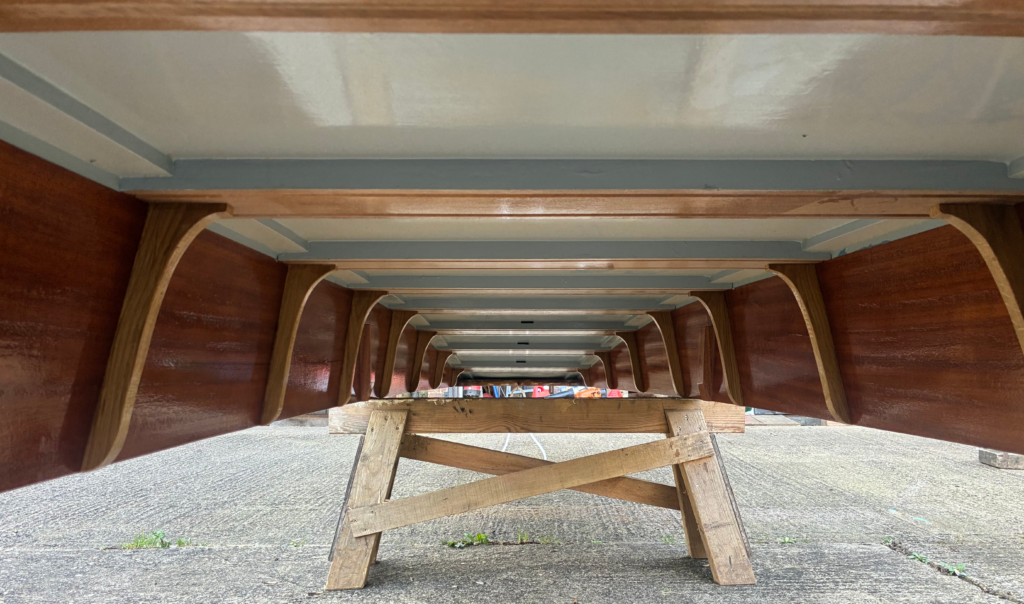
Now 70, he has constructed all 68 of the fleet here, each with his signature diamond carved into the prow. 24 feet long and 3 feet wide, the frame is built like a ladder, broad cross pieces called ‘treads’ joining the two sides together. Bob and Roger have developed a new technique for making the bottom. Instead of using planks of soft wood, which expand, contract and leak, they use overlapping pieces of marine plywood. Lloyds registered apparently. Made purely for boats, with no holes or gaps anywhere. And though they use templates and jigs along with other modern tools, they have stopped short of making fibreglass punts like many of their neighbours.
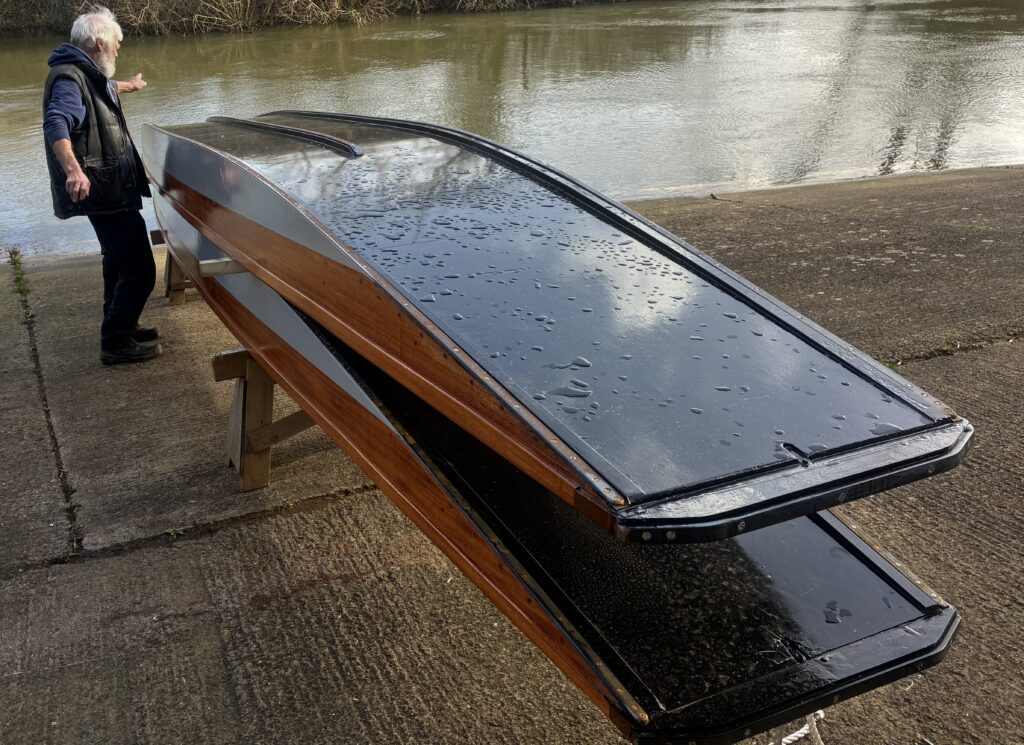
There are two elegant new punts standing out on the landing stage. Their mahogany sides shiny with new varnish, the ply freshy painted in Atlantic grey. “They are the best-looking punts in Oxford without a doubt” says Roger proudly. I don’t disagree.
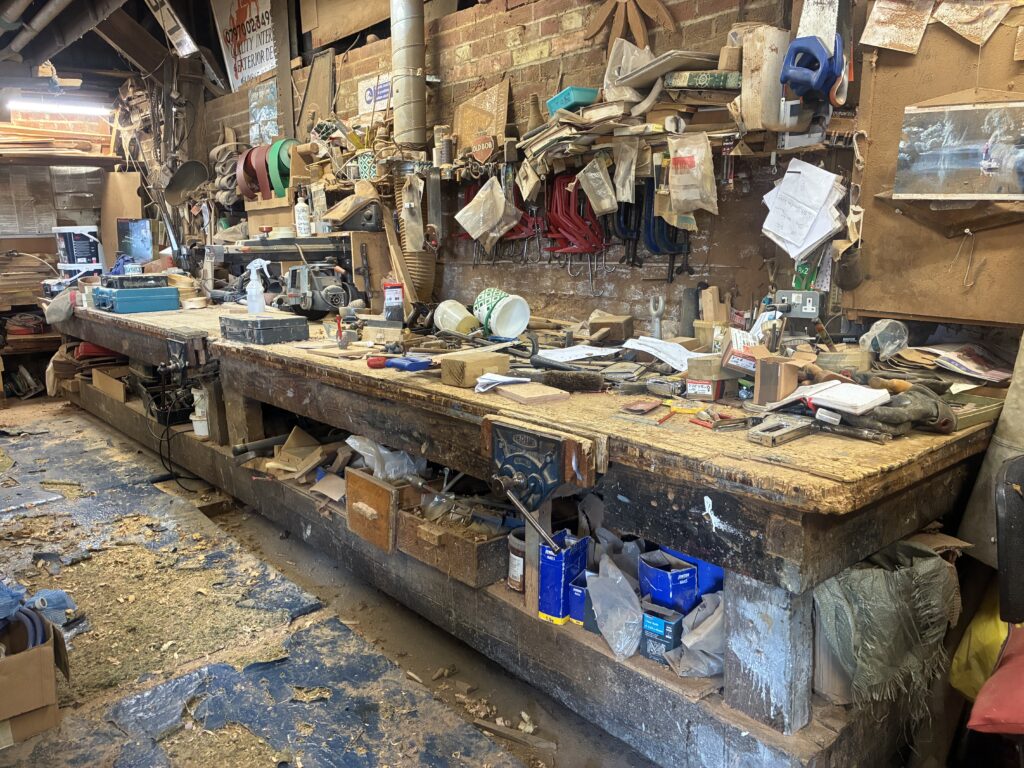
These days Bob has taken on an assistant, Steve, who cycles in from Bletchingdon every day. He’s hoping Steve, hard at it in the workshop when we are introduced, will replace him when the time comes. I notice that Bob’s hands show the wear and tear of a lifetime of working with wood, on hard cold floors, in all weathers. One of his fingers is missing. From an accident with an electric table saw, apparently. Steve’s fingers are long and slender in comparison.
“To think I gave up my life as a concert pianist for this”, Steve laughs, setting them all guffawing. I can see they all rub along rather well. They’ve got lots to laugh about. They like a bit of banter.
And there’s an extra incentive. As I take my leave and go to unlock my bike, Bob calls me back. He has spotted a cormorant flying above the river. There’s also a resident otter that likes to sit sunning itself on the pontoon. One of the joys of the job, he says. I can’t see Bob leaving any time soon. Technically he is the last one of his kind in Oxford. I hope the punters, soon to arrive to shatter the quiet that we have today, appreciate that.
Main picture: Bob and Roger in front of two new punts that will see action for the first time this summer.
Two new punts newly painted and varnished.
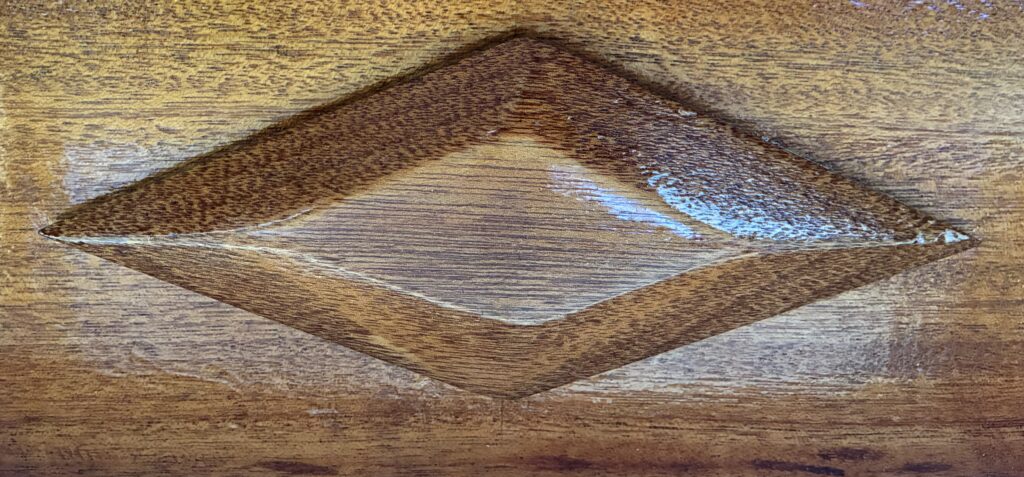
Bob’s trademark signature is on every punt he has made.
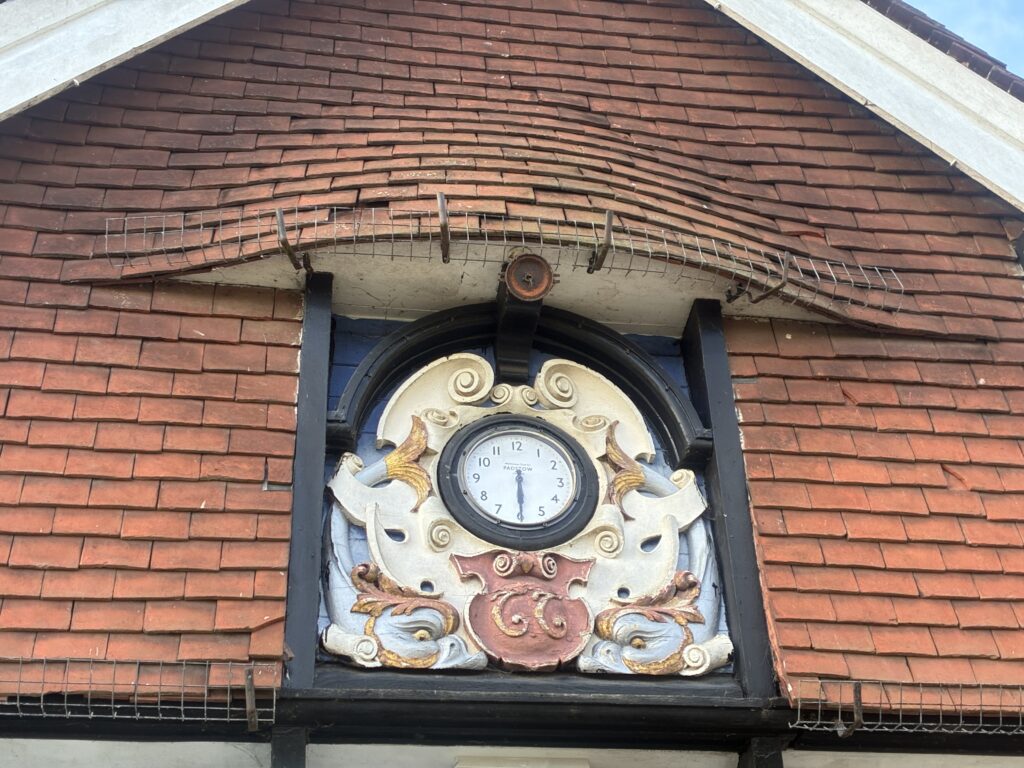
Thomas Tims initials are on the centrepiece of the building.
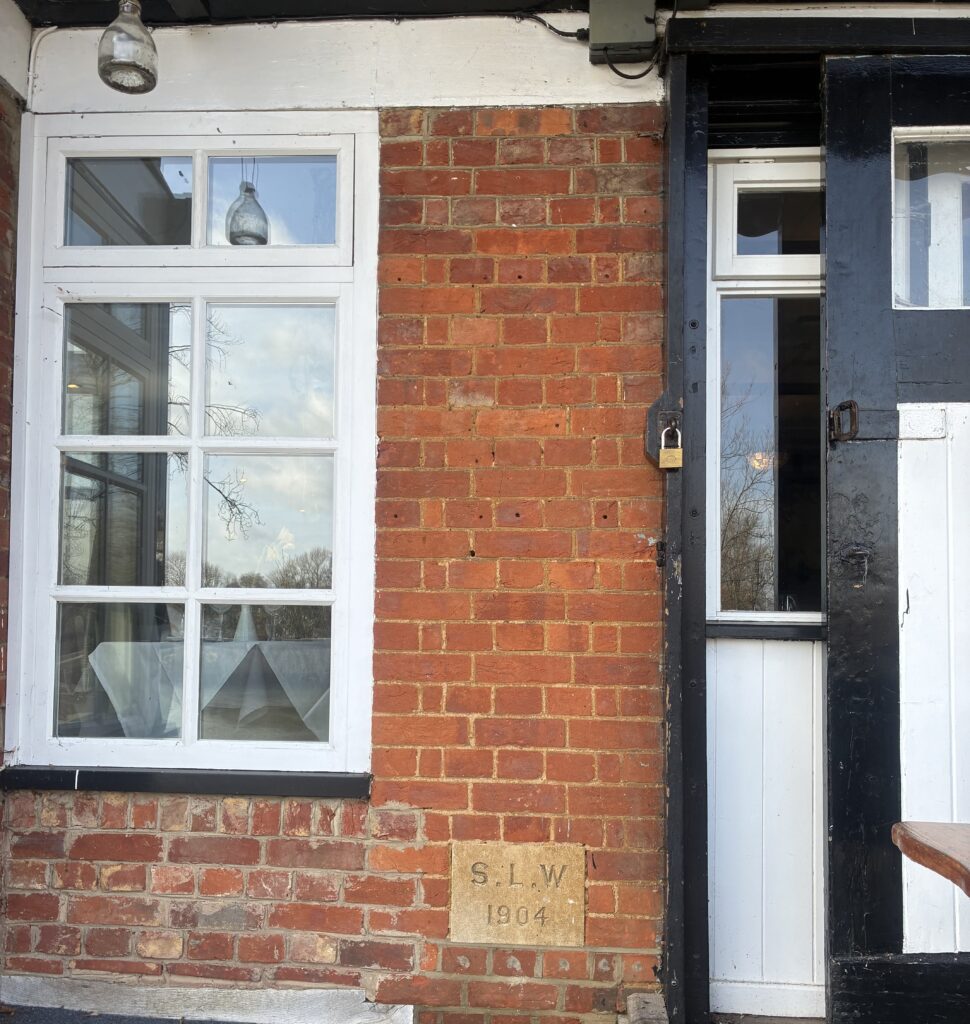
And those of his grand-daughter Sally Walker on the foundation stone.
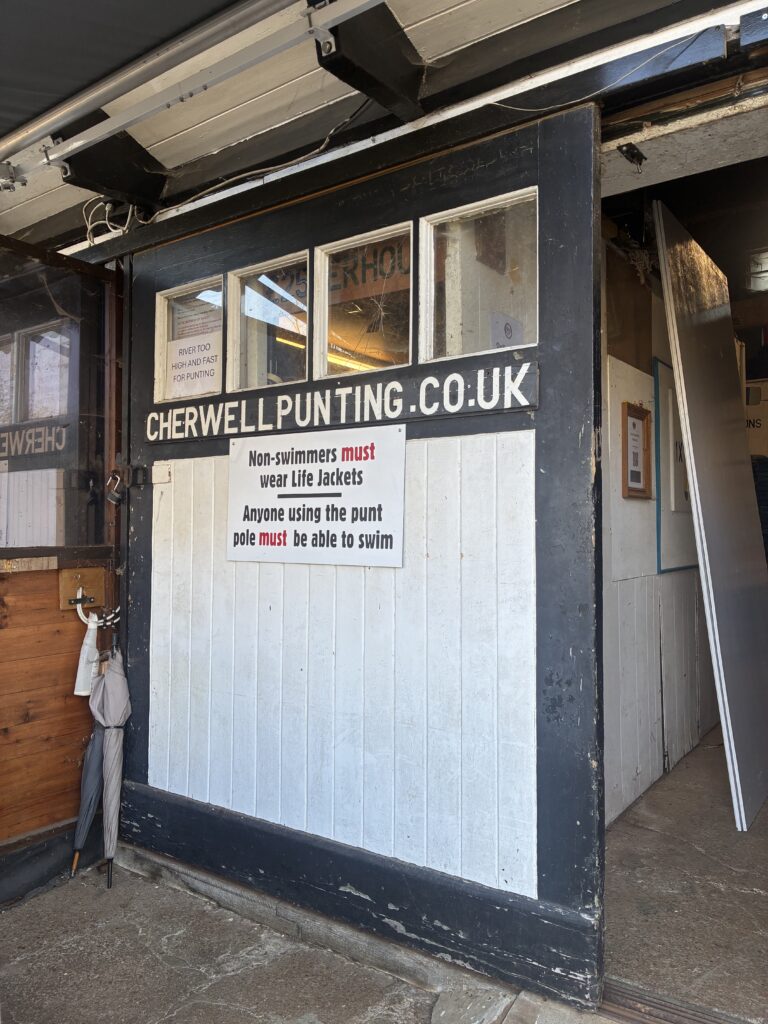
Roger’s office in the winter. In the summer he sits outside under an umbrella. You cannot book ahead at the Cherwell Boathouse.
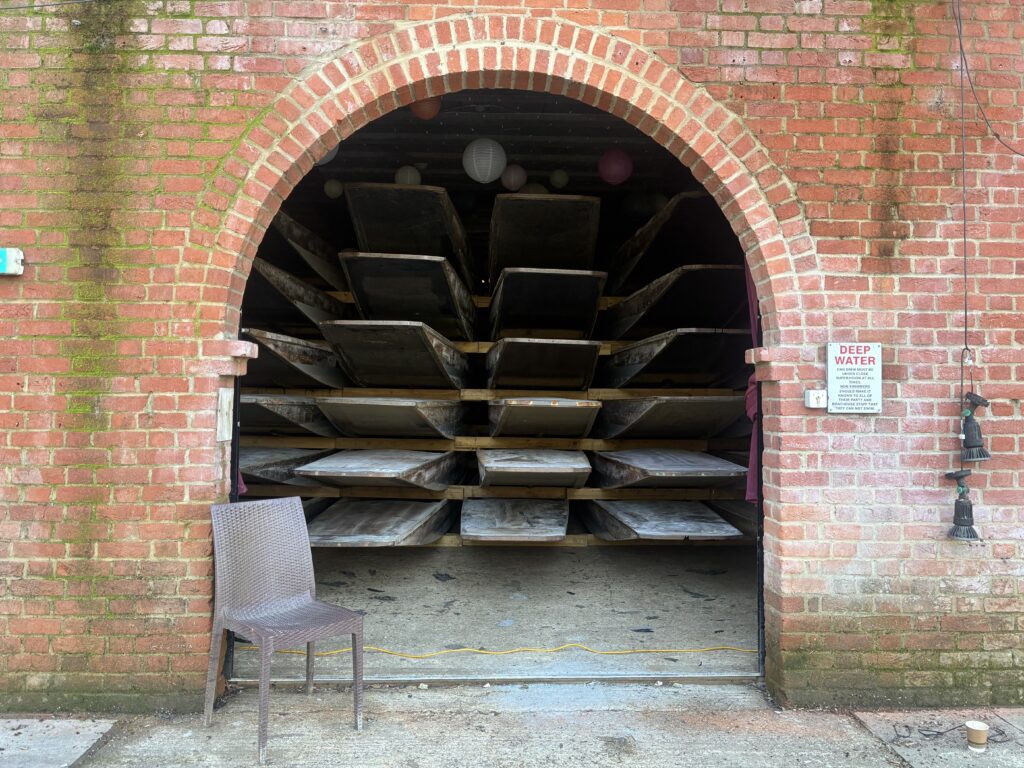
Winter storage
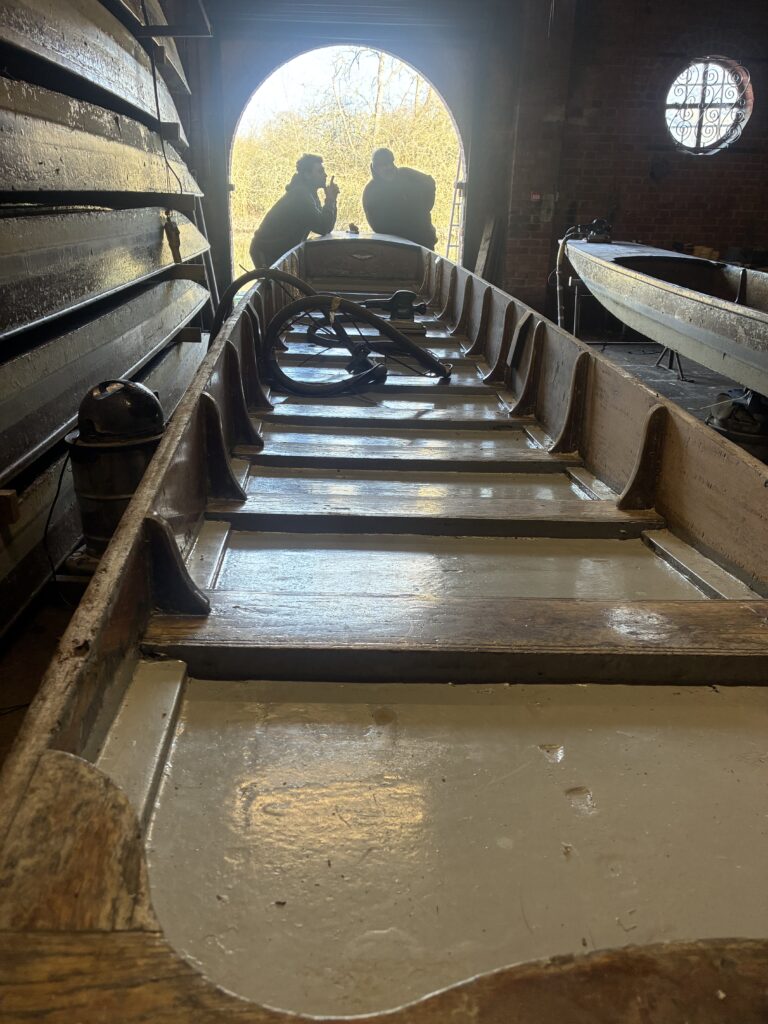
Sanding and painting
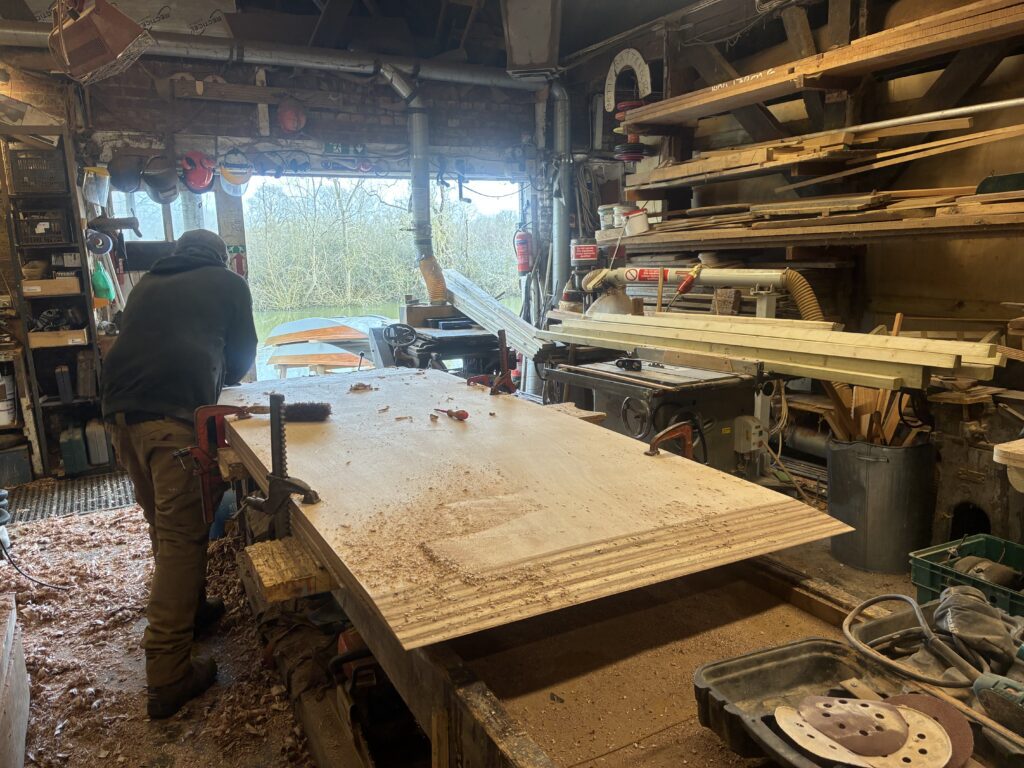
In the workshop making ready the plywood bottom for a new punt.
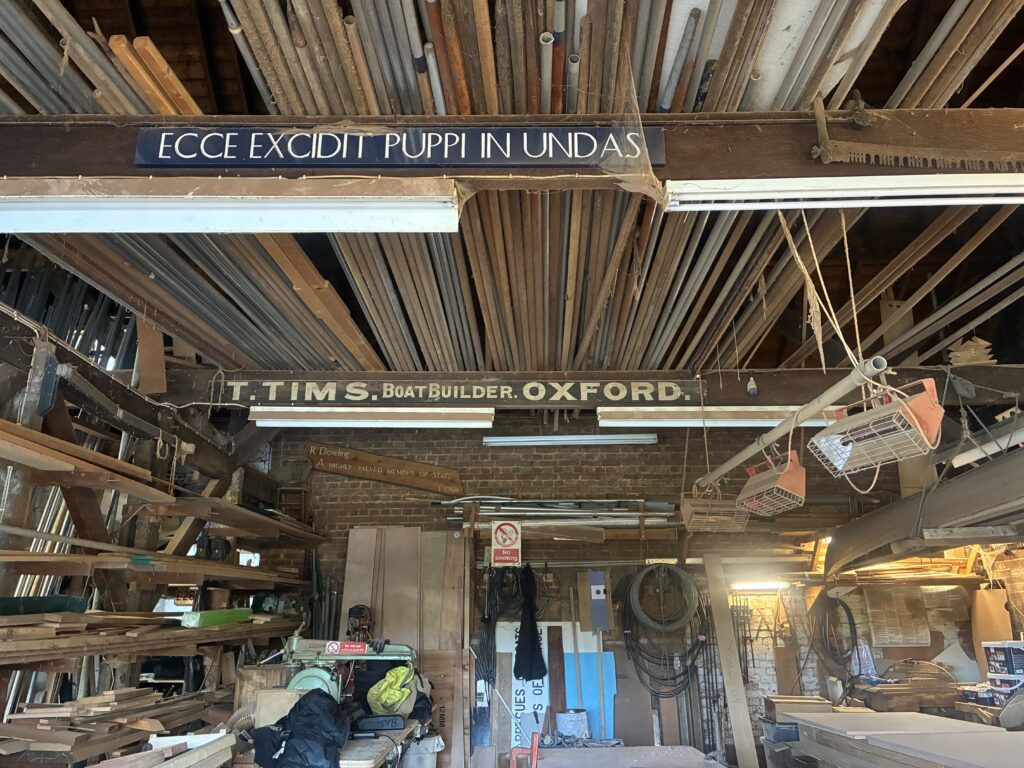
Bob carved the sign in Latin above. Taken from Book 5 of the Aeneid it translates as ‘Look he has fallen from the stern into the waves.’ Apt for where we are and what is a daily occurrence in the summer.
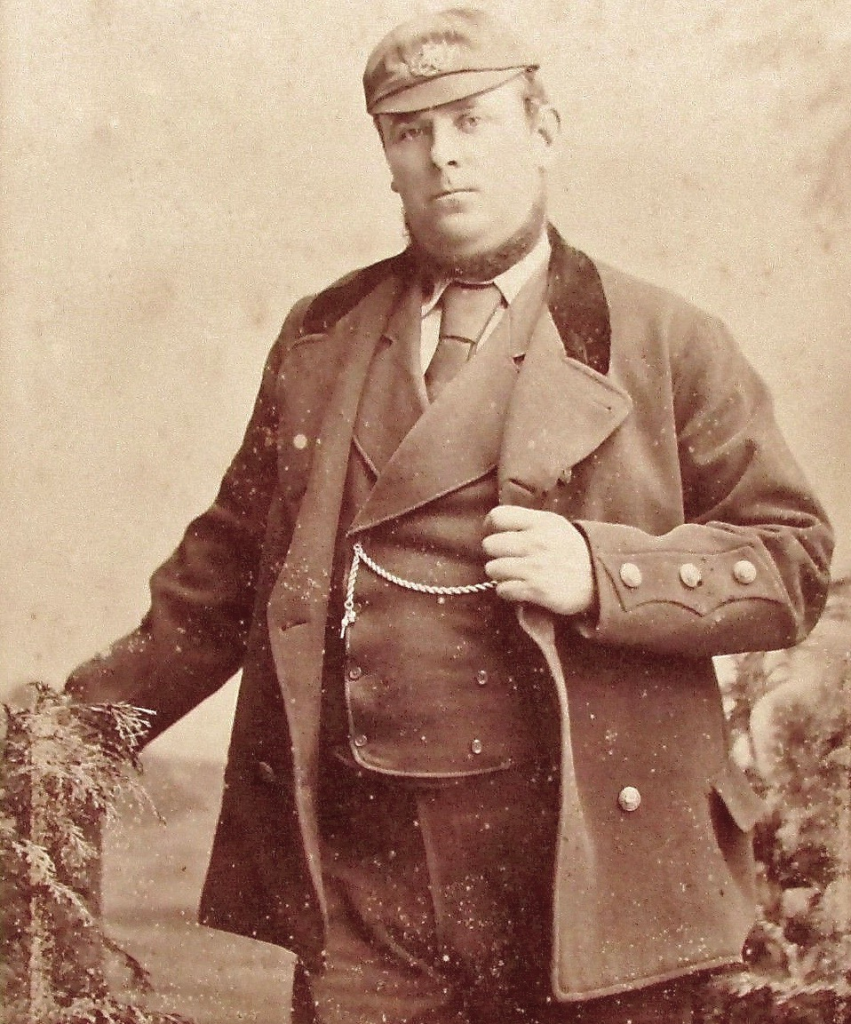
Thomas Tims, the Oxford University Waterman who built the Cherwell Boathouse in 1904. He also built a substantial house behind where he planned to live with his family. Sadly he died in 1908 before he had moved in.
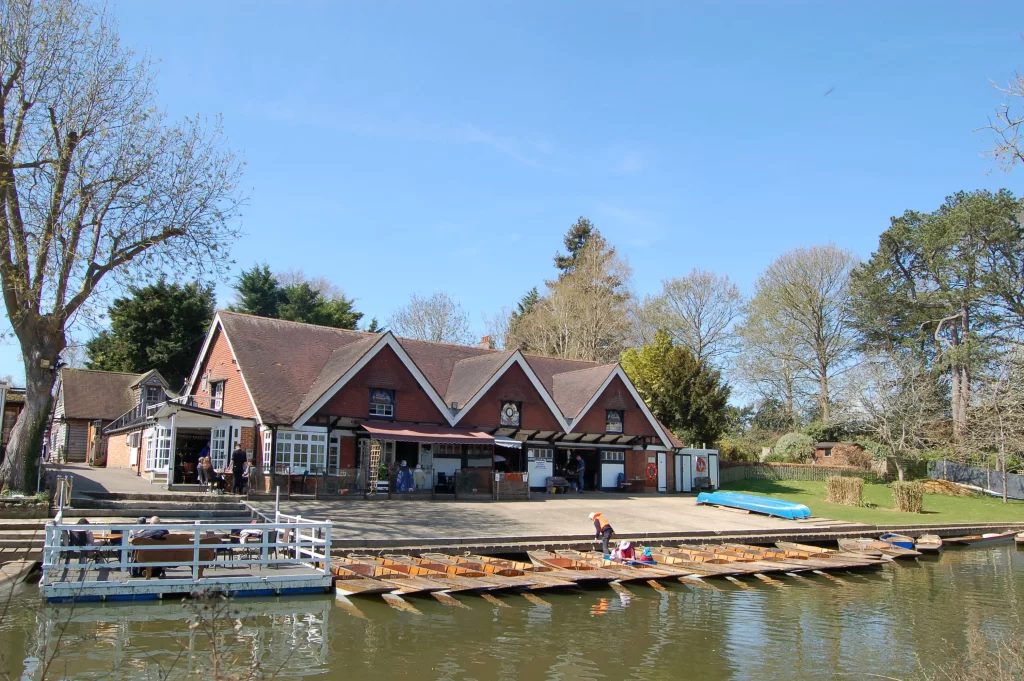
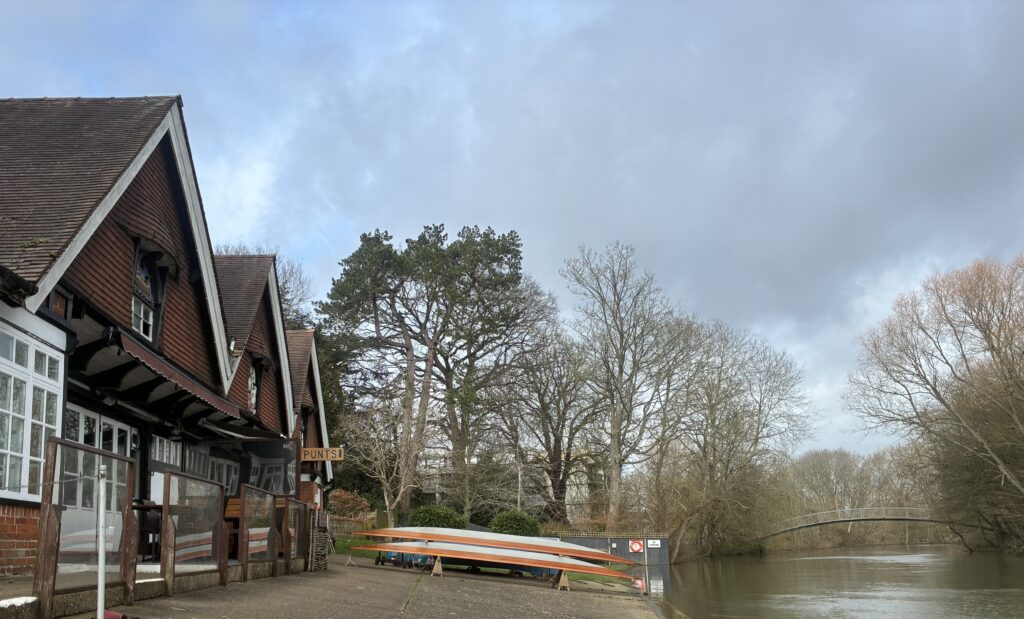
As the Boathouse looks later on in the season from the other side of the river, the wooden punts on the water and ready for hire. (Pictured April 2025)
You might also like to read.