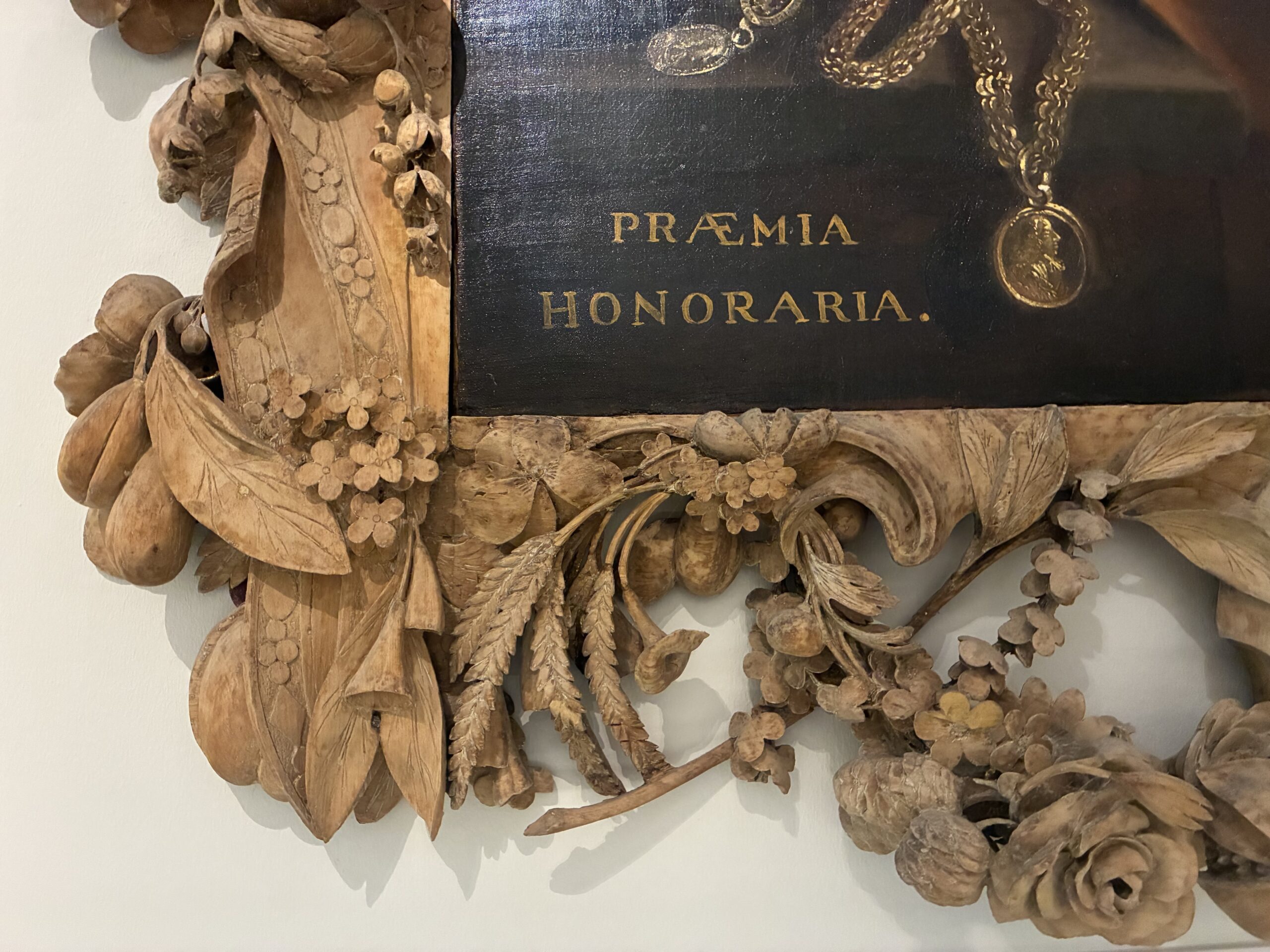
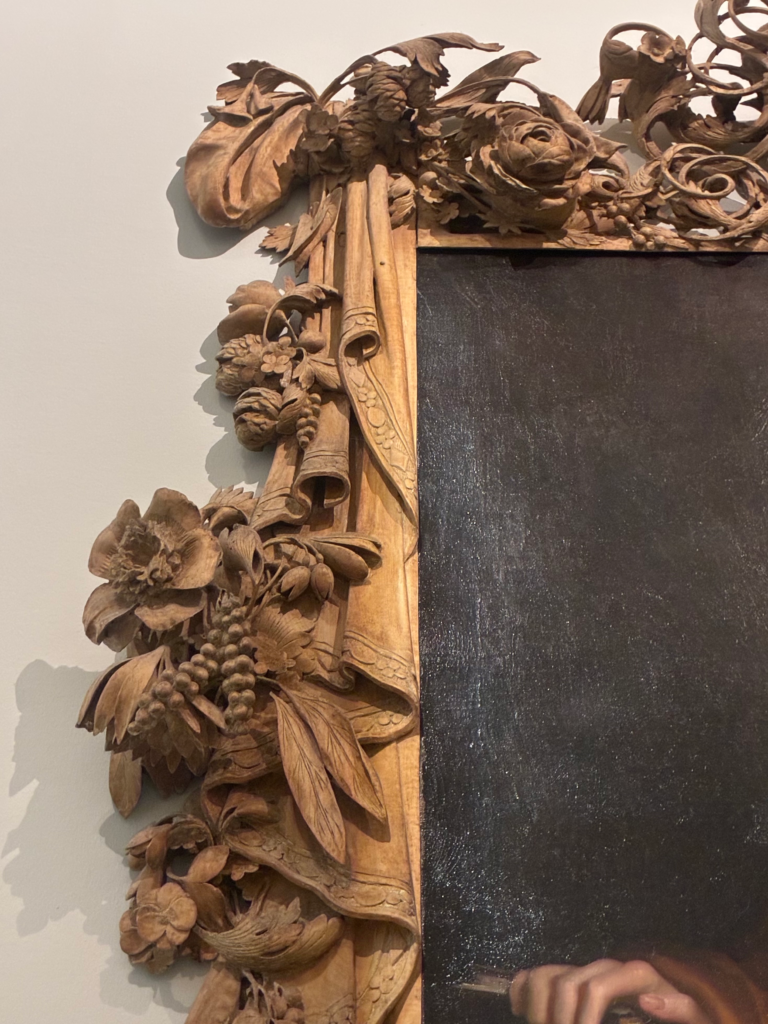
I have long been enchanted by a portrait that hangs in Oxford’s Ashmolean Museum. Well, not by the man in the picture exactly, though he happens to be Elias Ashmole, the founder of the place, glamourous in fashionable wig, velvet jacket, and lace cravat. But it’s the frame in which he sits that enthrals me. For so detailed and realistic are the flowers, fruits and foliage carved around the border that they seem as if they are still sprouting and suffused with life; so rounded and realistic are they that you might feel inclined to reach out and pluck them for the table. I’d not seen the piece for a while but the other day I had come across it again quite by chance. And it had undergone a restoration. The thick gold paint, applied apparently to the surround for an exhibition of other gilded pieces many moons ago, had been stripped away to reveal the naked wood. As it was originally intended. And so light and airy did this appear that I fell in love with it all over again.
The frame is the work of Grinling Gibbons, a 17th century Anglo-Dutch sculptor and artist who came to England in 1667 aged 19. Eager to take advantage of the creative opportunities made available by the Restoration of the monarchy and the Great Fire of London, he brought with him a knowledge of European methods, and the use of finer tools on softer woods like the lime (Tilia), in evidence on the work in front of me. Oak had been traditionally used for such things in England. But limewood gave him the chance to carve in the detail reminiscent of the Dutch flower painters of his day, to build up layers and so create in 3D the naturalistic and physical qualities he so cleverly demonstrates. The pale colour of the limewood also helped the dark backgrounds of the artwork stand out more visually. It wasn’t long before he was attracting commissions from the most powerful people of the day. There are Grinley Gibbons’ framed portraits of both Charles II and James, Duke of York (later James II) on the same wall as that of Ashmole. His work was being called ‘truly miraculous’, ‘stupendous and beyond all description.’ He was ‘an original genius’ and soon mooted as the ‘Michaelangelo of Wood,’ his efforts and those of his workshop of over 50 craftsmen displayed in the new St Paul’s Cathedral, Petworth House, Windsor Castle and many other buildings of note. He was a prolific sculptor in stone too.
And so it is not surprising that Elias Ashmole, a man mixing in the highest of aristocratic circles hired Gibbons, ‘the King’s Carver’ to create the surround for his portrait by John Riley. To be hung in pride of place in the building named after him. The first public museum in Britain opened in 1683 then housed in Broad Street (now the History of Science Museum) next to Wren’s famous Sheldonian Theatre. The institution that would secure his name in history.
But there is more to this story that meets the eye. Ashmole was the son of a draper’s daughter and a saddler. He had made up for the family’s declining fortunes by marrying into wealth and status. This allowed Ashmole to train as a lawyer and pursue his passions for alchemy and astrology; he had first met Gibbons when he cast his horoscope, and it is sometimes said the frame was made as payment for this. He was also a great collector. Mostly coins and manuscripts, both of which he ensured were included in pride of place in his portrait. But in choosing Gibbons to carve the frame, an artist celebrated for his life-like representations of the natural world, Ashmole lays claim to another collection entirely. That of John Tradescant and his son also confusingly called John.
Both Elder and Younger Tradescants were the most celebrated horticulturalists of their day. The garden nurseries they kept in Lambeth were filled with native flowers and plants as well as the exotic varieties they had gathered from across the globe to supply a stream of wealthy patrons including Charles I and his wife Henrietta Maria. Along the way they amassed a variety of other curiosities. These included a mermaid’s hand, ‘a natural dragon’, two whale ribs, crocodile eggs, and a number of tiny intricately carved fruit stones, one with an assortment of animals including a monkey riding an elephant, all in tiny miniature. Not to forget the famous stuffed dodo which inspired the character in Lewis Carroll’s Alice in Wonderland. These oddities were nicknamed ‘the Ark’, and became an early tourist destination, open to the public at 6p a pop.
Ashmole had met the younger Tradescant in 1650, when he catalogued their collection. He maintained that it was then that an agreement had been made, that he should receive the contents once the younger Tradescant and his wife died, there being no children. The first to go was John, and it was then that relations between Ashmole and John’s widow Hester turned sour. She claimed that he, having moved in next door, had knocked a hole in the wall and was using it to make away with what was rightfully hers. He accused her of selling off the more valuable pieces to make ends meet. Whatever the truth, the matter came to a sudden end when Hester was found face downwards on her property in a shallow pond. Foul play? Who knows. But so it was that Ashmole took the lot. And after most of his own collections were consumed by fire in 1679, it was this that formed the core of his bequest to Oxford University and the museum that was named after him
Today you can see the portraits of the Elder and Younger Tradescant hung in equal prominence to that of Ashmole opposite, in the lower galleries in Beaumont Street. From here they have a good view of the Grinling Gibbons frame, made up of so many of the botanical beauties they nurtured both at home and from seeds and specimens found on their travels. A curious mix of European plants and those from further afield, over 50 different species in all. Look carefully and you will see roses, peonies and pansies, violas and violets, convolvulus and campanula, strings of lily in the valley and whorls of acanthus leaves. Wheat, barley, peaches, plums and pea pods, (according to legend Gibbons used an open pea pod as a signature to show that he had been paid).
And then there are camelia blooms and cannabis leaves from Asia, Spiderwort from Virginia, Turk’s Cap from the Americas and African Helichrysum.
It is a truly splendid thing to behold.
A must see.
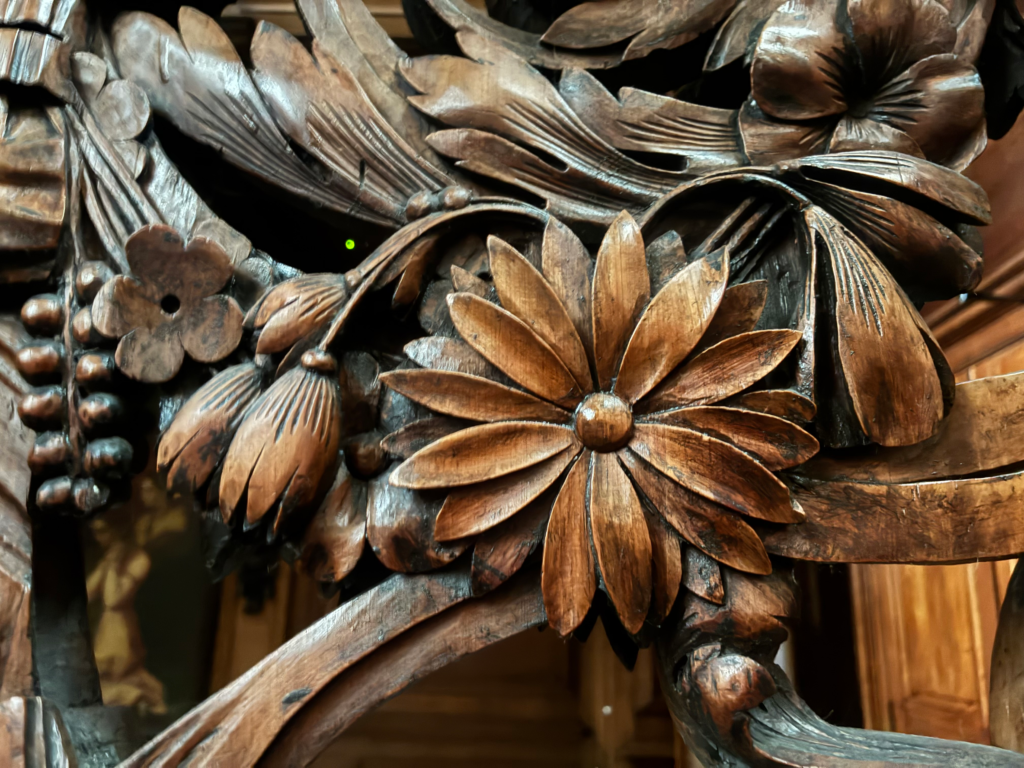
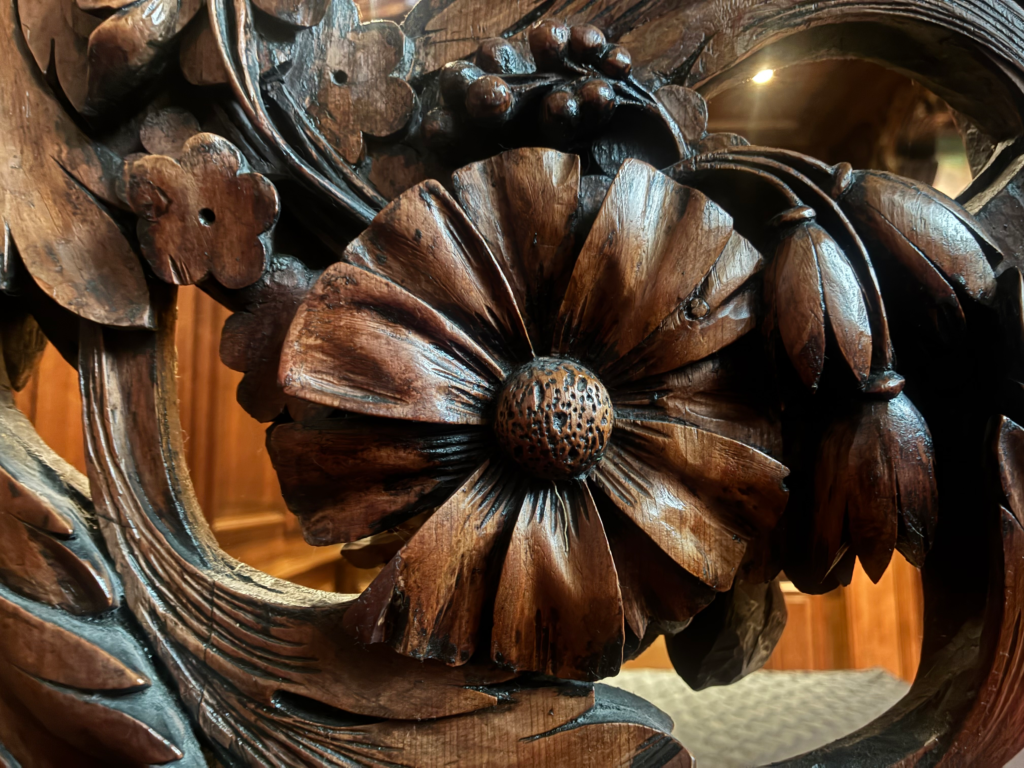
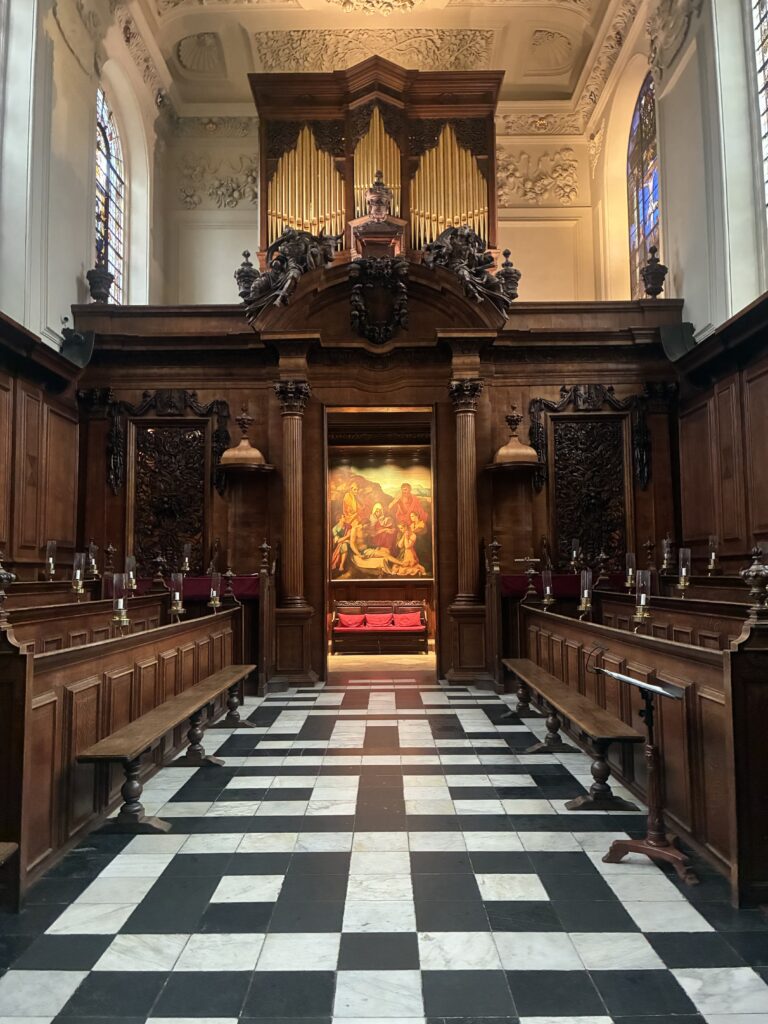
And once you have, trust me, you will be left wanting more. Which you will find in the magnificent Grinling Gibbons carvings on the reredos and fretwork panels of Trinity College chapel, across the road from where Ashmole’s portrait first hung. I have included some pictures below. For that story you will have to wait, but I can assure you it’s just as alluring.
Thanks to Stephen Harris Druce Curator of Oxford University Herbaria for help in identifying the species of plants on the Ashmole frame.
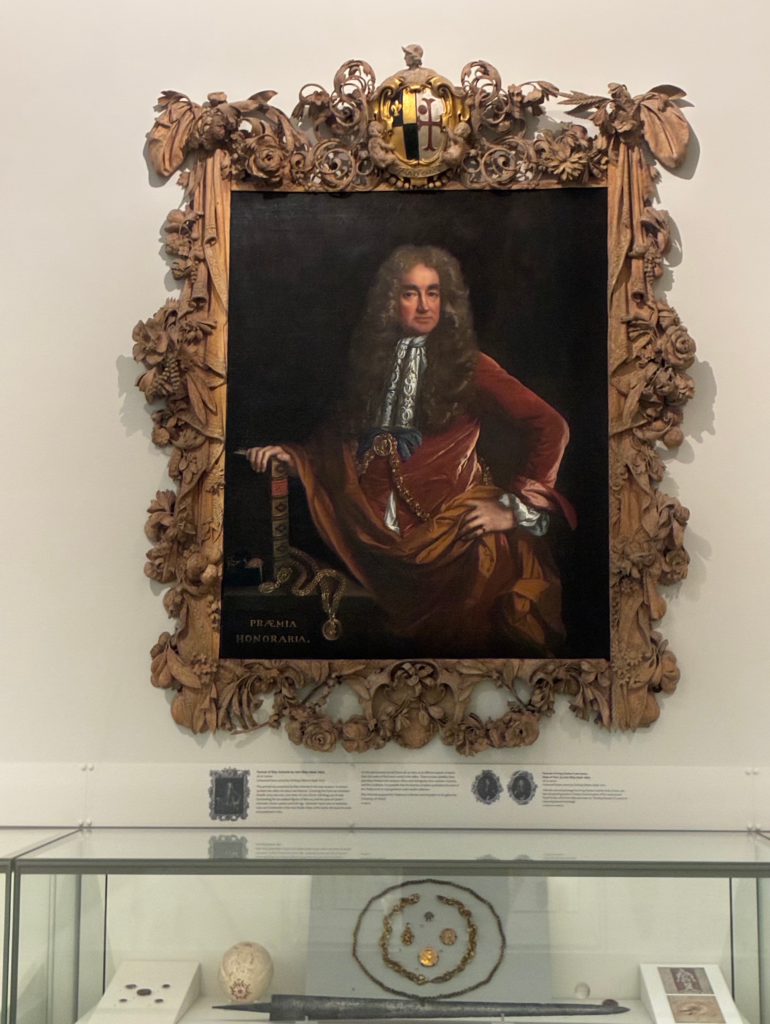
Portrait of Elias Ashmole by John Riley from the Ashmolean collections. Limewood frame carved by Grinling Gibbons (1648 – 1721). Ashmole’s heraldic crest and arms are at the top along with his motto ‘Ex Uno Omnia” (All things out of one.)
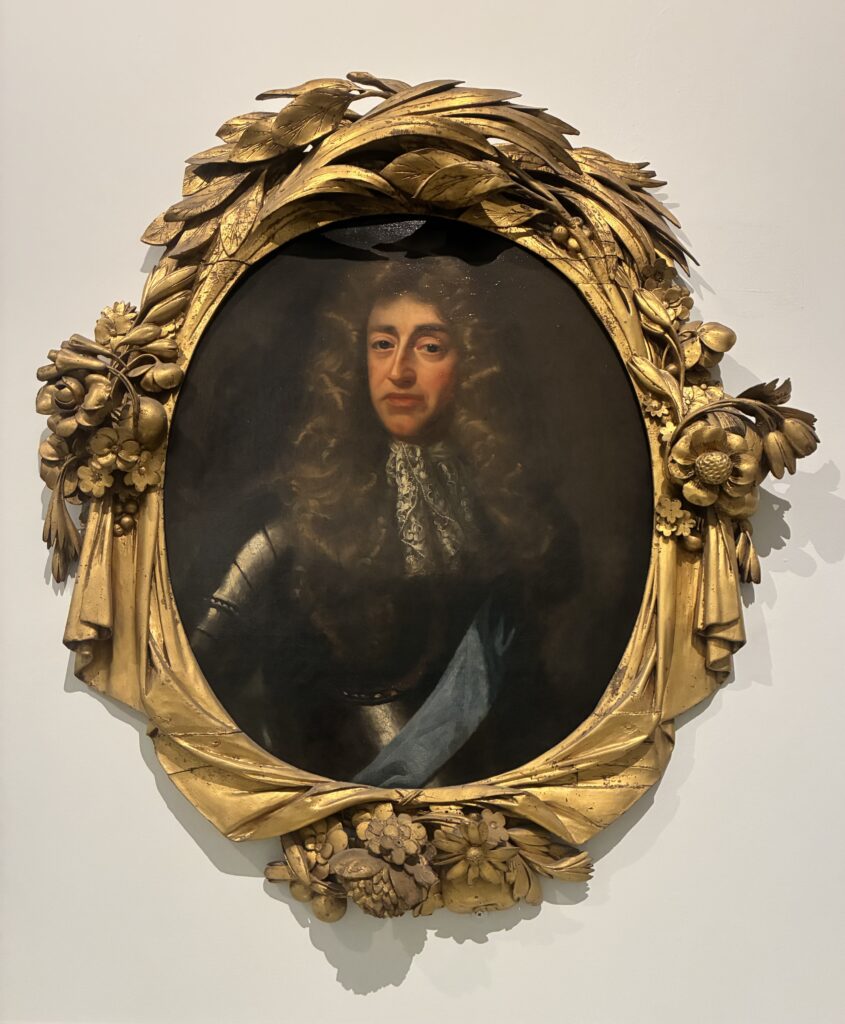
To Ashmole’s right hangs this portrait of James Duke of York (later James II) – also with a frame by Grinling Gibbons. This one was designed to be gilded.
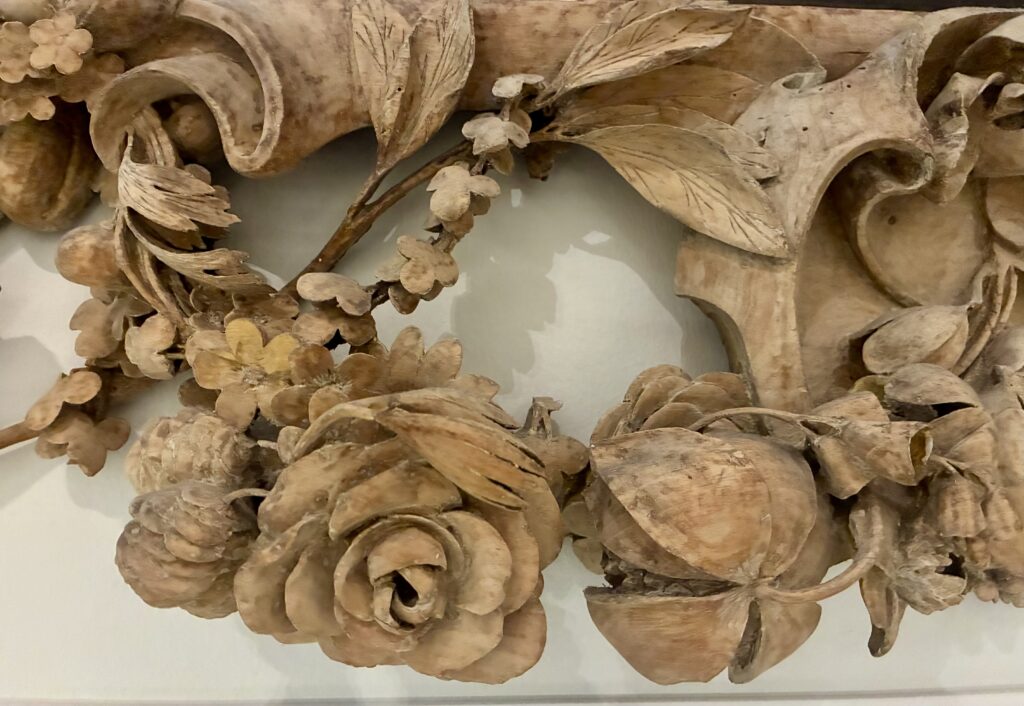
Detail from the lime wood frame.
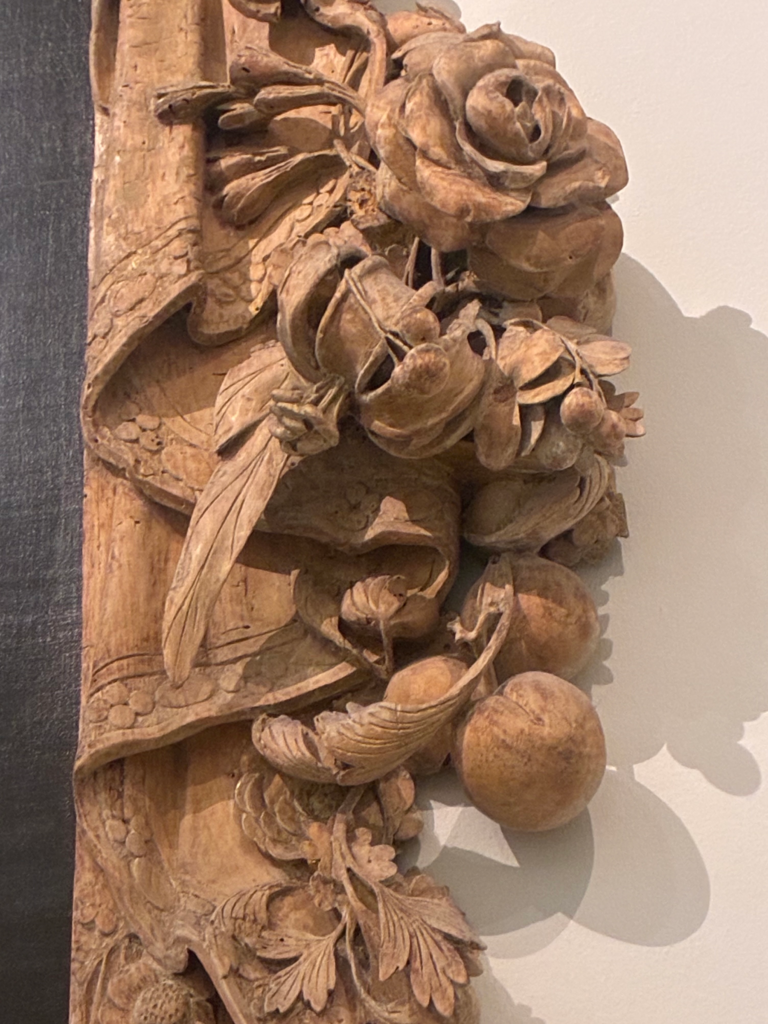
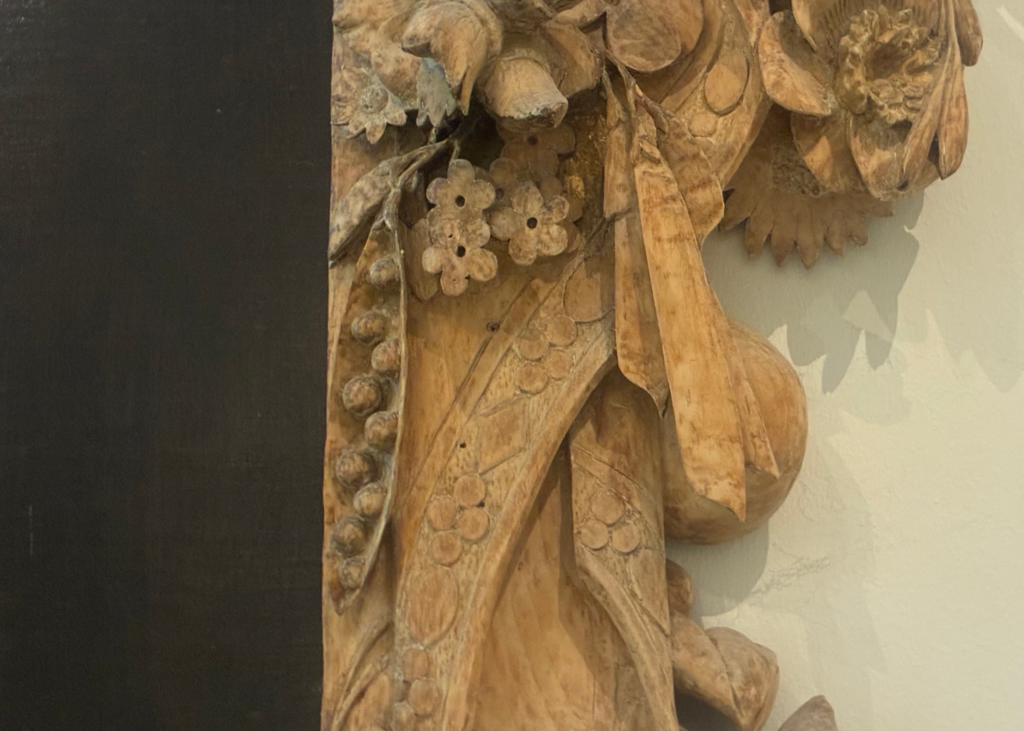
An open pea pod.
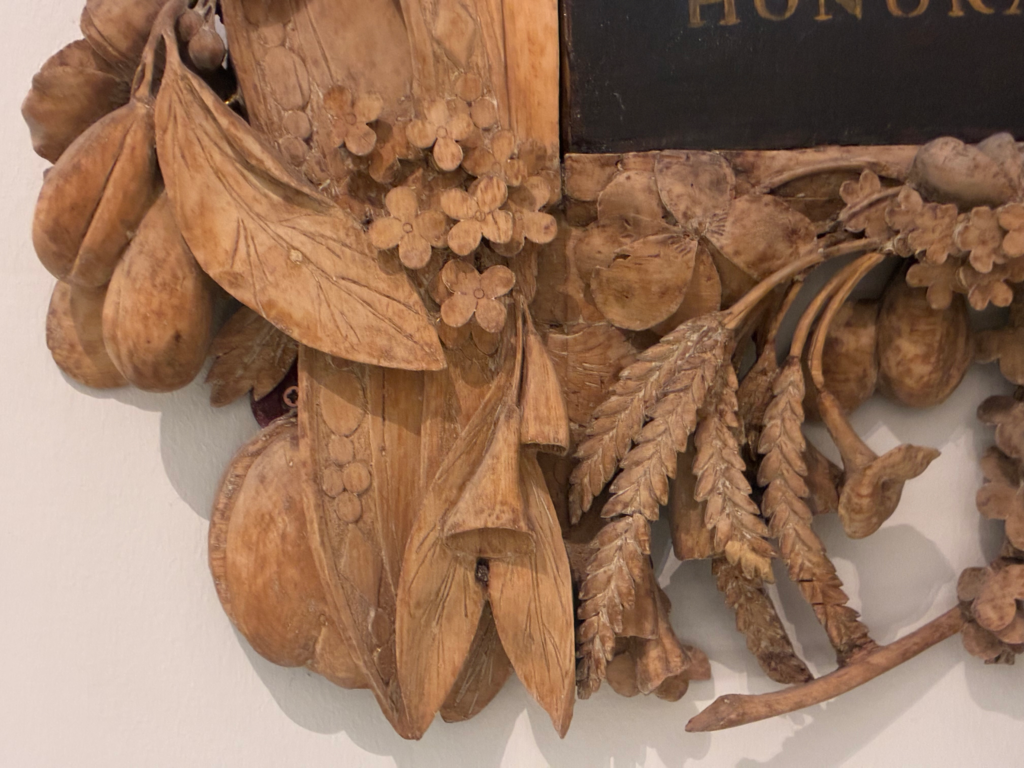
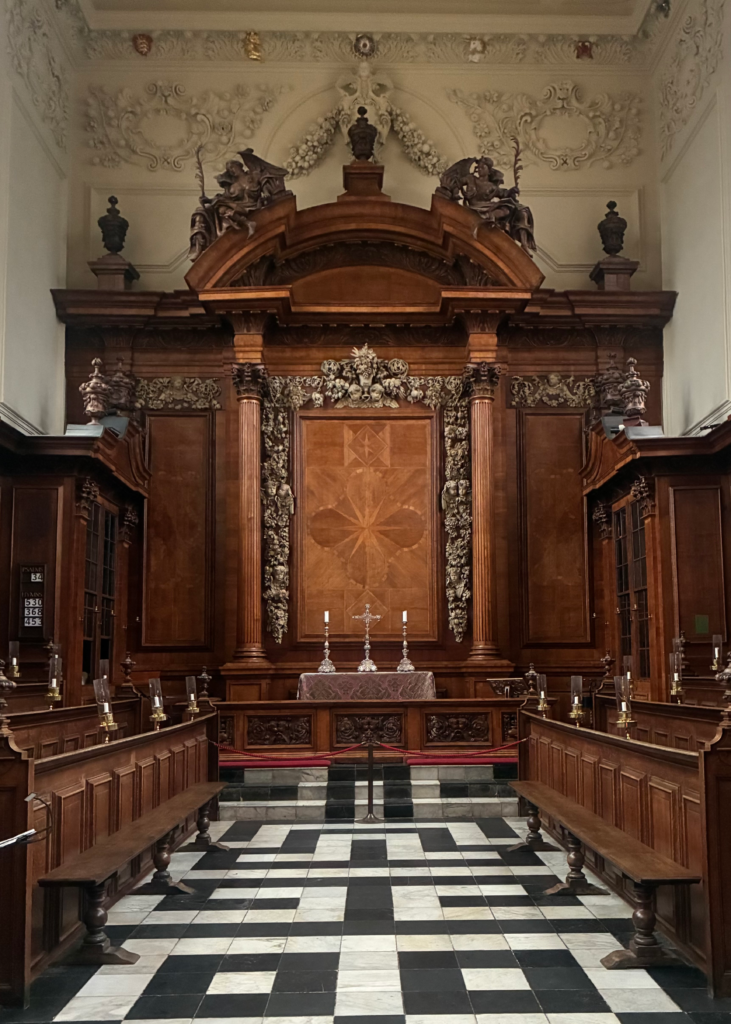
Grinling Gibbons light lime wood carvings in Trinity College chapel are set against the darker starburst panel above the altar.
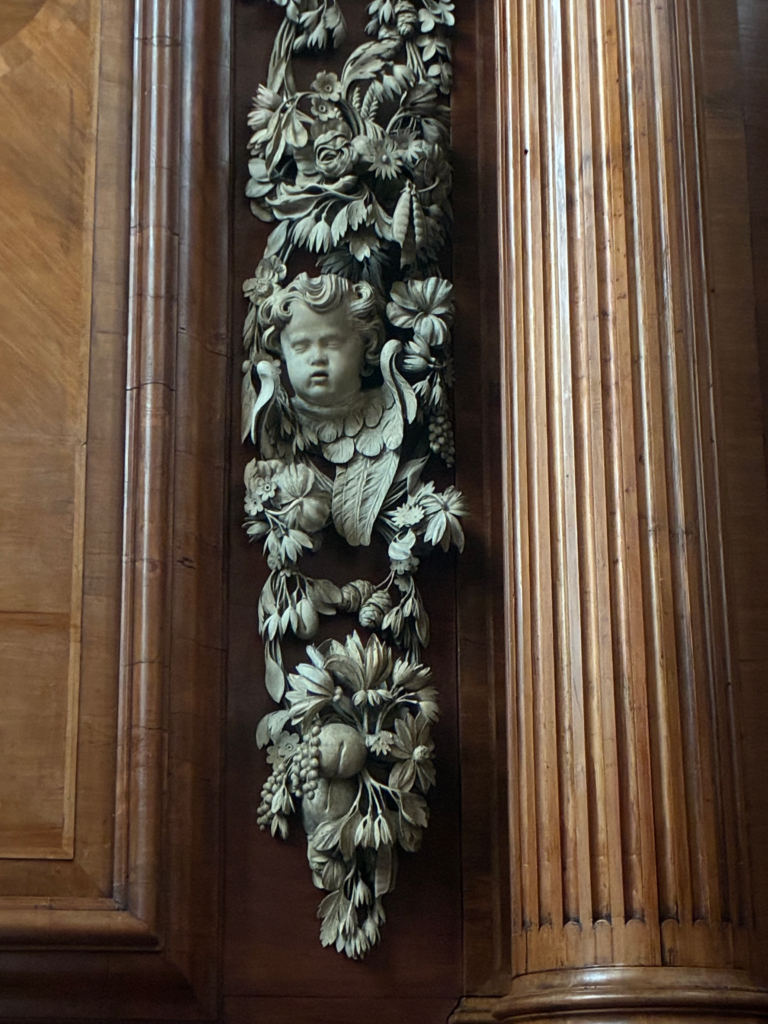
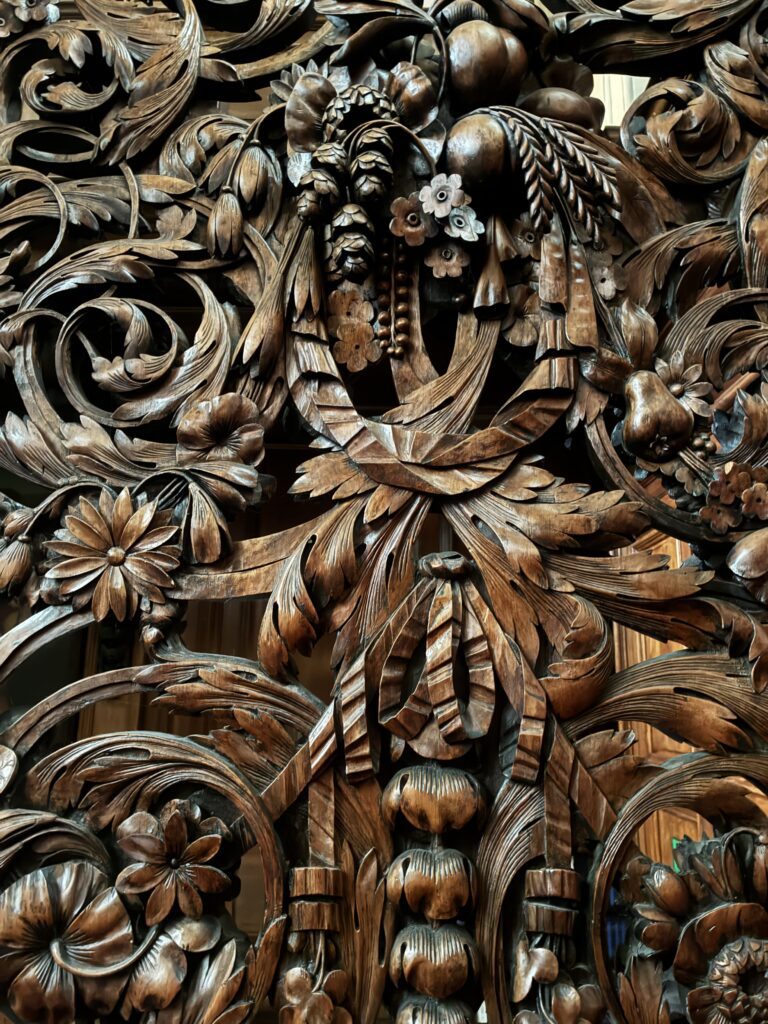
The fretwork on the antechapel screen is made from rare Bermudan cedar (Juniperus bermudiana.)
7 Comments
Join the discussion and tell us your opinion.
What an amazing talent. Thank you so much for telling your ‘Sausage’ followers about the many carvings by Grinling Gibbons that are ‘seeable’ in Oxford.
Lovely. But that is surely James 11, not Charles 11? Is it true that Gibbons signed his work by carving an open pod of peas. This features in carving attributed to him in the church of St Martin within Ludgate.
You are absolutely right and I have changed the caption accordingly. I do mention the pea pod connection – indeed there is a photo of the open pea pod on the Ashmole frame, though I had always heard that he only opened the pod once he had been paid.
Another marvellous post, thank you for keeping writing these! All so interesting and informative. … On another matter, I’d love some time to see what you make of Bartelmas chapel / leper hospital, and also Holywell Cemetery.
Thank you for pointing out yet more treasures on our doorstep. Grinling Gibbons has long been my most admired artisan – I made some clumsy forays into woodcarving after watching the late David Esterly create replacements to Grindling’s works lost to the Hampton Court fire a while ago. I had no idea about the Ashmolean frames and I shall hot-foot it there as soon as I can. I can’t wait for your piece on the Trinity carvings so temptingly trailed at the end of today’s Sausage.
Grinling Gibbons… weren’t they a prog rock band in the early 70s… ?
Thanks for covering the ongoing controversy over Ashmole’s ownership of the Tradescant rarities and how, precisely, he came to take possession of them. I start my poem, Musing on Museums, with some of the choice details (and go on to visit issues at the British Museum, before returning, as it were, to Oxford). It was published in Pulsebeat Poetry Journal: https://pulsebeatpoetry.com/pulsebeat-09/jake-lynch/