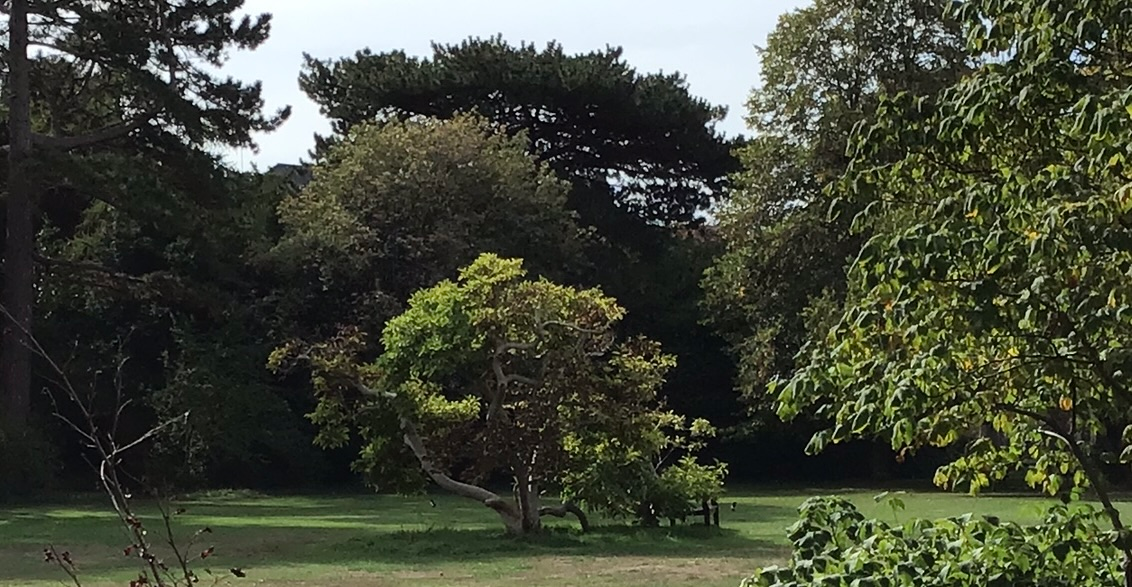
Today I am heading north of the city to meet an old friend of the Oxford Sausage, the biologist and artist Emma Coleman Jones. She is drawing a tree in the gardens of St Hugh’s College, which she thinks might interest me. And though at first, I am surprised to learn that it is a Magnolia soulangeana, whose glorious goblet shaped blooms don’t come good until the spring, I soon discover that the tree is also known under a different name. The Armistice Tree. A gift from students over a hundred years ago in 1919 to mark the signing of the treaty that ended the First World War on the 11th November 1918. An event still memorialised at this time every year, and in truth a more than appropriate reason to visit.
At the time of the tree’s planting St Hugh’s had only recently moved to its current site. Founded in 1886 the college set up to educate women of modest means had soon outgrown the accommodation provided for its first four students in a semi-detached house on Norham Road. The place they chose instead is affectionately known as ‘the island’, its 16 acres bounded on four sides, to the north and south by St Margaret’s and Canterbury Roads, and to the east and west the Banbury and Woodstock Roads. And although it is only a short walk from St Giles, as soon as you pass under the gateway and head through to the grounds it has the feel of a remote country pile, complete with lawns, a shrubbery, a dell, wooded areas and avenues today heavy with autumnal colour, and wide borders freshly dug over for spring planting.
The Armistice Tree takes centre stage in the vast sweeping lawn directly below the south facing terrace at the back of the Main Building. It was one of several Victory trees recorded as being donated to the college at that time. But the decision to put the magnolia in the prime spot would have certainly fallen to Annie Rogers, the keeper of the gardens or Custos Hortulorum as they call it here, and whose name is inscribed on the sundial opposite.
Annie Rogers was a well-known figure around Oxford. Brought up a stone’s throw from the Oxford Sausage headquarters, (where the Playhouse now stands on Beaumont Street) she was the only daughter in a large academic family. Fiercely intelligent, in 1873 she came top in a local exam from which a number of Oxford colleges (open only to men at this point) chose prospective students. But when it was discovered she had concealed her gender by entering only her initials on the entrance papers, she was denied a place. And so it was from that day on, she vowed to campaign for women to become full members of the University. And while it was not unknown for her to accost the top brass on Broad Street with what were then considered to be radical ideas of equality for women, it wasn’t until 1920 that she eventually got her wish. When at the age of 64, 45 years after gaining a first-class degree in Classics and with years of teaching women under her belt, Annie was eventually allowed to matriculate at the Sheldonian Theatre with full ceremonial honours.
But Annie was also just as affectionately remembered for her horticultural habits.
She was renowned for popping up suddenly from behind the shrubs to surprise students, dressed in layer upon layer of thick coats and her signature trilby hat, eager to discuss her latest acquisition to the garden. Or for her furtive forays into other colleges, surreptitiously snipping cuttings of plants that took her fancy, secreting them in a half-opened umbrella to transport back to St Hughes. Well after she gave up teaching, she kept up her position in the garden, one of the few places for many years women students could walk out with a man unchaperoned. Always a force to be reckoned with until in 1937 while heading to a meeting of the Archaeological Society, she was knocked off her bike by a lorry in St Giles and killed. (There is a blue plaque in her memory at 35 St Giles where she once lived, and a stone bench in the garden of the University Church of Mary the Virgin where she worshipped.)
But what a legacy she has left. The garden she nurtured is a joy. Wander along the meandering paths and you will chance upon a strawberry tree, a weeping silver pear and a tulip tree amongst the other 670 here. Emma shows me the snakebark maple that she has also drawn, planted in memory of Dr Freda Newcombe, another extraordinary woman who kept records of the 13,000 patients cared for here when St Hugh’s was requisitioned as the main hospital for treating head injuries during WW2. When the lawns were filled with prefabricated sheds and makeshift huts to house them. She followed their progress for many years after the war finished – her findings all there in the archives situated in the library above where the tree stands.
But that is a story for another time.
Today we have come to admire the Armistice Tree. As the evening light casts shadows through it rapidly falling leaves it is not hard to imagine the euphoria that the people of Oxford must have felt when large crowds gathered outside the Town Hall to hear the news that the war had ended, when the heads outside the Sheldonian were painted red white and blue, and church bells rang out around the city. Even as we stand in November watching the last of its foliage drop, fat goblet shaped buds are beginning to form. A symbol of hope for the future. And as we sport our remembrance poppies, Emma and I promise each other that we will be back in the spring. To witness it clothed in all its blossomy glory. I can’t wait to tell you all about it.
Emma Coleman Jones and I will be in conversation about The Armistice Tree and other Oxford trees as guests of My Jericho.
Thursday 19 November, St Barnabas Church, 18.30
You can purchase tickets here
Or £5 on the door.
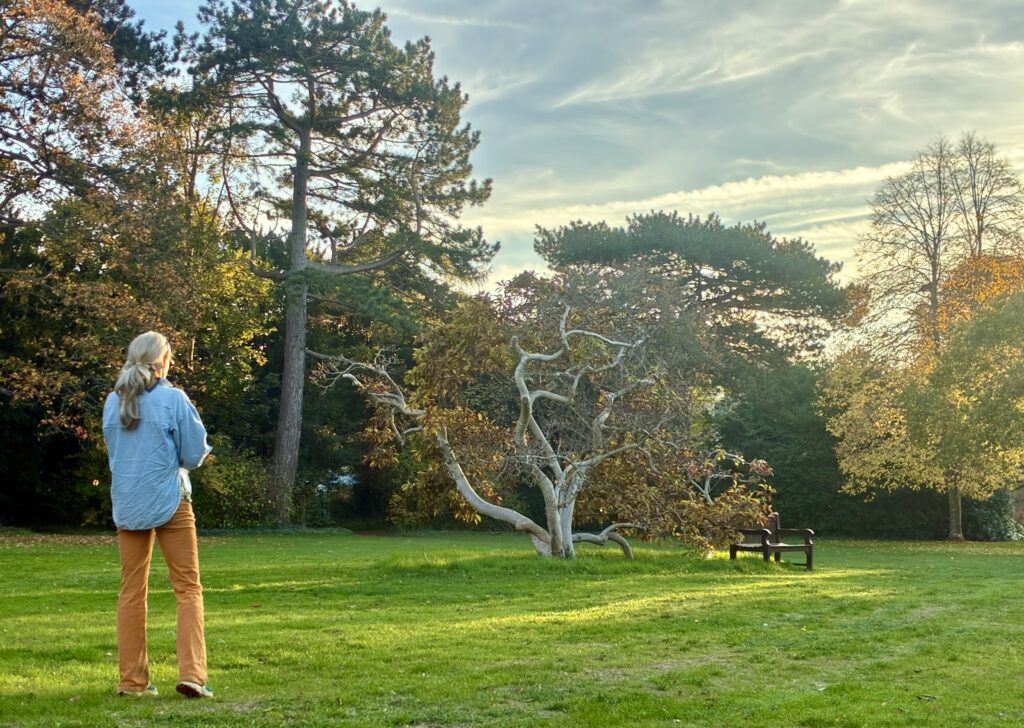
Emma will sketch her tree lots of times to get a feel for it. She does what she likes to call ‘stalking’ the tree as the weather, the light and the angle all have huge impacts on her work.
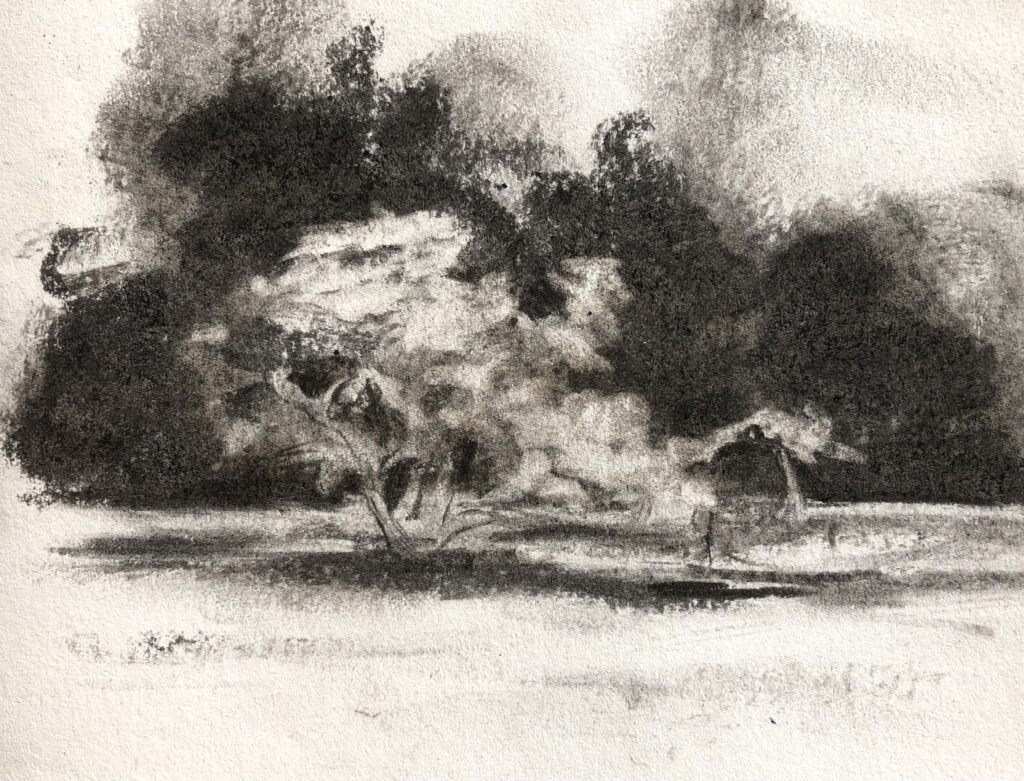
One of the sketches she made ©Emma Coleman Jones
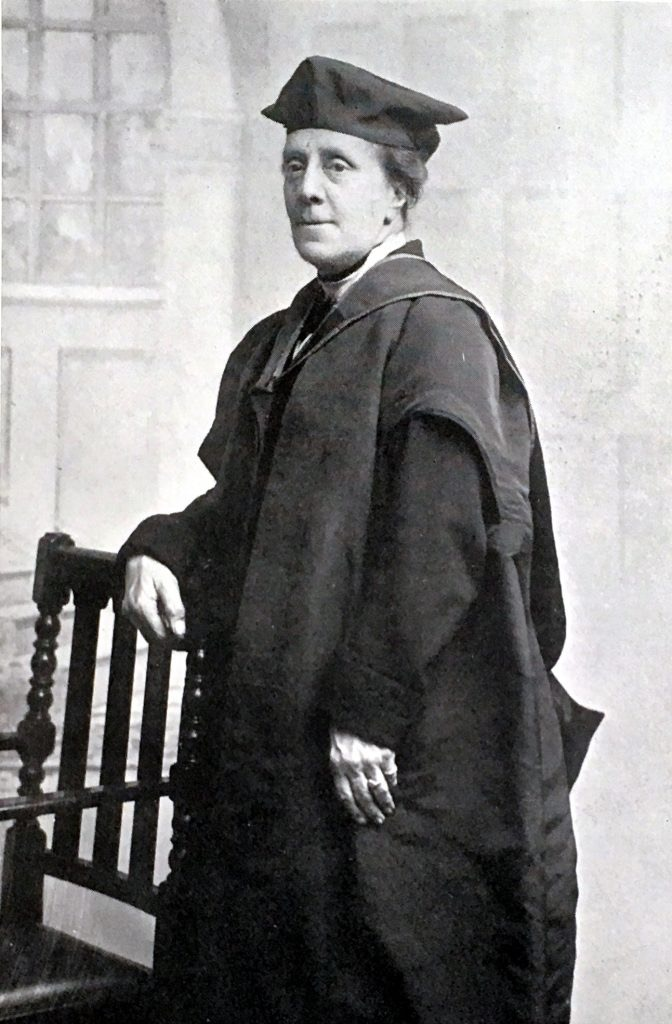
Annie Rogers after formally collecting her degree in 1920
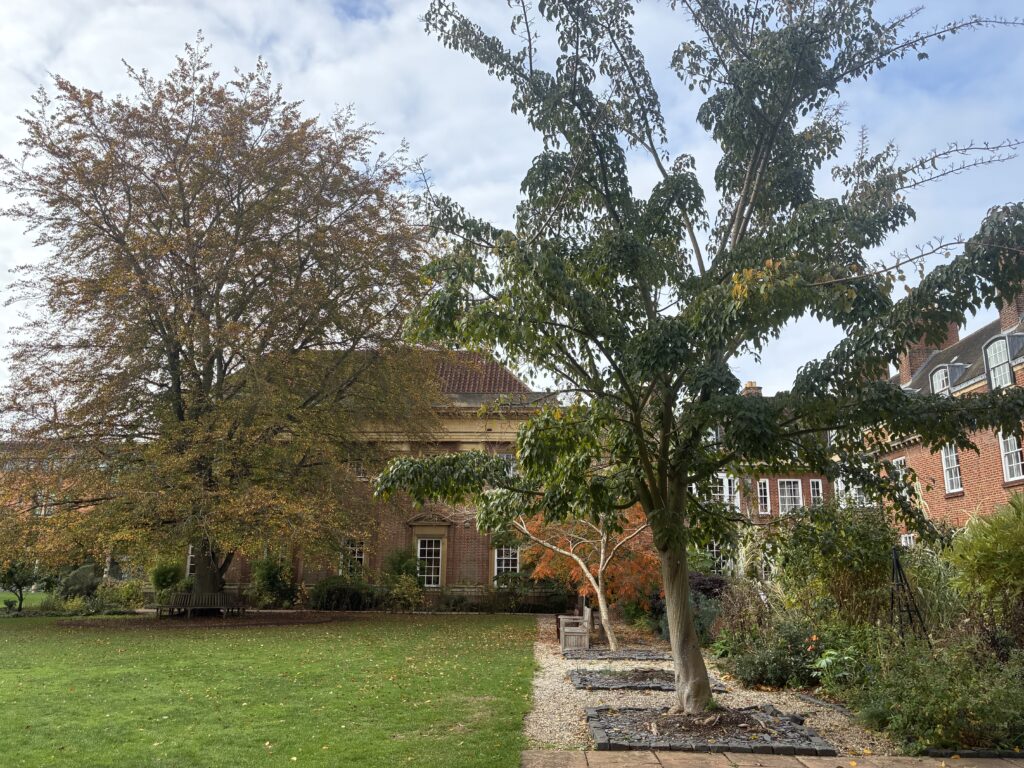
Freda’s tree. The Snakebark Maple planted for the neuropsychologist Dr Freda Newcombe in 2001 by the Veterans’ Association to commemorate her life and work. During WW2 and for many years after she kept detailed patient records of the soldiers with head injuries who were cared for at St Hugh’s, the only Combined Services Hospital for Head Injuries in Britain. Her research formed the basis for the compulsory wearing of crash helmets on motor cycles after there were so many casualties during the war. Her archives are kept in the library and archive collection you can see here behind the tree.

Emma’s drawing ©Emma Coleman Jones
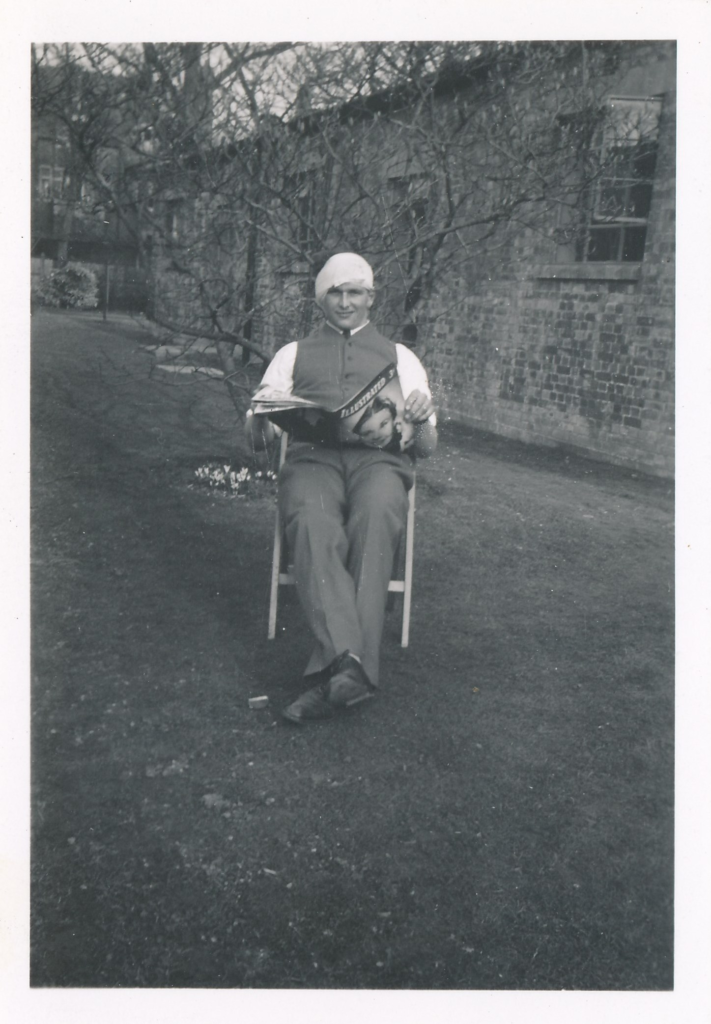
Image © St Hugh’s College
Our magnolia did well to survive through WW2. Here it is behind a patient during the time St Hugh’s was a hospital for head injuries. It has narrowly missed being uprooted to make way for the brick huts erected on the lawn.
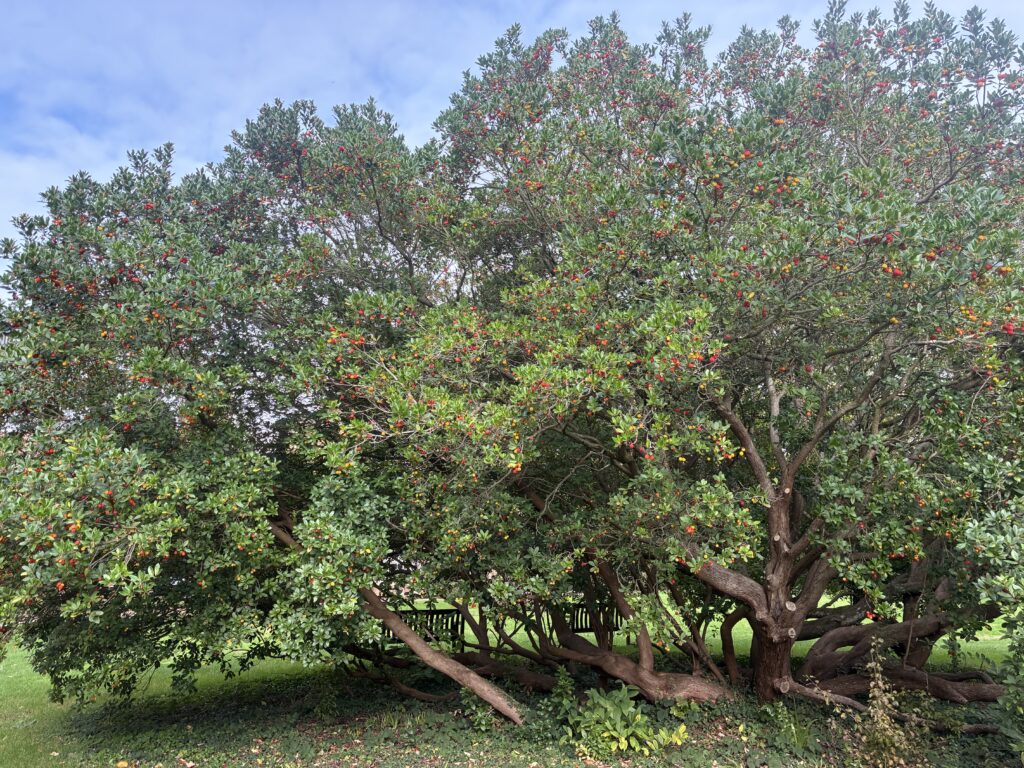
The strawberry tree.
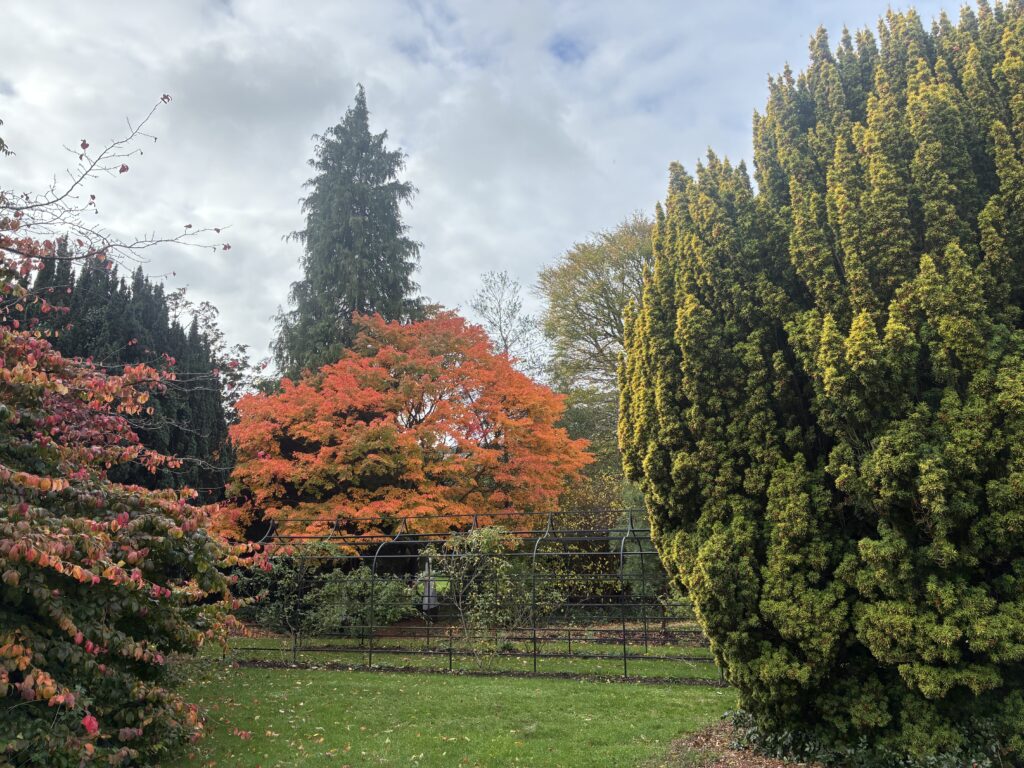
Autumn colour
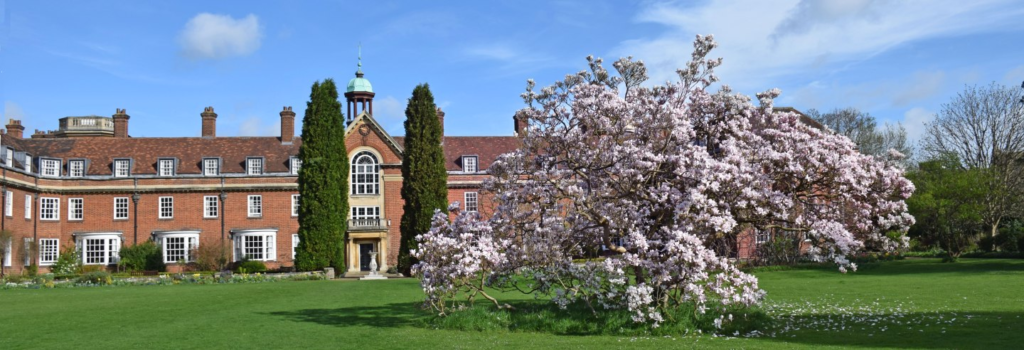
As it will look in the spring. Image © St Hugh’s College.
You might also like to read: