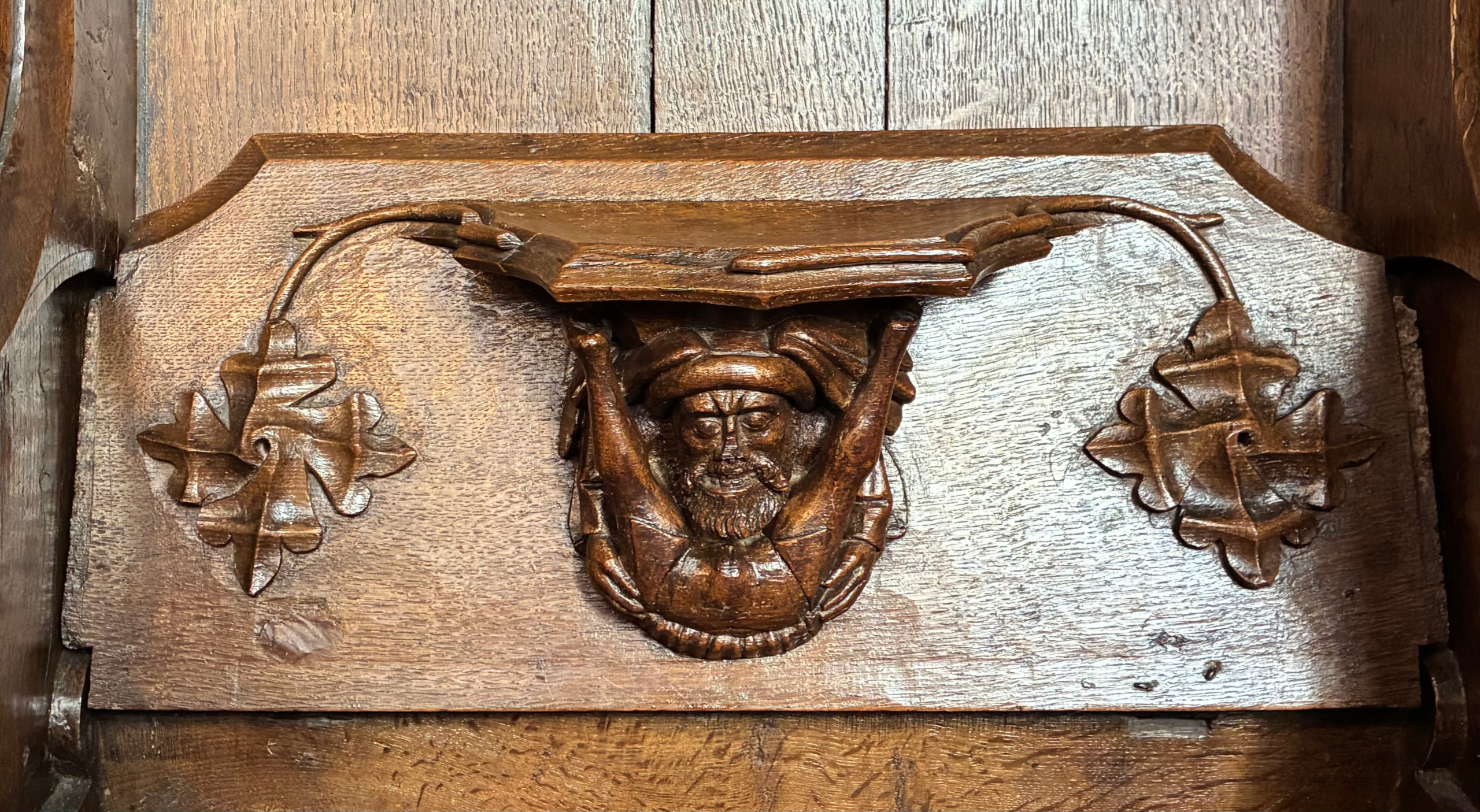
Imagine my delight when just a few weeks after discovering the medieval misericords at Magdalen College I was invited by the chaplain Revd Rachel Carnegie to take a look at the ones she has in the chapel at All Souls. These decorated ledges installed under hinged seats onto which when lifted Fellows could mercifully perch during their long hours of prayer, are even older, she tells me, dating from the building’s foundation between 1438 and 1442. But they are very fragile. And for much of the time roped off to prevent damage. So it is that I feel especially excited to have been given the chance to lift the lids on these creations carved over half a millennium ago.
All Souls, sandwiched between the University Church of St Mary the Virgin and The Queen’s College on the bus busy High Street, has always had something of the mysterious about it. It is after all the only college where there are no students, to become a Prize Fellow you must pass what is known as ‘the hardest exam in the world’, and where once every hundred years in an age old tradition called ‘Hunting the Mallard’, members of the College holding flaming torches process around the grounds following a duck on a stick. Perhaps then I can be forgiven for feeling that I was entering into unusually strange territory as I pass under the main gateway, cast a curious eye upwards to the grinning grotesques that decorate the stonework of the front quadrangle and make my way through a narrow fan vaulted lobby on its north west corner with its bas relief sculpture of the souls of the dead rising from their graves, and at length find myself in the quiet splendour of the chapel.
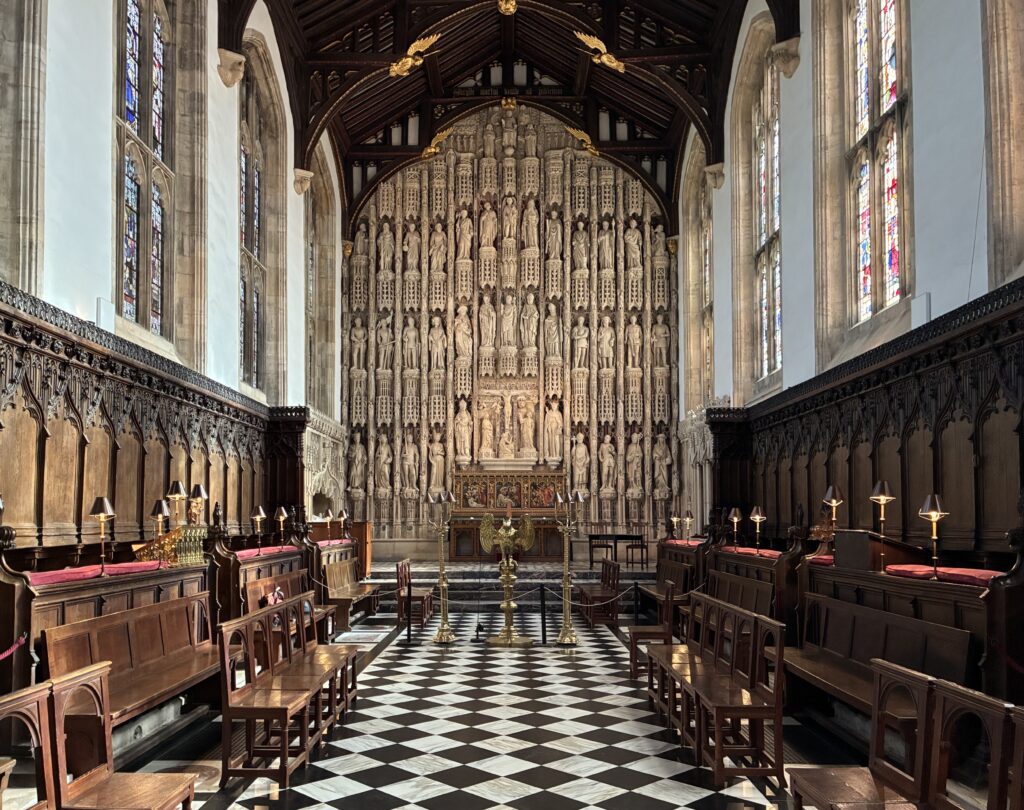
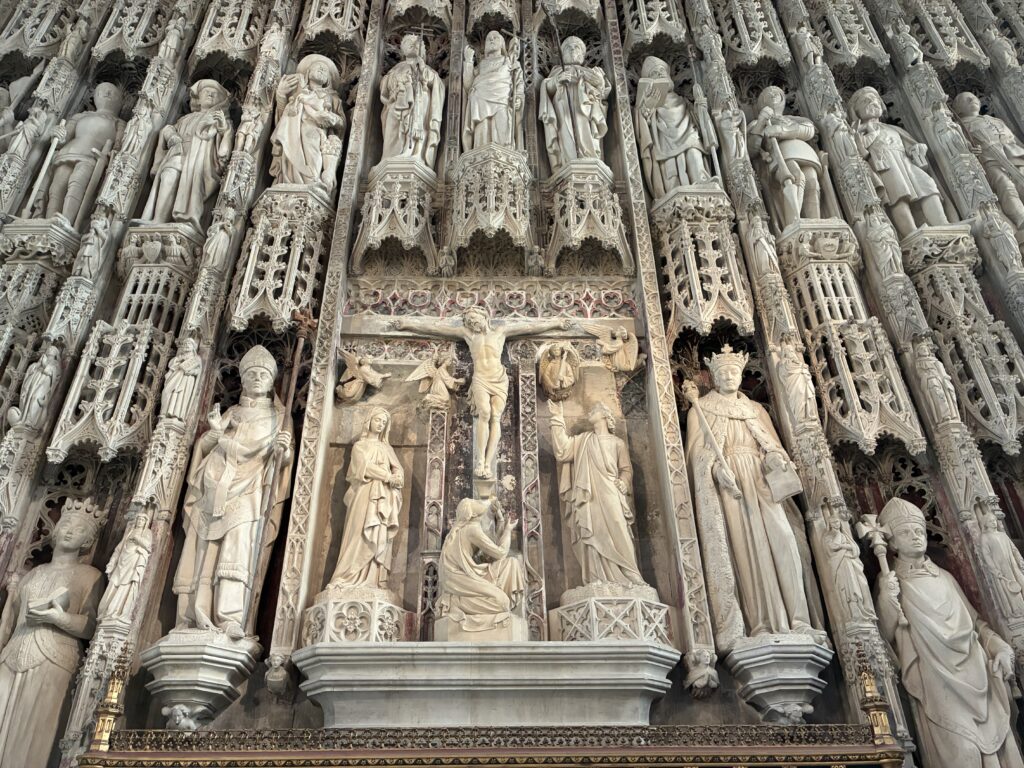
The misericords are still secreted as they have been since the 15th century, within the inner sanctum, concealed behind a vast, ornate navy and gilt screen. Its entrance perfectly frames the dominant feature inside, a magnificent stone reredos that occupies the entire east end of the chancel, its many niches filled with an array of statues celebrating the medieval world order. There is Christ sitting on a rainbow at the top, surrounded by tiers of saints and sovereigns, bishops and noblemen, angels and warriors. It’s a 19th century restoration of the statues in the original framework, Rachel tells me, after the brightly coloured original was trashed during the Reformation, but it is dazzling, nonetheless. And we must be thankful that the misericords were left untouched. Perhaps the seats of the choir stalls under which they lay hidden, were covered with cushions as they are today when the iconoclasts made their entry. Whatever, All Souls still have the full set of 42 choir stalls intact. Each with its own unique ‘mercy seat’ as they became known, closeted under the lid.
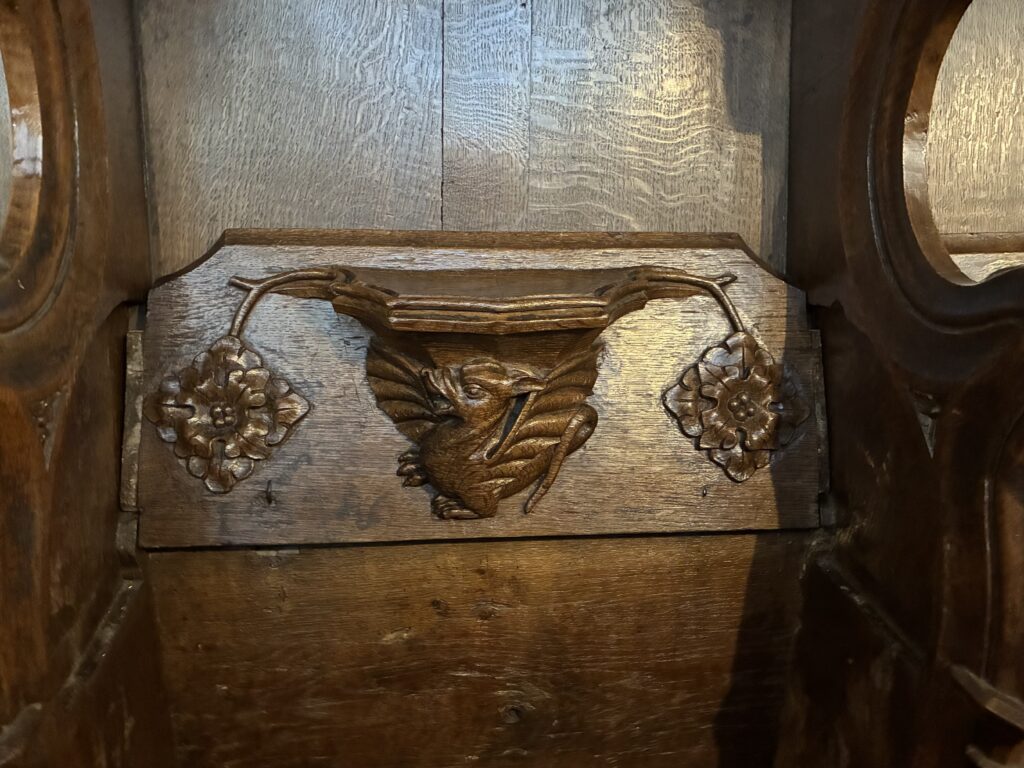
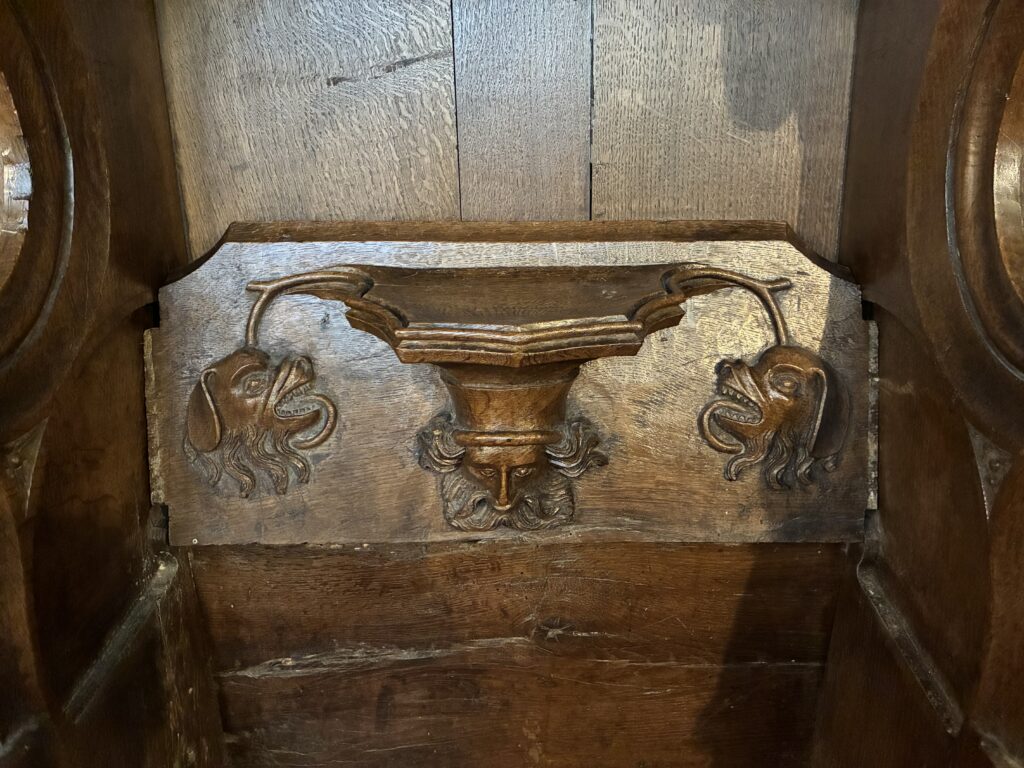
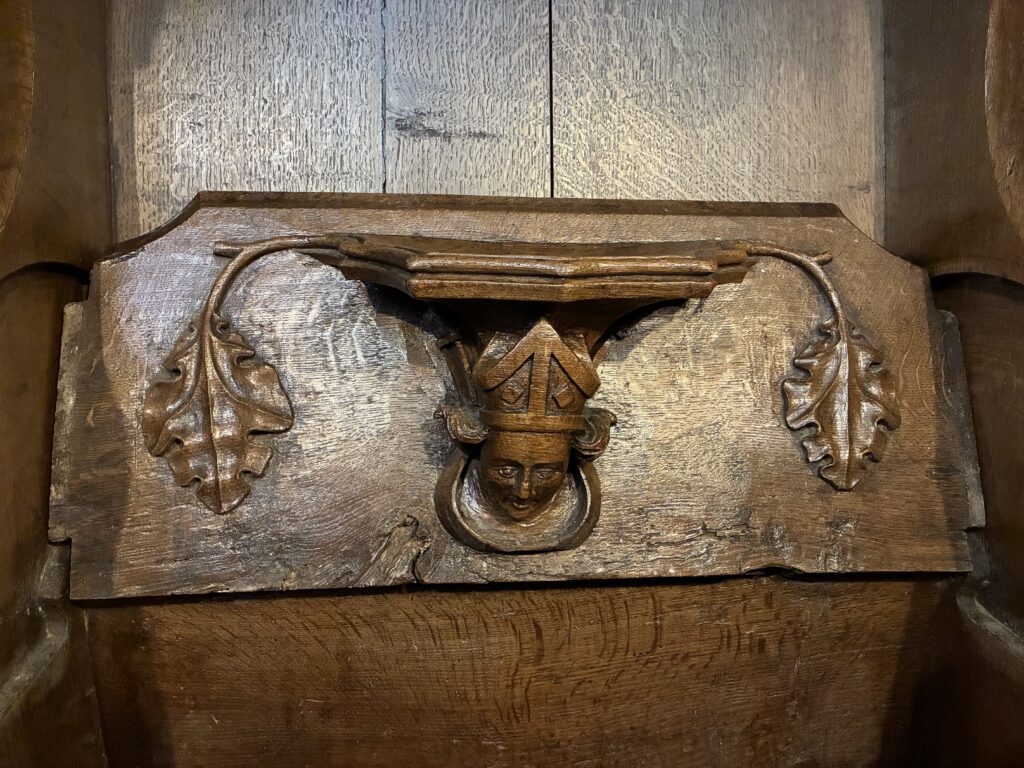
Carved in exquisite detail out of oak brought in from Eynsham, Shotover and Cumnor Woods. By carpenters contracted for three shillings a week. One by one as Rachel tips back the hinged seats, a new marvel is revealed. Alongside a garlanded nun and a mitred bishop, there is a pedlar pulling on a shoe, a man playing bagpipes, a woman syphoning beer from a barrel, and a mooning man, his bearded face leering from between his splayed buttocks. There is a feathered angel as well a green man, a lion with a curly mane, a dragon and a mermaid, flanked by a vast variety of flowers and foliage. What fun the craftsmen must have had in these characterful creations. From what we know of these workmen, they were the kind of chaps who were cast in the mystery plays of the Guild pageants. And there is a theatrical feel to their imaginative expressions of the human mind portraying a topsy turvy mix of real and mythic. A world that they believed might have every possibility of taking shape. But here kept hidden safely away under the seats. In contrast to the hierarchical universe that we see on show in the reredos above.
All Souls was the last legacy left by its founder Henry Chichele, Archbishop of Canterbury whose weather worn (originally set above the front gate) life size statue stands alongside that of his co-founder, King Henry VI in the outer chapel. Born of a time when a century of the plague had reduced the country’s population by half, the followers of John Wyclif had threatened to upend social stability, and the Hundred Years war was still raging on the continent, All Souls was to have two functions. As a training ground for top notch servants to keep Church and State from falling apart. And a chantry to pray for the souls of the ‘faithful departed’. Death was a thing foremost on people’s minds and this they truly believed might shorten their tortuous time in purgatory and help towards a happy resolution on the final judgement day.
Oxford fantasy writers have long written about the city’s thin veil between the real and the spirit world. And as I take my leave I cannot help but feel as All Souls Day approaches, there is nowhere where this is more likely to be played out than here at the college named after it.
All Souls is open to the public 2-4 pm every day except Saturday
Given the fragility of the originals, it is hoped there will be a photo exhibition on the All Souls College misericords next summer
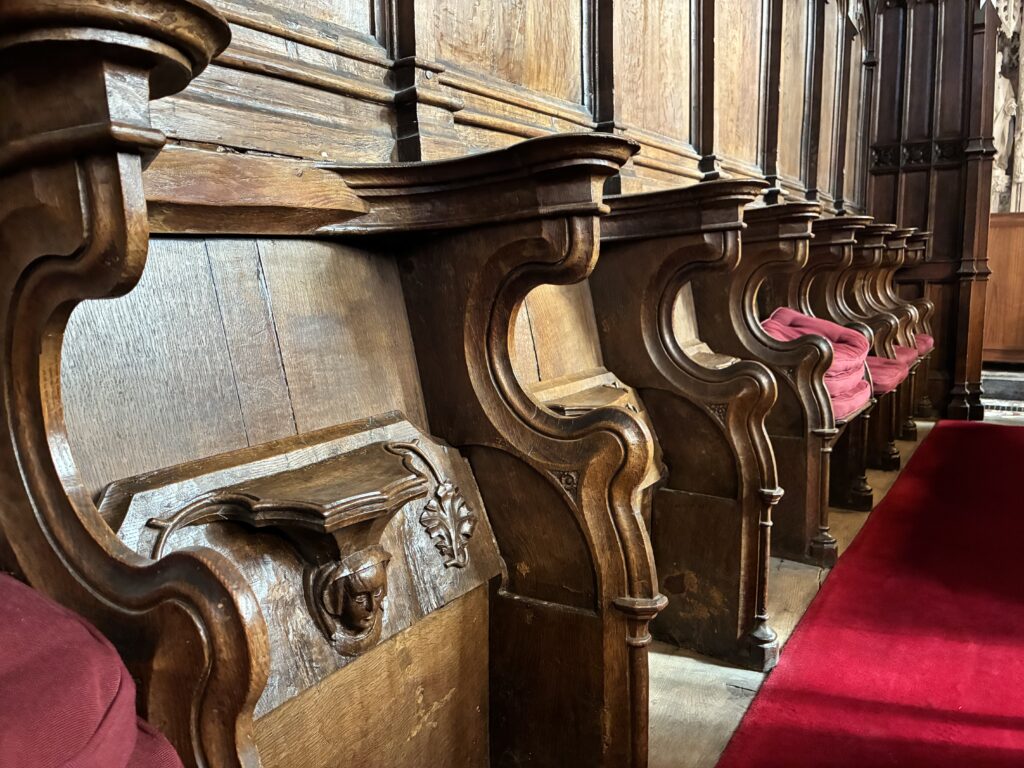
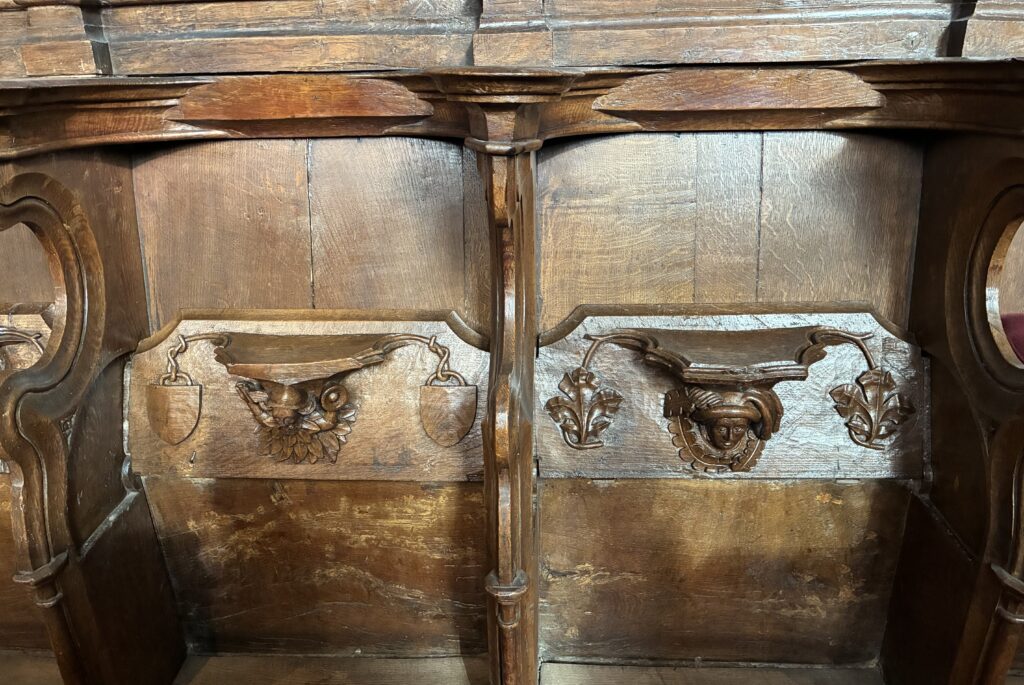
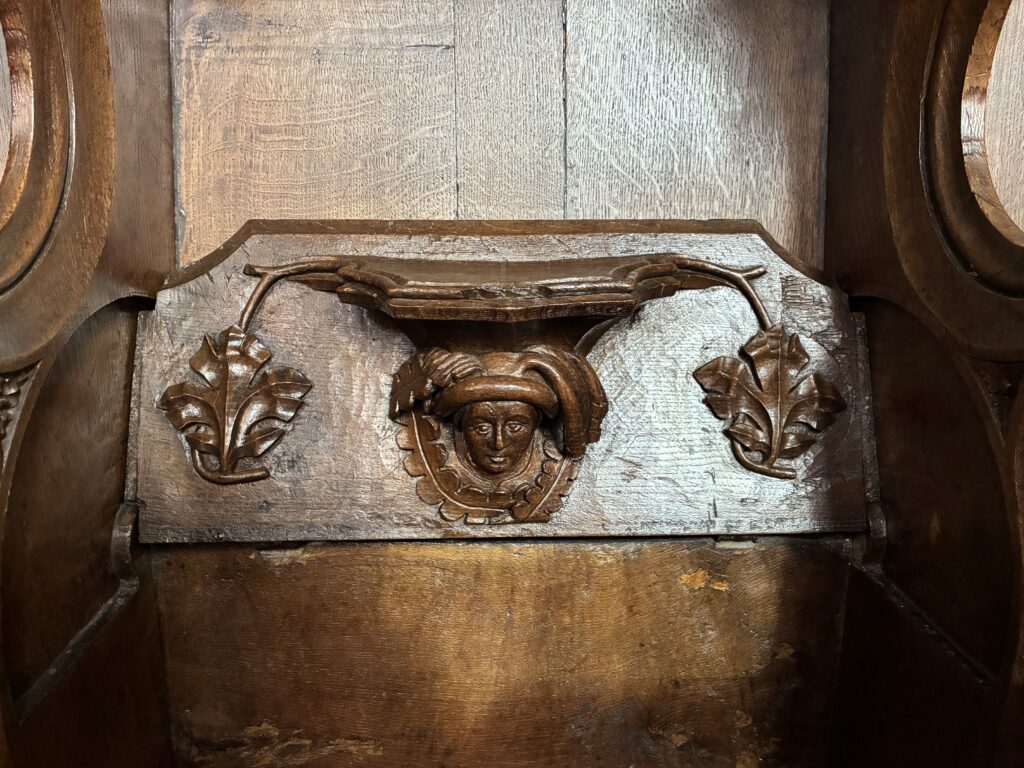
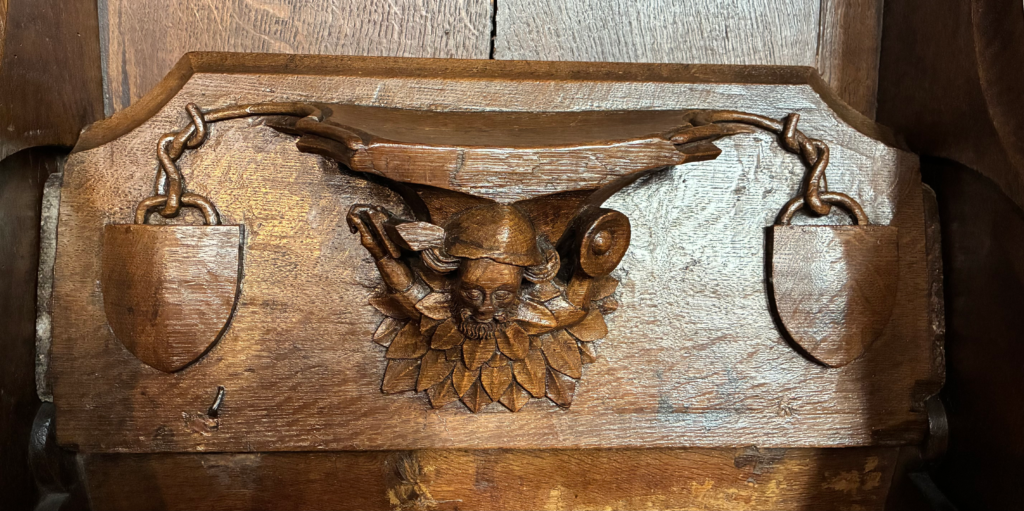
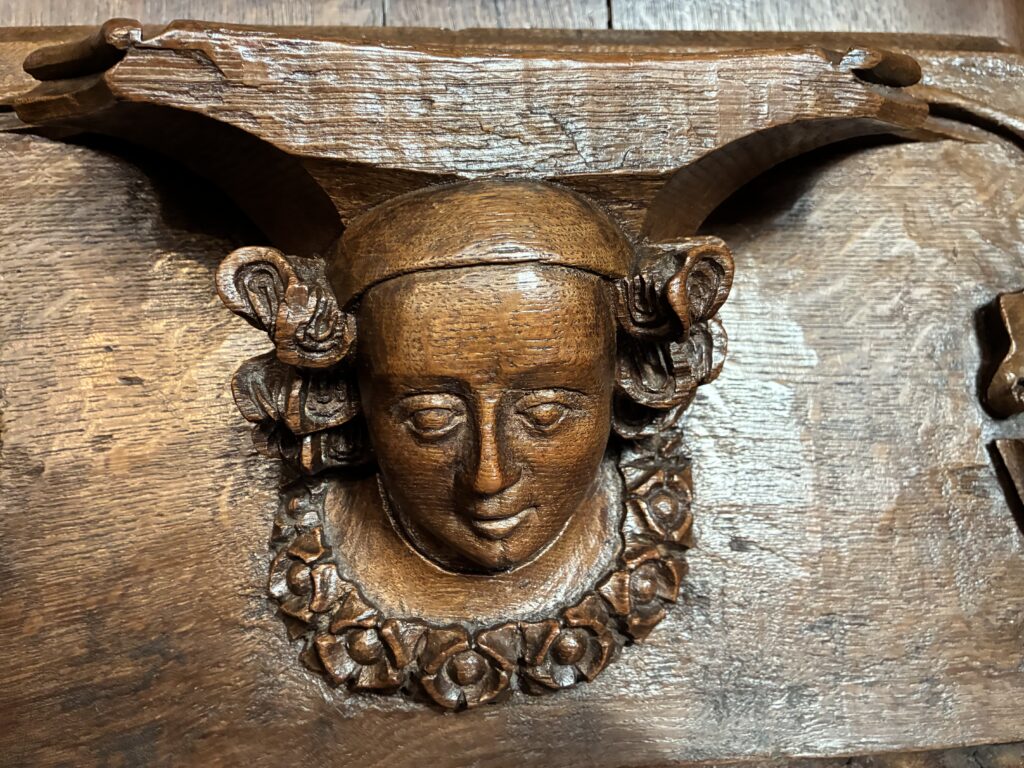
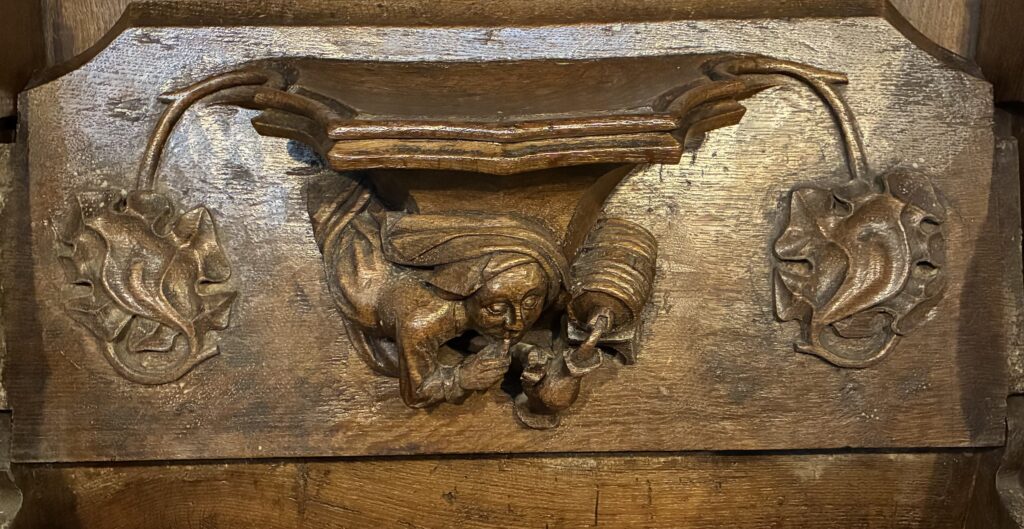
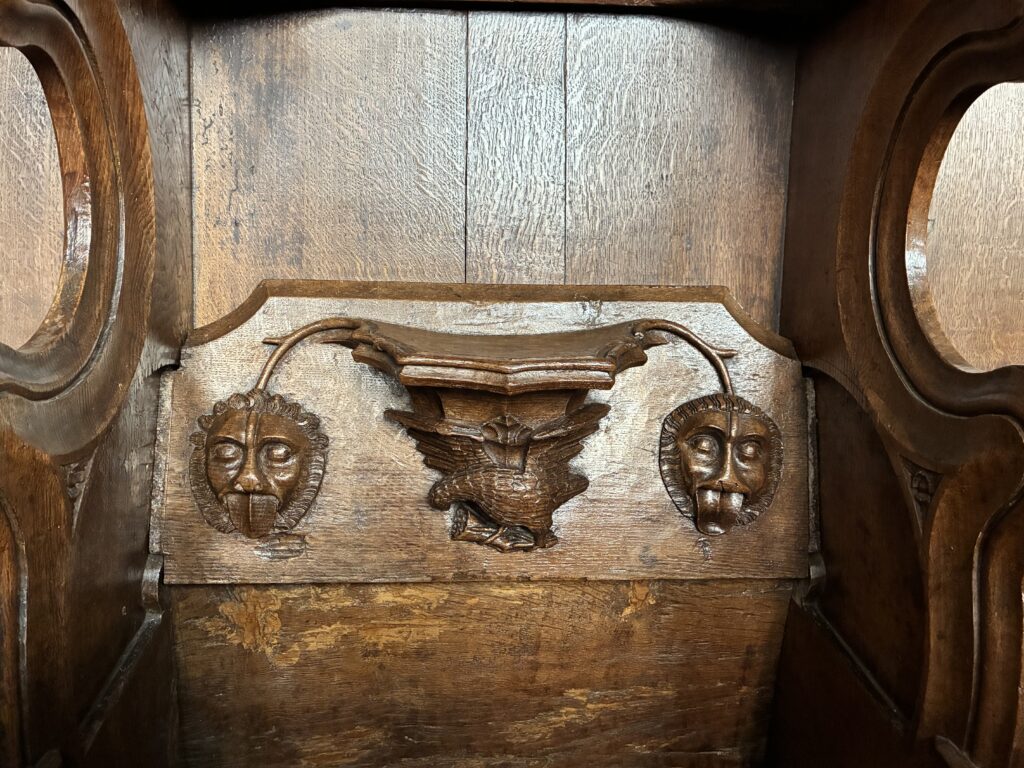
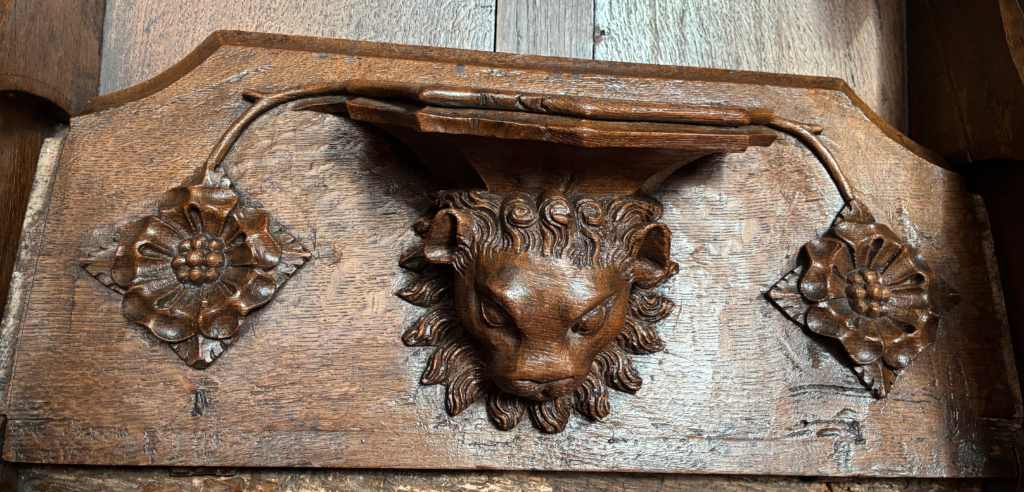
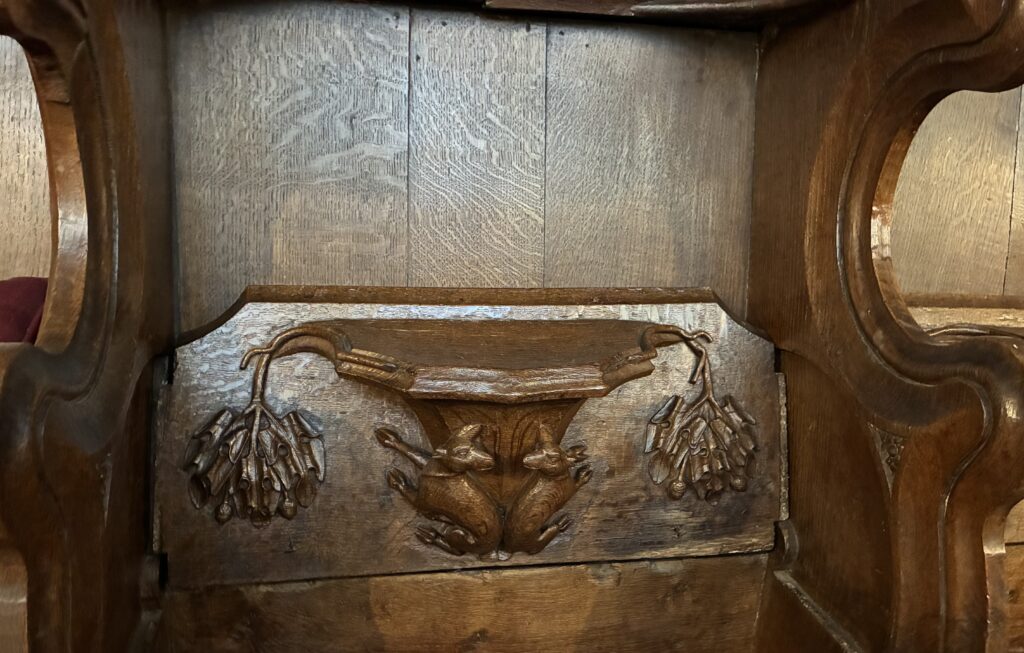
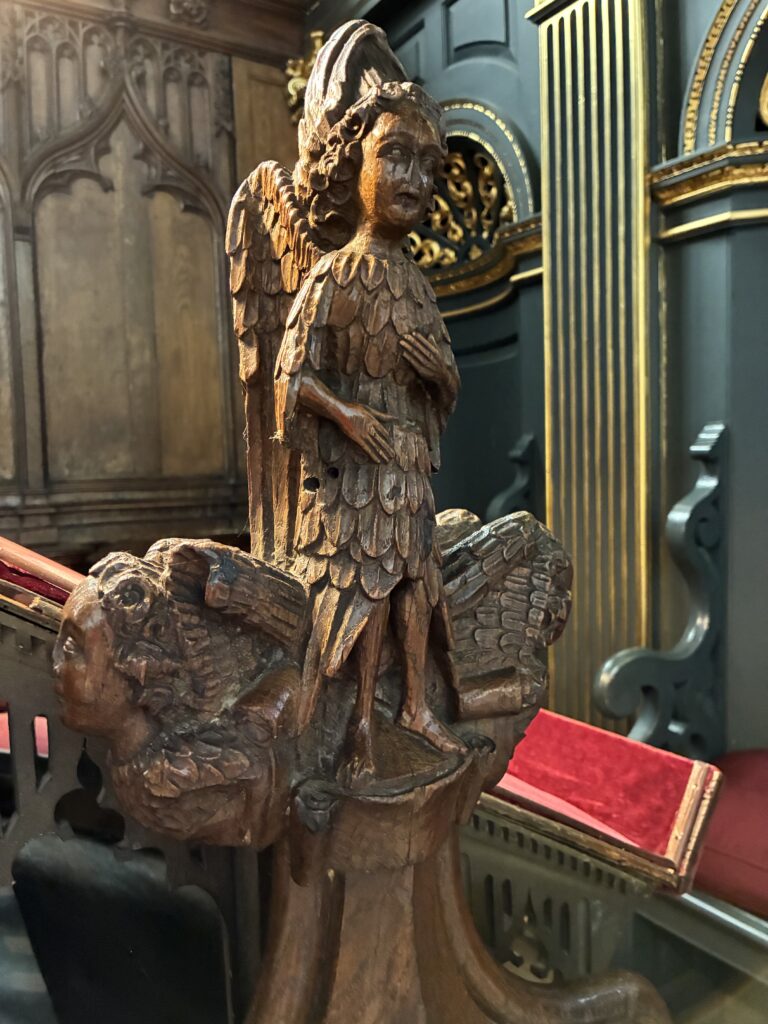
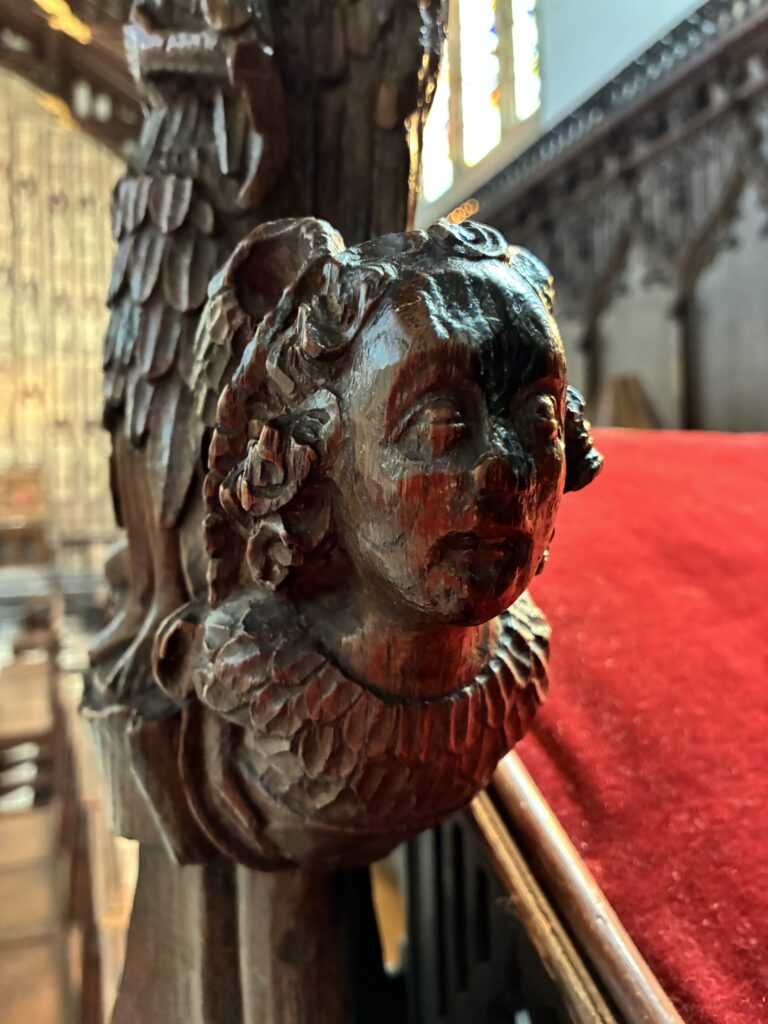
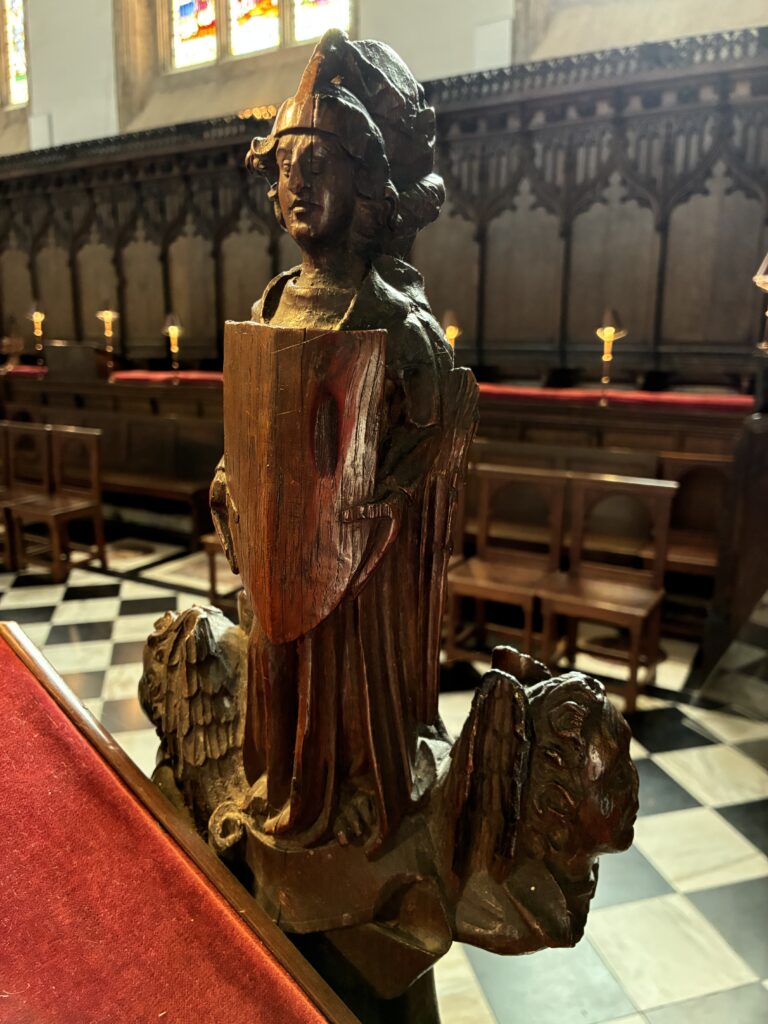
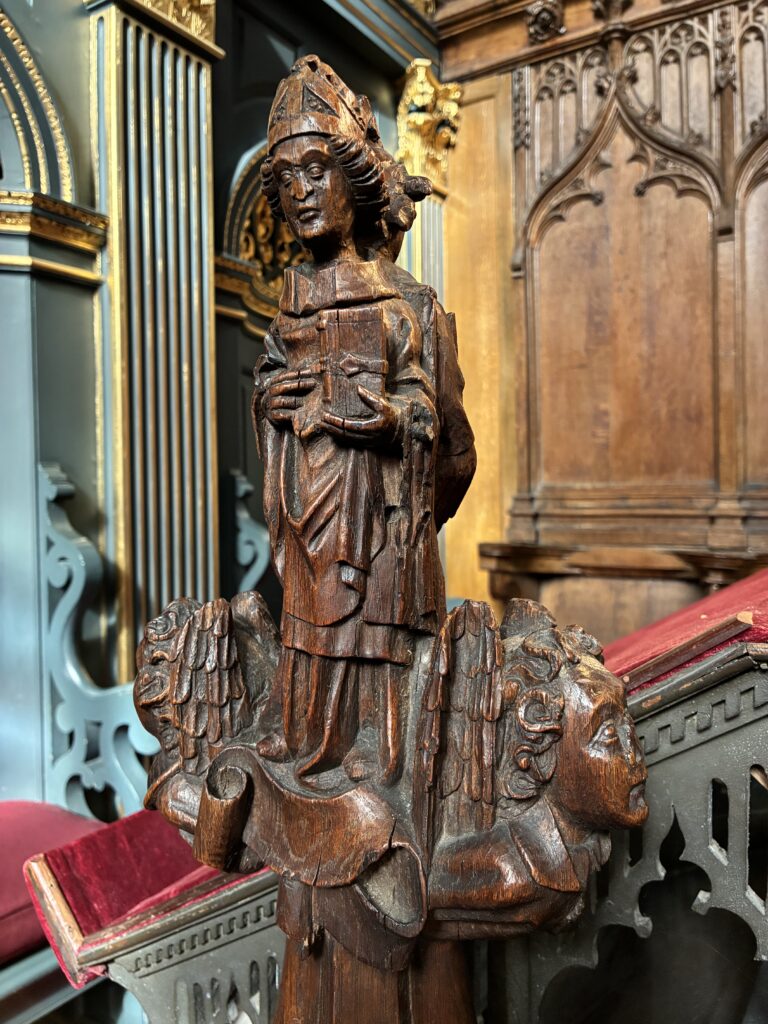
These carvings are situated on the end of the stalls and are altogether of a more pious nature.
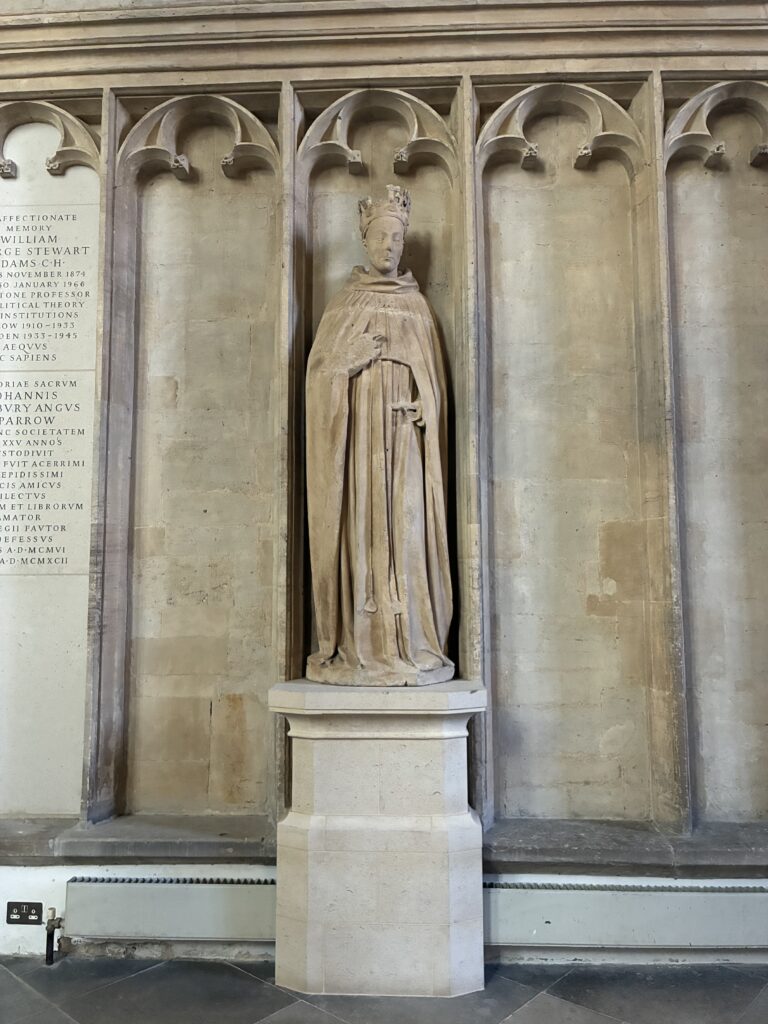
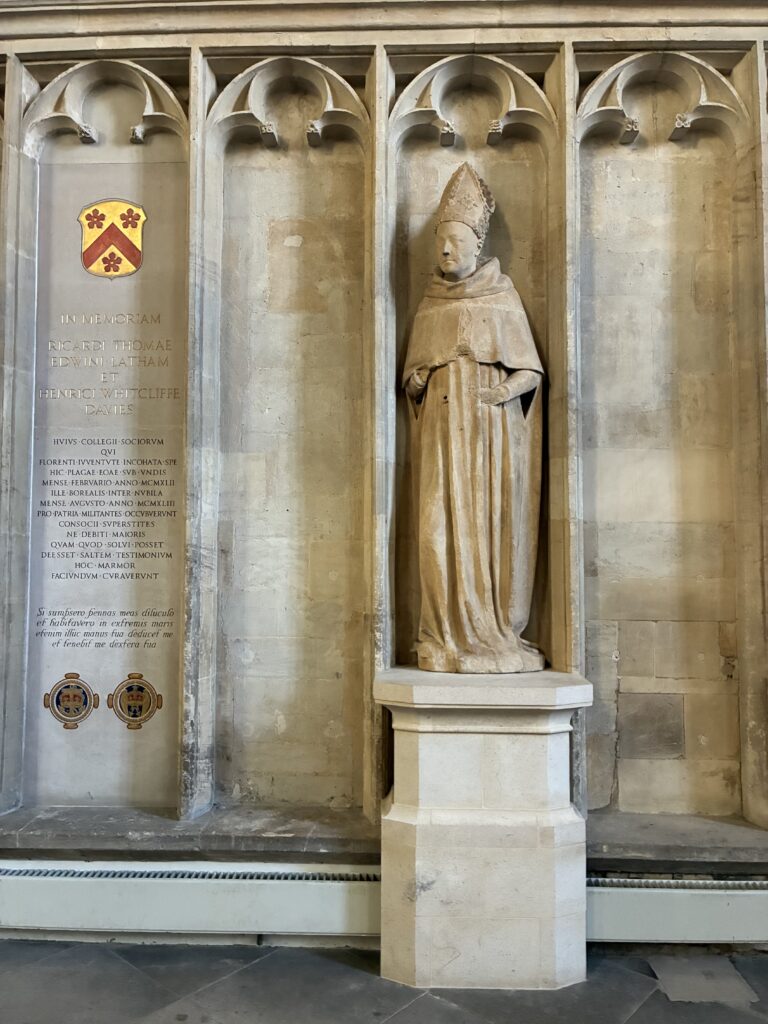
The founders of the college. Henry VI and Archbishop Henry Chichele are by John Massynghan, one of the most celebrated English sculptors of the medieval period. Once they decorated the gate, they now stand in the outer chapel.
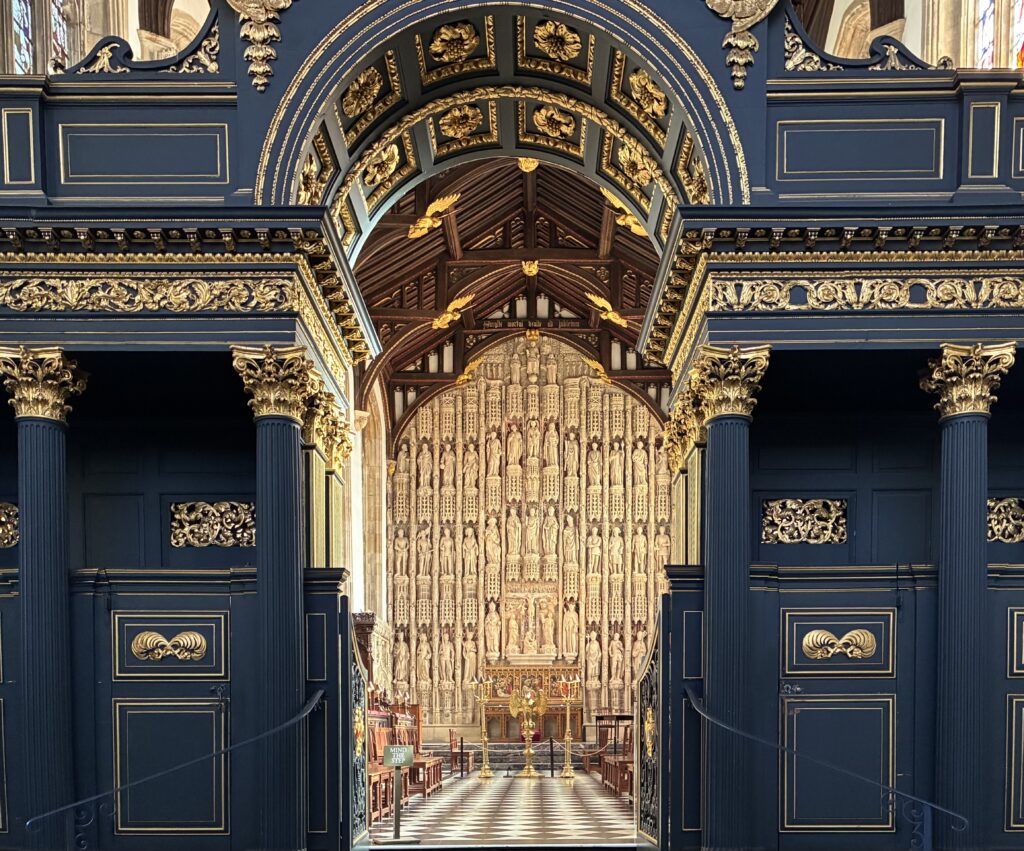
The view through the navy and gilt screen of the magnificent reredos behind the altar. The original statues, which were colourfully painted were removed during the Reformation, leaving only the niches. Which were reused when Gilbert Scott made the new statues in 1872. You can also see the hammer beam open timbered roof, with golden angels looking down from on high.
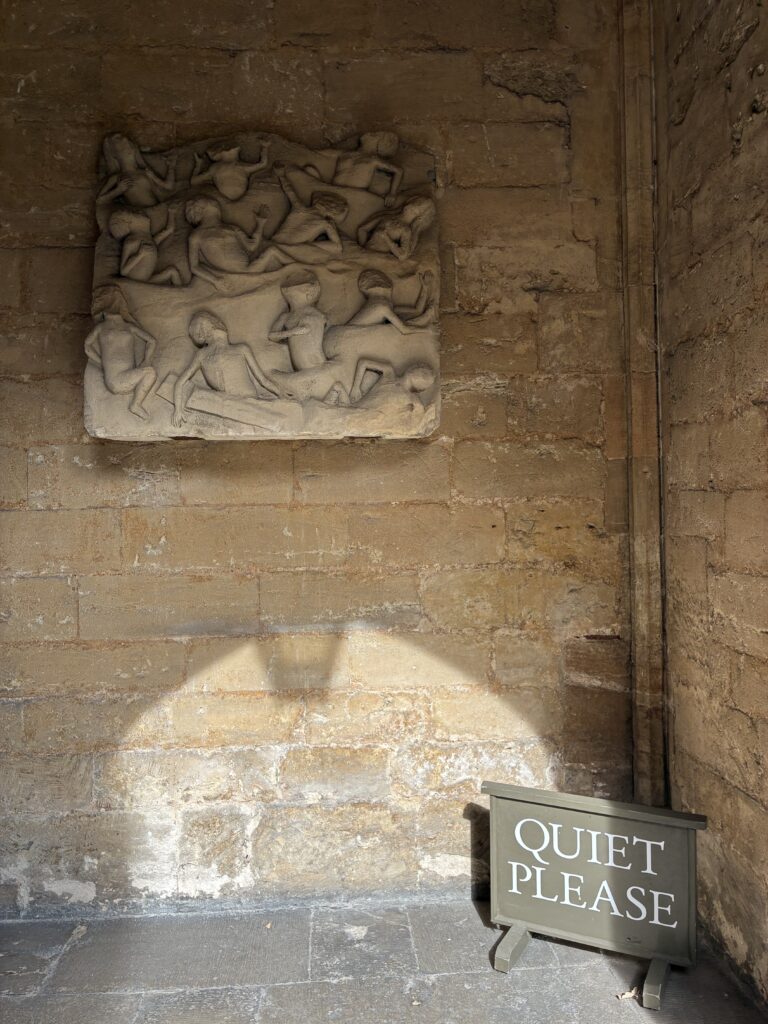
This sculpture shows the naked bodies of the dead now reunited with their souls, rising up from their tombs, and making their last journey towards their Final Judgement.
You may also like to read: