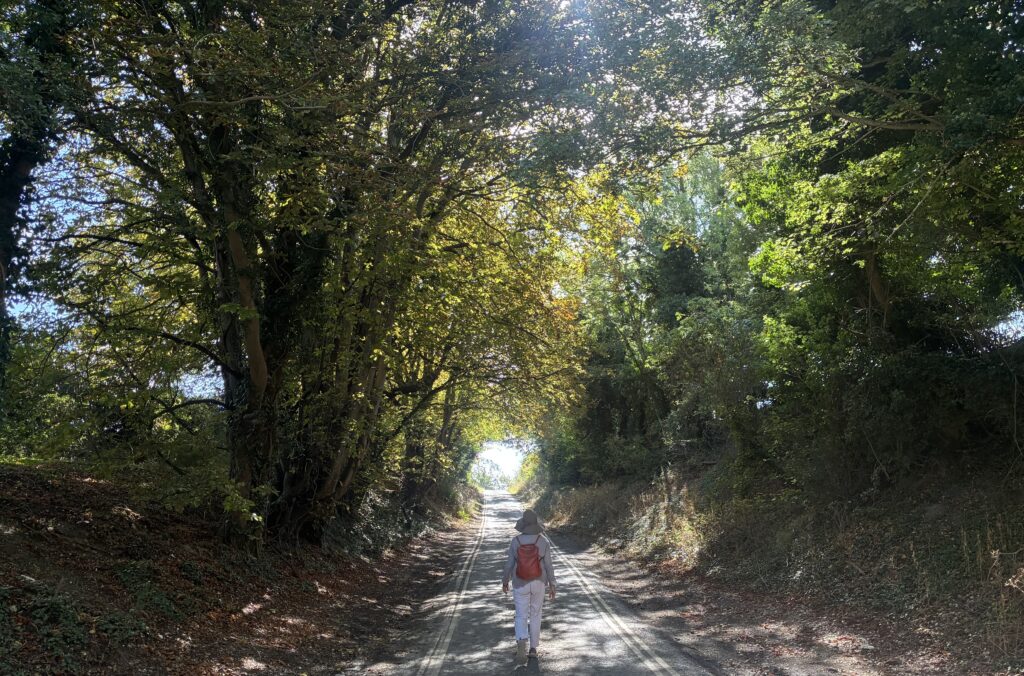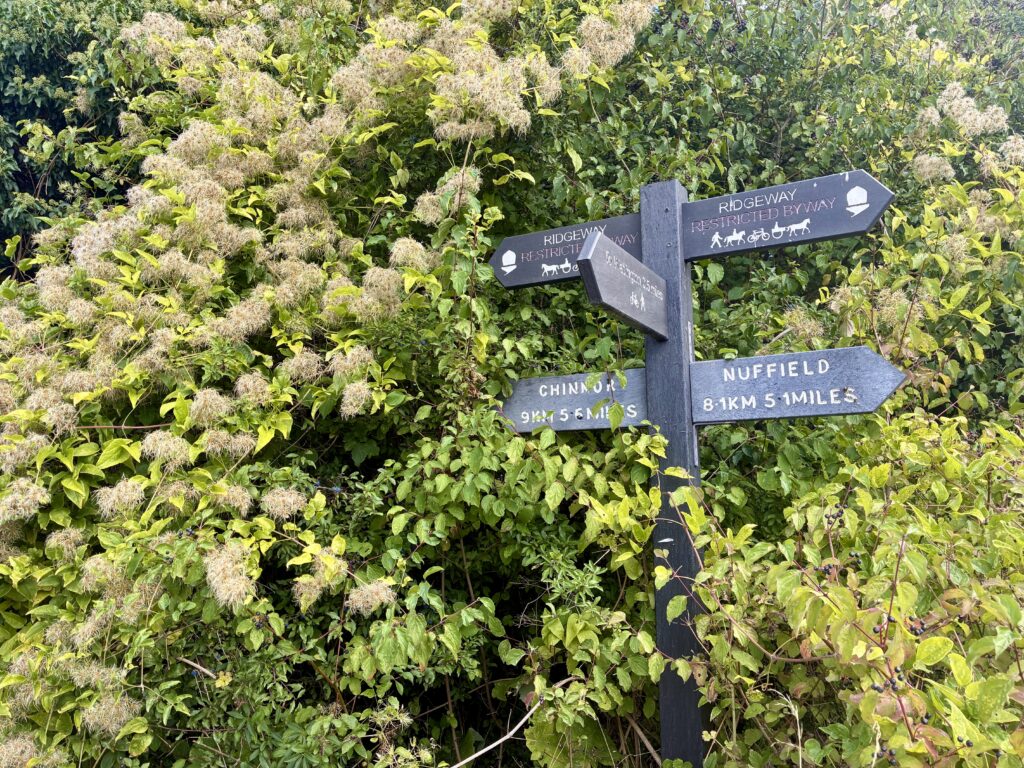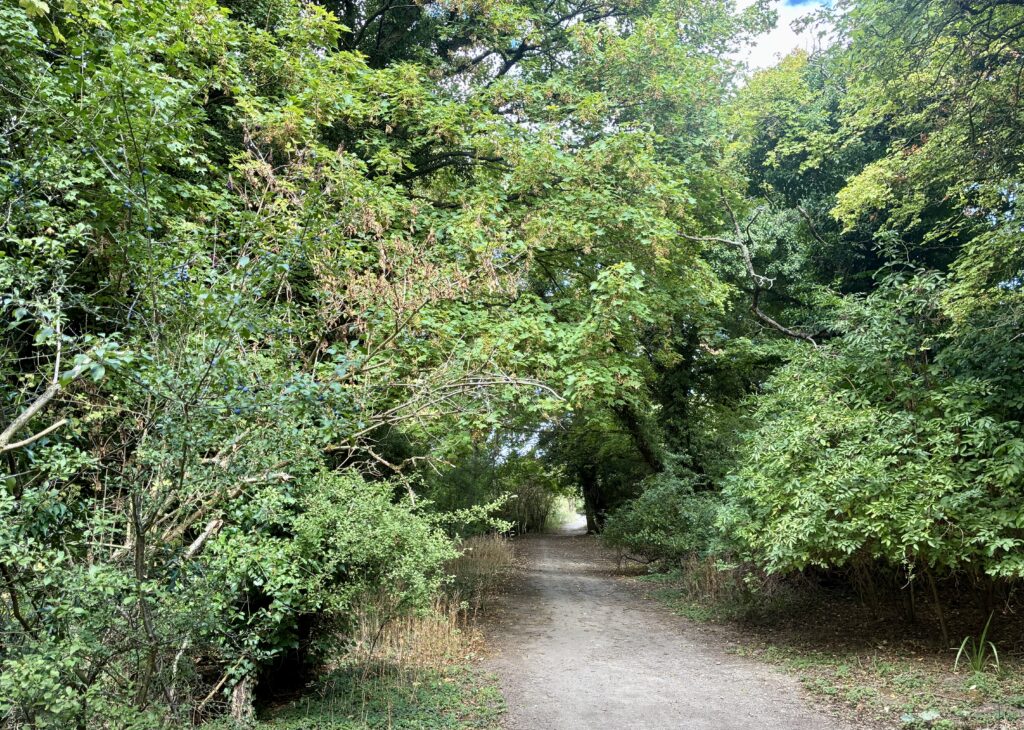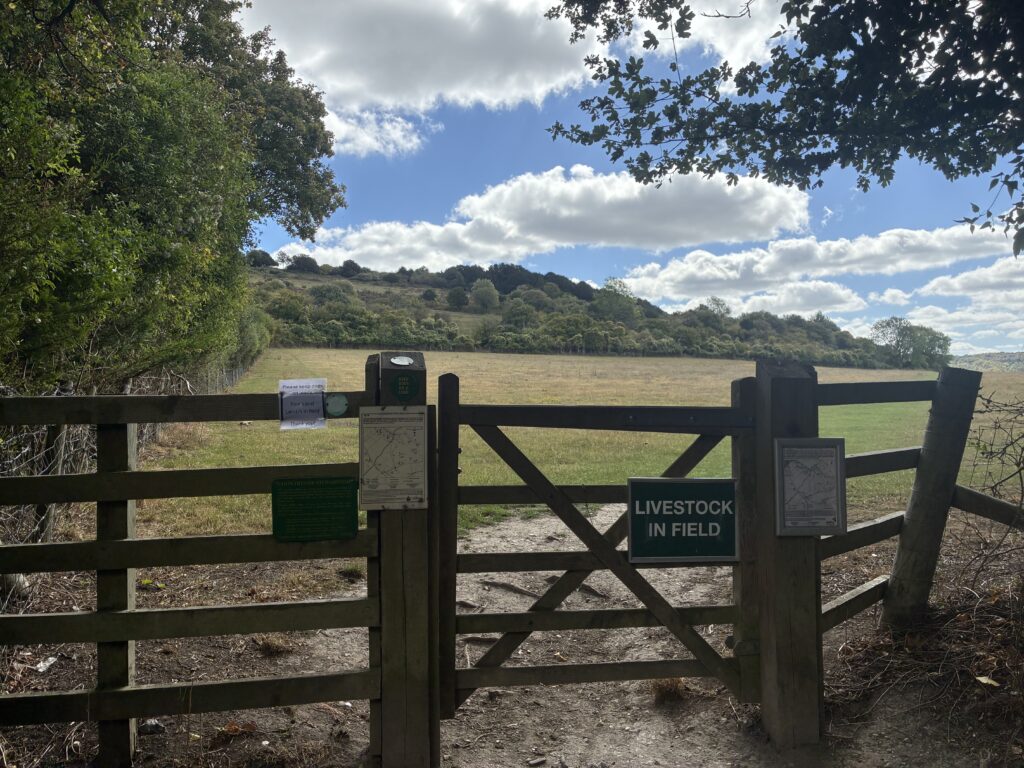
On one of the last of this year’s long summer days, I accept an invitation from my friend Gina to take a walk along the Ridgeway, also known as the oldest road in Britain. She had discovered that she could use her free pass on the bus to London as far as Lewknor, a small Oxfordshire village at the foot of the Chiltern Hills, and a stone’s throw from the ancient path trodden for over 5,000 years by generations of our ancestors. Keen to escape the heat of the city I accept with relish, and so it is, our rucksacks stuffed with suncream, sandwiches, and lashings of bottled water and armed with a rudimentary map, we alight at our stop, make our way under the busy M40, and follow the signs (the path now has official National Trail status). It isn’t long before we have left the roar of the traffic behind and are heading up hill with eager anticipation.
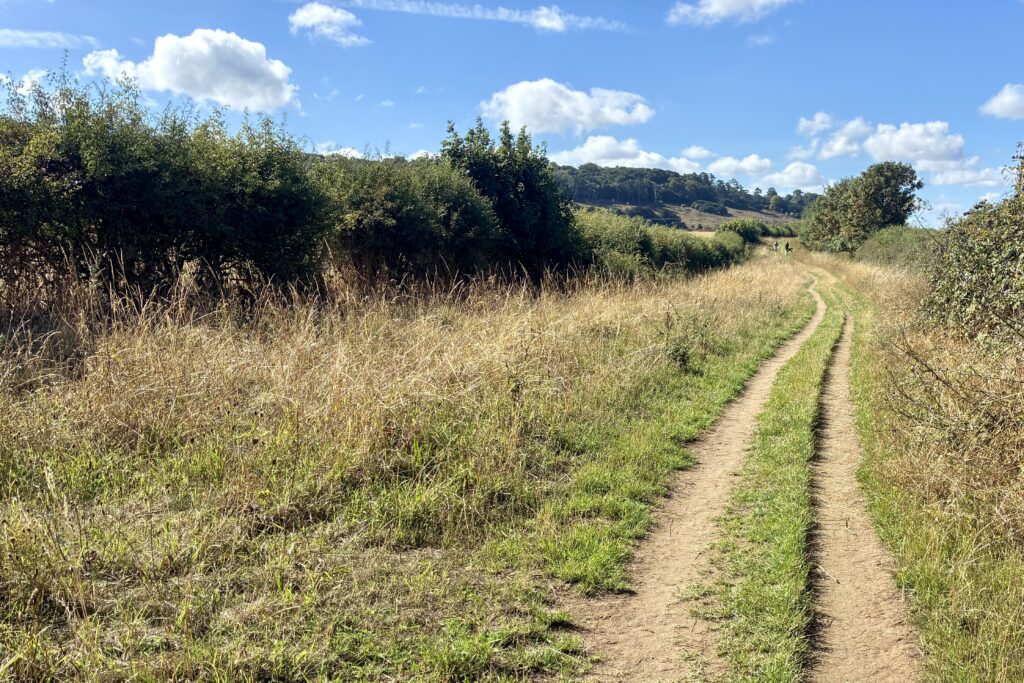
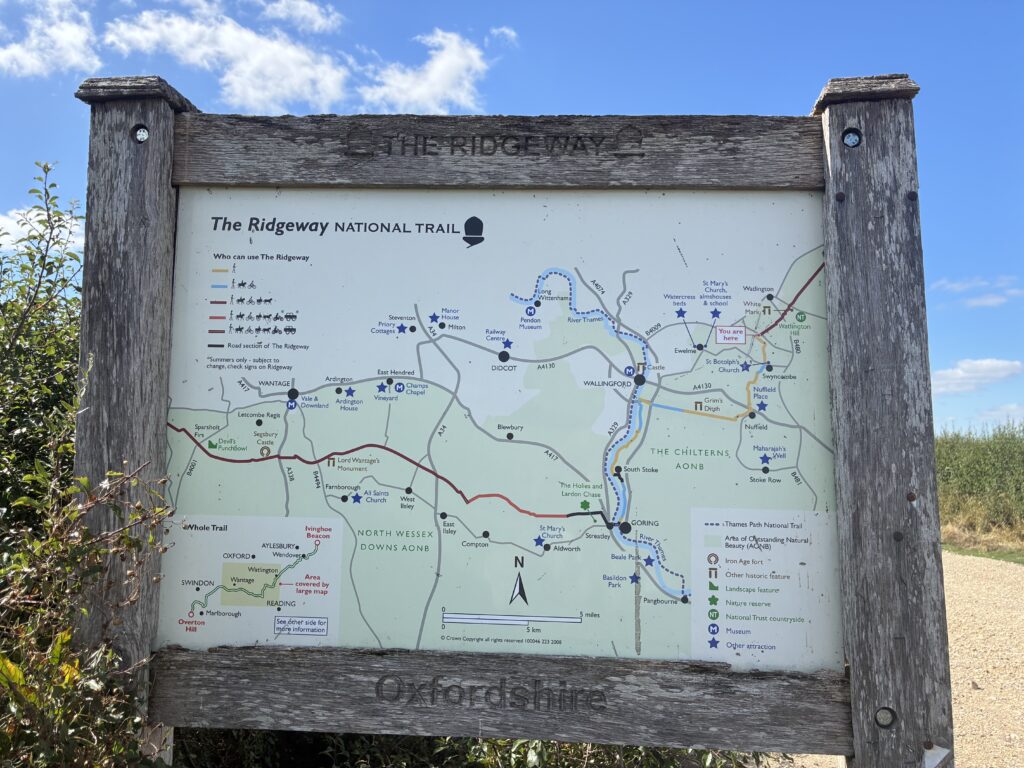
The Ridgeway starts from high up in the Chilterns at Ivinghoe Beacon in Buckinghamshire, and travels through the counties of Berkshire, Oxfordshire and a small corner of Hertfordshire to arrive 87 miles later at Overton Hill, near to the prehistoric stone circle of Avebury deep into Wiltshire. As its name suggests the path runs close to if not on top of the scarp slopes of the hills. It is one of a network of routes first formed by hunter gatherers who learned to navigate our island by avoiding the forested valleys and taking the high ground. Many years later the Ridgeway route was widened to allow for space to herd sheep, for travellers using horses and carts, for traders, pilgrims, even companies of soldiers. Until a way was found to forge roads below, and the old path was left, as the Victorian nature writer Richard Jefferies puts it, running ‘like a green riband through a sea of corn.’
En route you will find Swincombe Downs, Christmas Common, Grim’s Ditch, Churn Knob, wonderful names linking us to long forgotten times. There’s Wayland Smithy, a neolithic burial chamber. There are Iron age forts, and Bronze age barrows. There’s a location near our starting point where for centuries a hoard of Viking silver from the 870’s lay buried, only to be recently discovered by detectorists. It’s now in the Ashmolean Museum. And then there is the mysterious chalk figure of the great White Horse at Uffington, an enormous carving cut into the hillside by people so long ago that its purpose can only be guessed at.
I had last walked along the Ridgeway with my father when I was 10. He had planned a ‘boy’s own’ expedition for me and two brothers. Heavy on the epic, less strong on the planning. We had caught the train to Swindon and made our way to Avebury, intending to walk as far as Wallingford where having spent two nights under canvas, cooking on open fires, we would arrive home on foot to a triumphant welcome. Only the rain was incessant, our footwear totally inappropriate, (I was wearing red suede loafers which dyed my feet pink) and there was a painful parental chafing that refused to be relieved by generous applications of talcum powder. A day into our adventures, our rations ran out. There was nothing else for it but to make an ignominious call to my mother from the nearest pub. From where we were rescued by car.
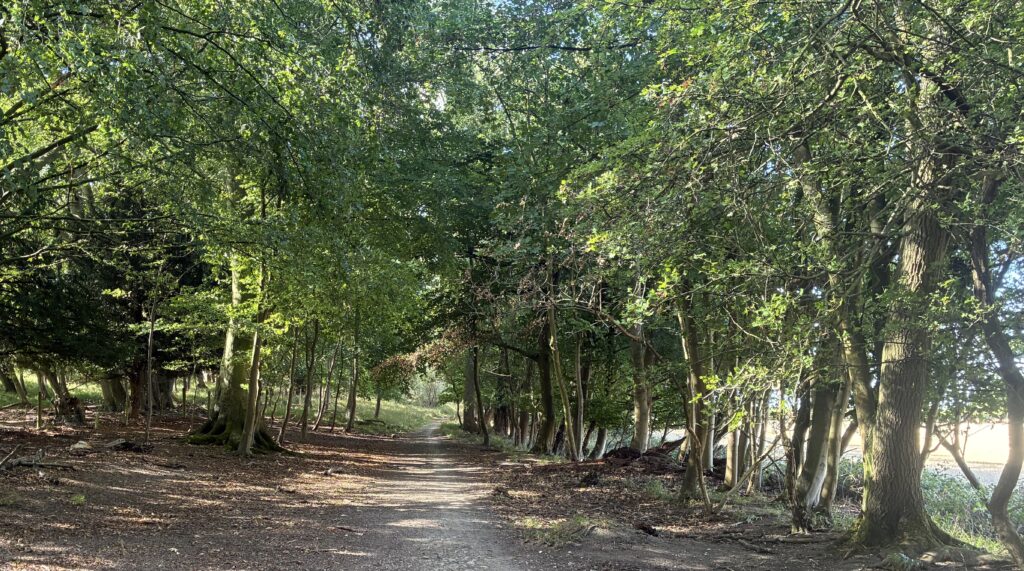
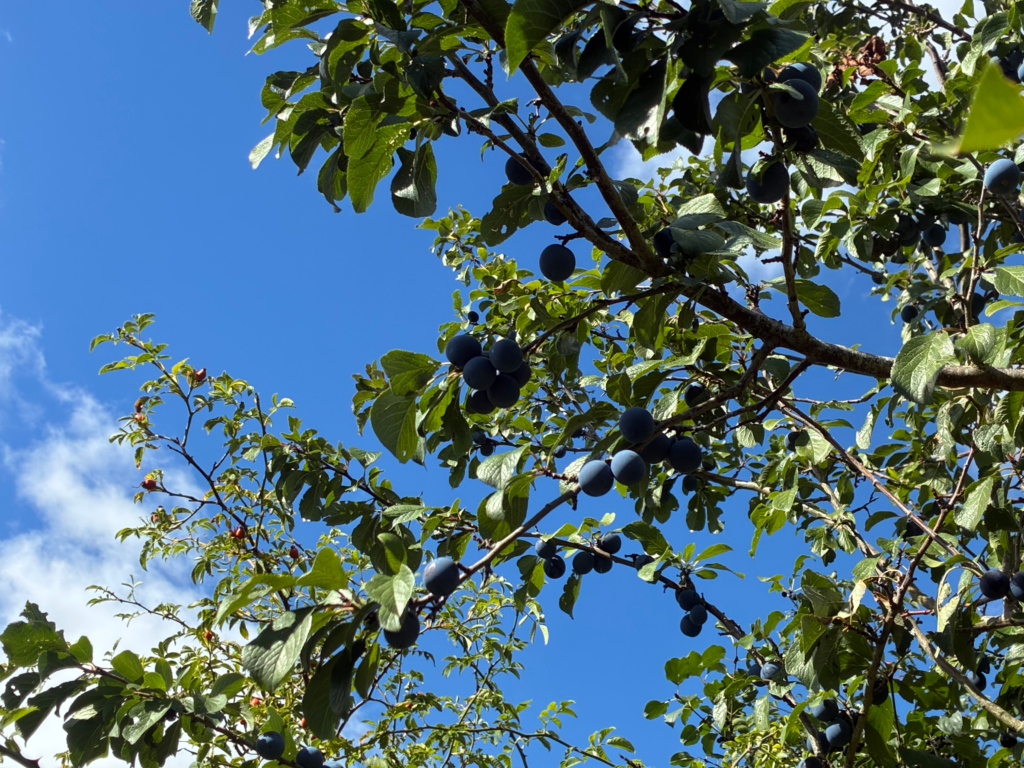
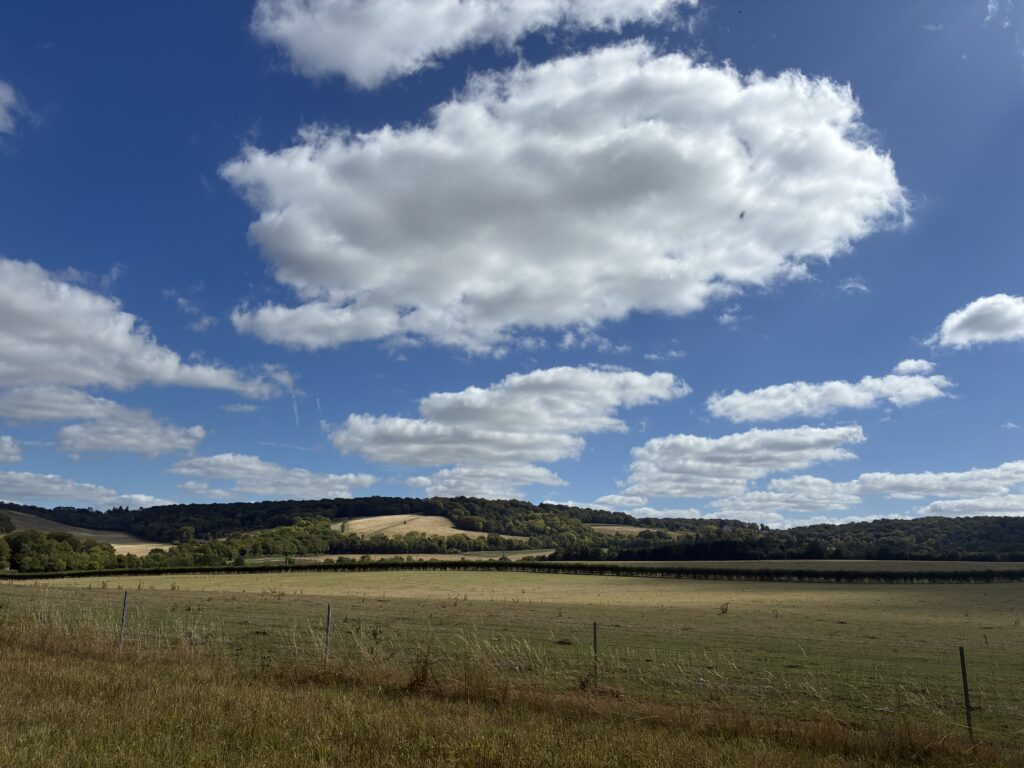
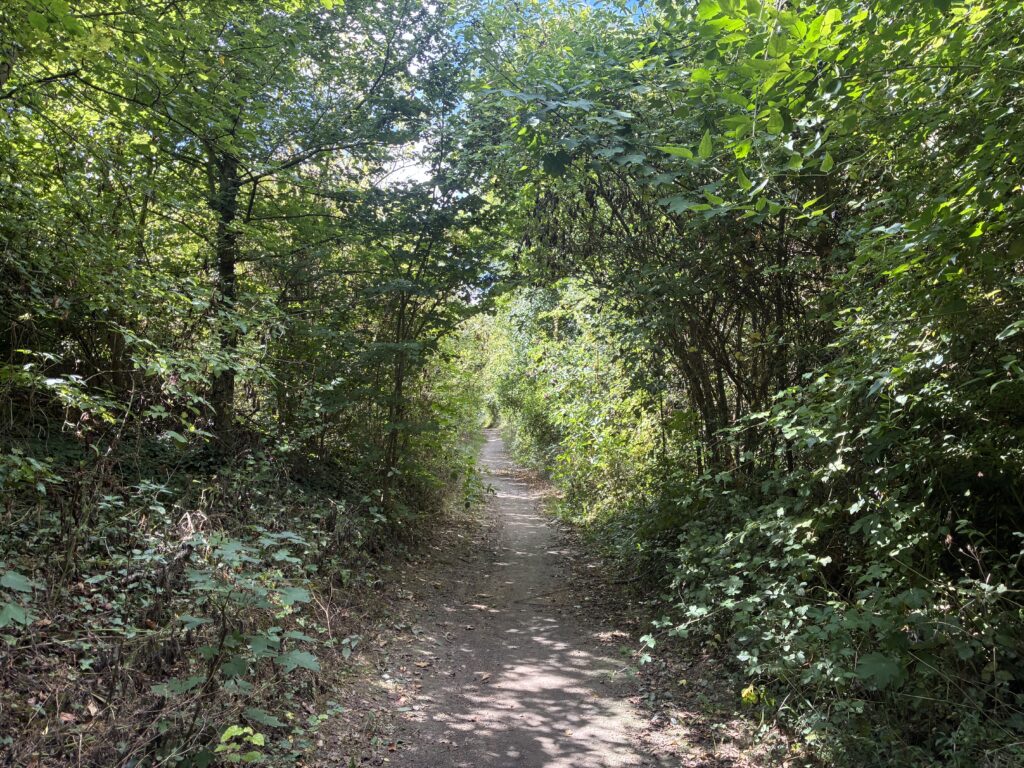
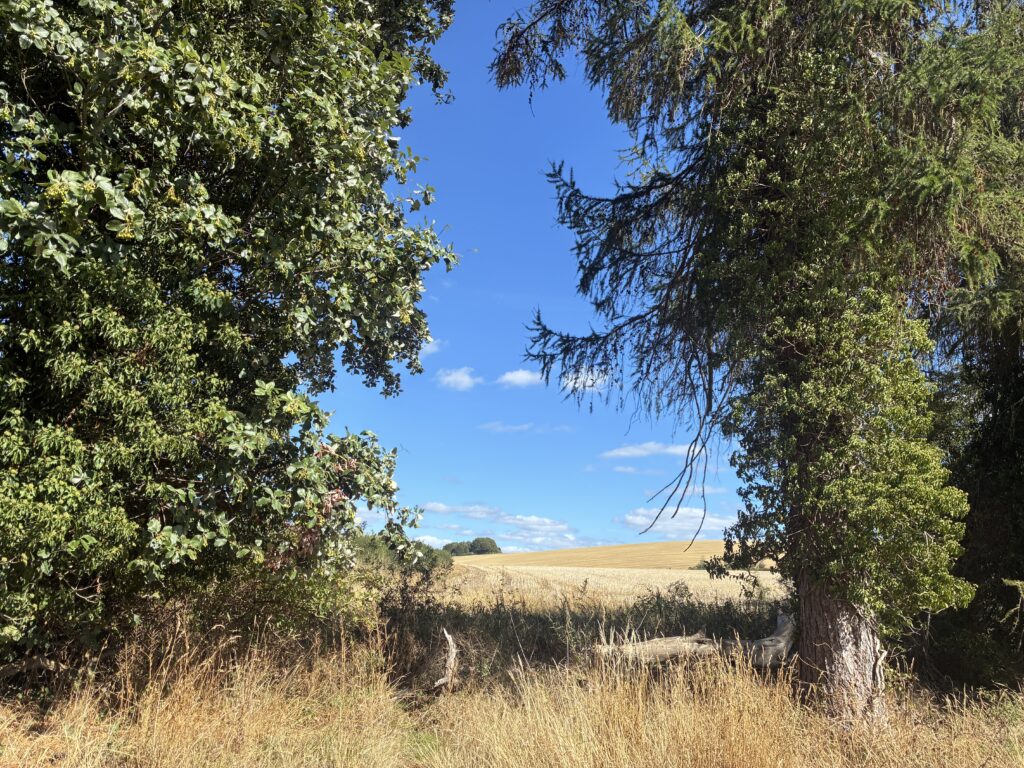
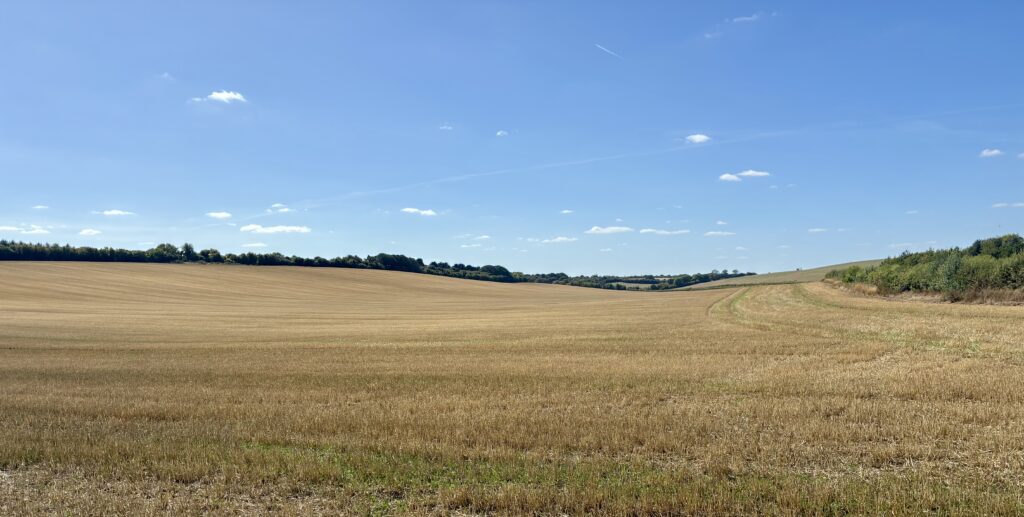
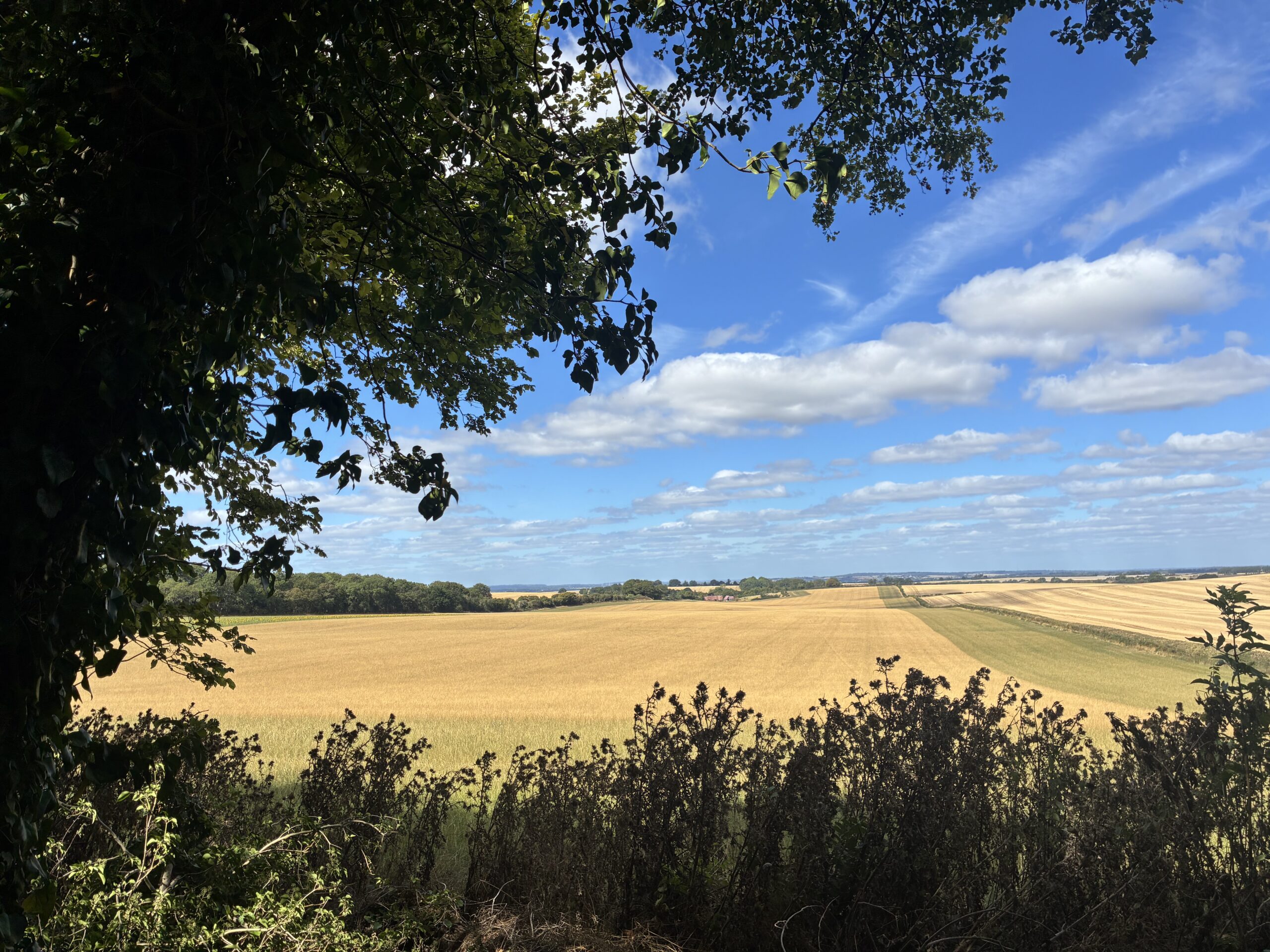
And so it is that all these years later, I have agreed on a much less ambitious plan. An eight-mile trek as far as Nuffield, famous for its association with William Morris, later Lord Nuffield, the founder of Oxford’s Morris Motor Company. Besides the weather is sunny, there is a slight breeze and soon the path is edged by overhanging branches laden with damsons and a crop of tiny but sweet blackberries. There are elderberries and sloes for the picking if that is our fancy. And the well wooded walkways on this part of the trail, of oak and beech, hornbeam and hazel, are illuminated with dappled light; the branches suddenly dropping away to frame bright fields of sunlit stubble stretching away below.
We pass few people on our travels. The occasional dogwalker or runner. But there are red kites and buzzards a plenty circling the huge skies, together with gatherings of migrating birds feeding from the spilt grain of the harvest, using the open chalk escarpments as natural highways southwards. And while at first we are full of conversation, soon we fall into quiet step. Mindful of the poet Edward Thomas who believed that when he walked here it was alongside a ghost world of ancient travellers ‘secretly sharing the world with the living.’
And so it seems. Towards the end of our journey, when the path was more open, and the sun shone with an intoxicating heat, a line of eight or so men and women, some wearing Viking helmets, appear suddenly on the brow of the hill. They are all riding segways. One after the other, they swoop past us and away into the woods beyond. Without so much as a nod or a wave. They appeared real enough. My companion can vouch for the story. But we have no evidence to verify the account. Perhaps they were the modernist descendants of the spirits that seem to linger all along the route.
Soon after this we hit a tarmacked road, and then the sign for Nuffield. Where as if by magic a tea room appears, housed in a 300-year-old inn called The Maker Space (it doubles as craft studios and a shop) serving pots of tea, delicious cheese scones and strawberry cake oozing with cream. And we feel glad, indeed humbled to have spent one of the last days of summer up here on the ancient highway that is Britain’s oldest road.