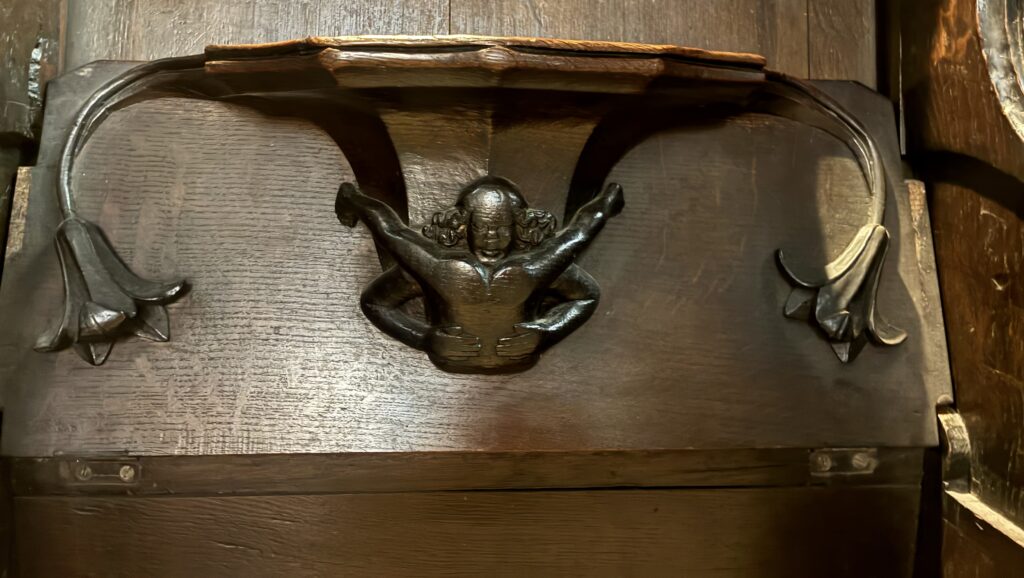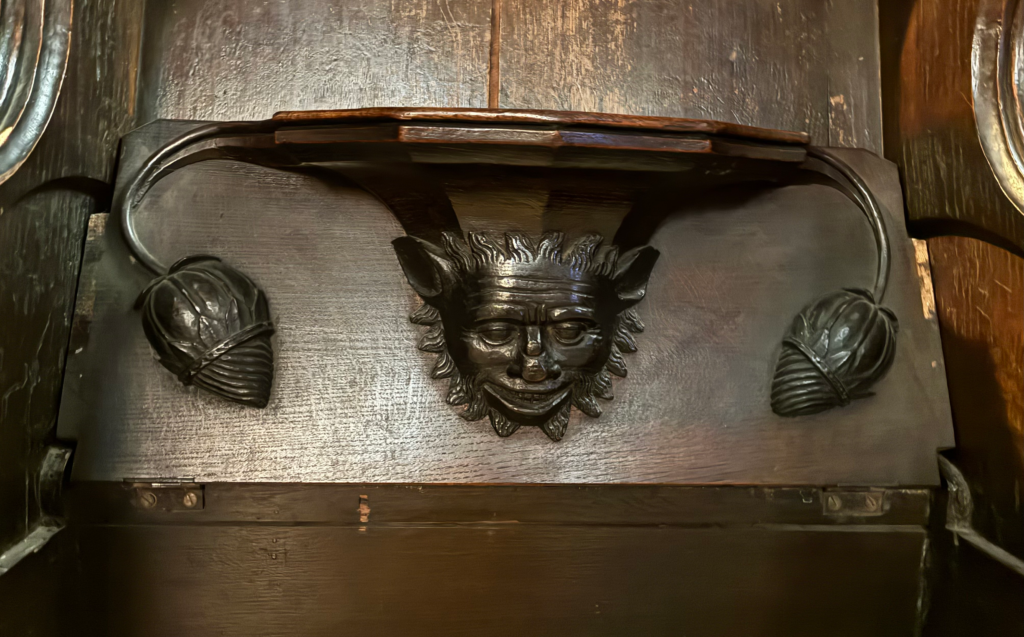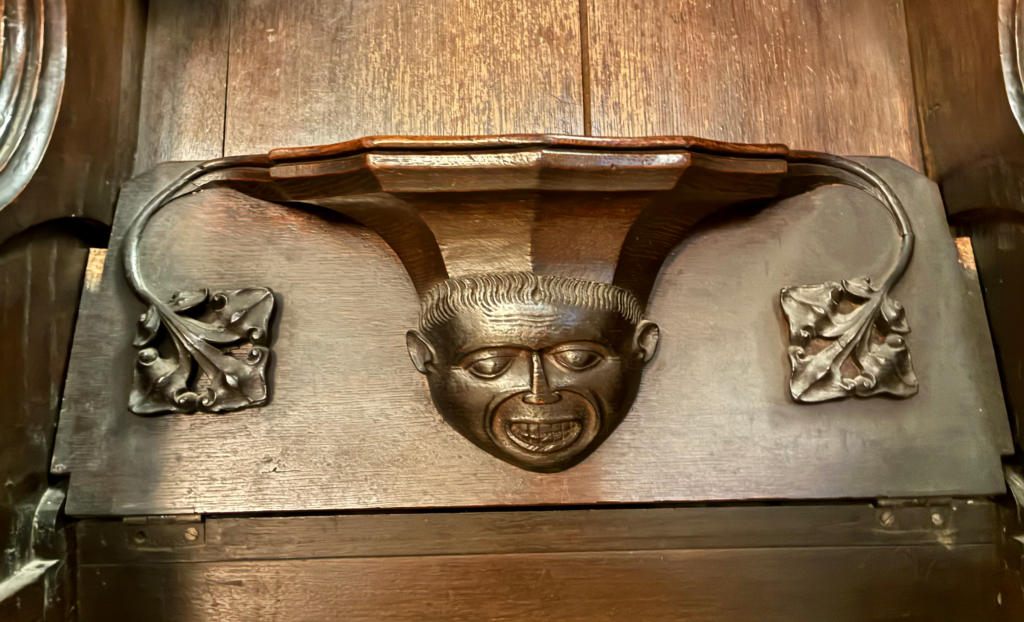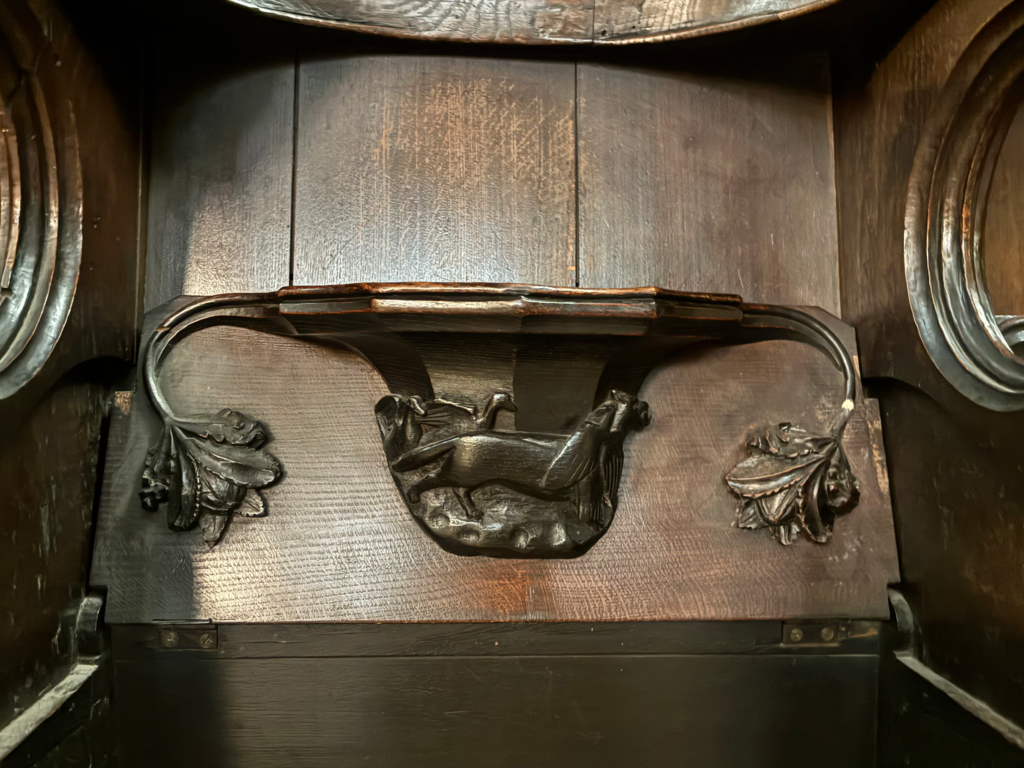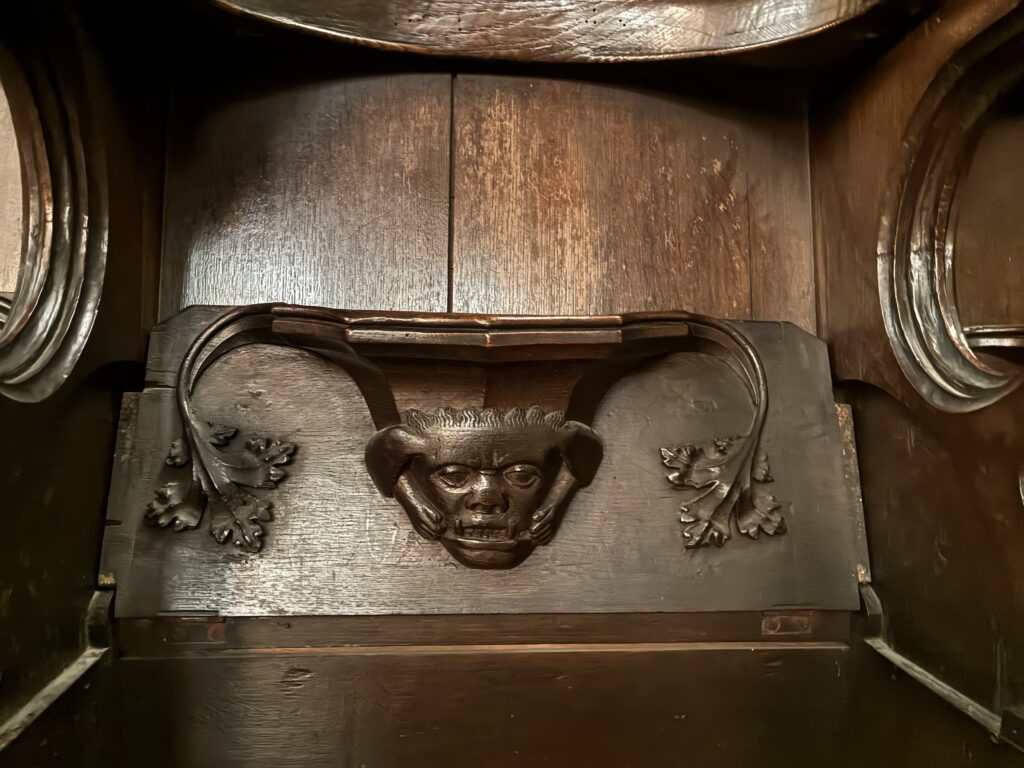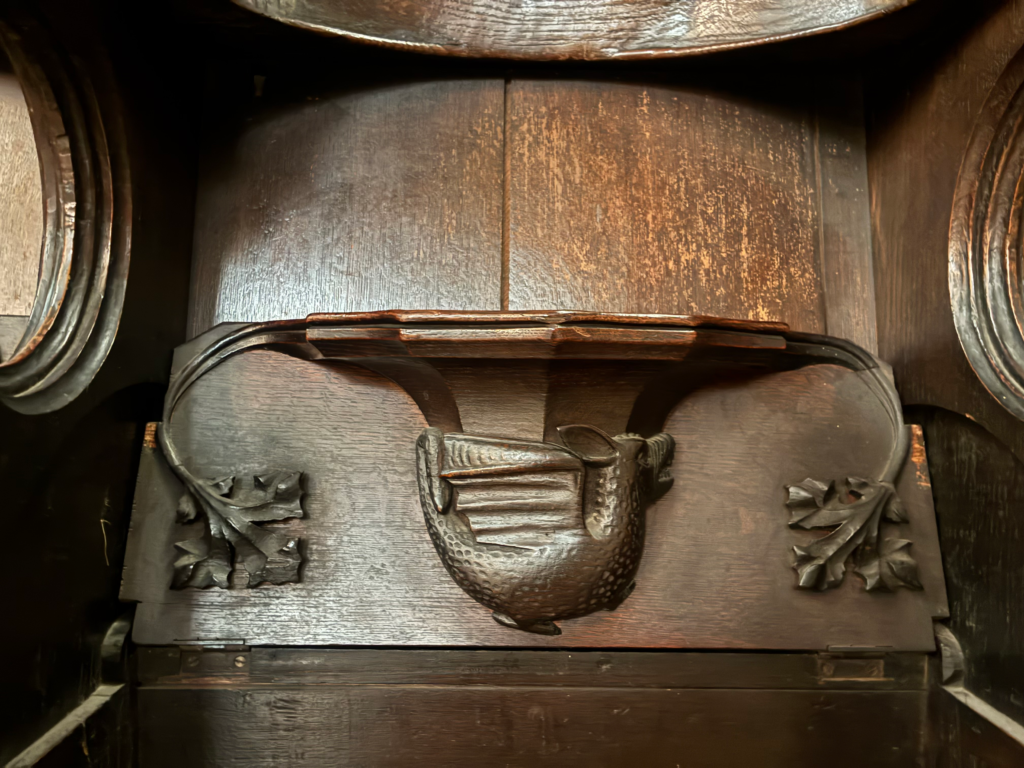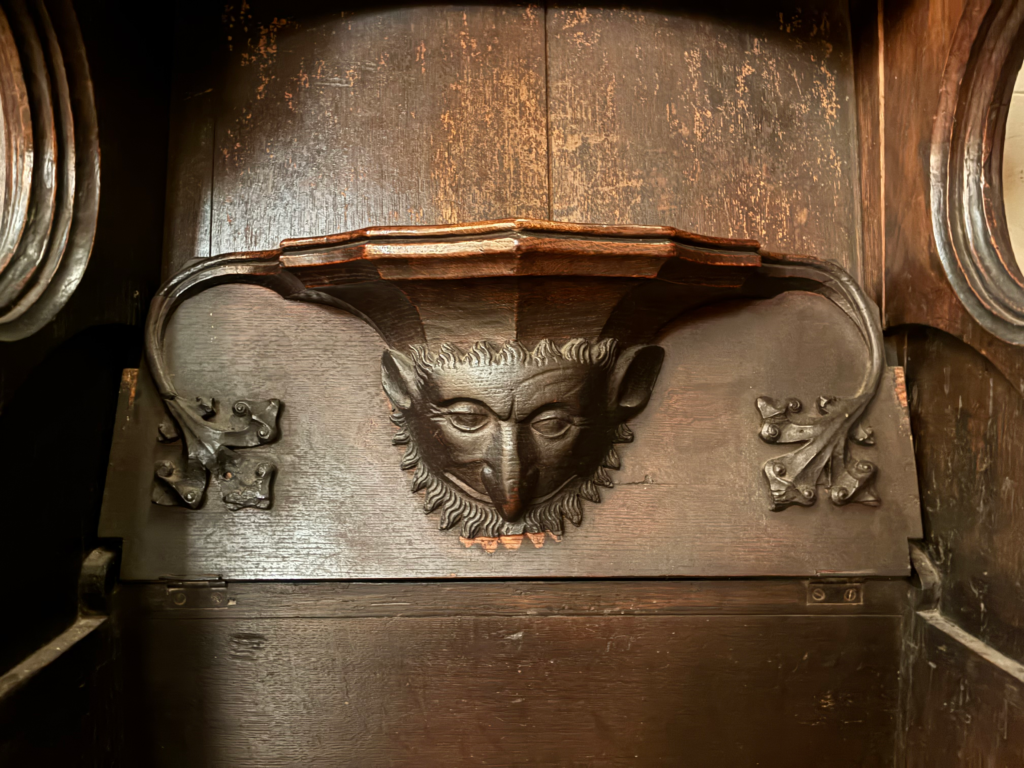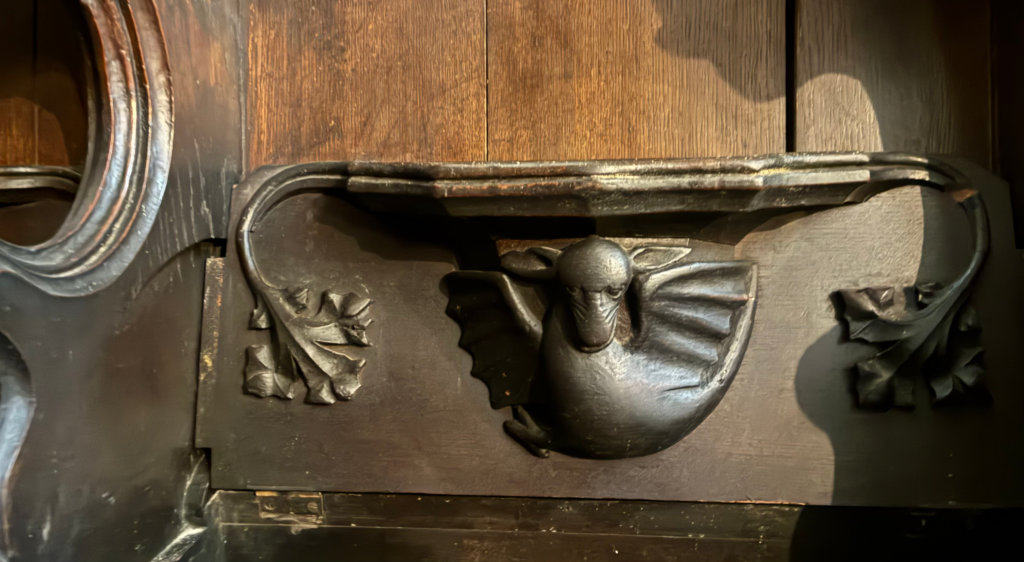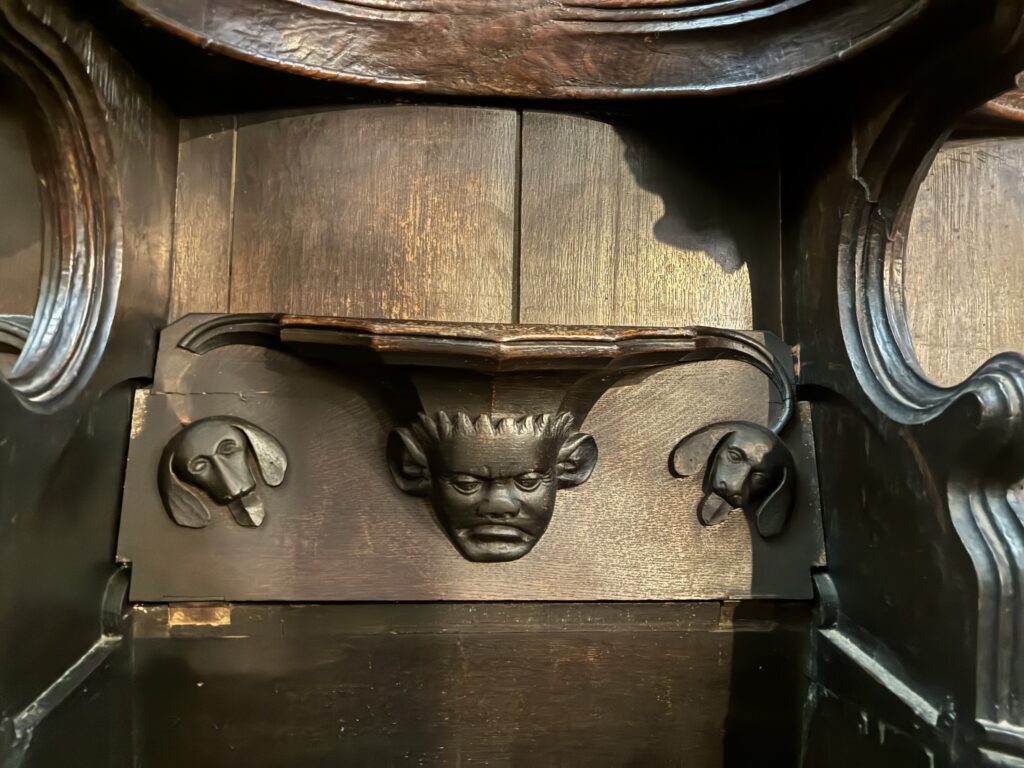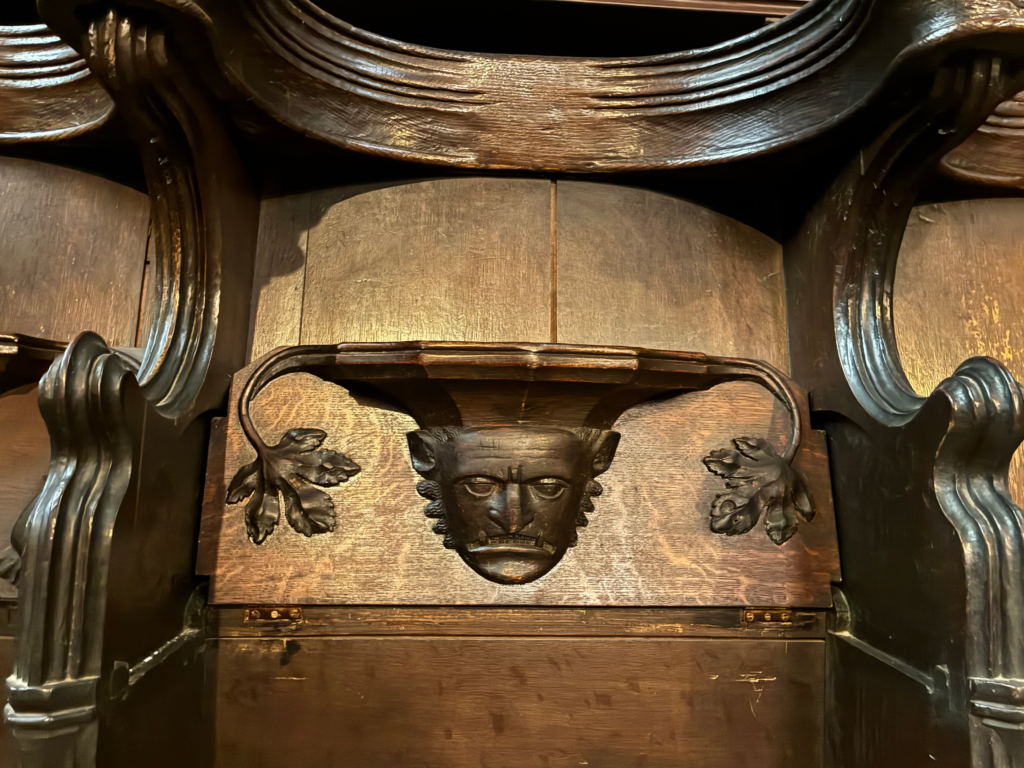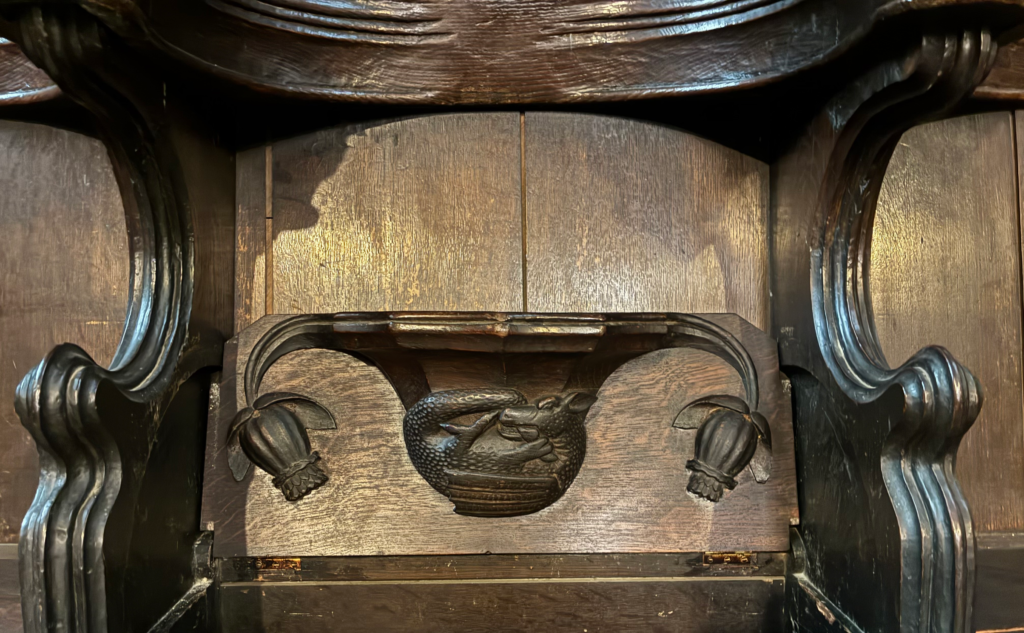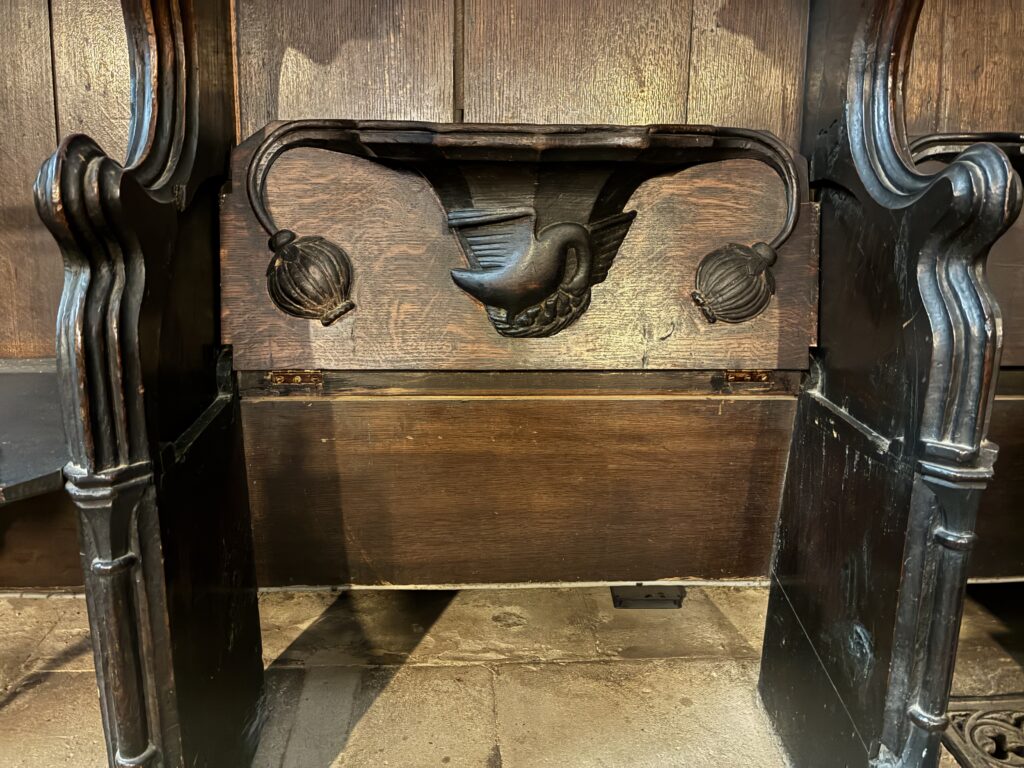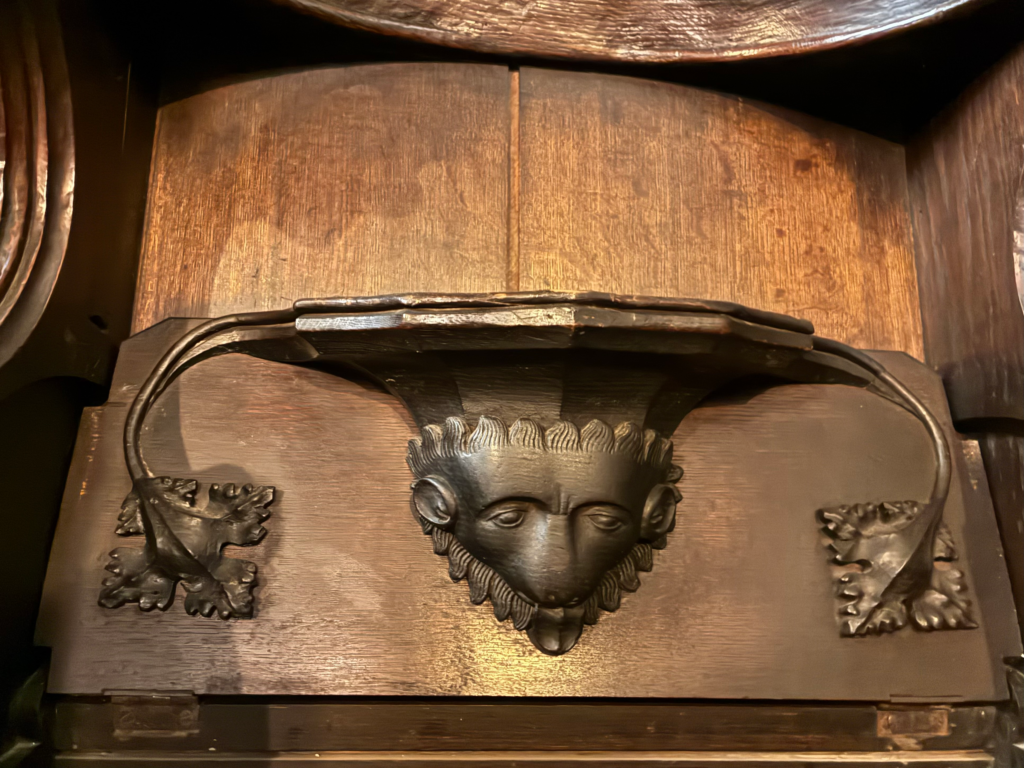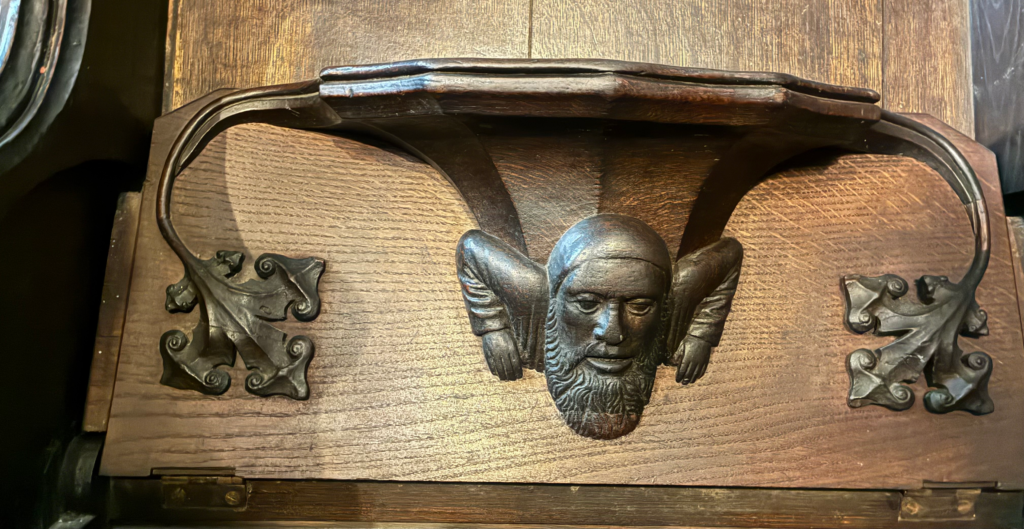
One morning during those recent long summer days I found myself on my knees in front of a man with his legs in the air. Desperate for some respite from the heat, I had popped into the cool shade of the Magdalen College chapel, (free entry for Oxford residents), and there he was. An impish look on his face, and a smile on his lips, peering from between his splayed lower limbs, exposing his bare buttocks in a feat of enviable acrobatics. There were a cast of similarly curious characters alongside him; a grinning elf with pointy ears, a troll with a tusk-like underbite, another with a protruding proboscis, a clawed dragon, and a fox making off with a goose in its mouth, the remains of the gaggle flapping and honking behind him. I felt as if I was standing on the threshold of a topsy turvy realm, not frightening exactly, but decidedly discordant.
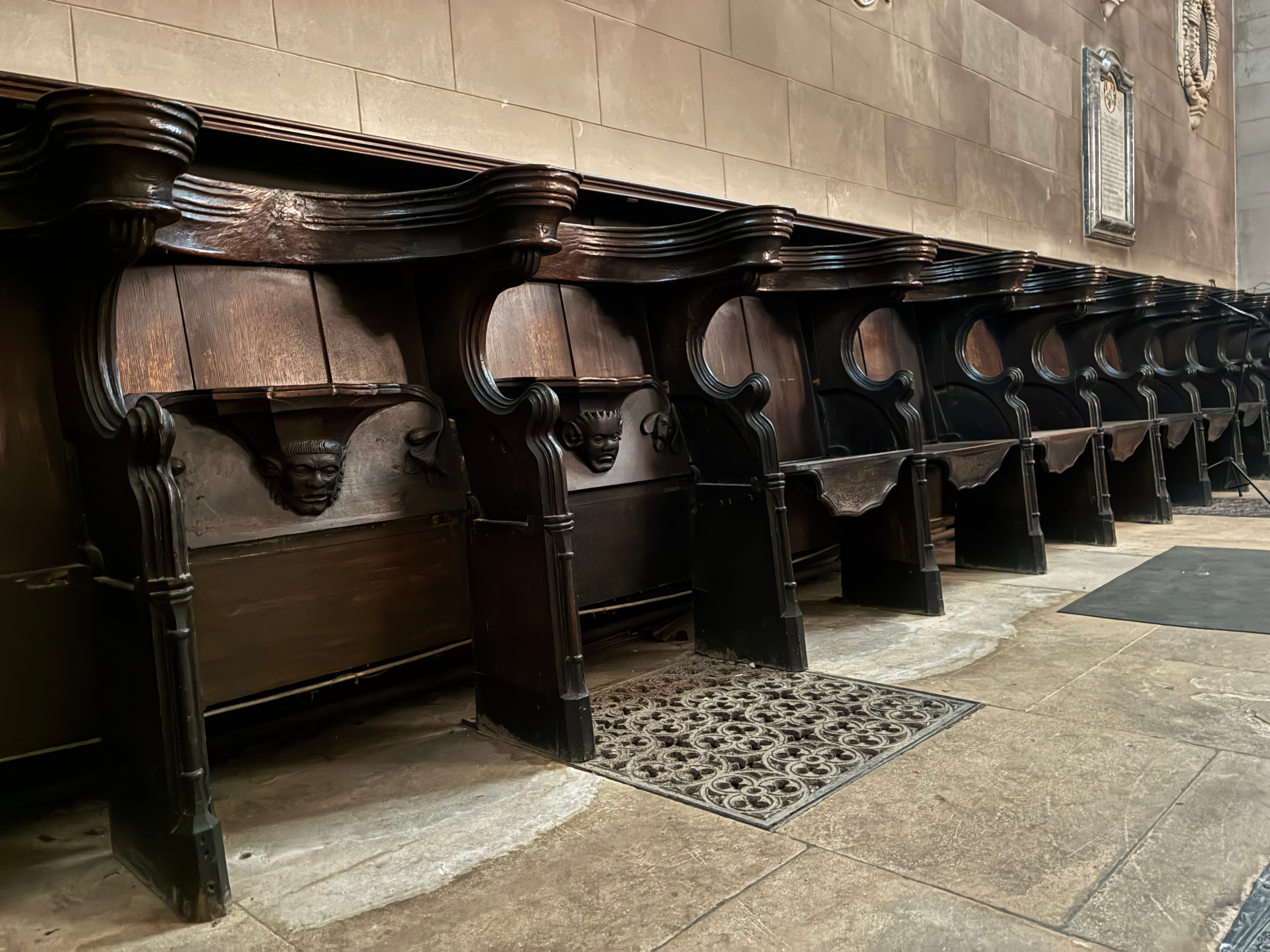
Carved out of oak and embellished with a swirl of ornamental foliage, these were my introduction to the weird and wonderful world of medieval misericords.
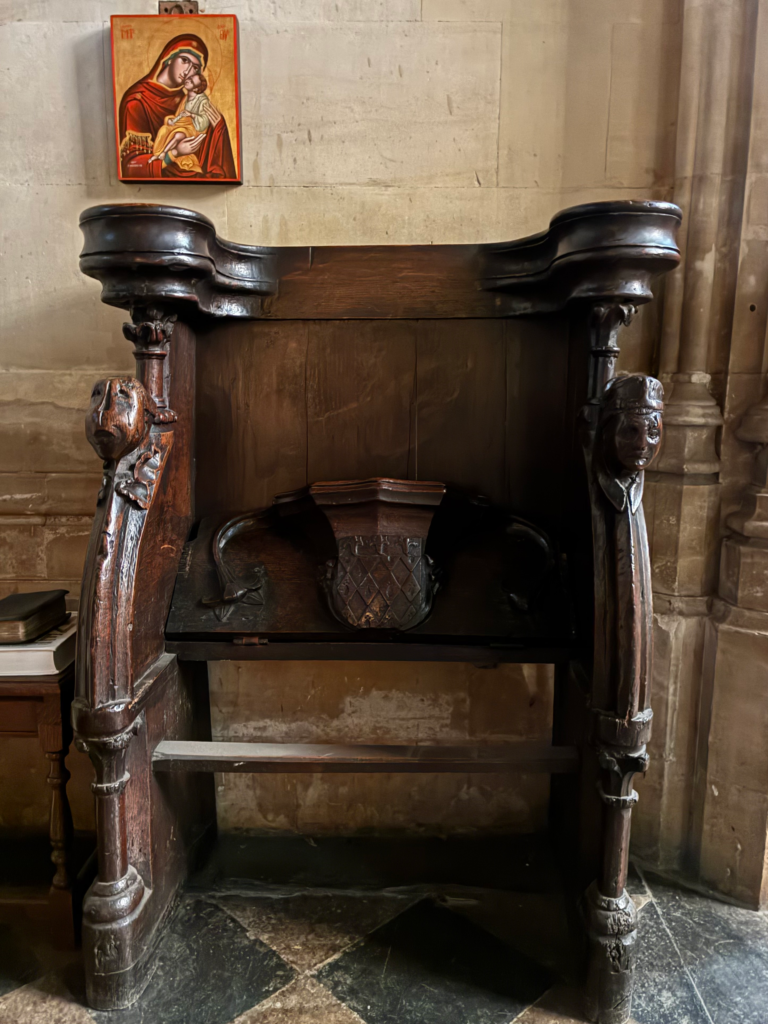
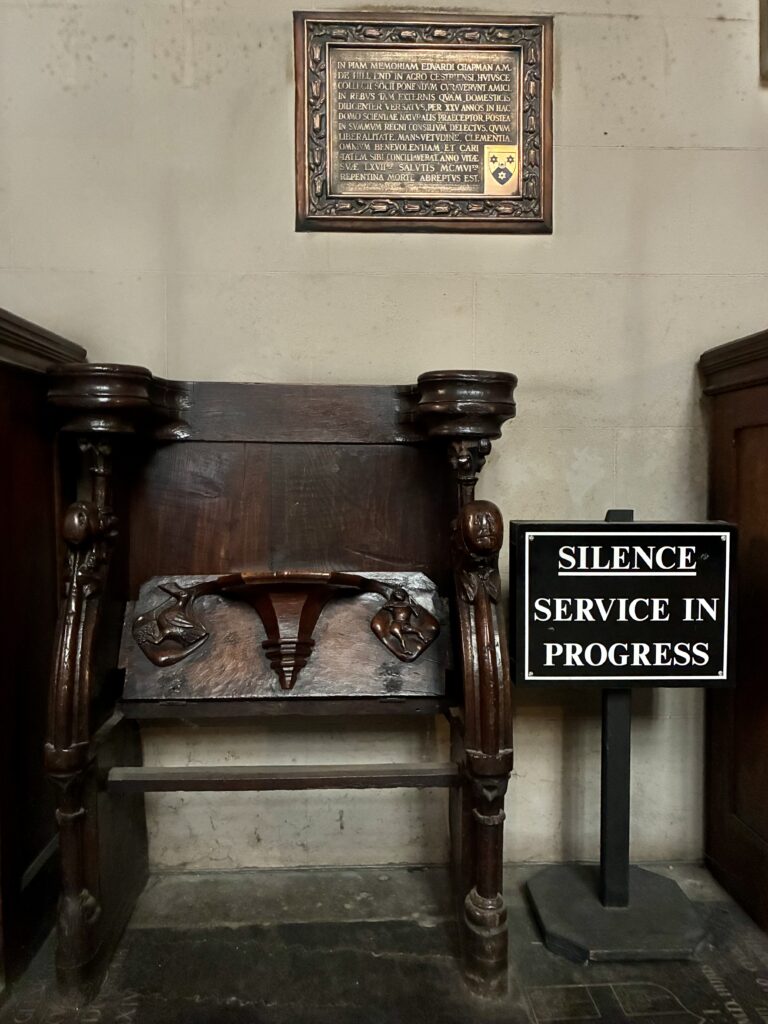
The word is from the Latin ‘misericordia’ meaning ‘mercy’ or ‘pity’. Back in the day monks worshipped standing up, from their choir stalls (literally ‘standing places’). Rising by two in the morning they were expected to attend seven fixed daily services; Lauds, Prime, Terce, Sext, Nones, Vespers and Compline, as well as mass and private prayer. On their feet, chanting, all the while hands outstretched towards heaven. The misericord was introduced to help, a ledge concealed under a hinged seat on which when flipped up, the clergy could mercifully perch discreetly to rest. And it soon became the custom to decorate the underside with carvings. Found in medieval cathedrals, and churches attached to monastic and collegiate institutions. Like Magdalen, established in 1458 by William Waynflete, Bishop of Winchester and Lord Chancellor of his time. It is these that I am looking at today.
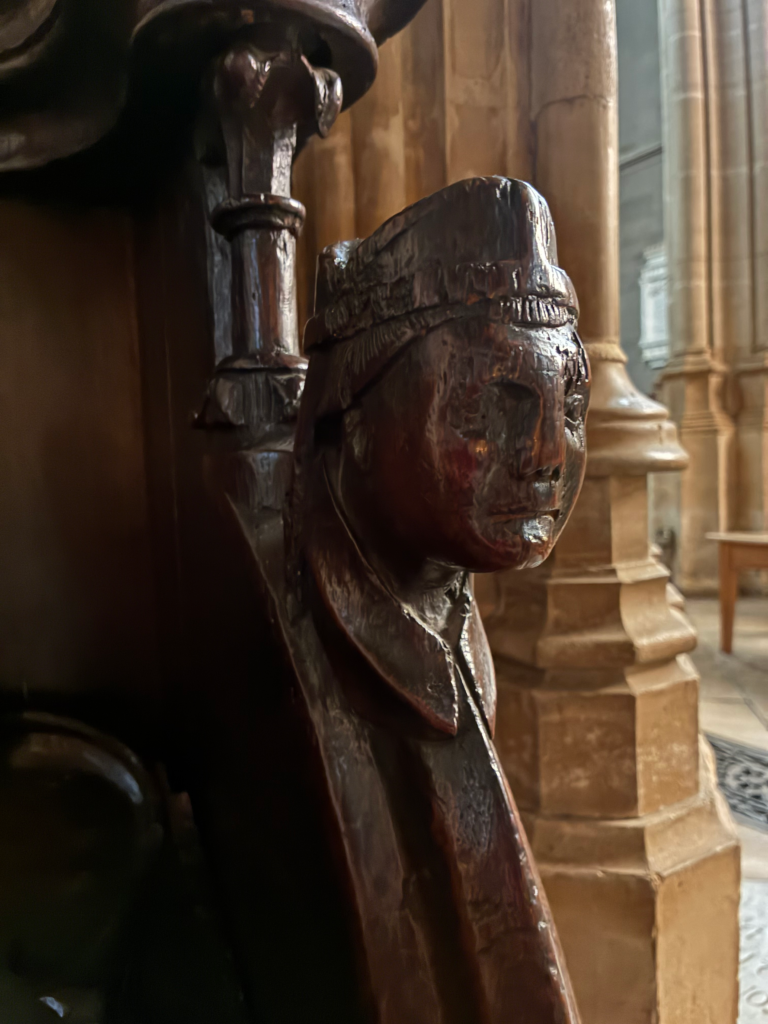
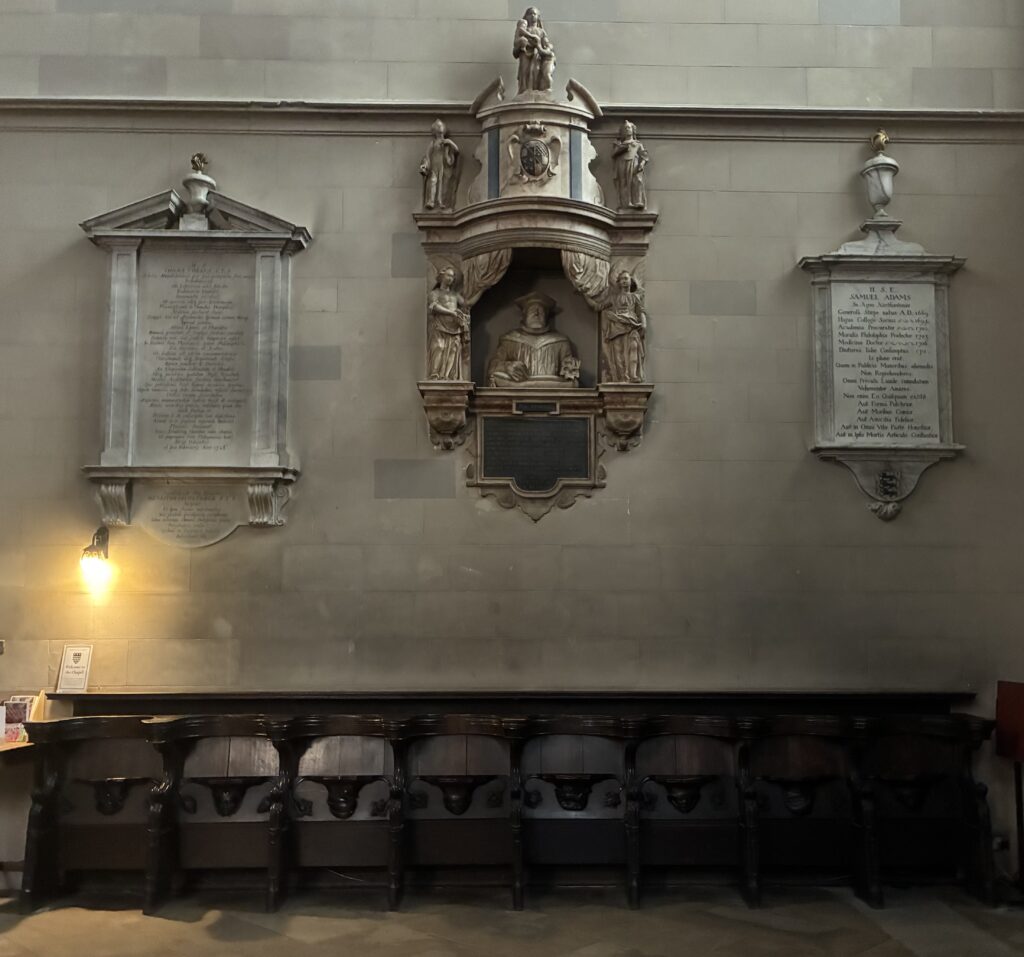
They are easy to miss in the low light of their surroundings, but the ones I meet first are eight in a row to the left of the door as you enter the ante chapel. There are two single stalls, more ornate, more fearsome than the ones in a row; maybe carved by a different hand for more senior members of the clergy, strange heads sculpted into the armrests. Lift the seat of the one stationed at the back and what appears to be a cockatrice stares back at you, a scaly beast half rooster half serpent with the power to petrify with one glance. Perhaps why the wide hipped archer opposite has his back turned away from him.
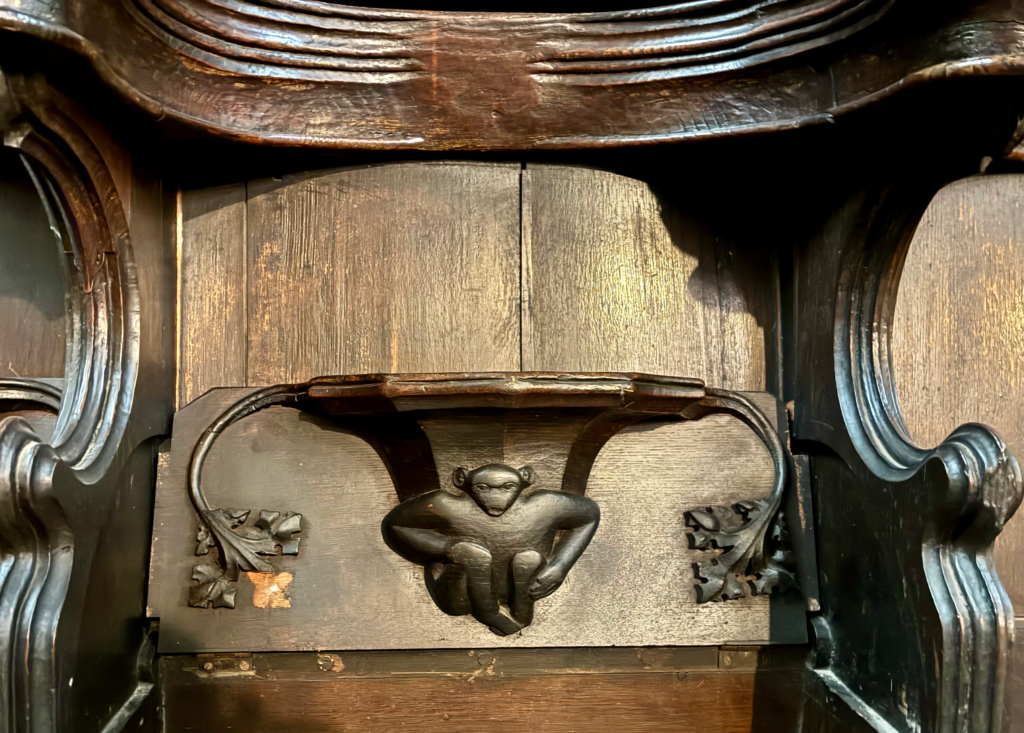
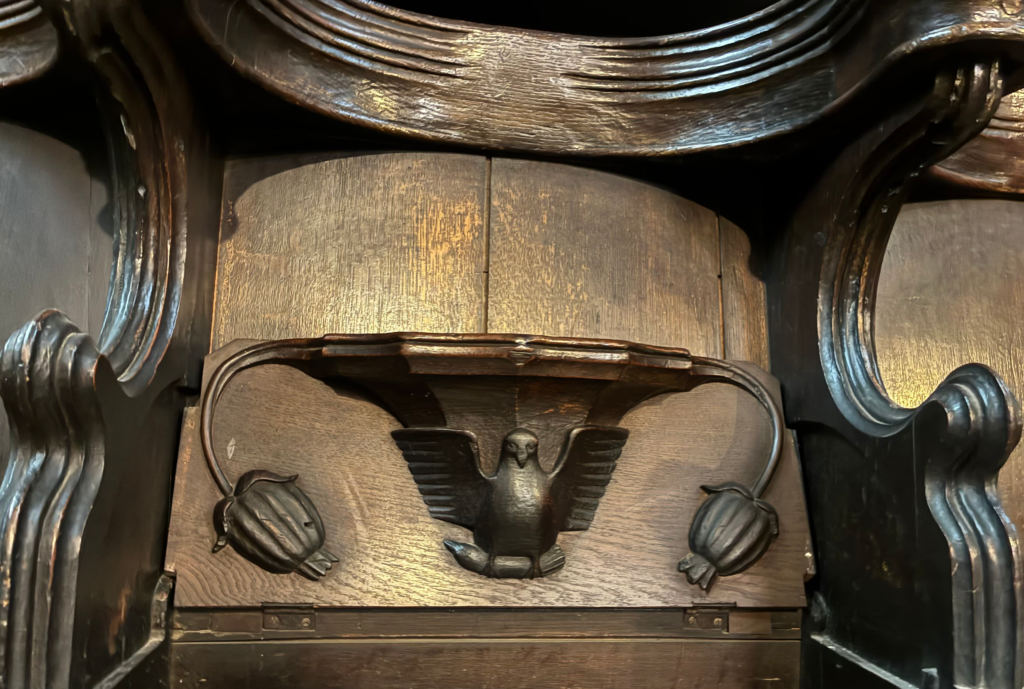
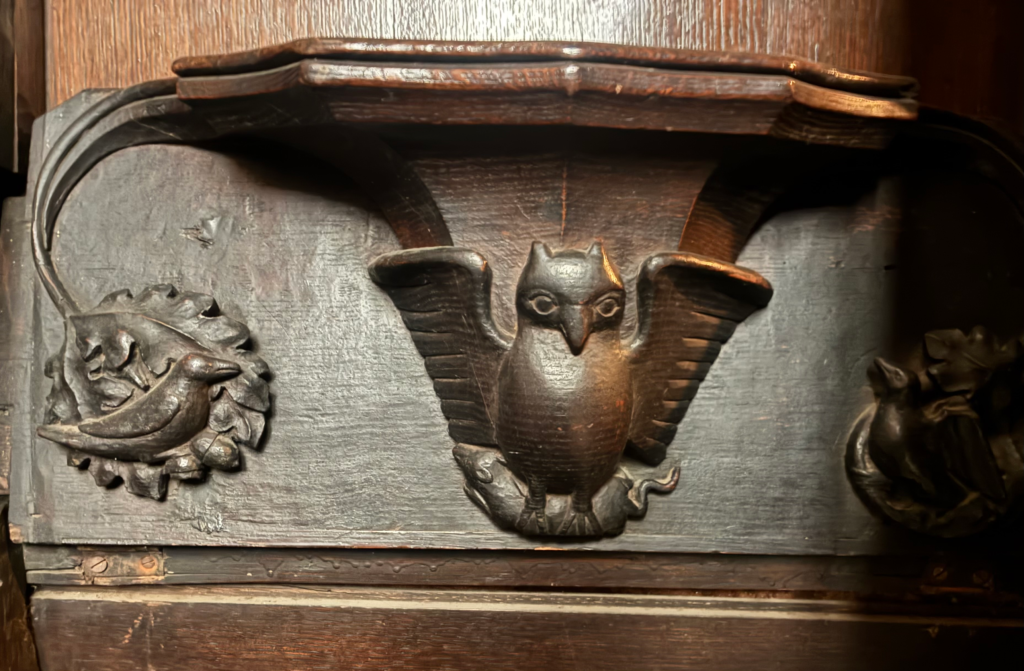
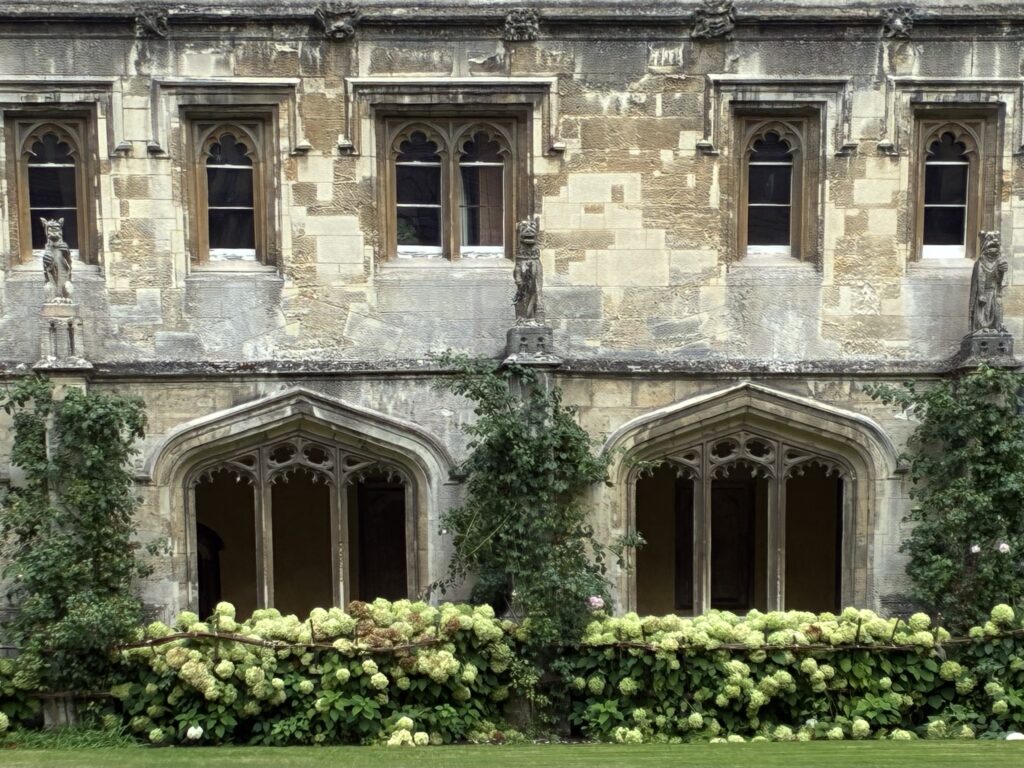
I count another 21, positioned in an L shape on the south and west side. And while many are obscured by the stacks of chairs and grand piano stored in front of them, of those that were accessible I was delighted to discover beneath the lifted lids a pair of panting dogs, an owl with a mouse clamped between its talons, a crouching monkey, a funny little man in a cap peering over a wall. An under-the-seat surreal fantastical world, straight from the pages of an age old folk tale. Might they have been the inspiration for the magical folk who inhabited the fictional Narnia? C.S Lewis was after all a fellow and tutor at Magdalen College for nearly 30 years. The stone statues that line the cloisters, the gargoyles and grotesques that look down from on high, and the medieval misericords must surely have all informed his mix of medieval mythology and Christian allegory.
By far the oldest furniture in the place, these 15th century stalls would have originally been positioned in the main chapel. They must have escaped the iconoclasm of the Reformation in the 16th century, when though some around the country made their way to timber yards and were saved by antiquaries or bought for country homes, others were simply broken up, the oak used for shipbuilding or for firewood. So we are lucky to have them. And there would certainly have been a few more. Some with canopies and loft panelling ‘terminating in crocheted arches and handsome tracery, the whole coloured and adorned with painted figures of saints.’ Last seen in 1828 when the building, like many Oxford college chapels, was being reordered and the stalls moved to their current position, it is rumoured that these were sold to the auction house, Mallams. Along with 13 or so from the original set.
So I am happy to have found the mercy seats of Magdalen, their secrets tucked away out of sight. It has been a treat to wonder at the rich imaginings of the medieval carver who believed the world was not as it seems, that strange goings on lurk just beneath the surface.
And to smile at his sense of humour.
A final glance and a parting nod to my new bare-buttocked buddy as I leave the shadowy darkness of the chapel. And it might have been a trick of the light, but I could have sworn he winked back.