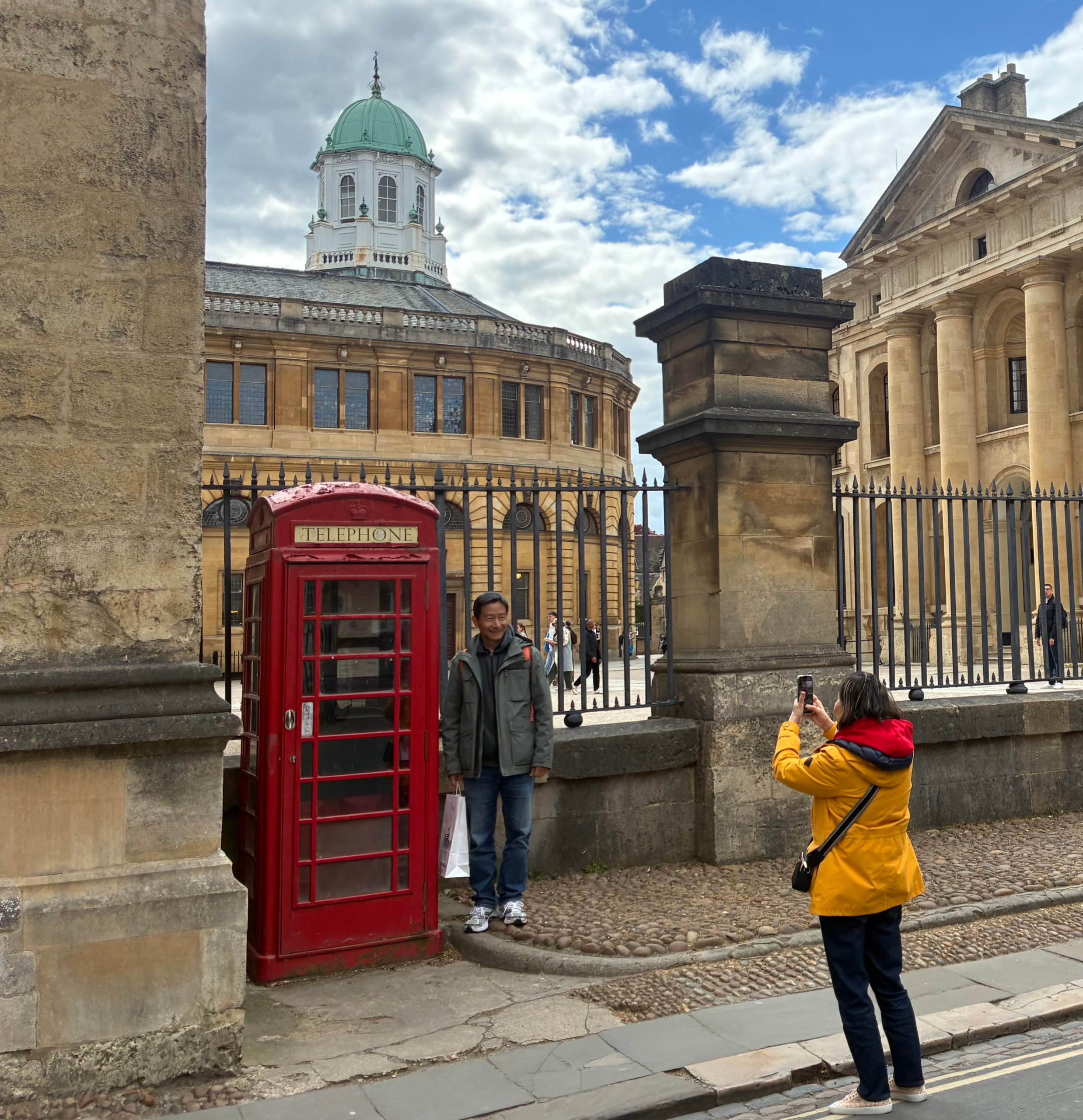
Nestled into a corner on Catte Street across the way from Oxford’s famous ‘Bridge of Sighs’, stands an old red telephone box. It is in a sorry state. The door is locked. The paint peeling. Its contents long since carted away. Most people pass it by without so much as a glance. Occasionally a tourist will stop to take a selfie, for they have read in the guidebooks that this is a monument to British telecommunications history, that the design has iconic status. But for me, standing here looking at its sad, empty shell, this cherry-coloured cubicle, with its distinctive domed roof, brings back a multitude of memories. Of queuing up to make a call home. Of long-distance breakups, tears falling on to its cigarette-butt besmirched concrete floor. Of hurried conversations as the time ticked by before the cash ran out, the pips went, and you were left listening to that long continuous burr of a tone. For this was the public telephone box I used when I first arrived in the city. And, as an anxious newcomer, the only way to connect with the warm, familiar voice of home.
I admit this was many moons ago. And to those who have only known a time when instant communication is available through a device held in your pocket, the idea that this rectangular glass and cast-iron structure held such importance might seem absurd. But it did.
And so it is that I decide to head out to photograph the last of the red telephone boxes left in our city centre. The design is by Giles Gilbert Scott (the grandson of the Victorian gothic revivalist Sir George Gilbert Scott – think Oxford’s Martyr’s Memorial and St Pancras Station). He had won a competition in 1924 set by the General Post Office to design a new public kiosk to replace the unpopular concrete, some roofed in thatch, K1 (Kiosk No. 1). Other entries had included a birdcage lookalike with a double Chinese awning. Scott’s, however, was inspired by the classical vaulted tomb of Sir John Soane (of whom he was a fan) in St Pancras Old Churchyard, painted a stand-out red to match the GPO post boxes, and embossed with a crown as a symbol of government and at that time state ownership. This became K2 (or Kiosk No. 2), and after several modifications (the K4 doubled as a machine to buy postage stamps, K5 was a pop-up and never got further than a prototype), the K6 (Kiosk No. 6) was rolled out in 1935 to commemorate George V’s Silver Jubilee. All bar one of what remains of our Oxford boxes are of this variety.
As it turns out my Catte Street telephone box stands around the corner from Giles Gilbert Scott’s other Oxford creation, the New Bodleian Library, officially opened in 1946, and completely revamped in 2015 to make way for the Weston Library. Both are listed. The old red telephone box cleverly categorised as a small building, its historic status making it across the line as a structure worthy of protection. But that is as far as it goes.
Listed but unloved. That’s mostly the message I get as I make my pilgrimage around the city. The kiosk on the east side of St Giles has had its door ripped off and seems to have replaced the now closed men’s public lavatories once housed underground a stone’s throw away as a ready convenience. The box on Market Street, built with transparent walls, stands blinded, its glass panels blacked out. While those of the once proud kiosk on the High Street are mostly missing.
Two remain intact. And still delivering their original purpose. Accessible through that familiar heavy door, the retro receiver making the same memorable dial tone when you lift it, the equipment serviceable by means of those clunky push buttons, and a handful of ready cash. But I have yet to see anyone go inside to make a call. I admit I have not used one myself for years.
But in amongst these tales of woe I found one exception. The red phone box outside the Story Museum on Pembroke Street (the building that once rather aptly housed Oxford’s telephone exchange). When I approached a group of children were gathered around it. Peering through the glass. Hands held up against their faces to get a better look at the tiny mice, tables made from cotton reels, toy pirate ships and other miniatures that populate the world inside. A telephone terminal turned temple to storytelling. Part of an adoption scheme, run by BT, that offers up old kiosks for £1 to be repurposed. It’s a great idea.
There’s a lovely old red telephone kiosk in Jowett Walk. Outside Balliol College’s new buildings. Politely appealing to a loving community or organisation to adopt it. There’s a sign up in the window, with a telephone number of who to contact if you are interested. Surely there is somebody out there ready to give the place a new lease of life. The perfect spot for a book exchange, a mini greenhouse, a tiny art gallery.
So spread the word. Let’s embrace our K6s. For they feel like old friends. And surely they deserve better.
Main picture: the K6 telephone kiosk on Catte Street
You can find out how to adopt a telephone box here.
More detail on Oxford’s red telephone boxes can be found on the Oxford History website
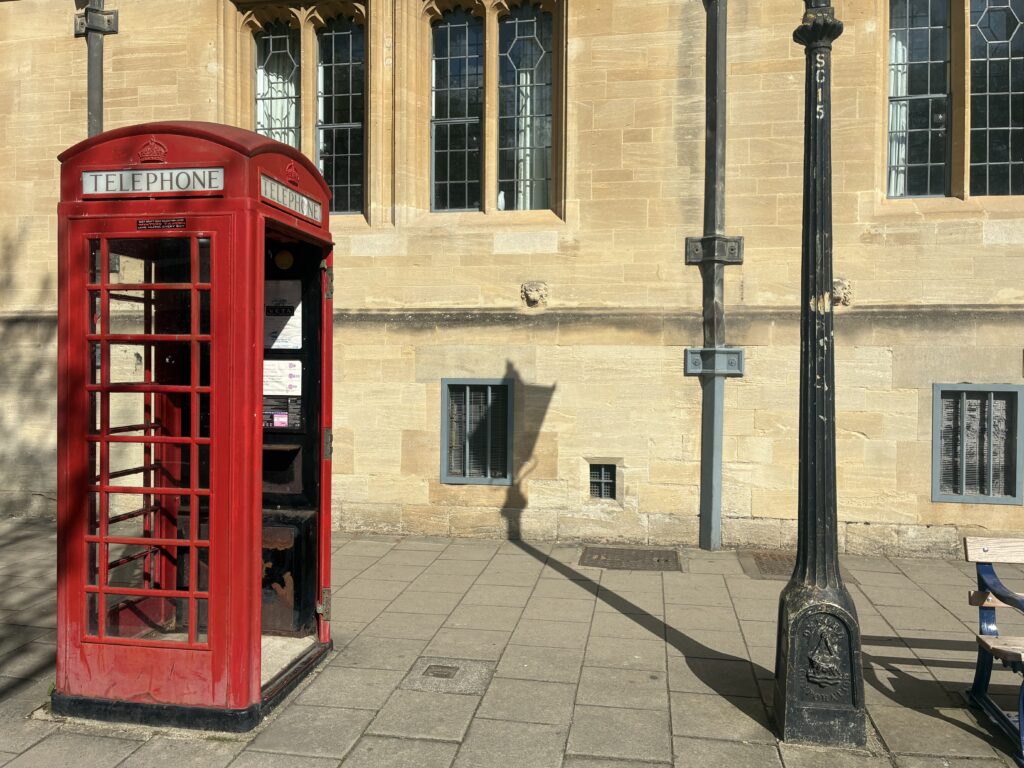
St Giles (east)
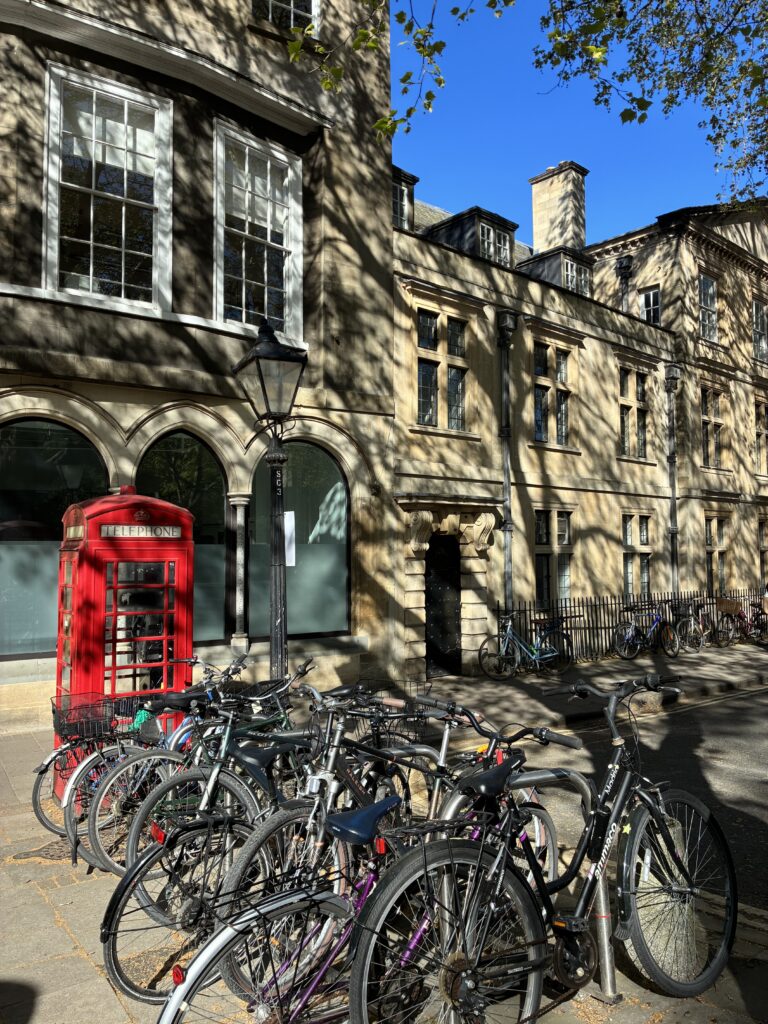
St Giles (west)and still in use. But by who?
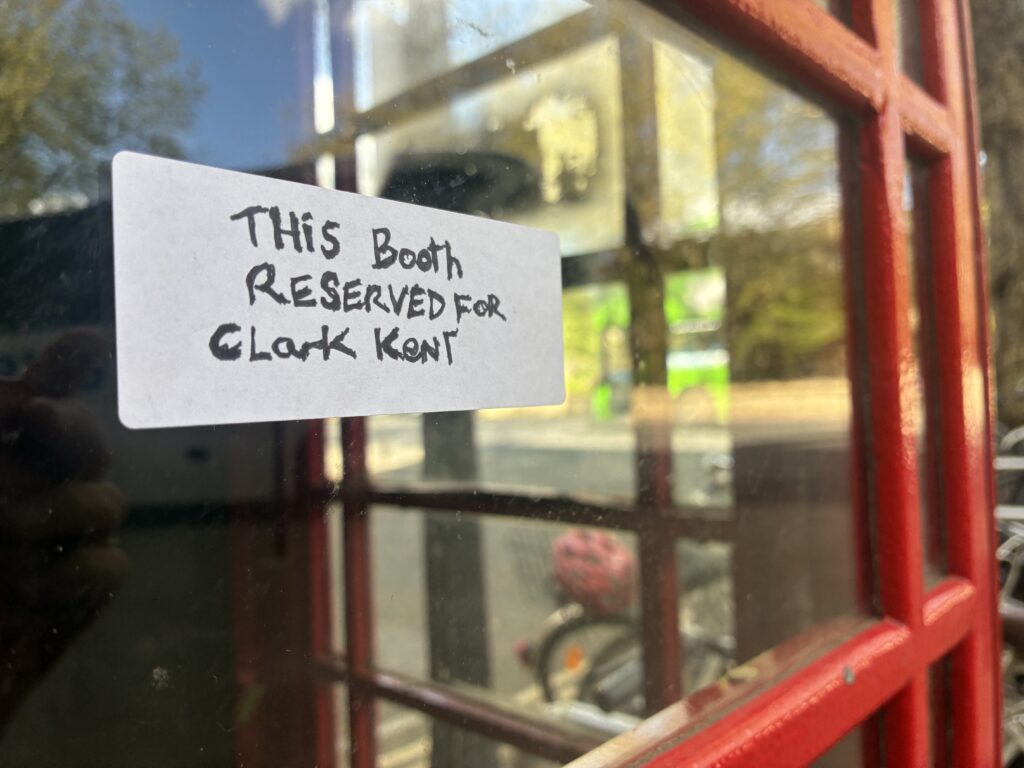
By Superman amongst others.
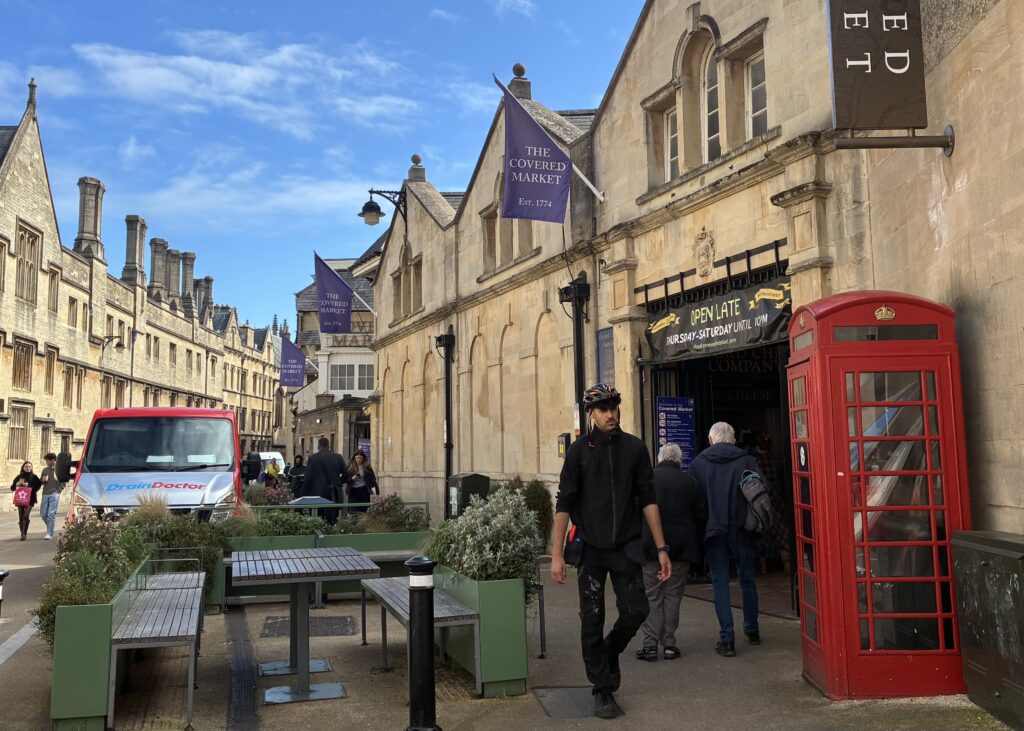
Market Street
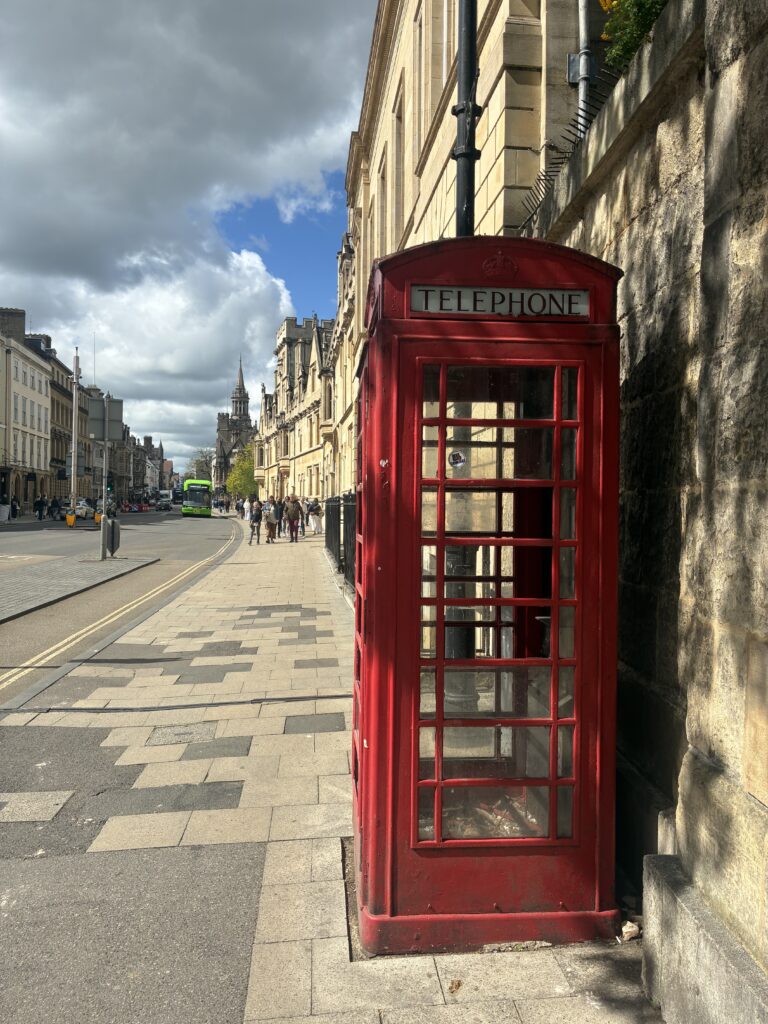
High Street
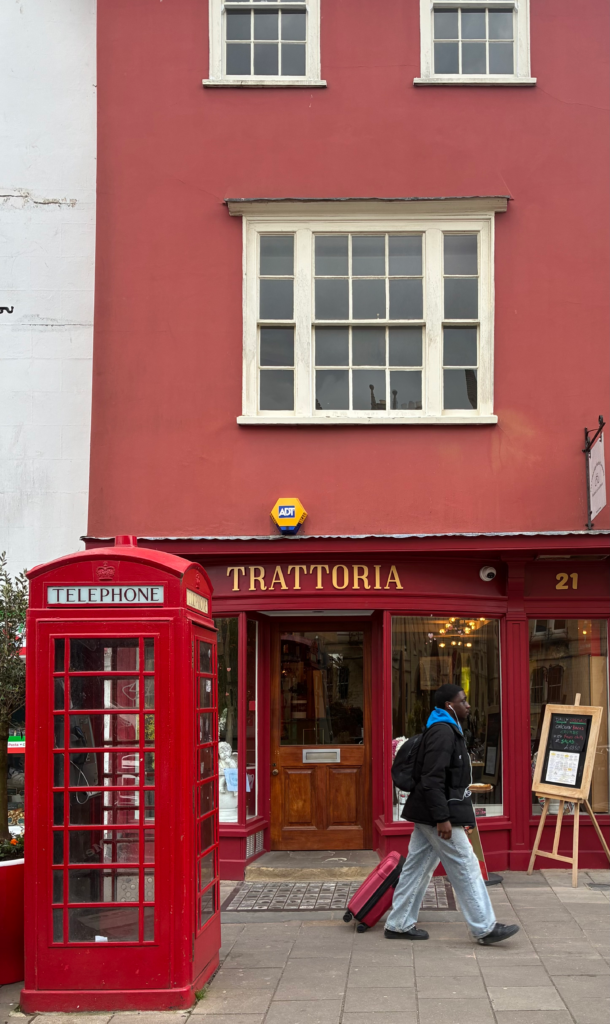
Broad Street (still in use). Do people still use them to make clandestine calls?
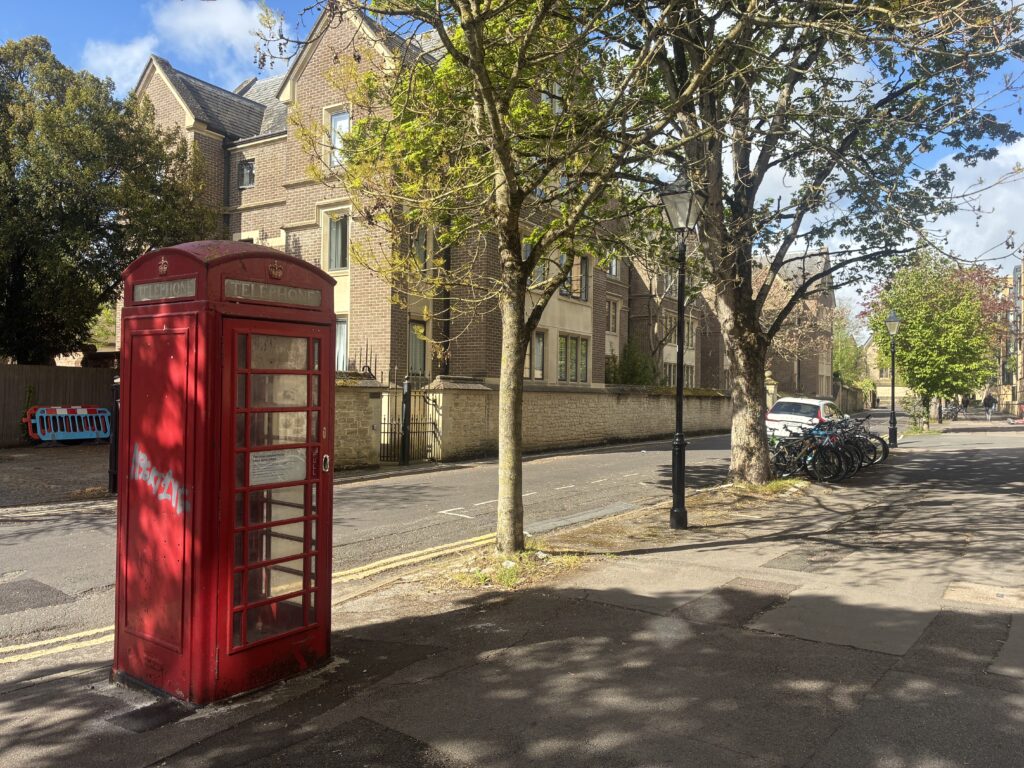
Jowett Walk
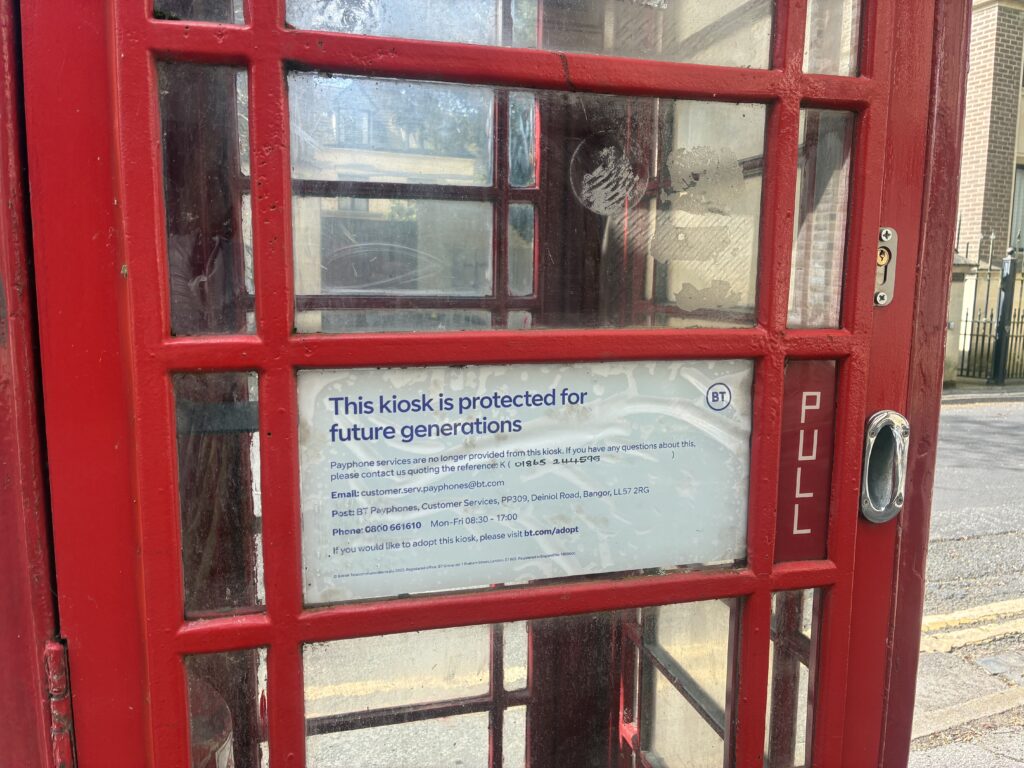
With its heart wrenching appeal for adoption.
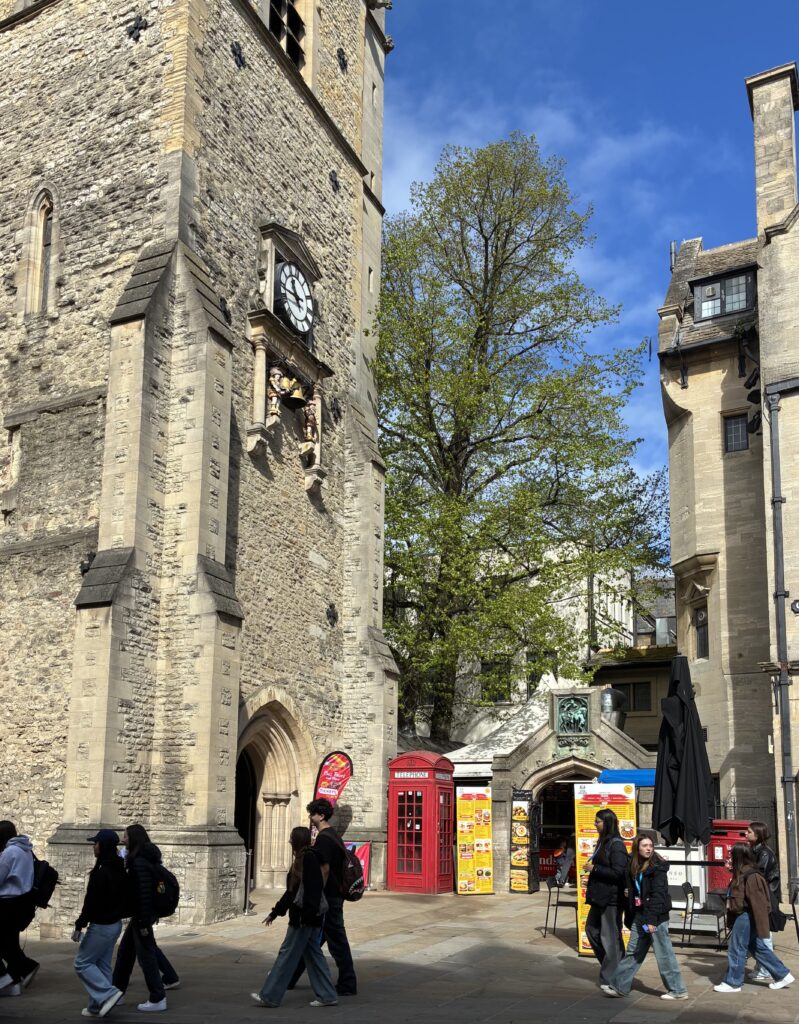
Carfax holds Oxford’s only K2 telephone box. It has a perforated crown instead of an embossed crown for better ventilation and the windows are proportioned differently. It was donated to the city by Nicholas Medley in the 1990’s to replace a previous incarnation. Medley worked at Oxford Station and collected telephone boxes.
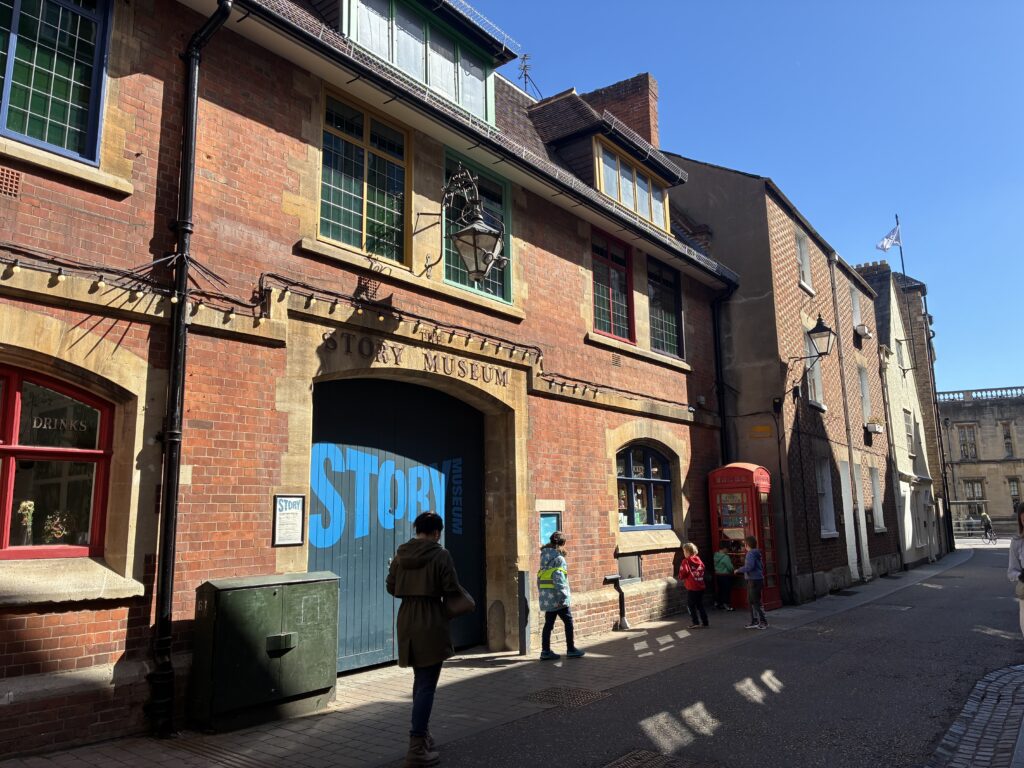
Pembroke Street
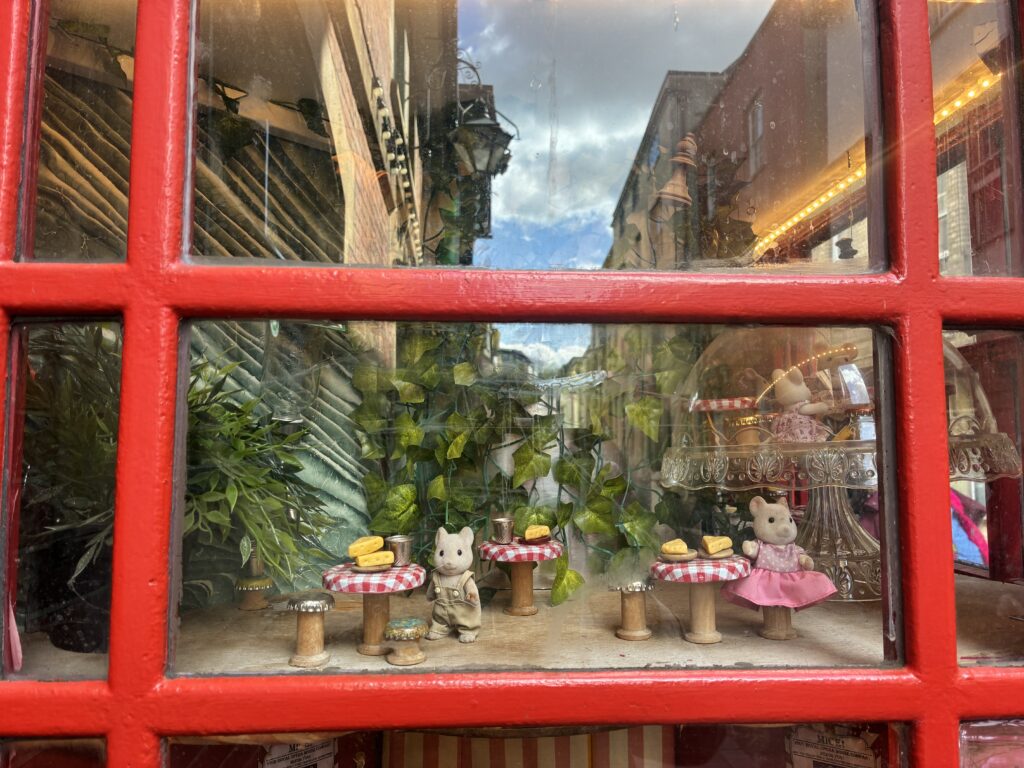
Repurposed by the Story Museum to inspire children to tell stories.
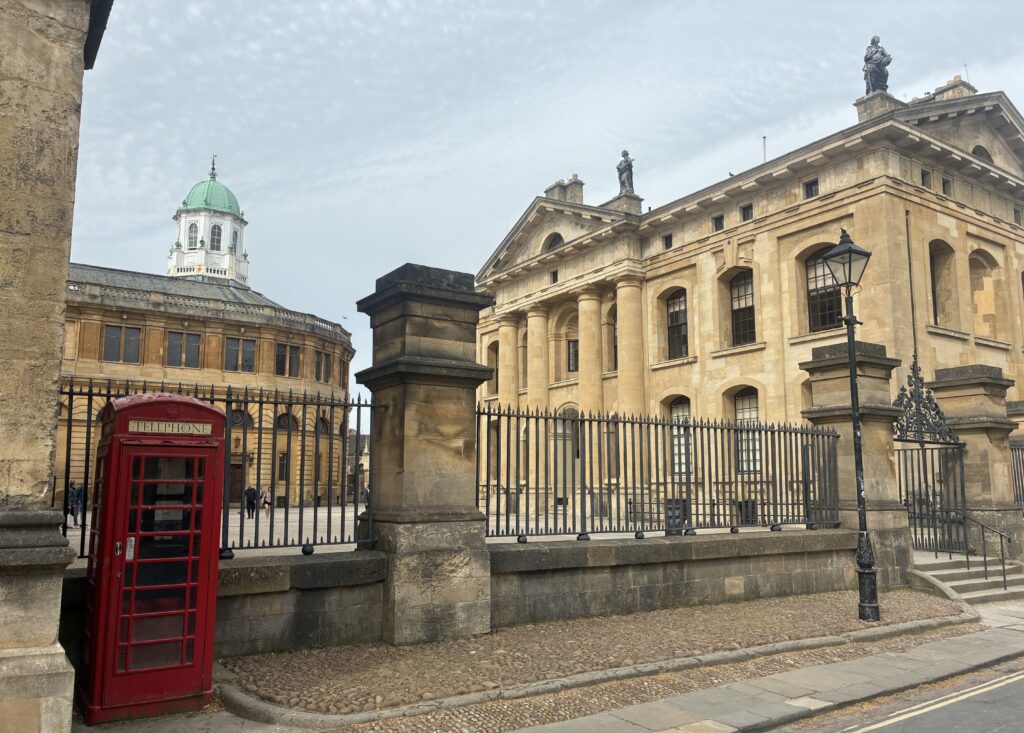
Catte Street. Surely a possible lending library run by the Bodleian Library next door?
8 Comments
Join the discussion and tell us your opinion.
Wonderful piece and beautiful pictures. Thank you xxx
Thank you for this wonderful trip down memory lane – the Catte Street box was my lifeline, too, during my first years away from home!
Hello, I loved the article on telephone boxes – made me well up!! I came to Hertford College in 1978 and used the one in Catte Street to phone my mum every week on a Sunday evening. I looked forward to the call all week and was terribly homesick for most of my time at Oxford. Thank you for the memories!
Likewise, Joy & John. You can see it here it is in 1980 cunningly disguised for the filming of “Heaven’s Gate”…

Brilliant – thanks
The mostly distinctive phone boxes in Oxford were painted white (I think there were two together) and just to the south of the Martyrs’ Memorial. I always assumed this was because red was thought to clash with the architecture nearby . They vanished many years ago but were certainly srill there in 1968. But they long ago stopped purring . The purring dial tone was replaced in the late 1970s r early 1980s by a high-pitched whine. They were never the same after the old Button A /Button B system was abolished. There were two chrome buttons on a big black box. You put in four pennies (circa 1961) and dialled direct, if it was local, or called the operator by dfialling O If the person answered, you pressed button A and your pennies cascaded into the box and were gone. But if there was no answer, you pressed button B and got your pennies back. I seem to remember local calls were unlimited in time, as in the USA. If thedial was broken you coud make the cll by gently but smartly raising and lowering the rest. ‘O’ required ten swift clicks. And most boxes had small mirrors next to the panels listing nearby exchanges etc. I was told that psychologists thought this would discourage vandalism, as people seeing themselves would not want to smash up the place. Who knows The only other place with white phone boxes was Hull, which thanks to some anomaly, ran its own phone system.
Don’t remember those white telephone boxes at all, but if this link works there were 4 of them in this picture from 1976.
https://www.facebook.com/photo?fbid=3719132571564943&set=pcb.1320641005856070
Brilliant as always. Maybe you’ll start a rush of adoptions!