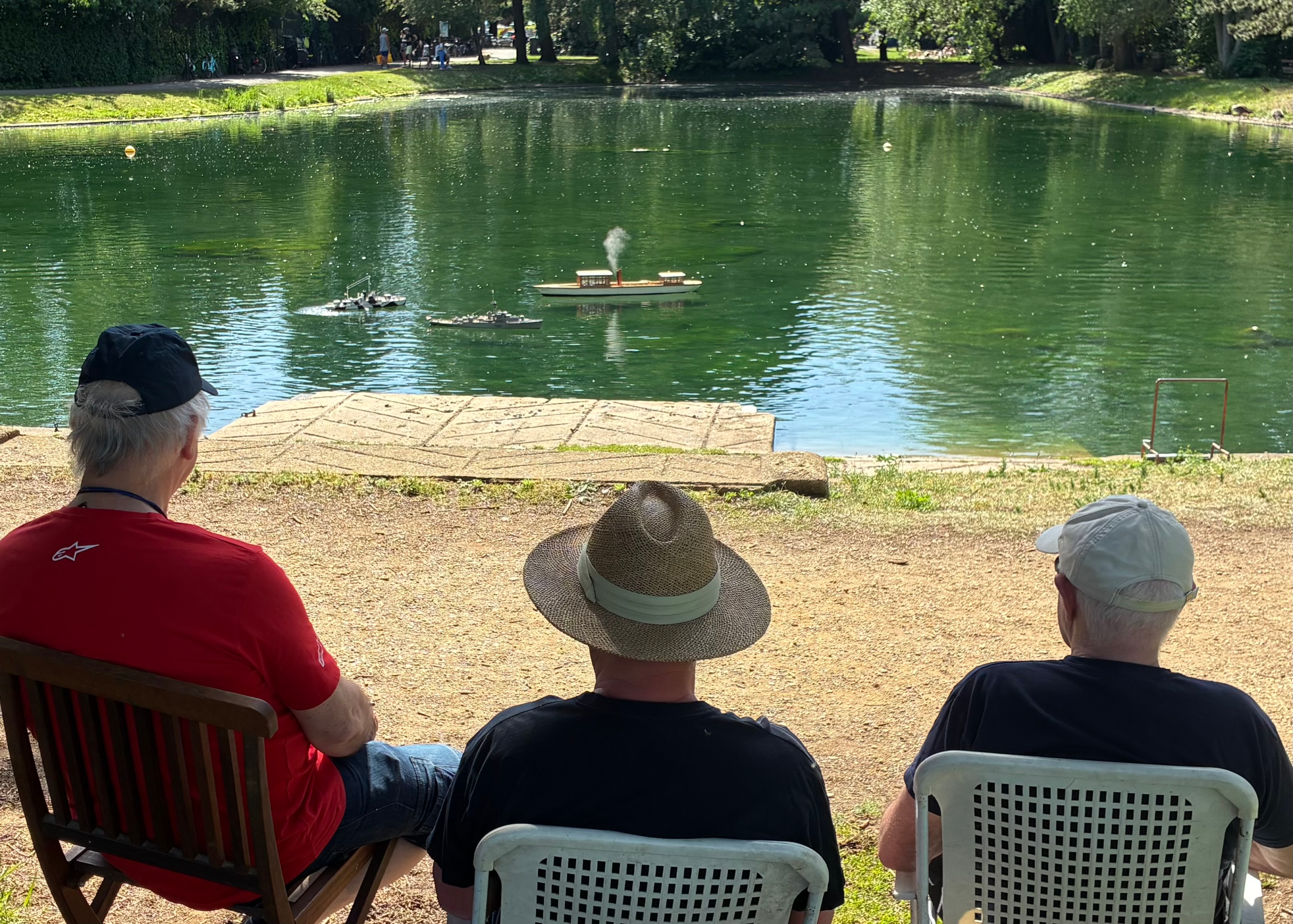
It’s a scorchy Sunday morning and I have come to Hinksey Park in South Oxford to meet with Terry, Tony and John. They have wisely placed their deckchairs under the shade of one of the giant redwood trees planted a century ago around the banks of the large heart shaped pond at its centre. They gather here every week. By the small green brick built shed. There are usually more of them. But today there are just three. Three friends with a shared passion. For this is the headquarters for the Oxford Model Boat Club.
Tugs and tankers, paddle steamers and powerboats, sailboats and skiffs, barges and battleships – they have all graced these waters. Smaller versions of the real thing, naturally. Some built to race (yachts and speedboats), others replica scale models lovingly constructed over many years in a back room or attic. Today Terry has brought his beautifully crafted classic steam launch Edwina, a copy of an elegant Edwardian day boat that once upon a time might have been employed to host summer picnics or as private viewing for sporting events on the river. Every so often a mischievous smile creeps over Terry’s face and he fiddles with whatever it is on his remote control that sends a jet of steam shooting from the central funnel. ‘Toot, Toot.’ I can honestly say that is the sound it makes. Provoking a joyous reaction. And for a moment we are all children again.
In truth there is a nostalgic, old-fashioned feel to the whole of Hinksey Park. A hidden treasure of a place tucked away off the Abingdon Road. Spragglesea Mead and Dean’s Ham – even the names of the allotments that stretch along its northern boundary, are rooted in Old English – derived from our ancient words for wetlands, stream and river. It remains a watery spot.
In the latter half of the 19th century, Hinksey was the location for the Oxford City Waterworks, built like so much Victorian industrial architecture to last, with a sense of civic pride, surrounded by spacious flowerbeds and open landscaping. Thankfully much of this was retained when it was transformed into a park in 1936 (the year of George V’s Silver Jubilee and as a result sometimes known as Jubilee Gardens). The light filled building with huge windows and ornate brickwork that once held the vast steam engines that pumped clean water for the first time direct into our homes, is now a thriving community centre with a lively Sunday farmer’s market. The gravel pit turned reservoir for the city, currently plays host to the largest breeding colony of Common Terns in Oxfordshire as well as groups of wild bathers. And the filter beds have been refashioned into what are today the only public outdoor swimming pools in the city. They have just reopened for the season, and are what brings me here to this part of town, my route skirting the little boating lake (once the cooling pond for the steam engines) with its ducks and geese and marine models.
While John, Terry and Tony are the core committee members of the Model Boat Club, they are somewhat vague about when it was first founded. “It was going when I first moved to Lake Street as a child over 60 years ago,’” maintains John. There were pedalo boats shaped like swans in the 50’s then. They cost 3 pence an hour he remembers. But it seems likely that there were model boats on the pond from when the park first opened. As early as 1901 an article in the Tatler, albeit about London boating lakes, states:
‘Model yachting is a pastime that is growing in favour. Every Briton has an infusion of sea salt in his blood and if he cannot afford to indulge in the expensive luxury of owning a real racing craft the model yacht offers a very good alternative.’
Model boating it maintained gave ordinary people the chance to not just become sailors when they had never been to sea, but to be the builders and designers of their craft too.
This is certainly what appeals to Tony.
“I first got interested in boats at the age of five. My grandfather was a customs officer at Liverpool Docks, and he used to take me every Saturday morning to see the ships. I’d always intended to work in shipbuilding, but when I graduated in the 70’s with an engineering degree it wasn’t the best of times for the industry.”
So now he builds scale models. His garage is full of them. One is of the Royal Yacht in which he has included tiny models of Queen Elizabeth and Prince Philip wearing the same outfits as when they attended the fleet review on the Clyde in 1965, an event which Tony had witnessed as a schoolboy and was eager to recreate.
For John, with his splendid bushy moustache, twinkly eyes and straw hat the joy is also in the camaraderie that the sport brings. And while there’s a resident stroppy swan that can make boating hard at this time of year, the problem of weed, and the ongoing discussion with the council about leasing the clubhouse, these are small matters in the grand scheme of model boating. For the most part the morning consists of mindful meandering, putting the world to rights and chatting to passers-by. They are a friendly bunch.
And as for Terry, it’s the old steam boats that fascinate him. He’s recently completed a scale model of the steam tug Imara, built in 1931, purchased by the Royal Navy and operated as a dockland tug all the way through WW2. It took him 1,000 hours to construct. He promises to bring it down one Sunday to show me.
I find these gentle enthusiasts strangely touching. The pastime disarmingly innocent. And relaxing too. John tells me they are eager for new members. You don’t need a boat, he insists. They have models in the clubhouse you are welcome to try out. They are always here at the pond in Hinksey Park on a Sunday morning if you fancy it.
‘Toot, Toot,’ whistles Terry’s steam launch as I wander back to my bicycle, turning to watch it as it chugs happily across the water.
I can’t help but wave and smile. It all sounds rather tempting.
More information about the club can be found at:
https://oxfordmodelboatclub.co.uk
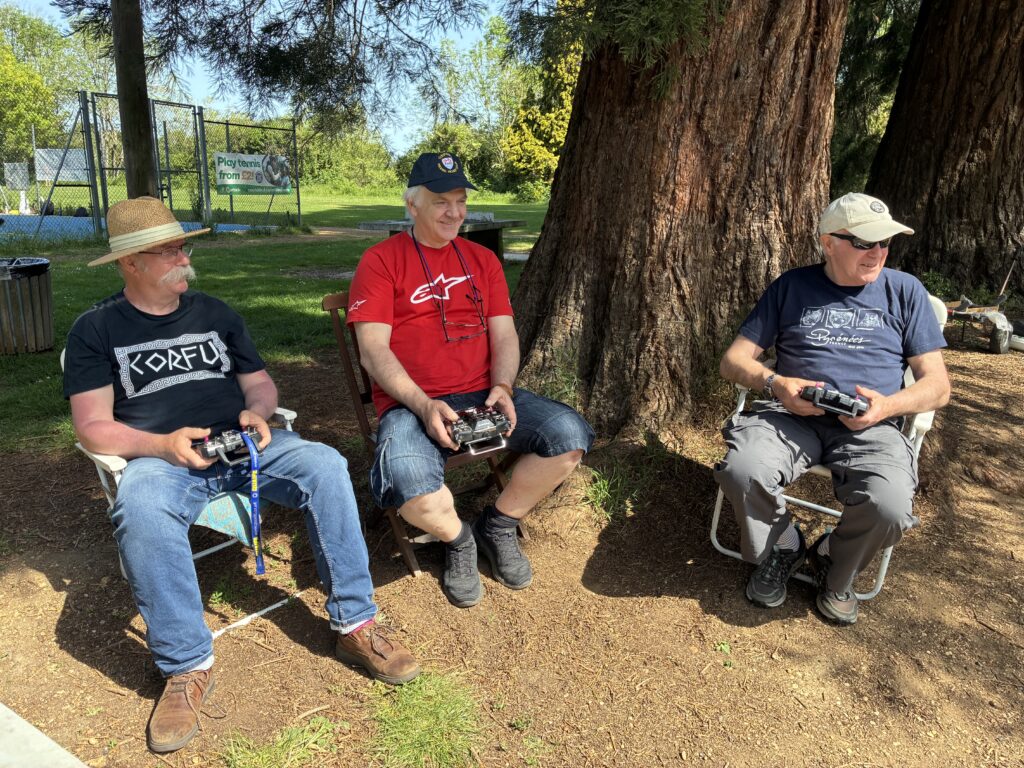
John Foreman (Chairman of the Oxford Model Boat Club), Terry Gregory (Secretary) and Tony Hughes (Treasurer)
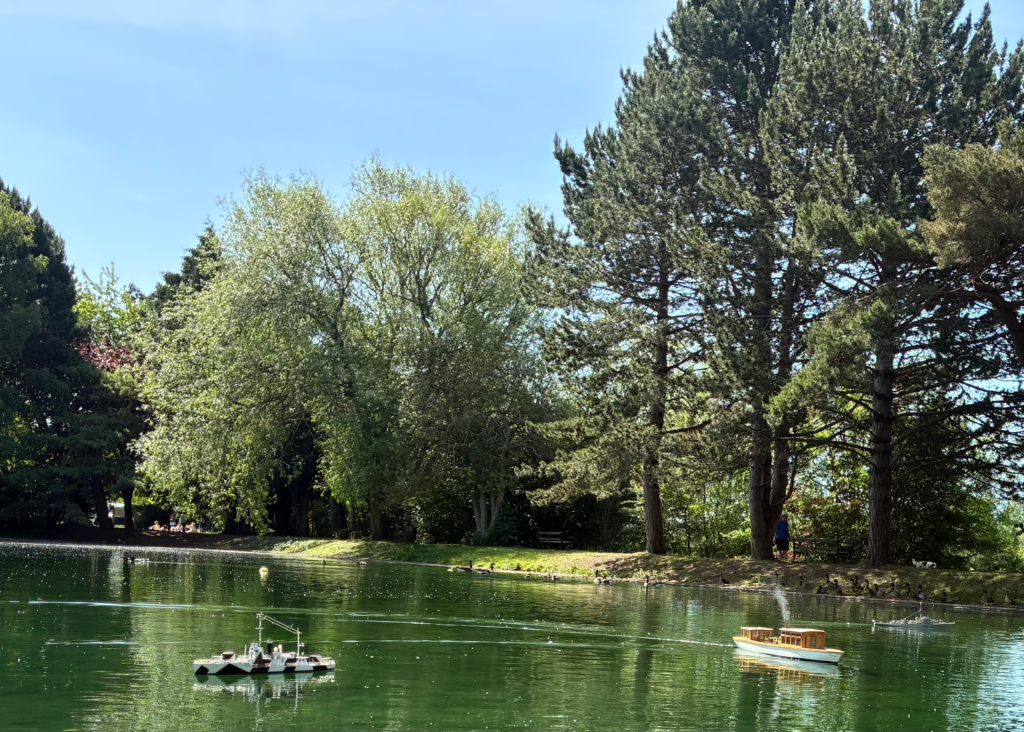
The Boating Lake with their three boats in action.
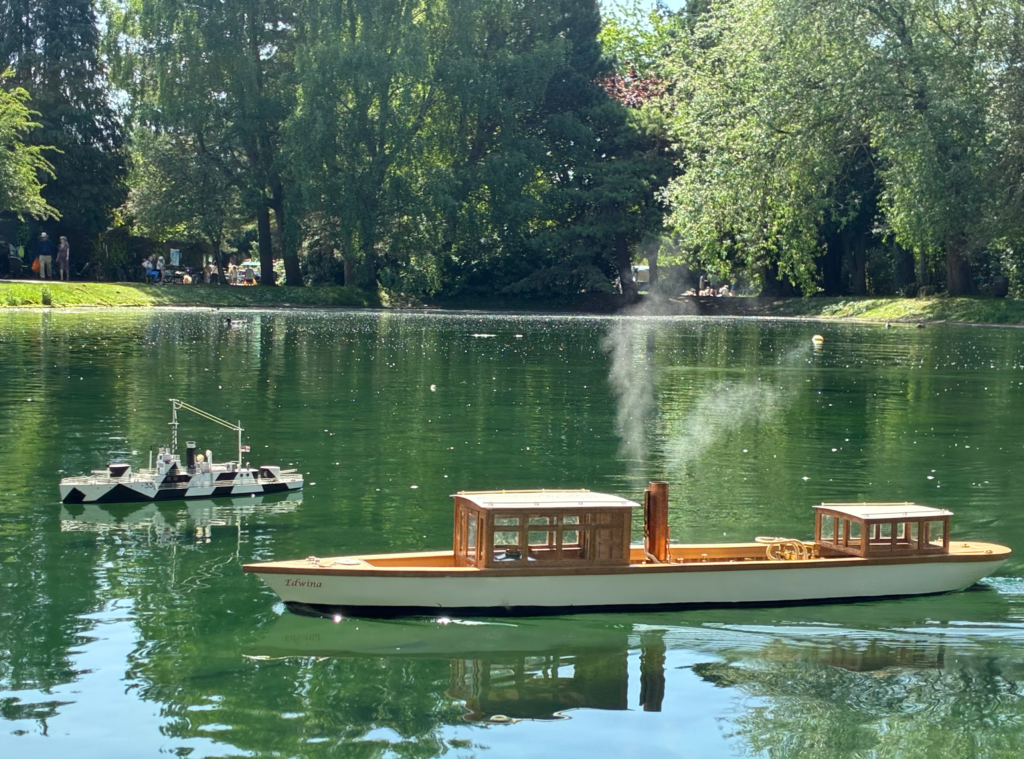
Toot Toot
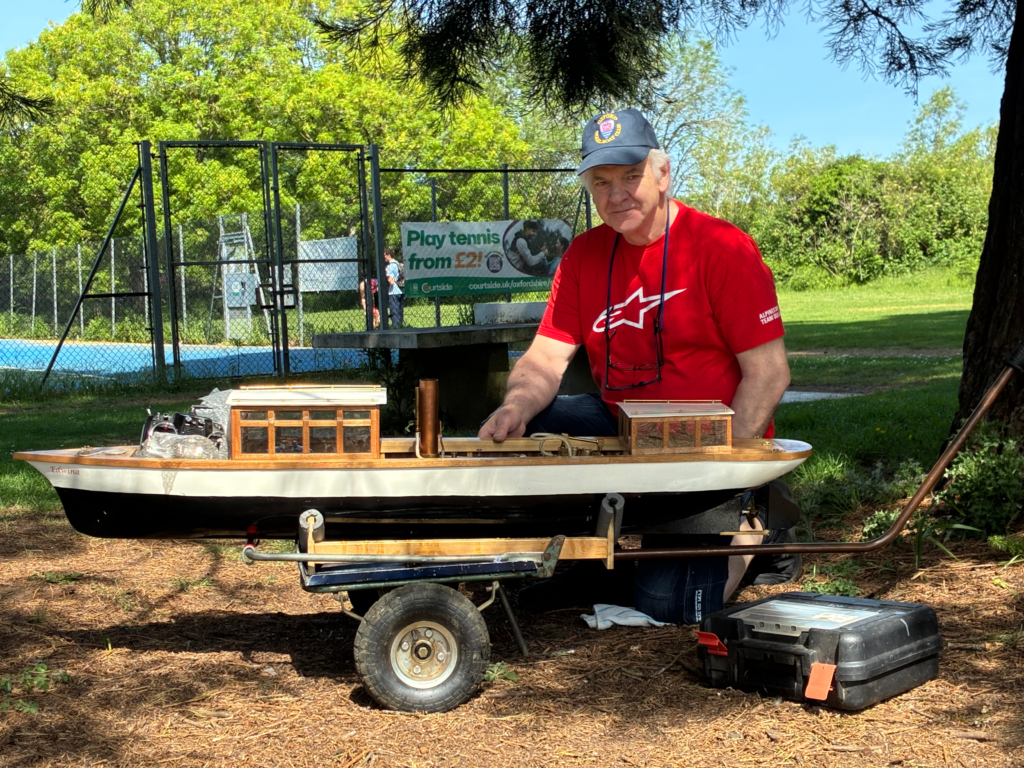
Terry and his scale Victorian/Edwardian steam launch which he built from scratch.
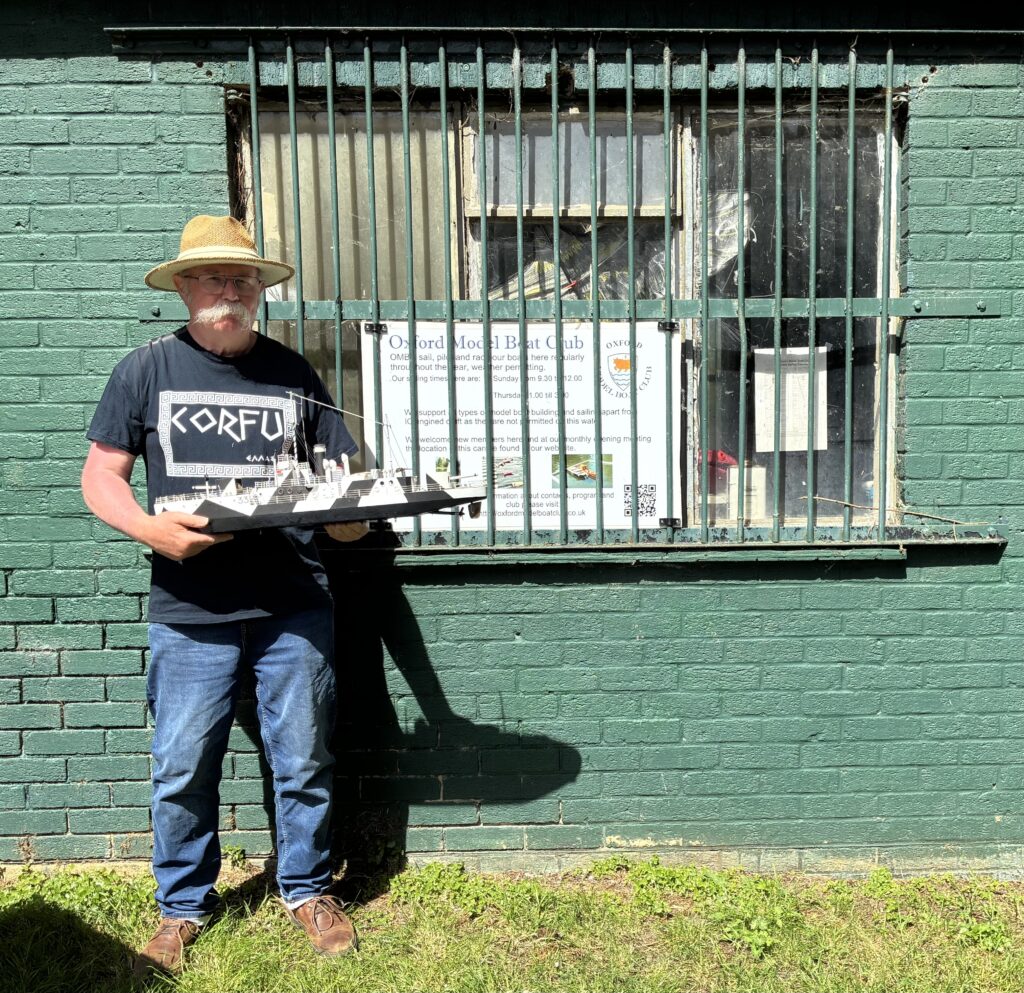
John has been making models for as long as he can remember. “I just love building things and I love history so this combines it all,” he says. He bought this model of HMS M.33 – a veteran Royal Navy monitor class warship, from a fellow club member when he downsized. He had built it from scratch. The original was built in 1915 and is only one of three surviving British WWI warships and the only remaining vessel from the Gallipoli Campaign. “It works well on the water,” laughs John.”Unlike most of the stuff I have.”
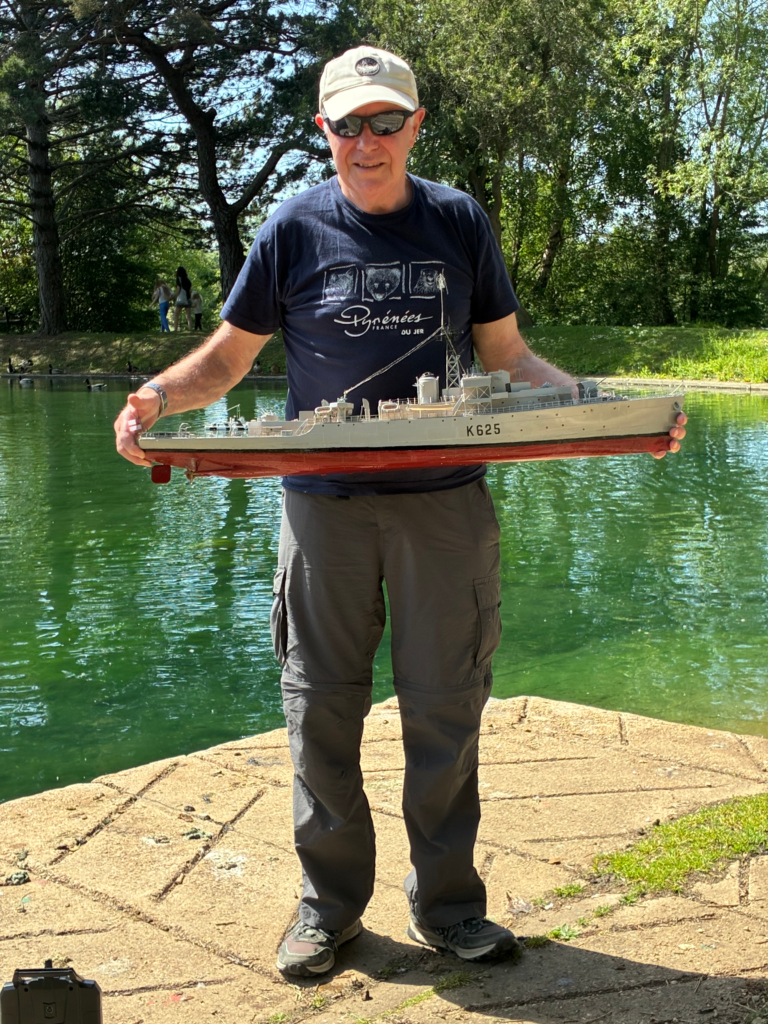
Tony with his model of HMS Loch Katrine, a WW2 anti submarine sloop re-classified as a frigate after the war. He built it from a kit. You get most of what you need in the kit apparently but it does take a long time to sort and build because there’s an awful lot of stuff on it.
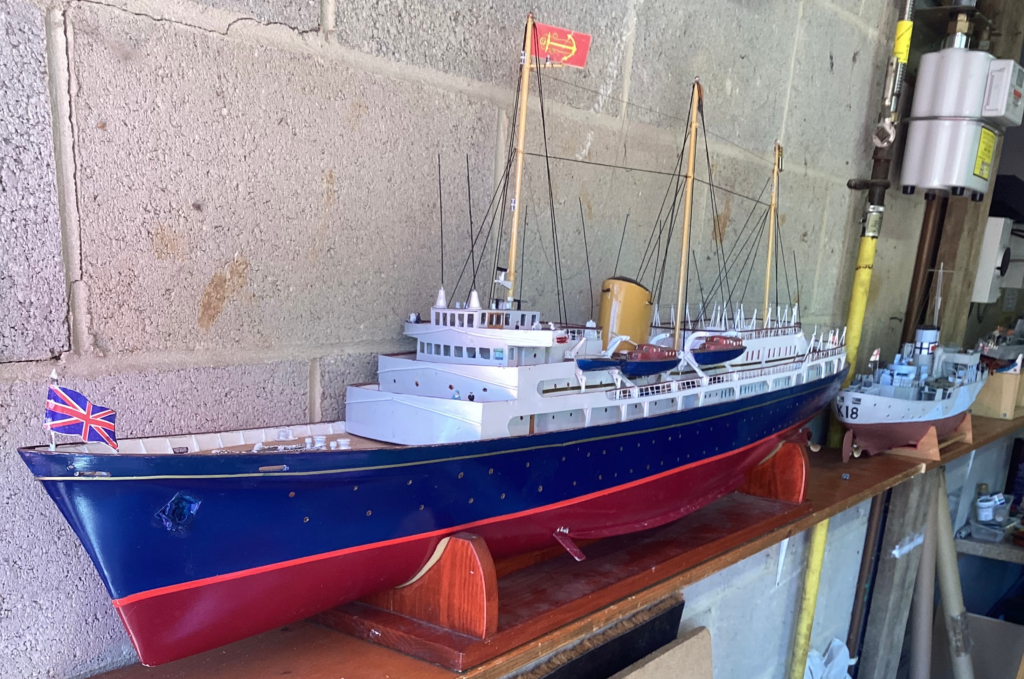
Tony’s garage is full of the models he has made over the years.”Every one is my last,” he says. This is the Royal Yacht with Queen Elizabeth and Prince Philip on deck.
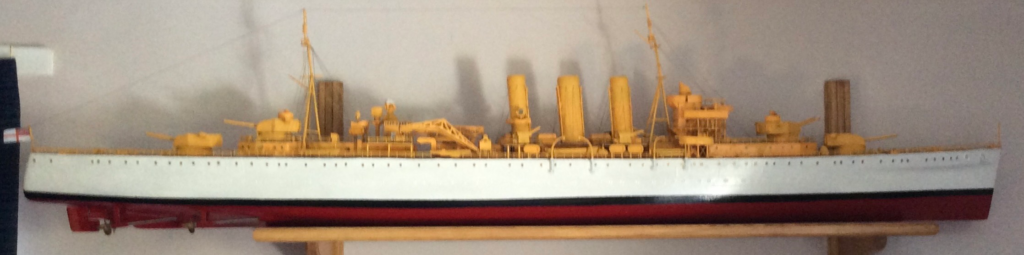
“My model of the cruiser HMS Dorsetshire in China Station colours (I think) where she served after her refit in 1937. She torpedoed the Bismark, delivering the coup de grace after our battleships had reduced her to a wreck. She was later sunk by the Japanese in the Indian Ocean.”
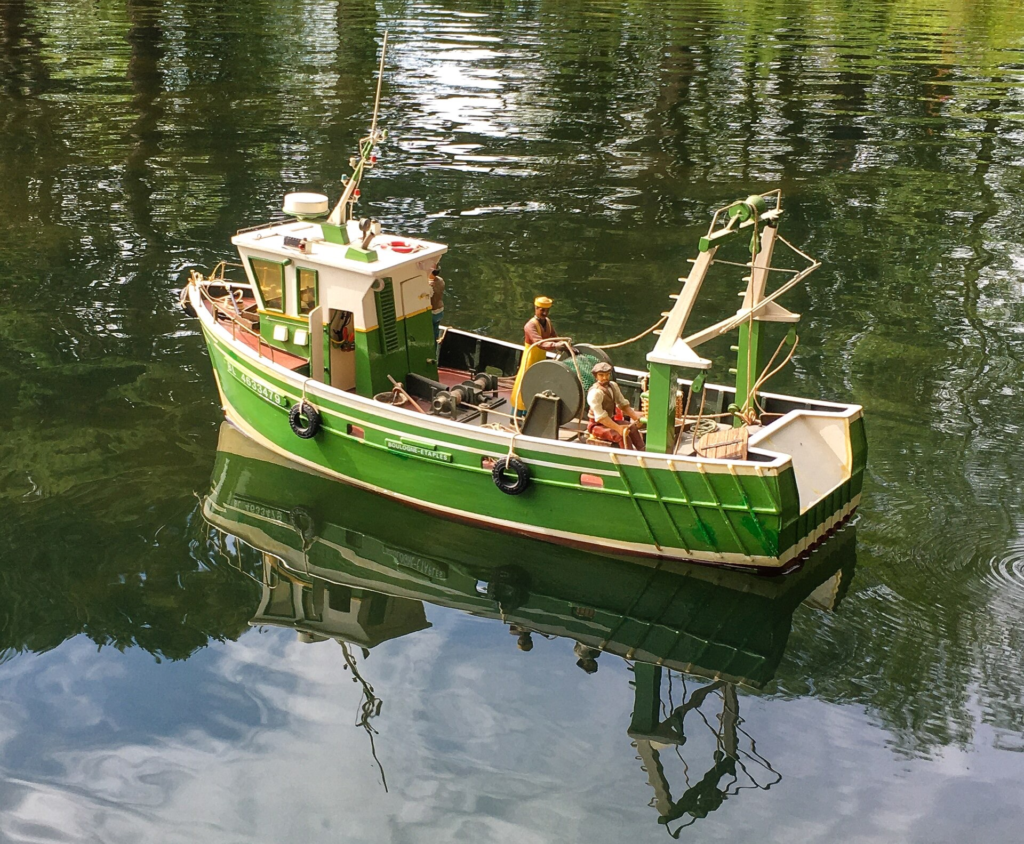
From the club’s ‘Tug and Working Boat Day’ on the pond. This is the Boulogne Etaples built in 1991 by an old member of the club.
By kind permission of the Oxford Model Boat Club
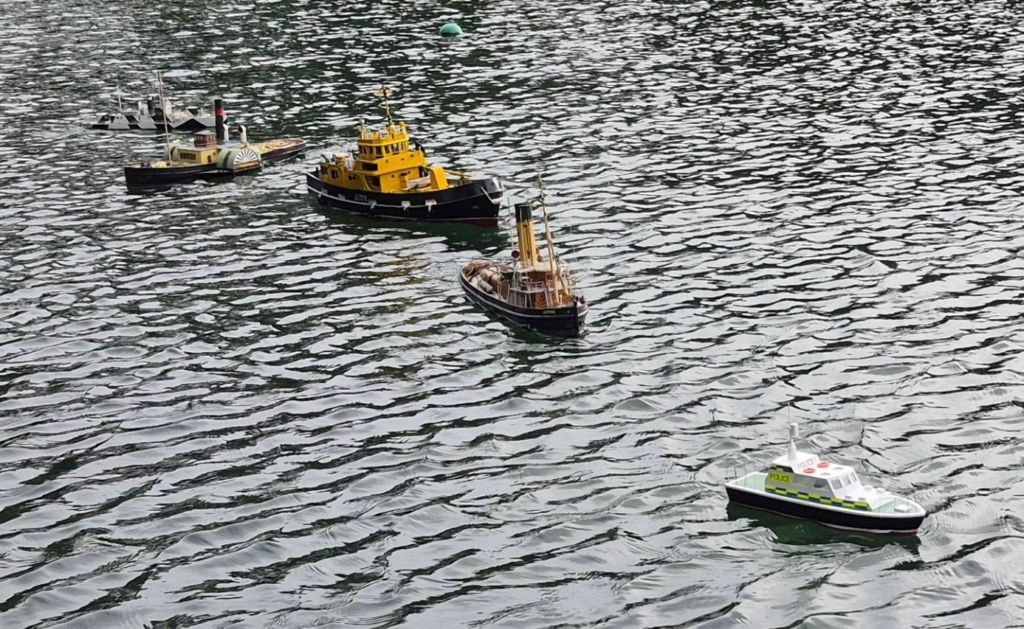
From the same day. You can see John’s black and white warship at the back.
By kind permission of the Oxford Model Boat Club
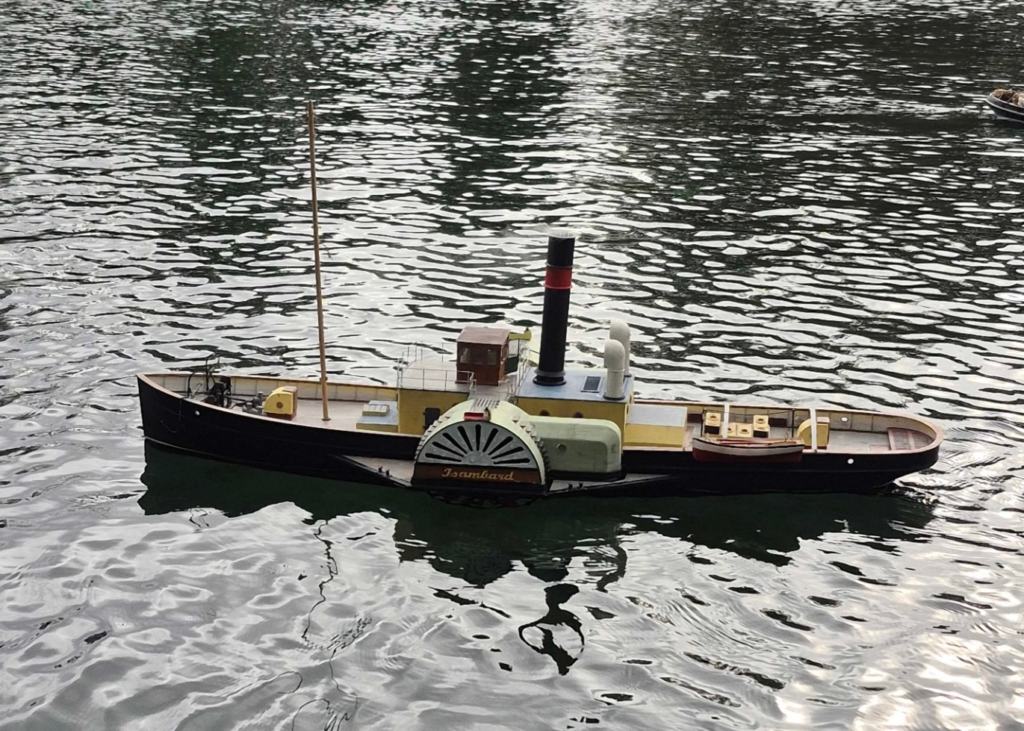
And a closer look at the replica paddleboat.
By kind permission of the Oxford Model Boat Club
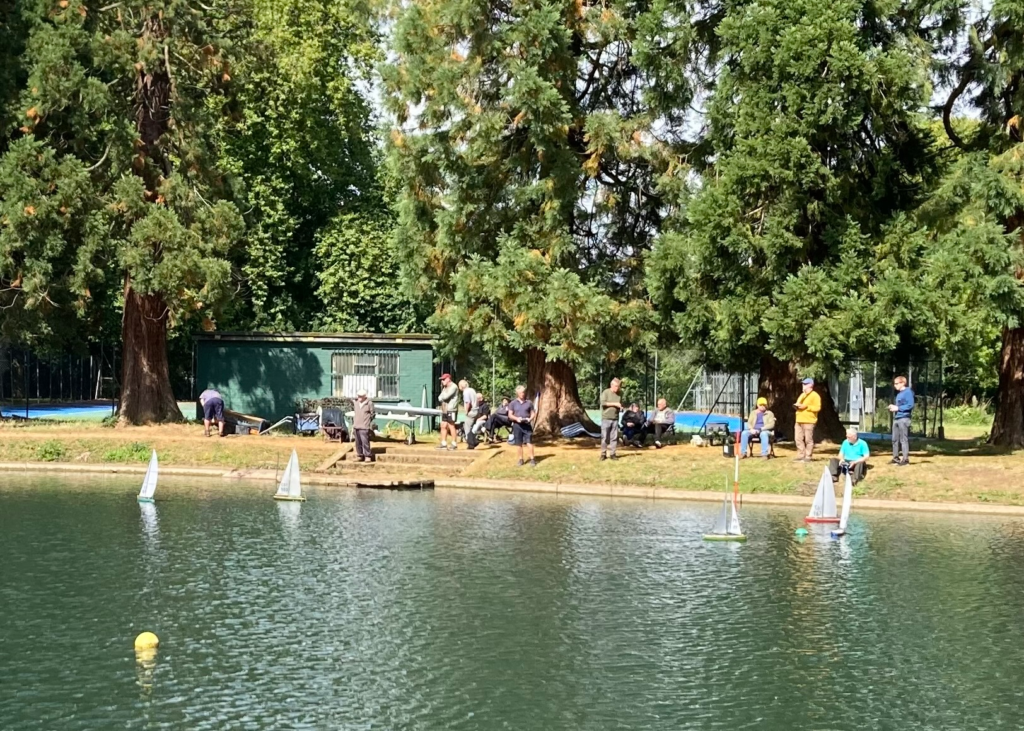
Fiesta yachts are raced once a month. But you do need wind. Model yacht racing is done to the same rules as real yacht racing.
They also race Hinksey 400’s, small high performance electric race boats. “They are hilarious,” says John. “We are of a certain age but when we are racing these boats we are like little kids.”
You may also like to read:
5 Comments
Join the discussion and tell us your opinion.
All your wonderful Oxford Sausage articles bring back memories of growing up in Oxford in the 1950s and 60s. Your article about Hinksey Park remined me of the bread shop that used to be on the corner of the park where my mother would cross over the Abingdon Road and stop to buy a loaf of Bermaline bread, on our way back to Boars Hill, having collected us from the Crescent School in Norham Gardens. Bermaline bread had a very unusual shape being narrow at the top. If we were lucky we were allowed to run across the grass to play on the swings and the see saw at the back of the park.
Hinksey Lake was originally created by the Great Western Railway when the line from the original terminus in Western Road was extended northwards. The gravel from the excavated pit provided the material for the high level embankments which enabled the line to be carried over the Thames, the Botley Road and the Sheepwash Channel. The LNWR didn’t have enough spoil to raise its line to its terminus in Rewley Road above the Sheepwash Channel, but built the swing bridge instead.
Dear Oxford Sausage author,
I just wanted to say how much I enjoy and appreciate your writing. We are newly moved to Oxford and find your weekly texts a wonderful way to learn about our new home.
Today’s piece on the model boat club was so deeply infused with humanity that it will make me smile all day. Thank you for what you do.
But this is first and foremost a Thank you message. No need to reply, please keep doing what you’re doing – it is hugely appreciated by many people.
When we were visited we were not sure when we started but that was a nudge for us to find out more about ourselves. We are pretty sure that this is the 60th year of the club as an article in an old model boating magazine we found says that. We may try and celebrate our 60th at our Picnic Day in early July, swan permitting!
Brilliant John. I will look out for you. A 60th birthday is a great one to celebrate.