Albert Ernest Smith was born in 1903 and started work aged 13 for what was then known by the Orwellian title of The Cleansing Department, part of Oxford Corporation (now Oxford City Council). His first job was as a dustman, later driving a small van from which he serviced the central Oxford public lavatories. His son Colin was also a refuse collector, for 19 years, his lorry the only Oxford Corporation dustcart ever to be ticketed by a local traffic warden for parking on double yellow lines on Little Clarendon Street while still on the job. There were headlines about it in the national papers. Colin even made it on to the television news. Sadly both are no longer with us, but I’d discovered their stories while chatting to Albert’s daughter, Colin’s sister Pam Tuckwell. She keeps a small, neat folder of battered old photographs and press cuttings at her home in Wolvercote. And it is here that I meet her and where she fills me in on her memories of growing up with them and her mother Alice in Gordon Street, South Oxford.
“My dad worked for The Cleansing Department for 52 years,” she beams pulling out the gold watch with his name engraved on the back, they gave him on his retirement. “He was a good honest hardworking man, and he enjoyed his work.
“When he started, they used horse pulled vehicles for rubbish collections. But then Morris Motors started up. It was my father who drove the first motorised dust lorry out of the factory.”
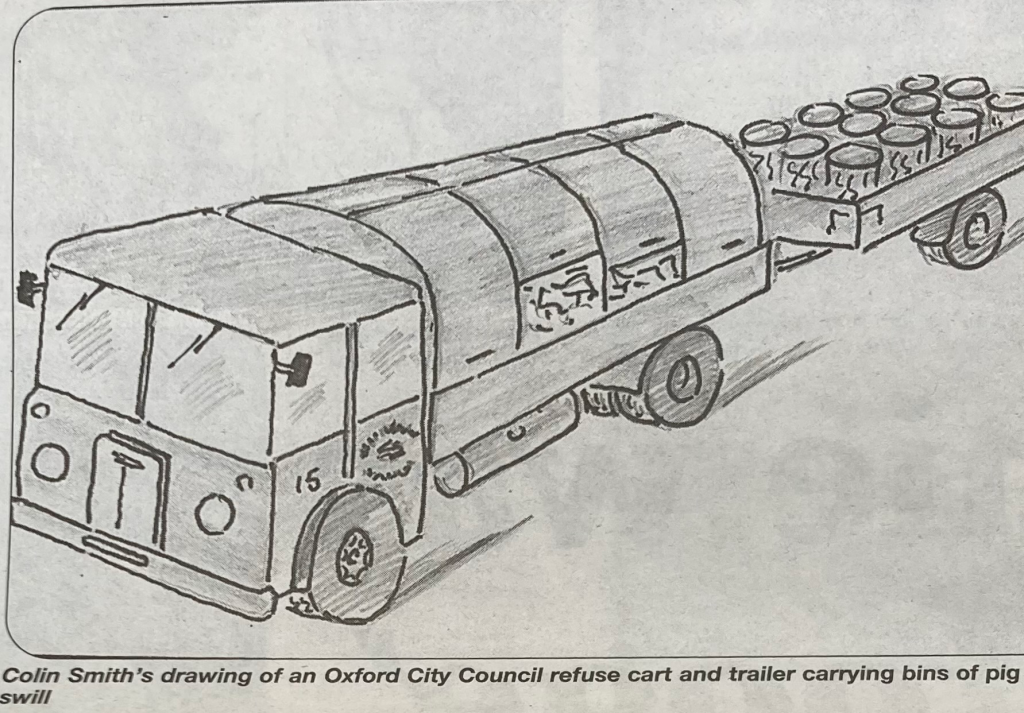
It’s all there in a small cutting from the Oxford Mail written after he died, alongside a magnificent drawing of the old-style refuse cart, drawn by Colin. It is towing a trailer carrying bins of pigs’ swill from the days when the council had a pig yard on Thames Street. Colin and crew would collect leftovers from the colleges and restaurants for them. It was all part of the rounds. In the same piece Colin remembers the old salvage yard in Isis Street near Folly Bridge where they took paper and cardboard. Copper, brass or lead was sold to Warburton’s scrapyard and the money shared by the men. And the ash shovelled from the boilers of hospitals, colleges, even Oxford prison was taken to Port Meadow tip where it was used for road surfaces.
It was this kind of work, Pam tells me, that her father had to stop after he had an operation on his stomach. “In those days there were no plastic wheelie bins. It was just heavy metal bins. Everyone had a coal fire so there was lots of heavy ash. The men had to lift the bins on to their shoulders and tip them into the lorry. Of course he couldn’t do that after the operation, so they found him lighter work. He drove a little van – I can still remember the registration – 436AFC – it was a little Morris, exactly like the one in ‘Call the Midwife’. I can see him now chugging around Oxford. He did things like picking up dead animals off the roads, and in voting times he’d collect the polling boxes and deliver them to the Town Hall to be counted.”
One of the other jobs he did was to collect all the white linen hand towels, then available from the attendant at the city’s public toilets to dry your hands. These were located downstairs on St Giles (men and womens), Blue Boar Street, and on Market Street and Gloucester Green.
“Picked up by my dad on a Tuesday and a Friday,” explains Pam, “they were all brought to our house to be washed. Delivered back all clean and neatly folded, he’d then pick up the next lot. This was very hard work. There were no washing machines. My mum would divide the towels into three groups: hand wash, boilers and scrubbers. Boilers were cleaned in a gas lit boiler, and the scrubbers were done in the sink with a scrubbing board. A mangle kept in the yard was used to squeeze the water out.”
This was all very well in the summer when Pam remembers lines and lines of white squares on the garden washing line. But in the winter, they were hung on wooden clothes horses dotted all over the house. There were wet towels everywhere.
“I had to help on return from school and in the holidays,” remembers Pam. “No playtime for me until work was done. My mother got one penny a napkin for all that work. Paid monthly.”
After I take my leave, I decide to check out today’s Oxford public lavatories. I wanted to see for myself if the lines of clean white porcelain sinks, high-level cistern lavatories with chains, and walls tiled with tiny white enamel that Pam remembers, still exist. Sometimes, apparently, the toilet attendant would even hand out Fox’s glacier mints.
First up the men’s public lavatories on St Giles. Built in 1895 – underground as Victorian sensibilities felt that these ‘objectional contrivances’ should be hidden away. Reached by a flight of York stone steps (still there) and lovely, decorative iron railings made by Lucy and Co (still there) they were closed in 2008, and now house two subterranean luxury hotel suites, No 1 and No 2’s (apostrophe ‘s’ added by me) The Netty, apparently Georgie slang for toilet. Rented for upwards of £180 a flush, I’m hoping you get a few white linen napkins thrown in for that.
So now both boys and girls must both use what was once ‘The Ladies’ in Magdalen East Street. Built under the traffic island that the newly signposted Unisex toilets share with both the ancient St Mary Magdalen Church and the Martyrs Memorial. Women had to fight to get these toilets installed in 1909, Oxford women’s water closets some of the very first in the country. For it was considered shocking that women should want to perform their private business in a public space – provoking disgust at the ‘indecency’ of it all.
There are no toilet attendants these days, only a contracted cleaner who comes in four times a day to check them out. I met him just as he was heading out. He’s done a decent job but this is not the most welcoming of places. Now kitted out with those all-in-one plastic basins that supposedly squirt soap, then water then dry your hand automatically, it’s a far cry from the days when Albert visited. A jug of flowers wouldn’t go amiss.
It’s the same story at Market Street and Gloucester Green, (the Blue Boar Street facilities are long gone). But then perhaps we are lucky to have any at all available to those caught short in the centre of town. Over 60% of the country’s council run lavatories have been lost over the last 10 years, some repurposed as bars, art galleries or hotels as is the case in Oxford. Others simply demolished, the land sold on. It also seems we no longer have to pay. To ‘spend a penny’, was a phrase coined back in 1851 after The Great Exhibition, when a small charge made to use the first ever public conveniences proved popular. But for your financial outlay, in Oxford at least you got a crisp, white linen towel.
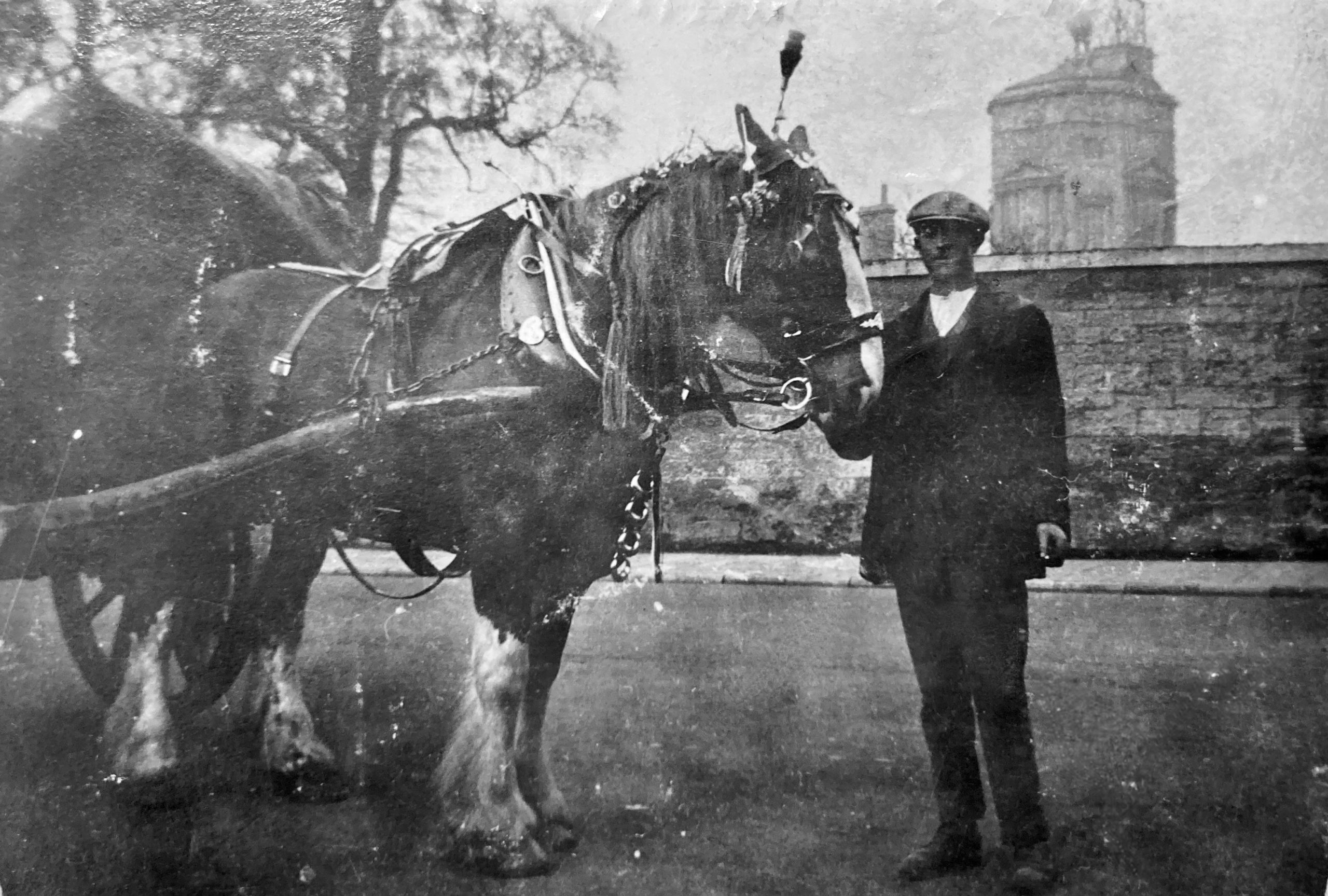
Main image: Albert Smith when the dustcarts were pulled by horses. You can see the Radcliffe Observatory behind when it still had the weather station on the roof. Courtesy of PamTuckwell
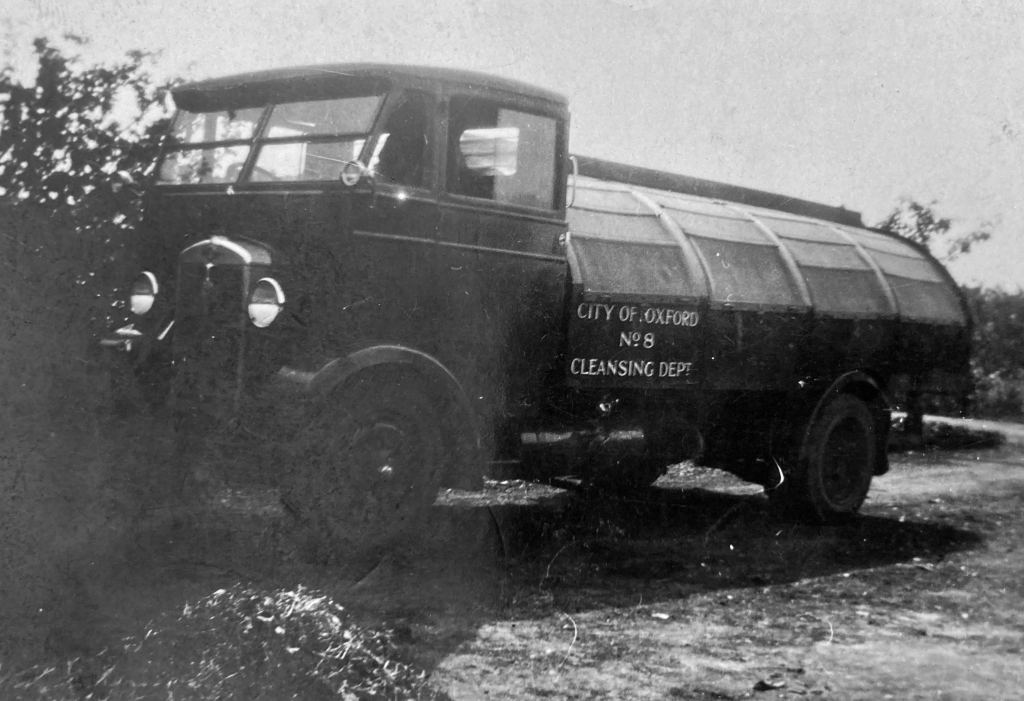
The first motorised dust cart, driven by Albert through the gates of the Morris Motors factory.
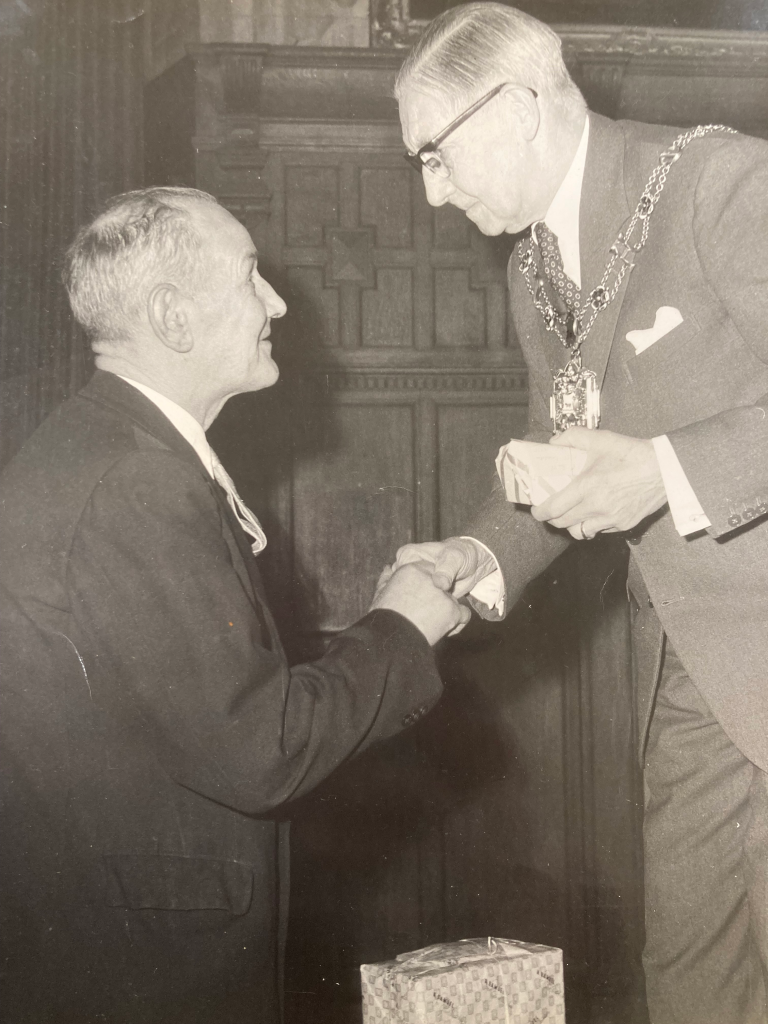
Albert Smith receiving his retirement watch from Oxford’s Lord Mayor, Alderman Frank Pickstock.
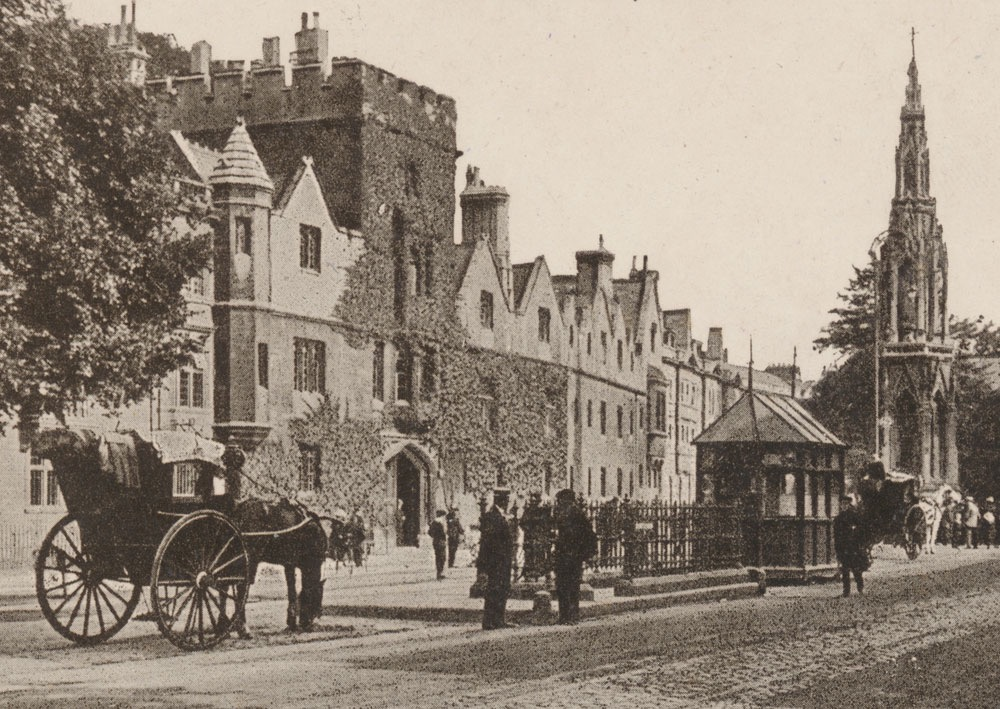
Detail from a postcard owned by Stephanie Jenkins of St Giles in 1915, with the gentlemen’s public lavatories in front of the old cabbie’s shelter (now moved and repurposed as Najar’s Place across the road).
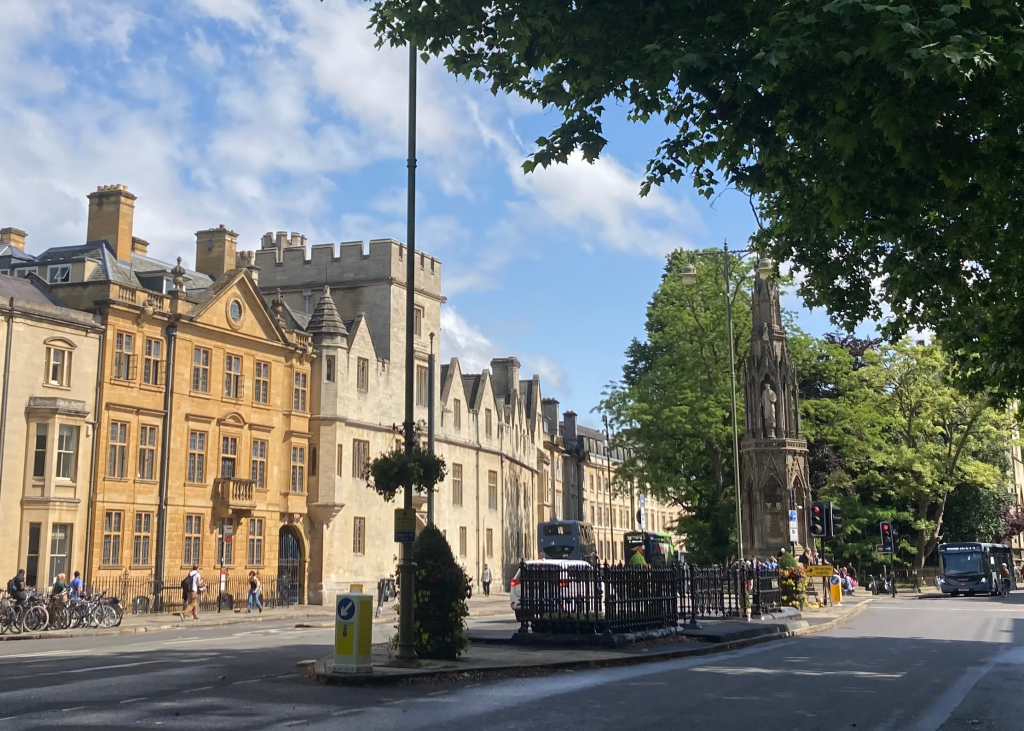
As it looks today.
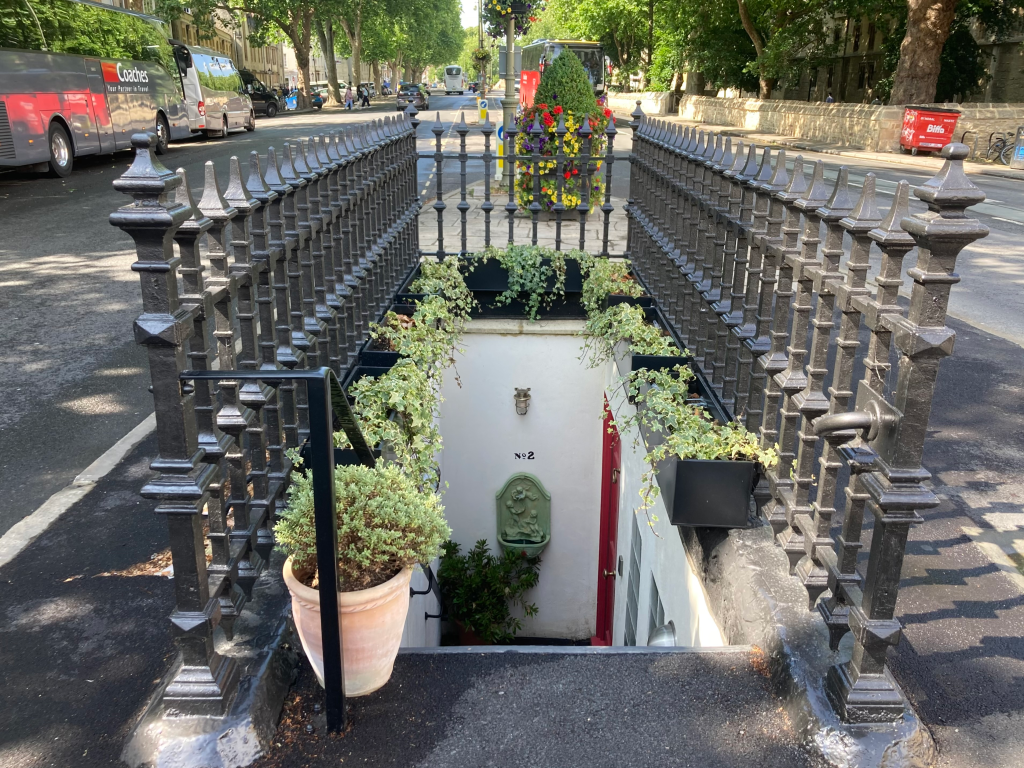
The old entrance to the Gentlemen’s lavatories repurposed as a subterranean hotel suite.
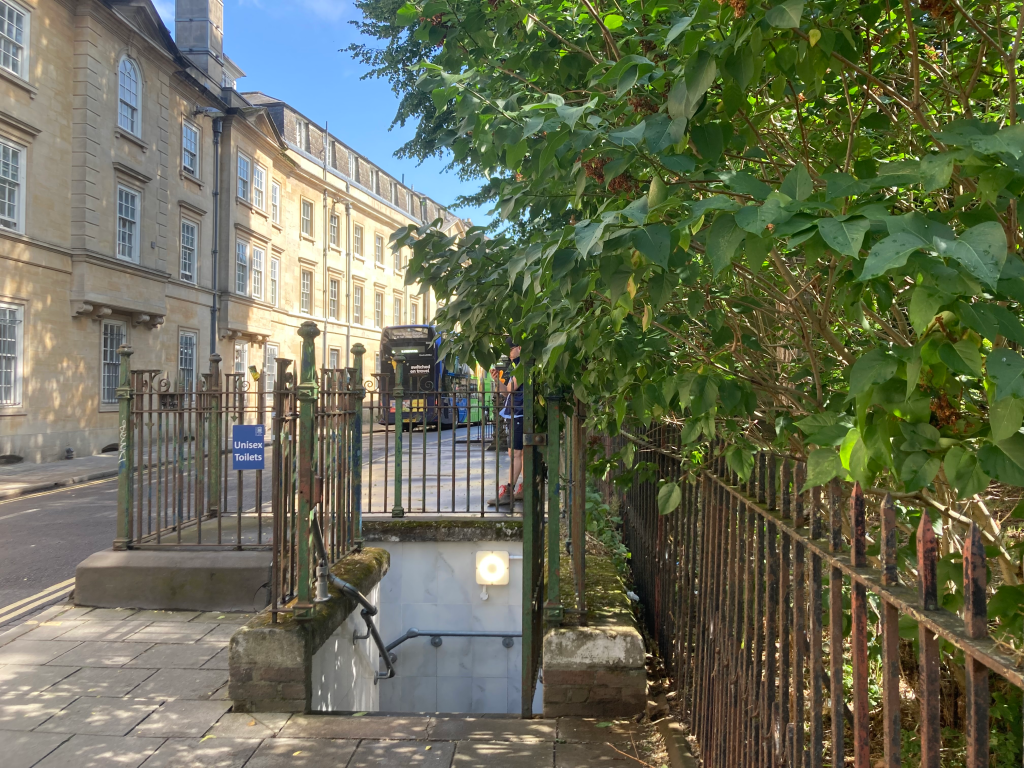
What were the Ladies public lavatories on St Giles, are now unisex
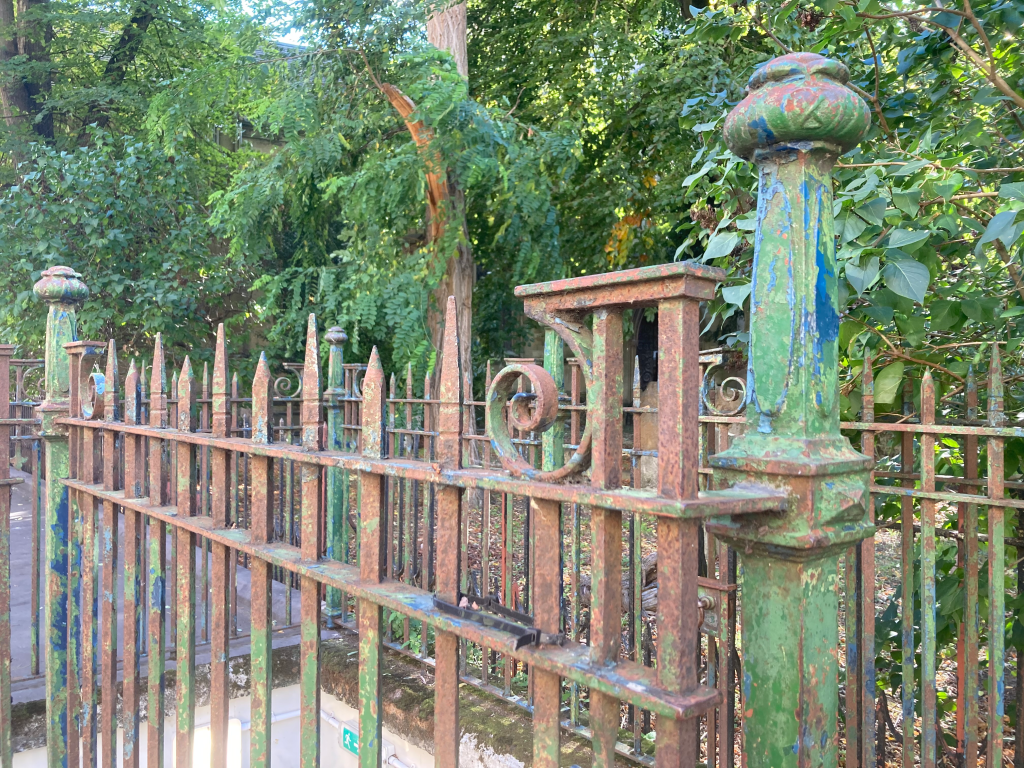
Still with their beautiful old cast iron railings with their decorative swirls and finials.
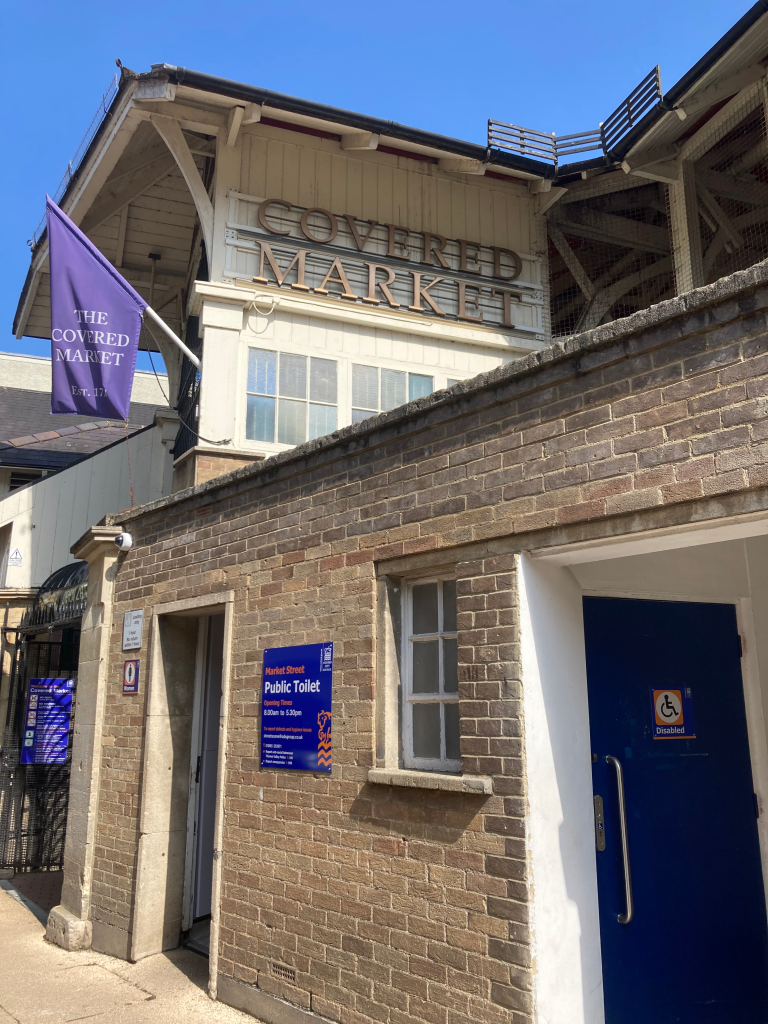
Market Street public conveniences
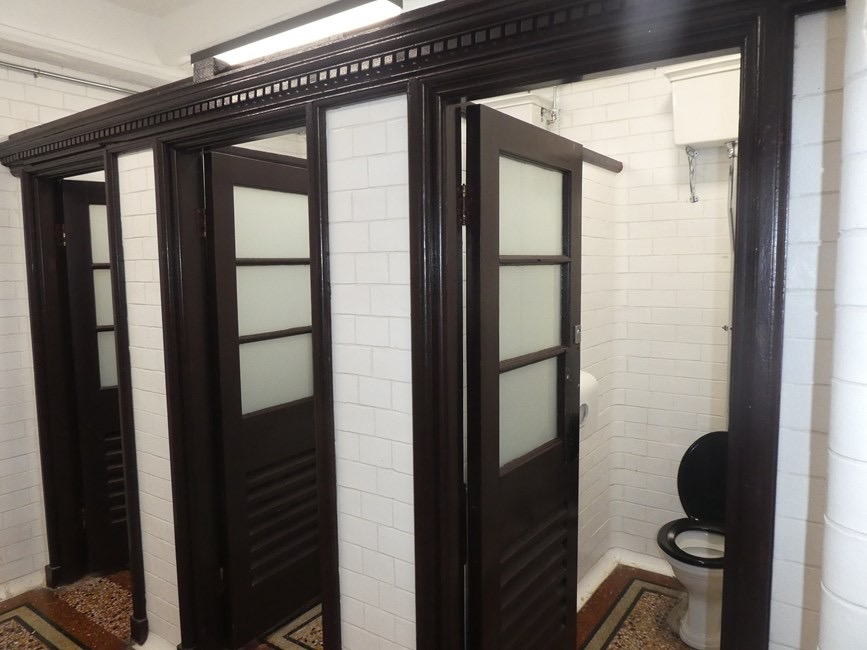
© Historic England
These toilet cubicles in Seaburn have recently been restored to their former glory and are now listed. Did the Oxford conveniences once look like this?

Pam at home in Wolvercote.
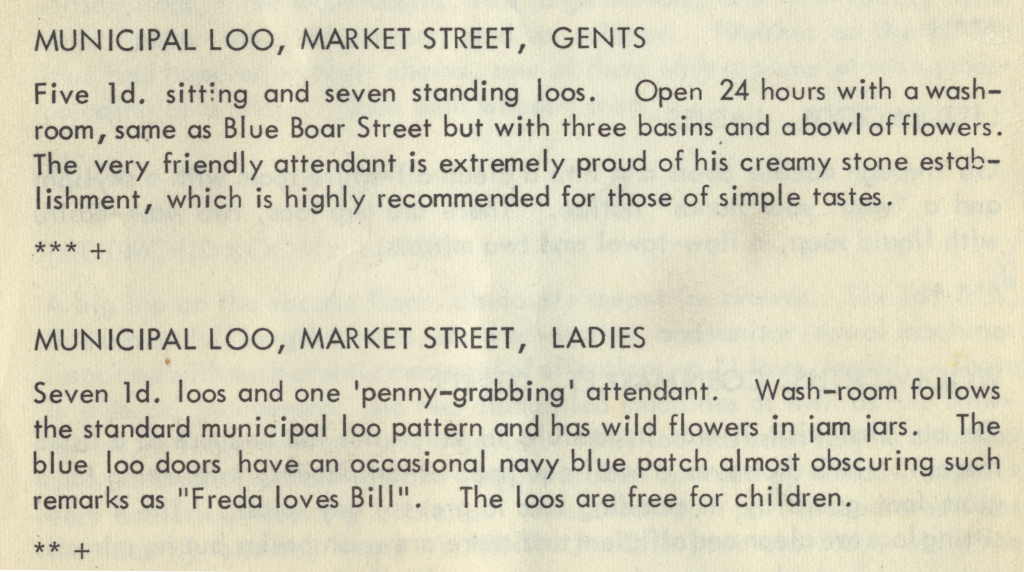
Stephanie Jenkins alerted me to Richard Graham, “At your own convenience: A guide to Oxford loos” (1966) At this time they were still very much looked after and were still charging one penny a pee. Here is his entry for the ones in Market Street.
You may also like to read From Cabbie’s Shelter to Najar’s Palace
11 Comments
Join the discussion and tell us your opinion.
What a marvelous piece, capturing perfectly people and history and current civic decline. Many thanks.
The public toilets in central Oxford were still beautifully looked after in the 1960s, as shown in Richard Graham, “At your own convenience: A guide to Oxford loos” (1966).
One of your very best. Thank you
I shall check out the railings near the unisex toilet. I often park my bike round there. I love the way you point out details that can so easily be missed. Incidentally Najars Place about the same area was fascinating.
I’m not sure I’d want to stay in the Nettie, but might be good to look inside! It took soooo long to finish these, I wondered if they ever would.
Thank you for this new angle – and hurrah for those women in 1909; I didn’t know ours were some of the first in the country. The Market St ones now do have some rather lovely quotes about Oxford on their walls for when you are queuing. And here is what the Netty looks like from the inside! https://observer.co.uk/style/travel/article/a-room-with-a-loo-oxfords-smallest-hotel-is-flushed-with-success
Great story and written to hold our interest. Lovely. Tiny wobble for the pants: “Georgie slang”? Geordie, surely.
Ooops yes
The picture of the cubicles in Seaburn reminds me of similar in Blue Boar street at the side of the Oxford Town Hall. Now all boarded up.
Brilliant that you remember these – and so sad that they are no longer there.
I enjoyed your article about your family. We lived opposite you in Gordon street and it bought back happy memories. Mary Taylor nee Mullins
Dear Sausage (!)
I greatly enjoyed your banger of a blog post on Albert Smith and all things sanitary.
`With great thanks and sizzling regards