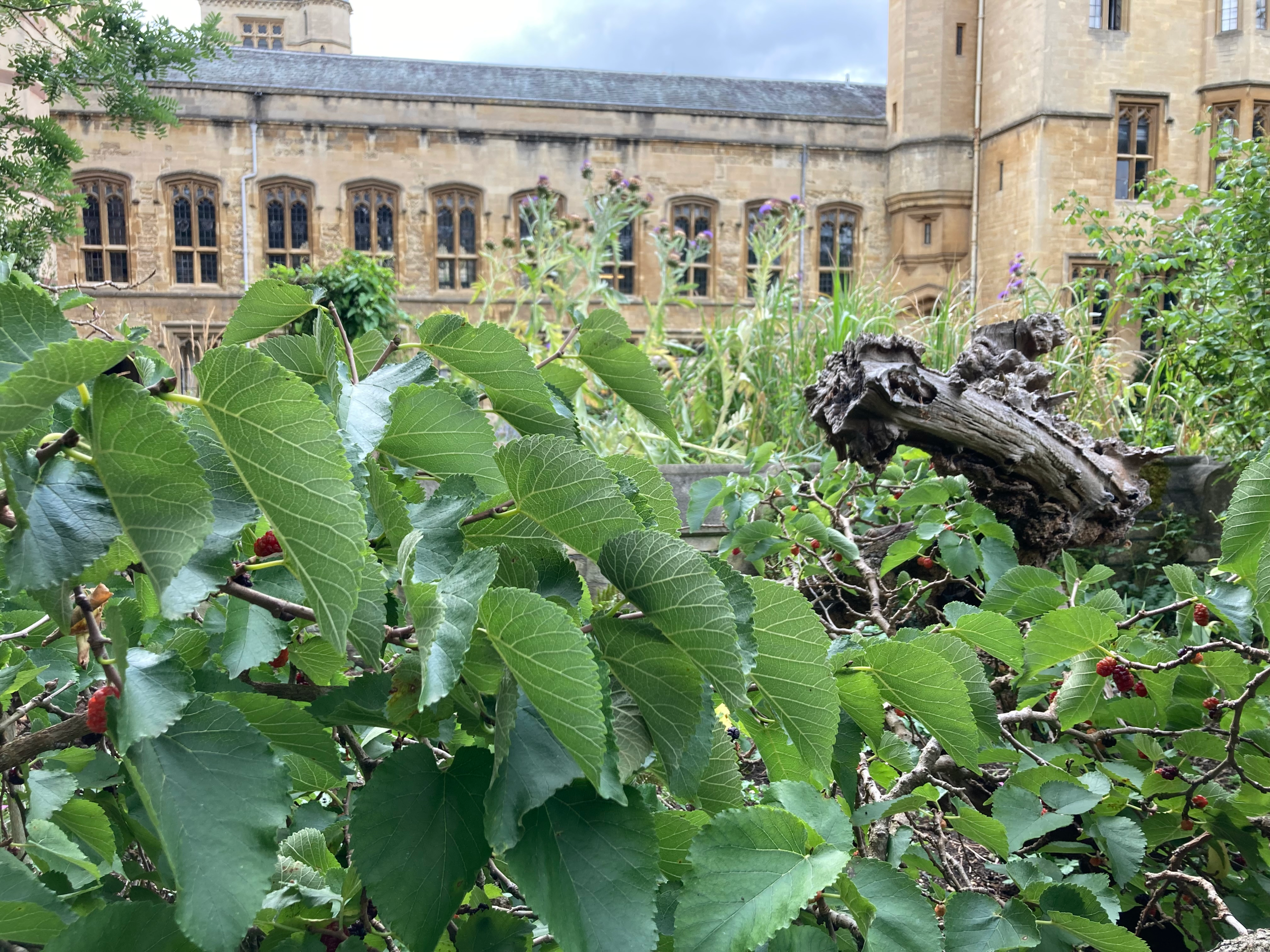
I had scrawled the word mulberries across the pages of my calendar for the first week of August. It was to remind me that this was the short window of time that these delicious knobbly clusters more muscular than a blackberry, sweeter than a raspberry, fully ripen and fall from the tree. For I wanted to make jam. Not any old jam mind. This jam was going to be special. A conserve created from the darkened crop of an ancient black mulberry tree. Planted in the gardens of Balliol College, one of the University’s oldest endowments. Over 400 years ago. Still bearing fruit, I’d been given the go ahead to take what I needed.
And so it is that clutching a plastic container with which to gather my sticky pickings (you rarely see them for sale in the shops so short is their shelf life), I weave my way through the throngs of tourists on Broad Street, turning through Balliol’s great gates where the porters on duty direct me across the Front Quad, down a dark passageway and into an open expanse of lawn. There are five mulberry trees in the garden, one was planted by Queen Mary in 1921 and another by Princess Margaret in the 1950’s.
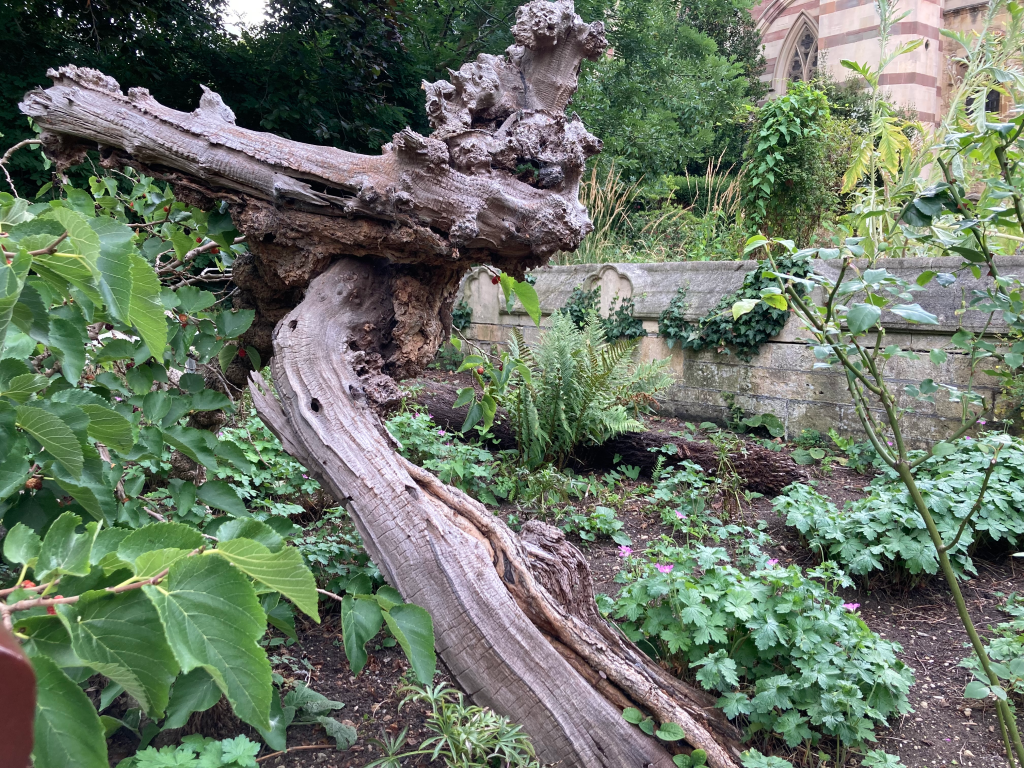
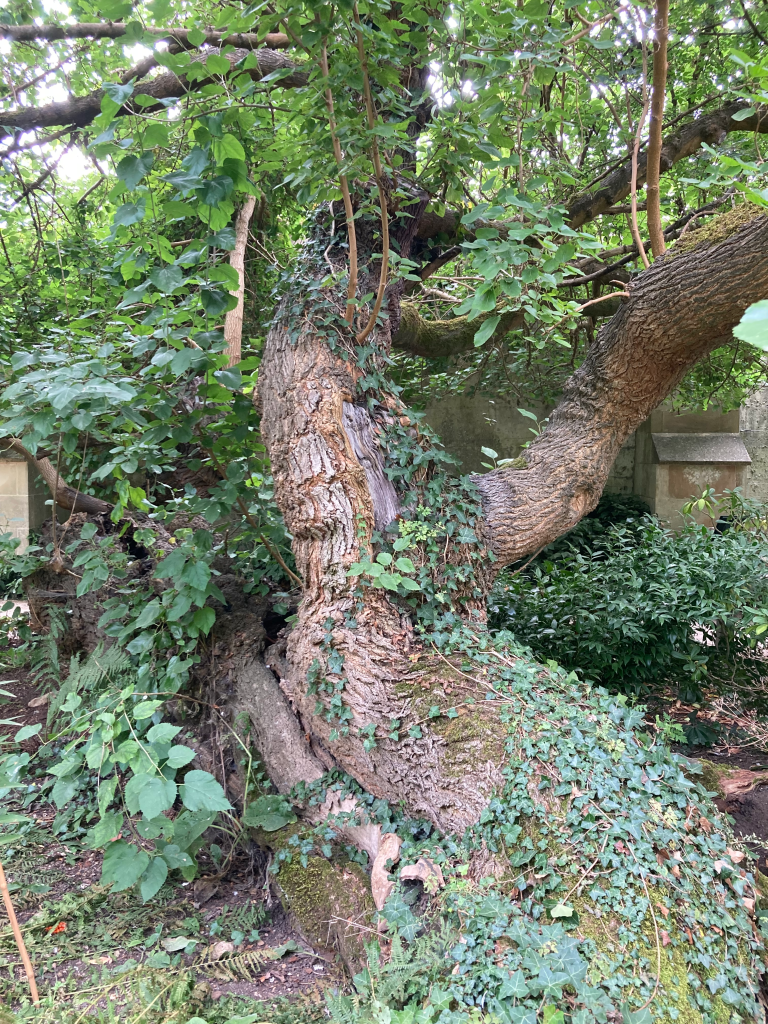
But the oldest, the one that I had come to visit, is associated with another royal. Lying prostrate in a flowerbed, its trunk gnarled, its branches propped, this is one of the very few that have survived from the thousands of mulberry saplings imported from Europe in 1609 by King James 1. He’d wanted to create a domestic silk industry, instead of buying the stuff from abroad at vast expense. And as the leaves of the mulberry were the silk moth caterpillar’s only food, he persuaded rich landowners to plant them on their estates. Some Oxford and Cambridge colleges also bought into the idea – the other Oxford mulberry from this date that still survives is at Merton College. He planted hundreds in the grounds of his Royal Palaces at Greenwich and St James Park. Our National Collection of Mulberries is still held at Buckingham Palace. He even appointed a Keeper of the King’s Silkworms.
There have been lots of suggestions as to why the project failed. Some say it was because James 1 imported the wrong kind of mulberry. For it is the white mulberry (morus alba), not the black mulberry (morus nigra) we have here at Balliol, that is native to East Asia and has been nurtured as food for silkworms in China for over four millennia. And it was the white mulberry that was planted by James’ great rival Henry IV of France in the Tuileries gardens of the Louvre Palace in Paris, that created the raw materials to manufacture what became known as ‘woven wind’. Others say that although James thought he was buying white mulberries, he was tricked by French suppliers who passed off black saplings as their albino alternative. The most likely explanation is that both were delivered but only the black survived. At the beginning of the 17th century, we were experiencing a mini-ice age, the first decade the era of the famous frost fairs on the Thames. Our cool damp climate was better suited to the black mulberry, native to Persia, cultivated as far back as Roman times across Europe for the shade of its heart shaped leaves and its intensely sweet bulbous fruit. Before the days of refined sugar production, they may have been short lived, but that heady sweetness must have been a welcome nectar. And so it was that the hardy black mulberry triumphed and trees are still found in country houses and Oxford colleges.
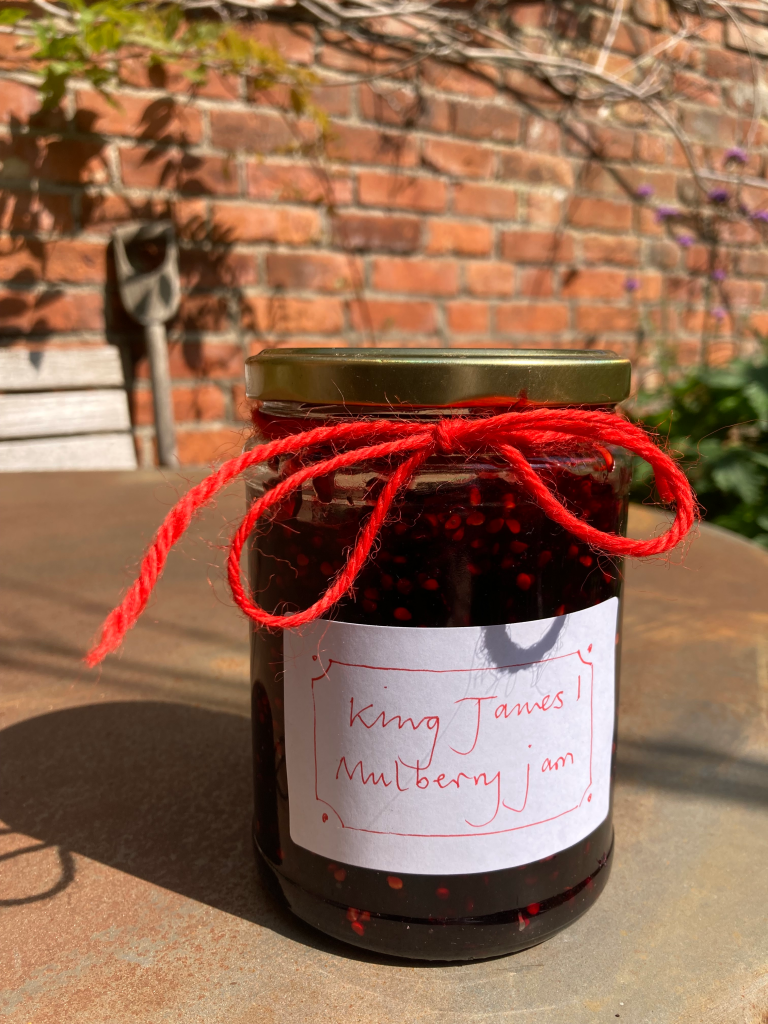
You certainly can’t make jam from the white mulberry, smiles a friendly gardener, as I set about picking the healthy crop from the age-old stump. So though I am sorry that King James never secured a thriving silk trade I am grateful to him for today’s harvest. Soon my hands are bloodied from their seeping juices – they are not called blood fruit for nothing – my lips a ruby red. And carrying them carefully home I boil them up in the pan with a little sugar and lemon (they are low in pectin so you will need something to thicken) and I have enough to make a jar full. It’s a dark burgundy colour, sweet, pippy and delicious on toast. Like the season, it disappeared all too quickly. I must write myself a note in the calendar for next year. This time pick more mulberries.
To find out more about the marvellous mulberry there is a website dedicated entirely to the tree edited by Peter Coles https://moruslondinium.org
The black mulberry has a phoenix like ability to reroot. The 1609 tree was originally planted the other side of this low lying wall in the Fellows Garden. Blown over by a storm in 1905, the old trunk put down new roots from buds underneath the bark in a process called ‘layering’. It’s the same tree but ‘reborn’ now in the Garden Quad.
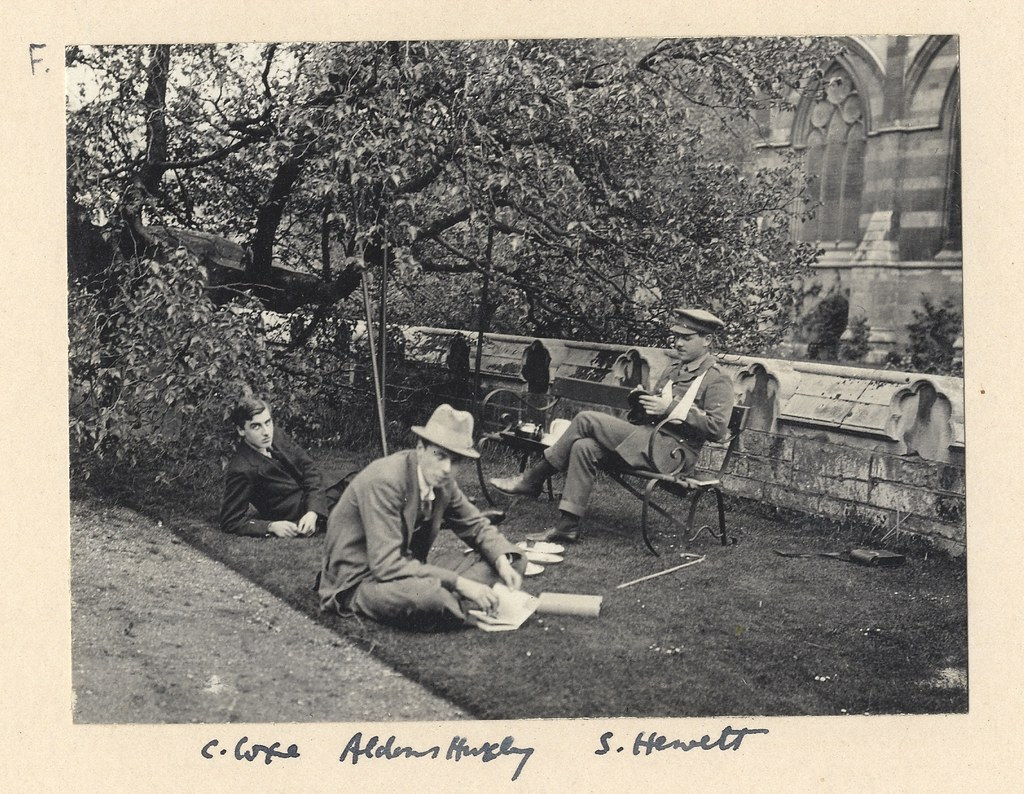
This photograph was taken in 1913 of three Balliol students including Aldous Huxley, just before the First World War. Could this be our mulberry tree after it had been blown over? ©Balliol College Archive
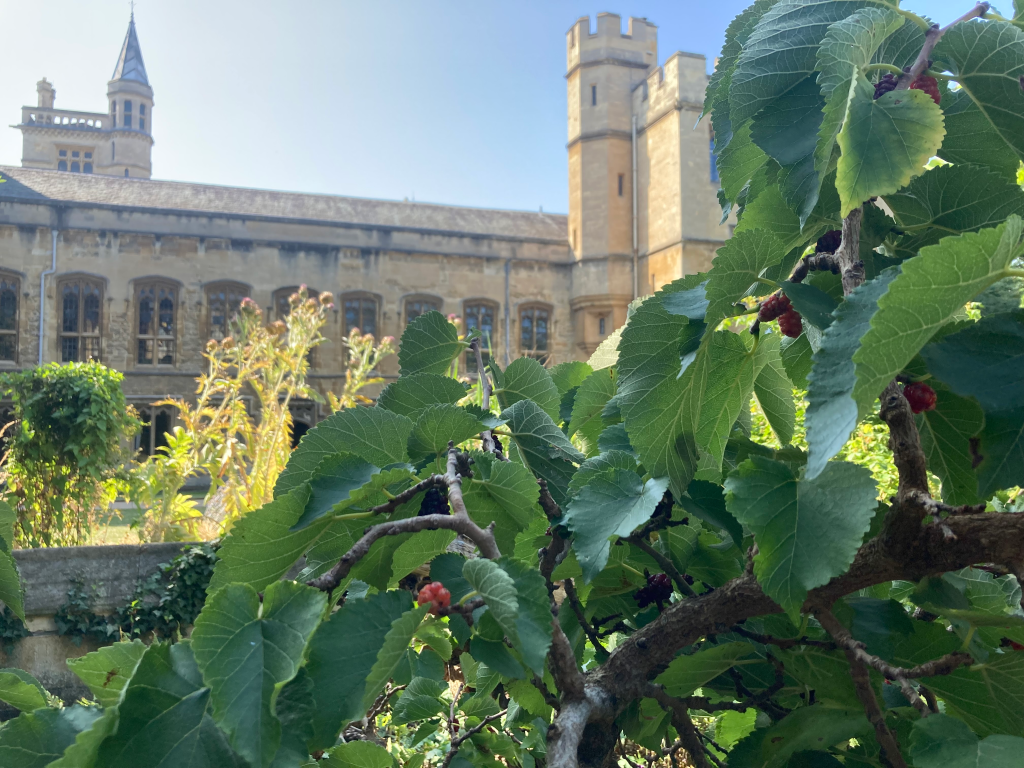
The tree with the old Balliol College Library behind.
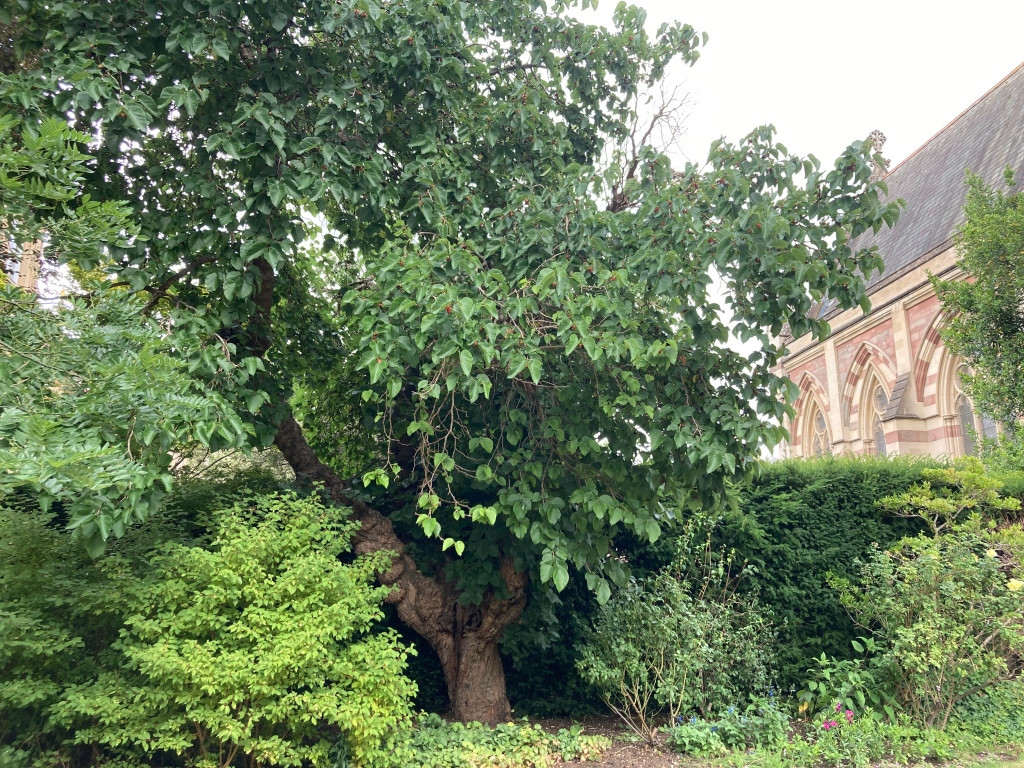
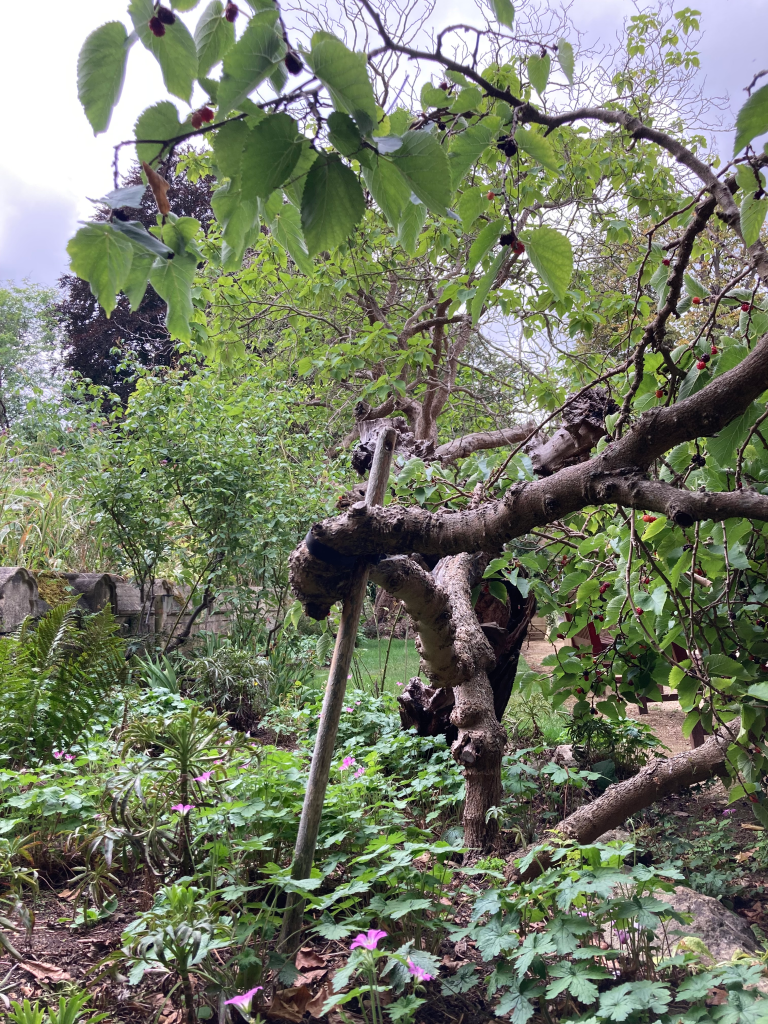
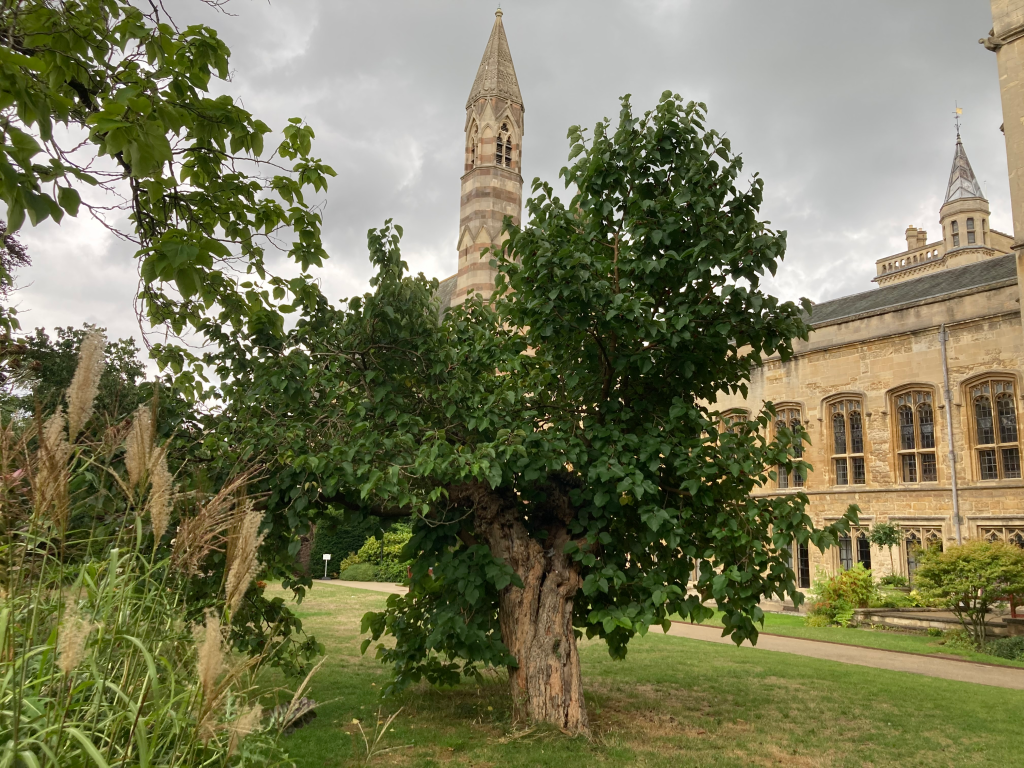
There are four other black mulberries at the college. This one stands in front of William Butterfield’s striped chapel. Its gnarled trunk belies its more recent age
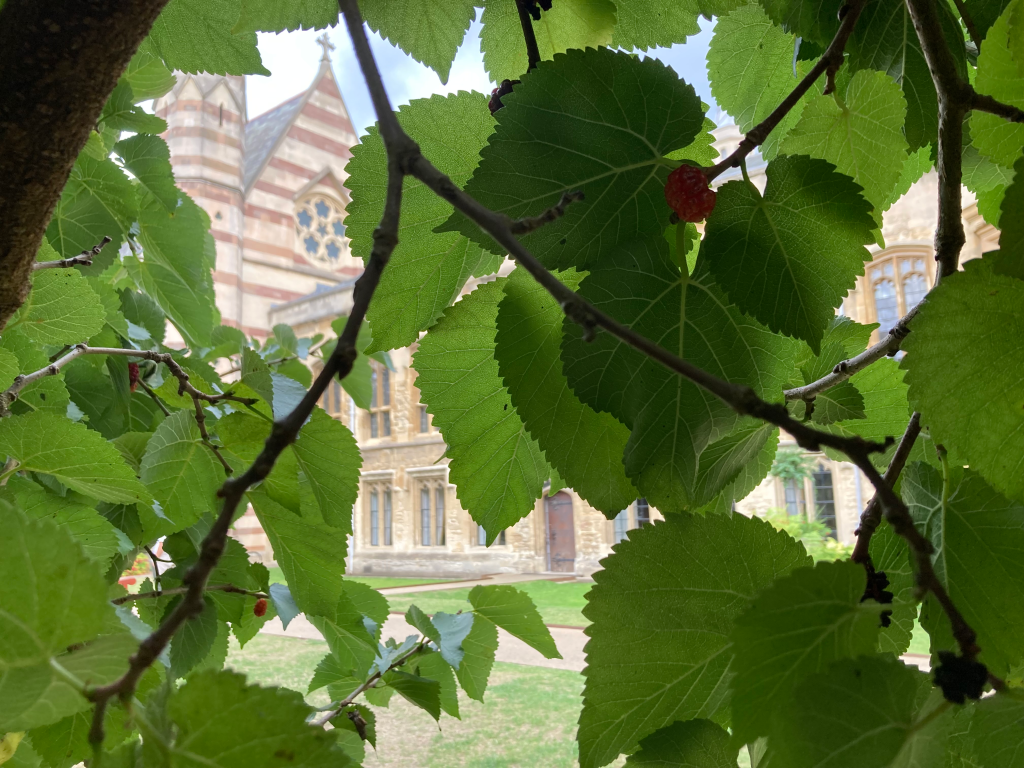
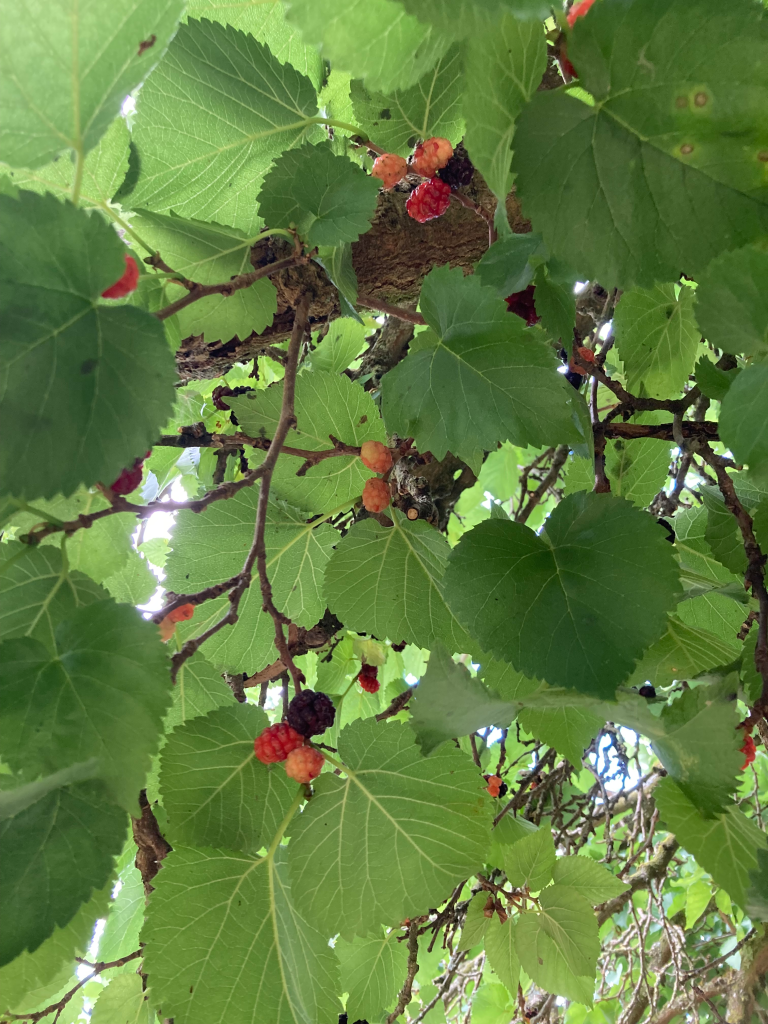
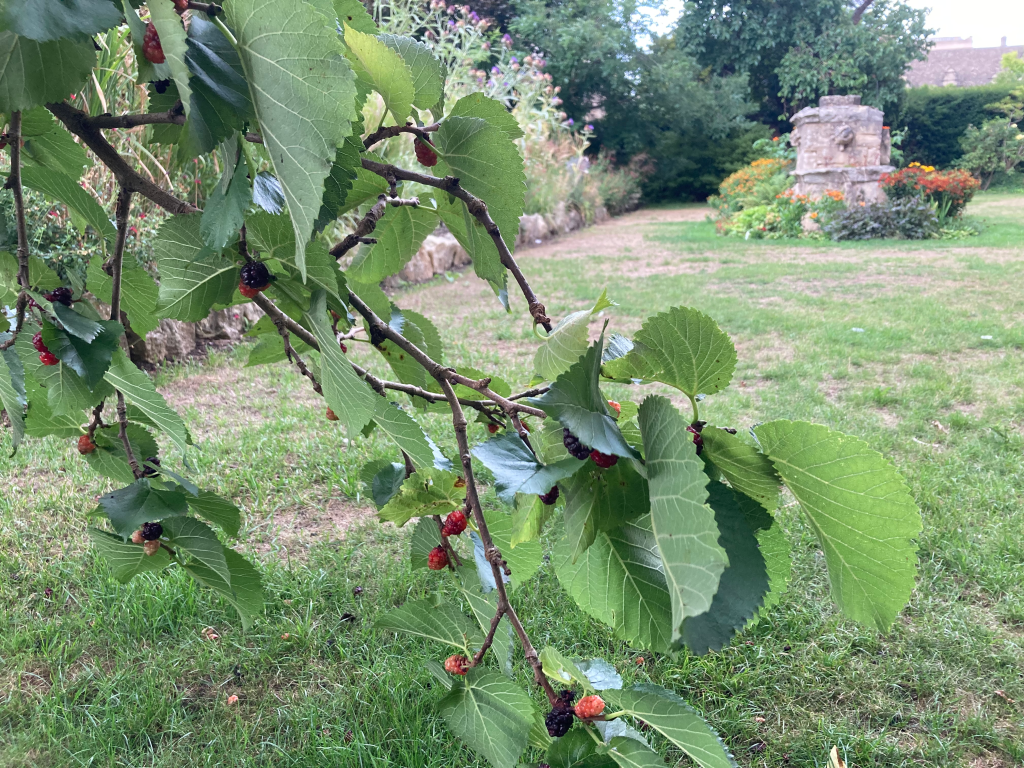
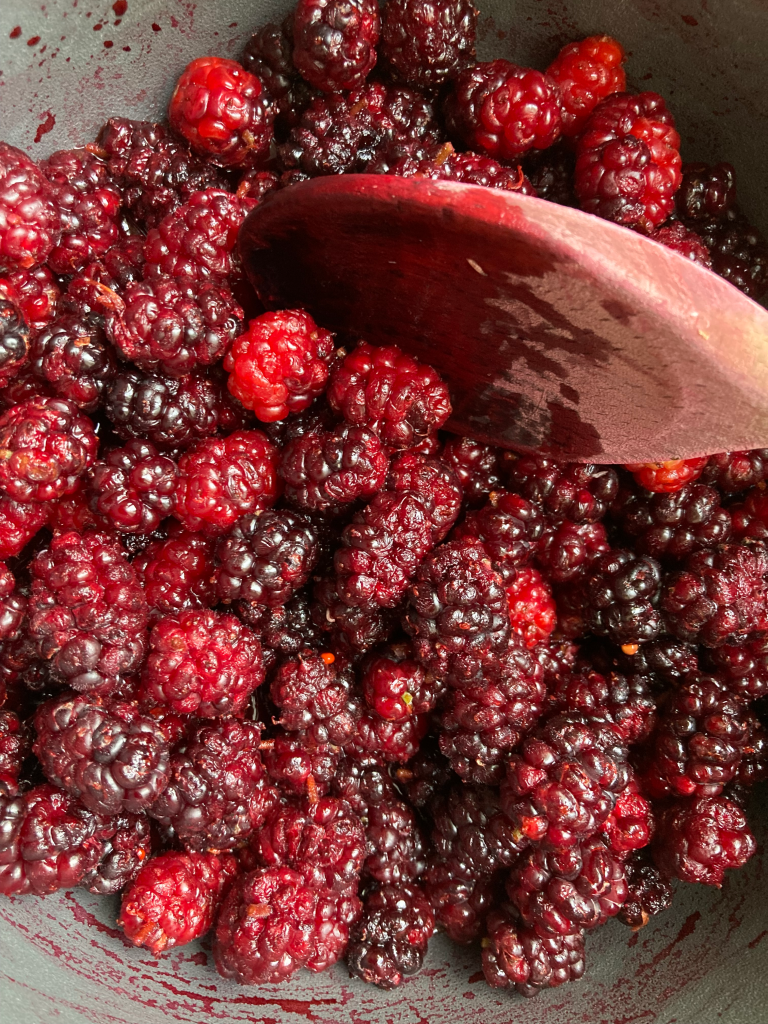
The berries at various stages of ripening.
I came across this rare white mulberry tree Morus alba, on the south wall of the walled garden while walking in Oxford’s Botanic Garden. It’s dated at roughly 200 years old which makes it the oldest in the country.
You might also like to read The oldest Tree in Oxford
2 Comments
Join the discussion and tell us your opinion.
I love this story! Many school children in South Africa kept silk worms and they were fed on the leaves of the BLACK mulberry. Our mothers had to wash our white shirts of mulberry stains when they ripened, much to their annoyance!
A wonderful piece celebrating the King of berries; thank you Arabella! I think that James had the last laugh as none of Henri IV’s mulberry trees have survived in the Tuileries. For fans of historical fiction and mulberries there’s a lovely novel by Alessandro Baricco called ‘Silk’.