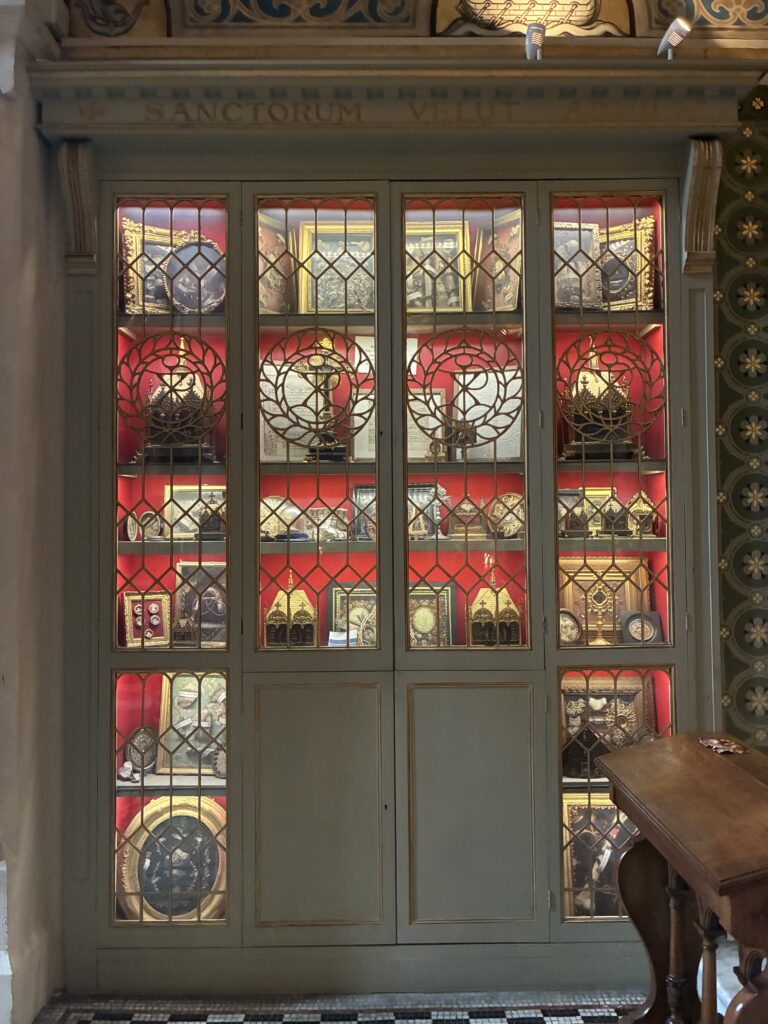
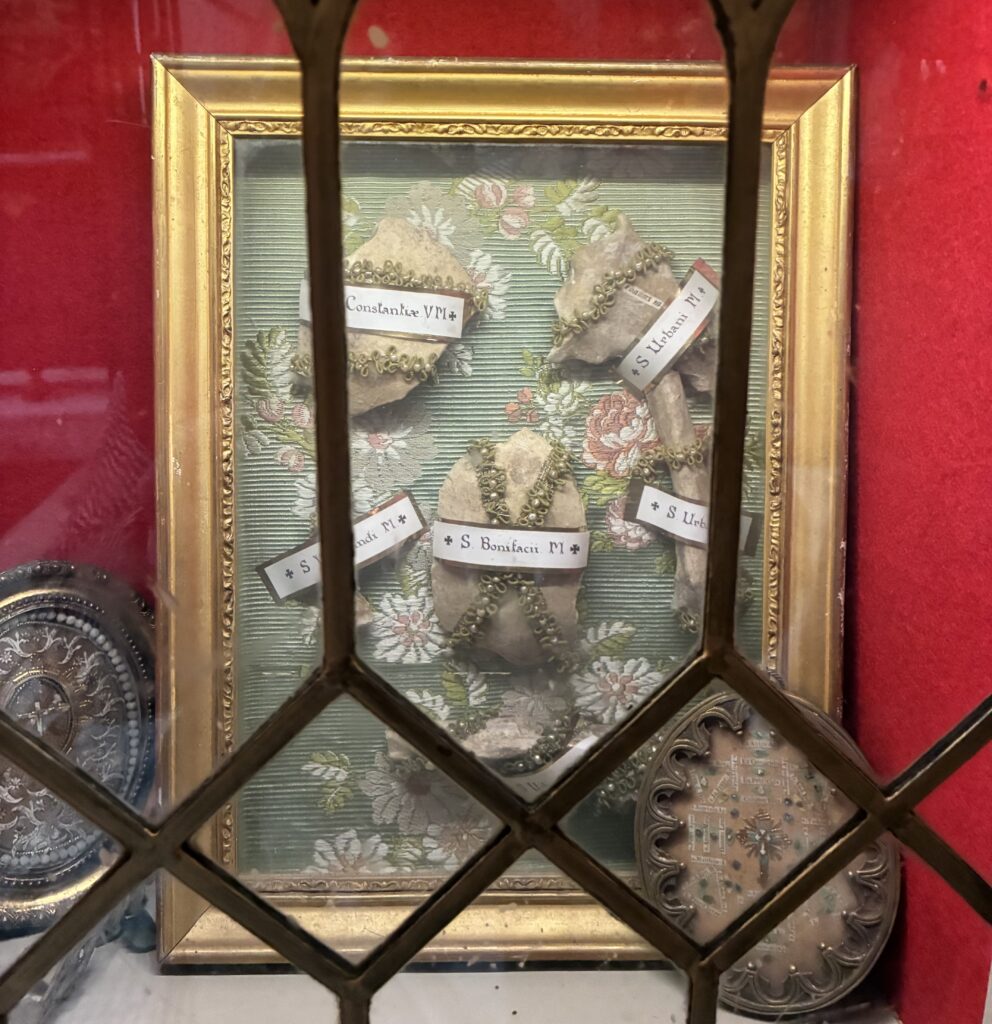
Sandwiched between a beauty salon and the entrance to Somerville College is Number 25 Woodstock Road. I must have passed the open arched stone entrance a thousand times, before a chance urge to explore what lies beyond found me heading through the courtyard and into the Catholic Church of St Aloysius, also known as The Oxford Oratory. I was surprised to find on a Thursday morning the vast vaulted nave so well attended, with a lengthy queue for the confessional box. And as they were about to begin morning mass, I took myself away from the main action, through a metal grille at the back of the church and into the quiet of a tiny chapel. Rows of votive candles, a fine painted ceiling, a picture of the Virgin Mary above the altar, so far so normal. But my eye was quickly drawn to something far from ordinary. For inside two ceiling-high, grey cabinets, internally lit and lined in red gauze, were shelves filled with an amazing array of ornately decorated receptacles; reliquaries as I later learned they are called. That is special showcases (caskets crafted from silver and gold, and made to look like churches, hollow crosses, statues and the like) designed to display the physical remains or objects used by those who have been canonised by the Catholic Church. Each is labelled with a tiny paper name tag in beautiful handwritten script. Peering through the glass I spot the jawbone of St Denis, (decapitated and martyred in the 3rd century), a piece of veil from St Lucy of Narni (surely the inspiration for the youngest child in the C.S Lewis Narnia stories), and a velvet-lined frame decorated with intricate floral quilling in which is exhibited a selection of bone fragments including a large piece marked as once belonging to St Hilary (a 4th century Bishop whose feast day falls at the beginning of the year and as such been appropriated as the name for our University spring term.)
All religious rockstars of their time. And still venerated in this, the home of Oxford’s most significant collection of holy relics. St Aloysius’ Relic Chapel. And as I was to find out, a place with a most remarkable history.
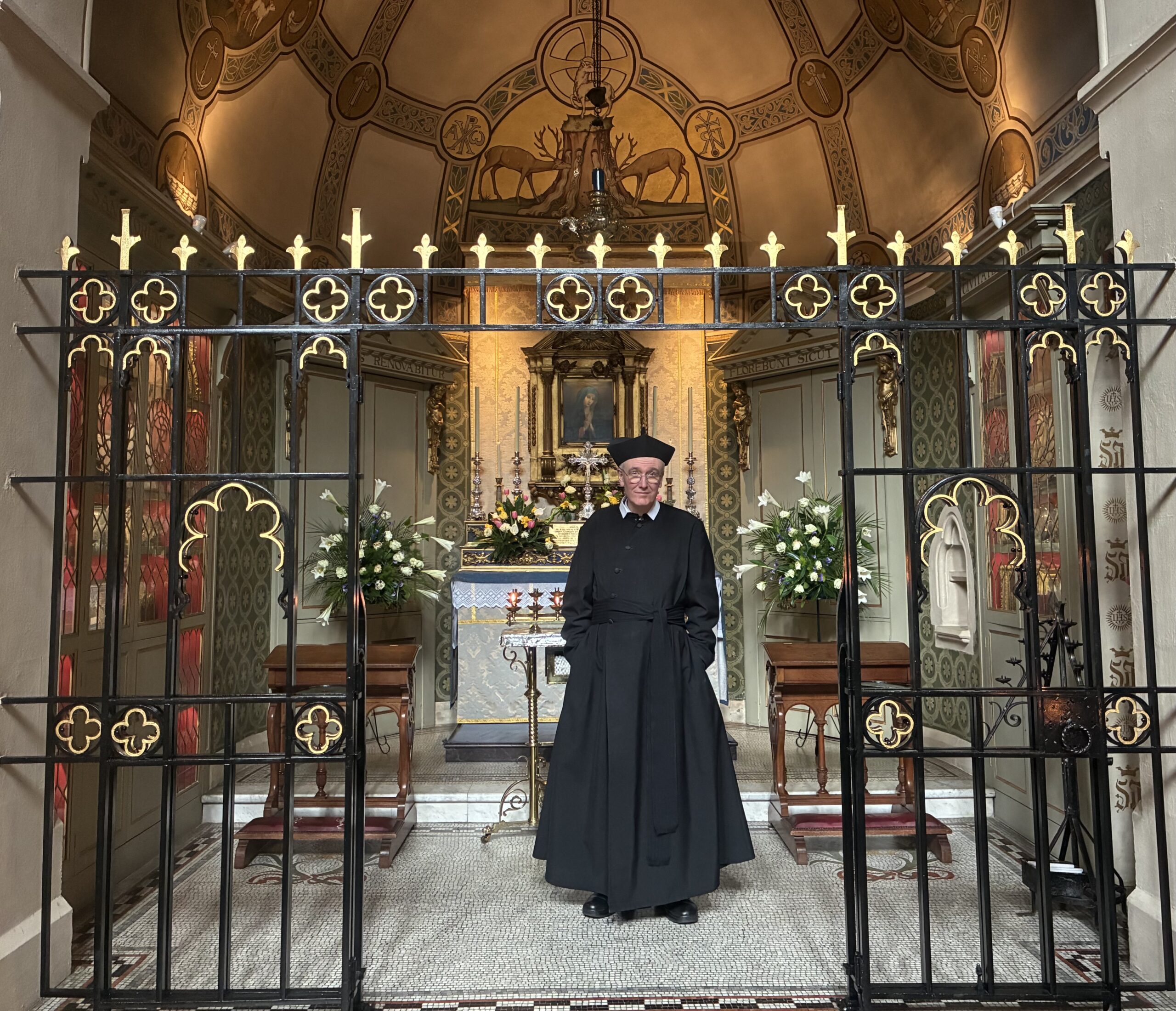
A couple of weeks later I meet with Father Dominic, a charming, soft-spoken man dressed in the black robes of his profession. He is the longest serving member here, arriving at the church in 1990 to set up The Oxford Oratory, a community of priests founded in the 16th century by St Philip Neri in Rome. They have a little café, amusingly named the Café Neri after him, next door in what used to be the old St Aloysius Primary School. And it is above this, in what is now a light-filled library, that Father Dominic explains how the chapel came to be.
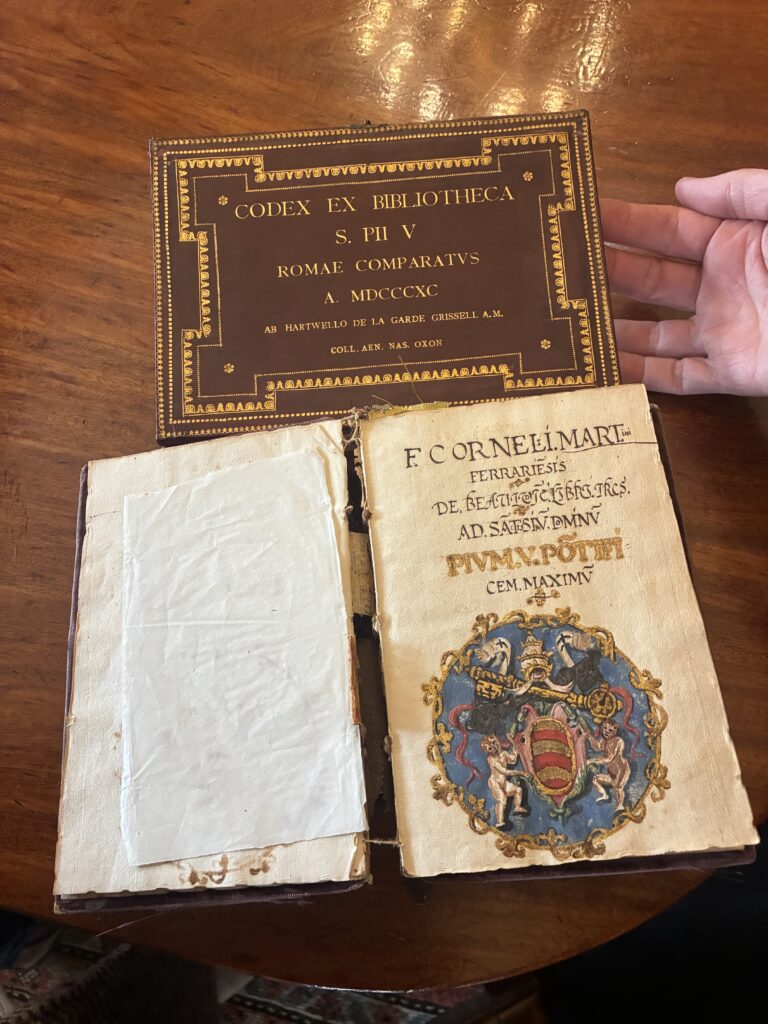
It all began with an Oxford man called Hartwell de la Garde Grissell. Recently converted to Catholicism he’d headed to Rome in 1868, just at the time when a secular reformation was gaining momentum in the country. The temporal power of the church was being challenged. Religious orders were being thrown out of their houses. Everything was up for grabs. And so it was that Grissell, serving as Chamberlain under three successive Popes and with friends in high places including the Papal Custodian of Relics, MonseigneurScognomiglio, was able to hoover up the vast array of relics and reliquaries that were going begging. As well as religious curios and antiquities, ornate plate and embroidered vestments, urns and inscriptions from the catacombs, some he was gifted, others he picked up at auction for a snip. And a couple of years later he brought the whole lot back and installed them in his own private chapel at 60 High Street on the corner of Longwall Street.
We know the contents of his collection because he catalogued all the items in four bound notebooks. Accounts of his collecting career, catalogues of printed books, transcripts of autographed letters of saints, a full list of relics in alphabetical order noting their feast days, seals and other authentication. Pretty much every saint in the calendar was represented, including the complete bodies of St Felix and St Pacificus. There were bits of St John the Baptist, and of the Apostles, and of more recent religious figures like St Edmund Campion and St Thomas Moore. There were 33 relics of St Philip Neri himself, including his death mask, his hair and bath towel.
And it was this unique collection that Grissell on his death in 1907 bequeathed to the Church of St Aloysius in which I am standing, at that time run by the Jesuits. Built only 30 years previously to celebrate the reintegration of Catholics into a city for so long dominated by Anglicans. The baptistry was quickly converted into a relic chapel, special display cases were constructed and the walls and ceiling decorated in iconography from the Roman catacombs, (after all it was from here that many of the relics came). St Pacificus was laid out under the altar.
And then in the 1950’s along came a cultural revolution. Post-war modernism held sway. Like so much of Oxford, the church was also deemed in urgent need of ‘modernisation’. The Victorian decorations were painted over in a ‘battleship grey’. The bottoms of the relic cupboards were cut away to make room for radiators. Vestments and mitres were given to amateur actors. And the relics themselves were declared unsavoury or inauthentic. Packed into a cheap coffin they were dispatched to the local crematorium and sent up in smoke. Never to be seen again.
Or so it was thought.
As it turns out the odd Grissell piece has turned up since Father Dominic and friends took over. He has brought me up to the library to show me some of them. Amongst other items a selection of letters autographed by the more recently canonised saints. Found in a locked cabinet, alongside much of the authentication documents belonging to the burned relics. They had also inadvertently kept the ashes, discovered casually cast under a table in a cardboard box.
And then slowly the Relic Chapel was restored to its original decor. The painting of the Virgin Mary above the altar, brought back from Rome by Grissell and known as ‘Our Lady of Oxford’ is the one thing that had never left. But now the colourful ceiling paintings have been uncovered. The cabinets are back in place and filled with a new collection of relics gifted from far and wide. And the ashes from Grissell’s great collection are housed and on occasion displayed in a special engraved glass urn. If I were a religious person, I might say the chapel had been resurrected.
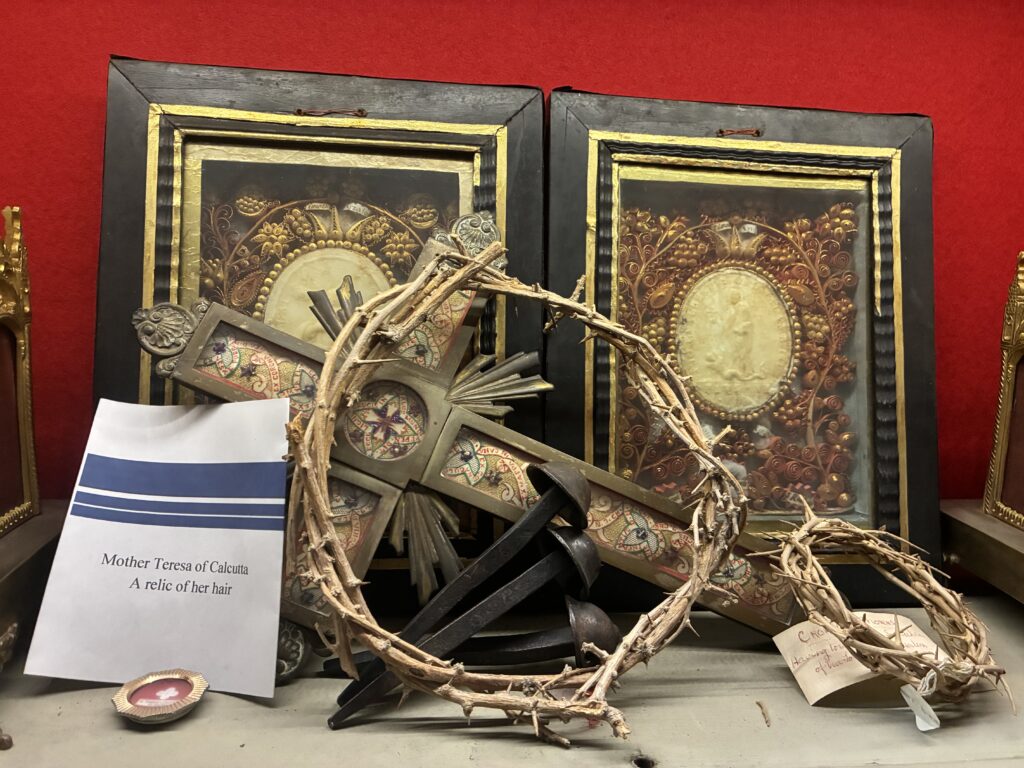
In truth it has been an absorbing couple of hours with Father Dominic. And I have learned a little about my Catholic neighbours. Like how a person gets to be beatified – they must have had a devoted following in their life time and evidence to say they have performed miracles – in the case of healing with no medical explanation and authenticated by a panel of judges. That there are three classes of relics – first class (a saint’s bodily remains, bones, skin, hair that kind of thing) second class (items used by a saint, books, clothing etc) and third class (anything that has touched a first class or second-class relic.) That relics cannot be bought or sold (that would be considered simony) but reliquaries can, (there are loads on ebay, I have looked). And that they should not be worshipped (that is idolatry) but should serve as a keepsake or a memory, just we might save photographs or lockets with hair from a loved one.
Fascinating stuff. And after I take my leave and head back on to the busy thoroughfare that is St Giles and into a sunny spring afternoon, I take a while to ponder what I have just seen. And while some may find the whole idea of relics medieval, distasteful even, I am not so squeamish. For it seems that those who sit and pray or come to light a candle in the little Relic Chapel of St Aloysius, find some solace in their ‘memorial garden of the friends of God.’ And if it helps them tackle this modern life of ours in a more meaningful way, then I am all for it.
Main image: Father Dominic in front of the Relic Chapel
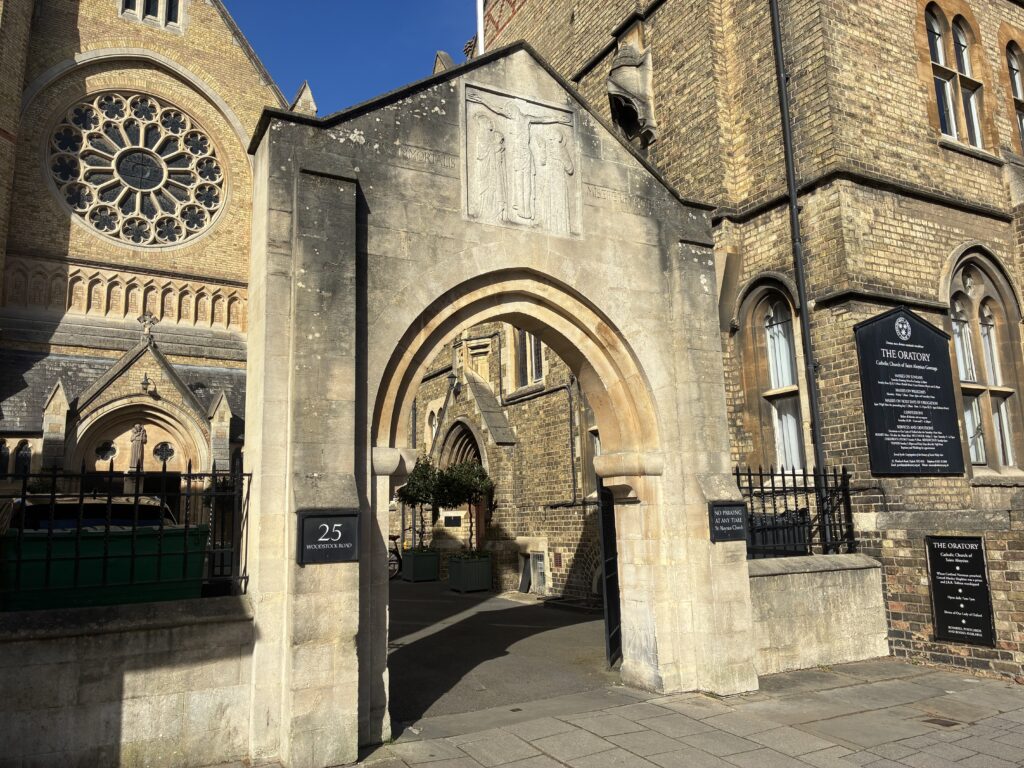
Entrance to The Oxford Oratory at 25 Woodstock Road. It was opened in November 1875 and dedicated by the Jesuits to St Aloysius, a young Jesuit saint whose statue stands above the porch. This was the first Catholic church of any significance to be built in Oxford since the Reformation. While Oscar Wilde attended its opening, Gerald Manley Hopkins served as a Jesuit priest here.
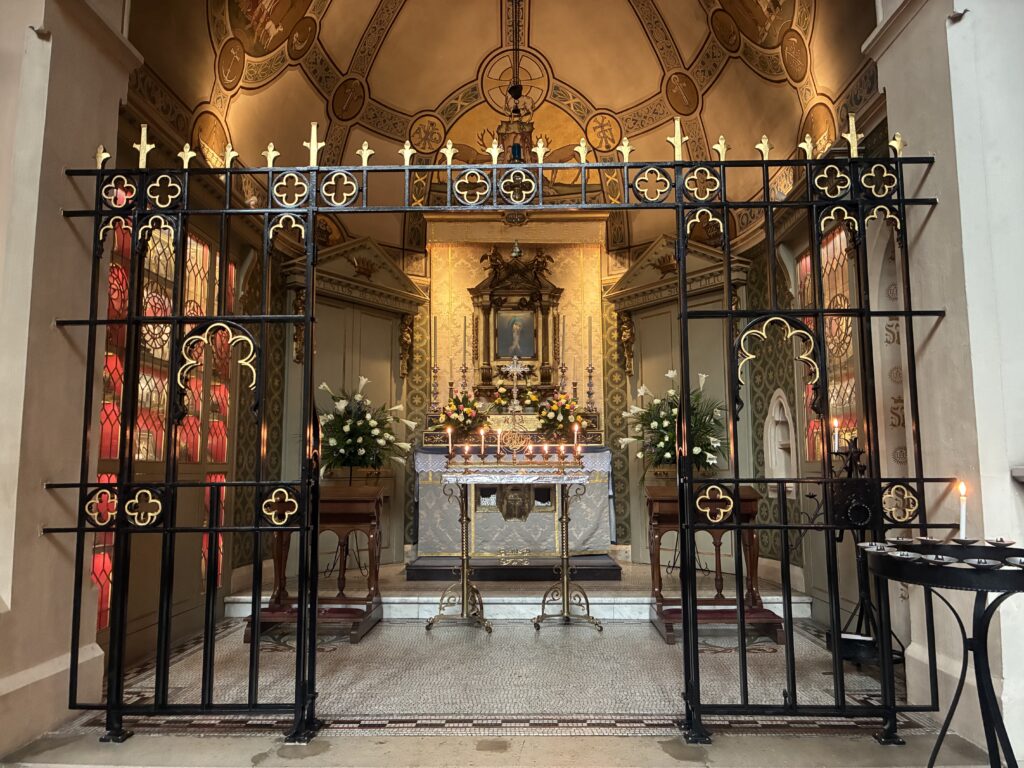
The Relic Chapel. The painting of ‘Our Lady of Oxford’ above the altar is one of the few items left from Grissell’s collection and takes centre stage. It was presented to Grissell by Pope Pius IX in 1869
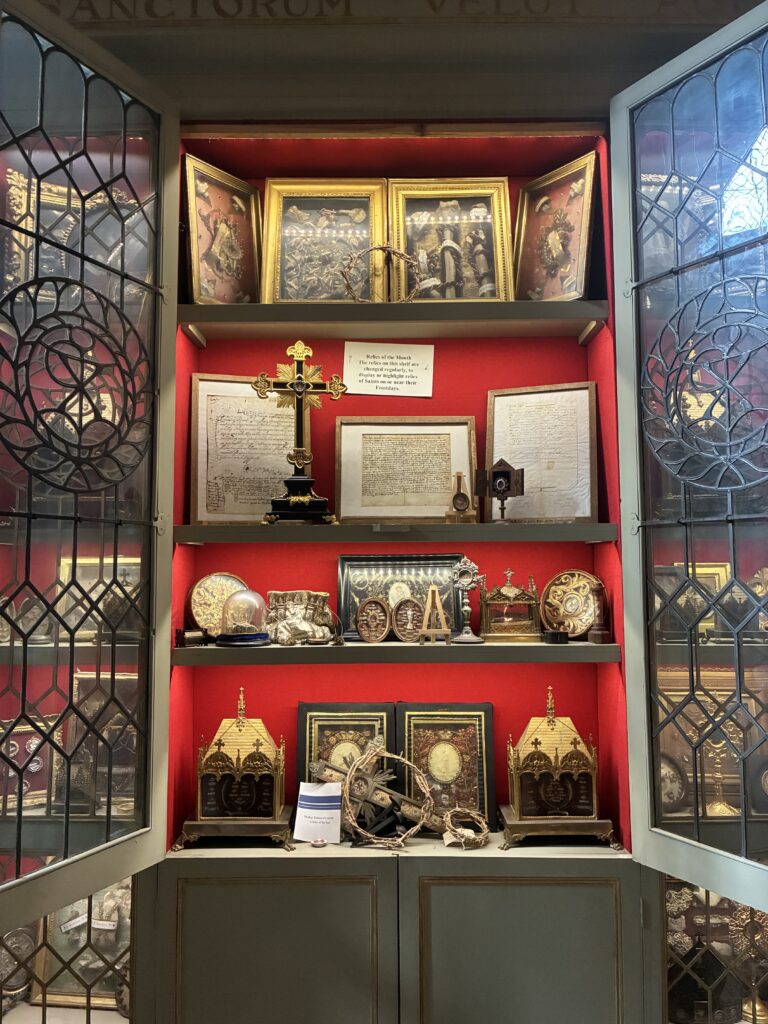
The red used as the background colour for the glass cabinets represents the blood of martyrs.
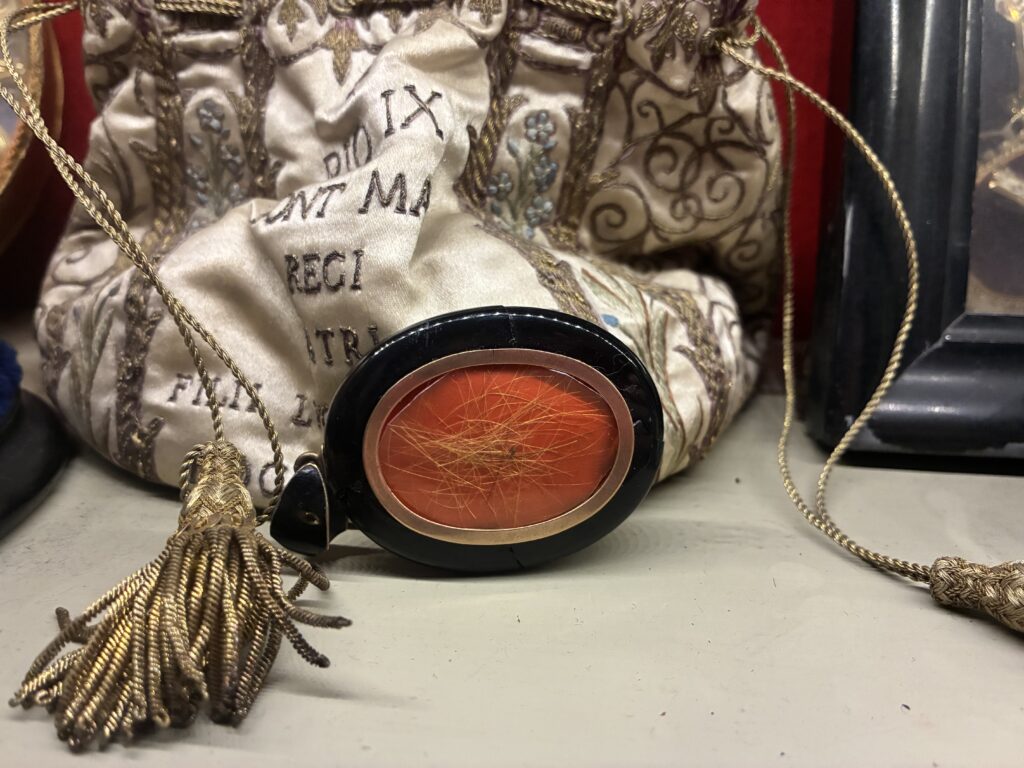
A locket containing the hair of St John Henry Newman. Once the vicar of the University Church of St Mary the Virgin and Littlemore, he later converted to Catholicism and brought the Oratory of St Philip Neri to England. There were no physical remains of his body when his grave was opened during the process of his canonisation. But hair gathered during his lifetime can still be found as here.
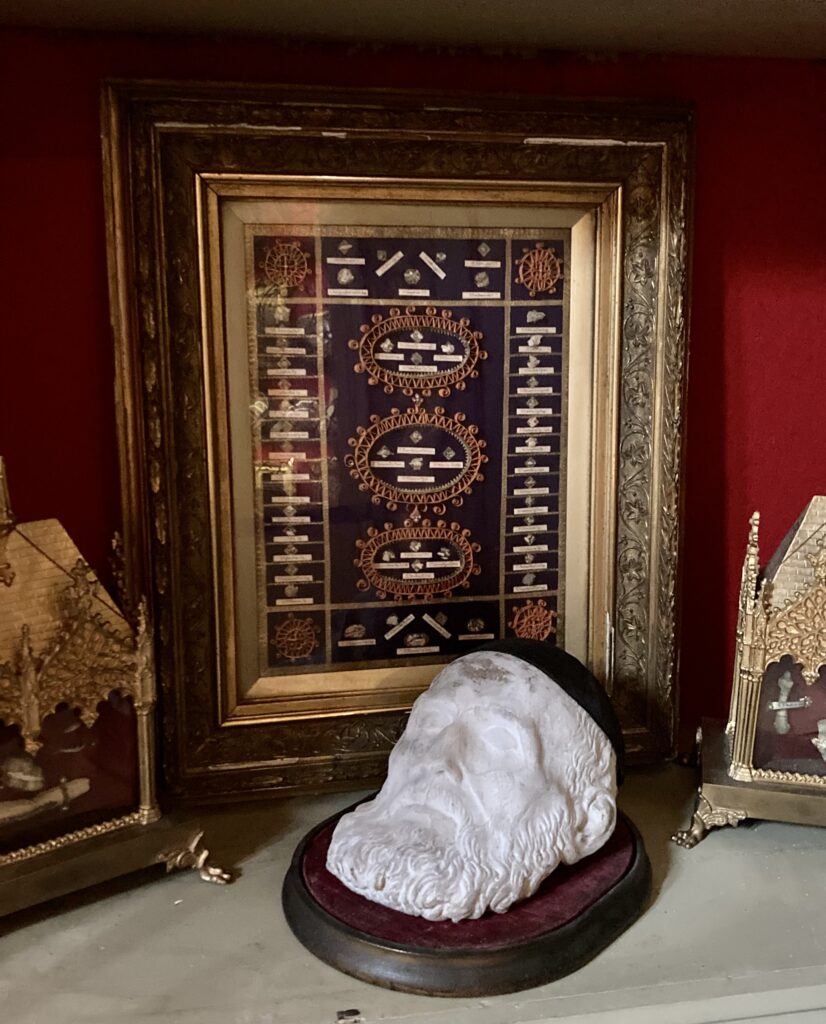
The death mask of St Philip Neri, the founder of the Oratory back in 16th century Rome. It is one of the few items that was overlooked from Grissell’s collection when it was cleared out in the 1970’s.
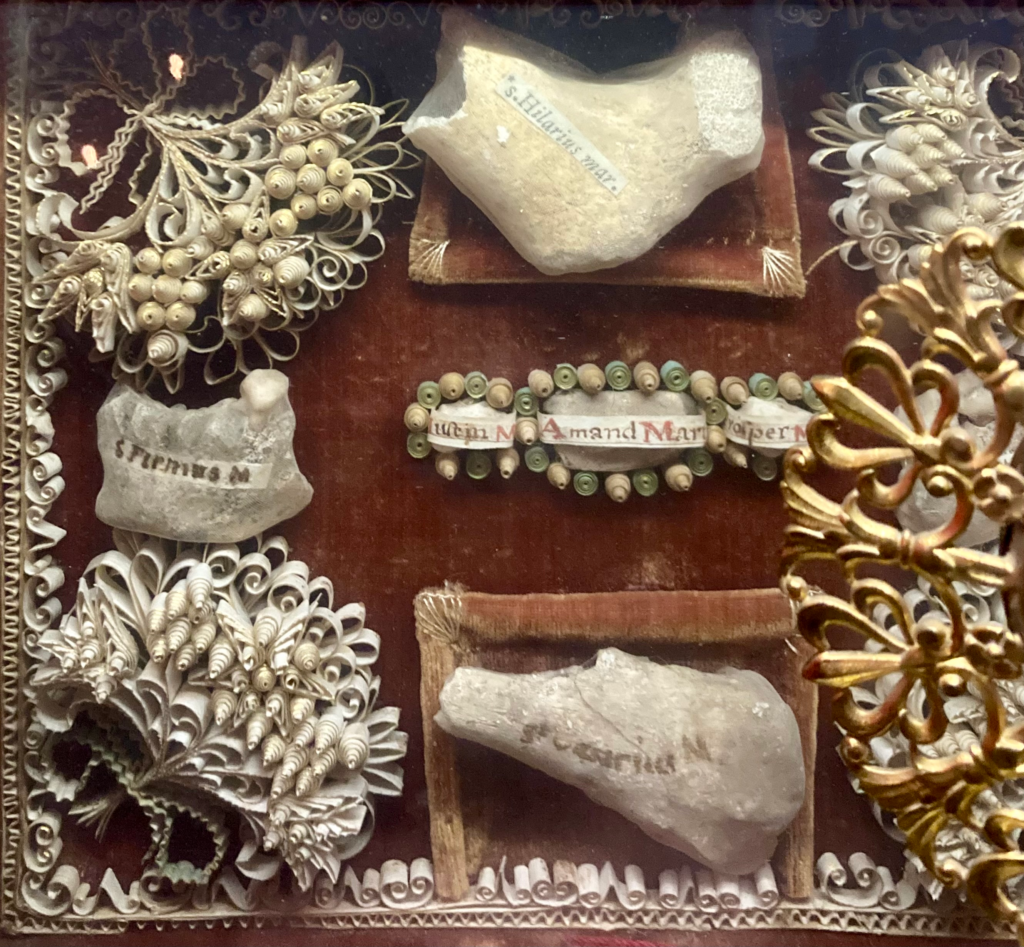
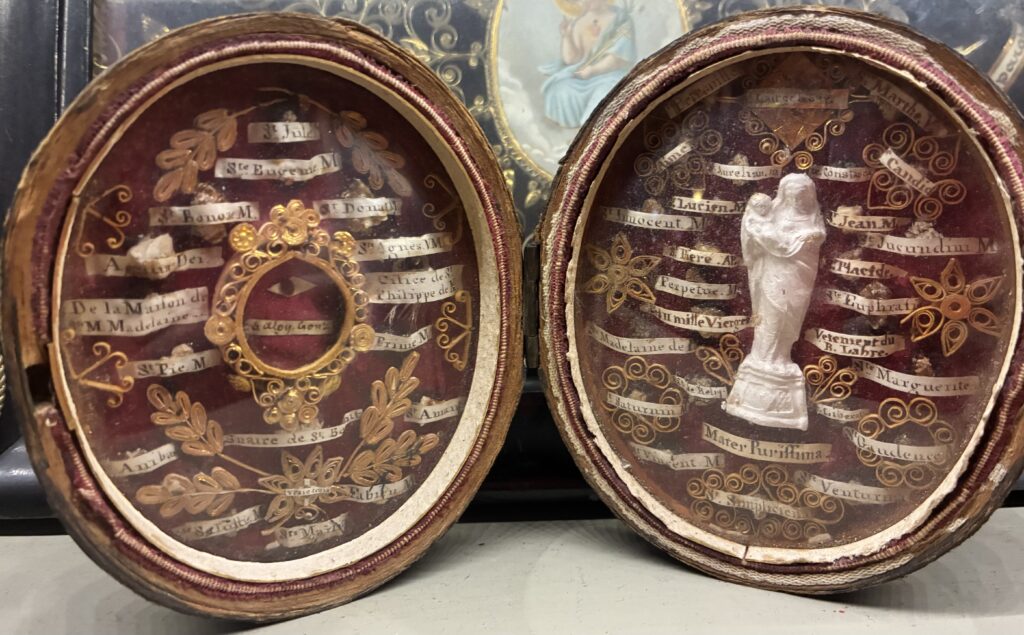
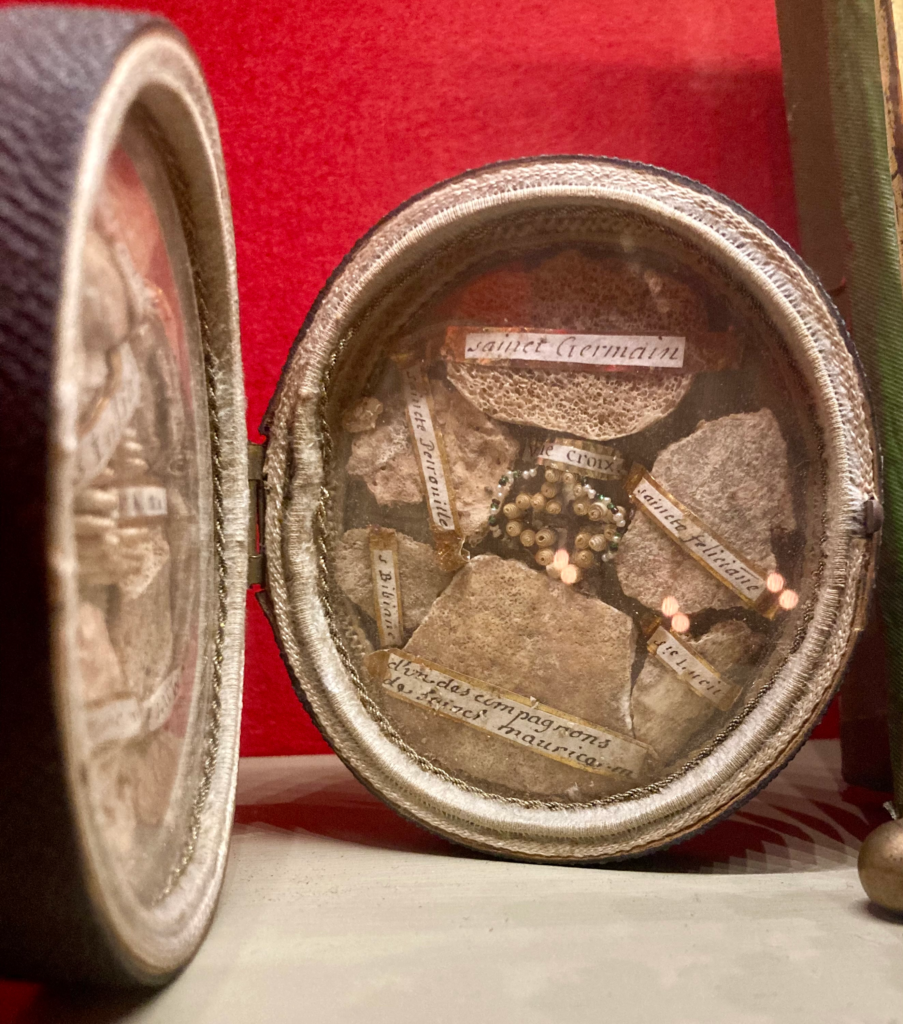
Tiny fragments of bone from a multitude of saints.
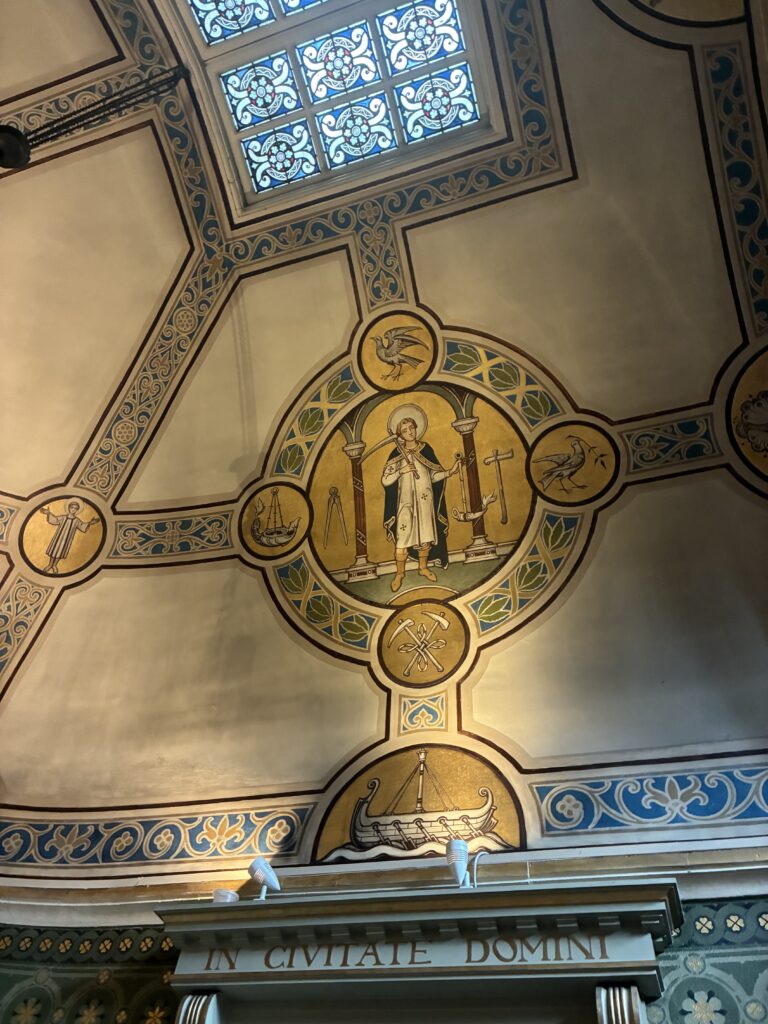
The Catholic Arts and Crafts artist Gabriel Pippet was responsible for the decoration in the Relic Chapel. To reflect its contents he drew on images and symbols found in the Christian burial site of the Roman catacombs. This image is of St Pacificus, whose body Grissell once had in his collection and once lay under the altar here.
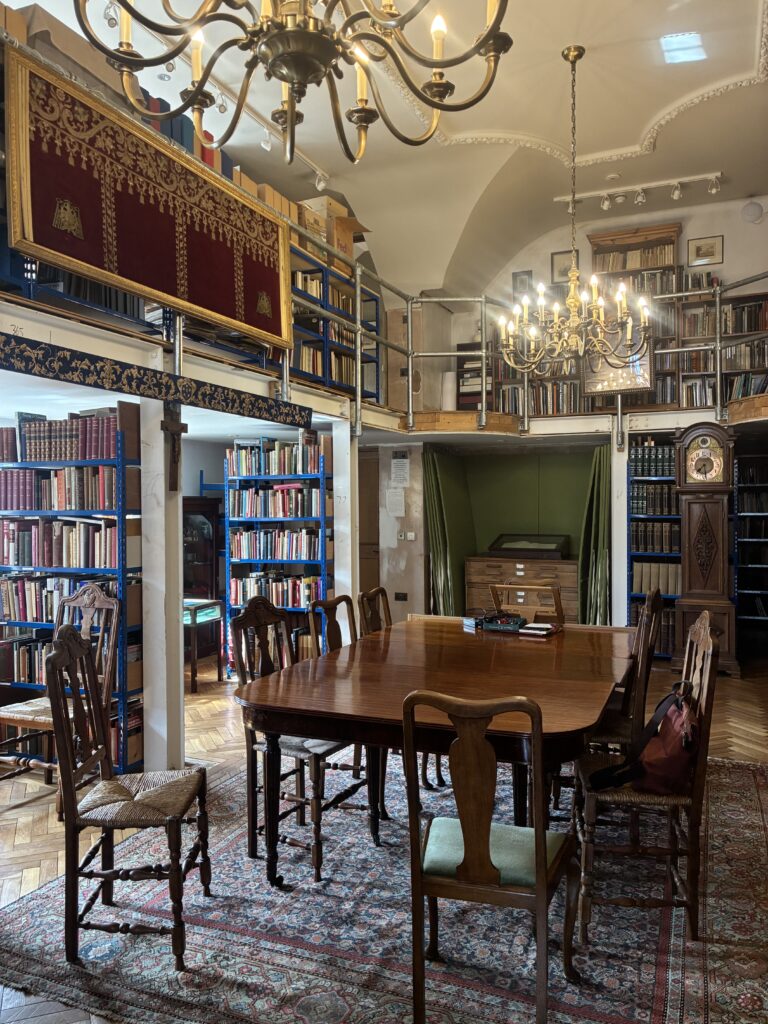
The library in what used to be the old St Aloysius Catholic Primary School, now moved up the Woodstock Road.
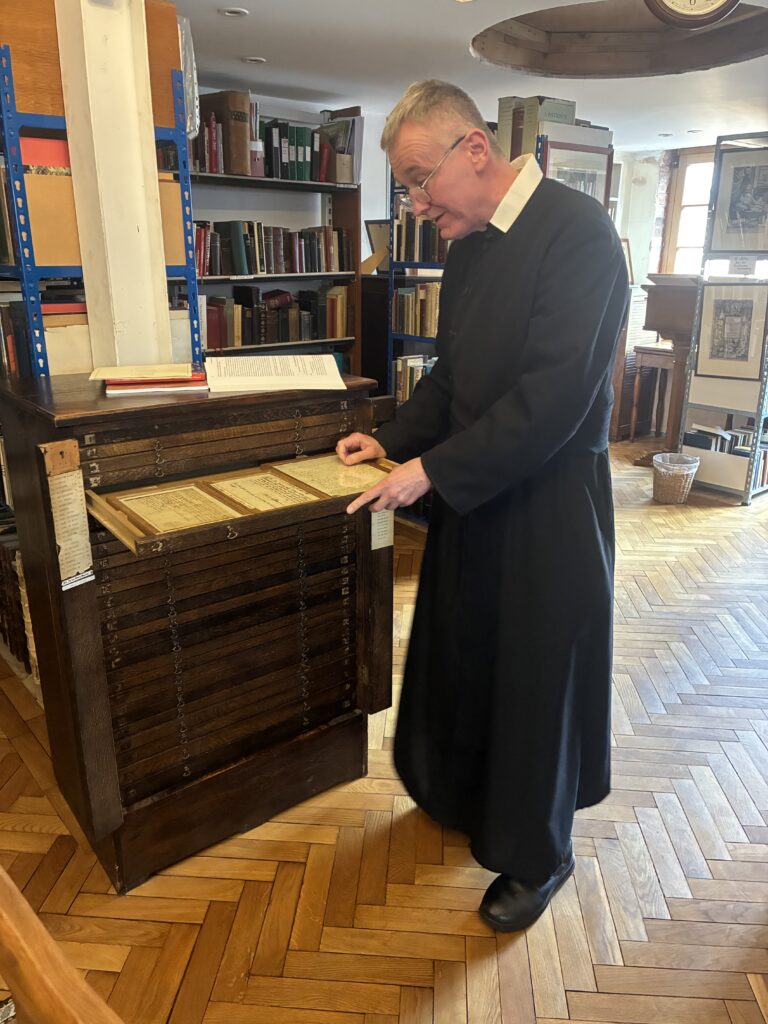
Father Dominic with some of the many letters and manuscripts written by saints.
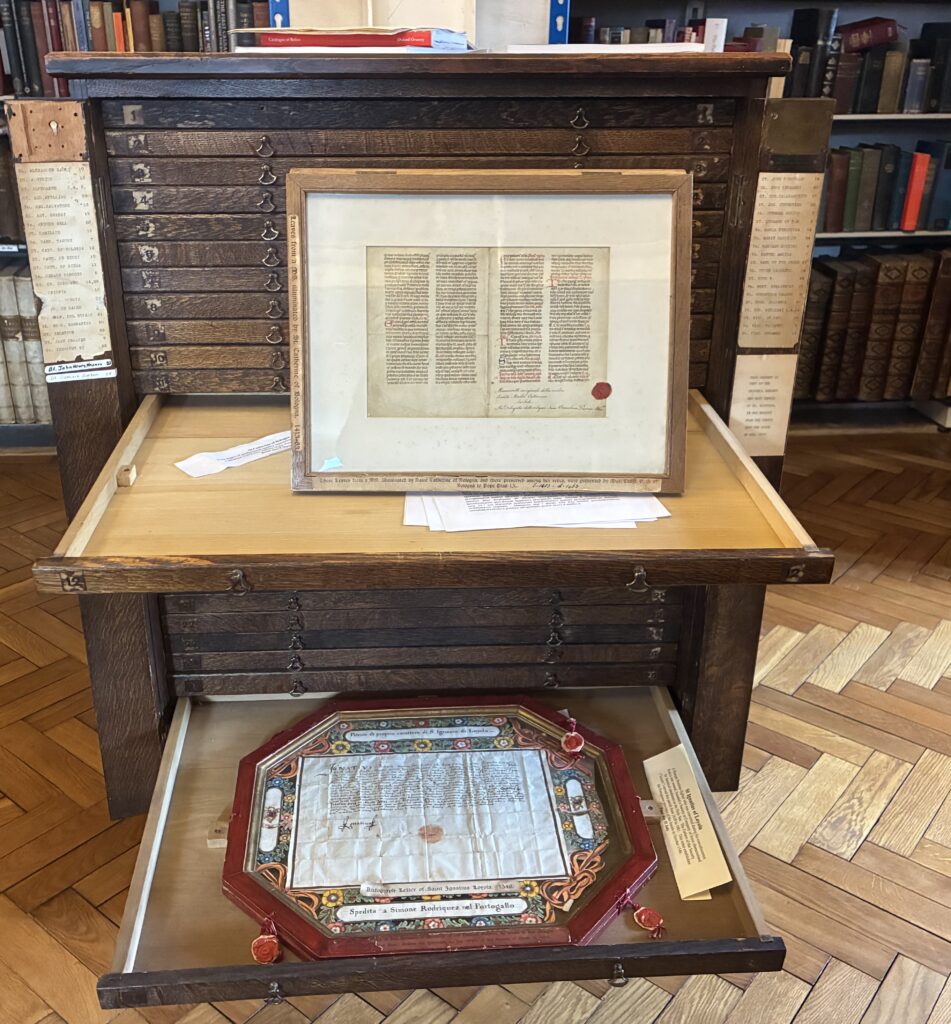
The beautiful handwriting of St Catherine of Bologna (above). And an illustrated letter dated October 1546 from St Ignatius of Loyola who founded the Society of Jesus.
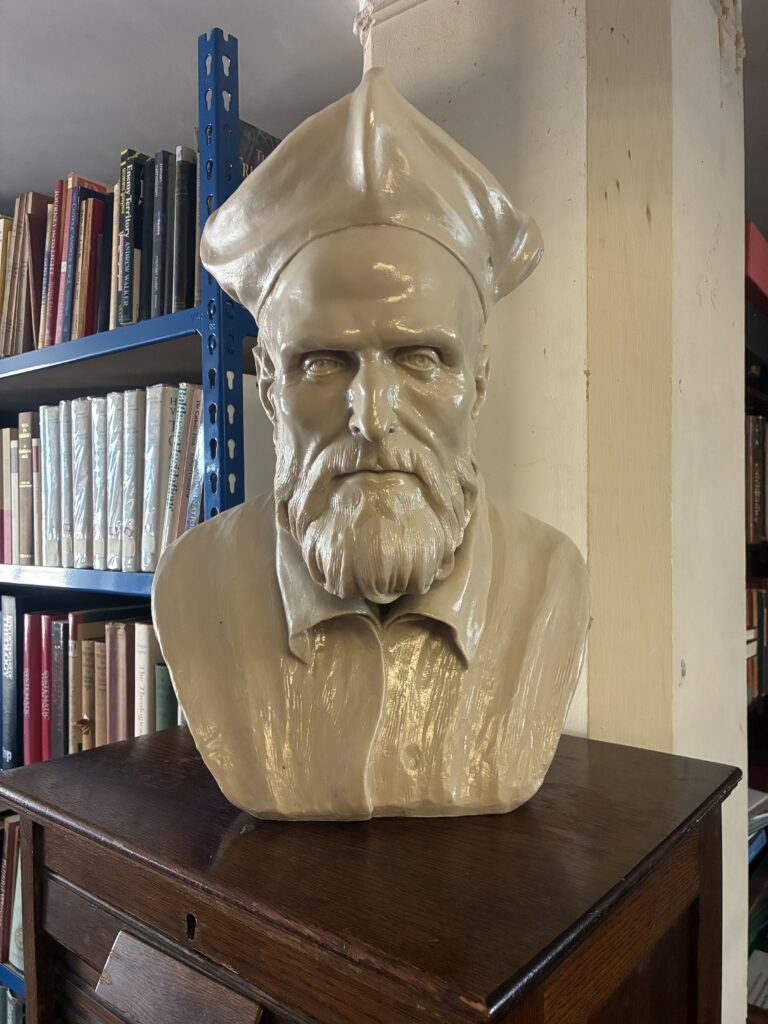
A bust of the Oratory founder St Philip Neri
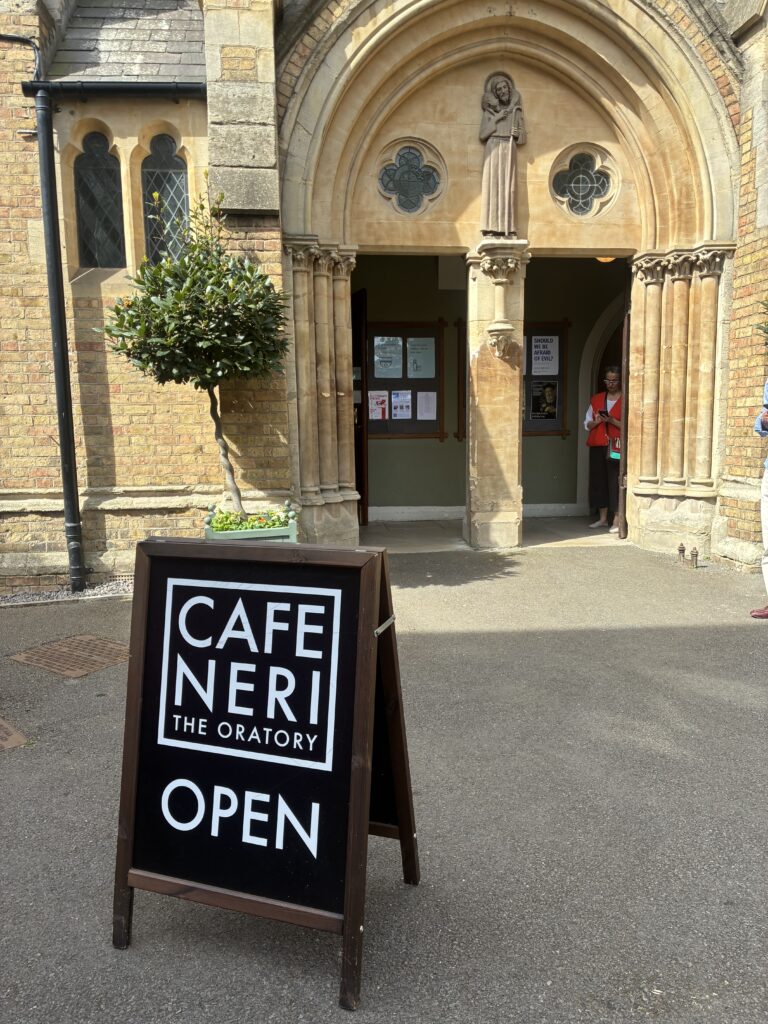
And the cafe that is named after him.
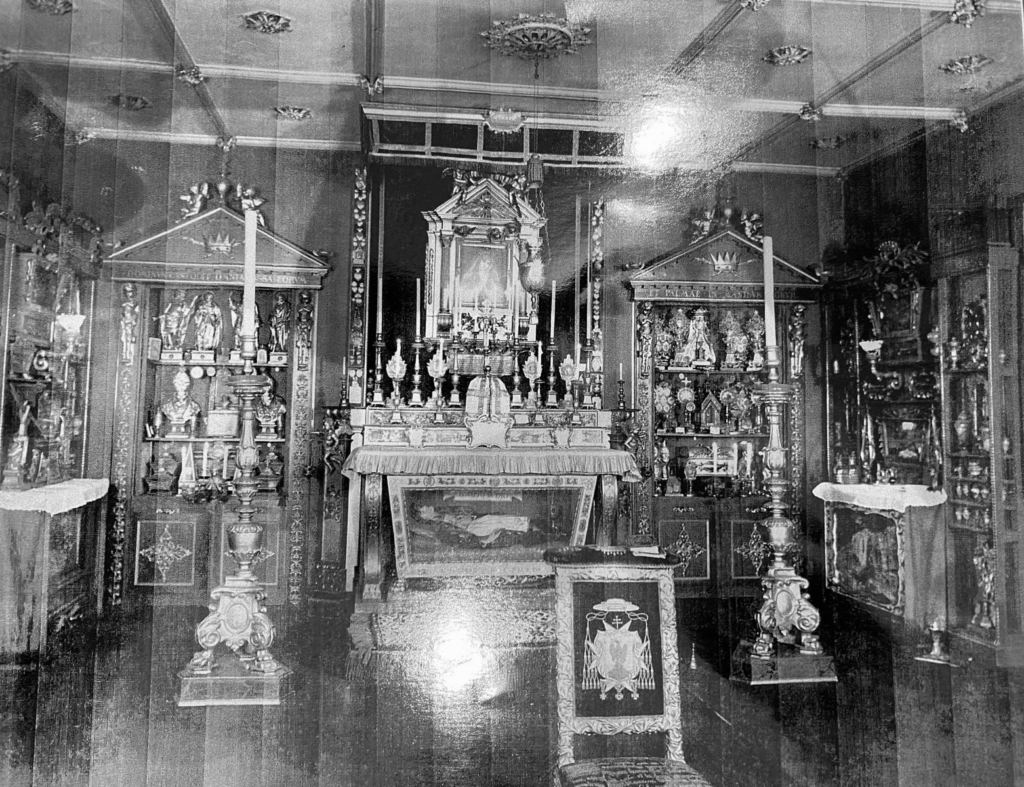
Hartwell de la Garde Grissell’s private Oratory on the corner of the High and Longwall Street. You can see St Pacificus under the altar.
You may also like to read:
4 Comments
Join the discussion and tell us your opinion.
Another interesting one.
you have made my sunday morning!!!! being french and….royalist, the important news of the assimilation of King Louis XIV by Buckland has certainly generated a lot of comments in my family : at least now we know the reality….Merci!
This was famously the church frequented by J.R.R. Tolkien in his years on the faculty. It is said he was heartbroken by the “remodeling” that vandalized the relics, an act of iconoclasm performed by Jesuits who might have been imitating the destruction under Henry VIII.
These pictures are amazing.
Thanks so much also for the information.
I appreciate reading your columns.