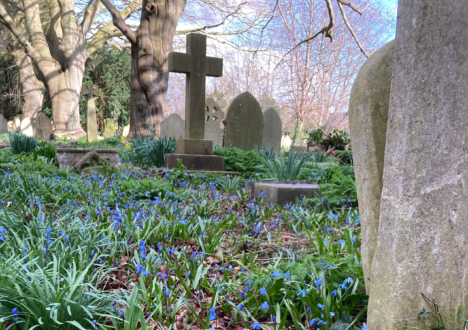
Springtime at St Sepulchre’s
A bright sunny day this week found me heading up Walton Street to St Sepulchre’s cemetery. Sandwiched between a Londis convenience store – with its mops, brushes and buckets of…
A bright sunny day this week found me heading up Walton Street to St Sepulchre’s cemetery. Sandwiched between a Londis convenience store – with its mops, brushes and buckets of…
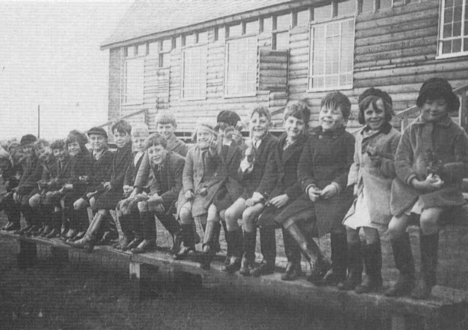
This is Hill End Camp, 67 acres of unspoiled countryside four miles west of Oxford, protected by deed of trust for the outdoor education of children. And it is here that I am heading today, 100 years after the first cohort of infants from West Oxford Elementary School arrived by charabanc back in 1926. A pioneering project that championed a belief in the physical and phsycological benefits of being in the ‘great outdoors’, of immersing yourself in nature. And I am delighted to say that it is still going strong.
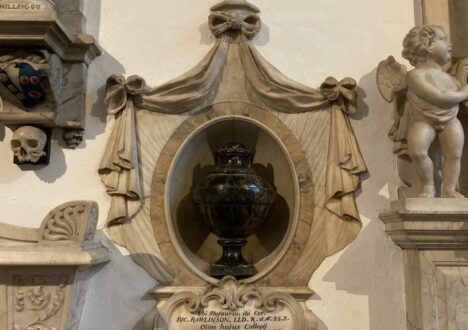
When Richard Rawlinson died in April 1755, he left instructions in his will that his heart ‘be taken out, enclosed in a silver cup with spirits and put into a black marble urn’. Then, after the rest of his body was laid to rest in St Giles Church in Oxford, this once beating organ was to be taken across the road to be stored separately at his old university college, St John’s.
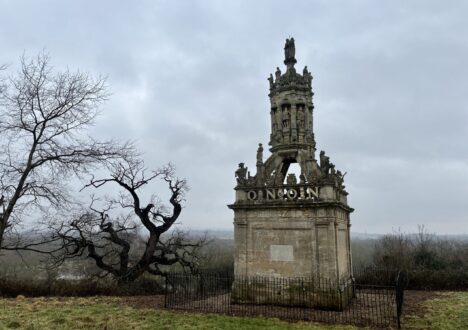
It is the 2nd February, or Candlemas, the date in the church calendar that marks the end of Christmastide and the beginning of spring. And to celebrate my friend, walking companion and expert in all things flora and fauna has taken me on a jaunt to see Candlemas Bells, more widely known as snowdrops, but so nicknamed after the time of year their delicate drooping heads emerge from the darkness of their frozen winter beds. A great place to see them in profusion, she claims, is not far from Oxford in the gardens of Nuneham House. About which I am secretly thrilled. For this is the resting place of the Carfax Conduit, a proud monument that once stood in the very centre of the city. I’d been keen to take a closer look for ages.